Roosters can eat bird seed, but it should only ever be a small treat, not a staple. The safe limit is roughly 10 to 15 percent of their total daily food intake, and it works best as an occasional supplement on top of a formulated poultry feed. Bird seed is high in fat and low in the nutrients roosters actually need, so if it starts crowding out their complete feed, problems follow quickly. Keep it dry, keep it fresh, and watch the amount. That's the whole framework.
Can Roosters Eat Bird Seed Safely? Risks and How to Feed

Maya Henderson
19 May 2026
Can roosters eat bird seed safely
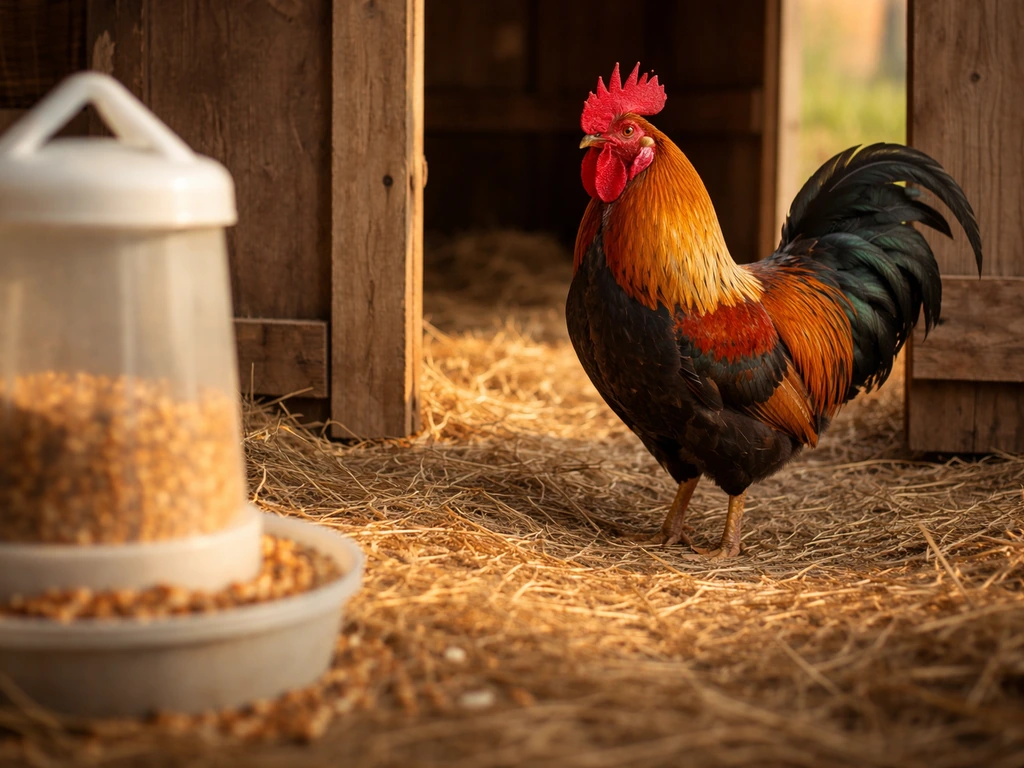
Yes, with clear conditions. Roosters (and backyard chickens generally) are opportunistic eaters and will happily peck at bird seed left in or around a feeder. Most standard bird seed mixes contain ingredients like millet, sunflower seeds, safflower, and cracked corn, none of which are toxic to chickens on their own. So in that basic sense, bird seed is not dangerous.
The problem is not the individual ingredients, it's the role bird seed plays in the rooster's overall diet. Merck Veterinary Manual and OSU Extension both make the same point: scratch grains and mixed seeds are acceptable in small amounts, but birds should get the majority of their nutrition from a balanced, complete poultry ration. Bird seed is a treat category, not a feed category. When it crosses that line, you start seeing nutrient imbalances that show up gradually, including poor feather quality, weight changes, and drops in overall condition.
The practical rule is this: only offer as much bird seed as your rooster can finish in about 20 minutes, and think of that as roughly 10 to 15 percent of everything he eats in a day. That guideline comes directly from OSU Extension's recommendations for scratch grain feeding in laying hens, and it applies equally well to roosters. Anything beyond that starts displacing the complete diet he actually needs.
Health risks from bird seed: mold, spoilage, and contaminants
The single biggest risk with bird seed is mold, and specifically the mycotoxins that moldy grain produces. Aflatoxin is the most notorious. It can develop during growing, harvesting, storage, or even while seed is sitting in a feeder, especially when it gets wet. The University of Georgia and Oklahoma State University Extension are both direct about this: any grain showing visible mold growth should be discarded immediately. Oklahoma Cooperative Extension goes further and says you should never feed grain that is moldy, damaged, or containing insects. Merck Veterinary Manual echoes this in its poultry section, noting that mycotoxicosis prevention depends on using ingredients free of mycotoxins and keeping feed dry throughout storage and feeding.
Rancidity is the second risk. Many bird seed blends contain sunflower seeds and other oil-rich seeds. When those fats oxidize, which happens faster in warm or humid conditions, the seed becomes rancid. Rancid feed is unpalatable and can cause digestive upset. The smell is a reliable tell: fresh seed has a mild, almost nutty smell, while rancid seed smells sharp or sour.
Chemical contamination is a less visible but real concern. Some commercially sold bird seed is treated with pesticides or mold inhibitors that are formulated for wild bird feeders, not poultry consumption. If you are pulling seed from an ornamental wild bird feeder setup and offering it to your rooster, it is worth checking the label on that specific product to confirm it does not carry any treatment warnings.
Nutritional fit: what bird seed provides vs what roosters need
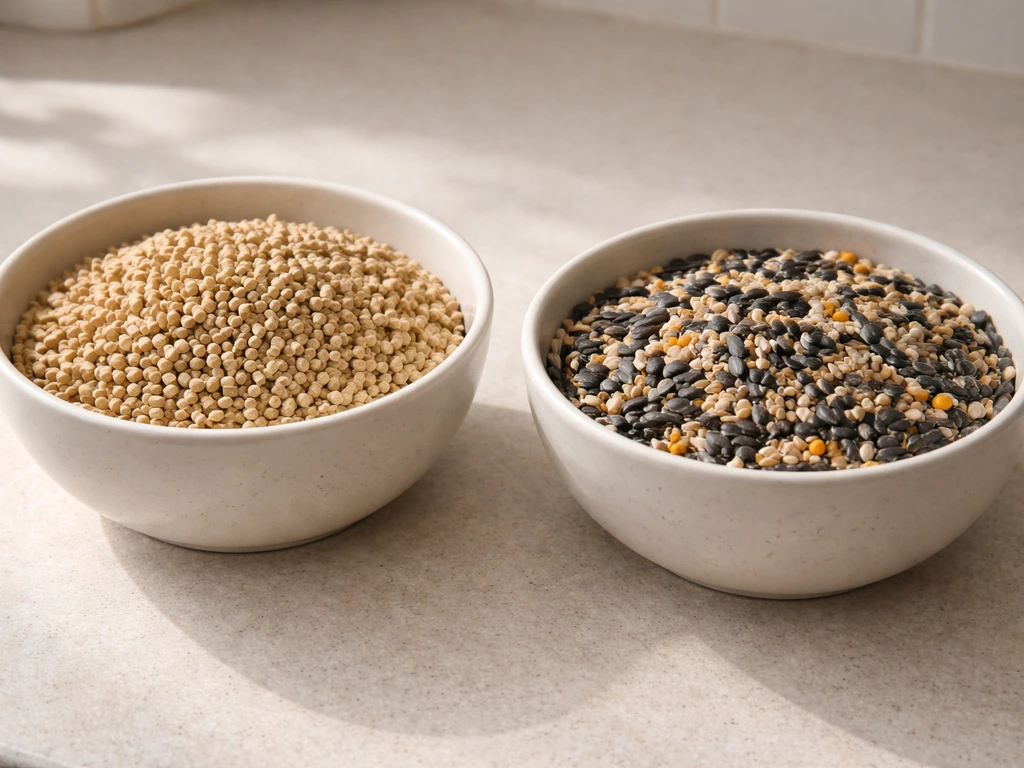
Bird seed mixes are formulated for small wild birds, not for poultry. The nutritional gap between the two is significant. A rooster needs a diet that supports muscle maintenance, immune function, and general metabolic health. That means adequate protein (typically 14 to 16 percent in a maintenance poultry ration), calcium, phosphorus, vitamins, and a balanced amino acid profile.
| Nutrient aspect | Formulated poultry feed | Typical bird seed mix |
|---|---|---|
| Protein content | 14–16% (maintenance rooster) | Varies widely, often lower and incomplete |
| Fat content | Moderate, balanced | High (especially sunflower-heavy mixes) |
| Calcium and phosphorus | Balanced for poultry needs | Not optimized for poultry |
| Vitamins and minerals | Added to meet poultry requirements | Minimal or absent |
| Amino acid profile | Complete (methionine, lysine balanced) | Incomplete, grain-biased |
| Role in diet | Primary feed (85–100% of intake) | Treat or supplement only (up to 15%) |
Merck Veterinary Manual is blunt about seeds being high in fat and not very nutritious as a primary diet source. That is true for pet birds and just as true for roosters. A rooster that eats mostly bird seed instead of a complete ration will get plenty of calories but will be running short on protein, key vitamins, and minerals. Over weeks and months, that shows up in his health. Bird seed works only as a supplement, layered on top of a proper base diet. Can bird eat quinoa? As with any treat, it should be offered only in small amounts and you should check how it fits the bird's balanced diet needs. The Merck Veterinary Manual for pet birds similarly advises that seed should not make up most of a bird’s diet and should be offered only occasionally because seeds are high in fat and not very nutritious blank" rel="noopener noreferrer">it should be offered only in small amounts. If you are looking for other safe treat options beyond bird seed, you can also check whether a bird can eat chia seeds and how to serve them properly can bird eat chia seeds.
How to feed roosters bird seed safely
If you want to offer bird seed to your rooster, here is a straightforward approach that keeps things safe and proportionate.
- Start with a complete poultry feed as the base. Make sure your rooster has free access to a formulated feed (pellets or crumbles designed for adult roosters or non-laying birds) before you consider adding bird seed at all.
- Measure the amount. Keep bird seed to no more than 10 to 15 percent of total daily intake. A rough practical test: offer what he can finish in about 20 minutes, then stop. If seed is still sitting there after that window, you gave too much.
- Offer it dry and fresh. Never offer bird seed that has been sitting in a damp feeder, has clumped together, or smells off. Check the seed before every feeding.
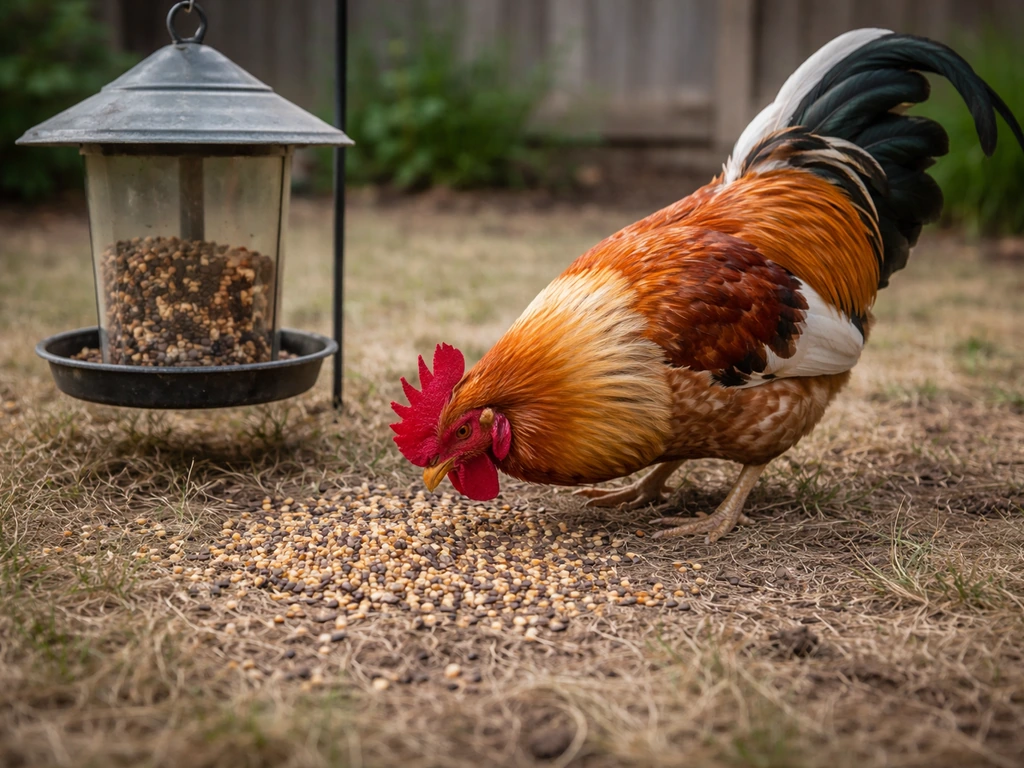
- Use a clean, elevated feeder or a dry dish rather than scattering seed on the ground. Ground feeding leads to wet, contaminated seed faster, and increases contact with feces and soil pathogens.
- Store seed properly. Keep it in a sealed, airtight container in a cool dry place. Discard any seed that has been exposed to moisture or shows any sign of mold, discoloration, or insect activity.
- Limit treats to once daily or a few times per week. Bird seed does not need to be an every-day offering, especially if your rooster is already getting a complete diet.
As a reference point for portioning treats generally, Purina's guidelines for adult hen treats suggest up to 2 tablespoons per bird per day as a treat ceiling. That is a useful mental anchor for bird seed too, though the 20-minute consumption test and the 10 to 15 percent of daily intake rule are the more reliable limits in practice.
Food safety and risks around feeders
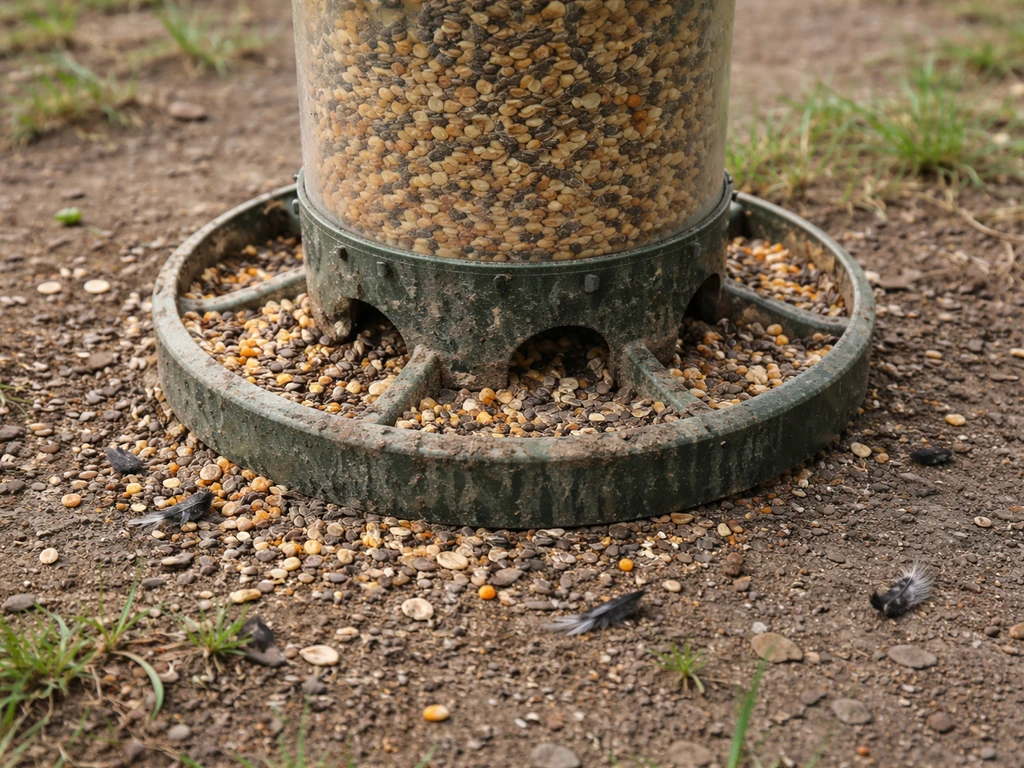
Feeders create a shared contact point between your rooster and wild birds, and that contact carries real disease risk. A Georgia study published in PMC found that contact between wild birds and backyard chickens is common when supplemental feed is present, and the pathogens shared between species include Salmonella, Newcastle disease virus, and highly pathogenic avian influenza. Wild birds visiting your chicken's food area are not just a nuisance. They are a genuine biosecurity concern.
Salmonella is particularly worth understanding. Wild birds can carry it asymptomatically and spread it through droppings onto feed and feeders. The Washington Department of Fish and Wildlife recommends cleaning feeders daily with a diluted bleach and water solution after rinsing. That standard applies even more urgently in a setup where chickens are interacting with feeders that wild birds also visit. Campylobacter is another enteric pathogen associated with backyard chicken flocks, with human health implications worth taking seriously.
Rodents are a second major feeder hazard. Spilled seed and uneaten bird seed attract mice and rats, which introduce their own pathogens and can raid feed storage as well. To reduce rodent pressure, pick up uneaten seed promptly, avoid overfilling feeders, and store all seed in hard-sided sealed containers. Never leave feed out overnight.
- Clean any shared feeders or dishes daily, rinsing first then using a diluted bleach solution
- Remove leftover or uneaten seed after each feeding session, especially in wet weather
- Keep wild bird feeders separated from your chicken's feeding area where possible
- Consider physical barriers (screening or fencing) to reduce wild bird access to your rooster's feed
- Store all seed in sealed, rodent-proof containers off the ground
When to avoid bird seed or switch feeds entirely
There are situations where offering bird seed to your rooster is a bad idea, and a few where it becomes actively harmful. Knowing the red flags helps you make the call quickly.
- Visible mold on any seed: discard the entire batch immediately, no exceptions
- Seed that has gotten wet and clumped or has sat in a damp feeder for any length of time
- Unknown blends with no ingredient list, especially if sourced from old stock or bulk bins where storage conditions are unclear
- Seed that smells sharp, sour, musty, or rancid
- Bird seed with any chemical treatment language on the label not intended for poultry consumption
- Roosters that are already underweight, recovering from illness, or being treated by a vet: stick to a complete formulated feed and skip the extras until he's back to full health
- Any situation where bird seed has become the dominant food source rather than the complete poultry feed
If you have been relying on bird seed too heavily, the fix is straightforward: pull it back and return to a complete poultry ration as the foundation. OSU Extension notes that scratch and grains are simply not necessary when birds receive a complete diet, and the same is true of bird seed. Many owners wonder if is quinoa bird seed, but it should be treated the same way as other mixed seed and limited to small portions. Your rooster does not need it. It is an enrichment option, not a nutritional requirement. If you want to add variety and enrichment without the risks that come with mixed bird seed, a formulated poultry treat product designed for adult birds is a safer choice, because the ingredient and storage standards are built for poultry specifically.
Other animals that end up around bird feeders, including goats, horses, sheep, and even smaller birds like quail, face similar questions about whether bird seed is safe or appropriate for them. If you are wondering can horses eat bird seed, the safest approach is to treat it as occasional feed at most and focus on a horse-appropriate diet instead. Goats generally should not eat bird seed as a regular food, and the same mold and spoilage risks apply at feeders. The short version across all of them is the same: bird seed is not designed for any of these animals as a primary feed, and the mold and spoilage risks apply regardless of species. The same caution applies if you are wondering can quail eat bird seed, because it is still meant as a limited treat rather than a complete feed. If you are managing a mixed backyard with multiple animals interacting near feeders, keeping seed dry, fresh, and limited is the universal rule.
FAQ
Is it okay to give my rooster bird seed from the same feeder I use for wild birds?
Yes, but only if it is clearly labeled as safe for chickens and stored dry. “Wild bird” mixes can contain additives or coatings meant for feeder use, and the higher sunflower and oil content also increases rancidity risk. If the bag does not clearly state ingredients for food use, treat it as higher risk and avoid regular feeding.
Can roosters eat bird seed if it gets wet, like from rain or a leaky feeder?
You can, but do it briefly and only for a small portion of the day. Mix once in a bowl you control, offer only what he finishes in about 20 minutes, and discard the leftovers. Do not leave wet seed in the feeder overnight, because moisture quickly increases mold and mycotoxin risk.
My rooster is losing weight, can I increase bird seed to help?
Usually not. If a rooster is underweight, molting heavily, or seems off, bird seed is not the fix because it is nutritionally incomplete. Use a complete poultry ration first, then consider bird seed only as a small treat. If symptoms persist, ask a poultry veterinarian because mycotoxin exposure and infectious causes can look similar early on.
Are some types of bird seed safer than others for roosters?
Prefer plain, unflavored, uncoated seed and keep it as a treat, but the larger issue is the mix and storage, not the type. Seed with lots of oily components can go rancid faster, and blends can be formulated for small birds with different nutrient profiles. Buy in smaller quantities, store sealed, and throw out anything with an off smell.
What should I check for on the label if I want to feed commercial bird seed to my rooster?
Avoid it. Sprayed or dusted seed (for insect control or feeder management) can introduce chemicals not intended for poultry. Also, “mold inhibitor” or other treatments can vary by product and may change how fast you should discard seed that has been stored or warmed.
How can I measure the right amount if my rooster eats slowly or other birds steal some?
You should not base the day’s allowance on the total amount in the feeder. Instead, estimate what your rooster actually consumes in one session, use the 20 minute “finish it” rule, and keep it around 10 to 15 percent of total daily intake. If it takes longer or he starts guarding the feeder, you are likely exceeding the safe treat limit.
If only a few kernels look moldy, is it safe to pick them out and feed the rest?
If you suspect mold, discard immediately, even if the mold spot is small. Mycotoxins can be present without visible growth, and re-serving contaminated seed can keep exposing him. If he has been eating questionable seed for days, monitor for reduced appetite, diarrhea, or weakness and consider contacting a vet for guidance.
What is the best way to reduce bird seed if I have been feeding a lot?
Switch to a complete poultry ration as the foundation, then add treats only at the limited level. Gradually phasing out over several days can reduce digestive upset, especially if the rooster is used to lots of seed, but the priority is stopping spoiled or high-seed feeding right away.
What signs would tell me bird seed is causing a problem, and what should I do?
Rancid seed can cause poor appetite and digestive upset. If he refuses food, has loose droppings, or seems lethargic after exposure, remove the seed, return to complete ration, and provide clean water. Persistent GI symptoms warrant a poultry vet because other infections can also cause similar signs.
Can I mix bird seed into my rooster’s regular feed?
Mixing bird seed with poultry feed in the same bin can be okay only if you are certain about the proportions and you still discard uneaten portions. It is easier to manage risk by offering bird seed separately as a short-session treat. This also prevents the seed from remaining moist or stale and becoming a long-term spoilage source.
How should I store bird seed to reduce mold and rancidity risk?
Do not store seed in open bags or in feeders for convenience. Use hard-sided sealed containers, keep them in a dry, cool place, and avoid introducing moisture. For feeders, clean and empty regularly so old seed does not sit, clump, or absorb humidity.
If other animals visit the feeder area, does that change the safety advice for my rooster?
Yes, the main issue is that feeders raise biosecurity risk from wild birds and rodents, and that risk is not limited to one species. If you share space with other animals, use species-appropriate feeding stations, remove spilled seed quickly, and keep seed access controlled to reduce pathogen spread.
Next Article
Can Sheep Eat Bird Seed? Risks and What to Do Today
Can sheep eat bird seed? Learn risks like mold, choking and contamination, and steps to act today if they graze it.