Yes, birds can eat quinoa, and it is generally safe for both pet birds and most common backyard species. If you are wondering whether is quinoa bird seed, remember that plain, rinsed cooked quinoa is the safest option for most backyard birds. The key conditions are that it should be plain (no salt, oil, or seasonings), rinsed thoroughly to remove the bitter saponin coating, and ideally cooked before serving. Raw quinoa is not toxic, but cooked quinoa is easier to digest and far more likely to actually get eaten. Think of it as a healthy occasional treat rather than a diet staple. You can also check whether birds can eat bird seed safely, since different seeds have different risks and preparation needs.
Can Bird Eat Quinoa? Safe Preparation for Backyard Birds

Maya Henderson
13 May 2026
Why quinoa is a reasonable food for birds
Quinoa is often called a complete protein because it contains all nine essential amino acids, which is unusual for a plant-based food. It also delivers magnesium, phosphorus, iron, and B vitamins. For birds, protein and trace minerals matter a lot, especially during molting season or for birds raising chicks. In that sense, quinoa fits naturally alongside other whole grains like millet and oats, which are already well-established backyard feeder staples.
That said, quinoa is also relatively starchy and calorie-dense compared to smaller seeds. If you start offering it in large quantities, you could end up tipping a bird's diet toward carbohydrates at the expense of the fats and proteins they get from seeds and insects. The right framing is that quinoa is a solid nutritional supplement, not a replacement for your bird's regular diet or standard feeder mix.
How to serve quinoa safely
Cooked vs raw: which is better?
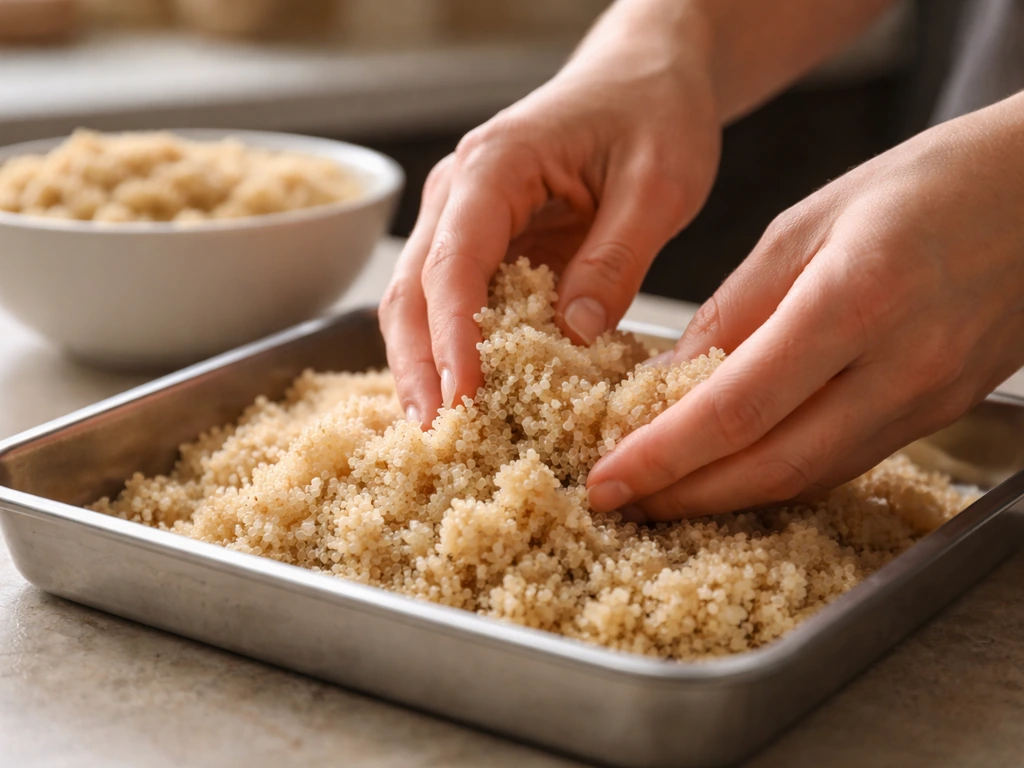
Cooked quinoa is the safer and smarter choice for almost every situation. Cooking softens the grain, makes it easier for birds to swallow and digest, and removes most of the saponin bitterness that raw quinoa carries. Chewy's avian nutrition guidance specifically recommends cooking quinoa first and serving it plain, either on its own or mixed in with chopped vegetables for variety. Raw quinoa is not off the table entirely, especially for larger birds that eat harder seeds anyway, but if you want to make it accessible and appealing, cooked wins.
Step-by-step prep
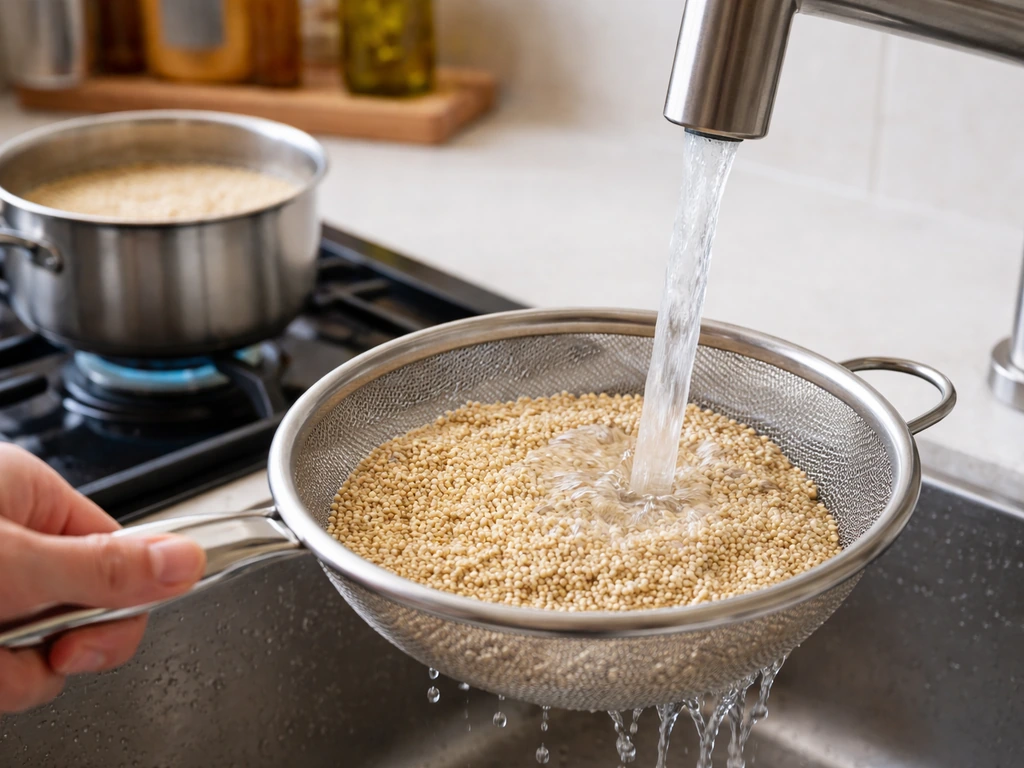
- Rinse dry quinoa under cold water for at least 30 seconds before cooking. This removes the saponin coating, which has a soapy, bitter taste that can deter birds and cause mild digestive irritation.
- Cook the quinoa in plain water only. No broth, no salt, no butter, no oil, no seasonings of any kind.
- Let it cool completely before offering it. Warm or hot quinoa can cause crop issues and will spoil faster in the feeder.
- Serve small amounts, roughly a tablespoon or two at a time for a backyard feeder, or a teaspoon for a pet bird alongside its regular diet.
- If mixing with other foods, pair with chopped leafy greens or other bird-safe vegetables. You can also mix cooled cooked quinoa into a standard seed blend to help birds discover it.
Feeder placement and portion tips
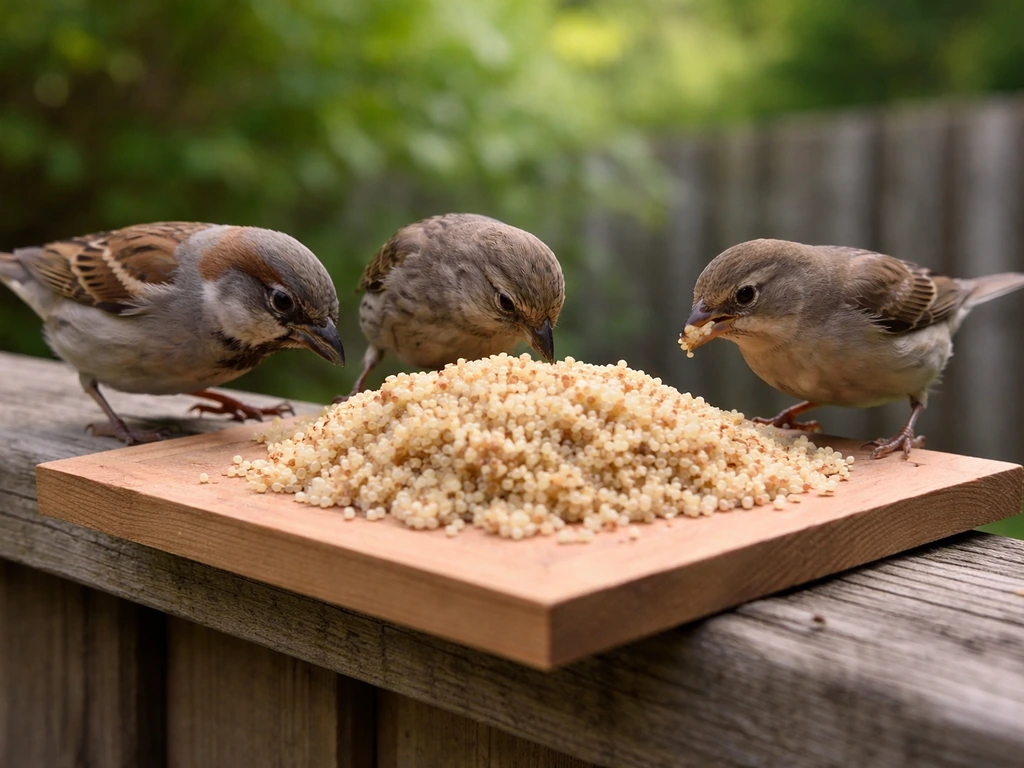
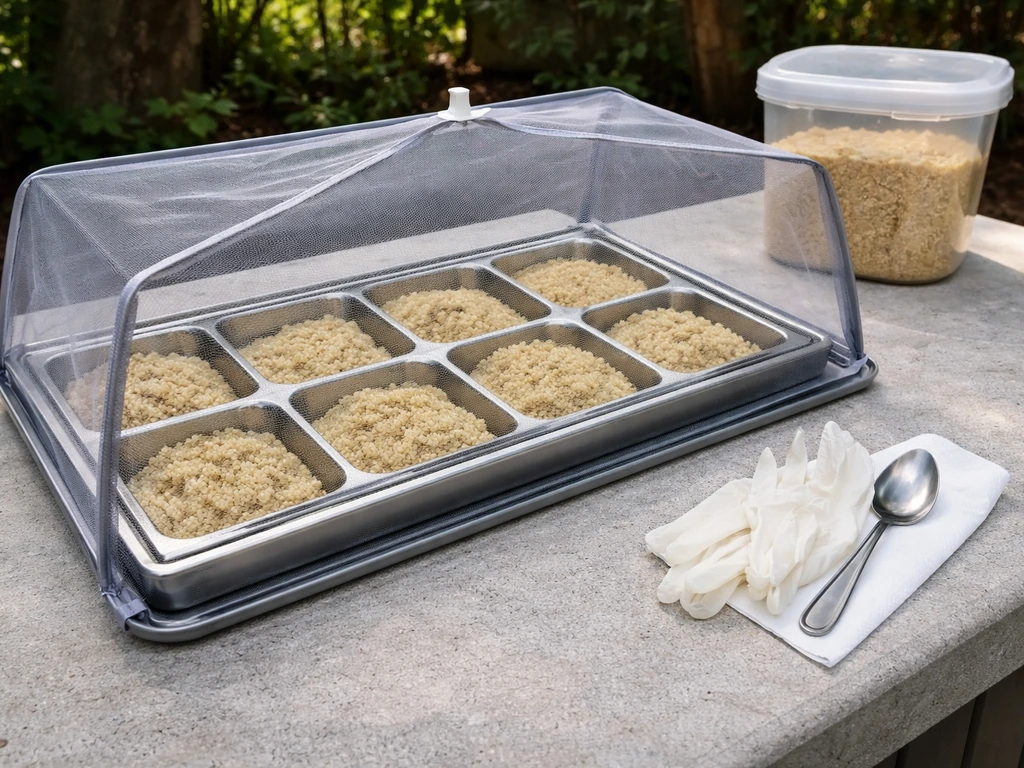
Use a flat tray or platform feeder rather than a tube feeder for cooked quinoa. Tube feeders are not designed for wet foods and will clog quickly. Place the tray in a shaded spot, especially in warm weather, and do not leave cooked quinoa out for more than two hours in temperatures above 70 degrees Fahrenheit. If birds have not touched it after that window, remove it and discard. You can offer dried or raw rinsed quinoa in a standard tray feeder if cooked leftovers are not practical for your routine.
Risks and red flags to watch for
Contamination and seasonings
Never offer quinoa that was prepared for human consumption. Restaurant-style or home-cooked quinoa almost always contains salt, garlic, onion, lemon juice, or oil, and any of these can harm birds. Salt in particular disrupts avian electrolyte balance even in small quantities. Garlic and onion are genuinely toxic to birds. If you are unsure whether a prepared quinoa dish is safe, the ASPCA Animal Poison Control Center is a reliable resource for confirming whether a specific ingredient or exposure is dangerous for birds and other animals.
Spoilage and mold
Cooked quinoa spoils quickly, especially outdoors. On a warm day, bacterial growth can begin within an hour or two. Moldy quinoa is a serious hazard: the mycotoxins produced by mold can cause liver damage and respiratory issues in birds, which is the same risk that applies to any wet or old seed left in a feeder. Check your tray feeder every time you offer cooked quinoa and clean the surface before the next serving. If you notice any clumping, off smell, or discoloration, throw it out and clean the feeder before refilling.
Choking and portion concerns
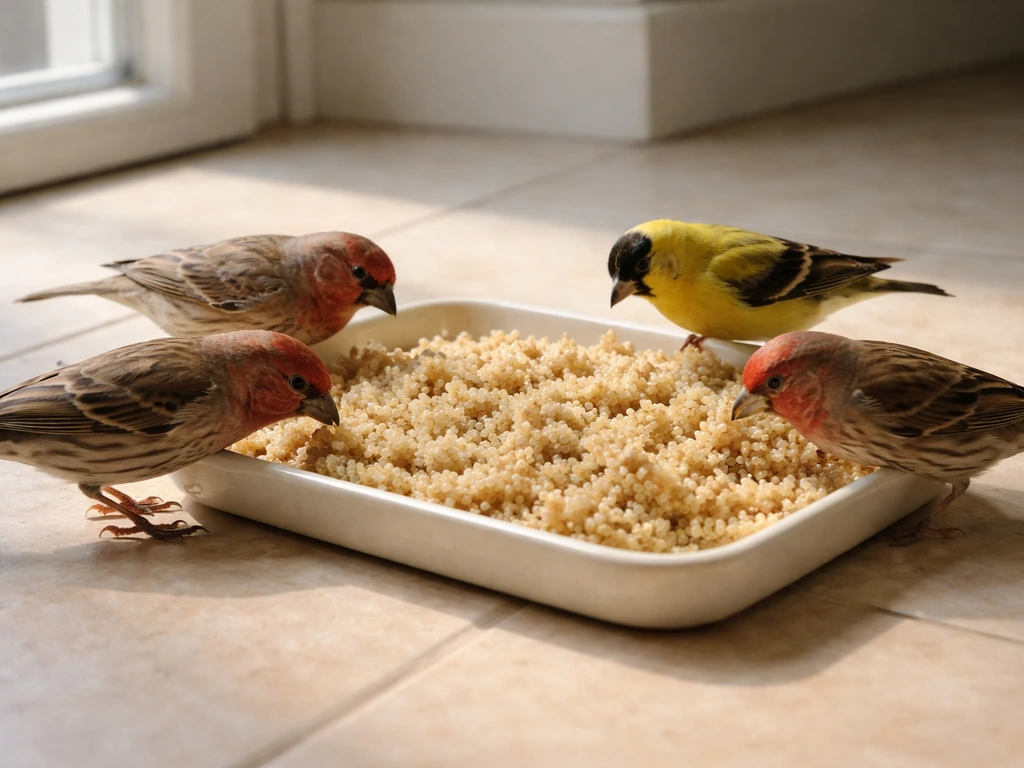
Cooked quinoa is soft enough that choking is rarely a concern for adult birds, but dry raw quinoa could be harder for smaller species to manage. If you are feeding very small birds like finches or sparrows, stick to cooked and cooled quinoa and keep portions small. Large clumps of cooked quinoa that have dried in the feeder can also become problematic, as birds may try to break them apart and inhale small bits. Stir and break up any dried clumps whenever you check the feeder.
Which birds are most likely to eat quinoa
Granivores, birds that naturally eat seeds and grains, are your best audience for quinoa. In a backyard setting, this typically means sparrows, finches, doves, juncos, and towhees. These species forage on the ground or at tray feeders and are accustomed to small grain-like foods. Pigeons and doves tend to be enthusiastic about any grain offering and will likely pick up on quinoa quickly.
Omnivorous species like starlings, grackles, and house sparrows will also investigate quinoa, especially cooked quinoa with a softer texture. Corvids like crows and jays are curious enough to try almost anything, and they can handle larger grain sizes easily. Insectivores like warblers or flycatchers are unlikely to show interest at all since quinoa does not match their natural food preferences.
For pet birds, parrots and parakeets (budgies) are the most commonly reported species to enjoy quinoa. Many parrot owners mix it with chopped vegetables as a chop dish. Cockatiels and lovebirds tend to accept cooked quinoa well when introduced gradually. If your bird ignores quinoa at first, try mixing a very small amount into a food it already likes and increasing the ratio slowly over a few days.
| Bird Type | Likely to Eat Quinoa? | Best Form | Notes |
|---|---|---|---|
| Finches and sparrows | Yes | Cooked, cooled | Prefer smaller soft grains; raw may be ignored |
| Doves and pigeons | Yes | Raw or cooked | Enthusiastic grain eaters; adapt quickly |
| Corvids (crows, jays) | Yes | Either | Will try most foods; no special prep needed |
| Parrots and parakeets | Yes | Cooked, cooled | Mix into chop or serve alongside vegetables |
| Starlings and grackles | Likely | Cooked | May dominate feeder; monitor portions |
| Warblers and flycatchers | Unlikely | N/A | Insectivores; not interested in grains |
| Quail | Yes | Raw or cooked | Ground foragers; comfortable with small grains |
Keeping your feeder setup safe and pest-free
Cooked quinoa left in an open tray is one of the faster ways to attract unwanted visitors. Rats and mice are drawn to soft, moist grains, and raccoons will clean out a tray feeder overnight if given the chance. The two-hour rule for cooked food outdoors is your main defense: put out only as much as birds will eat in that window, then remove the rest. If you keep seeing pests at your feeder, switch to offering only raw rinsed quinoa in smaller amounts and see whether that reduces interest from non-bird visitors.
Platform and tray feeders should be cleaned weekly at minimum, and more often if you are offering wet foods like cooked quinoa. A diluted white vinegar rinse followed by air drying works well. Avoid bleach near active feeders unless you rinse extremely thoroughly, since residue can harm birds. Also keep the ground beneath your feeder raked clean, since spilled cooked quinoa on the ground will mold and attract pests faster than anything in the feeder itself.
If you are already feeding a standard seed mix alongside quinoa, chia seeds are another grain-adjacent option worth comparing since they share some of the same nutritional strengths and prep considerations. Bird seed is different from grain like quinoa, and the safety depends on what type of seed it is and whether it has additives seed mix. If you are also wondering about other feeder foods, you may be asking whether can roosters eat bird seed is safe for them, and the answer depends on the type of seed and how it is stored chia seeds are another grain-adjacent option worth comparing. Birds may also eat other small seeds, but whether they eat grass seed depends on the species and whether the seed is plain and fresh. Yes, butchia seeds should be plain and fresh, and you should introduce them in small amounts because preparation and portion size matter for birds. Goat-safe feeding tips for the rest of your yard matter too, so it helps to know whether can goats eat bird seed and which types to avoid. The core rule across all of these is the same: plain, uncontaminated, appropriate portion size, and fresh. Stick to that and quinoa is a genuinely useful addition to your backyard feeding routine. If you are also wondering about other seed foods, can quail eat bird seed is a common question and depends on the ingredients and portion size.
FAQ
How much quinoa can I give birds without upsetting their regular diet?
If you are using cooked quinoa as a supplement, offer it in small “starter” portions, then adjust based on how many birds visit and whether droppings look normal. A practical rule is to keep quinoa to a minor share of the overall feeder offering, since birds need seeds, insects, or a balanced bird diet depending on species.
What’s the safest way to store and reuse cooked quinoa for backyard birds?
For outdoor feeding, cool quinoa should be handled like other perishable wet foods. Keep it out of the danger zone, use a smaller tray amount, and discard leftovers after the two-hour window above 70°F (or sooner on hotter days), even if it looks fine.
Can birds eat raw quinoa, and when is cooked quinoa actually required?
Yes, rinsed raw quinoa can be offered, but it is less likely to get eaten quickly because it is harder and more bitter unless you rinse well. For small birds, cooked quinoa is usually safer and easier to manage, while raw is better reserved for larger granivores that already eat harder seeds.
What ingredients make quinoa unsafe for birds, even if it’s “mostly plain”?
Avoid quinoa with any human-seasoning ingredients, including salt, garlic, onion, oil, butter, and anything “savory” or spiced. Even small amounts of salt can stress birds, and garlic or onion are genuinely dangerous, so only use plain quinoa made specifically without additions.
Can I put cooked quinoa in a tube feeder or hopper feeder?
Tube feeders are a poor choice for cooked or wet quinoa because moisture can cause clogging and spoilage. If you must use a feeder, use a shallow platform or tray that allows easy cleanup, and check more frequently if you notice clumps or wet residue.
I have a pet parrot or parakeet, can I mix quinoa into their daily chop or pellet rotation?
Yes, but quinoa should be introduced gradually and only with suitable mixing. Start with a tiny amount mixed into a favorite accepted food, keep the portions small, and watch for refusal, sudden digestive issues, or changes in droppings.
Why do my insect-eating birds ignore quinoa?
If your backyard birds are mainly insect-eaters, you may never get much interest, even if quinoa is safe. In those areas, focus on natural or appropriate insect and nectar foods for that species, since quinoa’s benefits are most relevant for granivores.
What should I do if quinoa keeps attracting rats or raccoons?
If quinoa seems to be attracting pests, reduce the amount you put out and shorten the time it stays available. Switch to smaller offerings, consider offering raw rinsed quinoa instead of cooked, and clean spilled bits from the ground, since spilled wet grains mold and pull more animals.
Can I use store-bought cooked quinoa from the package?
Yes, but keep it plain and separate from any cooking liquids or sauces. If you buy pre-cooked or microwavable quinoa, check the ingredient list carefully, since many brands include salt, seasonings, or added oils that are not bird-safe.
How do I prevent quinoa from clumping and creating choking or inhalation risks?
To prevent clumping, add or stir quinoa before serving and break up any dried pieces you find during checks. Clumps can be inhaled as small bits, especially for smaller birds, so frequent feeder checks and cleanup matter.
Next Article
Can Horses Eat Bird Seed? Safety, Risks, and What to Do
Yes for accidental small bites, but risks from mold, dust, and contamination. Learn symptoms and what to do.