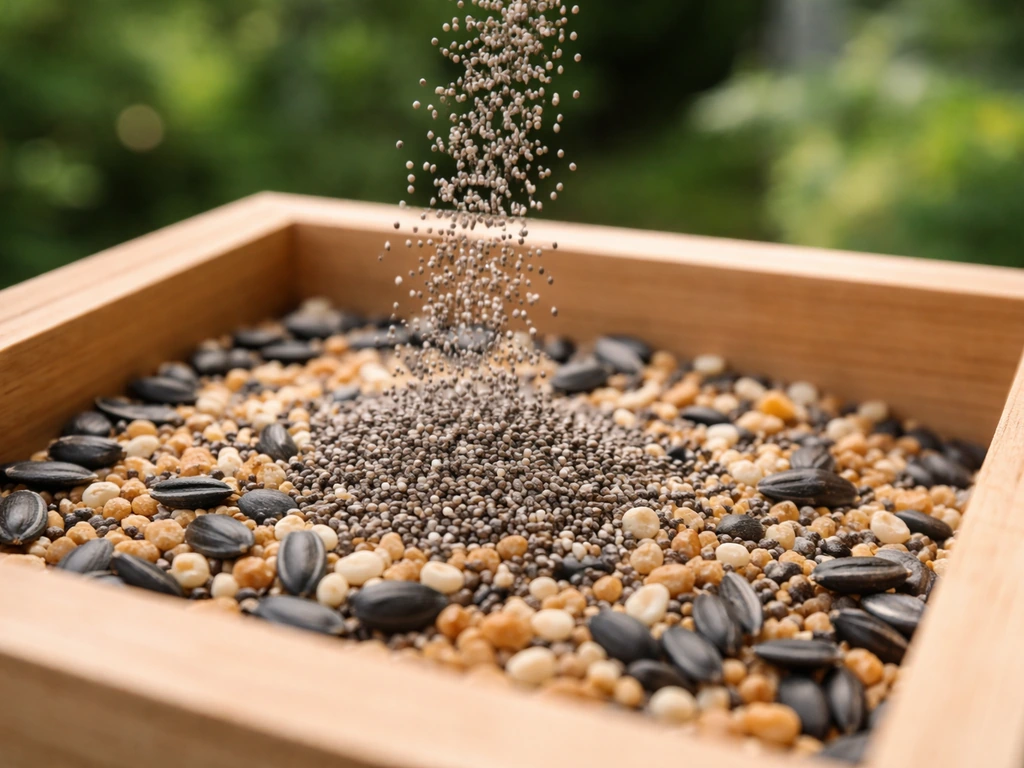
A small, accidental nibble of bird seed is unlikely to seriously harm a healthy adult horse. That's the short answer. But "unlikely to harm" is not the same as "completely safe," and the details matter a lot: how much seed, what type, and most importantly, what condition that seed is in. The bigger concerns are not the sunflower seeds or millet themselves. They're mold, mycotoxins, contamination, and the fact that bird seed is formulated for small birds, not horses.
Can Horses Eat Bird Seed? Safety, Risks, and What to Do

Maya Henderson
20 Apr 2026
Is bird seed safe for horses? The direct answer
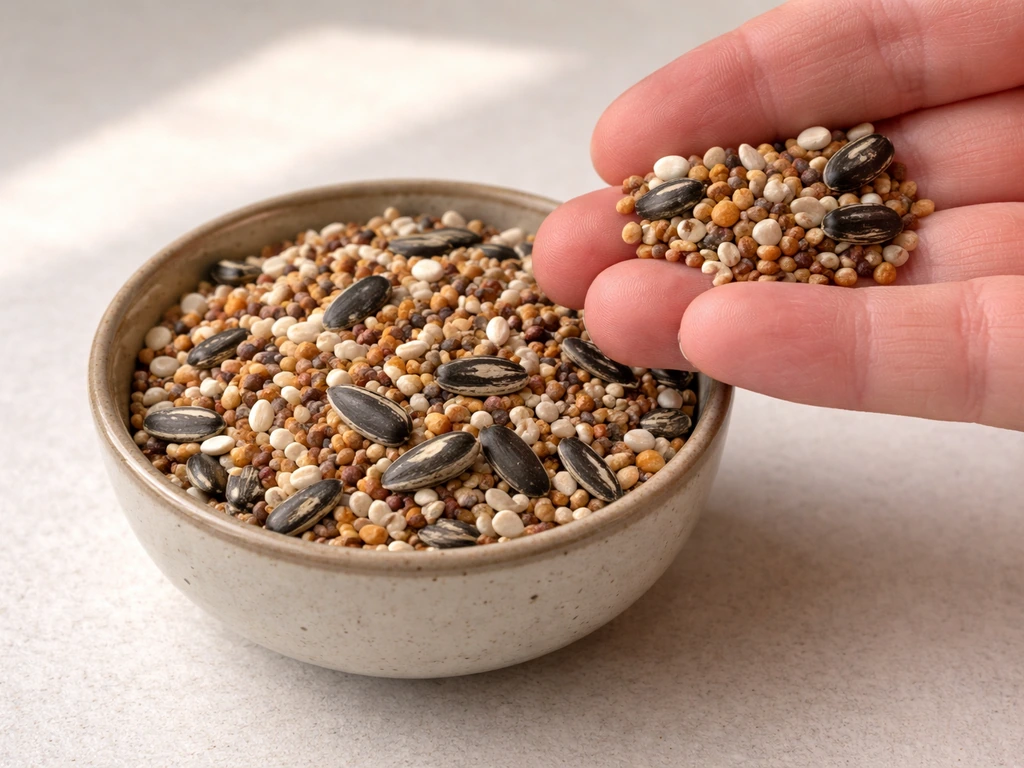
Plain, fresh, dry bird seed in a very small quantity is generally not acutely toxic to horses. The common ingredients in most wild bird seed mixes, things like sunflower seeds, millet, safflower seeds, and cracked corn, are not inherently poisonous to horses. If your horse got into a spill of clean, recently opened seed, you're probably not looking at an emergency.
That said, intentionally feeding bird seed to horses is not recommended, even occasionally. If you are thinking about whether do bird eat grass seed, focus on what birds naturally consume and keep your horse away from the same feed sources bird seed. It's not formulated for equine nutritional needs, the ingredient ratios are wrong for a horse's digestive system, and the risks that come with how bird seed is stored and handled make it a poor choice as a regular feed item or treat. The honest guidance is: if it happened once and the seed was fresh, monitor your horse. If it's been happening regularly, stop it now and talk to your vet.
The real risks: mold, contamination, and dust
The seed itself isn't the main problem. What happens to seed before a horse eats it is. Mold is the number one concern. Bird seed stored in a garage, shed, or outdoor feeder is routinely exposed to moisture, temperature swings, and humidity, all conditions that encourage mold growth. Molds like Aspergillus produce mycotoxins, including aflatoxins and fumonisins, that are genuinely dangerous to horses even in relatively small amounts.
Fumonisins are especially serious for horses. They're produced by mold that commonly grows on corn, which is a standard ingredient in many bird seed blends. Fumonisin exposure can cause equine leukoencephalomalacia (ELEM), a brain disease that can progress to weakness, recumbency, and death within 24 hours of the first visible symptoms. That's not meant to alarm you if your horse ate a handful of seed once, but it is a very real reason to take moldy seed seriously.
Trichothecenes are another group of mycotoxins found in moldy grain that can cause feed refusal, loss of appetite, diarrhea, neurologic signs, and skin irritation in horses. The good news is that recovery is often possible once the contaminated feed is removed. The critical step is recognizing the problem early and stopping exposure immediately.
Beyond mold, bird seed sitting in an outdoor feeder can collect rodent droppings, insect waste, and moisture that allows bacterial growth. Pesticide residue on seeds is another possible concern, particularly if the seed was stored improperly or sourced from low-quality suppliers. Dusty seed or fine particles from broken seeds can also irritate a horse's respiratory tract, which is worth keeping in mind if your horse is regularly near a feeder.
Context changes the risk: pasture vs. backyard feeders
Where the bird seed comes from and how the horse accesses it makes a significant difference. Here are the main scenarios and how to think about each one.
Horses in a pasture near a ground-level feeder
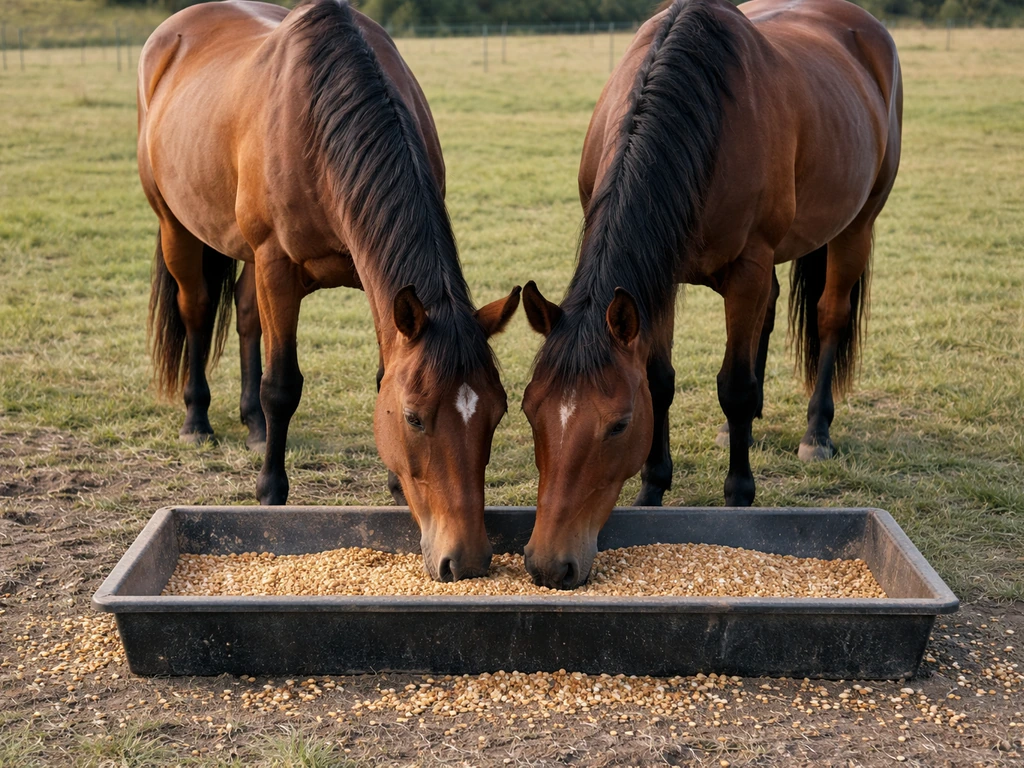
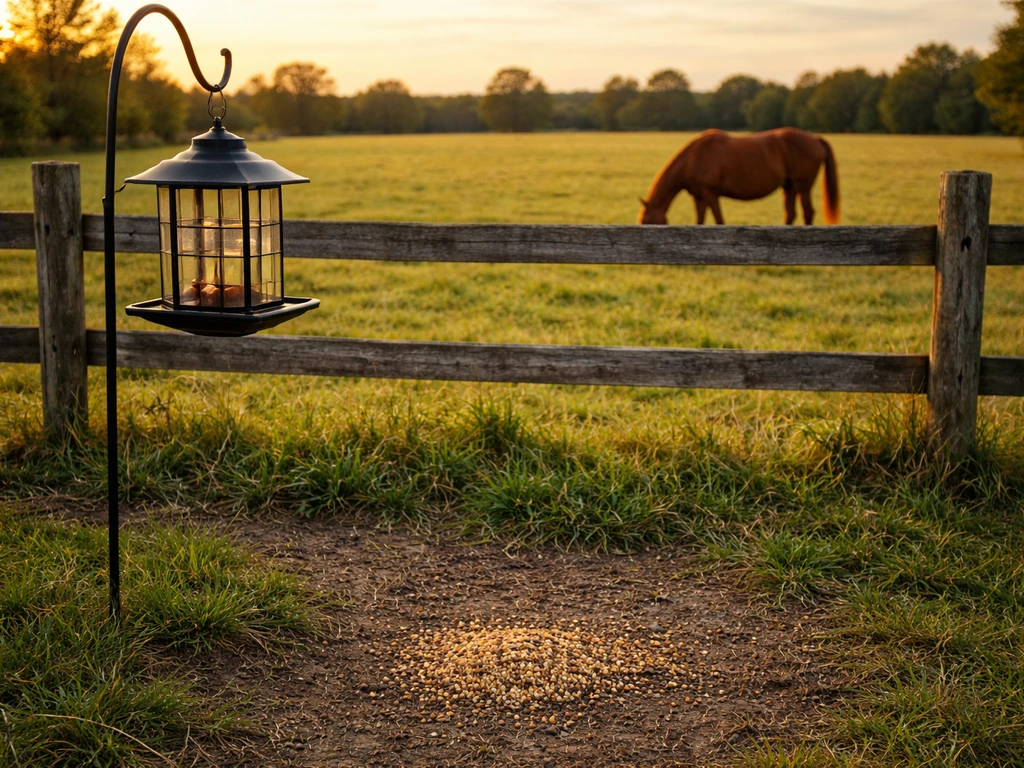
This is the highest-risk scenario. A low-mounted or ground feeder near a paddock or pasture means a horse can easily access a sustained supply of seed, not a one-time nibble. Outdoor feeders are also where seed is most likely to get wet, sprout, and mold. If you have horses in or near a space where birds are fed at ground level, that feeder needs to be moved out of their reach.
Spilled seed from an elevated feeder
Seed that falls to the ground from an elevated feeder is less likely to be eaten in large quantities by a horse, but it's still a risk if the horse is in that area regularly. Spillage that sits on wet ground quickly becomes a mold hazard. Cleaning up spilled seed and keeping horses out of the feeder area are both practical steps worth taking.
Indoor or covered storage
Seed stored in a tack room, barn aisle, or shared storage space is a contamination risk in two directions: horses can get into it directly, and rodents attracted to the seed can leave droppings in the same space where horse feed is stored. Keep bird seed in sealed containers, stored separately from horse feed, and in a location horses cannot access.
What's actually in the seed: ingredients, mixes, and the treat vs. staple problem
Most wild bird seed mixes contain sunflower seeds, millet, safflower, cracked corn, milo, and sometimes peanuts or dried fruit. None of these are outright toxic to horses in small amounts, but a few deserve attention.
- Cracked corn: This is the ingredient most at risk for fumonisin contamination. It also has a high sugar and starch load relative to what horses should eat, making it a poor ingredient for any horse prone to metabolic issues, laminitis, or insulin dysregulation.
- Peanuts or peanut components: Peanuts are a known aflatoxin risk when stored in warm, humid conditions. Aflatoxicosis can cause liver damage, and pregnant, young, or lactating horses are especially vulnerable.
- Sunflower seeds: High in fat, not harmful in a small quantity, but not nutritionally appropriate as a regular horse treat either.
- Dried fruit or added sugars: Some premium or specialty bird seed mixes include dried berries, fruit, or sweetened elements. These add unnecessary sugar and are not suitable for horses.
- Mold inhibitors or chemical preservatives: Some commercially stored seed may contain additives that are not tested for equine safety.
The "one-off nibble" scenario is genuinely different from regular access. Quinoa is sometimes included in bird seed, so it can also raise the same mold and storage concerns if it gets exposed to moisture. A horse that ate a small amount of clean, dry seed once is unlikely to show any reaction.
A horse that has been quietly snacking from a feeder for weeks is a different story, because mycotoxin effects can accumulate over time and animals may not show obvious signs early in the process. A Reddit thread about moldy hay warns that removing visible mold may not remove mycotoxins, and highlights serious health risks for horses from moldy feed mycotoxin effects can accumulate over time.
That's the sneaky part of mycotoxicosis: you might not see a problem until the exposure has been going on for a while.
How to compare common bird seed ingredients for horses
| Ingredient | Common in Mixes? | Risk to Horses | Notes |
|---|---|---|---|
| Cracked corn | Yes | Moderate to high (if moldy) | Fumonisin risk; high starch load |
| Sunflower seeds | Yes | Low (in small amounts) | High fat; not a suitable staple |
| Millet | Yes | Low | Nutritionally poor for horses |
| Safflower seeds | Yes | Low | Generally well tolerated in tiny amounts |
| Peanuts | Some mixes | Moderate (if moldy or stored poorly) | Aflatoxin risk when humid |
| Milo/sorghum | Yes | Low to moderate | Digestibility concern at volume |
| Dried fruit/added sugar | Some mixes | Low to moderate | Not appropriate for metabolic horses |
Symptoms to watch for and what to do right now
If your horse just got into bird seed and it appeared fresh, dry, and mold-free, monitor closely for the next 24 to 48 hours. Mycotoxin effects don't always appear immediately, so monitoring beyond the first few hours is important. Here's what to watch for:
- Loss of appetite or feed refusal
- Lethargy or unusual sluggishness
- Signs of colic: pawing, flank-watching, rolling, reluctance to move
- Loose stool or diarrhea
- Neurologic signs: stumbling, incoordination, wobbly gait, head pressing
- Difficulty breathing or any respiratory changes
- Swollen or inflamed areas around the mouth or muzzle (possible skin/mucous membrane irritation)
- Jaundice (yellowing of the eyes or gums, which could indicate liver stress)
If you see any neurologic signs, breathing difficulty, or rapid deterioration, call your veterinarian immediately. These can signal fumonisin or other mycotoxin exposure and can progress very quickly. The ASPCA Animal Poison Control Center is also available 24 hours a day, 7 days a week, and can help you assess the risk based on what your horse ate and how much. You can reach the ASPCA Animal Poison Control Center at (888) 426-4435. Don't try to guess at home whether the amount was "enough" to cause harm. Call for guidance.
When you call your vet or poison control, be ready to share: approximately how much seed was eaten, what type or brand of seed it was, whether the seed looked or smelled moldy, how long the seed had been stored and under what conditions, and whether any other horses were exposed. If multiple horses were exposed and any one of them shows symptoms, the MSU Extension guidance is clear: remove the seed from all exposed horses immediately and don't wait to see if others show signs.
If the seed was visibly moldy, wet, or smelled off, do not wait for symptoms. Contact your vet now. Removing the source of mycotoxins, such as contaminated moldy feed, stops further exposure, and specific antidotes for mycotoxins are not available do not wait for symptoms. Fumonisin-related ELEM can move from first symptoms to death in under 24 hours, so early intervention is far better than a wait-and-see approach.
Better solutions: protecting your horse while still feeding backyard birds
You don't have to choose between backyard bird feeding and horse safety. A few practical adjustments make both possible.
Feeder placement and cleanup
Mount feeders high enough and far enough from any horse-accessible area that spillage can't reach them. A general rule is to position feeders outside the fence line entirely, or in a dedicated garden area horses can't enter. Clean up spilled seed regularly, especially after rain, since wet seed on the ground is a fast mold generator. Tube or cage feeders that minimize spillage are better choices near equine areas than platform feeders.
Storage practices
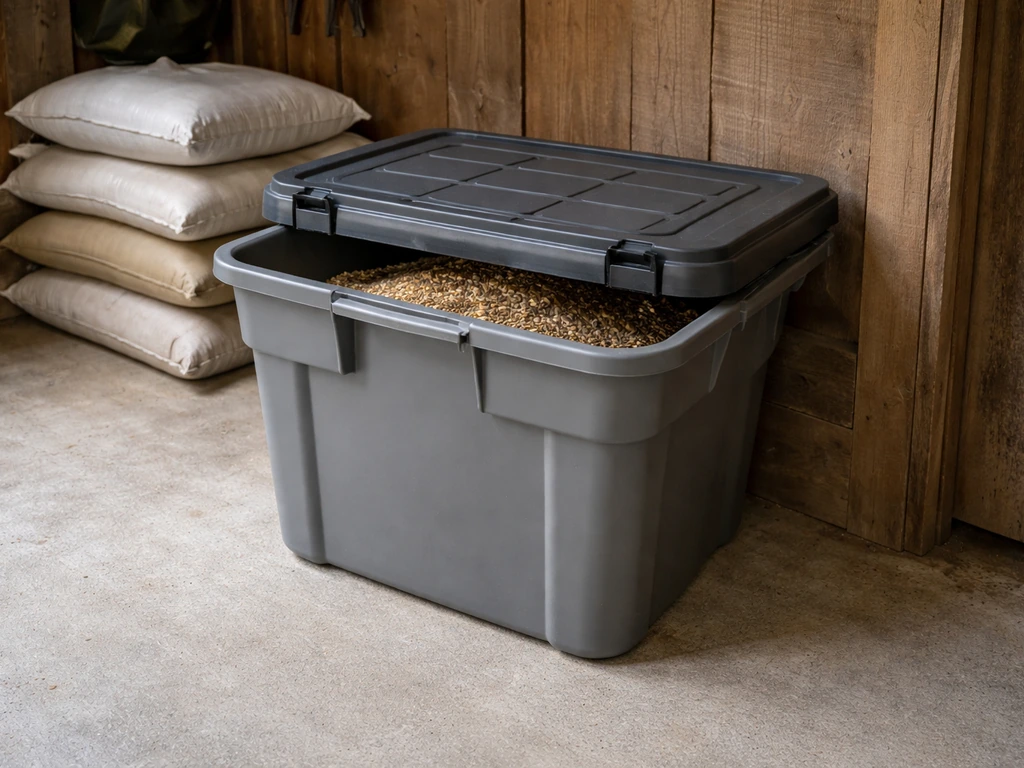
Store bird seed in airtight containers, in a dedicated location completely separate from horse feed and tack. Metal or heavy-duty plastic bins with locking lids keep rodents out, which matters because rodent droppings near horse feed are a contamination risk in their own right. Buy seed in quantities you'll use within two to four weeks, so it doesn't sit long enough to accumulate moisture or mold.
Rodent control
Bird seed attracts rodents, and rodents near a barn or tack room create a contamination risk for horse feed. Good rodent control around feed storage, including regular inspection, sealed containers, and removing attractants, reduces that risk significantly.
What to give horses instead
If you're looking for a treat or supplemental snack for your horse, stick to options that are actually formulated or proven safe for equines: plain carrots, apples (without seeds), plain hay cubes, or commercial horse treats. These are appropriate in their nutritional profile, have no mycotoxin risk from improper storage, and won't cause the digestive or metabolic concerns that come with feeding grain-based bird seed.
Moldy bird seed is the main reason to avoid it, so if you are wondering can quail eat bird seed, focus on freshness and proper storage grain-based bird seed. If you're wondering can sheep eat bird seed, the same mold, storage, and contamination concerns apply.
If you are wondering can bird eat chia seeds, the same storage and mold concerns apply, and you should avoid giving birds seed blends that have been sitting out or getting wet can quail eat bird seed. If you are wondering whether a bird can eat quinoa, the same freshness and mold-storing rules apply can bird eat quinoa.
The comparison to goats is worth noting here: like horses, goats may investigate bird seed but similarly benefit from proper species-appropriate feed rather than foraging on whatever is available. If you are wondering can goats eat bird seed, the same main concerns about mold, contamination, and storage apply.
The bottom line is simple. Fresh seed in a small amount, probably fine. Moldy, wet, or heavily contaminated seed, call your vet. And either way, take the practical steps to make sure it doesn't happen again, because the risk isn't always visible until it's a serious problem.
FAQ
My horse ate a few mouthfuls of bird seed that was dry and doesn’t look moldy. Should I withhold feed or water?
Don’t withhold water. For most horses, you can continue normal feeding and just monitor closely for 24 to 48 hours. The key decision is not “starve it,” it’s whether the seed showed any off smell, clumping, or moisture exposure. If you noticed any of that, contact your vet promptly instead of waiting for symptoms.
What symptoms would make me suspect mycotoxin poisoning rather than a simple stomach upset?
Mycotoxin-related issues often include more than GI signs alone. Watch for neurologic changes (tremors, weakness, trouble standing), breathing difficulty, rapid deterioration, unusual sleepiness, or skin irritation. If symptoms start progressing quickly, treat it as urgent and call your veterinarian immediately.
How fast do problems show up if the seed was contaminated?
Some effects can appear within hours, and fumonisin-associated ELEM can progress from early symptoms to severe outcomes in under 24 hours. That means monitoring only for the first hour or two is not enough, especially if the horse could have eaten seed for days or weeks.
Does feeding the horse “a charcoal or home remedy” help if I think it was contaminated?
In general, avoid giving unapproved adsorbents or trying home detox steps without veterinary guidance. Mycotoxins and contaminated grain can require specific supportive care and rapid removal from exposure. If you suspect mold, contact your vet first and bring the remaining seed for assessment if possible.
Should I throw away the remaining bird seed, or can I save it if it still seems fine?
If there’s any chance the seed got wet, sat outdoors for a while, or smells musty, discard it. Even if some kernels look normal, mold can be unevenly distributed in a batch. Store the rest only if it was kept completely dry and handled in a way you can trust.
Does the risk change based on the bird seed type, like sunflower-only versus mixed blends?
The risk is driven more by storage condition and contamination than by which seeds are present. That said, many mixes include corn or corn-derived components, which is relevant because fumonisins commonly relate to mold on corn. Regardless of the blend, wet or moldy seed is the red flag.
If multiple horses had access to spilled seed, do I treat them all the same way?
Yes. Remove all horses from the source immediately and assume everyone was exposed if they had access. If any horse shows symptoms, treat that as a signal to alert the vet for the entire group rather than waiting to see who gets sick.
What should I tell poison control or my vet when I call?
Bring specifics: approximate amount eaten (for example, “a handful” or “half a cup”), exact brand or ingredients if you know them, whether it looked clumped, wet, or moldy, when it was stored and where, and how long the horse had access. Also note any existing health issues, since sick or older horses may tolerate toxins less well.
Is it safe for horses to eat bird seed as enrichment or training once in a while?
It’s still not recommended as a routine treat. Even if occasional fresh nibbles seem harmless, the biggest problem is variable storage and handling, plus wrong nutritional ratios for horses. If you want training treats, use equine-appropriate options instead.
What’s the best way to prevent repeat exposure if I keep a bird feeder?
Place feeders outside the horse-accessible area, ideally beyond the fence line or in a dedicated space horses cannot enter. Use tube or cage feeders that reduce spillage, and clean up fallen seed after rain since wet ground becomes a fast mold source. Keep bird seed in sealed, locking containers stored separately from horse feed.
Can horses get sick just from being near bird seed, even if they never eat it?
Yes, indirectly. Dust from fine seed particles and mold spores can irritate airways, and rodents attracted to seed increase contamination risks in nearby feed storage areas. If you notice persistent respiratory irritation or evidence of wet/moldy seed or droppings in barn spaces, address the source and separate storage.
What if the seed was old and has been sitting for months, but the horse only ate a little?
Old seed is higher risk because mold and toxins can build up over time, especially if temperature swings or humidity occurred. A small amount may still be tolerated, but you should call your vet for guidance, particularly if the storage was outdoors, in a garage, or near any moisture.
Next Article
Can Birds Eat Chia Seeds Safely How to Offer It
Yes, birds can eat chia seeds safely. Learn how to offer small amounts, avoid wet or moldy chia, and watch for issues.