Goats can technically eat small amounts of bird seed without immediately dropping dead, but that does not make it safe or a good idea. Most commercial bird seed mixes are built for birds, not ruminants, and several of the common ingredients can cause real digestive problems in goats, especially if a goat gets into a big pile of it. The short answer: keep goats away from bird feeders and seed storage, and give them food that actually meets their nutritional needs.
Can Goats Eat Bird Seed? Safety Risks and Better Options

Maya Henderson
12 Apr 2026
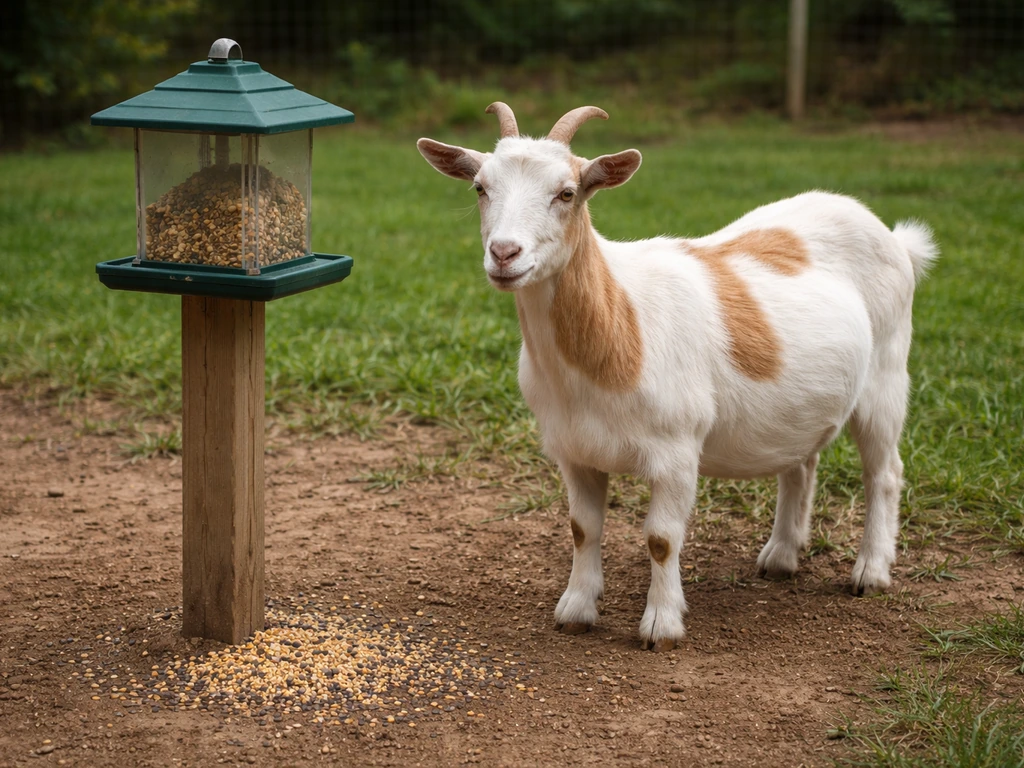
Can goats safely eat common bird seed mixes
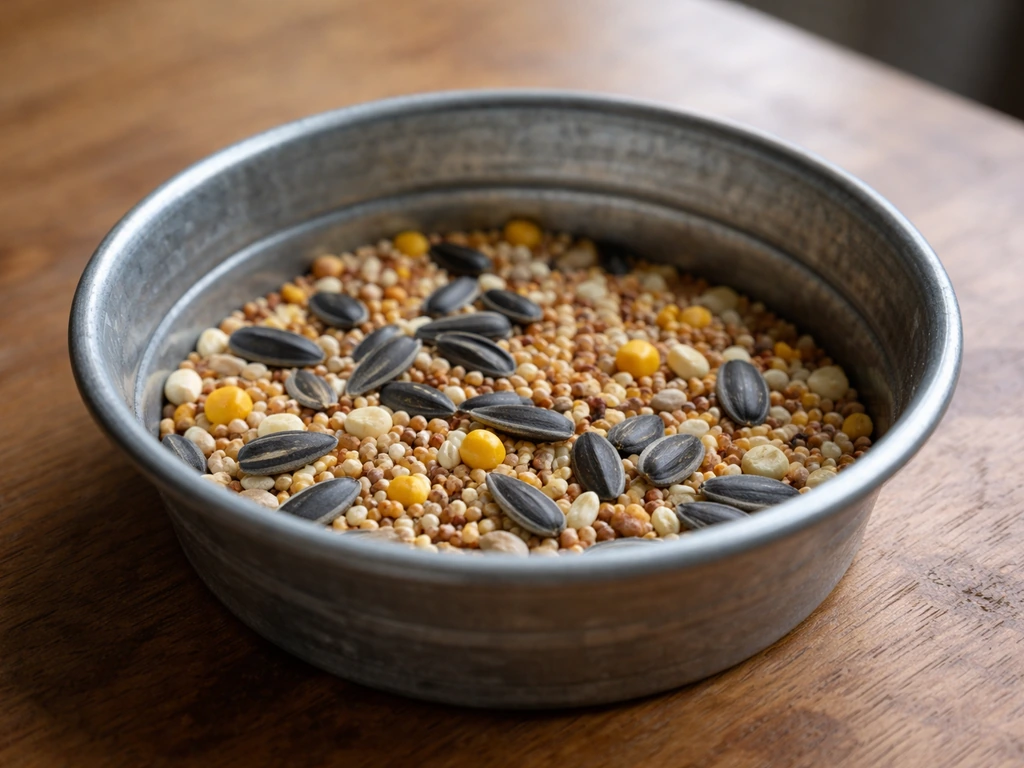
Most standard bird seed mixes contain sunflower seeds, millet, milo, safflower seeds, cracked corn, peanuts, and sometimes nyjer (thistle) seed. None of these are outright poisonous to goats in very small quantities, and a goat that sneaks a beak-full from a ground feeder once is unlikely to suffer serious harm. But that is a far cry from safe. Goats are curious and opportunistic eaters. If they find a feeder or a bag of seed, they will not sample politely. They will eat as much as they can, as fast as they can, and that is exactly where the danger starts.
Bird seed is calorie-dense and designed for small animals with fast metabolisms. Goats are ruminants with a fermentation-based digestive system that is calibrated for high-fiber forage, not concentrated grains and fats. Feeding bird seed regularly, or allowing unrestricted access, puts a goat's rumen under significant stress. So while the ingredients are not inherently toxic in tiny doses, the format, the quantity, and the context make bird seed genuinely risky for goats.
What's in bird seed that could be risky for goats
Let's go ingredient by ingredient through a typical mix, because the risk varies depending on what's in the bag.
- Cracked corn: Highly fermentable and one of the most common triggers for rumen acidosis in goats. It ferments rapidly in the rumen and can drop pH dangerously fast if eaten in large amounts.
- Sunflower seeds: High in fat and calories. Fine in small amounts, but large quantities can cause digestive upset and contribute to obesity and nutritional imbalance over time.
- Millet and milo: Grain-based fillers that add to the overall carbohydrate load. Not toxic, but still problematic in volume.
- Peanuts: High in fat and protein. Some mixes include salted peanuts, and salt in large doses is harmful to goats.
- Safflower seeds: Generally low risk in small amounts, but still a concentrated fat source.
- Nyjer (thistle) seed: Tiny and oily. Mostly a concern if consumed in large quantities alongside other seeds.
- Flavored or treated mixes: Some commercial blends include added sugars, artificial flavors, hot pepper coatings, or preservatives, none of which are appropriate for goats and some of which can cause gastrointestinal irritation.
- Moldy or stale seed: Possibly the highest-risk element of all. Bird seed spoils quickly, especially in damp conditions, and moldy seed can carry mycotoxins that are genuinely dangerous to livestock.
If you're curious about whether specific seeds like quinoa or chia are safe for birds in the first place, it's worth reading about whether birds can eat quinoa and how different seeds end up in feeders and on the ground where other animals can reach them.
Main risks: choking, digestive upset, toxicity, and contamination
Choking and physical hazards
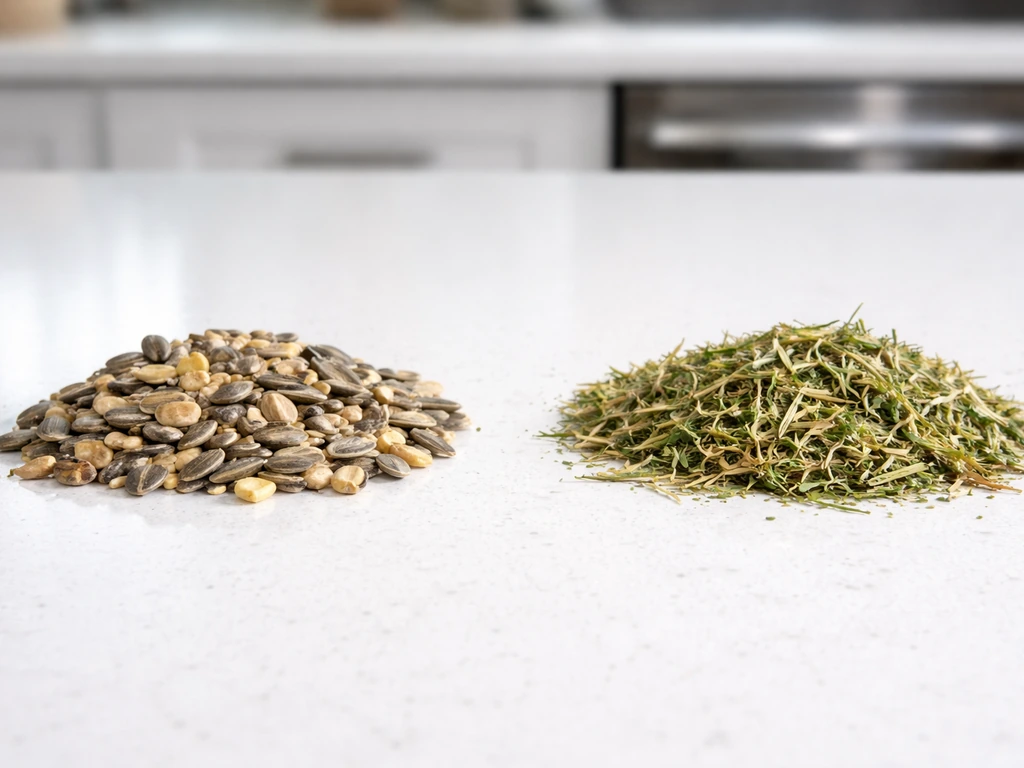
Whole sunflower seeds and larger seeds in a mix are not ideally sized for goats, and while goats chew differently than birds, rapid consumption of a dry, mixed pile of seeds can still cause choking or esophageal obstruction, especially in smaller or younger animals. This is less common than digestive issues, but worth noting if you have kids (young goats) near your feeders.
Rumen acidosis and grain overload
This is the big one. Grain overload, also called rumen acidosis, happens when a goat suddenly eats a large amount of rapidly fermentable carbohydrates like cracked corn that the rumen cannot handle. The cracked corn and grain components in bird seed ferment fast, producing lactic acid that quickly lowers the rumen pH. The rumen microbiome, which is adapted to slow-fermenting forage, can't cope.
The result ranges from uncomfortable digestive upset on the mild end to a life-threatening emergency on the severe end. According to research from Oklahoma State University's College of Veterinary Medicine, the severity depends on the type of grain, the amount consumed, and whether the goat was already eating a grain-heavy diet. A goat that lives on hay and suddenly eats a pound of bird seed is at higher risk than one that has slowly been introduced to some grain.
Bloat
Bloat (ruminal tympany) is a related and serious risk. As grain ferments rapidly in the rumen, gas builds up faster than the goat can expel it. Signs include a visibly distended left side of the abdomen, restlessness, abdominal discomfort, loss of appetite, and increased salivation. Bloat can become a genuine emergency in a short window of time.
Contamination: mold, pests, and rodent droppings
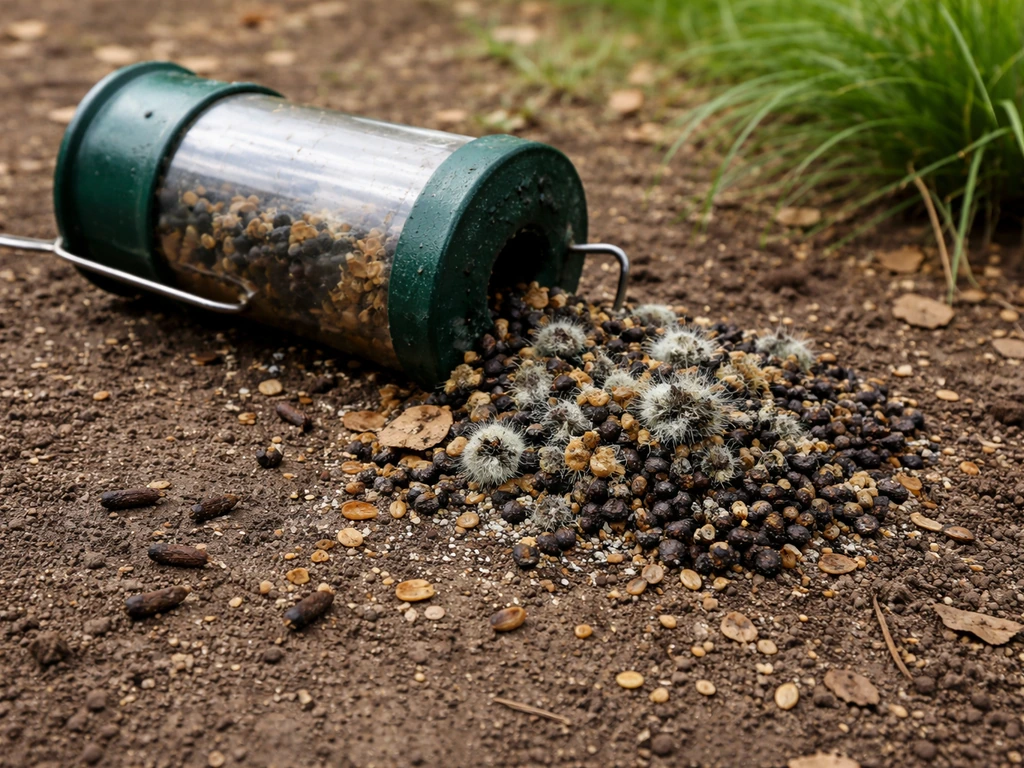
Bird seed that has been sitting in a feeder, spilled on the ground, or stored improperly can become moldy very quickly, especially in humid or rainy conditions. Moldy seed can carry mycotoxins that are toxic to livestock.
The Merck Veterinary Manual explains that mycotoxin risk is not just about visible fungi, because heat or processing can destroy fungi while the toxins persist, and moldy feed can be involved in major mycotoxicoses Moldy seed can carry mycotoxins that are toxic to livestock. .
Goats rooting around under feeders are also likely to ingest seed that has been contaminated by rodent droppings, insects, or other wildlife, which creates risks for bacterial infections and disease transmission. If your bird seed smells musty, looks clumped, or has visible mold, assume it is a hazard for any animal.
How much is "too much" and what to do if your goats already ate it
There is no clean universal threshold because it depends on the goat's size, age, and current diet, and on exactly what was in the seed mix. A mature 150-pound Boer doe that is already eating some grain supplementation will handle a small accidental snack much better than a 40-pound pygmy goat that lives on hay and suddenly eats a cup of cracked-corn-heavy mix. As a practical rule: if a goat got into a small spill (a tablespoon or two of seed, just nibbling at what fell from a feeder), watch and wait. If a goat got into a full bag, a large pile, or has been regularly sneaking into seed storage, treat it as a potential emergency.
If you suspect your goat has eaten a significant amount of bird seed, here is what to do right now:
- Remove access immediately. Get the goat away from the seed source.
- Do not feed any more grain or concentrates. Offer only hay and fresh water.
- Monitor closely for the next 4 to 6 hours. Watch for bloating, lethargy, diarrhea, lack of rumination, or unusual behavior.
- Check the left flank. A distended, drum-like left side is a sign of bloat and needs immediate attention.
- Call your vet. If you see any concerning symptoms, do not wait. Rumen acidosis and bloat can escalate quickly.
The Merck Veterinary Manual is clear that grain overload can range from mild indigestion to a rapidly fatal disease, and that urgent veterinary care is warranted when significant grain ingestion is suspected. Don't take a wait-and-see approach if a goat is showing symptoms.
Prevention: keep goats away from feeders and seed storage
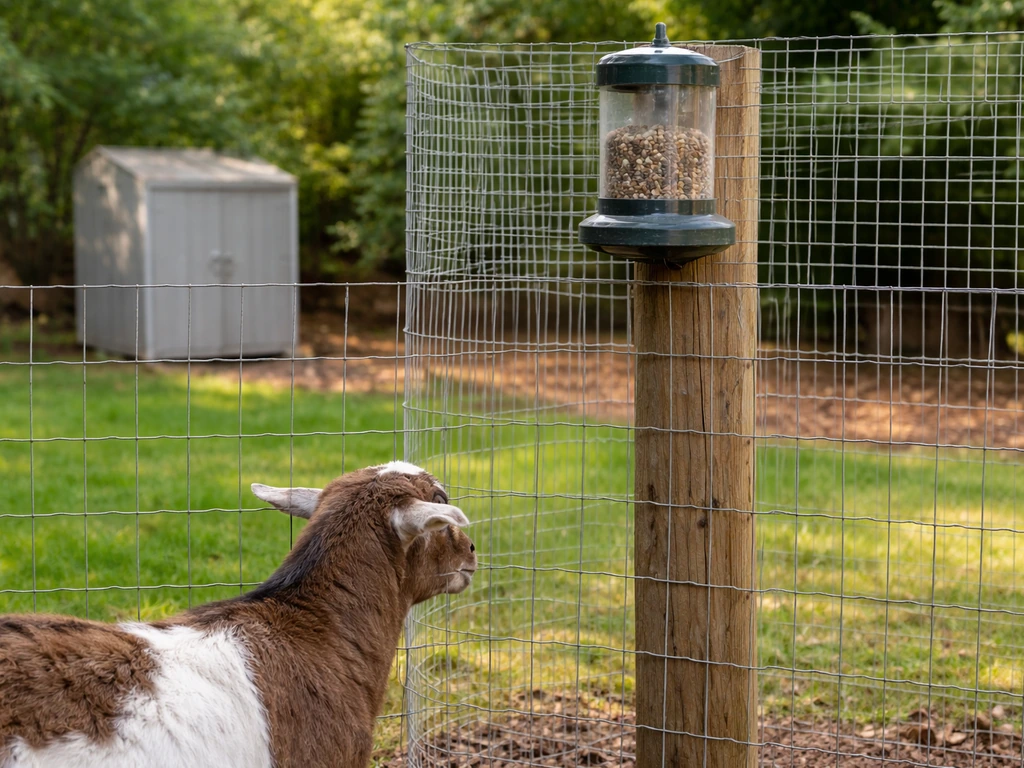
The most effective fix is separation. Goats and bird feeders should not share the same space without a physical barrier between them. Here are the most practical prevention steps:
- Hang feeders high enough that goats cannot reach them, at least 6 to 7 feet off the ground for larger breeds.
- Use pole-mounted feeders with baffles designed to stop climbing animals. Goats are resourceful and will figure out ramps or ledges.
- Fence off the bird feeding area. A dedicated bird garden with a gate is the cleanest solution if you keep backyard goats.
- Store all bird seed in sealed, rodent-proof containers inside a locked shed or room the goats cannot access.
- Clean up spilled seed daily. Ground-level seed is the most accessible risk. This also reduces the attraction for rodents, which can carry disease.
- If you use platform or ground feeders, relocate them outside the goat enclosure entirely.
Bird seed is attractive to a wide range of animals, not just birds. Understanding how different animals interact with feeders is part of responsible backyard feeding. Just like you might consider whether horses can eat bird seed safely if they share pasture space near a feeder, the same logic applies to goats in a mixed-animal yard.
Goat-safe alternatives to offer instead
If you caught a goat raiding the bird feeder and you're wondering what to actually give them, or if you were using bird seed as a convenience treat (which happens more than people admit), here are better options that match a goat's real nutritional needs.
| Food | Why It's Better | Notes |
|---|---|---|
| Quality grass hay (timothy, orchard grass) | High fiber, supports healthy rumen function | Should make up the bulk of a goat's diet |
| Goat-formulated pelleted feed | Balanced nutrients, appropriate carbohydrate levels | Follow weight-based feeding guidelines on the label |
| Fresh browse (willow, blackberry, rose) | Mimics natural foraging behavior, fiber-rich | Ensure plants are free of pesticides |
| Small amounts of oats | Lower fermentation risk than corn or wheat | Introduce slowly, use as a treat not a staple |
| Carrots or apple pieces | Palatable, safe in moderation | High sugar, limit to small treat quantities |
| Loose goat minerals | Corrects mineral deficiencies without calorie overload | Use species-specific mineral mix, not sheep minerals |
Goats are browsers by nature, not grain eaters, and their digestive systems work best with high-fiber forage as the foundation. Concentrated seeds and grains should make up a small percentage of the diet if they're included at all, and only in forms specifically designed for goats. Manitoba Agriculture emphasizes that goats have mineral needs that differ from other livestock, so use mineral products formulated specifically for goats only in forms specifically designed for goats. Bird seed, regardless of the ingredients, is not that.
It's interesting to compare how other backyard animals handle bird seed. For instance, sheep eating bird seed carries many of the same rumen-related risks as goats, since both are ruminants with similar digestive systems. And even birds themselves don't all handle every seed equally well, which is why questions like whether quail can eat bird seed or whether roosters can eat bird seed come up regularly for people managing mixed backyard flocks and animals.
When to call the vet and red-flag symptoms to watch for
Some situations call for professional help immediately. Do not wait to see if a goat improves on its own if any of the following are present:
- Visibly bloated or distended abdomen, especially on the left side
- Signs of pain: grinding teeth, kicking at the belly, hunching up
- Complete loss of appetite or refusal to move
- No rumination (you cannot hear or see the rumen working) for more than a few hours
- Diarrhea that is watery, profuse, or contains blood
- Lethargy, depression, or the goat is unresponsive to normal stimuli
- Staggering, incoordination, or collapse
- Known ingestion of moldy or visibly contaminated seed
According to the Merck Veterinary Manual, clinical signs of rumen acidosis in ruminants include bloat, lack of appetite, absence of rumination, dehydration, diarrhea, depressed mentation, incoordination, and in severe cases, collapse and death. These signs can progress quickly, sometimes within hours of a large grain ingestion. Call your vet or an emergency large animal clinic as soon as you notice any of them. Treatment can involve stomach tubing to relieve gas and pressure, and in serious cases, intravenous fluids or other interventions that have to be done by a professional.
One more thing worth knowing: bird seed on the ground doesn't just attract goats. It attracts rodents, wild birds, and other wildlife that can bring disease onto your property. Keeping seed stored properly and feeders positioned thoughtfully is good practice for the health of every animal in your yard, including the birds you're actually trying to feed.
For example, understanding whether birds eat grass seed helps explain why birds forage at ground level and why fallen seed accumulates so quickly in shared animal spaces. Similarly, niche seeds like chia seeds for birds or quinoa as bird seed are increasingly found in specialty mixes, which means the ingredient list on that bag near your feeder may be more varied than you expect.
Knowing what's in your seed is the first step to knowing what risks it poses to any animal that gets into it.
FAQ
If my goat only ate a few seeds from the ground, should I still call the vet?
Usually you can monitor at home after a true one-time nibble, but you should call your vet if you do not see normal rumination and appetite within a few hours, or if any bloat signs show up (left side swelling, straining, restlessness). When in doubt, send the vet a photo of the seed mix and estimate of how much was eaten, because the ingredient mix and quantity matter.
What symptoms would suggest bird seed caused rumen acidosis versus bloat?
Rumen acidosis often comes with reduced appetite, less chewing, diarrhea, and dehydration, while bloat is more about gas accumulation with a noticeably distended left abdomen, discomfort, and rapid decline. Either situation is urgent, but bloat can escalate quickly, so if you see abdominal swelling call for emergency guidance right away.
Does it matter whether the goat is a baby (kid) or adult?
Yes. Younger goats are more likely to overeat quickly and have smaller rumens, so grain-heavy foods can hit harder. Even if adults tolerate small mistakes, assume kids are at higher risk and treat any access to a pile or bag as potentially serious.
Are sunflower seeds, millet, or cracked corn the main problem?
The main issue is not that any single ingredient is always lethal, it is the overall “bird seed as a concentrate” effect. Cracked corn and other quickly fermenting grains drive the biggest rumen pH drop risk, and the calorie density encourages overeating. A mix heavy in corn or milo is especially concerning.
What should I do if I catch a goat actively eating bird seed?
Separate them immediately using a barrier (not by letting them finish the “bite”). Move any remaining seed out of reach, then observe closely for appetite, chewing (rumination), stool output, and abdominal shape over the next several hours. Avoid making sudden diet changes on top of the incident.
Can I treat the situation at home with home remedies like baking soda or activated charcoal?
Do not self-treat with rumen “buffers” or adsorbents unless your vet tells you exactly what to use and how much. Incorrect dosing can worsen problems or mask deterioration. The safest home action is separation, remove the access, and contact your vet promptly if any red flags appear.
How long after eating bird seed would symptoms show up?
For grain overload and bloat, problems can begin within hours after a large intake. This is why a “watch overnight” plan is risky if the goat got into a big pile or bag, or if the goat already seemed reluctant to eat afterward.
Is moldy bird seed also dangerous if it is just a little clumped?
Yes. Even small amounts can carry mycotoxins, and goats may keep sampling. If the seed smells musty, looks clumped, or has visible growth, remove it immediately and keep goats away from it, then tell your vet what you found.
Can goats eat seed in a bird feeder if I use a goat-proof feeder design?
A goat-proof barrier helps, but “spill risk” still matters. Goats can reach down, knock feeders, or eat fallen seed under the setup. Aim for a design that prevents both access to the feeder and access to ground-level accumulation, and clean up fallen seed regularly.
What are safer alternatives if I want to give my goat something similar to bird seed as a treat?
Better options are goat-appropriate treats like small portions of formulated goat snacks or specific grain supplements designed for goats, or browse-based treats like clean leafy weeds in moderation. If you want a seed-like treat, use products labeled for goat consumption rather than mixed wild bird blends.
How should I store bird seed so goats cannot get into it?
Use a sealed, lidded container stored up high or in a locked area that goats cannot access, and keep it away from corners where a goat can jump. Also keep feeders positioned so that dropped seed does not accumulate at goat muzzle height, and sweep up spills right after refilling.
If my goat shares a yard with sheep or other ruminants, does bird seed pose the same risk?
Yes, ruminants share similar fermentation-based digestive vulnerabilities, so sheep, goats, and sometimes cattle can all face rumen upset from concentrated seed ingestion. If one species gets into the feeder, treat it as a multi-animal risk and check other animals for symptoms after the incident.
Next Articles
Is Quinoa Bird Seed Safe for Backyard Birds?
Learn if quinoa is safe as bird seed, risks like salt and spoilage, and how to feed or stop today.
Do Seagulls Eat Bird Seed? How to Stop Them
Yes, seagulls often eat bird seed. Learn why they show up and how to block them while keeping feeding safe.
Do Pigeons Eat Bird Seed? Safe Feeding Tips and Risks
Yes, pigeons eat many seeds, but mold and mess make it risky. Learn safe bird seed storage, feeding, and placement.