Yes, chickens do play with bird toys, but not in the way a parrot or dog would. They peck, investigate, scratch, and manipulate objects out of curiosity and foraging instinct, and that counts as play. Research confirms three types of chicken play: locomotor (running, jumping), social (chasing, sparring), and object play (pecking at, carrying, or investigating items). The right toy taps into those instincts, and introducing enrichment properly keeps your flock engaged, reduces boredom-driven aggression, and supports better welfare overall.
Do Chickens Play With Bird Toys? Safe Enrichment Guide

Maya Henderson
3 May 2026
Do chickens actually play, or are they just pecking and foraging?
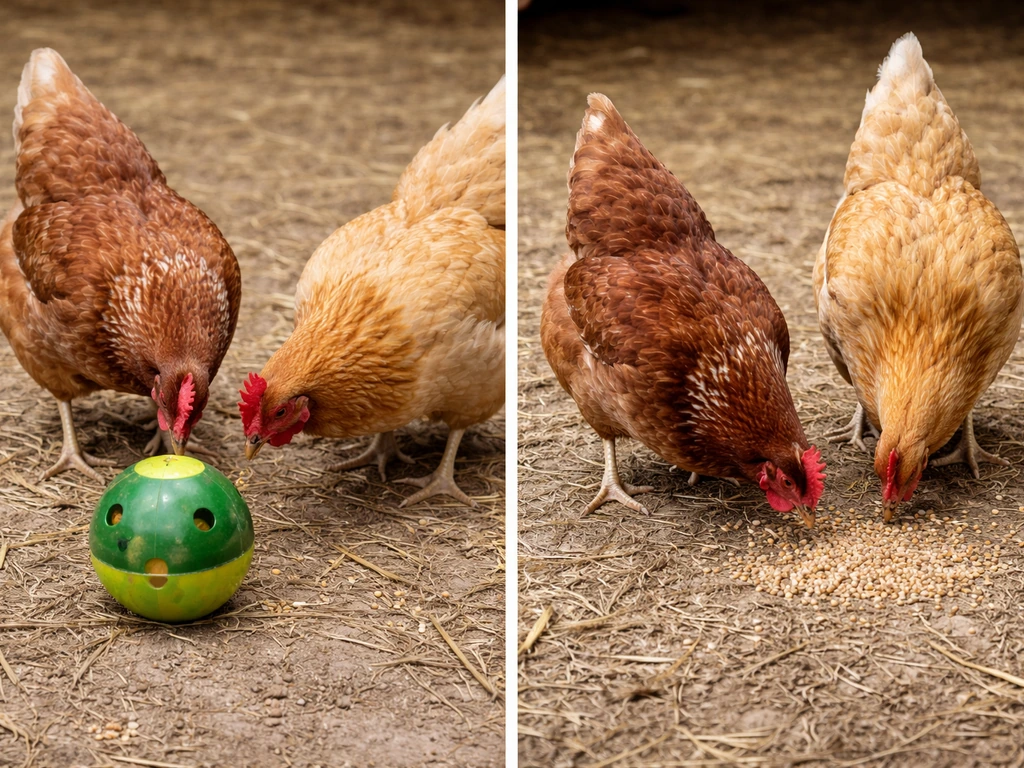
This is a fair question. Chickens are not playing fetch. But peer-reviewed studies on chicken play behavior classify object play as a genuine category, distinct from pure foraging, based on how chicks and adults engage with novel objects. Young chickens will peck, carry, toss, and investigate items even when food is not involved. Domesticated White Leghorns actually show more object play than their ancestral Red Junglefowl relatives, which suggests domestication has amplified this tendency rather than reduced it. Male chickens tend to play more overall than females, but hens absolutely engage too, especially with food-based enrichment and novel objects.
The distinction matters for you practically: chickens are motivated by curiosity, pecking instinct, foraging drive, and social dynamics around the flock. A toy that lets them do at least one of those things will get used. One that does none of those things will sit ignored. They also show fear responses to novelty, meaning a brand-new object dropped into the coop can cause the whole flock to avoid an area for hours before anyone works up the courage to investigate. That is completely normal.
What counts as a bird toy chickens will actually use
The term 'bird toy' covers a wide range, and most toys designed for parrots are not what your backyard flock needs. Chickens are ground-foragers first. Bird fat balls can be risky because they are made for different species and may contain ingredients that are unsafe for chickens. The enrichment items that get the most engagement are ones that involve pecking, scratching, or getting a food reward. Here are the categories that actually work:
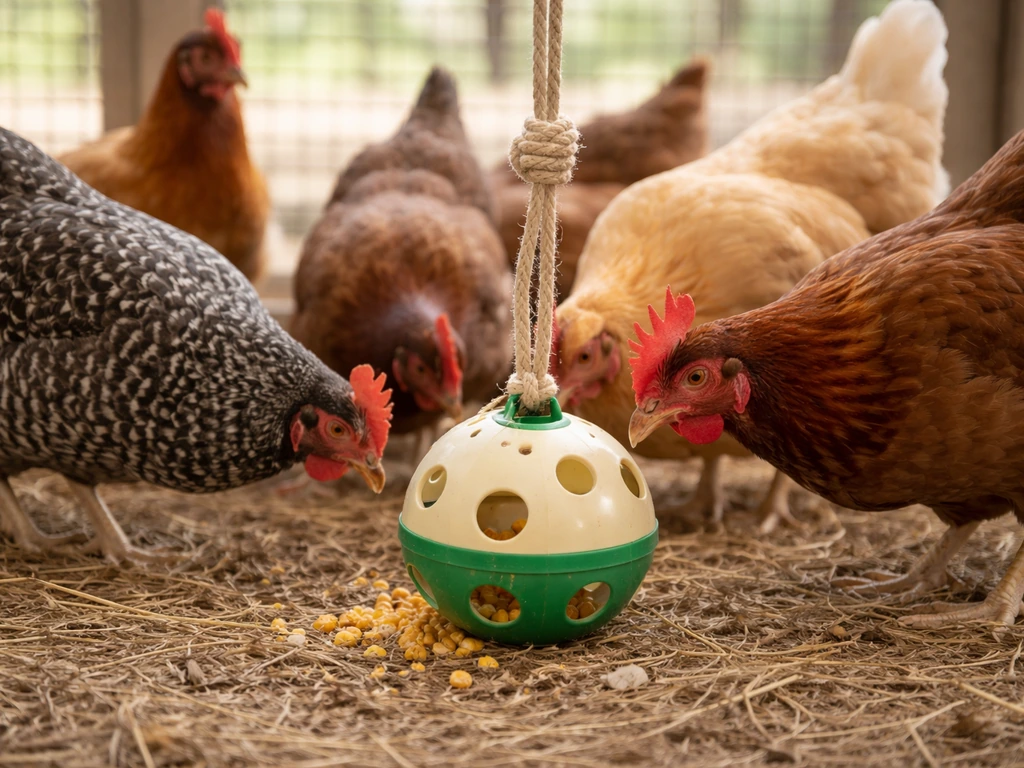
- Hanging treat holders: A mesh ball or wire basket stuffed with leafy greens, a halved cabbage, or a corn cob hung at beak height is consistently the most-used enrichment item in backyard coops. Chickens peck at it, it swings, they follow it. It satisfies foraging and object interaction at the same time.
- Pecking blocks: Compressed blocks of grain, grit, and minerals mounted or placed in the run give hens something to chip at over time. Slower to consume than loose feed and more engaging.
- Scatter feeding setups: Tossing a small amount of appropriate feed or scratch into straw or a patch of grass triggers an immediate surge in foraging behavior. Studies on broiler enrichment confirm this reliably increases active investigation. It is low-cost and highly effective.
- Foraging boards or mats: A rubber mat or piece of plywood with food hidden underneath, or a flat board they can flip, encourages problem-solving-adjacent behavior.
- Mirrors: Acrylic (not glass) mirrors are used in some coops and can reduce isolation stress. However, they carry aggression risk, which is covered in the safety section below.
- Small balls or rattles: Lightweight plastic balls (the kind sold for cats or small pet birds) can be nudged around the run. Hens tend to investigate these briefly rather than engage long-term, but they are better suited for chicks.
- Dust bath setups: Not a toy in the traditional sense, but a purpose-built dust bath area with dry sand or fine soil is one of the most welfare-positive enrichment additions you can make. Chickens scratch, roll, and shake in a dust bath, hitting all three play behavior categories at once.
Toy safety checklist before you add anything to the coop
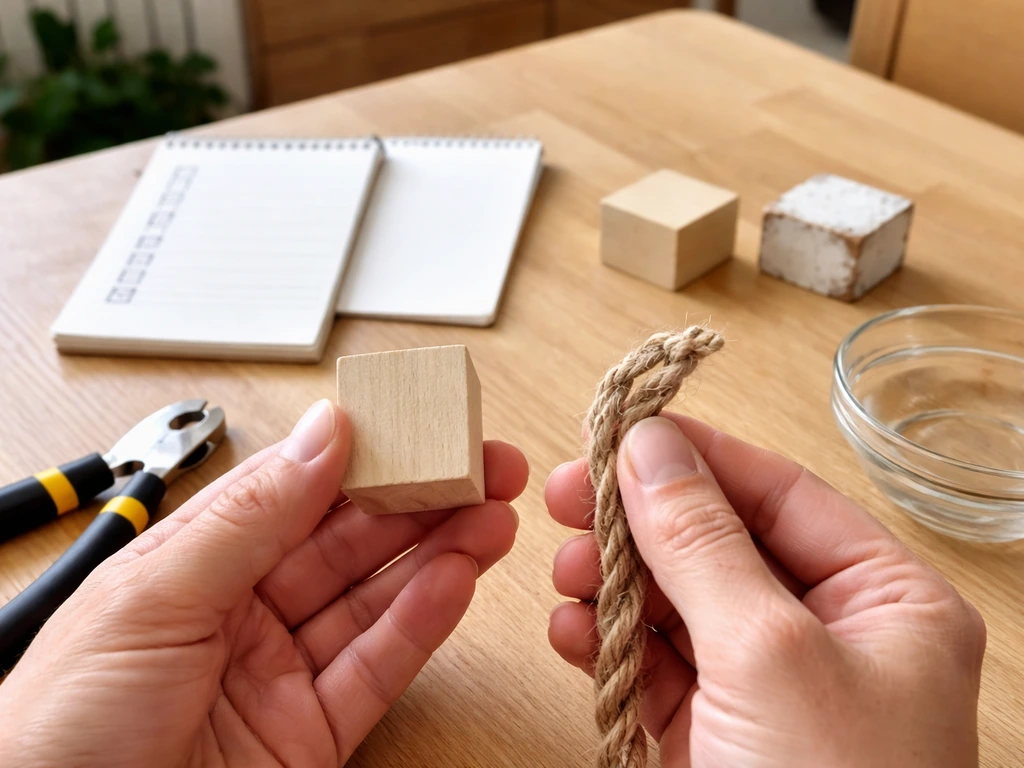
Chickens are curious and indiscriminate peckers, which means a poorly chosen item can cause real harm. OSU Extension’s backyard chicken coop design guidance includes layout and safety considerations that can help you decide where to place enrichment items within the coop or run Living on the land. Run through this checklist for any new enrichment object before it goes into the coop or run:
Materials
- Avoid painted or coated items unless you know the finish is food-safe and lead-free. Chickens will peck paint off surfaces.
- No breakable plastic or glass. Shards cause lacerations and can be swallowed.
- No rope, string, twine, or yarn longer than a few inches. Entanglement around legs and necks is a documented risk, and frayed fibers can cause crop or gut blockages if eaten. The U.S. Fish and Wildlife Service specifically flags string and twine as hazards for birds.
- No looped nylon or synthetic fiber that can form a noose.
- Avoid items with small metal hardware (clips, rings, chains with open links) that can cause foreign body injuries or heavy metal toxicity if ingested.
- Acrylic is safer than glass for mirrors. Glass breaks; acrylic does not.
- Natural materials like untreated wood, stainless steel mesh, and food-grade plastics are your safest options.
Placement
- Hang items at beak height for your average hen, not so high they strain or so low a bird can get under it and become trapped.
- Position toys away from feeders and waterers. Competition around food and water is already a source of flock tension; adding an enrichment item directly beside them can escalate pecking order conflicts.
- Make sure hanging items cannot swing into walls, posts, or other birds with enough force to cause injury.
- Do not place enrichment items near predator entry points or fencing gaps. OSU Extension guidance on coop design emphasizes predator-proofing considerations that should inform where you add anything that attracts birds to a specific spot.
Supervision
- Watch the flock for the first 30 minutes after introducing any new item. Look for persistent fear responses, resource guarding, or birds being blocked from access.
- Check for damage to the item after each day for the first week. A toy that was safe on day one can become hazardous after pecking loosens parts.
- Remove any item that is causing injury, including minor cuts to combs or wattles. Chickens are attracted to the color red and will peck at wounds, which can escalate quickly.
How to introduce toys today: a step-by-step enrichment routine
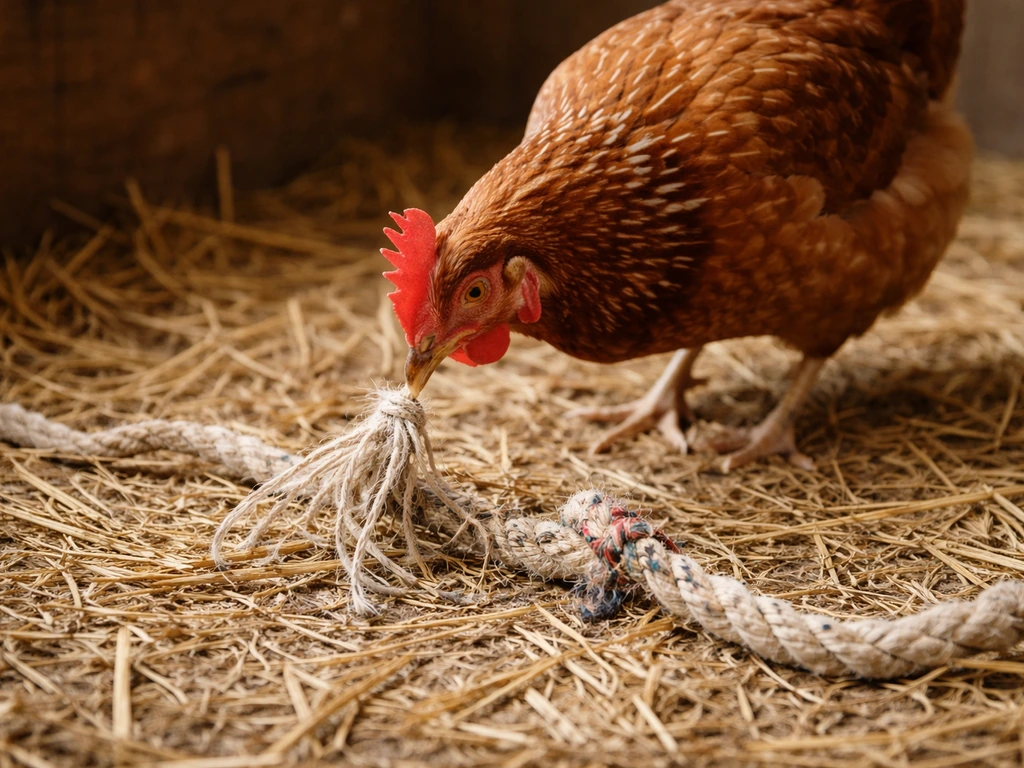
The goal here is to get your flock engaging with enrichment without triggering fear or aggression. Here is a practical routine you can start today:
- Start with scatter feeding. Before introducing any physical toy, scatter a small amount of appropriate scratch grain or feed across the floor of the run or into a patch of grass or straw. This costs nothing, takes ten seconds, and immediately triggers active foraging behavior. It also gets birds into the 'searching mode' that makes them more receptive to novel objects.
- Introduce one item at a time. Place a hanging cabbage or leafy green holder in the run while the flock is already outside and calm. Do not place it the moment they are let out in the morning when stress is high.
- Let them approach on their own terms. Stand nearby and observe, but do not crowd the object or chase birds toward it. Most flocks will have one curious hen who investigates first; others follow within 15 to 30 minutes.
- Watch for 30 minutes on day one. Note which birds engage, which avoid, and whether any bird is blocking others from getting near the item.
- Rotate items every 3 to 5 days. Novelty drives engagement. Once a treat ball is empty and familiar, it loses most of its draw. Swap it out, restock, or move it to a different location. Fresh placement in a new spot reads as a novel object again.
- Add complexity gradually. Once your flock is comfortable with hanging treats, you can introduce a foraging board, a dust bath station with fresh sand, or a pecking block. Add one at a time, spaced a few days apart.
- Remove items at night. Bring in or secure enrichment items after the flock roosts. This limits mold/spoilage buildup on food-based items overnight and removes anything that could attract nocturnal predators to the coop.
When things go wrong: common problems and how to handle them
The flock completely ignores the toy
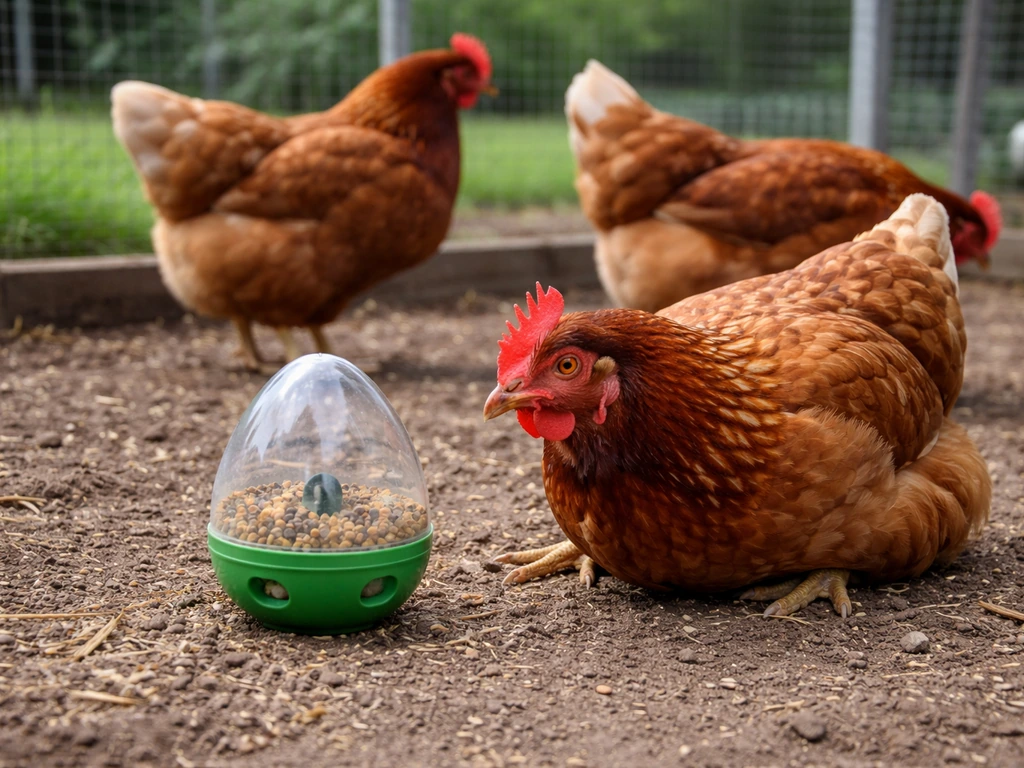
This is the most common outcome with non-food enrichment. If a toy has no food, no movement, and no foraging payoff, chickens often lose interest within a day. The fix is to make it food-relevant: stuff the item with something they want, hang it so it swings when pecked, or scatter feed near it so birds approach the area naturally and encounter the toy on the way.
One bird is guarding the toy
Resource guarding is a normal expression of pecking order behavior, but it becomes a welfare problem when lower-ranked birds cannot access enrichment at all. The solution is simple: add a second identical item (or a comparable alternative) on the opposite side of the run. Multiple access points break up monopolization. If guarding is severe and persistent, remove the item entirely for a week and try a scatter-feeding approach instead, which is much harder to hoard.
Aggressive pecking at a mirror or shiny object
Some hens treat a mirror as a rival and will attack it persistently. Research does show mirrors can mitigate isolation stress in some contexts, but if a bird is attacking the mirror, that is a stress response, not play. Remove it immediately. Not every bird responds positively to mirrors, and pushing through sustained aggression risks injury and flock-wide tension.
Minor injury from a toy
If you see blood, even a small wound, remove the item and address the injury right away. Chickens are strongly attracted to red and will peck at wounds on flockmates, which can escalate to severe injury or cannibalism in stressed groups. Clean and cover the wound, isolate the injured bird if pecking continues, and audit the toy that caused the problem before putting anything back in the coop.
The toy is eaten or partially destroyed
If rope, string, or synthetic fiber is being pulled apart and consumed, remove the item immediately. Frayed fibers and long strings can cause crop impaction and gut blockages. Replace it with a stainless steel mesh holder or untreated wood item instead.
Food-related hazards around enrichment: seed, spoilage, and toxic risks
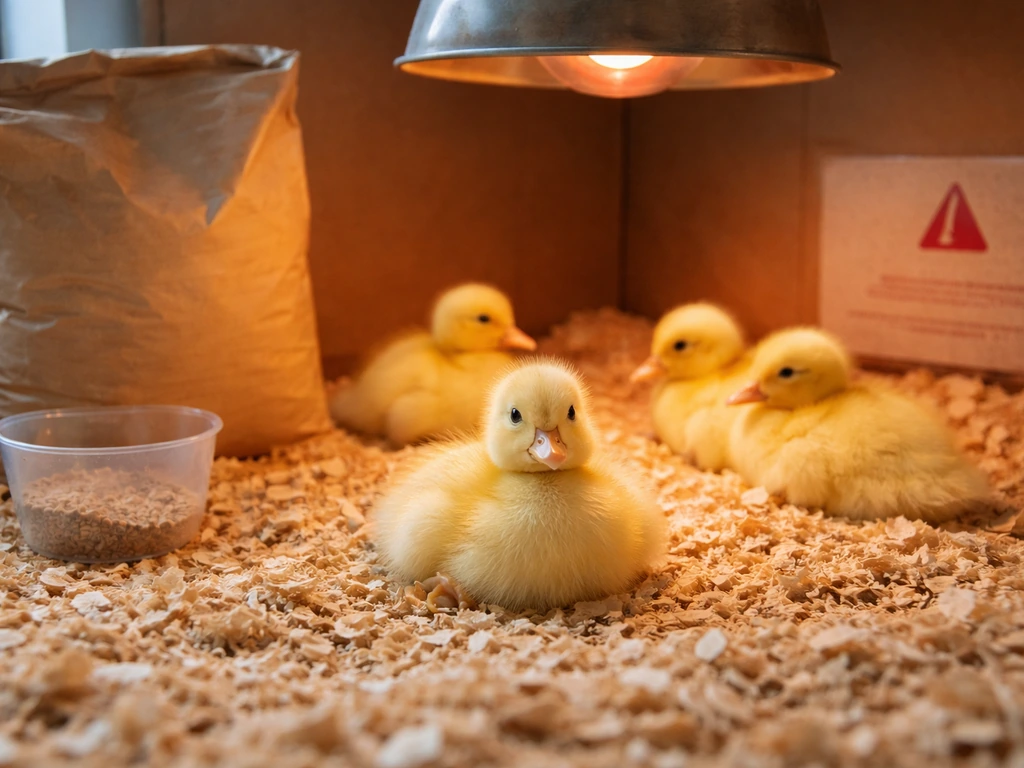
Food-based enrichment (the most effective kind for chickens) introduces its own hazard category that is easy to underestimate. While this guide is about chicken enrichment, you should treat game-bird starter carefully and only follow species-appropriate feeding guidance for ducklings. If you also feed wild birds nearby or keep chicken feed in the coop, these risks compound. If you are considering meat bird feed for laying hens, it is important to check ingredients and safety because their nutrition needs are different can laying hens eat meat bird feed.
Mold and mycotoxins
Any feed or grain that gets wet and sits in a treat holder or on the run floor is at risk of mold growth. Mold can produce mycotoxins, including aflatoxins from Aspergillus mold, which are toxic to poultry even in small amounts. Fusarium and Penicillium molds produce additional toxins that affect feed stored in damp or poor conditions. The risk is highest with wet weather, poor drainage in the run, or overnight condensation on food-based enrichment left in place. Remove uneaten grain or moist food items promptly, and never use wild bird seed from a feeder in chicken enrichment items as it may already be partially spoiled or contaminated. If you are choosing what to feed alongside enrichment, confirm that can chickens eat game bird feed is appropriate for poultry in your situation.
Wild bird seed and cross-contamination
If you keep a wild bird feeder near your chicken run, spilled seed that chickens access can be a problem. It also means you should avoid using peanuts intended for wild birds in chicken enrichment, since ingredients and spoilage risk may not be suitable for poultry wild bird seed. Wild bird seed mixes often contain ingredients that are fine for wild birds but not optimized for laying hens, and spoiled seed from a feeder is a genuine mycotoxin risk. If you are wondering whether birds can eat meat, remember that diet needs vary by species, and many backyard birds should stick to appropriate feed rather than random scraps can bird eat meat. Readers interested in whether chickens can safely eat wild bird food in general will find that topic covered separately on this site. Ducks can also have sensitive dietary needs, so check whether they can safely eat bird food before offering it chickens can safely eat wild bird food.
Rodent bait and foraging hazards
Enrichment that encourages chickens to forage across a larger area, especially near buildings or outbuildings, increases the chance they encounter rodent bait. Merck specifically notes that free-ranging backyard poultry can accidentally ingest rodenticides through foraging. If you have rodent bait stations on your property, mark the areas clearly and keep foraging enrichment well away from those zones.
Toxic plants
If you stuff enrichment items with foraged greens or let chickens range into garden areas, make sure nothing toxic is accessible. Nightshade family plants, rhubarb leaves, and some ornamental plants are hazardous. Stick to known-safe greens: cabbage, kale, leafy lettuce, and similar vegetables are consistently recommended.
If toys are not working: enrichment that does not rely on objects
Some flocks, especially older or more skittish birds, simply do not warm to hanging objects or novel items. That is fine. Object play is one type of enrichment, not the only one. Here are alternatives that align with natural chicken behavior and are low-risk:
Scatter foraging
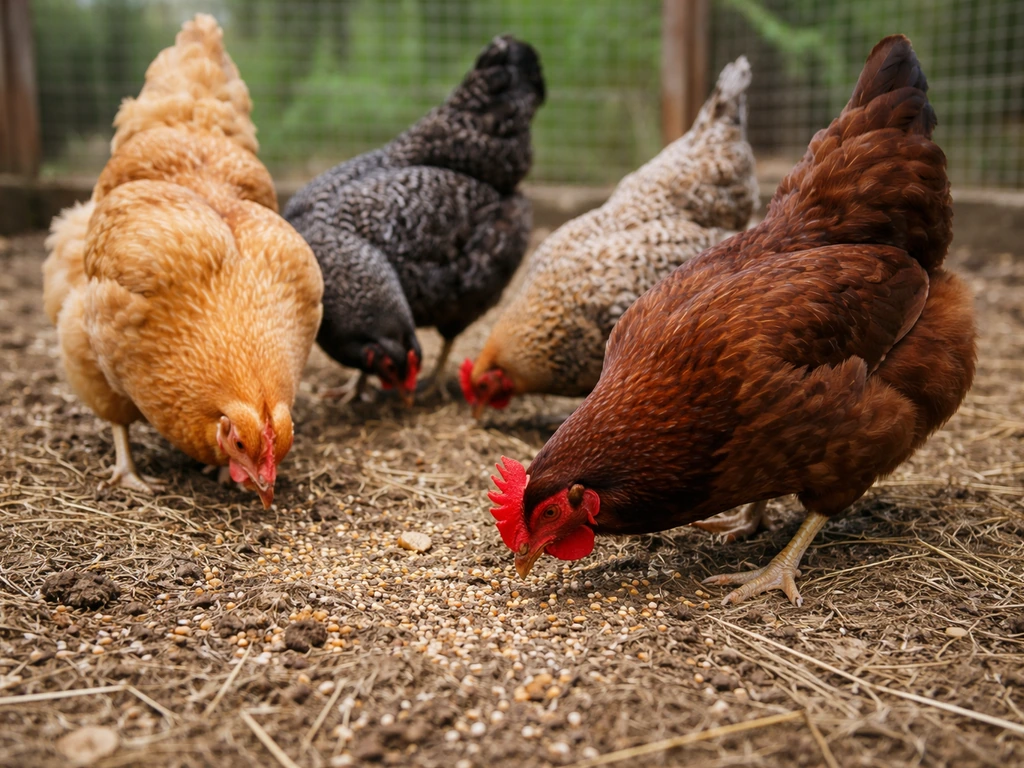
Scatter a small amount of appropriate feed or scratch across straw, grass, or a substrate layer in the run. Research on broiler enrichment confirms this triggers immediate and sustained foraging activity. Rotate where you scatter to keep birds exploring different areas of the run. This is probably the single highest-value enrichment activity per dollar and minute of effort.
Dust bath station
If your run does not have a built-in dust bath area, add one. A container with dry sand, fine soil, or wood ash (or a combination) at least 12 inches deep and wide enough for two birds at once covers locomotor and comfort behavior simultaneously. Cornell Cooperative Extension recommends dry sand as an ideal ground cover for outside chicken areas. Chickens that have reliable dust bath access show fewer feather-pecking behaviors, which is a meaningful welfare improvement.
Social enrichment and space
Sometimes what looks like boredom is actually overcrowding. Ensuring adequate space per bird reduces competition-driven aggression and gives natural social play more room to occur. Adding perches at different heights within the run also encourages locomotor behavior without any toy required.
Vegetable enrichment
Whole vegetables placed directly on the run floor, rather than hung, are another low-effort option. A halved head of cabbage, a broccoli stem, or leafy greens tossed in a pile give hens something to peck at and investigate collectively. RSPCA recommends broccoli and cabbage specifically for this purpose. Just remove anything uneaten after a few hours to prevent spoilage.
Quick-reference: enrichment ideas that work and ones to skip
| Enrichment Type | Works Well? | Key Caution |
|---|---|---|
| Hanging cabbage or leafy greens | Yes, consistently | Remove uneaten portions within a few hours to prevent mold |
| Mesh treat ball with scratch grain | Yes | Check for spoilage daily; do not leave out overnight in wet weather |
| Scatter feeding in straw or grass | Yes, highly effective | Avoid scattering near rodent bait zones or areas with spoiled wild bird seed |
| Dust bath station (dry sand/soil) | Yes, species-typical behavior | Keep dry; wet sand loses effectiveness and can harbor bacteria |
| Pecking block (compressed grain/grit) | Yes | Replace before it gets wet and crumbly to prevent mold risk |
| Acrylic mirror | Situational | Remove immediately if any bird attacks it persistently |
| Rope or string toys | Not recommended | Entanglement and gut blockage risk; avoid unless very short and monitored closely |
| Painted or coated items (unknown finish) | No | Chip-off ingestion risk; lead or toxic pigment hazard |
| Breakable plastic or glass items | No | Shard ingestion and laceration risk |
| Wild bird seed from an outdoor feeder | No | May be spoiled, moldy, or not nutritionally appropriate for hens |
The bottom line: chickens engage most reliably with enrichment that connects to their foraging and pecking instincts, not with abstract toys. Start with scatter feeding and a hanging vegetable, watch how your flock responds, rotate items every few days, and keep a close eye on food-based items for spoilage. That is the most practical, evidence-backed enrichment routine for a backyard flock, and it does not require spending much money or time at all.
FAQ
How quickly should I expect chickens to start using a new toy?
Start with the simplest option, a small quantity of their usual feed or scratch scattered in a different spot each day. Then add one low-risk novelty item (like a hanging cabbage or broccoli stem) instead of multiple toys at once, so you can tell which stimulus reduces boredom without creating fear or guarding issues.
My flock ignores the toy for a day. Does that mean it is not a good fit?
It is usually safer to begin indoors or at the edge of the run, where the flock is less likely to crowd or bolt from a brand-new object. If the object is only introduced suddenly in the middle of the coop, skittish hens may avoid it for hours and you can misread that as disinterest.
Do chickens play if the toy does not move or reward pecks?
Yes, but only if it truly connects to pecking and foraging. For example, use a food-rewarded item, a hanging vegetable, or a foraging container that encourages stepping and investigating. If a toy is purely decorative or does not move when pecked, chickens generally lose interest quickly.
What should I watch for in a “safe” bird toy before giving it to chickens?
Check for several danger patterns first: loose strings, frayed rope ends, and anything that can be swallowed in pieces. Also avoid items with unknown coatings, flock-safe labels only, and anything scented like insect control or cleaners. When in doubt, choose untreated wood or stainless components with no loose fibers.
Can I use a mirror as enrichment, and how do I know if it is causing stress?
Mirror tests are best done with a single bird at a time or with supervision, because some hens repeatedly attack the reflection. If you see escalation, retreat from the mirror immediately rather than letting the behavior “burn out,” since persistent pecking can cause injury.
How often should I rotate toys or enrichment items?
You should remove and replace the item on a schedule, even if it looks fine. A practical approach is to rotate every few days for non-food items and clean any feeders or holders daily for food-based enrichment. Rotation also prevents a toy from becoming a monopoly point for lower-ranked birds.
How long can chickens be left unsupervised with enrichment?
For many flocks, supervision is smart for the first 2 to 3 sessions, especially with rope-like materials, new shapes, and anything that could be hoarded. After you confirm no guarding, no chewing on hazardous fibers, and no wound-triggering pecking, you can leave appropriate items longer.
What if I have plenty of toys but still see aggression?
Yes. If the run is small or birds feel crowded, “play” can turn into competition, and you may see guarding even with otherwise suitable toys. Measure your space and add multiple access points, or switch to scatter feeding, which naturally distributes pecks across the group.
Can food-stuffed toys ever make things worse?
Overly tempting enrichment increases injury risk. If a food item attracts a stampede or intense pecking at a holder, spread it out (scatter feed) instead of concentrating it, and offer smaller portions more frequently to reduce crowding at one location.
Is it okay to use seed from a wild bird feeder in chicken enrichment?
Avoid using wild bird seed and similar mixes in chicken enrichment setups. Even if chickens will eat it, spoiled or contaminated mixes from feeders can raise mycotoxin risk, and the ingredients can be less suitable for poultry health over time.
What should I do if I use rodent bait on the property?
If you keep rodent bait stations anywhere on your property, keep enrichment well away from those labeled zones and remove scatter-based enrichment that drags into bait areas. Also check for gaps under fencing, because chickens can discover and access treated bait while foraging.
What if the toy makes the flock fearful?
Yes, and it helps you choose safer alternatives. If a toy triggers fear responses, try ground-based enrichment (scatter feeding, whole vegetables on the floor) first, then reintroduce object play gradually later. A fear-avoidance area that lasts hours usually improves more reliably with low-novelty options.
Next Article
Can Ducklings Eat Game Bird Starter? Safety Guide
See if ducklings can eat game bird starter, risks, bag checks, step switch plan, and what to monitor afterward.