Chickens can eat bird fat balls in small amounts occasionally, but they really should not be a regular part of the flock's diet. Most commercial fat balls are made for wild birds, not poultry, and the ingredients, salt levels, and contamination risks that come with them make them a poor choice for backyard hens. If your chickens already got into a fat ball or two, they will almost certainly be fine, but there are a few things worth watching for. Here is everything you need to know to make a safe call today.
Can Chickens Eat Bird Fat Balls? Safe Feeding Guide

Maya Henderson
2 May 2026
What are bird fat balls actually made of?
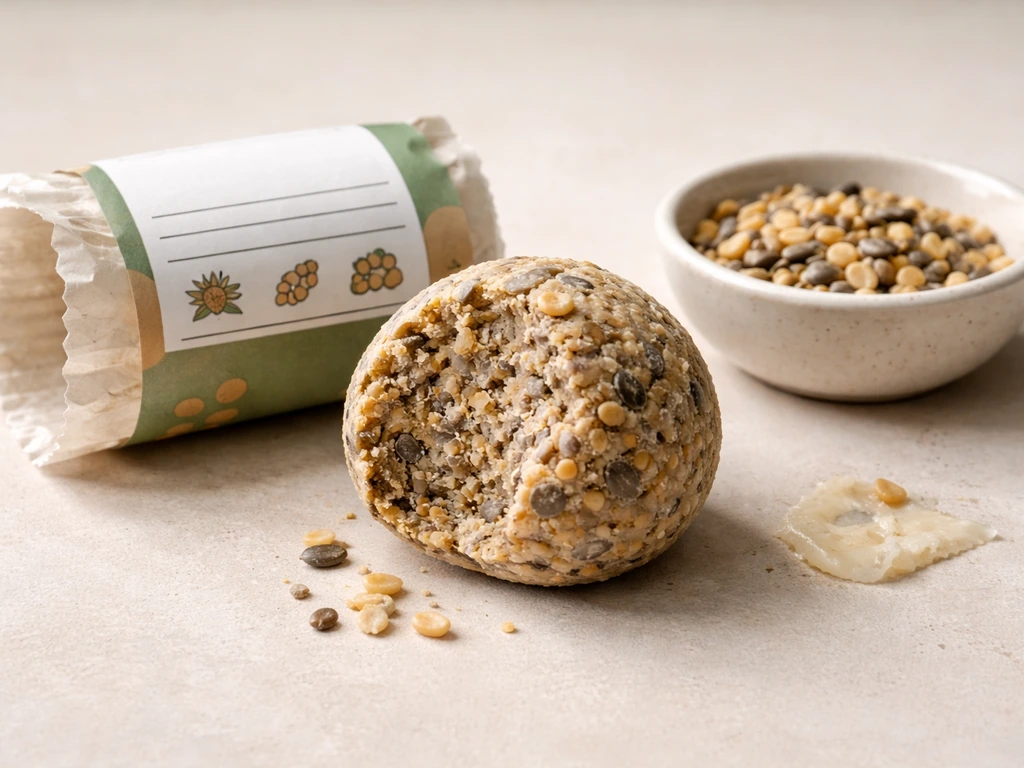
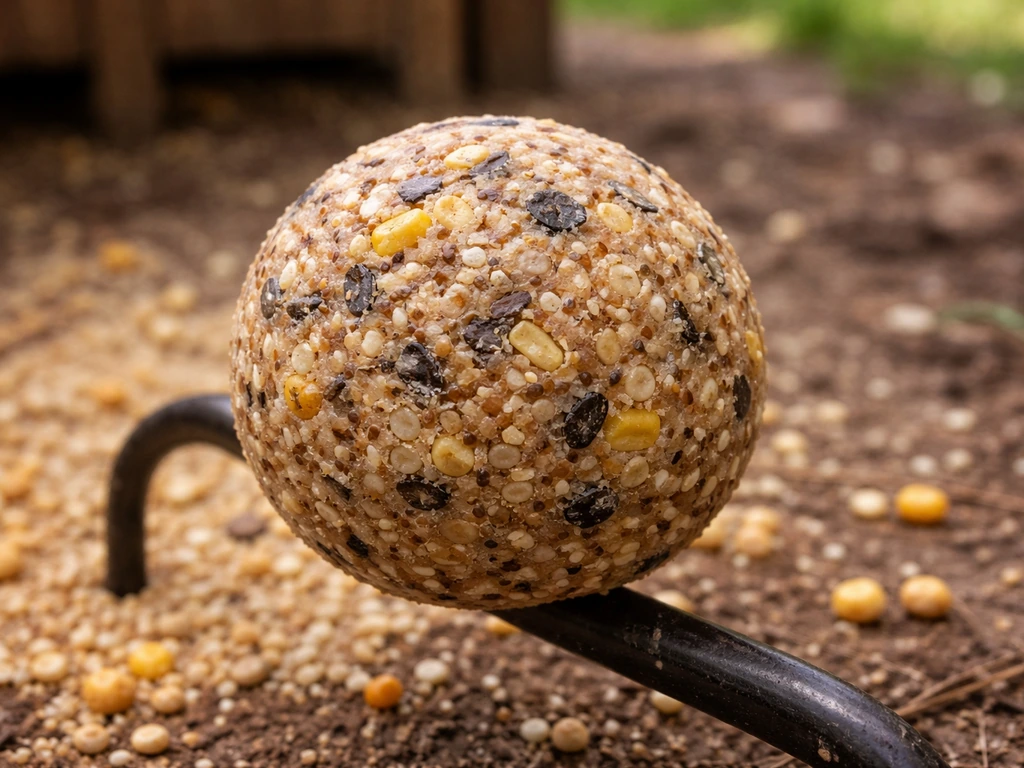
Fat balls (also called suet balls) sold for wild birds are typically built around rendered animal fat, usually beef tallow or lard, pressed into a compact sphere with a mix of seeds, grains, dried fruit, nuts, and sometimes insect meal or mealworms. The fat is the binding agent and the main energy source, meant to help small wild birds like tits, sparrows, and finches fuel up through cold weather. Manufacturers often add flavorings, preservatives, and colorings to make them more appealing to a wider range of wild species.
The seed and nut content varies a lot by brand. Some fat balls contain peanuts, sunflower seeds, or whole grains that chickens would happily eat on their own. Others contain dried chilies (used to deter squirrels), artificial flavor additives, or high-salt blends. That variability is one of the core problems when it comes to feeding them to chickens. You often do not know exactly what is in there, and the things you cannot see on the label are the things most likely to cause trouble.
Can chickens eat them safely in general?
A chicken that pecks at a fat ball once is not going to drop dead. Chickens are opportunistic eaters and will absolutely go after a fat ball if it is within reach. The fat and seed content is not acutely toxic, and a small, one-off nibble is unlikely to cause any immediate harm in a healthy bird. The problem is the risk profile that builds up with repeated access: high fat load, unknown salt levels, and the very real contamination hazards that come with any feed left out in a backyard environment.
Think of fat balls the way you would think about cheese or bacon scraps for a dog. Can bird eat meat? Some birds do eat insects and other animal protein, but chickens should stick to poultry-safe treats rather than suet or meat-based items meant for wild birds Think of fat balls the way you would think about cheese or bacon scraps for a dog.. Not poisonous, but also not designed for that animal, and consistently offering them creates problems over time. Backyard hens eating a complete layer feed do not need the extra fat that a small songbird relies on to survive winter. The nutritional math just does not work in their favor.
Key risks for chickens: fat, salt, and additives
The biggest concern with fat balls and chickens is the fat load. Poultry, especially high-production laying hens, are already prone to a condition called Fatty Liver Hemorrhagic Syndrome (FLHS). The Merck Veterinary Manual notes that FLHS is diet-associated and that affected birds can be found dead without any prior warning signs. Adding extra dietary fat on top of a commercial layer diet pushes hens closer to that risk, particularly birds that are already heavy or less active.
Salt is the second major issue. Many commercial fat ball blends contain added salt, which chickens handle poorly even in moderate amounts. Excess sodium causes increased thirst and urination, loose droppings, and in larger quantities can lead to salt toxicity. Unlike wild birds that can metabolize small salt hits more easily, chickens are much more sensitive, partly because they tend to eat more volume at once rather than pecking in small bites.
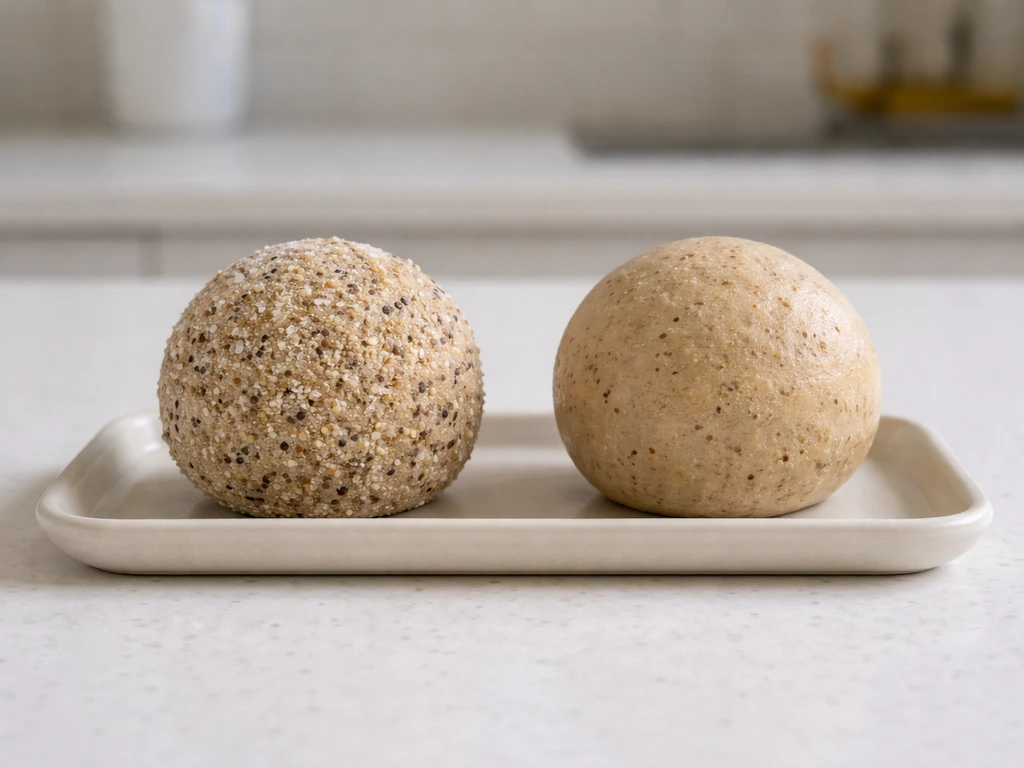
Other additives worth checking for before offering any fat ball to your flock include dried chilies or chili powder (a common squirrel deterrent in wild bird products), artificial preservatives like ethoxyquin, and dried onion or garlic flavorings, which are genuinely harmful to chickens even in small amounts. The density of the ball itself is also worth thinking about. A very firm, compact fat ball can be a choking risk for birds that try to swallow a large chunk rather than peck at it carefully.
Contamination risks: mold, rancid fat, droppings, and pests
This is where the real day-to-day danger lies, and it applies whether the fat ball is sitting in a wild bird feeder or on the ground in your chicken run. Oregon State University Extension is direct about it: in warm weather, suet spoils quickly. Virginia DWR's safe bird feeding guidance adds that suet can turn rancid fast and that warm temperatures accelerate the process significantly. Rancid fat is not just unpleasant. It can cause digestive upset, vomiting-equivalent reactions in poultry, and in serious cases, liver stress.
Mold is the other major contamination path. A fat ball that has been rained on, sat in humidity, or gone through a freeze-thaw cycle will start developing mold within days, sometimes hours. Chickens are sensitive to certain mold mycotoxins, and eating moldy feed can cause neurological symptoms, gut damage, and immune suppression. Any fat ball that looks dull, smells off, has any visible fuzz, or has been sitting out for more than a day or two in warm conditions should be thrown away, not offered to the flock.
Fat balls in wild bird feeders also collect droppings from multiple wild bird species, including sparrows, starlings, and pigeons, which can carry Salmonella, Campylobacter, and other pathogens transmissible to chickens. Penn State Extension emphasizes removing debris and droppings from feeding areas as a core disease-risk-reduction strategy. If wild birds have been feeding from a fat ball, consider it contaminated before offering any remnant to your chickens. West Virginia University Extension makes the same point about pest attraction: old or spilled feed draws rodents and insects, which introduce further contamination risk.
How to offer fat balls safely if you choose to
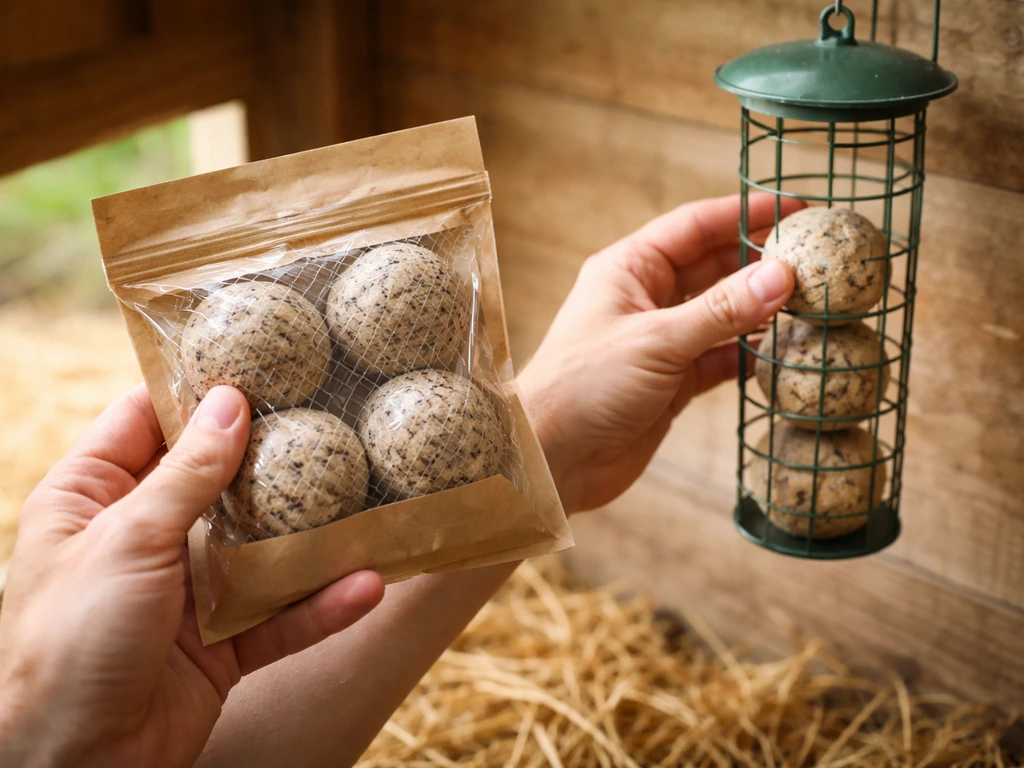
If you want to give your chickens an occasional treat using a suet-based product, here is how to do it with the lowest possible risk. If you are wondering about game bird starter, the feeding approach and risks can be quite different from suet-based fat balls, so check the specific guidance first. If you are also wondering whether chickens play with bird toys, bird-safe enrichment is a similar kind of consideration: choose items made for poultry use and keep them clean and supervised.
- Read the label carefully first. Avoid any fat ball containing added salt, dried onion, garlic, chili, artificial flavorings, or preservatives you cannot identify. Plain suet with seeds or mealworms is the safest starting point.
- Check freshness before serving. It should smell neutral to slightly fatty, not sour, rancid, or musty. If it has been stored in warm conditions or was sitting in an outdoor feeder, skip it.
- Break off a small piece rather than offering the whole ball. A golf-ball-sized fat ball is too much for one hen at one sitting. A piece roughly the size of a large grape per bird is a reasonable limit as an occasional treat.
- Offer it fresh and remove any uneaten portion within 30 to 60 minutes, especially if temperatures are above 15°C (60°F). Do not leave it overnight.
- Never offer a fat ball that has been sitting in a wild bird feeder. Wild bird droppings on the surface introduce pathogens your flock does not need to encounter.
- Sanitize the area afterward. Wipe down the spot where you offered it with diluted white vinegar or a poultry-safe disinfectant. University of New Hampshire Extension notes that suet feeders need frequent cleaning because residue goes rancid quickly, and the same logic applies to anywhere chickens ate from.
- Treat it as a cold-weather-only option. In spring and summer, the spoilage risk climbs fast and the nutritional benefit is much lower since hens are typically more active and eating well.
If you want to offer extra fat or protein as a winter treat without the risks, there are better alternatives purpose-built for poultry. Plain mealworms (dried or live) are a high-protein, low-risk favorite. Scratch grains work well as a warm-up treat on cold mornings. Plain suet blocks made without additives and offered in small amounts are safer than commercial fat balls. If you are wondering about game bird feed, you should check its ingredients and feeding purpose before offering it to chickens. These options give you the treat value without the ingredient uncertainty.
When not to feed fat balls at all
There are situations where the answer is simply no, regardless of how fresh or clean the fat ball is. If you are wondering about ducks specifically, you can’t assume they’ll be safe eating the same bird food meant for wild species can ducks eat bird food.
- Overweight hens or birds with known liver issues: The extra fat load is a direct trigger for FLHS, and there is no benefit that outweighs that risk.
- High-production laying hens already eating a calorie-dense layer feed: Their diet is optimized and additional fat does more harm than good.
- Warm weather (consistently above 18°C / 65°F): Spoilage and rancidity happen too fast for safe use.
- Any fat ball that has been in a wild bird feeder: Pathogen contamination from wild bird droppings makes it a disease risk.
- Mixed flocks with ducks or other waterfowl: The dietary needs differ enough that what might be a marginal treat for a chicken becomes a more significant concern for ducks, who are even more prone to niacin and salt imbalances.
- If there is any active disease or respiratory illness in your flock: Immune-compromised birds should not be eating anything outside their normal, controlled diet.
- Any fat ball that smells off, looks moldy, or has gone through repeated wet-dry or freeze-thaw cycles.
If your chickens already ate fat balls: what to watch for
If your flock got into a fat ball or two before you could stop them, take a breath. A one-time exposure in healthy birds is very unlikely to cause serious harm. That said, you want to monitor them for the next 24 to 48 hours and know what warrants a call to the vet.
| What to watch for | What it might mean | What to do |
|---|---|---|
| Loose or watery droppings for more than 24 hours | GI upset from high fat content or a salt reaction | Ensure fresh clean water is available at all times; monitor closely |
| Lethargy, hunching, or sitting apart from the flock | Possible digestive distress or early sign of something more serious | Isolate the bird, check for other symptoms, call a vet if it persists beyond 12 hours |
| Vomiting or regurgitation (crop gurgling, head shaking) | GI irritation, possible rancid fat reaction | Remove all treats, offer only water and plain feed, consult a vet |
| Sudden death or collapse | Possible FLHS or severe toxic reaction (rare but possible in birds with pre-existing liver issues) | Contact a vet immediately |
| No symptoms at all | Most likely outcome after a small one-off exposure | Remove fat balls from their access, return to normal feed, no action needed |
The most important immediate step is to make sure they have unlimited access to fresh, clean water. If the fat ball had a high salt content, hydration is the primary way a healthy bird's body will deal with it. Pull any remaining fat ball pieces out of the run so they cannot continue eating. If you are not sure what was in the fat ball or how much they ate, calling your vet or a poultry-experienced avian vet for a quick check-in is never a bad idea, especially if any bird is already showing symptoms.
Going forward, if you want to keep supplementing your flock's diet during cold months, the safer path is choosing treats specifically formulated for poultry, checking the ingredient list on anything marketed for wild birds before letting chickens near it, and keeping your feeding area clean and free of wild bird feeder contamination. That last point matters more than most keepers realize, since the disease risk from wild bird droppings around a shared feeding space is one of the most underappreciated hazards in any backyard setup. The Wild Bird Feeding Institute also notes that feeding areas and food contaminated with feces can spread Salmonella, which is why cleaning and feed management matter at bird feeders wild bird droppings around a shared feeding space.
FAQ
How long can chickens safely eat bird fat balls before it becomes a problem?
There is no safe “schedule” for repeated feeding of commercial bird suet to poultry. The risk comes from cumulative fat, salt variability, and spoilage time, so treat it as a one-off or very rare bite. If you notice they are seeking it out repeatedly, stop offering it and remove remaining pieces, since the risk rises with each additional access.
What symptoms should I watch for after my chickens got into a fat ball?
Monitor for diarrhea or loose droppings, increased thirst, lethargy, trouble walking, and any signs of abdominal distress for 24 to 48 hours. If a bird seems weak, vomits repeatedly, has rapid breathing, or has neurological changes, contact an avian vet promptly, especially if the fat ball was warm, spoiled, or salty.
If the fat ball looks fresh, is it still unsafe?
It can still be unsafe because ingredient uncertainty is a major issue. Even “fresh” suet balls may contain added salt or harmful flavor additives, and wild-bird feeder contamination can occur even when the surface appears clean. When in doubt, don’t offer it to chickens at all.
Can I rinse or wipe the fat ball to make it safer?
Rinsing or wiping is unlikely to fix the core problems. It does not remove deep contamination, and it can accelerate spoilage once the fat is exposed to moisture. The better approach is removal and disposal if there is any sign of off odor, moisture exposure, mold, or long time sitting out.
Are all suet balls equally risky, or are some safer for chickens?
They vary a lot. The main safety difference is additives and salt. A plain suet made for poultry, with no chili, onion/garlic flavoring, or unknown preservatives, and offered in tiny amounts is generally lower risk than wild-bird blends. However, “safer” still does not mean it is a good daily supplement for layers.
How much is “small amount” if I choose to offer suet occasionally?
Keep it minimal, more like a quick treat than a meal component. For most backyard flocks, that means offering only a tiny sliver and limiting access so it cannot become a regular food choice. If birds consume the majority quickly, remove the rest rather than letting them keep pecking until it is gone.
What should I do if the fat ball was left outside in hot weather?
If it sat in warmth, assume spoilage risk is high. Discard it if it smells rancid, looks dull or sticky, or shows any fuzz, since rancid fat and mold can cause digestive upset and liver stress. Do not try to “rescue” it by feeding only a corner, since spoilage can spread.
Can chicks or young chickens eat bird fat balls?
It’s better not to. Younger birds are more sensitive to diet imbalances and contamination, and they may swallow larger pieces, raising choking and digestive risk. If you want a winter treat, use age-appropriate options like mealworms or poultry-safe scratch grains instead.
Will feeding fat balls attract pests that are harmful to my chickens?
Yes, it can. Old or spilled suet and seed draw rodents and insects, which adds another contamination pathway around the coop. Keep feeding areas clean, remove leftovers quickly, and prevent wild-bird access to the same feeding spot when possible.
If my flock ate it once, do I need to change their diet immediately?
Usually no, but you should avoid adding more high-fat treats. Ensure they continue eating a proper layer ration and provide unlimited fresh water. Remove remaining pieces and observe for symptoms rather than making sudden feed switches unless a vet advises it.