Ducklings can eat game bird starter in a pinch, but it comes with real risks you need to manage carefully. The biggest concerns are protein that's too high past the first couple of weeks, niacin levels that may fall short of what ducklings need, and the possibility that the feed is medicated with a coccidiostat that could harm your birds. If you're in a bind and game bird starter is all you have, you can use it very briefly (think first two weeks only) with the right precautions, but duck-specific starter is always the safer first choice.
Can Ducklings Eat Game Bird Starter? Safety Guide

Maya Henderson
3 May 2026
What's actually in game bird starter
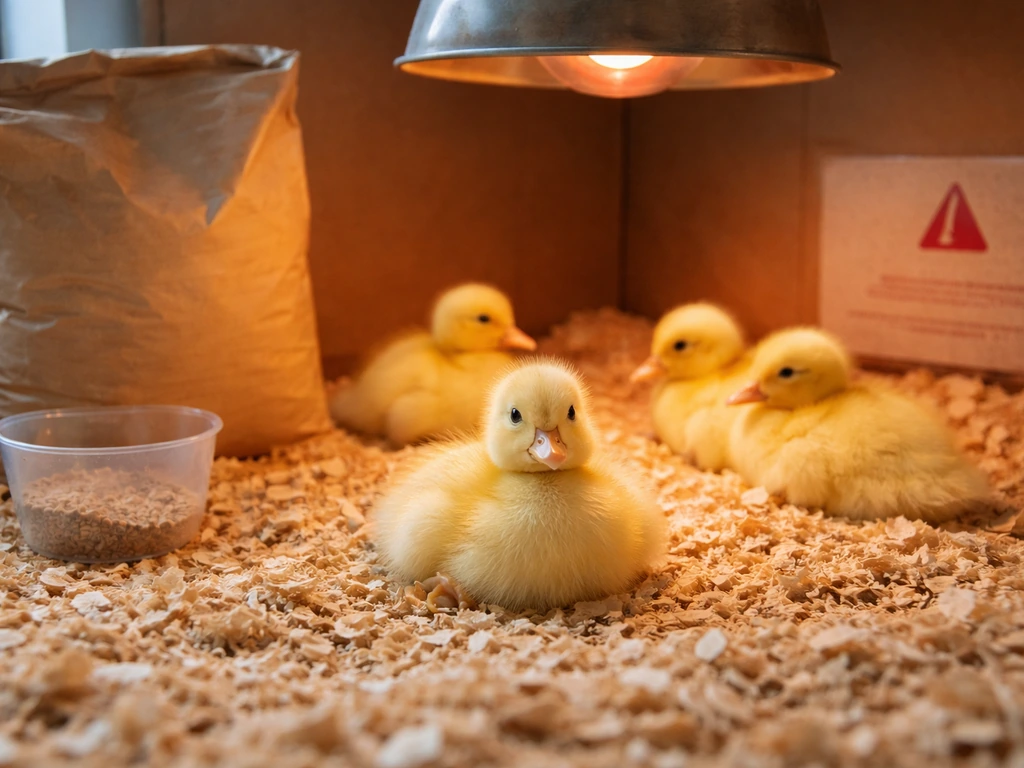
Game bird starters are designed for fast-growing upland birds like quail, pheasants, and turkeys. They're typically high-protein feeds, often running 25–28% crude protein, formulated to push rapid early growth. Most include a full vitamin and mineral premix covering things like vitamin A, D-3, riboflavin, vitamin B-12, and amino acids like lysine. Some versions are medicated; others are not.
The medicated question is the one that matters most. Some game bird starters include a coccidiostat, which is a drug that prevents coccidiosis. The active ingredient varies by brand. Amprolium is one example, used at around 0.0175% in some products. Other formulations use ionophore coccidiostats, a class of compounds that includes monensin, lasalocid, narasin, salinomycin, and maduramicin. Several brands, like Tucker Milling's quail and game bird starter, explicitly state they contain no antibiotics or coccidiostats. Laucke Mills is another brand that lists no coccidiostat. But plenty of others do include medication, so you cannot assume anything until you read the label.
The feeding window for game bird starter is also worth noting. Hubbard Feeds, for example, recommends their game bird starter as a sole ration from hatch through 4 to 5 weeks for meat birds, or through 8 weeks for birds raised for release. Those timelines are built around game bird physiology, not duck physiology, and that distinction matters.
What ducklings actually need to grow well
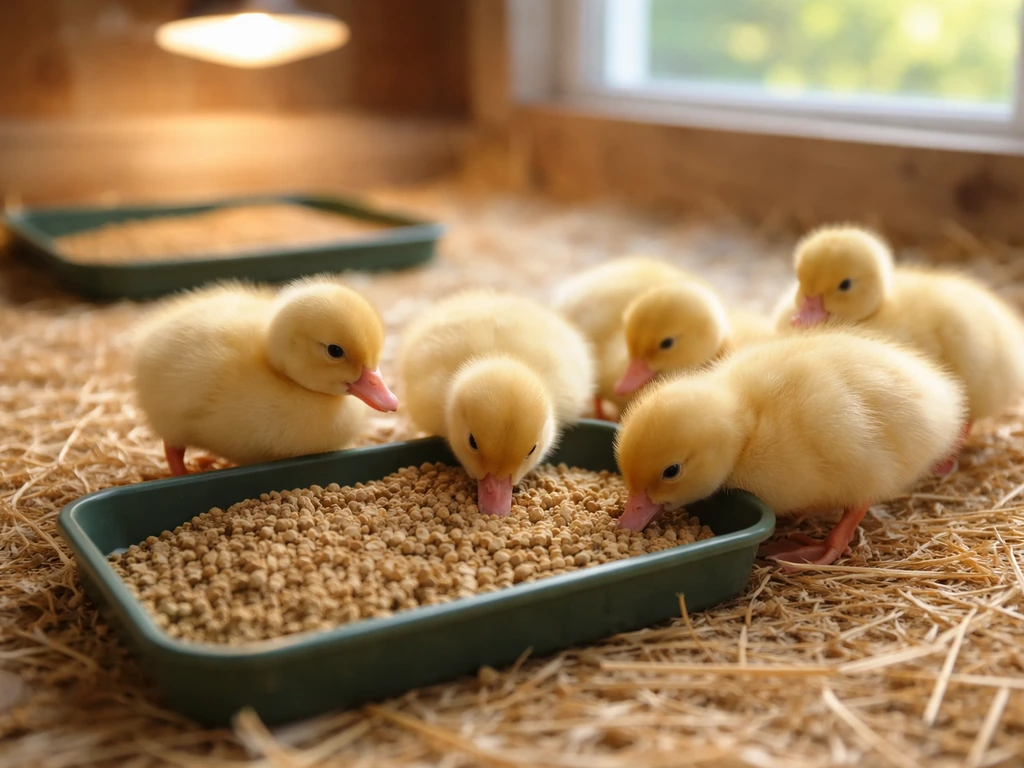
Ducklings have a different nutritional profile than game birds or chickens. For Pekin ducklings in the first two weeks, the target is roughly 22% crude protein, an energy base around 2,900 kcal ME/kg, calcium around 0.65%, available phosphorus around 0.40%, and niacin at approximately 55 mg/kg of diet. Research on meat-type ducklings (1–21 days) puts protein at about 20% and niacin at 50 mg/kg. Either way, niacin is non-negotiable.
Niacin deficiency is one of the most common mistakes people make when feeding ducklings something not formulated for waterfowl. Ducks need substantially more niacin than chickens, and most poultry and game bird starters are built around chicken requirements. Because of that difference, you should not assume chickens can safely eat the same high-fat treats like bird fat balls meant for other animals Ducks need substantially more niacin than chickens. If niacin is too low, ducklings develop leg problems, bowed legs, joint weakness, and poor coordination, often within the first few weeks. A feed like Mazuri Waterfowl Starter is designed specifically to hit these targets, providing 20% protein and adequate niacin in one complete package.
Ducklings also don't need grit if they're eating a commercial crumble that dissolves easily. If you're supplementing or offering anything outside of crumble, small chick grit introduced around 3 weeks becomes relevant. Keep that in mind if you're mixing feeds or adding extras.
Can ducklings safely eat game bird starter: the real risk check
The honest answer is that game bird starter sits in a gray zone. It's not automatically toxic, and some versions are completely drug-free with a protein and mineral profile that's at least in the ballpark for young ducklings. But there are three specific hazards worth taking seriously.
Medicated formulas and ionophore risk
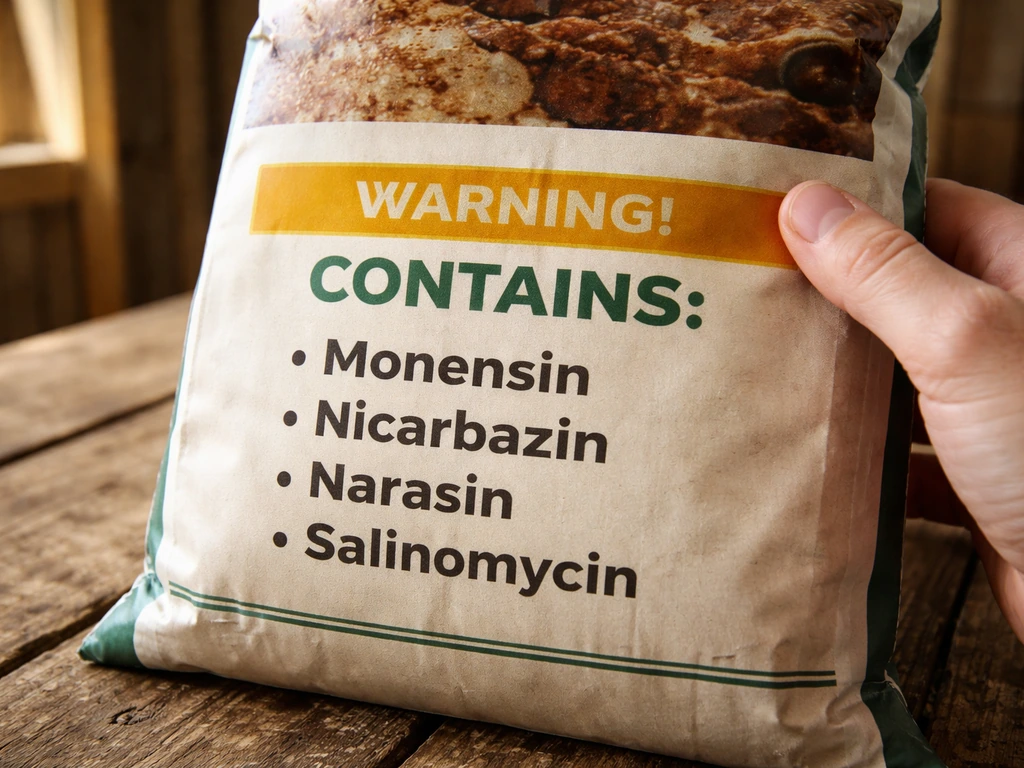
If the game bird starter contains an blank" rel="noopener noreferrer">ionophore coccidiostat, that's where things get genuinely dangerous. Ionophores like monensin, narasin, and salinomycin are species-specific and dose-specific. While narasin has been evaluated for use in ducks for fattening under controlled conditions, the safety window is narrow and there are documented contraindications, including interactions with certain antibiotics like tiamulin. Ionophore toxicity in birds produces anorexia, diarrhea, breathing difficulty, ataxia, depression, recumbency, and in severe cases, death. Merck Veterinary Manual notes that blank" rel="noopener noreferrer">ionophore toxicosis in turkeys can cause wing and rear limb weakness with recumbency, even while affected birds may still look bright and alert. You do not want to experiment with this in young ducklings.
Amprolium, another common coccidiostat, is generally considered lower-risk for ducks than ionophores, but it's still a medication not labeled for ducklings. The safest move is to avoid medicated game bird starter entirely and choose a non-medicated formula if you must use game bird starter at all.
Protein overload past the early weeks
Game bird starters often push 25–28% protein. Game bird starter is usually formulated for meat birds, so it isn't meant to match what ducklings need Game bird starters often push 25–28% protein.. For ducklings past two to three weeks old, that's too high. Excessive protein in ducklings is directly linked to angel wing, a wing deformity where the joint twists outward. It's a real and irreversible problem in severe cases. Research consistently shows there's no benefit in feeding protein above about 16–20% after the first two weeks in a well-balanced duck feed. So even if you use game bird starter in week one, you need a clear plan to transition off it before protein damage sets in.
Niacin gap
As noted, game bird starters are calibrated for birds that don't need as much niacin as ducks. If you're using game bird starter, you'll almost certainly need to supplement niacin separately. Brewers yeast (not bread yeast) is the easiest way to do this: sprinkle it over feed at about 1 tablespoon per cup of feed. Niacin can also be added to water, though measuring it correctly is trickier.
What to check on the bag before feeding anything to ducklings
Before you open that bag of game bird starter and pour it into the brooder, run through this checklist. This applies whether you're using it as a temporary solution or evaluating it against duck starter options.
- Check for the word 'medicated' on the front of the bag. If it says medicated, look for the active drug ingredient and its percentage. Reject any ionophore coccidiostats (monensin, lasalocid, narasin, salinomycin, maduramicin, laidlomycin). Amprolium is lower risk but still not ideal.
- Look at the crude protein percentage. For ducklings 0–2 weeks, 20–22% is appropriate. Anything above 22–25% is acceptable only very briefly. Above 28% is too high even for the first week.
- Find the niacin listing. If niacin is not listed, or is listed below 50–55 mg/kg, plan to supplement with brewers yeast immediately.
- Check calcium and phosphorus. Duck starter targets are roughly 0.65% calcium and 0.40% available phosphorus. Game bird starters often run calcium higher (0.85–1.2%), which is too much for young ducklings and can interfere with bone development.
- Inspect the bag for moisture, clumping, or any sour or musty smell. Moldy or spoiled feed is a contamination hazard regardless of what species it's meant for. Aflatoxins and mold toxins are real risks in improperly stored poultry feed.
- Note the expiration date and manufacturing date. Old feed loses vitamin potency even if it looks fine.
- Check whether the product lists a specific target species. 'Game bird' covers quail, pheasant, turkey, and similar birds. None of these are ducks, and waterfowl have distinct needs the label may not address.
How to use game bird starter temporarily: age guide and transition plan
If duck starter isn't available and game bird starter is your only option right now, here's how to use it as responsibly as possible. This is a temporary-use plan, not a long-term feeding strategy.
| Age | What to do | Notes |
|---|---|---|
| Hatch to 2 weeks | Non-medicated game bird starter is acceptable in an emergency. Supplement niacin via brewers yeast (1 tbsp per cup of feed). | Avoid any medicated formula. Monitor for leg weakness daily. |
| 2 to 3 weeks | Begin transitioning to duck grower or unmedicated all-flock feed. Mix 50% game bird starter with 50% appropriate grower. | Protein needs to drop toward 16–18%. High protein now raises angel wing risk. |
| 3 weeks and beyond | Full switch to duck-specific grower or waterfowl feed. No game bird starter. | Introduce small chick grit if offering anything other than commercial crumble. |
For the transition itself, don't switch cold turkey. Mix feeds over about five to seven days, gradually increasing the proportion of the new feed each day. A sudden switch can cause digestive upset in ducklings, whose gut bacteria are still establishing. Start with 75% game bird starter and 25% new feed on day one, then shift the ratio by roughly 15–20% each day until you're fully on the new feed by day five or six.
Signs something is going wrong
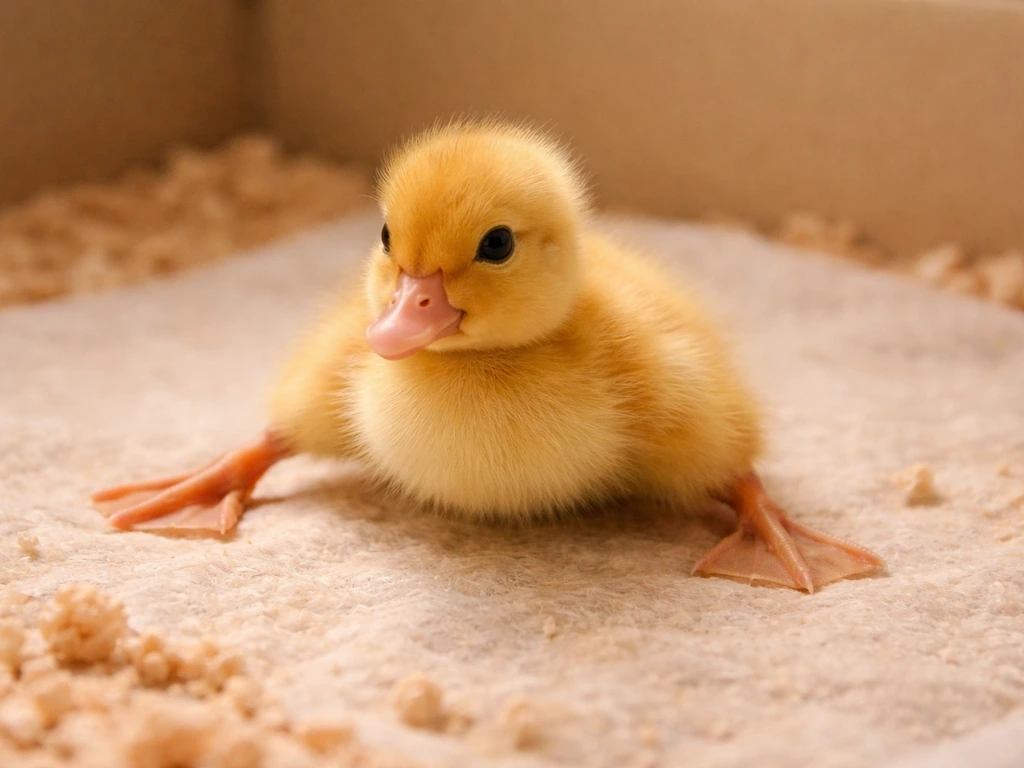
Watch your ducklings closely any time you're feeding something that isn't designed specifically for them. The following signs tell you to stop the current feed and reassess immediately.
- Leg weakness, splayed legs, or a duckling that stumbles or sits down frequently: this is a niacin deficiency flag, especially in the first two weeks.
- Twisted or drooping wing tips in birds 2–4 weeks old: angel wing from excessive protein. Lower protein immediately and do not reverse the feed change.
- Loose, watery, or very dark droppings that persist more than 24 hours: possible digestive upset from a feed change, or a reaction to a medication in the feed.
- Loss of appetite, lethargy, or a duckling that separates from the group and sits hunched: these are non-specific distress signs. Combined with other symptoms, they warrant a vet call.
- Breathing difficulty, stumbling, or inability to stand in multiple birds simultaneously: if you're using a medicated feed, ionophore toxicity is a possibility and this is an emergency.
- Feed that smells sour, musty, or off: discard it. Mold toxins accumulate quickly in warm, humid conditions and a brooder is exactly the kind of environment where feed can go bad fast.
Better options and where to find them
The cleanest solution is a purpose-built waterfowl starter. Mazuri Waterfowl Starter is one of the best-known commercial options, hitting 20% protein and providing adequate niacin without requiring supplementation. Purina Flock Raiser (at about 20% protein, unmedicated) is widely available at feed stores and works reasonably well for ducklings if you supplement niacin. An all-flock or flock raiser crumble is often a better emergency substitute than game bird starter because the protein is more appropriate and it's typically unmedicated. If you are wondering about can laying hens eat meat bird feed, the bigger issue is that meat-bird formulas are not balanced for egg-laying needs.
If you're comparing this to the question of whether ducks can eat wild bird food or general bird seed, those options are even less suitable than game bird starter. Commercial formulated crumble, whatever its limitations, is still far closer to what a duckling needs than scattered seed mixes. The same principle applies to laying hen feeds or chicken-specific starters, which are calibrated for birds with different nutritional requirements.
Wild bird peanuts are not formulated for chickens either, so treat them as an occasional, label-checked snack rather than a staple. If you're looking at laying hen feeds for adult chickens, keep in mind they are formulated around different nutrient needs than ducklings. Do chickens play with bird toys, and does it relate to how you manage their enrichment needs?
Chickens can generally eat game bird feed in moderation, but you should still check for medication and ensure the protein and calcium levels match their stage laying hen feeds or chicken-specific starters. Even though this article focuses on ducklings, the safest rule for chicken owners is to treat wild bird food as an unknown feed and avoid it unless it is specifically formulated for chickens can chickens eat wild bird food.
For sourcing, most farm supply retailers (Tractor Supply, Rural King, local co-ops) carry waterfowl starter or at minimum flock raiser crumble. If you're in an area with limited options, ordering directly from Mazuri or a regional milling company online usually gets feed to you within a few days. Keep a backup bag on hand so you're never in a position where game bird starter is your only option.
Backyard feeder and wildlife safety when ducklings are in the mix
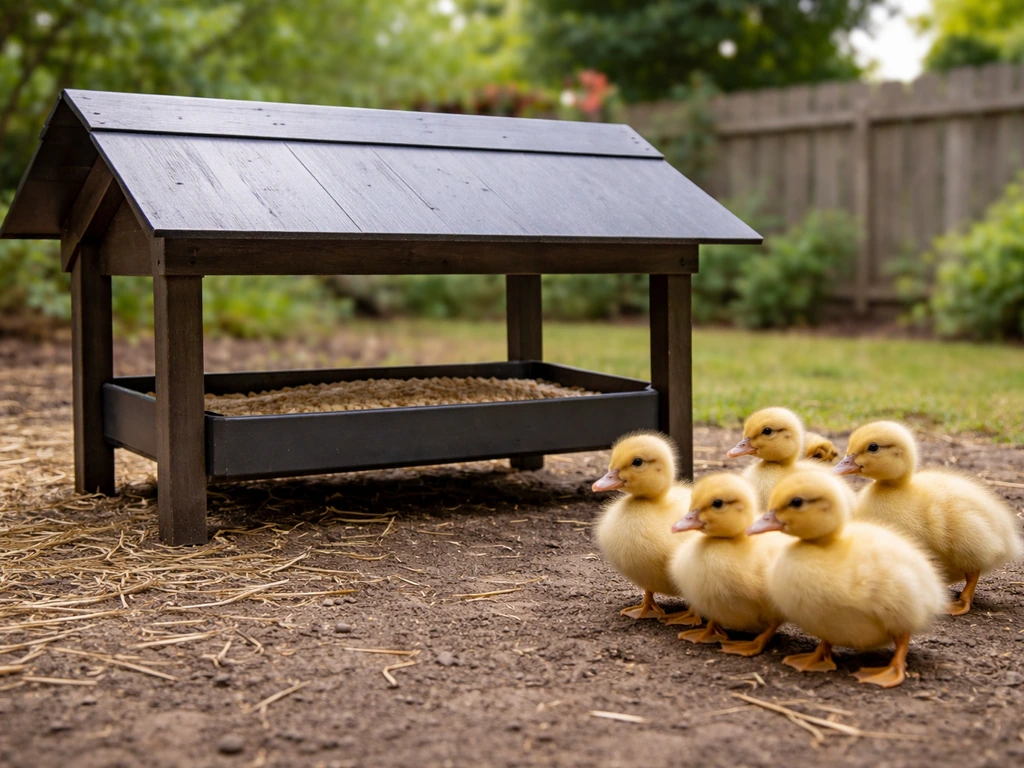
If your ducklings are in a backyard setting near bird feeders or in an area where other wildlife passes through, feed management becomes a broader safety issue. Even if you use bird toys, make sure they are safe for the species and won’t affect your ducklings' diet or hygiene. Duckling feed left out in open pans or spilled on the ground attracts scavengers and predators, including raccoons, opossums, and raptors. A duckling that wanders near a feeder area is also at risk from these same animals.
Spoiled or wet feed on the ground is a contamination risk not just for your ducklings but for any wildlife that accesses the area. Mold develops quickly in damp feed, and scattered crumble can become a toxin source within 24–48 hours in warm weather. Feed only what ducklings can consume in one sitting, refresh water frequently (wet feed in a waterer goes bad fast), and clean up any spilled feed daily.
Store game bird starter or any poultry feed in sealed, rodent-proof containers away from moisture. A metal trash can with a locking lid works well. Bags left open or stored in humid conditions lose vitamin potency and develop mold much faster than the expiration date suggests. If you're also managing a backyard bird feeder nearby, keep the feeder area and the duckling feeding area separated to reduce the chance of wild birds dropping into the duckling feed or vice versa, which can introduce pathogens in both directions.
If you're feeding ducklings in a space where feral or domestic cats, dogs, or other pets have access, secure the feeding area. A duckling focused on eating isn't paying attention to threats. The feed itself can also attract rats and mice overnight, which in turn draw predators you don't want near young birds. A simple covered feeder or feeding inside a secured pen during the brooder stage solves most of these problems and keeps your ducklings safer from both nutritional mishaps and wildlife encounters.
FAQ
Can ducklings eat medicated game bird starter if I’m only using it for a day or two?
Yes, if it is a complete, unmedicated crumble and you can confirm on the label that it does not contain a coccidiostat (no ionophore like monensin, lasalocid, narasin, salinomycin, or maduramicin, and no amprolium). Otherwise, treat it as unsafe and switch to an unmedicated waterfowl or all-flock option, then add niacin if needed.
If one bag of game bird starter is safe for ducklings, is every brand automatically safe too?
Don’t rely on “game bird” being interchangeable across brands. The safest approach is to check the label for any coccidiostat ingredient and dosing notes, and only then decide. If you cannot confirm it is unmedicated, assume it could be medicated and avoid it for ducklings.
Is game bird starter ever acceptable for ducklings you plan to keep as breeders, not just meat birds?
For egg-laying breeds, feeding game bird starter to ducklings can increase the chance of long-term growth and leg issues because the protein and niacin targets are mismatched. Even if you correct the niacin later, the early protein imbalance and any medicated ingredients can still cause problems, so plan a transition off it before the ducklings reach 2 to 3 weeks old.
What’s the easiest way to add niacin when using game bird starter, and how do I avoid overdosing or uneven dosing?
Add niacin based on the stage and your feed’s label, not by guesswork. If you choose brewer’s yeast, use it as a sprinkle over the feed and mix it evenly so every duckling gets similar dosing, then monitor droppings and activity. If you are treating for any illness or giving antibiotics, double-check medication compatibility before adding supplements.
If I cannot get waterfowl starter, can I mix game bird starter with another poultry feed to make it safer?
Yes, but only if it is a non-medicated crumble and you still address niacin. For example, if the only non-medicated alternative you have is regular poultry feed, you may still need niacin supplementation because most poultry starters are formulated for chicken niacin needs, not duck needs.
Is it better to add niacin to water or to the feed for ducklings?
Cold water or inconsistent dosing can make niacin added to water unreliable because ducklings may not drink evenly. If you add any supplement to water, measure carefully, provide fresh water frequently, and stop using it if you notice reduced intake or digestive upset.
What warning signs mean I should stop game bird starter immediately?
If ducklings stop eating, act weak, show diarrhea, or have trouble breathing after switching to game bird starter, stop that feed immediately and move to an appropriate unmedicated duckling or waterfowl starter. If symptoms are severe or you suspect ionophore medication, treat it as urgent and contact an avian veterinarian.
Can treats or supplements make game bird starter riskier even if the bag protein looks “close enough”?
Yes. Protein issues depend on the overall diet, not just the feed label. If you also give extra high-protein treats (like mealworms, poultry feeds, or fatty bird foods), you can push the total protein above what ducklings need, increasing the risk of deformities. Keep extras minimal until you are on a duck-targeted ration.
Do ducklings need grit if they are eating game bird starter crumble?
Ducklings usually do not need grit when eating a commercial crumble that is designed to be easily consumed. If you are feeding larger pieces or you are mixing in seed-like foods, then grit becomes relevant. Also, never add grit to a diet that already includes adequate digestible crumble unless you change feed texture.
Is there a maximum number of days ducklings can be on medicated game bird starter before it’s dangerous?
If your game bird starter is medicated, there is not a reliable “safe cut-off” for ionophore exposure. For amprolium, ducklings can still be at risk because it is not labeled for them. The practical decision aid is simple: use non-medicated only, and if you cannot confirm, choose another unmedicated feed.
What should I do if game bird starter gets wet or sits in the brooder?
Feeding environment matters because spilled or wet feed can mold quickly. If the feed is damp or clumped, discard it and clean the brooder area, since mycotoxins can cause illness that looks like nutrition problems. Use only the amount they eat in one sitting and refresh water often.
Next Article
Can Chickens Eat Bird Fat Balls? Safe Feeding Guide
Can chickens eat bird fat balls safely? Learn ingredients, risks like salt and rancid fat, portion limits, and what to d