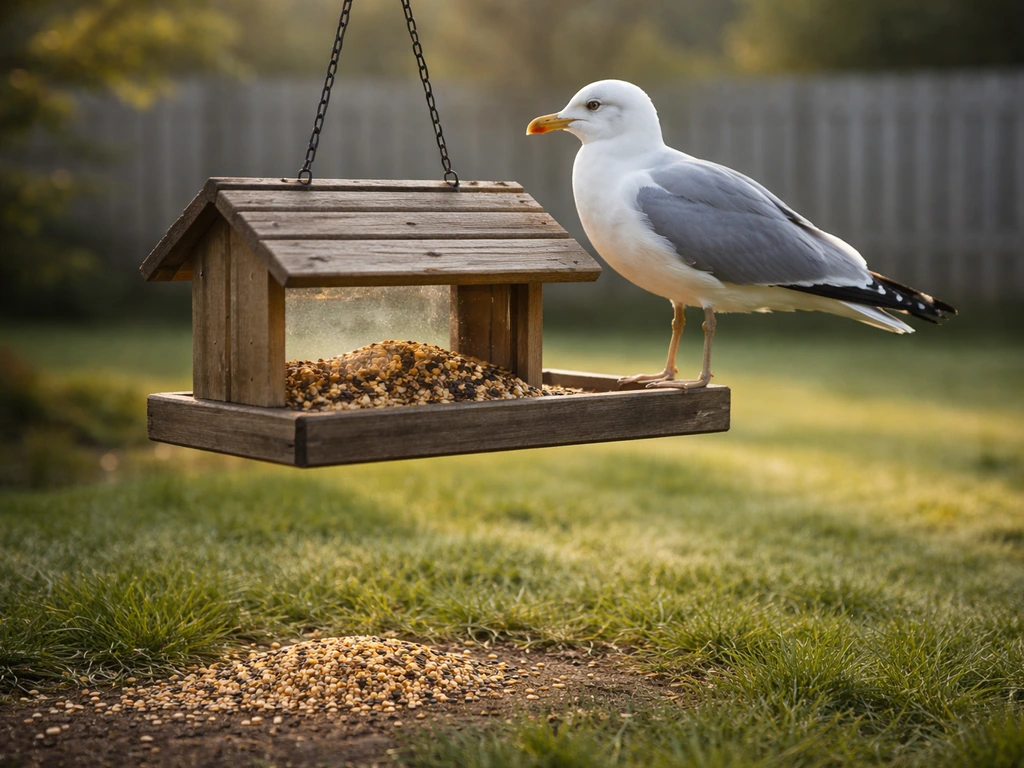
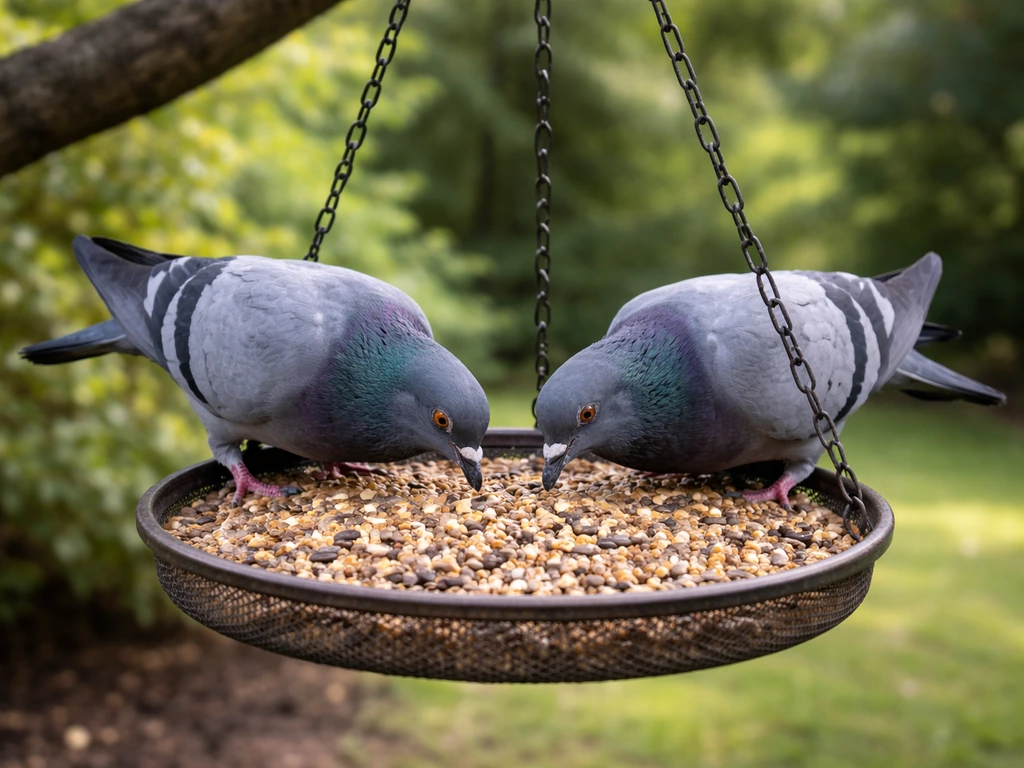
What seed types mockingbirds prefer (and what they usually ignore)
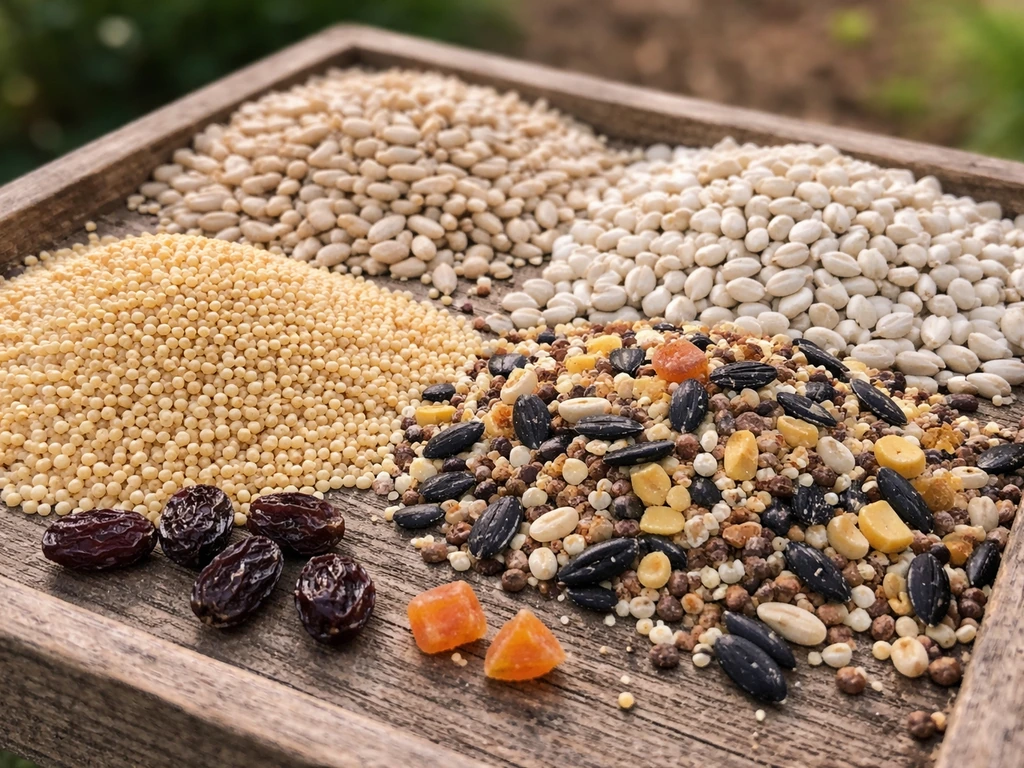
When it comes to seed, mockingbirds are largely indifferent. Sunflower seeds, millet, safflower, and corn-based mixes are the backbone of most backyard feeders, but none of these consistently pull in mockingbirds. If a mockingbird does poke around a seed feeder, it is usually because something else nearby caught its attention, not the seed itself.
What they actually want is fruit and protein. Raisins and currants soaked overnight, dried cranberries, fresh berries, and mealworms are the real draws. Missouri Department of Conservation confirms that in winter, mockingbirds will visit feeders stocked with fruits like raisins and cranberries, and that they also appreciate mealworms. So if you want mockingbirds specifically, stop thinking about seed and start thinking about a fruit-and-mealworm tray.
One practical note: peanut or dried-fruit blend mixes designed for orioles or bluebirds may get a mockingbird's attention because of the fruit component, not the nut or seed portion. Keep that distinction in mind when shopping for offerings.
Where and how they feed: feeders vs ground, timing, and foraging behavior
Cornell Lab classifies the Northern Mockingbird as a ground forager. In practice, that means they spend a lot of time walking, running, and hopping across open ground, grabbing insects, berries, and other food items as they go. They are not built behaviorally for clinging to a tube feeder and husking seeds the way a chickadee or finch would.
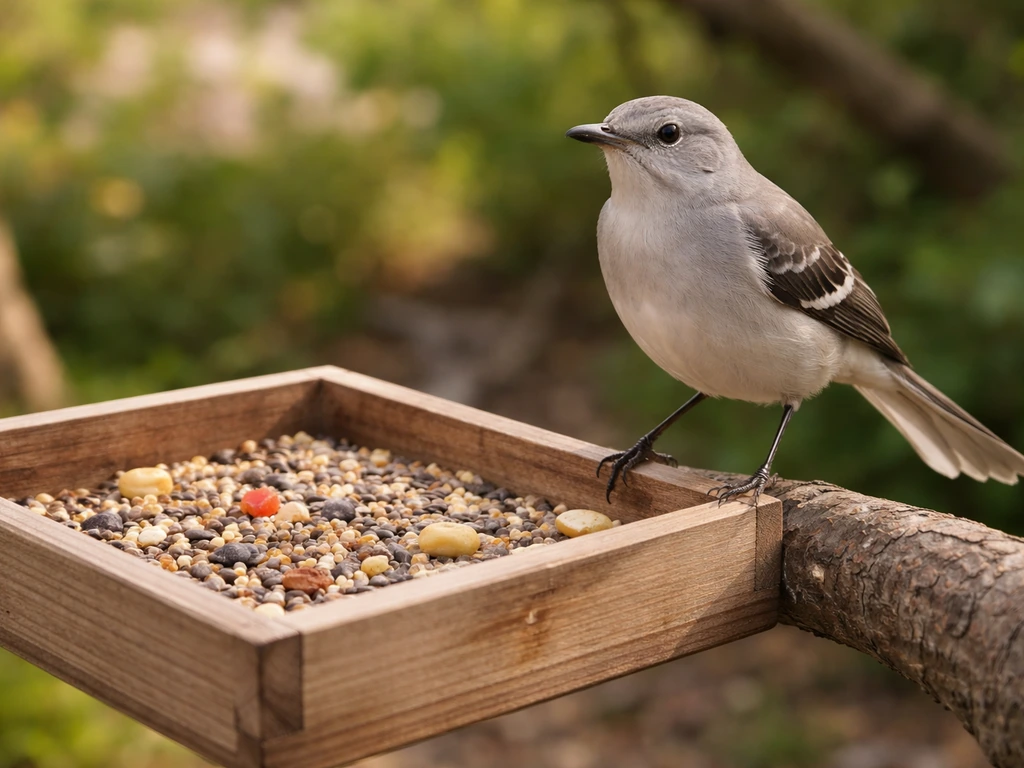
For feeder design, open tray feeders and platform feeders placed low, or right on the ground, are far more likely to get results than enclosed hoppers or tube feeders. One Project FeederWatch participant reported placing mealworms across different tray feeders and found the mockingbird literally followed the trail of mealworms from tray to tray. That behavior fits perfectly with how they naturally forage, moving systematically across a patch of ground looking for accessible food.
Cornell Lab also notes that mockingbirds will sometimes hover briefly to grab hanging fruit, so a small dish of fruit suspended at perch height is worth trying too. As for timing, fall and winter are your best window. That is when the Northern Mockingbird's diet shifts most heavily toward fruit, as both Cornell Lab and NPS confirm. Summer visitors are more focused on insects and less likely to stop at any feeder setup. If you have been trying to attract them in July with no luck, the season is working against you.
If you are curious about how feeding volumes and daily consumption patterns work across different bird species, understanding how many seeds a bird eats in a day can help you gauge how much to put out without letting food sit too long and spoil.
How to tell mockingbirds are visiting (behavior and identification cues)
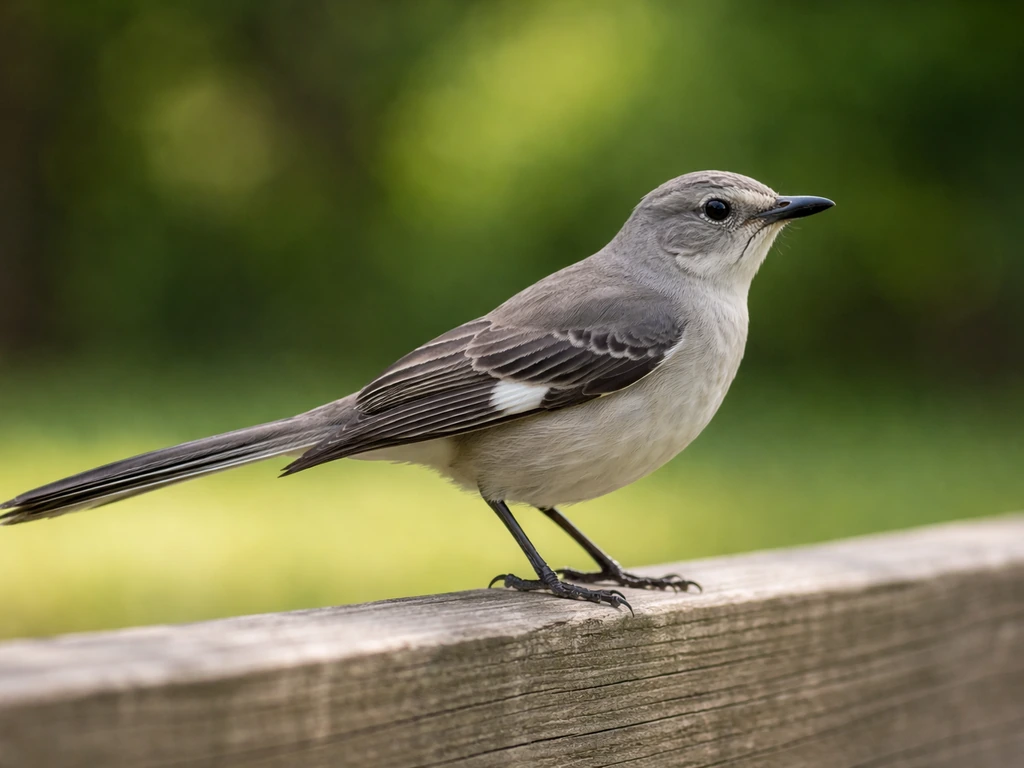
Northern Mockingbirds are medium-sized gray-and-white birds, a little slimmer than a robin, with long tails and white wing patches that flash visibly in flight. But behavior is often the easiest giveaway. When foraging, a mockingbird will frequently stop mid-movement, blank" rel="noopener noreferrer">flick its wings open, and briefly flash those white patches on the wings and tail. The Pennsylvania Game Commission specifically notes this wing-flick display as a reliable identification cue. It is distinct from other mimid species like the brown thrasher or gray catbird, which share similar habitats but do not perform the same display.
You may also notice a single bird patrolling and defending the entire feeder area aggressively. Cornell Lab describes mockingbirds as territorial and aggressive year-round, and you will often find just one individual, or a bonded pair, holding down a backyard. If a gray-and-white bird is repeatedly chasing off other species from your feeder space, that is a strong sign you have a mockingbird in residence.
Singing is another dead giveaway. Mockingbirds mimic dozens of other bird species in long, repeating sequences, sometimes even at night. If you hear what sounds like five or six different birds in a row coming from one perch, that is your mockingbird.
How to attract them today: feeder and placement choices
If you want to give yourself the best shot at attracting a mockingbird starting today, here is exactly what to do:
- Set up an open tray feeder or platform feeder at a low height, ideally accessible from the ground or close to it.
- Soak raisins or currants in water overnight, then place them on the tray. Dried cranberries work too. Audubon specifically recommends soaked raisins and currants on a table feeder as the go-to mockingbird attraction strategy.
- Add live or dried mealworms in a shallow dish on the same tray. Missouri DNR confirms mockingbirds respond well to mealworms.
- Place the feeder in a relatively open area with some nearby perch points like a low shrub or fence, since mockingbirds like a clear sightline.
- Mount the feeder on a pole about five feet off the ground with a baffle to reduce squirrel interference, which is consistent with Audubon's general feeder-placement guidance.
- Be patient in summer. Fruit-based setups work best in fall and winter when mockingbirds are actively seeking berry-type foods.
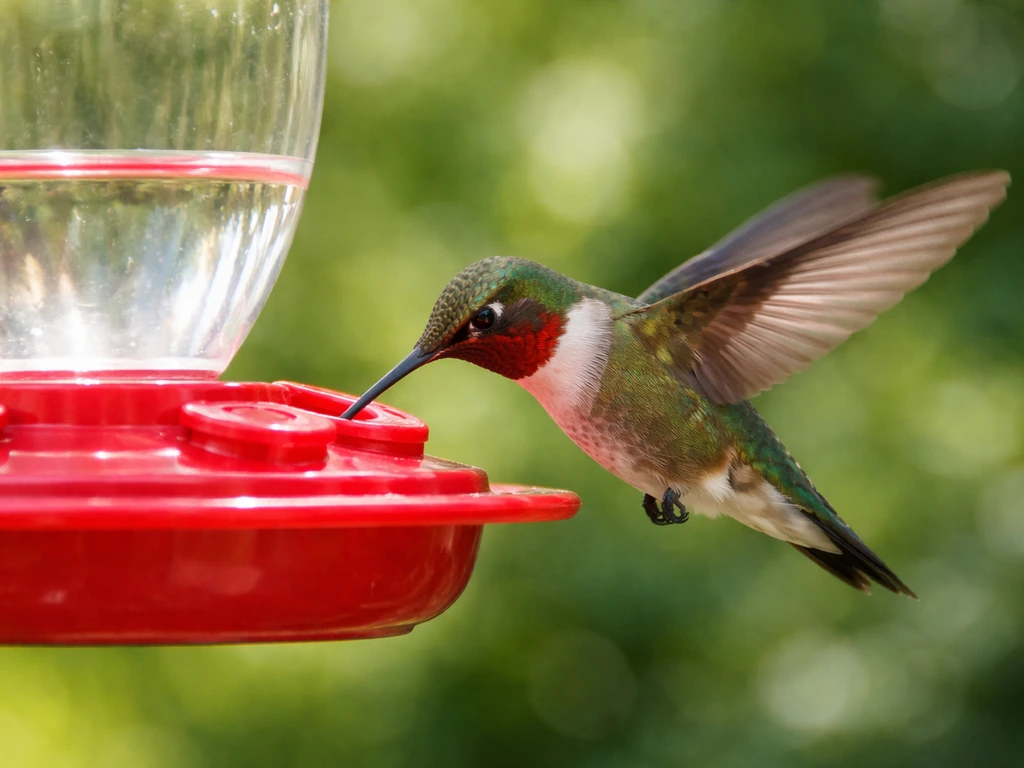
Unlike hummingbirds, which need very specialized feeders and liquid nectar, mockingbirds are pretty easy to accommodate with a basic tray setup once you get the food right. If you are wondering why hummingbirds do not eat bird seed either, the reasoning is similar: some birds are just wired for completely different food types than what standard seed feeders offer.
Mockingbirds vs other common feeder visitors
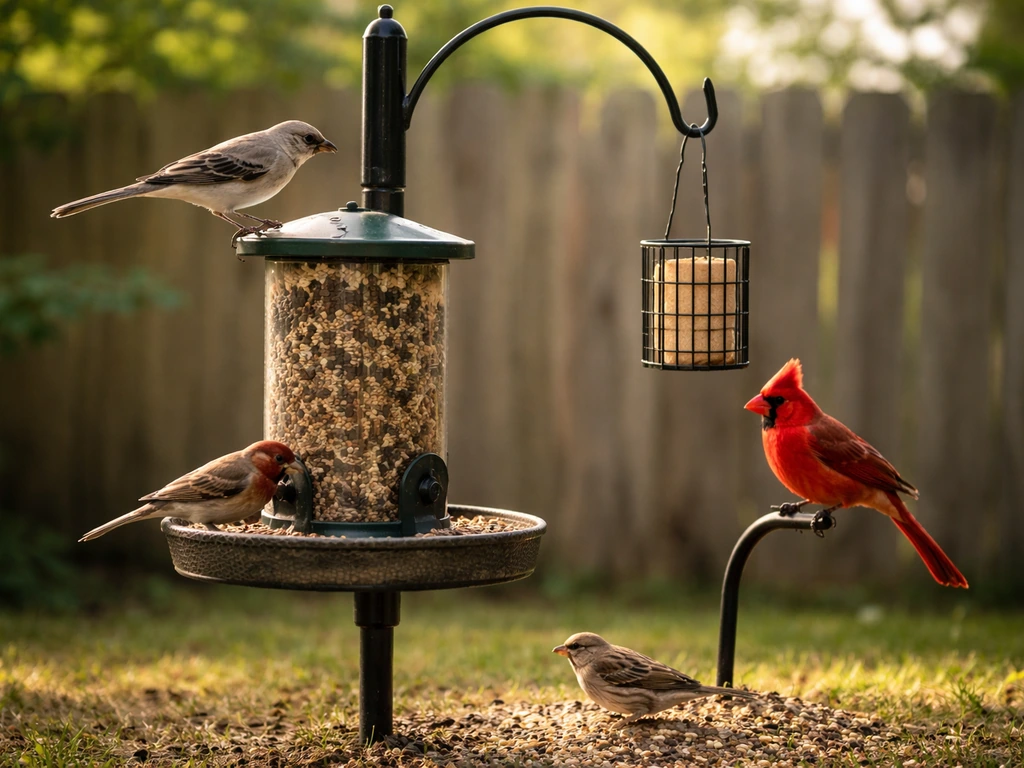
It helps to understand where mockingbirds fit in the broader ecosystem of backyard feeders. Here is a quick comparison of how they stack up against other birds you might see at or around your feeder.
| Bird | Primary feeder draw | Feeder type | Seed eater? | Territorial at feeders? |
|---|
| Northern Mockingbird | Fruit, mealworms | Open tray/platform | Rarely | Yes, aggressively |
| Northern Cardinal | Sunflower seeds | Platform or hopper | Yes | Mildly |
| House Finch | Sunflower, nyjer | Tube feeder | Yes | No |
| European Starling | Suet, scraps, seed mix | Platform or ground | Sometimes | Yes, in flocks |
| American Robin | Fruit, worms | Ground or tray | Rarely | Mildly |
Starlings are worth a special mention here because, like mockingbirds, they can dominate a feeder space. If you are dealing with both species, understanding how starlings use bird seed can help you set up a feeder strategy that serves one without inviting the other to take over completely.
Backyard safety: keep seed fresh, prevent mold, and protect pets
Even if mockingbirds are not eating your seed directly, you still need to manage what is in your feeders because spoiled seed can harm every bird that visits, and it can also create hazards for pets. Here is what matters most:
Mold and mycotoxin risks in old seed
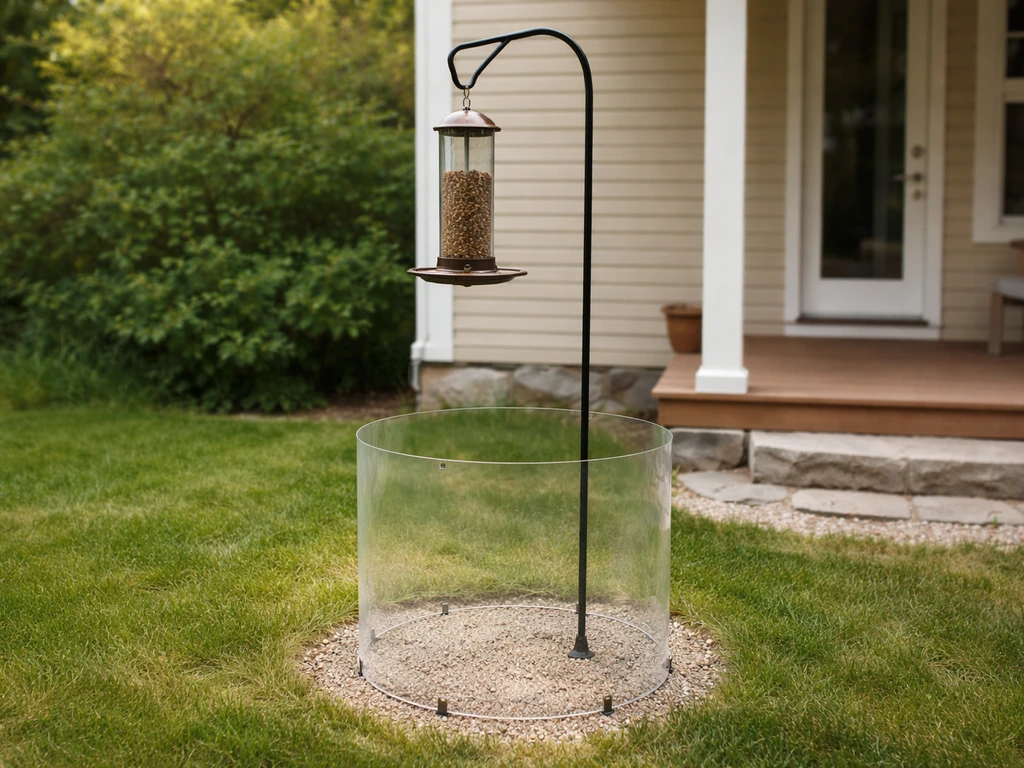
Damp or old seed is not just unappetizing, it can be dangerous. Audubon is direct about this: damp seeds can grow mold that is fatal to birds, and you should never carry seed over from one winter to the next. The USGS adds an important wrinkle: grain contaminated with toxin-producing molds may not have any visible mold on it. You cannot always see the problem, which is why regular turnover matters. The FDA also notes that temperature, humidity, and rain all accelerate mold development in grains and dried fruits, which are exactly the items you will be using to attract mockingbirds.
Georgia Wildlife warns that birds can get sick or die from feeding on contaminated seeds, and that moldy seed clogging feeders is a real disease vector. The fix is simple but requires consistency: store seed in a cool, dry container, buy in quantities you will use within a few weeks, and pull out anything that smells musty or looks clumped.
Feeder cleaning schedule
Project FeederWatch recommends cleaning seed feeders about once every two weeks under normal conditions, and more often during warm, damp weather or periods of heavy use. That means scrubbing out hulls, droppings, and residue with a diluted bleach solution and letting the feeder dry fully before refilling. For tray feeders that hold fruit and mealworms for mockingbirds, you will want to clean more often since fruit rots faster than seed.
Audubon also flags that rancid or dripping suet can damage birds' feather waterproofing over time, which is a good reminder that any food item left out too long creates cascading problems beyond just mold.
Keeping pets safe around feeders
If you have dogs or cats, feeder placement becomes a safety issue. Audubon recommends placing feeders at least five feet off the ground to keep contents out of reach of dogs, and using pole-mounted setups with baffles. A dog getting into a dish of mealworms or fruit is unlikely to cause serious harm, but moldy seed or seed hulls mixed with droppings are a different story. Keep ground-level spill zones clean if you have pets who roam the yard. Cats are a concern for the birds themselves, so position your tray feeder where a mockingbird has clear sightlines and escape routes, not tucked into dense low cover where a cat could ambush it.
Troubleshooting: if they are not eating or you want to manage their visits
Mockingbirds are ignoring your setup
If you have set up a tray with fruit and mealworms and no mockingbird has appeared, there are a few likely explanations. First, check the season. Summer is the hardest time to pull them to a feeder because insects are abundant and they do not need your help. Fall through early spring is when fruit offerings become genuinely compelling. Second, check whether a territorial individual has already claimed a different food source nearby, like a fruiting shrub or berry-laden tree. If their natural foraging is covered, they have less reason to investigate your feeder. Third, give it time. Mockingbirds are not flock birds. Cornell Lab notes they are found alone or in pairs, so you are waiting on one specific individual to discover and trust your setup, not a wave of visitors like you might get with finches.
It is also worth knowing that mockingbirds are heavy insect consumers during warmer months. Understanding how many insects a bird eats per day puts into perspective just how protein-dependent mockingbirds are in spring and summer, and why a fruit or seed setup simply cannot compete with a yard full of natural insect activity during that time.
Mockingbirds are being too aggressive and chasing off other birds
This is a genuinely common issue. Because mockingbirds are territorial year-round, one bird can effectively take over an entire feeder station and bully out every other species. The practical fix is to separate feeding stations. Put your seed feeders for finches and sparrows in one area, and place the fruit-and-mealworm tray for the mockingbird in a different part of the yard. A territorial mockingbird will generally stake out one territory and may not bother patrolling a second feeder area that is far enough away. It is also worth thinking about whether birds can eat too much bird seed when competition pressure causes some birds to feed more than they normally would just to stay ahead of the dominant individual.
You want to discourage mockingbirds entirely
If a mockingbird is causing too much disruption, the simplest approach is to remove the offerings it finds appealing (fruit, mealworms) and stick to seed-only feeders. Since mockingbirds rarely bother with sunflower or millet, a seed-focused setup is naturally less attractive to them. You will not eliminate their presence in your yard entirely since they forage broadly, but you can make your feeder area less of a destination. Keeping feeders stocked at appropriate volumes without excess also helps. Knowing how much bird seed a bird actually eats helps you stock feeders more precisely so you are not leaving excess out overnight, which attracts more competition and speeds up spoilage.
Finally, if you are managing a feeder for a broad mix of species, keep your overall consumption expectations realistic. Daily seed consumption per bird varies more than most people expect, and overstocking is one of the main reasons seed goes stale, attracts pests, and creates the mold conditions that can sicken the birds you are trying to help.