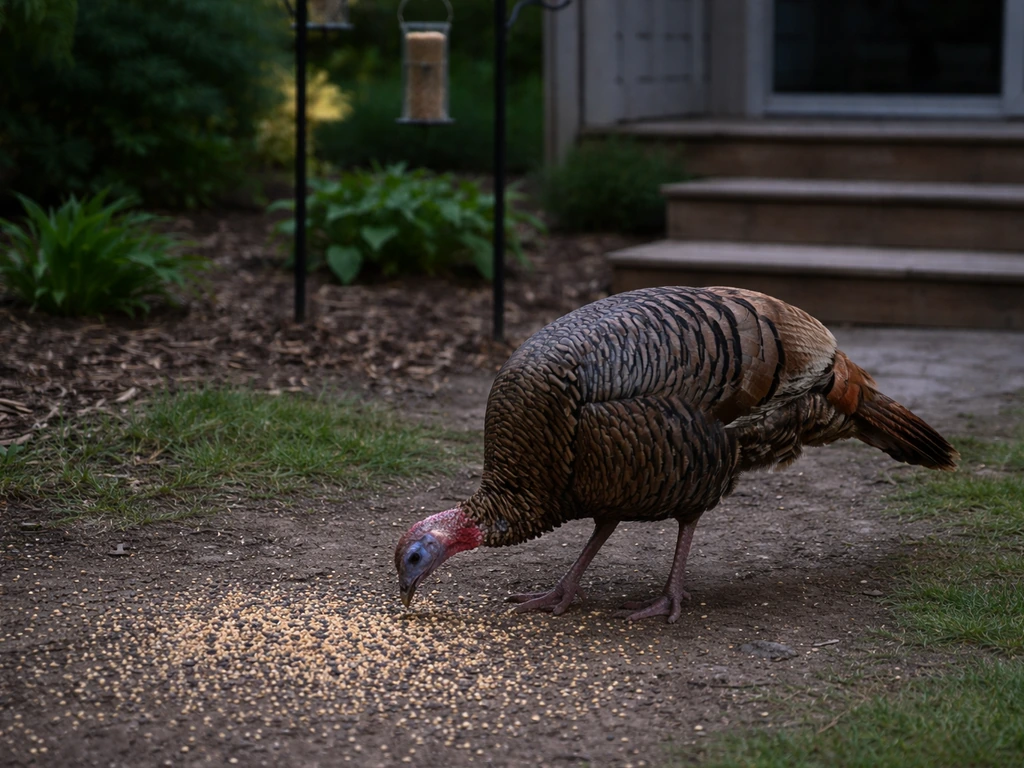
What hummingbirds actually eat
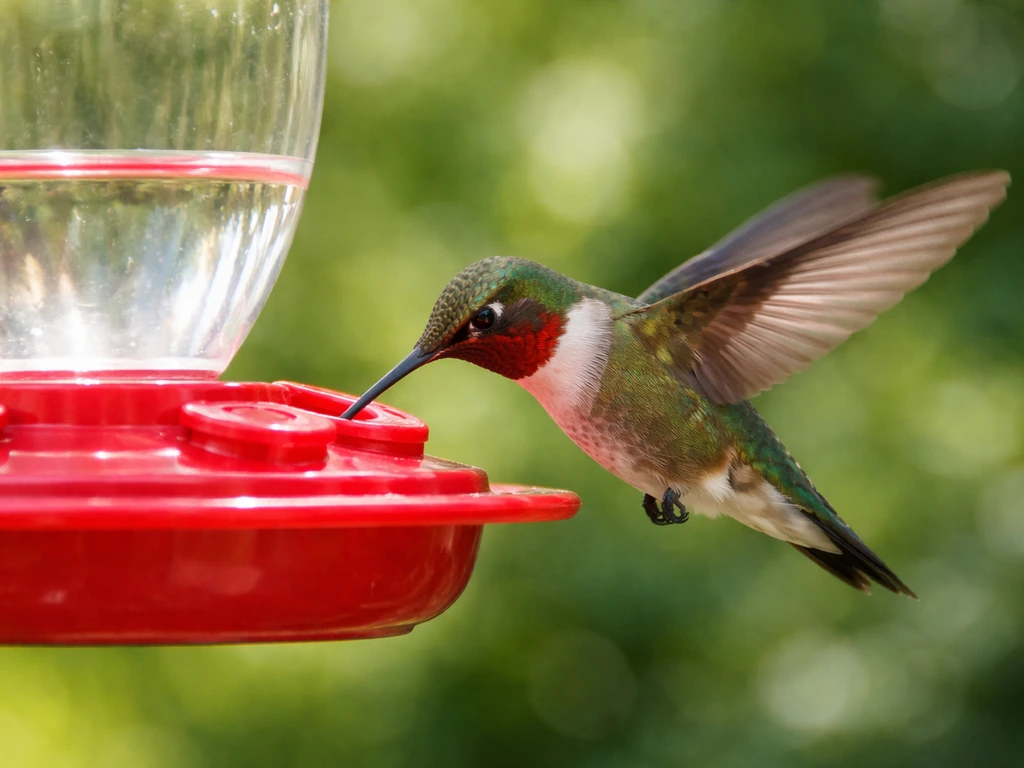
Hummingbirds are nectar feeders first and insect eaters second. Their long, slender bills and specialized tongues are designed to probe flowers and lap up nectar. In the wild, they visit hundreds of flowers per day to meet their enormous energy demands. A nectar feeder mimics that food source by offering a sugar-water solution (more on the recipe below), which is why hummingbird feeders look nothing like seed feeders.
Nectar, however, is almost pure carbohydrate with very little protein. To fill that nutritional gap, hummingbirds also eat small insects, including gnats, aphids, and tiny spiders. Cornell Lab of Ornithology notes that insects are especially important for nestlings, who need protein to grow. So if you see a hummingbird darting around and snapping at the air, it's not being playful, it's hunting. Understanding how many insects a bird eats in a day gives you a better sense of just how much protein hunting factors into a hummingbird's daily routine.
Why hummingbirds might show up near your seed feeder
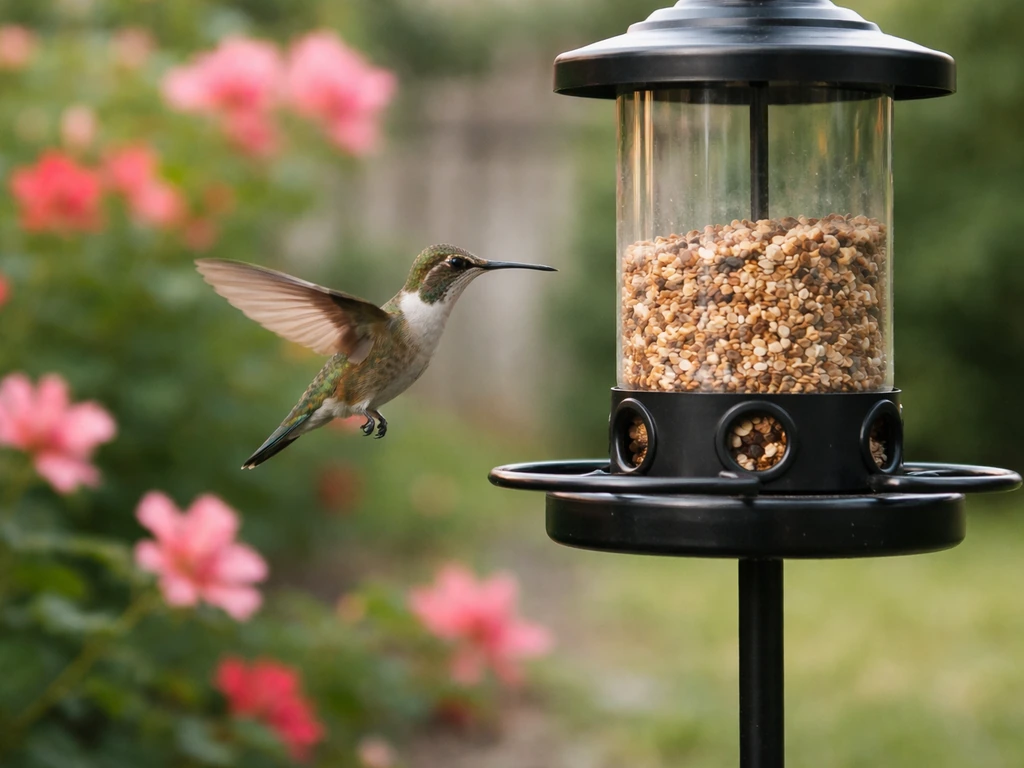
This is a common point of confusion. You set up a seed feeder, you start seeing hummingbirds nearby, and you wonder if maybe they're eating the seed after all. They're almost certainly not. Here's what's actually going on:
- Nearby nectar sources: if your seed feeder is close to flowering plants, the hummingbird is visiting the flowers, not the feeder.
- Insects near the feeder: seed feeders attract insects, and hummingbirds may be hunting those insects. Spilled seed and hulls can draw gnats, fruit flies, and other small bugs that are perfect hummingbird prey.
- Curiosity or flyover: hummingbirds investigate their territory constantly. A feeder with a bright red port or flower decoration might catch their eye even if there's nothing inside for them to eat.
- Confusion with other birds: house finches and other small birds hover briefly at feeders, and they're sometimes mistaken for hummingbirds at a glance.
Unlike species such as mockingbirds or starlings that will readily sample seeds and other backyard foods (you can read more about whether mockingbirds eat bird seed if you're trying to figure out who's raiding your feeders), hummingbirds are highly specialized and simply have no interest in seeds as a food source.
How to feed hummingbirds safely
The right nectar recipe
The recipe is simple and consistent across every reputable source: 1 part plain white granulated sugar to 4 parts water. That's it. Boil the water briefly to help the sugar dissolve and slow fermentation, let it cool, then fill the feeder. Store any extra in the refrigerator for up to two weeks. Do not use honey (it ferments quickly and can harbor dangerous mold), artificial sweeteners (they provide zero nutrition), organic or raw sugar (the trace minerals can be harmful in large quantities), or red dye of any kind (the dye is unnecessary and potentially harmful).
Feeder placement
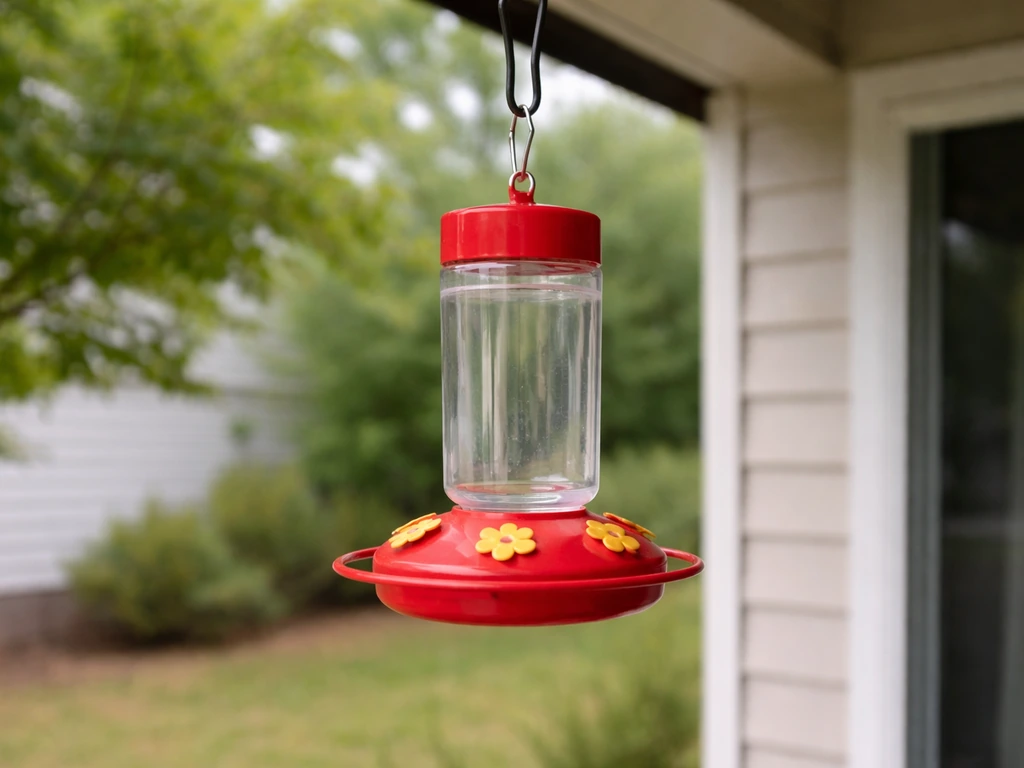
Place nectar feeders either three feet or closer to a window, or more than 30 feet away. The logic is the same as for any bird feeder: at very close range, birds can't build up enough speed to injure themselves on the glass. In the middle range, around 4 to 30 feet, window strikes become genuinely dangerous. Beyond 30 feet, birds have good situational awareness and can usually avoid the glass. Hang feeders in partial shade when possible, since direct sun speeds up fermentation and nectar spoils faster in the heat.
Cleaning schedule
This is where most people go wrong. Nectar ferments, and a feeder full of fermented or moldy solution can sicken or kill hummingbirds. The Smithsonian National Zoo recommends changing the nectar and cleaning the feeder every other day in warm weather. The Hummingbird Society similarly recommends changing nectar frequently in warm weather, such as [every day or every other day depending on temperature](https://www.
hummingbirdsociety. org/post/how-to-clean-hummingbird-feeders-and-when-to-change-the-nectar), and less often when temperatures are cooler. If the hummingbirds are emptying it faster than that, clean it every single time you refill it. Use hot water and a bottle brush to scrub all surfaces, including the ports.
A weak vinegar solution works well for stubborn residue. Skip soap and detergents entirely, since residue left behind can harm the birds. Rinse thoroughly and let the feeder dry before refilling.
When to put feeders up and take them down
In most of the continental U.S., ruby-throated hummingbirds start arriving in April and May and leave by October. In warmer regions like the Southwest and along the California coast, some species are year-round residents. A good rule: put feeders up about a week before you'd expect hummingbirds to arrive in your area, and leave them up for at least two weeks after you've seen the last bird. Hummingbirds that are migrating late will still need fuel, and taking feeders down too early can leave stragglers without resources.
What not to feed hummingbirds: the real risks of regular bird seed and other substitutes
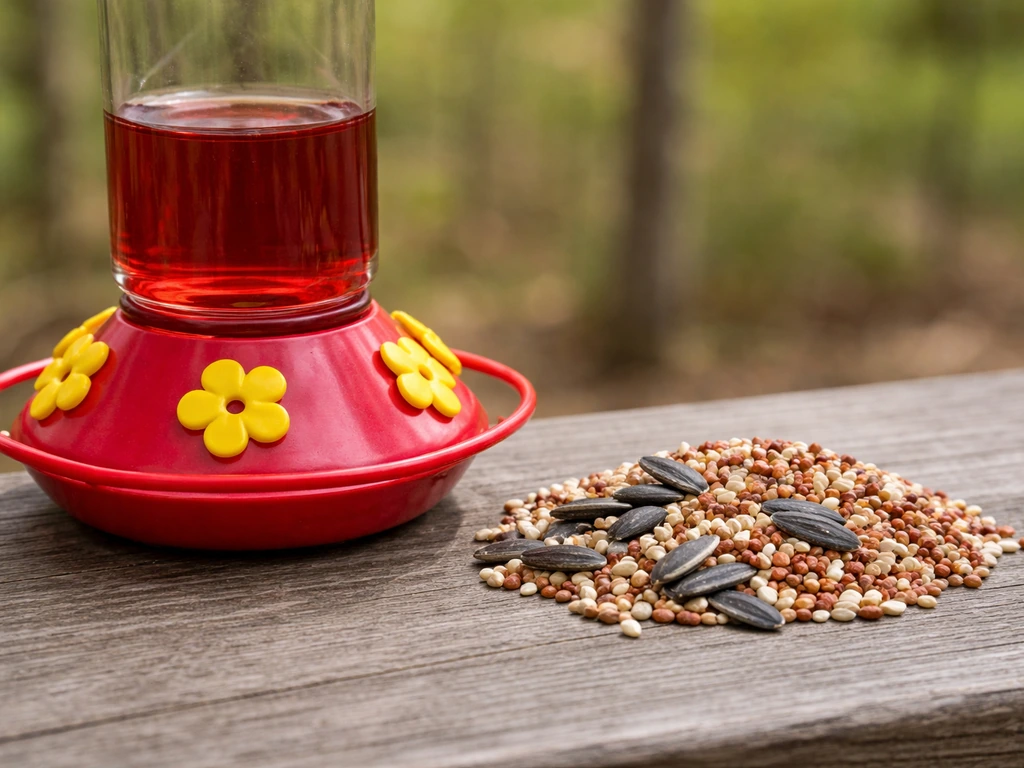
Regular bird seed, even high-quality mixes like sunflower seeds or safflower, offers hummingbirds nothing they can use. Their bills can't crack seeds, they don't have the crop anatomy to process them, and they won't attempt to eat them. Bird food intended for other species, including suet, millet, and nyjer, is equally useless and potentially harmful if a hummingbird tried to consume it. The same goes for bread, crackers, fruit juice, or anything with artificial ingredients.
The more practical risk isn't that hummingbirds will eat bird seed. It's that putting out bird seed draws in other species that can dominate a feeder station and deter hummingbirds. House sparrows, starlings, and other aggressive seed-eaters can crowd out more delicate birds. Heavy seed feeder traffic also generates spilled hulls and waste on the ground, which attracts rodents and promotes mold growth, exactly the kind of conditions that create pest and hygiene problems for your whole yard.
It's also worth thinking carefully about whether birds can eat too much bird seed, especially if you're running multiple feeders. Overfeeding with calorie-dense seeds can shift bird behavior in ways that aren't always beneficial for the birds themselves.
Comparing hummingbird feeders vs. seed feeders at a glance
| Feature | Hummingbird Nectar Feeder | Standard Seed Feeder |
|---|
| Food type | 1:4 sugar-water solution | Seeds (sunflower, millet, safflower, etc.) |
| Birds attracted | Hummingbirds only | Finches, sparrows, chickadees, jays, starlings, and others |
| Cleaning frequency | Every 1-2 days in warm weather | Weekly, more often if wet or moldy |
| Spoilage risk | High (ferments quickly in heat) | Moderate (mold grows in wet seed) |
| Pest attraction | Ants, bees, wasps | Rodents, squirrels, aggressive birds |
| Pet hazard | Low if placed out of reach | Moderate (seed ingestion, fecal contact) |
| Cost to operate | Low (sugar + water) | Moderate to high (seed costs) |
If your goal is specifically to attract hummingbirds, a dedicated nectar feeder is the only feeder worth running. Running a seed feeder alongside it is fine, but keep the two feeders separated by at least 10 to 15 feet so seed-eating birds don't crowd the nectar station.
Feeder safety for pets and backyard wildlife
Nectar feeders present fewer hazards to pets than seed feeders do, but neither is completely without risk. The main concerns around any feeder setup are hygiene, pest attraction, and keeping the feeding station from becoming a problem for the surrounding wildlife ecosystem.
Pest insects at nectar feeders
Yellowjackets, bees, and ants are the most common insect pests at hummingbird feeders. Iowa State University Extension identifies all three as genuine nuisance problems that can also deter hummingbirds from using the feeder. To manage them: use a feeder with built-in bee guards over the ports, hang an ant moat (a water-filled barrier above the feeder) to stop ants from reaching the nectar, and avoid overfilling the feeder so nectar doesn't drip and attract insects in the first place. Don't use oil or petroleum products on the hanger to deter ants, since these can contaminate the nectar or harm the birds.
Seed feeders, rodents, and pets
If you're running seed feeders in addition to a nectar feeder, the seed side of your setup carries more risk for backyard animals and pets. Spilled seed and hulls on the ground attract rodents, and a yard with a rodent population can create secondary problems for outdoor cats, dogs, and local wildlife. Dogs that root around under seed feeders can ingest old seed, but more importantly they can come into contact with bird droppings, which carry bacteria including salmonella. It's worth knowing how much bird seed a bird actually eats when you're planning your feeder setup, because overloading feeders leads to excess waste on the ground and all the problems that come with it.
Disease and feeder hygiene
Feeders of any type can spread illness when birds congregate. Salmonella is the most commonly cited risk, and it spreads easily through droppings on and around feeders. If you notice sick or lethargic birds near any of your feeders, take them all down, discard the food, clean and disinfect the feeders thoroughly, and keep them down for at least two weeks before restarting. This applies to both nectar feeders and seed feeders. Thinking carefully about how many seeds a bird eats in a day also helps you calibrate fill levels so seed doesn't sit long enough to grow mold, which is one of the faster routes to feeder-related illness.
Simple feeder hygiene checklist
- Change nectar every 1 to 2 days in warm weather, every 3 to 4 days in cooler temperatures.
- Scrub feeders with hot water and a bottle brush at every refill. Use weak vinegar for stubborn mold. No soap.
- Rinse all feeders completely and let them air dry before refilling.
- Clear spilled seed and hulls from the ground at least once a week to reduce rodent and mold risk.
- Inspect seed in feeders after any rain and replace it if it's clumped, wet, or smells musty.
- Remove all feeders if sick birds are observed. Disinfect before restarting after two weeks.
What to do right now if you want hummingbirds visiting
Skip the bird seed entirely if hummingbirds are your goal. Pick up a nectar feeder with red accents (hummingbirds are strongly attracted to red), mix up a batch of 1:4 sugar-water solution using plain white sugar, and hang the feeder in partial shade within three feet of a window or more than 30 feet away. Set a reminder to clean and refill it every two days.
Flathead Audubon Society advises that sugar water should not be left out more than 2 to 3 days (and changed daily in very hot weather) because of bacteria, mold, and fermentation risk Set a reminder to clean and refill it every two days. . If you also want to support the insect side of their diet, plant native flowering plants nearby, which attracts the tiny insects hummingbirds hunt.
That combination of a clean nectar feeder plus a bug-friendly garden is the most reliable way to bring hummingbirds in consistently and keep them coming back.