Wild birds are surprisingly good at self-regulating how much they eat, but that does not mean overfeeding is harmless. The real danger is not a bird gorging itself into obesity overnight. It is what happens when too much seed sits in a feeder or on the ground: mold, bacteria, disease transmission, and a magnet for rodents. That said, individual birds can show signs of crop trouble, nutritional imbalance, or seed-related illness, and knowing what to look for will help you act fast.
Can Birds Eat Too Much Bird Seed? What To Do Now
Maya Henderson
18 May 2026
Can birds overeat bird seed?
Technically, yes, but it is less common than people assume. Unlike caged pet birds, wild birds burn a tremendous amount of energy foraging, flying, and staying warm, which keeps most of them from eating to the point of harm. The real problem with "too much" is not a single bird eating a huge portion in one sitting. It is the cumulative effect of a feeder that is always stocked to the brim, seed that spills and accumulates on the ground, and food that sits long enough to spoil or draw disease-carrying animals into your yard.
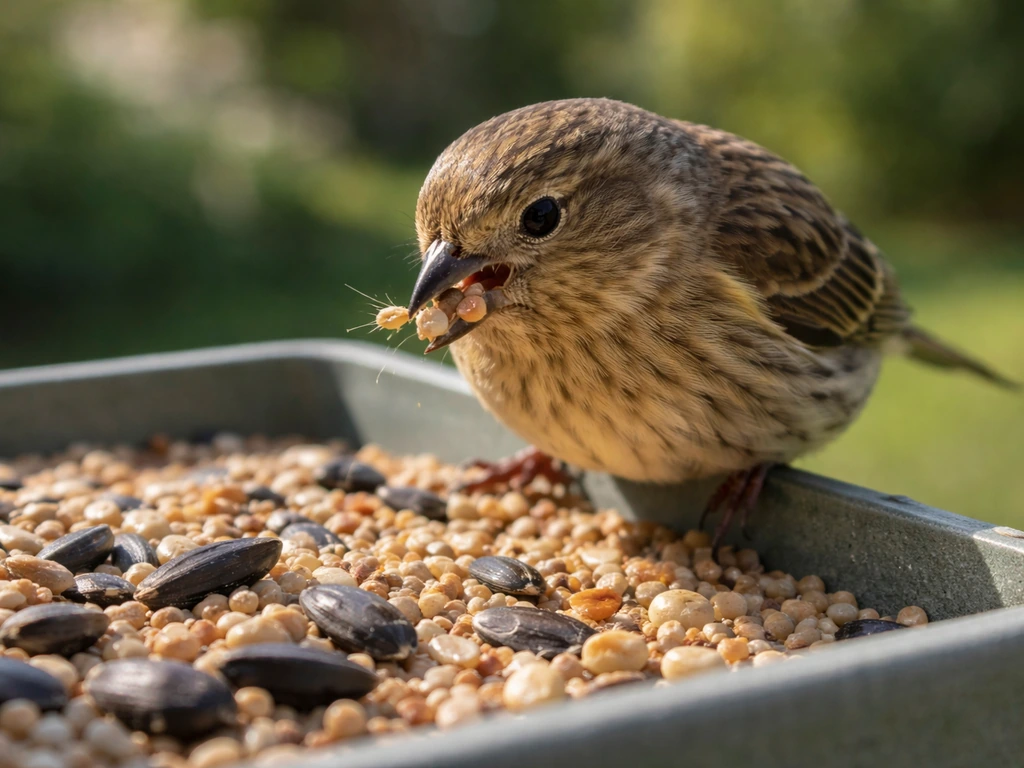
That said, individual birds can and do run into crop-related problems. A bird's crop is a pouch in its throat that stores food before it moves to the stomach. If a bird eats too fast or consumes food that does not move normally through the crop, it can develop crop impaction or crop stasis. These are not simply "I ate too much" situations. They are medical issues that need veterinary attention, not more seed. Finches, doves, and sparrows are common backyard visitors that can be affected.
For wild birds as a group, "too much" usually means too much seed on offer relative to how quickly it can be eaten fresh. A useful mental rule: if there is seed left in the feeder that has been there for more than a few days in warm or humid weather, that is already too much.
Signs a bird may be overfed or seed-sick
Some of these signs are caused directly by eating too much or the wrong seed. Others are caused by pathogens that thrive on old, damp, or contaminated seed at busy feeders. Either way, if you see these behaviors, something is wrong and your feeder is likely involved.
- Sitting at or near the feeder for long periods without flying, looking lethargic or fluffed up
- A visibly swollen or lopsided crop (the bulge at the base of the throat that does not go down after a few hours)
- Drooping wings or difficulty holding the head up
- Loose, watery, or foul-smelling droppings (can indicate salmonellosis or aspergillosis)
- Red, swollen, or crusty eyes with discharge (classic sign of house finch eye disease, also called mycoplasmal conjunctivitis)
- Rapid loss of condition, visible weight loss, or emaciation despite being near food
- Excessive thirst or labored breathing
- A bird that seems disoriented or cannot fly away when approached
Birds lingering at feeders for unusually long periods are a red flag specifically noted in connection with house finch conjunctivitis. Sick birds that cannot see well or feel too weak to forage normally tend to park themselves near a food source. If you spot this, the bird is likely ill from a feeder-transmitted pathogen, not just overfed.
Aspergillosis, a fungal lung disease linked directly to moldy seed and wet grain, causes loss of appetite, listlessness, and in advanced cases, diarrhea, emaciation, and labored breathing. This is not a disease caused by eating too much. It is caused by eating contaminated seed, which is exactly what happens when feeders are not cleaned and seed sits too long. It is a good reminder that the quantity problem and the sanitation problem are tightly connected.
The hidden risks of too much seed: mold, moisture, pests, and contamination
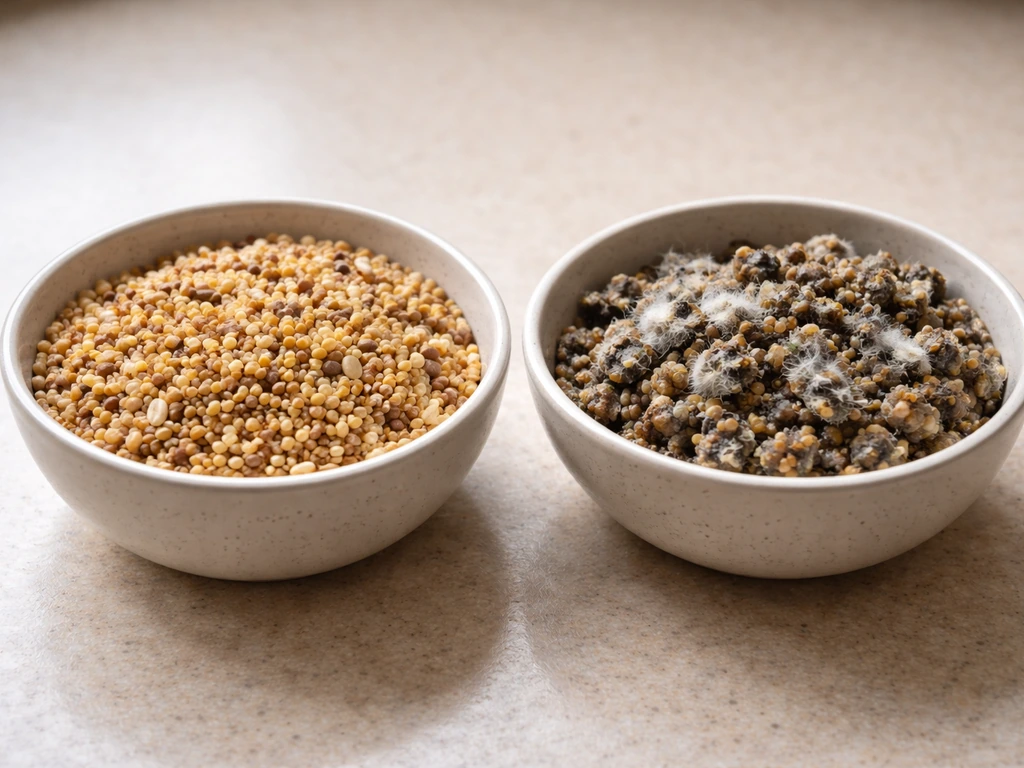
When seed accumulates faster than birds eat it, the real cascade of problems begins. Wet weather speeds this up dramatically. Even in cold-weather conditions, mold can grow on damp seed inside feeders or on the ground beneath them. Aspergillus mold, the same genus responsible for aspergillosis in birds, produces aflatoxins that are dangerous not just to birds but to dogs and cats that may eat dropped seed.
Salmonellosis is another serious risk. It spreads when birds ingest food or water contaminated with feces, which happens constantly at crowded feeders where many birds land on or sit directly in seed. Handling contaminated feeders can even infect people, which is why hygiene matters as much as the birds' health.
Beyond disease, excess seed on the ground is one of the fastest ways to attract rats and mice to your yard. King County Public Health in Washington state specifically flags bird feeders as a rodent attractant. Rodents are themselves a source of bacteria like Salmonella, so the chain from too much seed to rodents to more contamination is a short one. Insects, particularly grain beetles and weevils, also move into stored or spilled seed quickly, which can make the seed itself a hazard for birds and any pets that get into it.
How to fix it today
If you have spotted sick birds, moldy seed, rodent activity, or you just realized your feeders have been neglected for months, here is what to do right now.
- Remove the feeder temporarily. If you have seen sick birds at your feeder, take it down for at least two weeks. This is the standard guidance from both the CDC and Iowa DNR, and it gives the local bird population time to disperse and reduces ongoing disease spread.
- Clear out all seed. Empty the feeder completely. Do not just top it up. Old seed mixed with new seed spoils faster and hides contamination.
- Clean the feeder outdoors with a 10% bleach solution (1 part bleach to 9 parts hot water). Scrub all surfaces, rinse thoroughly, and let it dry completely before refilling. Never refill a wet feeder.
- Clean the ground beneath the feeder. Rake up and bag all spilled seed, husks, and droppings. This is where most mold and pathogen buildup actually occurs.
- Wash your hands thoroughly with soap and water after handling any feeder, seed, or anything from the bird-feeding area. Wear gloves if you are dealing with visibly soiled or moldy material.
- If you see a bird that is clearly unwell (cannot fly, severely lethargic, neurological symptoms), contact your local wildlife rehabilitator rather than attempting to handle or feed it yourself.
How much seed to offer and how to set up your feeder right
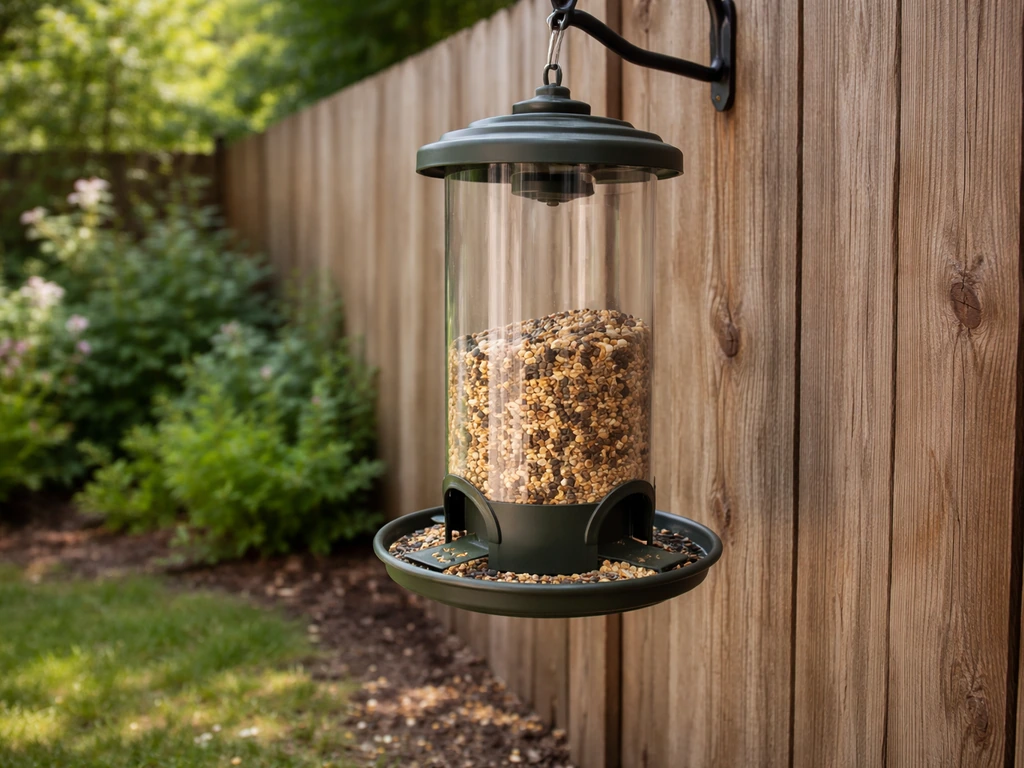
A practical starting point is to offer only as much seed as the birds in your yard will finish within one to two days. That keeps seed fresh, reduces waste on the ground, and limits contamination risk. In hot or humid weather, go even smaller since mold develops faster. In cold, dry winter conditions you have a bit more flexibility, but the two-day rule is still a good habit.
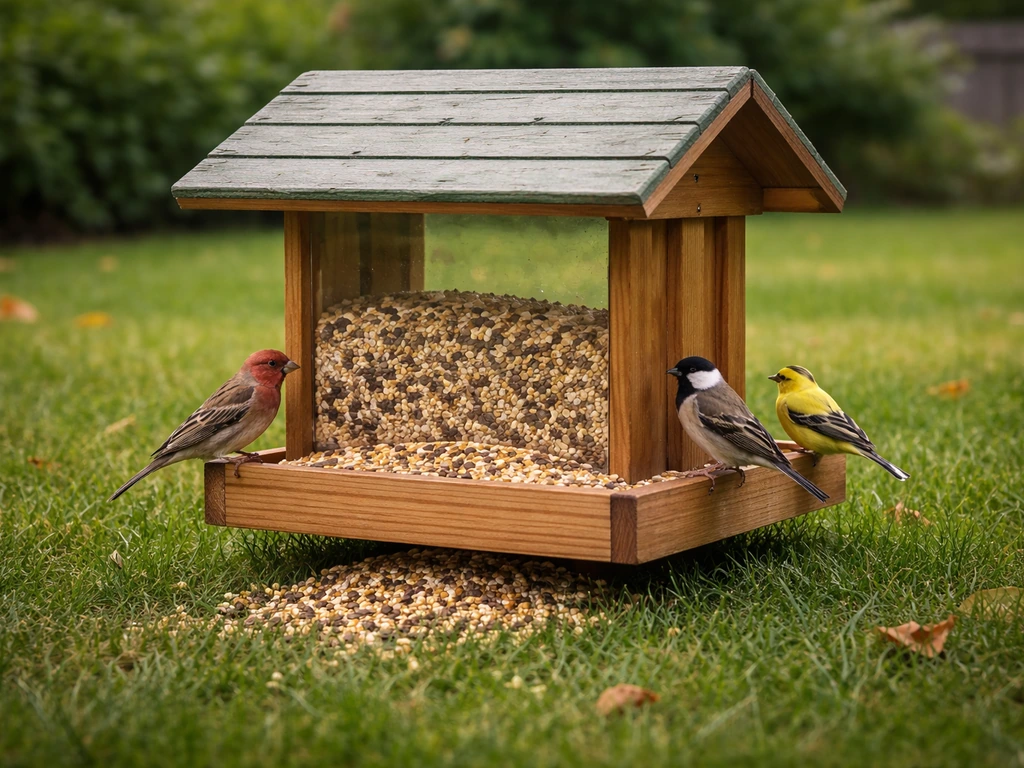
Feeder type matters more than most people realize. If you are also wondering how much bird seed a bird actually eats, the best approach is to start with small, fresh portions and adjust based on what the birds finish within a day or two how much seed you offer. Tube feeders with small ports dispense seed gradually and favor smaller birds like finches and chickadees. They reduce waste compared to open platform feeders where birds scatter seed freely.
Hopper feeders hold more volume but need more frequent checking for moisture and mold at the bottom where seed packs together. Avoid large flat-surface or table feeders if you are dealing with disease concerns, since birds sitting directly on the seed surface contaminate the food much more easily.
Placement also plays a role. Keep feeders away from areas where rodents already have cover (dense brush, woodpiles against the house). Mounting feeders on poles with baffles helps keep squirrels and rodents out. Position feeders where you can see them easily so you actually notice if seed is building up or if birds start behaving strangely.
Species and situation differences
Not all backyard birds feed the same way, and the risk profile shifts depending on who shows up.
Ground feeders
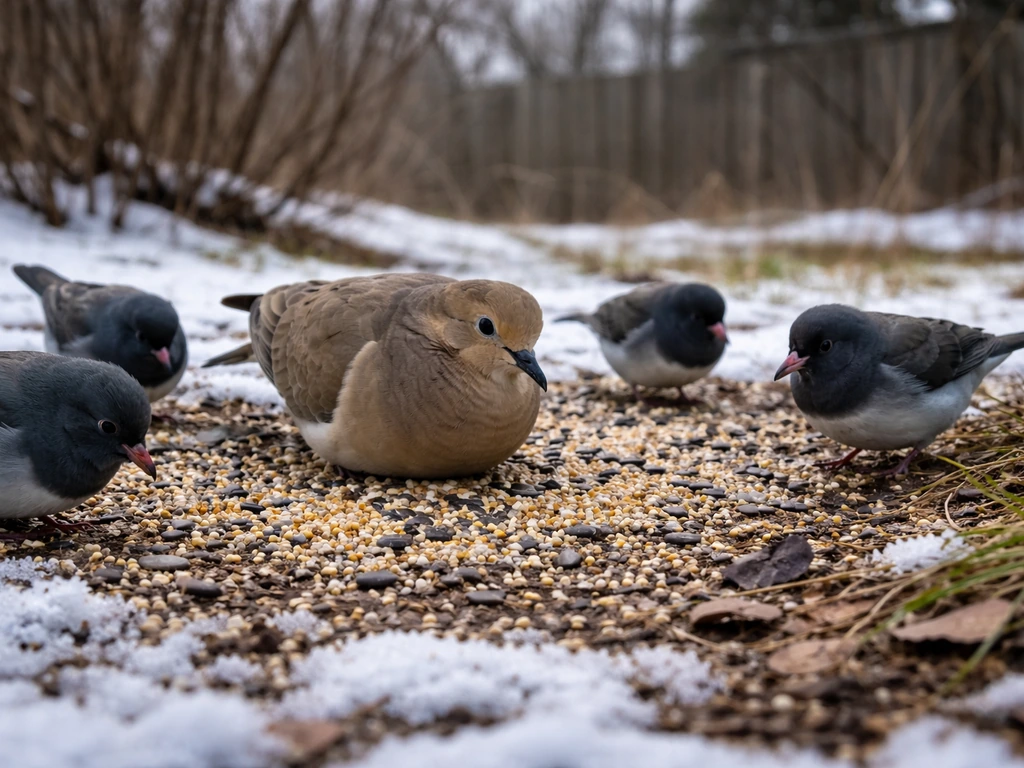
Mourning doves, dark-eyed juncos, white-throated sparrows, and towhees are among the birds that prefer picking up fallen seed from the ground rather than using a hanging feeder. Project FeederWatch specifically notes this behavior. These birds face higher exposure to contaminated seed because they are eating what has been sitting on damp ground, mixed with droppings from above. If you have a lot of ground-feeding activity, keeping the area beneath your feeders raked and clean is not optional. It is critical.
Winter crowds and flock behavior
In winter, feeders can attract significantly larger numbers of birds than at other times of year. Dense flocks mean more droppings, faster seed consumption, more contact between individuals, and faster disease spread. This is when cleaning frequency matters most. Vermont Fish & Wildlife Department also emphasizes that birdfeeders should be cleaned at least once a month to prevent pathogen buildup, especially during periods when birds crowd feeders cleaning frequency. Salmonellosis outbreaks at backyard feeders are most commonly reported in winter when bird populations concentrate around food sources.
Larger and more aggressive species
Blue jays, common grackles, and European starlings will dominate feeders and scatter large amounts of seed. Starlings are known to readily eat from many types of bird feeders, which can increase the amount of seed waste and contamination risk if seed sits too long European starlings. While mockingbirds are not the most common feeder guests, they can still visit for seed when it is available.
They are not doing more harm to themselves than smaller birds, but they drive up seed waste and feeder fouling. Using tube feeders or feeders with weight-sensitive perches that close under heavier birds can help manage this. If you are tracking how many seeds a bird eats in a day, keep in mind that a jay or a starling can displace or scatter far more seed than it actually consumes. If you are tracking how many seeds a bird eats in a day, compare it with the specific daily seed intake question in this guide to better estimate what is normal.
Knowing how many seeds a bird eats in a day helps you offer portions that stay fresh and do not accumulate. To estimate how many insects a bird eats a day, it helps to compare its insect-rich diet during active foraging with how much it gets from feeders and other food sources.
Seasonal feeding risk
Warm, humid months (late spring through early fall) carry much higher mold and spoilage risk than cold, dry winter months. RSPB guidance updated in recent years specifically recommends smaller amounts of seed, avoiding flat feeders, and stricter hygiene during warmer periods. Regardless of your location, scaling back how much you offer in summer is smart practice.
Pet and wildlife spillover safety
Dropped or spilled seed is a hazard that extends well beyond the birds themselves. Dogs are the most common household risk. Old or damp birdseed can harbor Aspergillus mold and produce aflatoxins. Aflatoxin primarily damages the liver, and dogs can be seriously harmed by eating contaminated seed that has been sitting on the ground. If your dog has been eating dropped birdseed and starts vomiting, showing lethargy, or goes off their food, contact your vet and mention the seed exposure.
Cats face a different risk. They are more likely to stalk the ground-feeding birds themselves than to eat seed, but they can still be exposed to contaminated materials in the feeding area. Keeping cats indoors near active feeders is good practice for both the cat's health and the birds' safety.
Store your seed properly. The Pennsylvania Game Commission specifically advises storing seed in rodent-proof and insect-proof containers. A metal bin with a tight lid is ideal. Seed stored in cloth or thin plastic bags in a garage or shed is an open invitation for mice, which then contaminate the seed with droppings before it ever reaches the feeder.
If you find a sick or dead bird near your feeder, the CDC advises removing the feeder and bird bath for two weeks, cleaning both outdoors, and washing your hands thoroughly. If you notice multiple dead or sick birds in a short period, report it to your state fish and wildlife agency. Clusters of sick birds can signal something more serious, such as a salmonellosis outbreak or, in rare cases, avian influenza, which should be reported to state or federal authorities.
Long-term prevention: a checklist for responsible backyard feeding
Getting your setup right once is not enough. These habits, kept consistently, are what actually prevent the cycle of seed buildup, contamination, and sick birds from repeating.
- Clean all seed feeders at minimum every two weeks with a 10% bleach solution; more often in hot, humid, or wet conditions, or whenever sick birds appear
- Always dry feeders completely before refilling, a wet feeder promotes mold within hours in warm weather
- Offer only a one to two day supply of seed at a time, and scale back further in summer
- Rake and remove spilled seed and hulls from the ground beneath feeders at least weekly
- Change birdbath water daily and scrub the basin at least once a week
- Store seed in sealed, rodent-proof metal containers away from moisture
- Use feeder styles (tube feeders, weight-sensitive perches) that reduce seed scatter and limit access by large or nuisance species
- Keep feeders positioned where you can monitor them easily for seed buildup, moisture, or unusual bird behavior
- Take feeders down for two weeks any time you observe multiple sick or dead birds
- Wash hands with soap and water every time you handle feeders, seed, or birdbath water
- Keep pets away from feeder areas or at minimum check those areas regularly for old or moldy seed
- Contact a local wildlife rehabilitator for any bird that cannot fly, appears severely ill, or shows neurological symptoms
Feeding birds in your backyard is genuinely beneficial when done right. The birds get a reliable food source, and you get to watch them up close. Hummingbirds generally prefer nectar, so you may not need bird seed for them do hummingbirds eat bird seed. The problems come from neglect, not generosity. Keeping feeders clean, portions reasonable, and the ground tidy under them is really all it takes to keep the whole system healthy for birds, pets, and people alike.
FAQ
If I suspect I overfilled the feeder, should I stop feeding entirely or just reduce the amount?
Remove the old seed and any spilled seed first, then switch to smaller, fresh portions for a week. Clean the feeder and any accessories (like trays or platforms) with hot soapy water, and let everything fully dry before refilling. If you see ongoing sickness in more than one bird over a few days, stop feeding and contact your state wildlife or animal health agency for guidance.
Can seed be “too old” or moldy even when birds seem fine right away?
No, seed that has been damp or sitting too long can be hazardous even if it was eaten quickly at first. As a rule, discard any seed that looks clumped, moldy, has a musty smell, or has been contaminated by droppings. Replace it with fresh seed, and check storage too, since mold can start before the seed ever reaches the feeder.
What’s the best way to tell if my feeder has a moisture problem (not just “not enough cleaning”)?
Yes, especially with tube or hopper feeders where seed can accumulate and pack moisture at the bottom. Check the lowest point of the feeder and the tray area for wet clumps or a damp ring, not just the visible top layer. If you find moisture, clean and dry the feeder promptly and reduce how long seed is left out.
How should I adjust the 1 to 2 day rule during spring, summer, and winter temperature swings?
Most of the time, you reduce risk by feeding only what is likely to be eaten within 1 to 2 days. For winter, you can maintain that cadence but be stricter if temperatures swing warm and humid. If you have a lot of ground feeding, treat “one day” as the safer target, because spilled seed mixes with droppings and stays accessible to birds and pests.
If I see one bird acting “full,” how do I know it’s a crop problem versus just overeating?
Crop impaction or crop stasis is typically not fixed by offering less seed, because it is a medical condition. If a bird is bloated in the throat area, stays puffed up, seems unable to swallow, or has trouble moving normally, stop feeding that species at your feeder and contact an avian rehabilitator or wildlife vet for advice.
Is there a safer way to manage the risk to dogs if they get into spilled seed?
If you have a pet that may eat dropped seed, that can become the bigger risk than the birds themselves. Pick up spilled seed regularly, keep pets out of the feeding zone, and store seed securely so it does not become accessible to them. If your dog has access to dropped seed, call your vet right away if you see vomiting, lethargy, or loss of appetite, and mention possible birdseed exposure.
What feeder types are most likely to cause “too much” problems, even if I’m only refilling once or twice?
Yes. Open platform and table feeders increase scattering and allow birds to sit directly on food, which speeds contamination from droppings and wet ground. If you are seeing repeated illness or you notice lots of seed buildup underneath, switch to tube feeders with small ports or weight-sensitive feeders that limit waste and reduce direct contact with seed.
A bird keeps coming back sick to my feeder, what should I troubleshoot first?
Start by reducing the volume and increasing cleaning frequency, not by blaming a single bird. Also check your setup for common triggers: seed left for days, dampness in the feeder, heavy ground feeding, and rodent access. If sick reports keep happening, consider temporarily stopping feeding to break the contamination cycle while you clean and reassess placement.
Why do I sometimes see sick birds even when I cleaned recently?
Not necessarily. A feeder can be “clean enough” visually but still carry contamination in hard-to-reach spots, like feeder seams, the bottom where seed packs, and any perches or baffles that collect residue. Scrape off buildup, wash thoroughly, and remove old seed around the base. Drying matters too, because moisture can start mold within days.
What’s the safest way to pause feeding after finding sick or dead birds nearby?
If you stop feeding, you may still need to deal with the contamination already in place. Remove the feeder and any bird bath, clean the surrounding area, and keep pets away from spilled seed. When you resume, start with smaller amounts and ensure fresh, dry conditions to prevent “old-seed exposure” for the next round of birds.