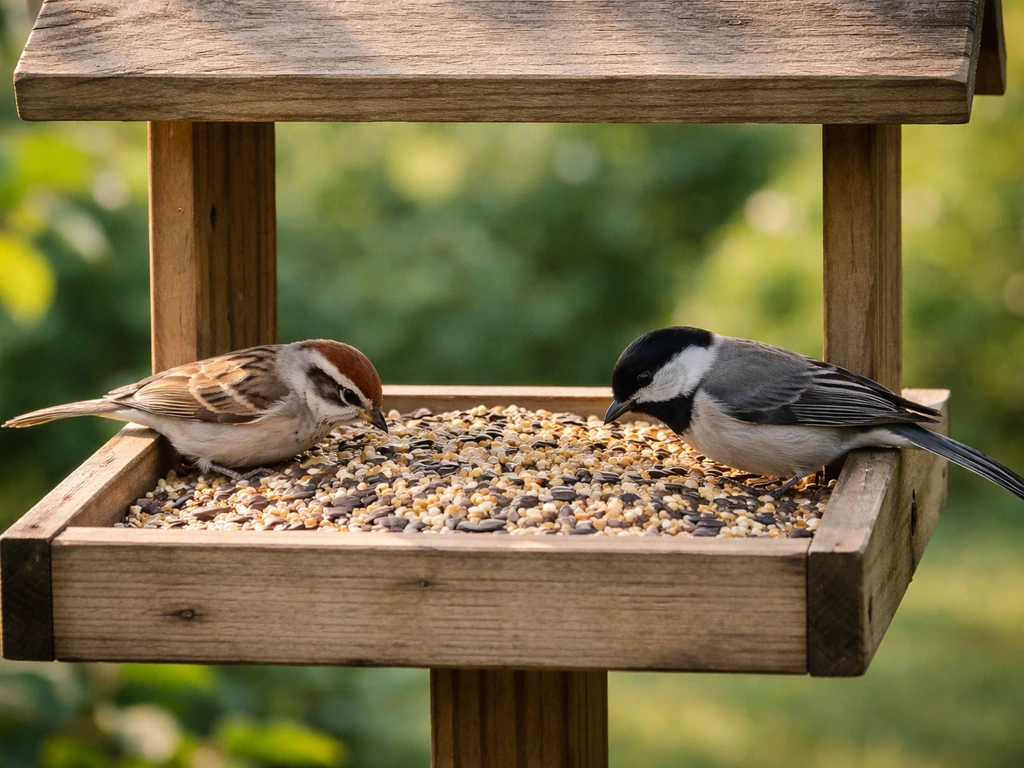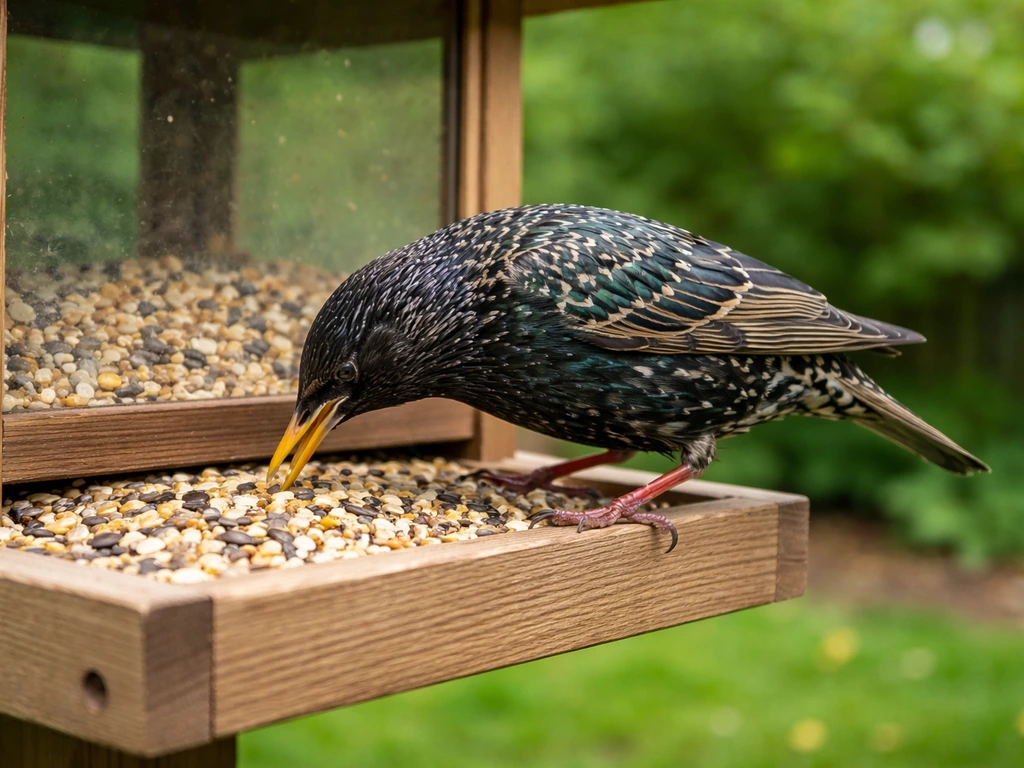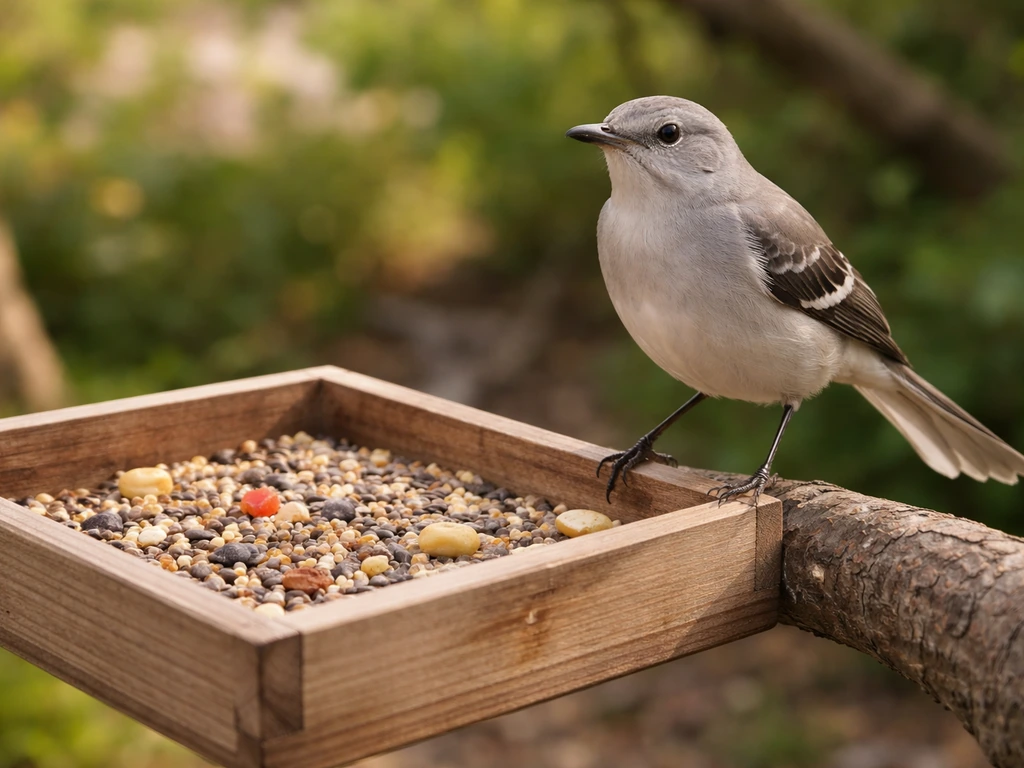
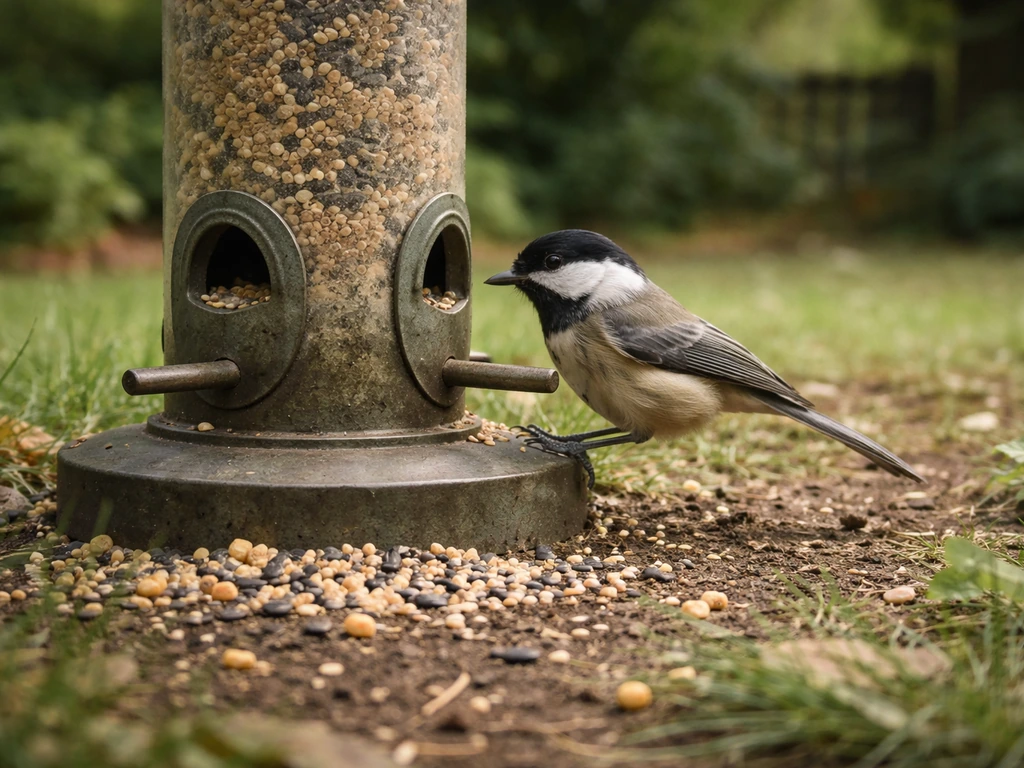
Most small backyard birds like chickadees and finches eat roughly 35% of their body weight in food per day, which works out to somewhere between 30 and 70 individual seeds depending on seed type and the bird's size. Larger birds like Blue Jays eat closer to 10% of their body weight daily, meaning they consume more seeds per sitting but need fewer meals to hit their target. The honest answer is that there's no single number, but you can get a reliable ballpark for your feeder in about a week using a simple tracking method described below. Do hummingbirds eat bird seed, and if so, what kind of seed matters for hummingbirds feeder.
How Many Seeds Does a Bird Eat in a Day?

Maya Henderson
11 May 2026
How much small vs. large seed-eating birds actually eat each day
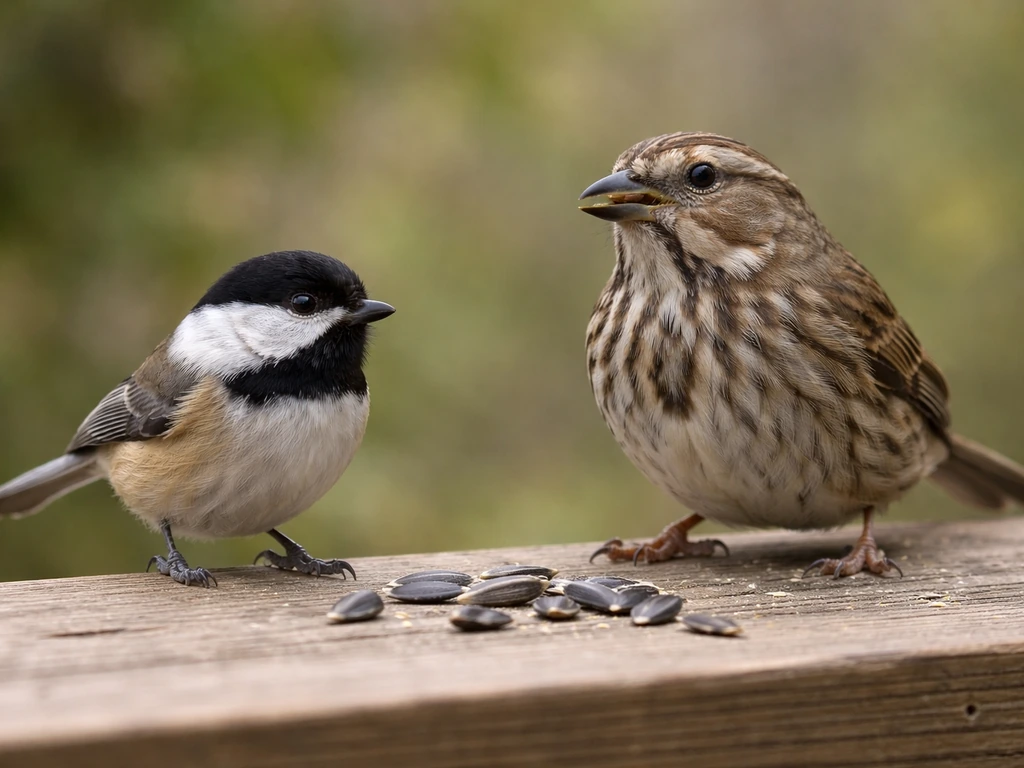
Bird size is the biggest factor driving daily seed intake. A Black-capped Chickadee weighs about 11 grams and needs to eat roughly 35% of its body weight in food each day just to survive, especially in cold weather. Research puts that at up to about 70 black-oil sunflower seeds per day as a practical upper limit if that's all it ate.
In reality, chickadees mix seeds with insects and berries, so feeder visits cover only a portion of that total. A Blue Jay, weighing around 85 grams, only needs about 10% of its body weight daily, but each seed it eats is much bigger and it often caches extras. A Common Raven needs only around 4% of its body weight per day.
Shell-handling speed matters just as much as hunger. A study on Bullfinches found that larger birds dehusk sunflower seeds at about 12 seeds per minute, while smaller birds of the same species managed only about 6 seeds per minute. So even within a single species, body size affects how quickly a bird can actually process seeds, not just how many it needs.
| Bird | Approx. Body Weight | Approx. % Body Weight Eaten Daily | Rough Sunflower Seeds/Day (if seed were sole food) |
|---|---|---|---|
| Chickadee | 11 g | ~35% | 50–70 |
| House Finch | 20 g | ~25–35% | 40–60 |
| Blue Jay | 85 g | ~10% | 20–40 (larger seeds) |
| Mourning Dove | 120 g | ~10–15% | Prefers millet; 100+ small seeds |
| Common Raven | 1,100 g | ~4% | Wide omnivore; seeds a small fraction |
These numbers are upper estimates for seed-only diets. Most feeder birds also forage on insects, fruit, and other food sources away from your yard, so they won't be pulling 70 sunflower seeds out of your feeder every single day. Think of the feeder as one stop on a longer daily route.
Seed type and feeder setup change everything
Not all seeds are equal in calories or size, so the number of seeds a bird eats in a day shifts dramatically depending on what you're offering. A chickadee getting all its energy from tiny millet seeds would need to eat many more individual seeds than if it were eating energy-dense sunflower hearts. Keep that in mind when you're trying to estimate consumption by counting seeds.
Sunflower seeds
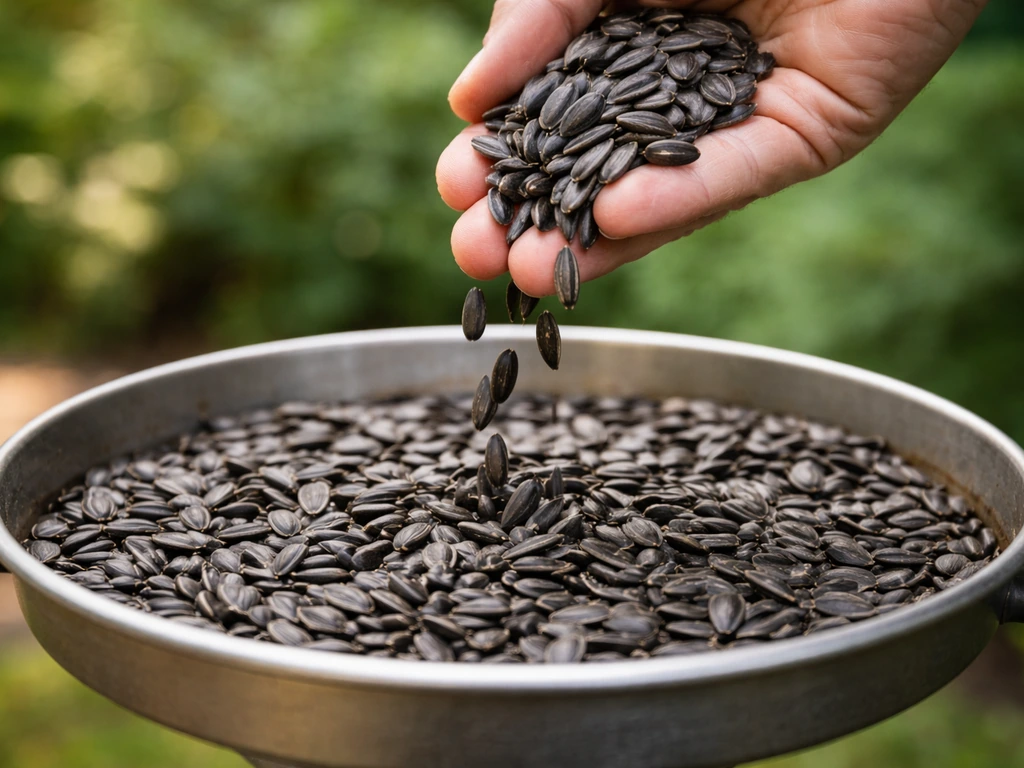
Black-oil sunflower seeds are the most popular feeder seed for good reason: they attract the widest variety of birds and pack a lot of calories into a small package. One thing worth knowing is that the hull on an in-shell sunflower seed makes up roughly 25 to 30% of the total weight, so birds are discarding a significant portion of what you're putting out. That pile of shells under your feeder isn't wasted seed, it's actually evidence your birds are eating well. Hulled sunflower hearts are more efficient, but they spoil faster and should only be put out in amounts that will be eaten within a day or two.
Millet and cracked corn
White millet is tiny and low in calories compared to sunflower, which means birds like sparrows and doves eat far more individual seeds per day when millet is the main offering. Cracked corn is popular with larger ground feeders like Mourning Doves, Northern Cardinals, and squirrels. It's cheap and effective but spoils quickly when wet, so use shallow trays and refresh frequently. Mixed seed bags often include a lot of filler seeds (red millet, milo) that many backyard birds actively reject and toss to the ground, creating mess and attracting pests without adding much feeding value.
Feeder type affects how much gets eaten vs. wasted
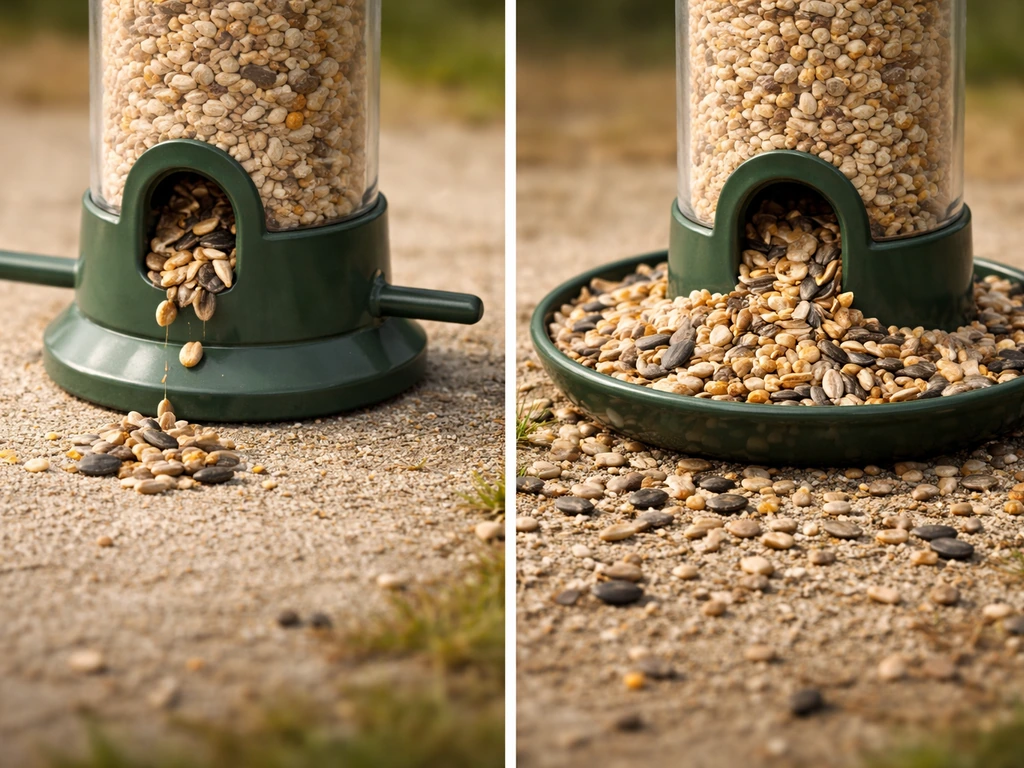
- Tube feeders with small ports reduce waste and limit access to the specific seed inside, which keeps the right birds at the right feeder.
- Platform or tray feeders expose more seed to weather and droppings, leading to faster spoilage, but they work well for ground-feeding species.
- Caged feeders block larger birds and squirrels, which measurably increases the share eaten by your target small songbirds.
- Feeders with trays underneath catch fallen seed and reduce ground mess, which helps limit rat and squirrel activity.
How to estimate how many seeds your birds eat at home
You don't need a lab to get a usable estimate. A simple method that works well: fill your feeder to a known level at the same time each morning, then check how much is gone the next morning before you refill. After five to seven days, you'll have a reliable average daily consumption for the whole feeder. Divide by the average number of birds you see visiting to get a rough per-bird number.
For chickadees specifically, research supports an even simpler approach: because a chickadee typically grabs one sunflower seed per feeder visit, counting feeder visits (or watching for a few 15-minute windows and multiplying out) gives you a direct seeds-per-day proxy for that species. It's not precise, but it's actionable.
- Fill your feeder to a measured level (use a measuring cup) every morning at the same time.
- Note how much seed you added and how much remained before refilling.
- Track this for 7 days and average it out to get daily feeder consumption.
- Watch your feeder for two or three 15-minute windows on a typical day and count visiting birds.
- Divide total daily seed consumed by average bird visits to get a rough per-bird estimate.
- Adjust for obvious non-bird consumers: squirrels raiding the feeder will inflate your numbers.
What makes birds eat more or less on any given day
Season is the biggest driver of day-to-day variation. Birds eat the most during temperature extremes (deep winter cold and during late winter when natural seed sources are depleted), during migration when they need to build fat fast, and right after breeding season when adults are feeding young and recovering. On mild fall days with plenty of wild food available, your feeder might barely be touched. Feeding is most impactful in late winter and early spring when natural seeds are exhausted, so don't be alarmed if your feeder sits quiet some weeks.
Competition at the feeder also suppresses individual intake. Dominant species and larger birds displace smaller ones, so if you have a flock of starlings or House Sparrows dominating your feeder, your target birds may be getting far less than they need. Do starlings eat bird seed, and if so, how much can they consume compared with other feeder birds? Age matters too: juvenile birds are less efficient foragers and may visit feeders more frequently but take longer per seed.
- Cold snaps: Expect a 20–40% jump in feeder activity as birds burn more calories to stay warm.
- Migration periods (spring and fall): Transient visitors may dramatically spike your seed consumption for days at a time.
- Hot, dry summers: Many birds shift to insects and fruit; seed consumption can drop significantly.
- Feeder competition: Dominant species at the feeder reduce access for smaller birds, effectively cutting their daily intake.
- Natural food availability: When berries, insects, and wild seeds are abundant, feeder use drops.
Keeping seed safe: mold, spoilage, and pests
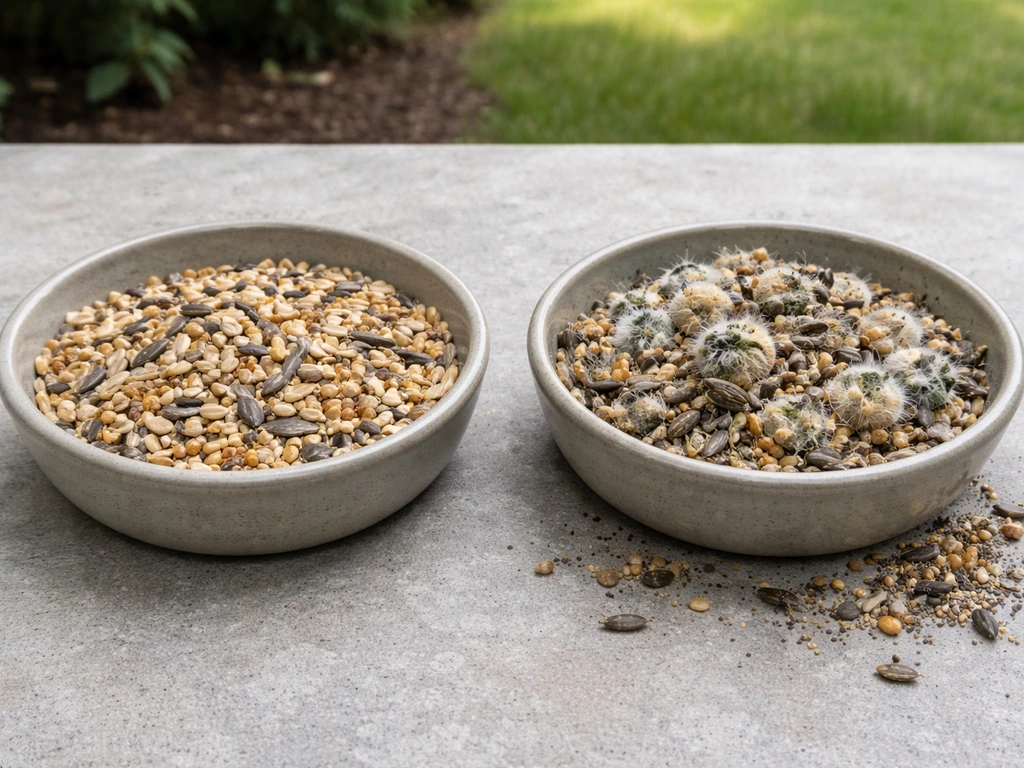
Spoiled seed is a real hazard. Moldy seed can make birds sick, and wet seed clumped at the bottom of a feeder is one of the most common problems backyard feeders run into. Hulled sunflower hearts and other shell-free seeds are particularly risky because they lack the protective coating of an intact hull, and they can develop dangerous bacteria quickly in warm or damp conditions. Only put out what your birds can finish in a day or two.
Dirty feeders have also been directly linked to disease outbreaks in wild bird populations. Conjunctivitis in House Finches, for example, has spread through contaminated feeders. An experimental study found that higher feeder density can enhance House Finch disease transmission dynamics by increasing feeder availability blank" rel="noopener noreferrer">Conjunctivitis in House Finches. Mycoplasmal conjunctivitis in House Finches has been linked to transmission associated with bird feeder use, with feeders acting as fomites blank" rel="noopener noreferrer">contaminated feeders. The practical fix is straightforward: clean your feeders regularly, dry them completely before refilling, and don't let old seed accumulate.
Basic feeder hygiene checklist
- Clean tube and hopper feeders every two weeks under normal conditions, and weekly during warm or wet weather or heavy use.
- Scrub with a 10% bleach solution (about 1 part bleach to 9 parts water), rinse thoroughly, and let dry completely before refilling.
- Check the bottom of your feeder every time you refill and discard any clumped, wet, or discolored seed immediately.
- Sweep up spilled seed from the ground regularly to reduce pest attraction and prevent mold buildup.
- Store your seed supply in airtight containers in a cool, dry place, and don't mix old seed with fresh.
When you're cleaning up seed debris or old droppings under a feeder, wear gloves and a dust mask. Accumulated bird droppings can harbor fungi including Histoplasma, which causes histoplasmosis when spores are inhaled. This is rare but worth a simple precaution, especially if you're digging into built-up debris under a long-standing feeder.
How your feeder affects pets and local wildlife
A bird feeder doesn't just feed birds. Ground-spilled seed reliably attracts squirrels, rats, mice, and occasionally raccoons, especially if you're using mixed seed with cracked corn or millet. Rats in particular are drawn by seed that accumulates overnight. The best defense is sweeping up fallen seed every evening, using feeders with catch trays, and avoiding putting out more than your birds can eat in a day. Raised feeders on smooth metal poles with squirrel baffles help a lot.
Cats are a serious concern near active feeders. When birds are distracted at a feeder, they're more vulnerable to ambush, and outdoor cats kill an enormous number of wild birds every year. If you have cats or your neighbors do, keeping feeders elevated and in open areas where birds have clear sightlines helps, but the most effective solution is keeping cats indoors, particularly in yards with active feeders.
Dogs are generally less of a direct threat to birds but can ingest spilled seed, hulls, or old droppings from under a feeder. Most seed is not toxic to dogs in small amounts, but moldy seed containing mycotoxins can cause tremors and serious illness. If your dog regularly grazes under your feeder, sweep the area daily and consider moving the feeder to a part of the yard your dog doesn't access.
Squirrels will eat a remarkable quantity of seed if left unchecked, often displacing the birds you're actually trying to feed and inflating your consumption estimates significantly. Mockingbirds also eat bird seed, so if you have one visiting, it can increase the amount of seed disappearing from your feeder do mockingbirds eat bird seed. Baffled pole-mounted feeders and caged tube feeders are the most effective deterrents. If you want to know how many seeds your birds are actually eating (versus squirrels), getting squirrel access under control is a prerequisite for any meaningful tracking.
Quick coexistence tips
- Mount feeders on smooth metal poles with squirrel baffles, at least 5 feet off the ground and 10 feet from any jumping-off point.
- Sweep up fallen seed every evening to avoid attracting rats overnight.
- Keep cats indoors, especially during peak bird feeding times in the morning and late afternoon.
- Move feeders if you notice consistent dog access to seed debris underneath.
- Use tube feeders with small ports and caged designs to limit access by larger, aggressive species like starlings.
FAQ
Is the “seeds per day” number based on shelled seeds or whole seeds with shells?
It can be, but the correct way to think about “seeds” depends on whether you mean whole kernels (including shells) or edible parts. For example, with in-shell sunflower seeds, shells are about a quarter to a third of the seed weight, so a bird may discard many “seeds” worth of hull while still consuming the same overall energy. If you want a more apples-to-apples estimate, track by seed pieces or switch to shelled products and compare across days.
Why do my seed counts (like seeds on the ground) not match what I expect my birds to be eating?
If you count only what falls from your feeder, you’ll usually overestimate intake because birds can drop or discard parts while feeding, and many seeds are also taken away to caches. Squirrels and dominant birds can remove seed too, so spilled seed is not a reliable proxy for the target birds’ actual consumption. Your most accurate method is measuring how much you refill consumes at the feeder, then cross-check with bird counts and deterrents.
Does how many seeds a bird eats in a day change if I switch seed types (sunflower vs millet vs cracked corn)?
Yes, and it mainly changes the number of “seed items” per day. Millet is tiny and lower in calories per piece than sunflower hearts, so birds may eat far more individual millet grains to meet energy needs. The same bird can consume fewer larger, calorie-dense seeds in the same day, so a single number only works for a specific seed type and feeder setup.
When is the best time to measure how many seeds birds eat per day in my yard?
Heavier winter weather and early spring often push intake upward, but the bigger practical issue is that birds may also stop using your feeder for stretches when natural food is abundant nearby. If your estimate uses only mild weeks, it will read low. Plan your 5 to 7 day tracking window during late winter or during a period of cooler weather when the feeder is actively used.
How do mixed seed blends with filler seeds affect “how many seeds per day” estimates?
Mixed seed blends can make estimates unreliable because many birds reject certain fillers, and the discarded parts can still fall, spoil, or attract pests. If you see lots of red millet or milo-like waste, your birds may be eating fewer calories than your “seed disappearance” suggests. Consider using a simpler blend for a week so your per-bird estimate corresponds to what birds actually select.
What’s the most common mistake when estimating per-bird seed intake from feeder totals?
Yes. If you only divide feeder disappearance by the number of birds you see during a single moment, you can undercount or overcount because some visits are brief and some birds may not be coming from nearby areas. A better approach is to estimate average daily bird visits (or use repeated 15 minute observation windows) and then compute average per bird based on that average, not a one-time count.
How can squirrels or other feeder visitors ruin my daily seed consumption calculations for birds?
If only a portion of your feeder is being used (for example, ground-spilled seed is large, or squirrels can access the seed), your feeder-level “consumed” number won’t match what birds ingest. You’ll need to get squirrel pressure under control (catches, baffled poles, or feeder designs that limit access below) before the tracking method produces meaningful per-bird numbers.
If hummingbirds visit my yard, should I use the same seed-per-day estimate?
Hummingbirds typically do not eat typical bird seed, and if you’re trying to feed them, “how many seeds per day” for birdseed does not apply. If hummingbirds are visiting your feeder, you usually need nectar feeders (and the correct cleaning schedule) rather than seed blends. If your article question is specifically about seed-eating birds, focus on finches, chickadees, sparrows, and similar species.
Does dominance at the feeder (starlings, sparrows, larger birds) change how many seeds the birds I care about eat?
A lot. Seed intake can drop when dominant birds displace others, and it can rise when juveniles are present because foraging behavior changes (they may visit more often but may take longer per seed). If you notice one species monopolizing the feeder, your per-bird estimate should be treated as a range unless you separate observations by species and dominance period.
What should I do if my seed looks wet or clumps at the bottom of the feeder?
Don’t treat “moldy” or wet clumps as harmless waste. Spoiled seed can make birds sick, and wet or shell-free seeds can develop dangerous growth quickly, especially during warm or damp weather. If you see caking or smell changes, discard it and shorten your “put out for a day or two” window to match local conditions.