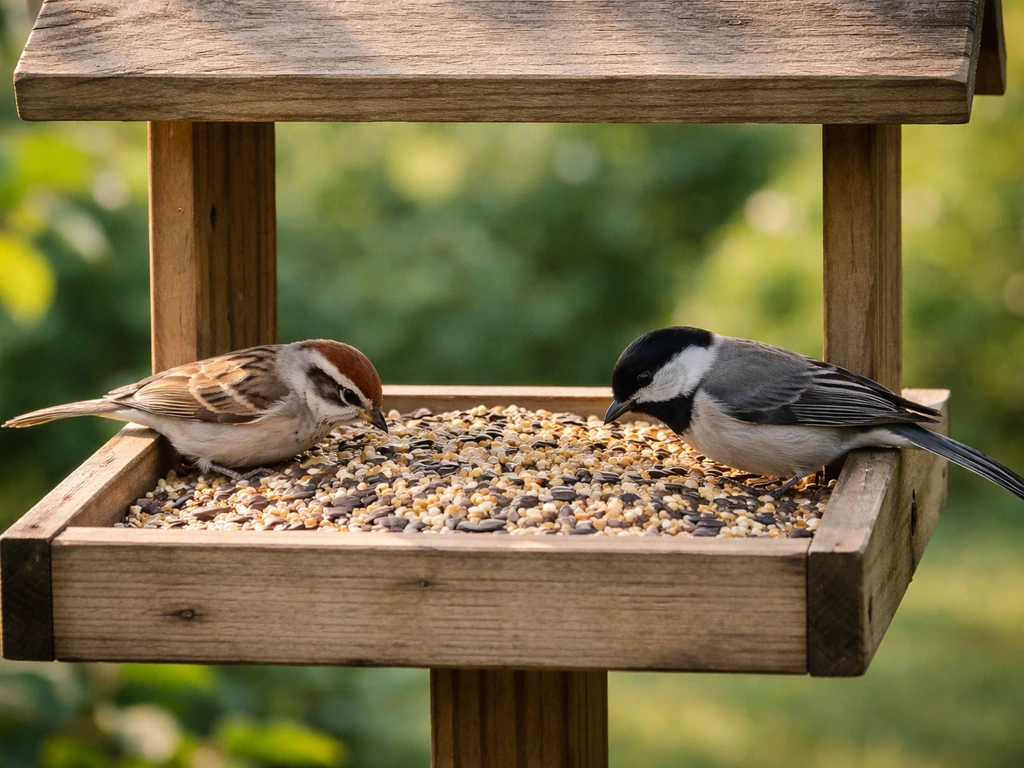
A typical backyard seed-eating songbird eats roughly 25 to 35 percent of its body weight in food per day. For a small bird like a chickadee or house sparrow (weighing about 0.5 to 1 oz, or 14 to 28 grams), that works out to roughly 1 to 2 teaspoons of seed daily under normal conditions. Larger songbirds like northern cardinals (about 1.5 oz or 43 grams) can eat proportionally more, closer to 3 to 4 teaspoons. Those numbers shift a lot depending on season, seed type, and feeder access, but they give you a starting point that's far more useful than guessing.
How Much Bird Seed Does a Bird Eat Daily? A Guide

Maya Henderson
21 Apr 2026
Quick rule-of-thumb for daily bird seed intake
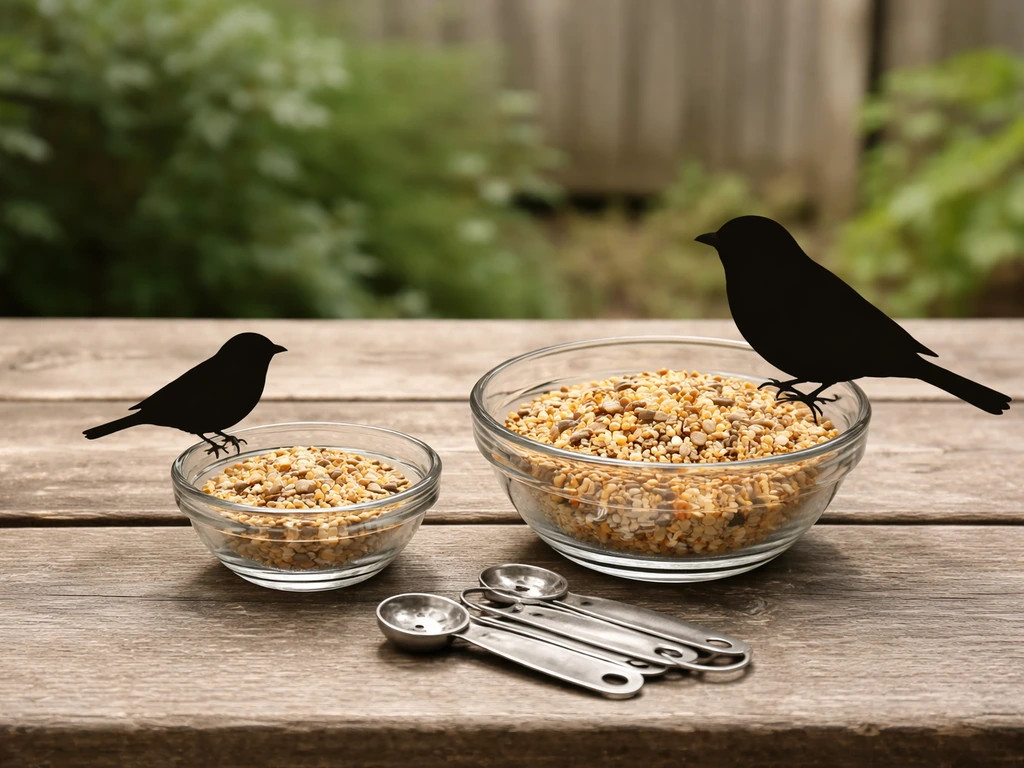
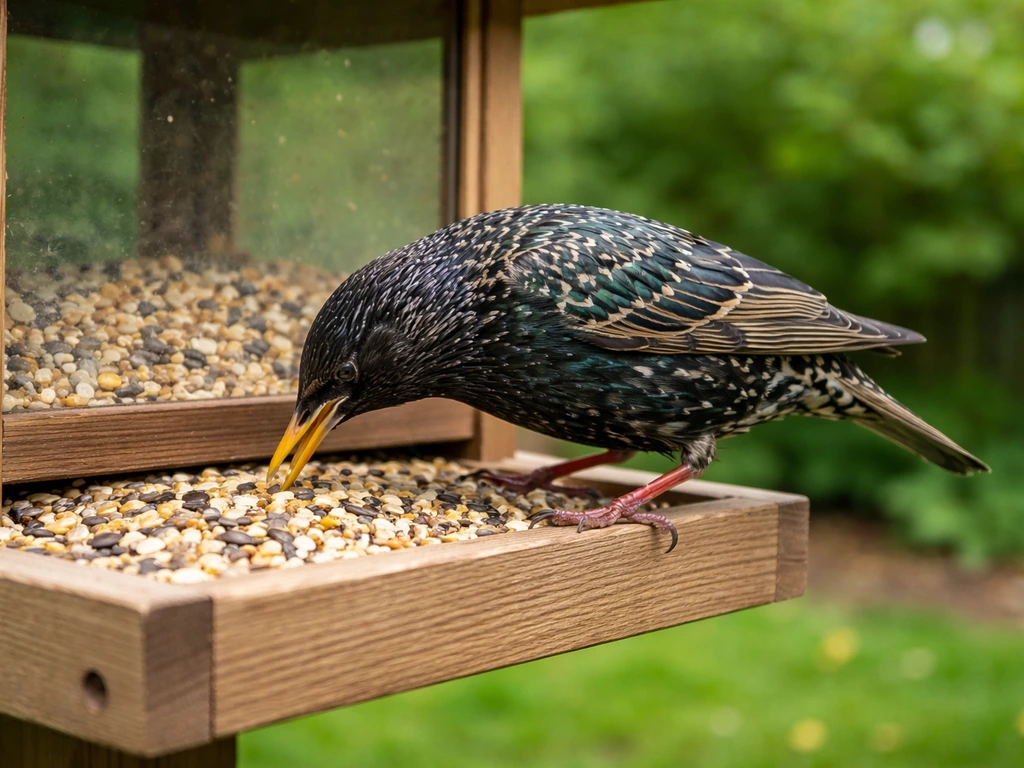
The most practical way to think about daily seed intake is by bird size. Small birds in the 10 to 20 gram range (house sparrows, chickadees, finches) eat roughly 3 to 7 grams of seed per day, which is about 1 to 2 teaspoons. Medium-sized birds like cardinals and nuthatches, in the 25 to 45 gram range, eat closer to 8 to 15 grams, or roughly 2 to 4 teaspoons. European starlings, which are larger at around 75 to 90 grams, can eat as much as 17 grams (about 0.6 oz) per bird per day when food is available. Multiply those numbers by how many birds are visiting your feeder and you have a rough daily target.
| Bird | Approx. Body Weight | Est. Daily Seed Intake (grams) | Est. Daily Seed Intake (teaspoons) |
|---|---|---|---|
| House sparrow | 25–30 g (0.9–1.1 oz) | 3–7 g | 1–2 tsp |
| Black-capped chickadee | 10–14 g (0.35–0.5 oz) | 3–5 g | ~1 tsp |
| American goldfinch | 11–14 g (0.4–0.5 oz) | 3–5 g | ~1 tsp |
| Dark-eyed junco | 17–23 g (0.6–0.8 oz) | 5–8 g | 1.5–2 tsp |
| Northern cardinal | 40–48 g (1.4–1.7 oz) | 10–15 g | 2.5–4 tsp |
| European starling | 75–90 g (2.6–3.2 oz) | 15–18 g | 4–5 tsp |
These are estimates based on percentage-of-body-weight models used in wildlife research, not lab-precise measurements. Real consumption at your feeder will vary, but this table gives you a reasonable baseline for planning how much to put out.
What changes how much a bird eats
Season and temperature
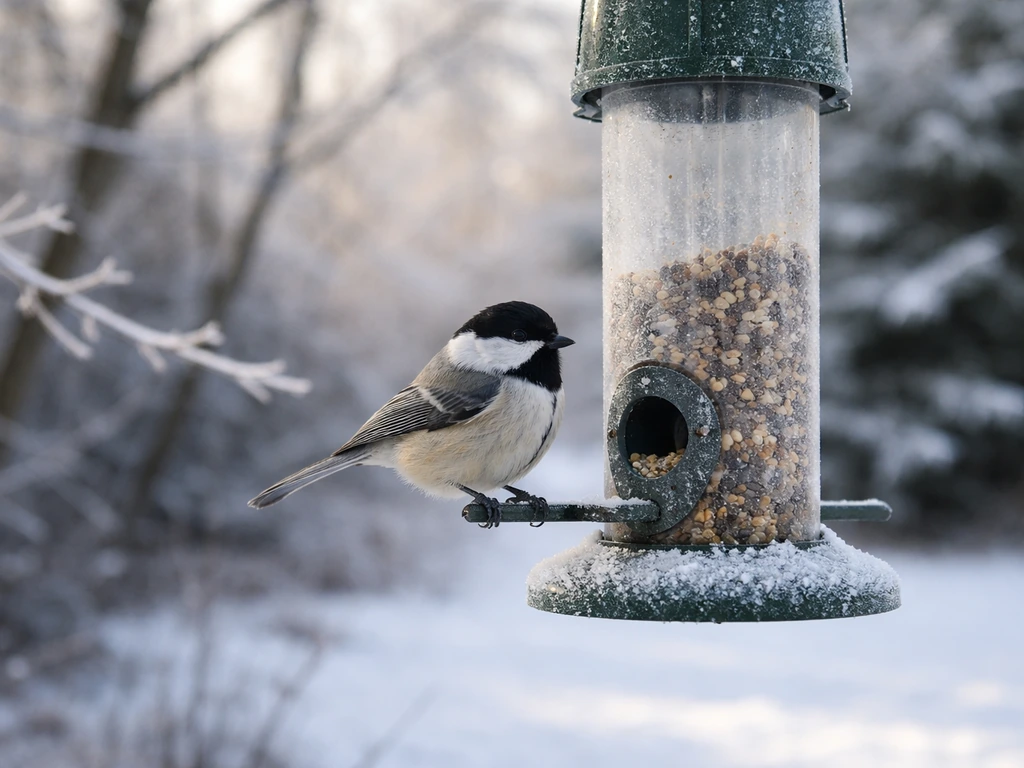
Winter is when consumption spikes most dramatically. Chickadees, for example, need roughly twice the calories in cold weather compared to summer because maintaining body heat is metabolically expensive. Some research suggests the difference can be even more extreme, with winter feeding needs running far higher than summer baseline. If you notice your feeders emptying much faster from November through February, that's not a coincidence. In summer, birds eat less seed partly because insects and natural vegetation are abundant, so the feeder acts more as a supplement than a main course. Insect-rich seasons can also change how many insects a bird eats over the course of a day.
Seed type and bird preference
Seed type directly affects how much a bird actually consumes versus what it handles and drops. House sparrows show strong preference for white millet and will selectively pick through mixed blends to find it, which means a lot of other seed ends up on the ground uneaten. Black-oil sunflower seed is the most universally accepted high-energy option across species and generates less waste per calorie delivered. Nyjer (thistle) attracts finches and goldfinches but is so small that measuring intake is harder. Suet is calorie-dense and relevant in winter but is not technically seed, so birds eating suet may eat slightly less seed at the same time.
Feeder type and access
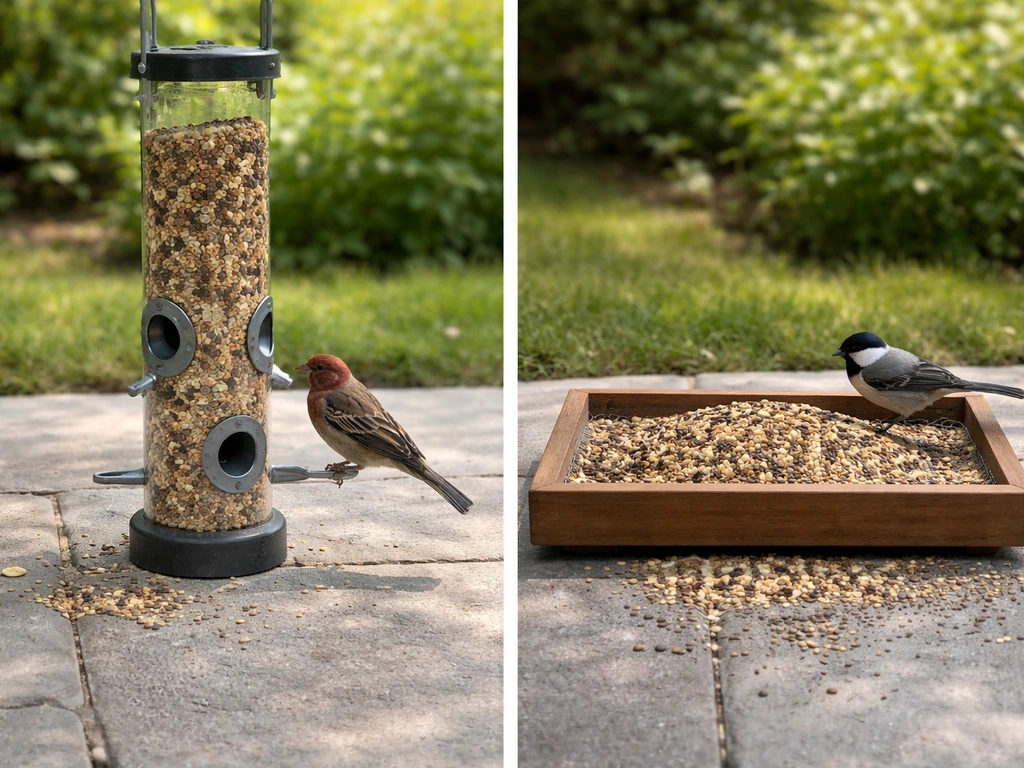
Feeder design changes consumption patterns in real ways. Tube feeders dispense seed as birds eat, which limits spillage but can slow down access for larger birds. Platform feeders give open access to everything at once, which attracts more species but also more waste. Ground feeding is natural for sparrows and juncos, but scattered seed on bare ground degrades faster. Crowding at a feeder also reduces per-bird intake because dominant birds displace smaller ones, so more feeders often means more total consumption across the yard.
Species-specific notes
Not all backyard visitors eat the same things. Mockingbirds and starlings are opportunistic and may visit seed feeders but get a significant portion of their diet elsewhere. If you are specifically planning for starlings, see do starlings eat bird seed as a related consideration when choosing how much seed to offer.
If you're wondering about specific visitors, how much a species like a mockingbird actually relies on seed versus fruit and insects matters when you're trying to estimate feeder draw. Hummingbirds are a different category entirely: they consume nectar, not seed, and can drink roughly 50 percent of their body weight in nectar per day. Putting seed out for hummingbirds won't work.
The daily seed consumption question really applies to the sparrow, finch, chickadee, nuthatch, and cardinal family of feeder birds.
How to estimate consumption from your feeder
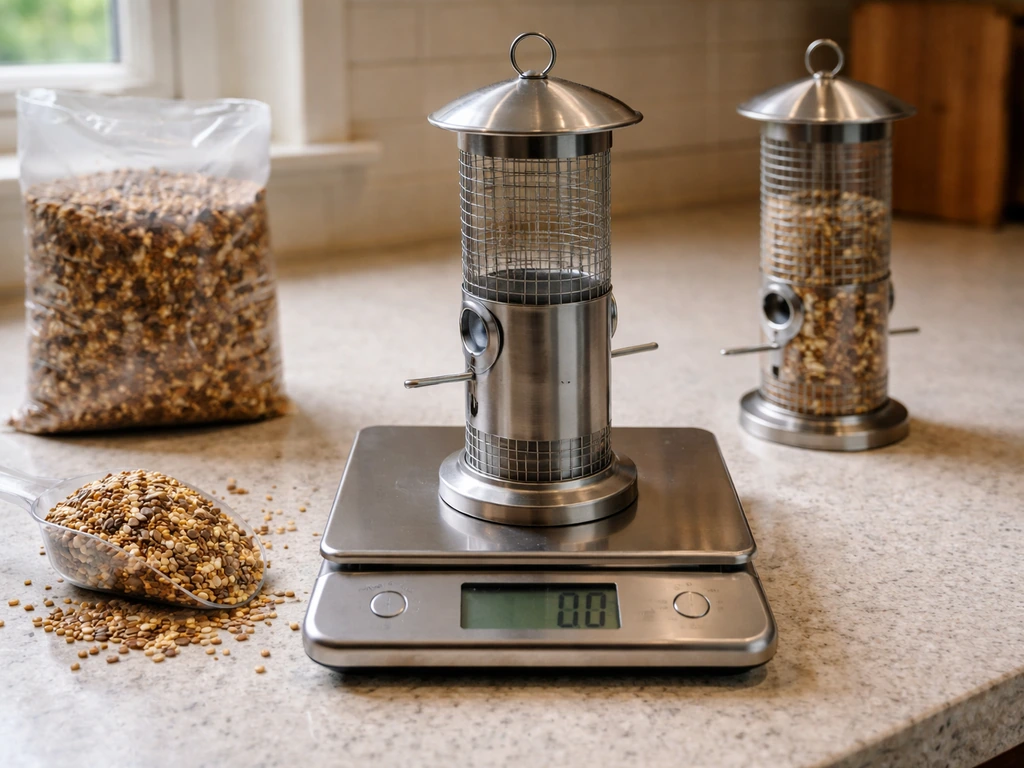
The most reliable way to figure out how much seed your specific birds are eating is to measure it directly. This takes about a week of observation and a simple kitchen scale, and the result is far more accurate than any general estimate.
- Weigh your feeder empty, then weigh it again after filling. Record the starting weight of seed.
- Let birds feed for exactly 24 hours without refilling.
- Weigh the feeder again. The difference is your daily consumption for that feeder.
- Do this for three to five days and average the numbers. Day-to-day variation is normal.
- Divide by the approximate number of birds visiting (a rough visual count works fine) to get per-bird consumption.
A kitchen food scale that measures in grams is the right tool here. A full tube feeder typically holds 400 to 800 grams of seed depending on size. If you're going through a full feeder every day, that's a strong signal of either high bird traffic or some wildlife help from squirrels or other animals. Project FeederWatch uses exactly this before-and-after weighing method in its citizen science protocols, and it works just as well at a single backyard feeder as it does in a research context.
Once you know your daily consumption rate, you can right-size how much you put out each morning. The goal is to offer enough seed that birds have access throughout the day but not so much that a significant amount sits in the feeder overnight or through wet weather. Even so, offering more than birds will eat can lead to waste and can increase the chances of moldy seed in the feeder can birds eat too much bird seed. Any seed that lingers more than a day or two in humid conditions is on its way to becoming a problem.
Overfeeding, waste, and when seed goes bad
Putting out too much seed isn't just wasteful, it creates real health risks for the birds you're trying to feed. Seed that gets wet, whether from rain, morning dew, or condensation inside a feeder, can start growing mold within 24 to 48 hours in warm weather. The mold you need to worry about most is Aspergillus, which causes aspergillosis, a respiratory disease in birds. Audubon describes it as transmissible through moldy food, and Cornell's Wildlife Health Lab notes it's difficult to treat once a bird is infected. Visually, mold on seed often appears as a dusty grey, blue, or green coating on the surface, and the seed may clump together.
Platform feeders are the highest-risk design for mold because seed sits exposed to the elements and mixed with bird droppings. Penn State Extension's guidance is direct on this: if you use a platform feeder, only put out as much seed as the birds will finish in a single day. Tube feeders are somewhat more protected but can develop mold at the bottom where moisture and seed dust accumulate. Penn State also flags that tube feeder bottoms need regular attention specifically to prevent that residue buildup.
Wet or rotting seed on the ground under a feeder is its own separate problem. Discarded hulls, droppings, and uneaten seed create a layer of organic material that stays damp, grows mold, and can also harbor bacteria. Project FeederWatch recommends raking or shoveling up that ground waste regularly and discarding it rather than leaving it to accumulate. The U.S. Fish and Wildlife Service advises cleaning feeders weekly or more, and cleaning the ground beneath them at the same time.
Interactions with pets and other wildlife
Spilled seed under a feeder doesn't just sit there waiting for birds. Dogs and cats often investigate it, and moldy seed is genuinely dangerous to them. The ASPCA's poison control guidance specifically lists moldy food as a pet hazard, and the FDA has documented aflatoxin poisoning in pets that ate moldy corn, grains, or peanuts contaminated with Aspergillus flavus mold toxins. If your dog is the type to hoover up anything on the ground, a feeder with a lot of spillage underneath it is a real risk, not a minor concern.
Beyond pets, excess seed and ground waste attract rodents. Project FeederWatch notes that food scattered on the ground is a direct draw for mice and rats. USDA APHIS wildlife damage guidance is straightforward: don't let bird food accumulate on the ground. If you're seeing rodent activity near your feeder, the amount you're putting out is almost certainly more than the birds are consuming, and the excess is feeding something else overnight.
Larger wildlife visitors like squirrels, raccoons, and deer are also drawn by abundant, accessible seed. This is worth factoring in when you're estimating how fast your feeder empties, because a dramatic overnight drop in seed level usually isn't birds. Managing portion size and feeder height or baffling helps keep feeding targeted at the birds you actually want to attract.
How to adjust your feeding setup today
Feeder choice and portioning
If you've been filling feeders to the top and hoping for the best, the simplest immediate change is to cut your daily fill amount by half and observe whether birds empty it by end of day. If they do, add a bit more the next day. If seed is still sitting after 24 hours, cut back again. Virginia Cooperative Extension's bird feeding guidance recommends this same principle: distribute only what birds will consume within the day. This single habit eliminates most of the mold and waste issues by default.
Tube feeders work well for small seed-eating birds and minimize spillage. Hopper feeders release seed as birds eat, which also reduces exposure. If you're using a platform feeder and dealing with waste, consider switching to a tube or hopper for your main seed offering and using the platform for a smaller supplemental amount that you refill daily. No-mess or no-waste seed blends, which remove hulls before packaging, are worth considering if ground cleanup is a persistent issue. Less shell debris means less damp organic matter accumulating underneath.
Cleaning and storage
Clean your feeders at least once a week. A scrub with a 10 percent non-chlorinated bleach solution, followed by a thorough rinse and complete air drying before refilling, is the standard approach recommended by Audubon. Fully drying before refilling is important because moisture introduced into dry seed accelerates spoilage. For tube feeders, pay particular attention to the bottom ports and the base of the tube where moisture collects.
Store bulk seed in a cool, dry place in a sealed container, ideally a metal bin or heavy-duty plastic container with a tight lid. Seed stored in open bags in a garage or shed is vulnerable to both moisture and rodents. If your stored seed smells musty or shows any clumping or visible mold, discard it rather than putting it out. Feeding moldy stored seed is as risky as letting seed go bad in the feeder itself.
A simple daily routine that works
- Fill feeders each morning with a measured amount based on your tracked daily consumption, not by topping them off.
- Check for wet or clumped seed before refilling and remove it if present.
- Rake or sweep under feeders every two to three days, or after any rain.
- Clean feeders fully once a week with bleach solution, rinse, and dry before refilling.
- Inspect stored seed monthly for moisture, odor, or clumping and discard any that's suspect.
- If you have pets that roam near feeders, keep the ground beneath them clear daily.
Getting the amount right is mostly an observation exercise, not a complicated calculation. Track what disappears in 24 hours, match your fill amount to that, and adjust as seasons change. You'll use less seed, deal with less mess, and provide a much safer feeding environment for the birds and for any pets or wildlife sharing the yard.
FAQ
What should I do if my feeder gets empty overnight?
If your feeder empties in less than a day, cut your next fill to avoid overnight leftovers, then add small increments (for example 25 percent more) only if birds are still actively eating at the end of the day. A fast emptying rate can be high bird traffic, but it can also be squirrels or raccoons taking advantage of access.
Does a bird eat more seed during cold snaps than the usual winter estimate?
Yes, but it is usually higher than you expect for small birds when heat is low and food is scarce. If it is extremely cold and your feeder still looks fresh by late afternoon, the birds may be supplementing with natural foods, so “more seed” is not always the right fix. In that case, focus on seed quality and feeder protection from moisture and wind.
How does feeder type change how much seed I should put out per day?
Tube and hopper feeders often protect seed from rain better, so you can usually provide slightly more than with a platform feeder, but you should still stop if seed is lingering after 24 hours. Platform feeders require the strictest “single-day” approach because seed is exposed to weather and mixes with droppings and debris.
Why do I see lots of husks even when the feeder seems to be emptying normally?
Yes. Birds can drop a surprising amount of hulls and refuse mixed seed they do not prefer, so “how much seed I buy” can be very different from “how much seed mass birds actually consume.” If your goal is to reduce waste and mess, weigh the feeder daily and consider switching to black-oil sunflower, which often produces less waste per calorie.
How can I estimate seed consumption when many different bird species share the feeder?
If multiple species are using the same feeder, total daily seed disappearance can be much higher than the per-bird estimate because different birds are active at different times and some visit briefly. To plan accurately, measure your feeder’s fill and empty amount, then count birds for a few days and treat the result as your baseline for your exact mix of visitors.
Why might my feeder show lots of waste even though birds are actively eating?
If only sunflower seeds are offered, some birds may eat more efficiently, but others may still waste seed by preference. If your birds are selectively picking, you can see faster hull and discard buildup without proportional feeder weight loss. Using a kitchen scale for at least a week helps you avoid being misled by shell waste alone.
What are signs that the seed sitting in the feeder has gone bad?
Yes. Even when birds are eating seed regularly, spoiled food risk rises if seed stays damp, clumps, or sits in humid weather. As a practical rule, if you see dusty grey, blue, or green coating or seed that is clumping together, stop using that seed and clean the feeder and any wet area beneath it before refilling.
Should I refill bird seed once per day or multiple times?
Plan for “how much birds can finish in a day,” not “how much birds can eat at once.” If you want to keep visitation steady, split feeding into smaller refills morning and early afternoon, especially in warm, humid weather. This reduces the amount that sits overnight even if birds visit at different times.
What if birds are eating the feeder seed, but the ground waste stays wet?
If the seed under or around the feeder is consistently damp or there is visible ground mold, raking or removing it becomes more important than adjusting feeder fill alone. Wet ground debris can keep producing mold and also creates a longer-term cleanup issue. Consider baffle use and switching away from highly wasteful feeder setups if wetness persists.
How do I know whether my feeder is attracting rodents because of too much seed?
In areas with heavy rodent activity, feeder leftovers and spilled seed are often the main driver of mouse and rat visits. If you see rodent signs, your best “seed amount” adjustment is usually to reduce spillage by using a tube/hopper feeder and tighten your daily fill limit to what birds finish the same day.
If moldy seed is a pet hazard, how should I manage cleanup under the feeder?
For pets, the risk is mainly tied to moldy or contaminated food that falls to the ground, not normal dry seed. If you have a dog that picks up anything outdoors, choose a feeder that minimizes spillage, clean up hulls and waste daily, and avoid refilling until the area underneath is dry.
Does the same “how much bird seed” rule apply to hummingbirds?
It depends on what you are offering. The daily amount estimates apply to seed-eating feeder birds, not hummingbirds that rely on nectar. If you have hummingbirds visiting, skip “seed amount” planning for them and instead use nectar feeders with appropriate fill amounts and freshness practices.
Next Article
Do Starlings Eat Bird Seed? How to Stop Them Fast
Yes, starlings eat bird seed. Stop them fast with feeder changes, seed swaps, placement tips, and safety checks.