The short answer: American Goldfinches are the number-one bird that eats thistle seed (sold as nyjer), but they're far from the only ones. Set up the right feeder with fresh seed and you'll likely pull in Pine Siskins, House Finches, Lesser Goldfinches, Common Redpolls, and occasionally Indigo Buntings too. If you've already got a feeder out and nothing is showing up, this guide will walk you through why and what to do about it today.
What Bird Eats Thistle Seed Nyjer and How to Attract Them
Maya Henderson
13 Apr 2026
The birds that actually eat thistle seed
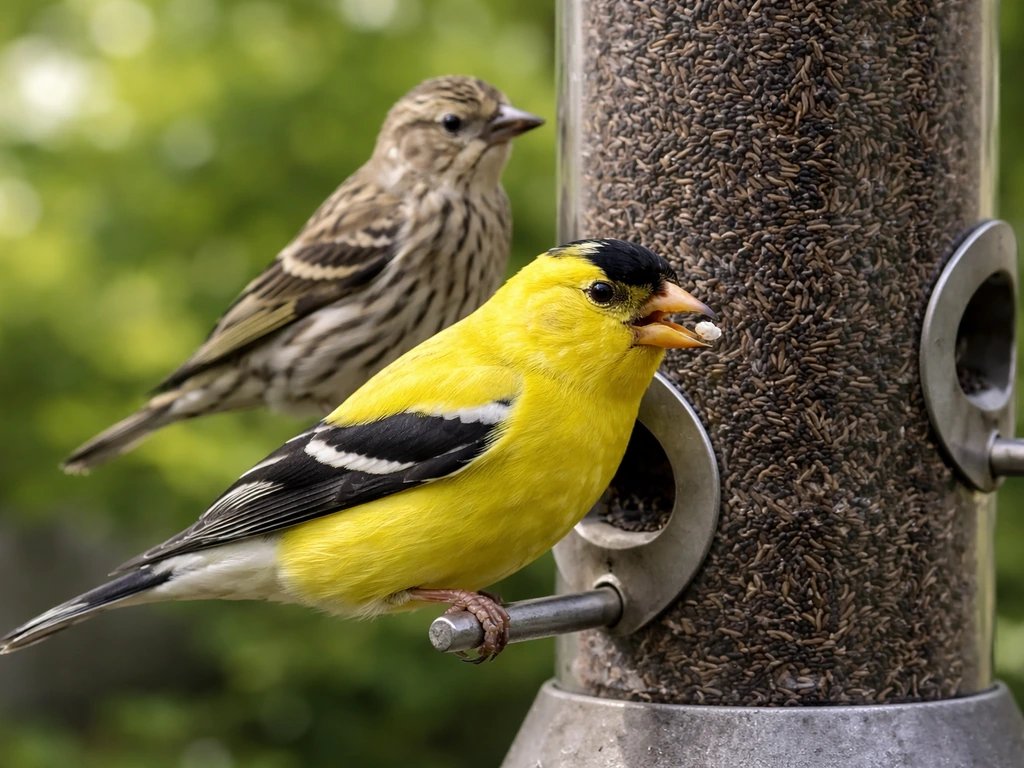
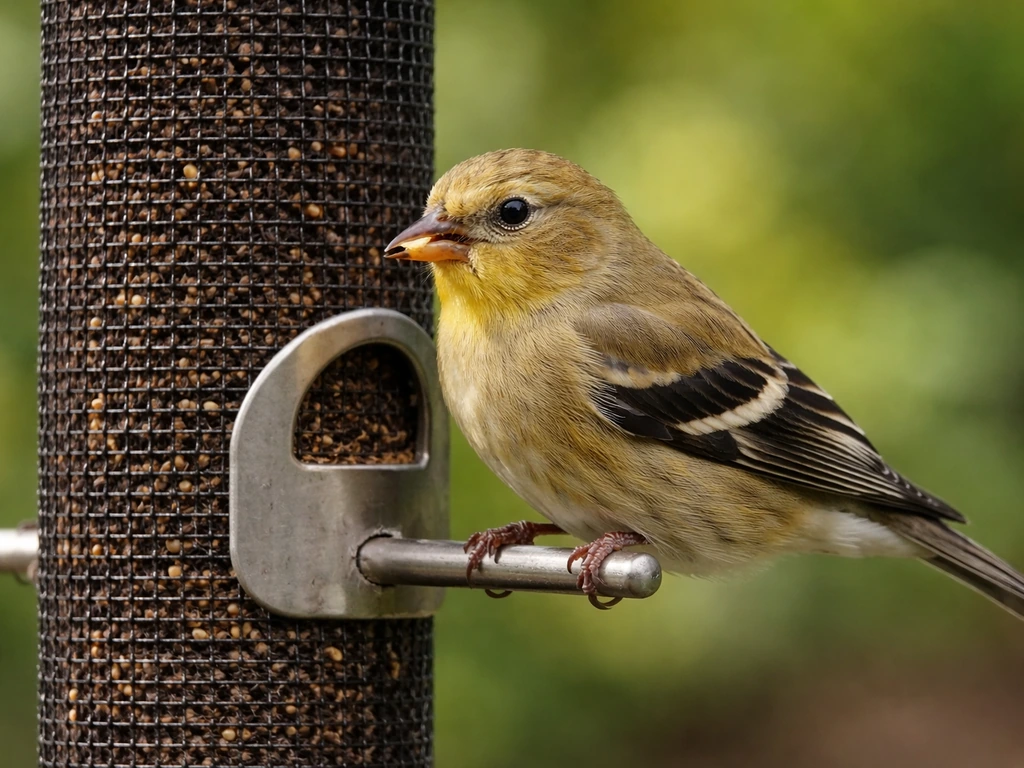
American Goldfinches are the star attraction. They specifically prefer nyjer (commonly and incorrectly called thistle seed) over most other seeds, and a tube feeder stocked with it will bring them in reliably from late summer through winter and into early spring. They're the bright yellow birds people usually picture, though males are olive-drab outside of breeding season, so don't let the color fool you in winter.
Pine Siskins are close behind. They visit most kinds of feeders and actively search out thistle, millet, and hulled sunflower. They tend to show up in flocks and can be surprisingly bold. If you see small streaky brown birds mixed in with goldfinches, those are probably siskins. Lesser Goldfinches are common thistle eaters in the western U.S. and are especially drawn to nyjer sock feeders. Common Redpolls are more seasonal, visiting in winter irruption years when food is scarce farther north. Indigo Buntings will occasionally stop at a nyjer feeder during migration, though they're not regulars.
House Finches and Purple Finches will also sample nyjer, but they're not as selective about it as goldfinches and siskins. If your goal is specifically to draw goldfinches, nyjer is your best tool. Other seed types will just bring in everybody else first.
Is your seed actually nyjer? How to check
Here's where a lot of beginners get confused: what's sold as "thistle seed" is almost never actual thistle from the plant. It's nyjer (also spelled niger), a small black oilseed from the plant Guizotia abyssinica, which is native to Ethiopia. The name "thistle seed" stuck in the market even though it's botanically unrelated to the prickly thistle plant. Audubon Park labels their product as "Nyjer® Seed, also known as thistle seed," which is the correct framing. When you're shopping, look for the word nyjer or niger on the bag and check that it's a small, thin, black seed, not something that looks like sunflower or millet.
One more thing worth knowing: all commercially imported nyjer is heat-treated by requirement. Since 2001, the USDA has required imported niger seed to be sterilized at 248°F (120°C) for fifteen minutes (the T412-a schedule). This is done specifically to prevent the seed from sprouting under your feeder. So if you're worried about whether thistle bird seed causes weeds in your yard, the answer for properly treated commercial nyjer is: not really. Any plant that does manage to sprout from it will be stunted and won't establish normally.
When you're checking your bag, also look at the WBFI (Wild Bird Feeding Institute) labeling guidance: the trademark "Nyjer®" was introduced partly to clear up the niger/thistle naming confusion in stores. If a bag just says "finch mix" without specifying nyjer, check the ingredients. Some finch blends include sorghum in bird seed mixes, which goldfinches will largely ignore. You want nyjer to be the primary or sole ingredient.
Feeder type matters just as much as seed type
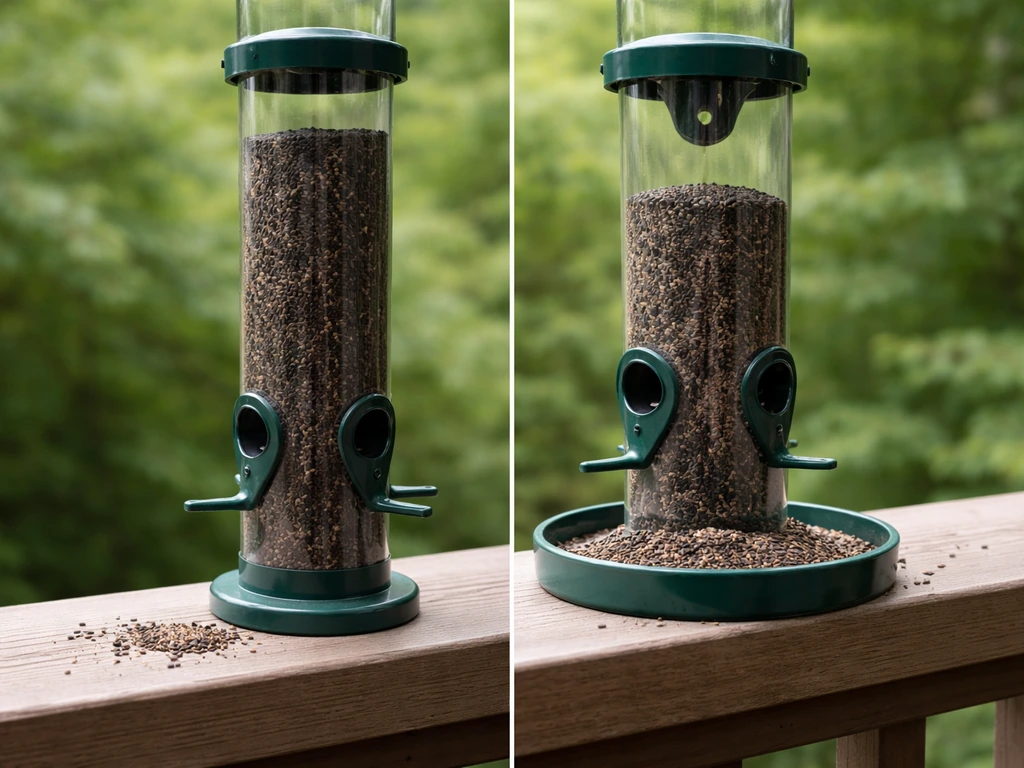
Nyjer requires a specific feeder. The seed is tiny, and a standard tube feeder or platform feeder will either let it fall straight through or make it hard for small birds to access cleanly. Nyjer feeders are designed with very small holes that match the size of the seed and the thin bills of finches. FeederWatch notes that nyjer requires a feeder with very small feeding ports to accommodate the tiny seed and attract finches such as American Goldfinch, Pine Siskin, and Common Redpoll blank" rel="noopener noreferrer">very small holes that match the size of the seed and the thin bills of finches. Thistle sock feeders (mesh bags) are the other common option and work especially well for Lesser Goldfinches and siskins. Audubon Park specifically recommends using nyjer in a finch tube or sock feeder for this reason. If you're using a regular feeder, that may be exactly why birds aren't showing up even when the seed is right.
Setting up your feeder for the best results
Placement makes a real difference. Goldfinches and siskins prefer feeders that feel somewhat open, not pressed tight against a wall or dense shrubs. A feeder hung from a pole or shepherd's hook about 5 to 6 feet off the ground, with some clear sightlines around it, is ideal. They like to be able to see predators coming. That said, having some trees or shrubs within 10 to 15 feet gives them a safe perch to land on before approaching the feeder and somewhere to flee to if startled.
Goldfinches tend to be most active in the morning and again in the late afternoon. If you're watching at midday in summer and seeing nothing, that doesn't mean the feeder is a failure. Give it a few days after first setting it up, especially if you're new to the yard or the season has just changed. Birds have to discover a new food source, and that can take a week or two.
If you want to maximize your chances and avoid any issues with seed freshness or sprouting, consider looking into bird seed that does not sprout as a broader strategy for your yard, since nyjer fits into that category when properly treated.
Birds still not showing up? Work through this list
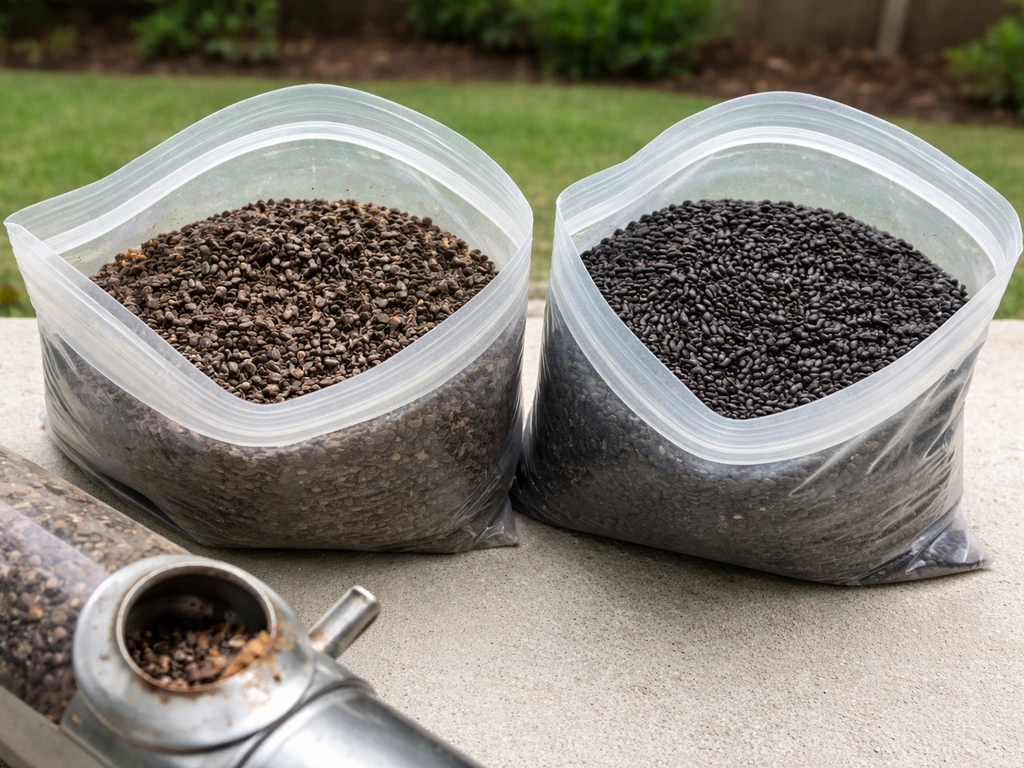
The most common reason finches ignore a nyjer feeder isn't the location, it's the seed. Nyjer goes stale quickly, especially once a bag is opened. The tiny seeds have a high oil content, and that oil oxidizes. If your seed is more than a few months old, or has been sitting in the feeder during a stretch of warm wet weather, the birds may simply smell or taste that it's off. Try pinching a few seeds between your fingers. Fresh nyjer is slightly oily and has a faint nutty smell. Old or spoiled seed smells flat, musty, or rancid.
Work through this list if birds aren't visiting:
- Check the seed freshness first. Dump what's in the feeder and refill with seed from a freshly opened bag.
- Confirm you're using a nyjer-specific tube or sock feeder, not a general-purpose seed feeder.
- Check the feeder holes for clogging. Damp nyjer can cake and block the ports. A toothpick or feeder brush clears this quickly.
- Give it at least 10 to 14 days after a new setup. Birds need time to discover a new food source.
- Consider whether goldfinches are even in your area right now. In some regions they're highly seasonal or irruptive (like redpolls).
- Assess the surrounding habitat. Is the feeder in a spot with zero perches nearby? Add a small branch or shepherd's hook with a secondary perch.
- Rule out disturbance. A feeder near a high-traffic door, window with reflections, or frequent foot traffic will keep nervous finches away.
If you've been dealing with ongoing feeder frustrations beyond just the thistle seed situation, it can help to read through common <a data-article-id="072ADA8D-2AC3-4A9A-BCC4-1187DCBEE1">bird seed problems that affect feeder success more broadly, since spoilage and feeder design issues often overlap.
Keeping squirrels and bigger birds off your nyjer feeder
The good news about nyjer feeders is that squirrels aren't particularly interested in the seed itself. It's not a high-value target for them the way sunflower or peanuts are. That said, they'll still knock feeders around and can damage mesh sock feeders. The best deterrent is a properly installed pole-mounted baffle, ideally metal, which blocks squirrels from climbing up to the feeder. A baffle placed at least 4 feet off the ground on a pole that's at least 5 feet away from any launchable surface (fence, tree branch, ledge) is the setup that actually works.
Larger birds like starlings, grackles, and blackbirds are the bigger issue at finch feeders. The design of nyjer feeders helps here naturally: the small holes and tiny perches are built to accommodate thin-billed finches and physically exclude larger birds that can't grip the small ports or get their bigger bills in. Choosing a feeder with upward-facing perches (birds feed hanging upside down) further limits who can use it, since goldfinches handle that easily but most larger species won't bother. Using appropriately designed feeder access is one of the most practical ways to limit nuisance species without needing any separate deterrent.
House Sparrows can sometimes crowd finch feeders since they're small enough to access the ports. If that becomes a problem, try relocating the feeder away from structures and eaves where sparrows nest. Keeping the area under the feeder tidy also helps, since scattered seed on the ground is what draws them in large numbers.
Nyjer vs. other finch-friendly seeds: a quick comparison
| Seed Type | Top Attracted Species | Sprout Risk | Feeder Type Needed | Squirrel Interest |
|---|---|---|---|---|
| Nyjer (thistle) | Goldfinches, Pine Siskins, Redpolls, Lesser Goldfinches | Very low (heat-treated) | Nyjer tube or sock feeder | Low |
| Hulled sunflower | Goldfinches, siskins, chickadees, nuthatches | Low (hull removed) | Any tube or platform feeder | High |
| Millet (white) | Juncos, sparrows, doves, siskins | Moderate | Platform or ground feeder | Moderate |
| Safflower | Cardinals, house finches, chickadees | Low | Tube or hopper feeder | Very low |
| Finch blend (mixed) | Variable, depends on mix content | Variable | Tube feeder | Moderate |
If your primary goal is goldfinches and siskins specifically, nyjer is the most targeted option. It's also the one least likely to attract squirrels or the larger bully birds. The trade-off is that it goes stale faster than hulled sunflower and requires a dedicated feeder, so you need to stay on top of freshness and maintenance.
Keeping your feeder safe: mold, spoilage, and pet risks
Nyjer feeders, especially sock-style mesh feeders, are particularly prone to moisture issues because the material holds dampness. When nyjer gets wet and stays wet, it cakes into a solid mass that clogs ports and, more seriously, starts to mold. Moldy seed is a genuine health hazard for birds. Project FeederWatch warns that birds can become ill from leftover seed and hulls that become moldy or wet, and recommends cleaning seed feeders about once every two weeks, more often during warm or damp conditions. That schedule isn't overkill; it's the minimum.
For cleaning, the Minnesota DNR recommends a solution of 2 ounces of bleach per 1 gallon of water, scrubbing all surfaces, then rinsing thoroughly and letting the feeder dry completely before refilling. Don't skip the drying step: a damp feeder refilled immediately is just going to repeat the mold problem faster.
Seed scattered on the ground under the feeder is another issue. It attracts rodents, and ground accumulation of wet or moldy seed is a contamination risk for both birds and any pets that roam the yard. The FDA has documented aflatoxin poisoning in pets from mold-contaminated feed, and the relevant mold (Aspergillus flavus) can grow on grain-type seeds in damp conditions. You won't necessarily see visible mold on every contaminated seed, but visible mold growth is a clear sign to discard the seed entirely and clean the feeder before refilling. Sweep up spilled seed under the feeder at least monthly, and rake out any wet seed accumulation after rain.
Storage matters too. Keep nyjer in a sealed container in a cool, dry place. Buying in large quantities sounds economical, but if you can't use it within a few months, it's better to buy smaller bags more frequently. Stale seed is the single most common reason finch feeders underperform, and it's easily fixed.
A quick feeder maintenance checklist
- Clean feeder every two weeks with a bleach-water solution (2 oz bleach per 1 gallon water), then rinse and dry fully.
- After rain or humid stretches, check feeder ports for caked or wet seed and clear them immediately.
- Discard any seed with visible mold and do not put it back in the feeder or on the ground.
- Sweep up spilled seed under the feeder at least monthly.
- Store unused nyjer in a sealed, airtight container away from heat and moisture.
- Replace seed in the feeder if it's been sitting for more than 4 to 6 weeks, or sooner if it smells off.
- Keep dogs and cats away from seed accumulation on the ground to reduce aflatoxin exposure risk.
One thing that sometimes surprises people is that there are also some unexpected bird seed benefits for humans connected to the habit of backyard feeding, from stress reduction to learning more about local wildlife, though the primary goal here is obviously the birds themselves.
Finally, if you're buying in bulk or noticing any irregularities in availability or pricing at your local store, it's worth knowing that supply chain factors have genuinely affected seed stocks in recent years. Understanding why there is a bird seed shortage in some markets can help you plan ahead and avoid getting stuck with old inventory that a retailer has been sitting on for months.
Bottom line: buy fresh nyjer, use the right feeder, keep it clean, and give it a couple of weeks. Goldfinches and siskins will find it. The whole setup is genuinely low-maintenance once you get it dialed in, and a well-run nyjer feeder is one of the most reliably rewarding things you can put in a backyard.
FAQ
Which bird should I expect to see first if I put out nyjer?
If your goal is strictly the bird that eats thistle seed (nyjer), focus on American Goldfinches and Pine Siskins first. Lesser Goldfinches can also be a strong match in the western U.S., but if you live outside their range you may see fewer visits even with perfect feeder setup.
How long should I wait before deciding the nyjer feeder is not working?
Not always. Many finches arrive in waves, so give the setup 7 to 14 days after you refill or change seed, and watch during morning and late-afternoon. Also check that the feeder is actually dispensing seed consistently, because nyjer can bridge in mesh socks when damp.
What if my “finch mix” bag says it contains thistle seed, but birds still ignore it?
For American Goldfinches and siskins, avoid mixed blends that do not list nyjer or niger near the top of ingredients. If the bag is labeled “finch mix” and contains a lot of sorghum or other fillers, goldfinches will often ignore it, leaving you with a feeder full of seed that other species eat instead.
How can I tell whether my nyjer has gone bad?
A good diagnostic is smell and handling. Fresh nyjer usually feels slightly oily and may have a mild nutty odor, while old or heat-damaged seed tends to smell flat, musty, or rancid. If you see clumps, caking, or port blockage, assume the seed has absorbed moisture or gone stale and replace it.
Can nyjer cause health problems for birds even if it is “sterilized” so it will not sprout?
Yes, it can. Even though properly treated commercial nyjer is intended not to sprout, birds can still get sick if wet seed or mold is allowed to build up. Use a sock feeder only if you can keep it clean and dry, and remove seed after rainy stretches to prevent caking and mold.
What feeder type works best for nyjer, and should I choose tube or sock?
Use a feeder made for tiny seeds, then match the style to the species you want. Tube feeders with fine ports work well for goldfinches, while mesh socks often fit Lesser Goldfinches and siskins better. If you use a standard feeder with larger openings, the seed may fall through or larger birds may dominate.
How do I stop larger birds from eating the nyjer before finches arrive?
If starlings and grackles are showing up, it usually means the feeder ports are too large or the feeder design allows bigger bills to access the seed. Switch to a finch-specific feeder with small ports and consider an upside-down feeding design, which finches can handle but many larger species cannot.
Will squirrels still be a problem with nyjer thistle seed?
Even though squirrels are less interested in nyjer than in sunflower or peanuts, they can still knock feeders over or damage sock mesh. Add a properly sized pole baffle that blocks climbing routes, place it at least 4 feet above ground, and keep the pole away from launch points like nearby branches or fences.
What should I do if house sparrows keep taking over my nyjer feeder?
House sparrows can access finch ports in some setups and may outcompete goldfinches at the feeder. If sparrows are crowding, move the feeder away from nearby nesting sites and structures, and clean up spilled seed under the feeder so it is less attractive to ground-foraging birds.
What are the most common causes when no finches show up at all?
Start with small adjustments before changing everything. If birds are not visiting, check four things in order: seed freshness, feeder type and port size, moisture conditions (especially on socks), and placement with clear sightlines and a safe perch within roughly 10 to 15 feet.
Next Article
Do Seagulls Eat Bird Seed? How to Stop Them
Yes, seagulls often eat bird seed. Learn why they show up and how to block them while keeping feeding safe.