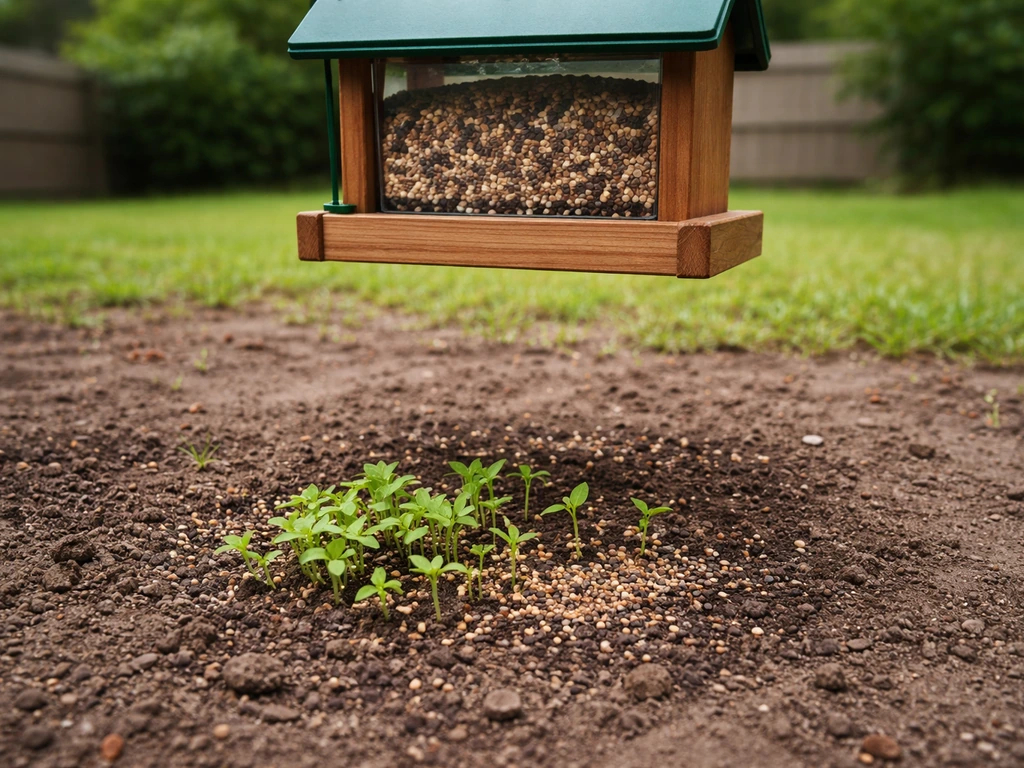
Yes, sorghum is in many commercial bird seed blends, and it goes by the name you are most likely to see on the bag: milo. Grain sorghum and milo are the same thing, and it is a legitimate feed grain with a long history in animal nutrition. Whether it is actually useful in your feeder depends on which birds visit your yard, how the seed was stored, and what else is mixed in with it. Here is everything you need to know to make a smart choice today. If you are wondering why there is a bird seed shortage right now, supply and ingredient availability can affect which blends are on store shelves.
Is Sorghum in Bird Seed? Safety, Birds, and What to Do

Maya Henderson
20 Apr 2026
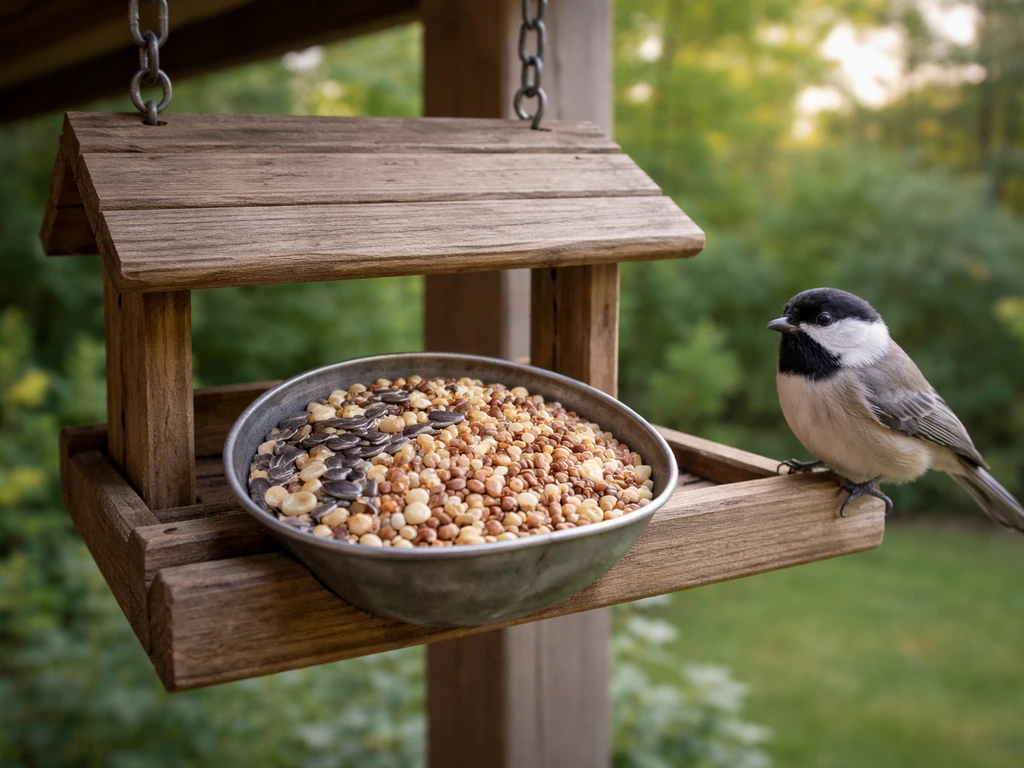
So what exactly is sorghum in bird seed?
Sorghum is a cereal grain, and when you see it in bird seed the variety in question is grain sorghum, also called milo. This is different from sweet sorghum (used for syrup) or sorghum-sudangrass hybrids (used as livestock forage). The grain form is small, round, and reddish-brown, and it has been used in animal feed for centuries. Roughly half of global sorghum production goes into animal feed, so it is a well-established ingredient, not a filler invented for bird seed.
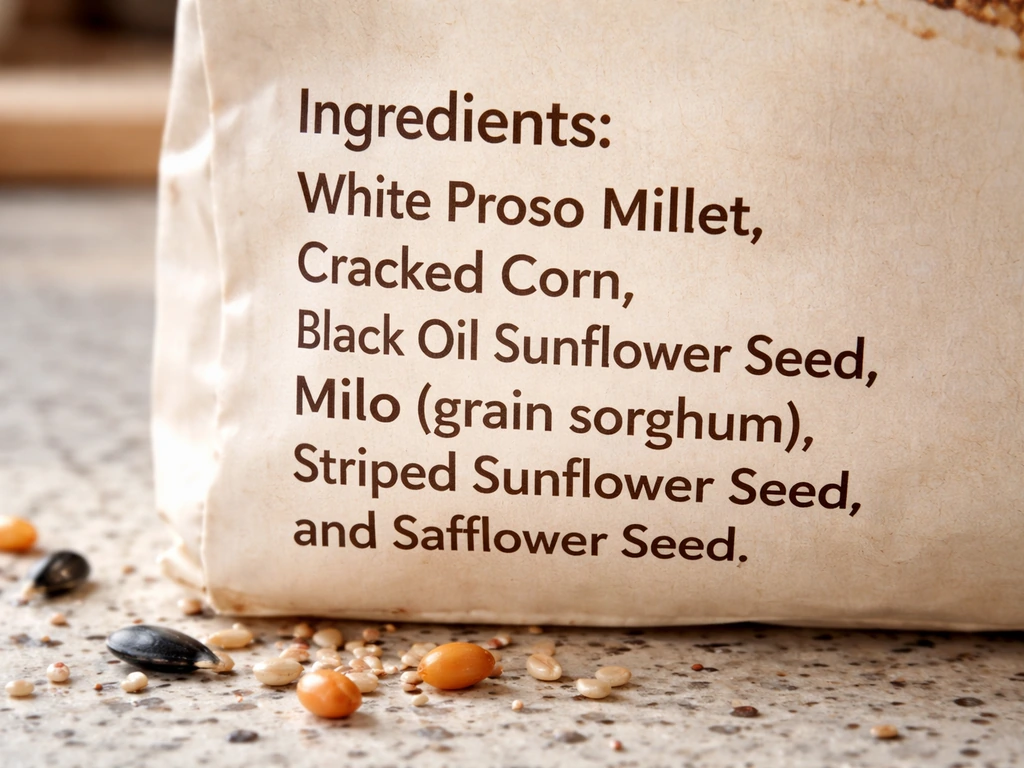
In a feeder context, milo is the important name to know. Many bags will not say 'sorghum' at all. They will list 'milo' in the ingredients, and that is the same grain. Some specialty blends may use the term 'grain sorghum' or just 'sorghum,' but milo is by far the most common label name. Once you know milo equals sorghum, you can evaluate any bag accurately.
How to find it on the label
Bird seed ingredient lists follow the same descending-weight order as a food label. If milo is listed first or second, it makes up the largest share of the blend. If it is buried near the end, it is a minor component. This matters because a lot of budget mixes use milo as a high-volume, low-cost filler. You might think you are buying a sunflower-and-safflower blend, but if milo is near the top of the list you are paying for a lot of grain most songbirds will not touch.
Look for these names on the ingredient panel, any of which indicates sorghum is present:
- Milo (most common)
- Grain sorghum
- Sorghum
- Milo maize
- Red milo
You will also want to note whether the label describes the grain as whole, cracked, or processed. Most commercial bird seed uses whole milo berries. Cracked or chopped sorghum is less common in wild bird blends and tends to spoil faster once the outer hull is broken, since moisture can reach the interior of the grain more easily.
Which birds actually eat sorghum (and which will not)
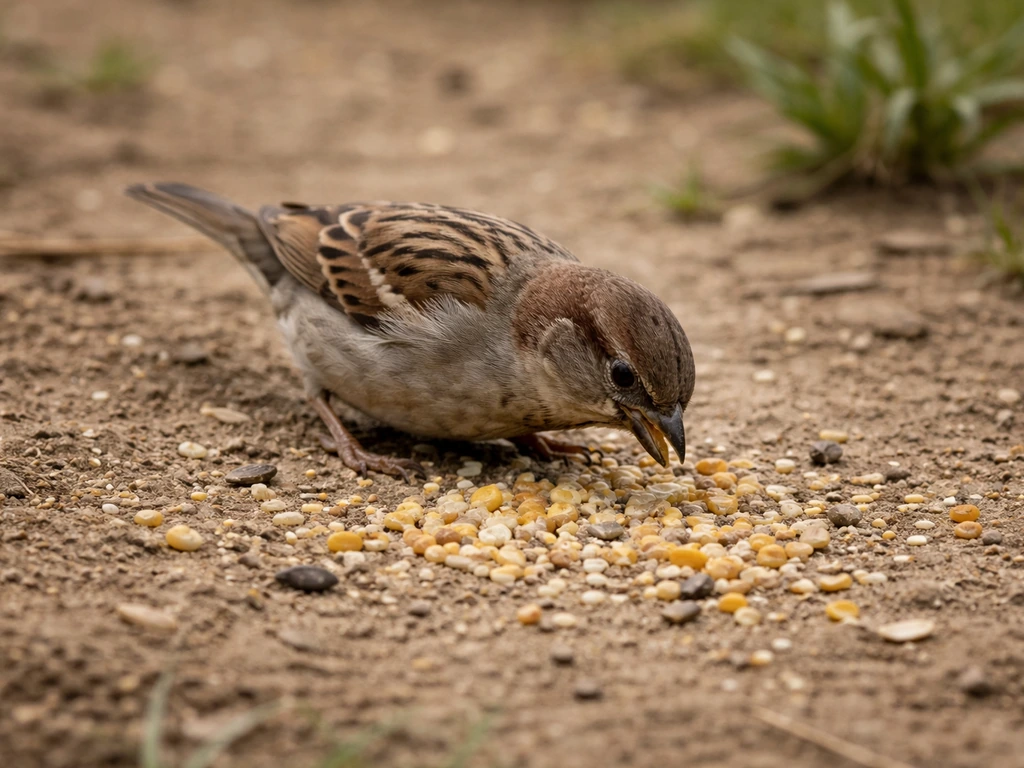
Milo is primarily a ground-feeder grain. The birds most likely to eat it are species that forage on or near the ground and have the bill strength and feeding behavior to handle a hard, round grain. Kansas State University extension research found that milo was generally unattractive to most backyard bird species studied, which lines up with what many feeder operators observe: birds pick around it and leave it in the tray.
That said, some species genuinely do eat it. If you live in the Southwest or have a yard that attracts ground-foraging birds, milo can be worth offering in a ground tray or low platform feeder.
| Bird Type | Likely to Eat Milo/Sorghum? | Notes |
|---|---|---|
| Doves (mourning, Eurasian collared) | Yes | Ground feeders, will readily take milo |
| Quail | Yes | Prefer ground scatter or low tray |
| Native sparrows (house, white-throated, etc.) | Sometimes | Variable; many will eat it if little else is available |
| Towhees | Sometimes | Ground scratchers, will try milo |
| Cardinals | Rarely | Strongly prefer sunflower; usually ignore milo |
| Finches (goldfinch, purple, house) | No | Prefer thistle and sunflower; will not eat milo |
| Chickadees and nuthatches | No | Prefer sunflower, suet; will skip milo |
| Turkeys (wild) | Yes | Will eat grain sorghum readily on ground |
| Blackbirds and starlings | Yes | Will eat milo, which can attract unwanted large flocks |
The practical takeaway: if your yard is mostly visited by songbirds like finches, chickadees, and cardinals, a blend heavy in milo is mostly going to accumulate on the ground uneaten. Uneaten seed on the ground is exactly where spoilage, mold, and pest problems begin. If you want to avoid wasted seed and the cleanup issues that come with it, look for blends where sorghum appears near the end of the ingredient list, or choose a no-waste mix entirely.
Real risks: mold, spoilage, pests, and contamination
Mold and mycotoxins
This is the most serious hazard with any grain-based bird seed, and sorghum is no exception. When grain sits in a damp feeder or on wet ground, mold grows fast. Two mold-related diseases are directly relevant to backyard feeding.
Aspergillosis is a respiratory disease caused by Aspergillus mold spores. Birds inhale the spores from moldy grain and can develop a fatal lung infection. Audubon and the New York State DEC have both warned explicitly that feeding moldy seed transmits aspergillosis to wild birds. NYSDEC also notes that people who feed birds have traditionally been warned about feeding moldy birdseed or bakery products, because they can contribute to aspergillosis risk NYSDEC notes that people who feed birds have traditionally been warned about feeding birds moldy birdseed or bakery products. Once you see fuzzy growth, clumping, or a musty smell in a feeder, that seed needs to come out immediately.
Aflatoxin is a toxic compound produced by certain molds (Aspergillus flavus and related species) that grow on stored grains including sorghum. Oklahoma State University extension actually recommends using grain sorghum over corn in wildlife feeding specifically because milo tends to be lower-risk for aflatoxin than corn under the same storage conditions. Even so, if sorghum gets wet and stays wet, aflatoxin can still develop. The FDA has documented what aflatoxin poisoning looks like in animals: sluggishness, loss of appetite, vomiting, jaundice, unexplained bruising or bleeding, and diarrhea. Any animal (bird, pet, or wildlife) showing these signs after grain exposure needs veterinary attention.
Pest attraction
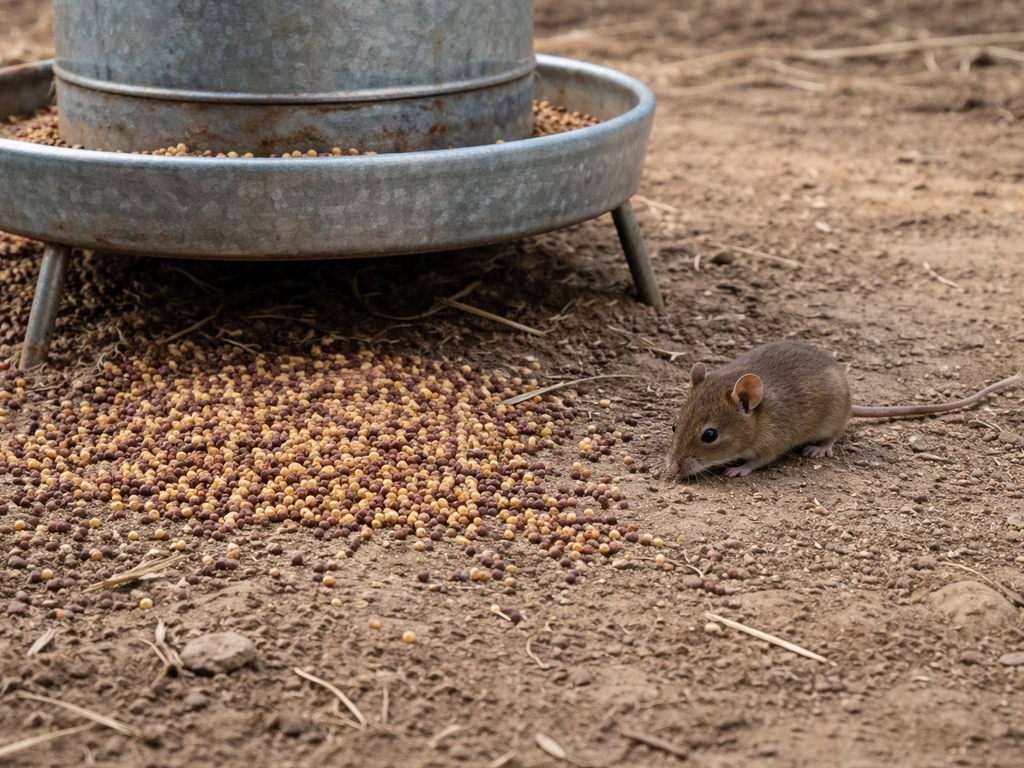
Uneaten milo on the ground is a magnet for rodents. Mice and rats are attracted to the dense, calorie-rich grain, and once they find a reliable food source they stay. Ground-scattered sorghum that birds ignore is a particularly fast way to establish a rodent problem in a yard. Starlings and large blackbird flocks are also drawn to milo, and a feeder packed with milo can attract dozens of birds that outcompete the smaller species you actually want to see.
Pesticide-treated seed
Seed sold for planting, not feeding, is sometimes coated with fungicides or insecticides. Treated seed is required by USDA regulations to carry specific warning labels and is not intended to be used as feed. The risk is highest if you source sorghum from agricultural suppliers rather than dedicated bird food retailers. Stick to products explicitly labeled as wild bird food, and check that the bag does not include any treated-seed warnings. USGS research has examined neonicotinoid-coated seed exposure in birds, confirming that pesticide-coated grains are a recognized risk pathway, even if specific studies have found variable results depending on dose and species.
What about your pets and other backyard wildlife?
Dogs
Plain, uncontaminated grain sorghum is not inherently toxic to dogs. The real danger is moldy seed. The FDA warns that aflatoxin poisoning in pets is directly linked to eating moldy grains, corn, and peanuts. A dog that hoovers up spilled seed from under a feeder, especially old seed that has been rained on, is at genuine risk.
Signs to watch for include lethargy, vomiting, loss of appetite, yellowing of the eyes or gums, and unusual bruising. If you see any of these after a dog has eaten spilled seed, call a vet. The other risk is volume: the Pet Poison Helpline notes that large amounts of ingested seed can create a gastrointestinal obstruction. If a dog ate a significant quantity of whole grain, watch for signs of bloating or constipation.
Cats
Cats are less likely to eat grain than dogs, but the same mold risk applies if they are picking at spilled seed or hunting near a feeder base. Cats near feeders are also a predator concern for the birds themselves, which is a separate issue but worth mentioning. Keep feeder areas clean to reduce reasons for cats to linger there.
Pet birds
If you keep parrots, doves, finches, or other cage birds, do not let them eat wild bird seed that has been sitting outdoors. PetMD specifically warns that mold-prone grain foods are a hazard for pet birds, and that birds exposed to potentially toxic items should see a vet promptly if they show lethargy, loss of appetite, or breathing difficulty. Commercial wild bird mixes are not formulated or quality-checked to the same standard as pet bird food.
Rodents and larger wildlife
Squirrels and raccoons will eat sorghum but are generally hardy enough to handle small amounts of clean grain. The problem is that these animals encourage habituation and can damage feeders. Deer and wild turkeys will readily eat grain sorghum scattered on the ground. If you are intentionally feeding wildlife like turkeys, OSU Extension guidance supports milo as a relatively safer grain choice compared to corn from an aflatoxin standpoint, as long as storage conditions are controlled. For rodents specifically, the best coexistence approach is to reduce ground spillage, which sorghum-heavy mixes tend to create in large quantities.
Livestock
Grain sorghum is a recognized livestock feed ingredient and is generally safe for chickens, pigs, and cattle when properly stored. If you keep backyard chickens and they have access to spilled bird seed containing milo, it is not an immediate emergency, but the same mold caveats apply. Do not let any livestock eat grain that shows signs of clumping, discoloration, or mold growth.
How to feed sorghum-containing seed safely
Storage
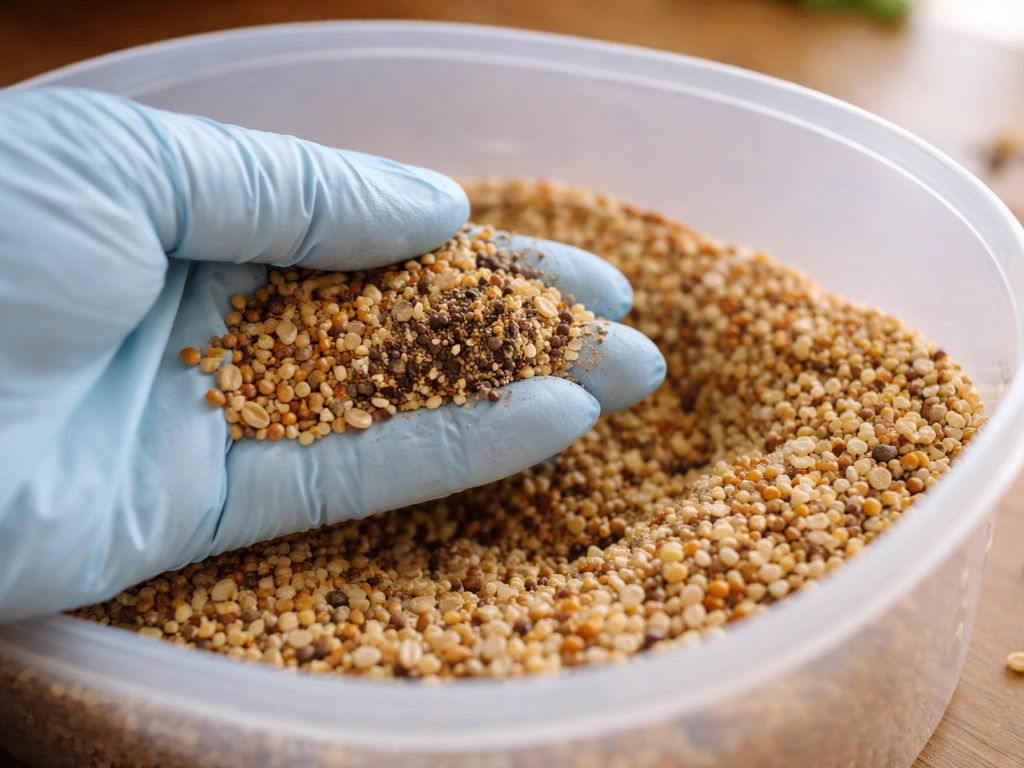
Moisture and heat are what turn good seed into a mold hazard. Store bird seed, including any blend containing milo, in a cool, dry location away from direct sunlight and temperature swings. An airtight container (metal or hard plastic) in a garage, shed, or basement works well. Do not leave bags open or store them outside where rain and humidity can get in. Expert guidance consistently recommends keeping stored seed off the ground and away from exterior walls where condensation builds up. Keeping the storage environment ventilated and avoiding large piles that trap internal moisture are the same principles food safety guidelines recommend for any stored grain.
Feeder setup
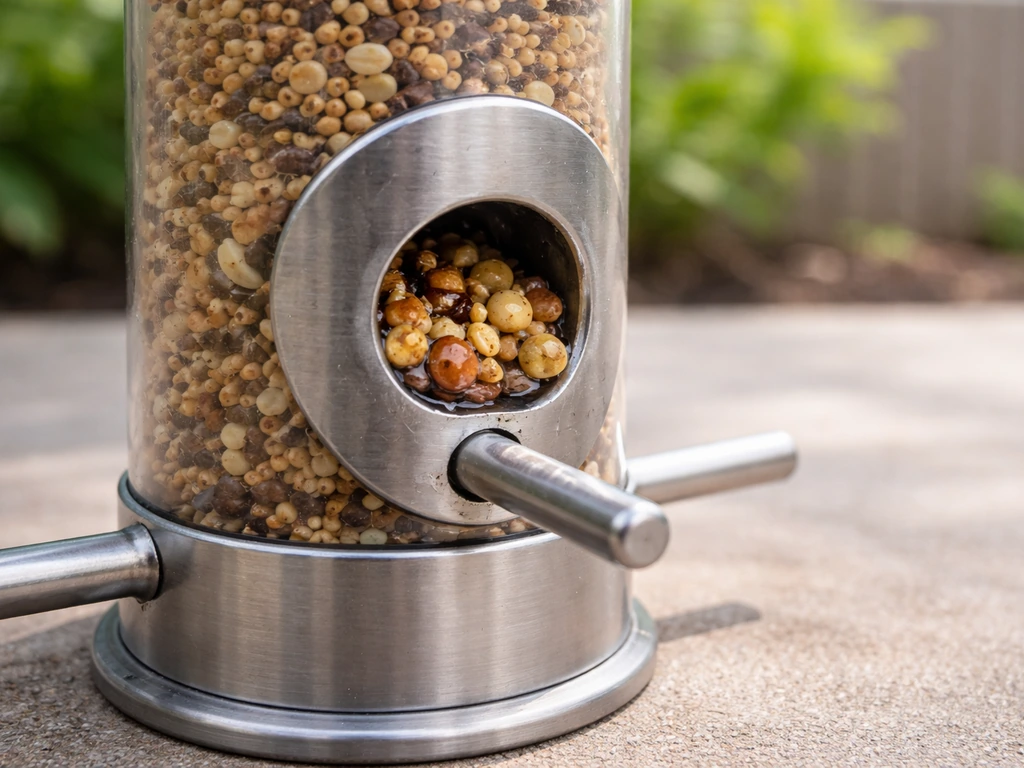
For blends with sorghum, the feeder design matters. Tube feeders with small ports are actually a mismatch for milo; the grain can jam and sit wet inside the tube for days. Flat platform feeders or wide-tray feeders with drainage holes work better because they allow airflow and let you see when seed is accumulating uneaten. Keep portions small: only put out what birds will consume within a day or two, especially in wet weather. If rain is coming, cover the feeder or bring it in to prevent soaking.
Portioning and rotation
- Fill feeders with small amounts (enough for one to two days) rather than topping them up weekly.
- Inspect the feeder before refilling. If you see clumping, discoloration, or smell anything musty, empty the feeder completely before adding fresh seed.
- Clean the feeder with a dilute bleach solution (1 part bleach to 9 parts water) and let it dry fully before refilling.
- Rake or remove uneaten seed from the ground beneath feeders every few days to prevent ground-level mold and reduce rodent attraction.
- Dispose of visibly moldy seed by burying it away from the feeding area or sealing it in a bag for trash. Do not compost moldy bird seed.
When to skip sorghum blends entirely
If your yard's regular visitors are finches, chickadees, nuthatches, or cardinals, a milo-heavy blend is going to create more problems than it solves. The uneaten grain piles up, gets wet, and creates exactly the mold and pest conditions you want to avoid. In that case, choose a blend where sorghum does not appear at all, or opt for a single-ingredient seed like sunflower hearts or nyjer (thistle) that matches your bird community.
If you are considering thistle seed instead, see whether thistle bird seed cause weeds so you can prevent unwanted growth in your yard does thistle bird seed cause weeds. If you are trying to attract birds that eat thistle seed, nyjer is the key ingredient to look for in your mix nyjer (thistle).
The topic of bird seed that does not sprout or cause ground-level mess is directly related here, since a lot of the sprouting and mess problems with cheaper mixes trace back to high volumes of milo and filler grains. If you are trying to avoid sprouting and messy ground scatter from seed mixes, look for options designed to not sprout, such as bird seed that does not sprout.
Already fed it? Here is what to watch for
If you recently put out a sorghum-containing blend and are now wondering whether anything is wrong, here is a practical checklist to work through.
Check the seed itself
- Smell the feeder: a musty, sour, or otherwise off smell means mold is present.
- Look for clumping or caking: dry milo berries should feel loose and separate easily.
- Look for visible fuzz, discoloration (white, green, or black patches), or sliminess.
- Check the ground beneath the feeder for wet clumps or sprouting grain.
If you find any of these signs, remove the seed from the feeder immediately. Bury the contaminated seed away from the feeding area or seal it in a trash bag. Audubon's guidance is clear: do not leave bad seed where birds can still access it, even on the ground.
Watch the birds
- Healthy birds at a feeder are alert, active, and fly off quickly when startled.
- A bird sitting fluffed up near the feeder, reluctant to move, or showing labored breathing is a warning sign.
- Birds that appear uncoordinated or are found on the ground unable to fly should be considered ill.
- Aspergillosis affects breathing; a bird that appears to wheeze or open-mouth breathe in cool weather may be affected.
You cannot treat a wild bird for aspergillosis at home. If you observe multiple sick birds near the same feeder, take the feeder down, clean it thoroughly, and do not put it back up for at least a week. Contact your local wildlife rehabilitator if you find a bird that cannot fly or is clearly ill.
Watch your pets
If a dog or cat was recently near the feeder and is now showing any of the following signs, contact your veterinarian or call the Pet Poison Helpline promptly: lethargy or unusual tiredness, vomiting or diarrhea, loss of appetite, yellowing of the eyes or skin (jaundice), or unusual bruising. For pet birds specifically, PetMD recommends seeking veterinary attention any time a bird is lethargic, stops eating, has difficulty breathing, or is otherwise unwell after a possible toxic exposure. Do not wait to see if symptoms resolve on their own.
The bottom line on sorghum in bird seed: it is a real, widely used grain ingredient sold under the name milo, it has genuine value for ground-feeding birds like doves and quail, and it is not inherently dangerous when stored and used correctly. People often look for bird seed benefits for humans too, but the key is choosing safe, properly stored seed. The problems come from blends that use it as cheap filler that the birds in your yard will ignore, leading to spoilage, mold, and pest attraction. Know your birds, read the label, keep the seed dry, and clean the feeder regularly and you will avoid most of the issues that make milo a frustrating ingredient.
FAQ
Can I still use a milo-heavy mix if my birds mostly ignore it?
Yes, but only in specific cases. Milo is a common ingredient, yet many backyard songbirds do not readily eat it, so it often ends up spilled. If you keep it anyway, use a ground tray or low platform with small daily portions, and remove any leftover seed after rain or within 24 to 48 hours to prevent mold.
If the bag does not say “sorghum,” how do I know whether it contains it?
It is usually not a separate ingredient. “Milo” and “grain sorghum” refer to the same cereal grain, but the label may also say it is whole, cracked, or processed. Whole milo tends to be less likely to spoil in a feeder than cracked or chopped forms once hulls are damaged.
What are quick signs that the sorghum (milo) in my feeder is unsafe?
Mold can start even if you only see a little clumping or smell. If you notice fuzzy growth, dark spots, sticky clumps, or a musty odor, discard the seed and clean the feeder with soap and water first, then let it fully dry before refilling. Do not just stir the seed or top it off with dry seed.
Is planting seed that includes sorghum safe to use in a feeder?
Not reliably. Seed sold for planting can be treated with pesticides or fungicides, and those products must carry warnings because they are not intended as feed. Even if it “looks the same,” buying from an agricultural or planting seed source increases the chance of treated seed, so stick to blends explicitly labeled for wild birds.
Will sorghum in bird seed attract rodents even if I clean regularly?
Yes, in two ways: spilling and storage. Milo can be attractive to rodents when it accumulates on the ground, and it can also spoil if moisture gets into the feeder or the bag. To reduce both, use feeder designs that minimize jamming and spillage, keep portions small, and store the bag sealed in a cool, dry, indoor location.
Why does my feeder get damp or jam when I use milo-heavy seed?
Tube feeders with small ports can trap whole grain and create pockets where moisture stays. That increases the chance of wet, moldy grain inside the tube. If your blend is milo-heavy, switch to a flat platform or wide tray feeder with airflow and drainage, or use an outdoor cover to prevent rain soaking the seed.
Are there any birds that actually prefer milo or grain sorghum?
Yes, but it depends on the species and your feeding setup. Doves, quail, and other ground-foragers are more likely to take milo, especially in regions where they commonly encounter it. If you want to test without wasting a lot, offer a small amount in a ground tray away from other food sources and observe for a day or two.
I suspect mold after a rainy week. What should I do first?
Do it like a feed safety cleanup, not a “spot wipe.” Remove the feeder contents, dispose of any seed that was wet, clumped, or musty (do not compost it), and scrub the feeder surfaces to remove residue where mold spores can remain. Wait until everything is fully dry before restarting feeding to avoid re-exposure.
What symptoms should make me worry if my dog ate spilled milo?
Volume matters. If a pet dog scavenged spilled grain, especially older seed or seed that got wet, contact a vet promptly if you see vomiting, diarrhea, loss of appetite, lethargy, yellowing of gums or eyes, or bruising. Whole grains can also cause gastrointestinal blockage, so the vet may advise monitoring or an exam depending on how much was eaten.
Can I feed my pet bird the same wild seed mix that I use outdoors?
For household birds, the safer rule is “no outdoor sitting seed.” Caged birds can be especially sensitive to mold-prone grain, and they are not the intended audience for wild bird mixes that sit exposed to weather. If your cage bird has eaten some, watch closely and seek avian vet advice right away if there is breathing trouble, lethargy, or reduced eating.
Next Article
Does Thistle Bird Seed Cause Weeds? What to Do Now
Learn if thistle bird seed causes weeds, why volunteer plants sprout, and how to stop seed spillage today safely.