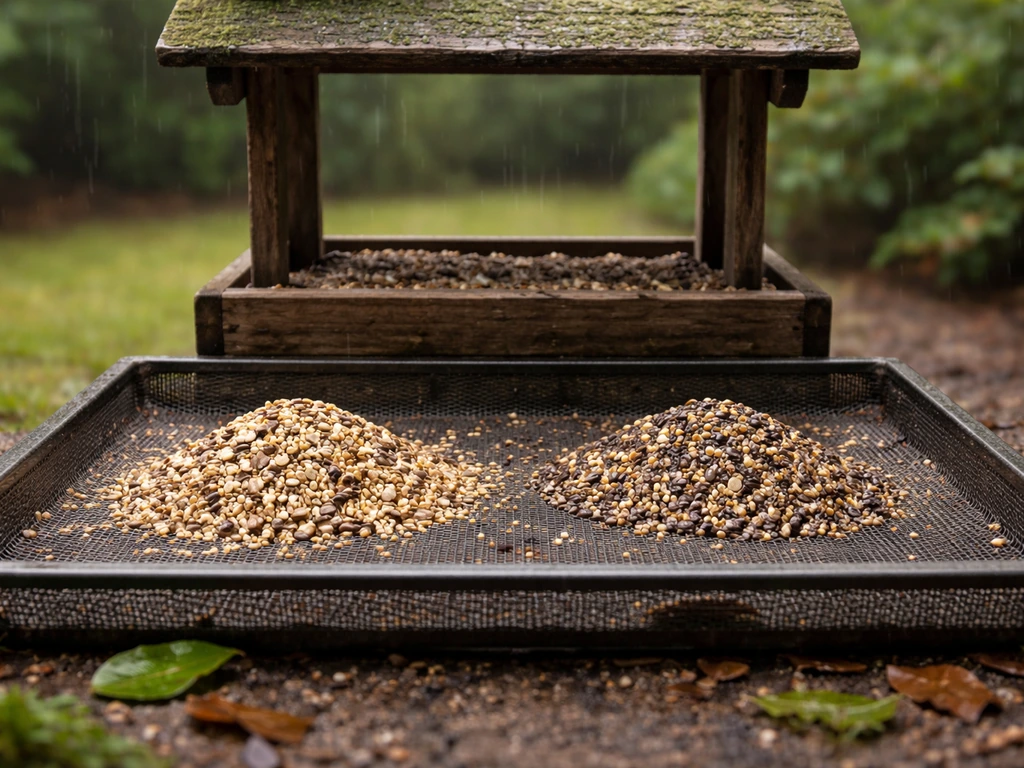
If your bird seed is moldy, caked, infested with insects, sprouting weeds, or drawing rats and squirrels instead of songbirds, the fix is almost always the same starting point: remove the bad seed today, clean the feeder with a dilute bleach solution (1 part bleach to 9 parts water), let it dry completely, and refill with fresh, appropriate seed. That handles the immediate hazard. Everything else, picking the right seed, stopping pests, managing wildlife drama at the feeder, and keeping pets safe, comes down to a handful of habits you can put in place this week.
Bird Seed Problems: Fix Mold, Pests, Spoilage, and Waste
Maya Henderson
25 Apr 2026
Quick diagnosis: what's actually going wrong
Before you fix anything, spend two minutes identifying what you're dealing with. Most bird seed problems fall into one of five categories, and the solution is different for each.
| Symptom | Likely cause | Priority level |
|---|---|---|
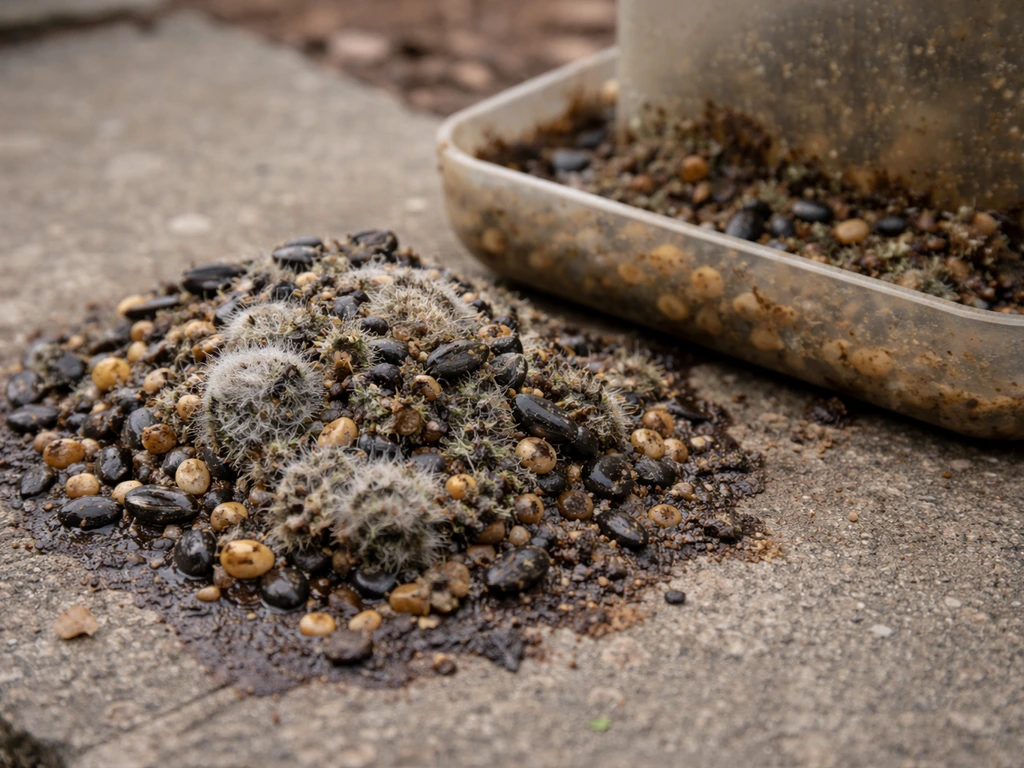
| Seed is clumped, dark, or smells sour/musty | Mold or moisture damage | Fix today — health risk |
| Oily, stale smell with no visible mold | Rancid fats/oils in seed | Fix today — birds will reject it anyway |
| Tiny bugs or webbing in seed or feeder | Grain weevils, moths, or mites | Fix today — can spread to pantry |
| Green shoots or weeds under feeder | Viable seed germinating | Fix this week — messy and wasteful |
| Seed looks fine but birds aren't coming | Wrong seed for local species | Fix when you restock |
| Rats, mice, or squirrels at the feeder | Ground spillage and improper feeder type | Fix this week — rodent attractant |
| One or two species hogging the feeder | Feeder design or bully-bird behavior | Fix when convenient |
Mold is the most urgent issue. You can usually spot it as gray or black fuzz on seed, dark clumping, or a sharp musty odor. Rancid seed is trickier because it looks normal but smells slightly like old cooking oil. If seed has been sitting in a warm feeder through rain and heat, assume the oils have turned even if you can't see visible mold.
Health and safety risks to birds, pets, and wildlife
Spoiled bird seed is not just unappetizing. It carries real health risks for every animal that touches it, and occasionally for people too. While this article focuses on spoilage, bird seed can also have bird-safe benefits for humans when handled and stored properly bird seed benefits for humans.
Risks to wild birds
Mold on seed and hulls can carry mycotoxins, toxic byproducts produced by fungi like Aspergillus. Birds that eat moldy seed can develop mycotoxicosis, and according to the Merck Veterinary Manual, there are no specific antidotes for mycotoxins. Removing the contaminated source is the only reliable intervention. Accumulated droppings on feeder trays compound the problem because they create a second pathway for bacterial and fungal infection. Disease can spread quickly through a flock when multiple birds share a contaminated feeder.
Risks to dogs and cats
A dog eating a few pieces of fresh bird seed typically isn't an emergency, but moldy or aflatoxin-contaminated seed is a different story. High aflatoxin exposure can cause serious illness and even death in dogs. Cats face similar risks plus additional hazards depending on what's mixed into the seed (some blends include dried fruit, which can contain raisins). Because seed routinely ends up on the ground where pets scavenge, this is a real exposure risk, not a theoretical one.
Risks to people
Aspergillus spores are common in the environment, but people with weakened immune systems or lung conditions face elevated risk from handling heavily moldy seed. Always wear gloves when cleaning a visibly contaminated feeder, and avoid shaking out old moldy seed in an enclosed space.
Fixing spoiled seed: mold, rancid oils, and contamination
Once you've confirmed the seed has spoiled, here's the right order of operations.
- Empty the feeder completely. Tip bad seed into a sealed plastic bag, not your compost bin, and put it in the trash. Moldy seed in compost can spread fungal spores and attract pests.
- Take the feeder apart as much as possible. Remove trays, perches, and any detachable components.
- Scrub all surfaces with hot soapy water to remove seed debris, hull fragments, droppings, and visible mold.
- Disinfect with a bleach solution: 1 part household bleach to 9 parts water. Soak or scrub all interior and exterior surfaces for a few minutes. For reference, Minnesota DNR gives the ratio as roughly 2 ounces of bleach per gallon of water, which lands in the same range.
- Rinse thoroughly with clean water until no bleach smell remains.
- Let the feeder air dry completely before refilling. This step is non-negotiable. Refilling a damp feeder is what causes mold to return within days. Audubon specifically flags this as a key step that people skip.
- Refill with fresh, dry seed appropriate for your target birds.
If your feeder is dishwasher-safe, a hot dishwasher cycle after scrubbing can substitute for hand-disinfecting. For rancid seed with no visible mold, follow the same process. The seed is still unsafe for birds and the oily residue inside the feeder will contaminate a fresh batch quickly if you skip cleaning.
Pest and waste control: insects, rodents, sprouting, and cleanup
Insects in your seed or feeder
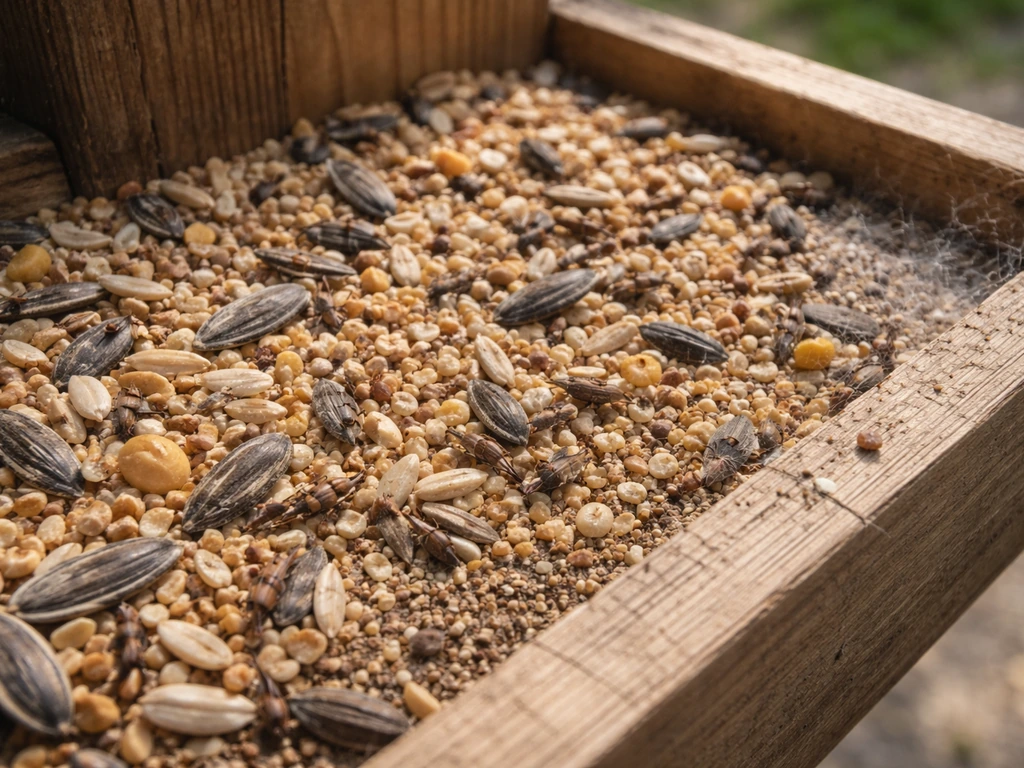
Grain weevils, Indian meal moths, and seed mites are the most common culprits when you find bugs in or around a bird feeder. They usually arrive in bulk seed bought from a store with high turnover or slow stock rotation. If you find webbing or tiny larvae in a seed bag, seal and discard the entire bag. Clean the feeder as described above, then clean the container you were storing seed in before buying a replacement batch. Storing seed in airtight hard-sided containers (not fabric or thin plastic bags) dramatically reduces re-infestation.
Rodents and squirrels
If you're seeing rats or mice under your feeder, seed spillage on the ground is the main driver. Squirrels are an additional complication because they knock large amounts of seed out of feeders while feeding. A few practical steps close most of this problem: use a tray or catcher under the feeder to collect fallen seed, rake and remove ground debris at least twice a week, switch to no-waste or hulled seed mixes that leave less debris, and consider a squirrel baffle on the feeder pole. Avoid leaving seed out overnight near the ground if rodents are already present in your area.
Sprouting and weed growth
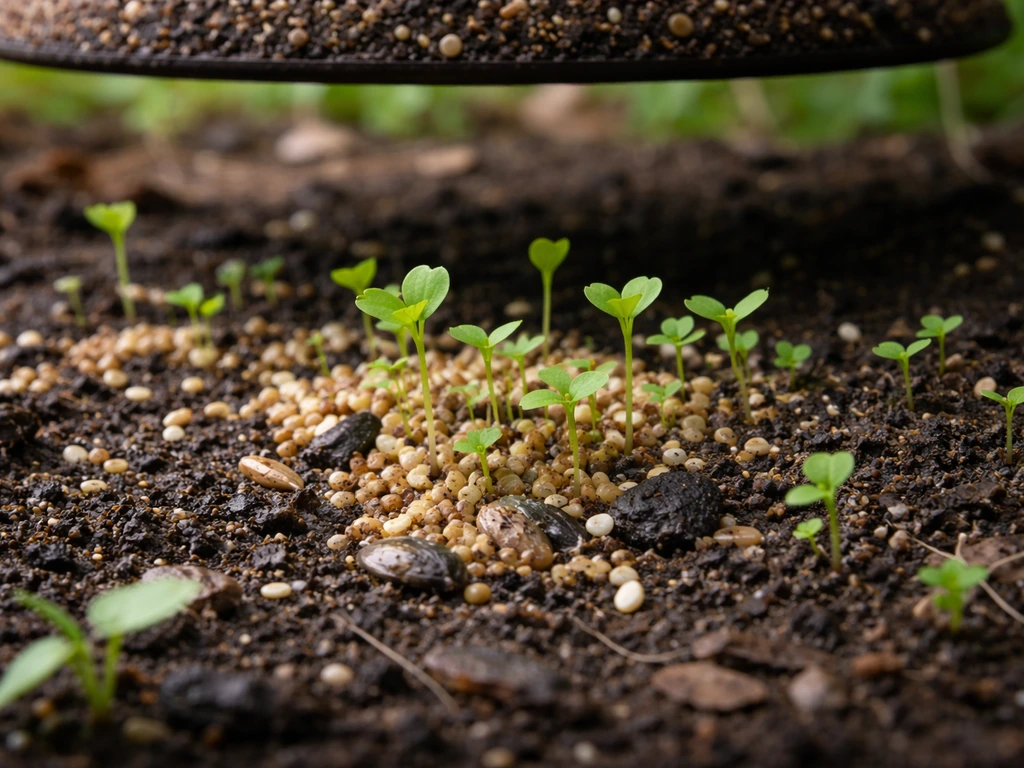
Millet, sunflower, and sorghum (a common filler in budget mixes) are all viable seeds that will germinate in moist soil. If you're seeing a green patch under your feeder, the simplest fix is switching to hulled or sterilized seed. If thistle bird seed is sprouting and causing weed growth, switching to hulled or sterilized seed can prevent germination under the feeder green patch. Sterilized seed has been heat-treated to prevent germination without affecting palatability for birds.
Alternatively, spreading a weed barrier or gravel under the feeder stops germination even with whole seed. If you're curious about which specific seeds cause the most sprouting issues, that's a topic covered separately in a piece on bird seed that does not sprout. If you want the full list and how to choose types that are least likely to germinate, see our guide to bird seed that does not sprout.
A bird that reliably eats thistle seed is the goldfinch.
Choosing the right seed and feeder setup to prevent recurring issues
A lot of bird seed problems trace back to buying the wrong seed, either because it's a cheap mix full of filler grains birds won't eat (creating waste and rot) or because it doesn't match the species in your yard. Here's a quick reference for matching seed to birds.
| Seed type | Best for | Common problems if misused |
|---|---|---|
| Black-oil sunflower | Most songbirds, chickadees, finches, cardinals | Hull buildup under feeder if unhulled |
| Nyjer (thistle) | Goldfinches, siskins, small finches | Goes rancid quickly; use small quantities and clean often |
| Safflower | Cardinals, chickadees; squirrels tend to avoid it | Fewer species attracted than sunflower |
| Millet (white) | Sparrows, doves, juncos | Sprouts readily; attracts house sparrows in large quantities |
| Peanuts (shelled) | Woodpeckers, jays, nuthatches | High fat; goes rancid fast in heat; watch for aflatoxin |
| Mixed budget blends with sorghum/milo | Filler; most songbirds reject it | Accumulates uneaten on the ground, attracts rodents and mold |
Sorghum (also called milo) is worth calling out specifically because it appears in many budget mixes. Most songbirds ignore it, so it piles up, gets wet, and molds. If your feeder mix includes sorghum and you're seeing waste accumulate, that's probably the culprit. Switching to a no-filler mix reduces waste, mold risk, and pest attraction in one step.
Feeder design matters as much as seed choice. Hopper feeders and fly-through feeders with roofs keep seed drier than open platform feeders. Tube feeders with small ports limit access to appropriate seed amounts and reduce spillage. Whichever style you use, the key is matching the feeder opening to the seed size so birds aren't scattering excess seed while trying to eat.
Feeder placement and wildlife coexistence
Where you put your feeder shapes which animals show up and how much conflict happens. Placement within about 3 feet of a window or more than 30 feet away reduces bird-window collision risk. But beyond safety, placement affects the whole ecosystem around your feeder.
Bully birds: starlings, house sparrows, and dominance
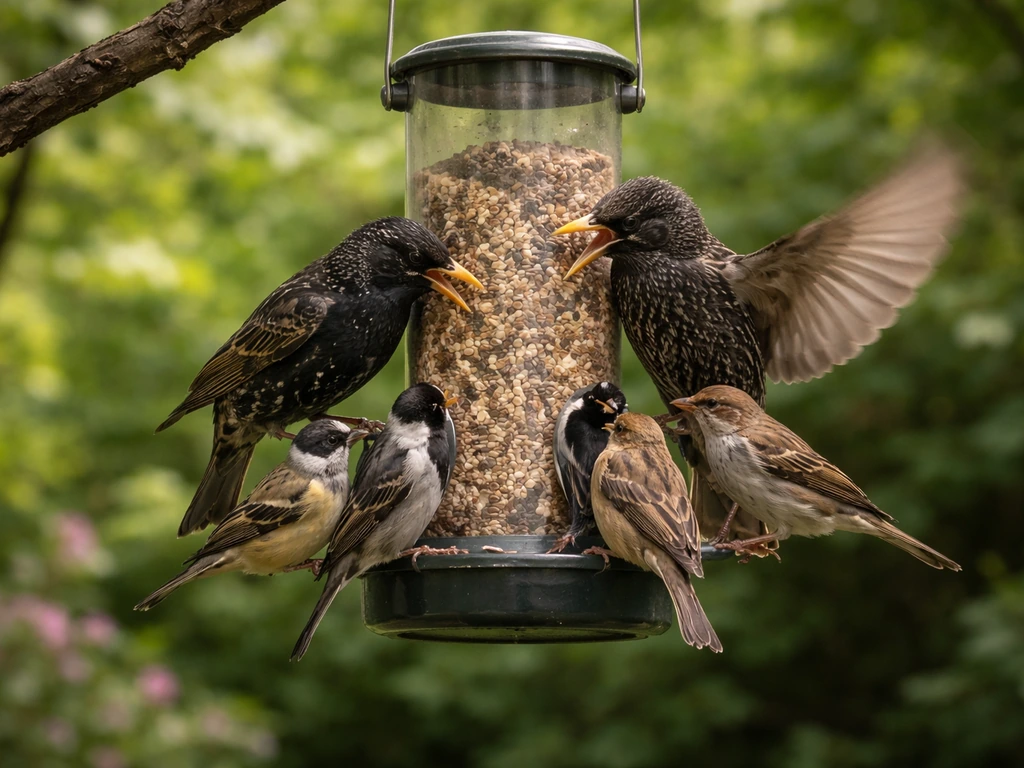
European starlings and house sparrows are the most common feeder-takeover culprits. They're aggressive, travel in numbers, and will push smaller native birds off feeders entirely. Dominance hierarchies at feeders are normal, with larger or more aggressive species usually winning access, but starlings and house sparrows take this to an extreme. A few targeted fixes help: caged feeders (with openings sized for smaller birds) block starlings while allowing chickadees and finches through. Feeders accessible only from the bottom work similarly. Switching away from millet and bread-style suet mixes, foods starlings especially prefer, also helps shift the balance. House sparrows are particularly persistent and may require a combination of feeder type changes and removing millet from your mix.
Predators near feeders
A feeder that concentrates many birds in one spot naturally attracts predators, mostly hawks like Cooper's Hawks and Sharp-shinned Hawks. This is ecologically normal, but if you're seeing a hawk hunting at your feeder regularly and other birds have stopped visiting, take the feeder down for a few days. The hawk will move on once the easy hunting opportunity disappears. Placing feeders near shrubs or brush piles gives smaller birds escape cover without making the area so dense that cats can hide in ambush range.
Scavengers and ground-feeding wildlife
Raccoons, opossums, and squirrels will clean up fallen seed overnight. In areas with moderate wildlife pressure, this can actually reduce ground waste and mold buildup. The problem starts when seed is so plentiful on the ground that it actively draws large numbers of rodents or creates a persistent attractant. Keeping the ground under feeders raked clean every two to three days keeps scavenger activity at a manageable level.
Pet safety: what to do and what to avoid
The main pet safety concern with bird seed isn't that seed is inherently toxic, it's that spoiled, moldy, or contaminated seed is dangerous, and pets have easy access to seed that falls to the ground. Here's what to keep in mind.
Do's
- Check seed mixes for added ingredients before buying. Some specialty mixes include dried fruit that may contain raisins, which are toxic to dogs.
- Rake up fallen seed before letting dogs or cats out near the feeder area, especially if seed has been sitting in rain.
- Store all bird seed in airtight containers out of reach of pets.
- If a pet eats fresh, uncontaminated bird seed in small amounts, monitor for stomach upset but this usually isn't an emergency.
- Call ASPCA Animal Poison Control (available 24/7) or your veterinarian immediately if you suspect a pet has eaten moldy seed or seed with unknown additives.
Don'ts
- Don't assume all bird seed is pet-safe. Contaminated or moldy seed carries mycotoxins that are harmful to dogs and cats.
- Don't leave moldy or discarded seed on the ground where pets can access it during disposal.
- Don't use medicated or treated seed products near areas where pets roam.
- Don't wait to call a vet if your pet ate a large amount of seed or shows any symptoms of illness such as vomiting, lethargy, or loss of appetite after potential seed exposure.
If a wild bird appears sick near your feeder, don't handle it barehanded. Use gloves, place it in a ventilated cardboard box, and contact a local wildlife rehabilitator. Sick birds near feeders can sometimes indicate a contamination or disease issue affecting the local flock.
Your prevention routine: storage, rotation, and cleaning schedule
Most bird seed problems are preventable with a consistent routine. This doesn't need to be complicated. Here's a schedule that works in most climates and keeps feeders genuinely safe. Minnesota DNR recommends cleaning bird feeders using a bleach solution of 2 ounces bleach per 1 gallon of water, scrubbing the entire surface Keep birds healthy by cleaning feeders regularly.
| Frequency | Task |
|---|---|
| Every visit (when refilling) | Check for clumping, off smells, or visible mold before adding new seed on top of old |
| Every 1 to 2 weeks | Full feeder cleaning with bleach solution (more often in hot or humid weather) |
| Every 2 to 3 days | Rake up seed debris and hulls from the ground under the feeder |
| Monthly | Inspect seed storage containers for moisture, bugs, or condensation; rotate stock so older seed is used first |
| Each new bag of seed | Check purchase date or batch freshness before storing; buy from stores with high turnover |
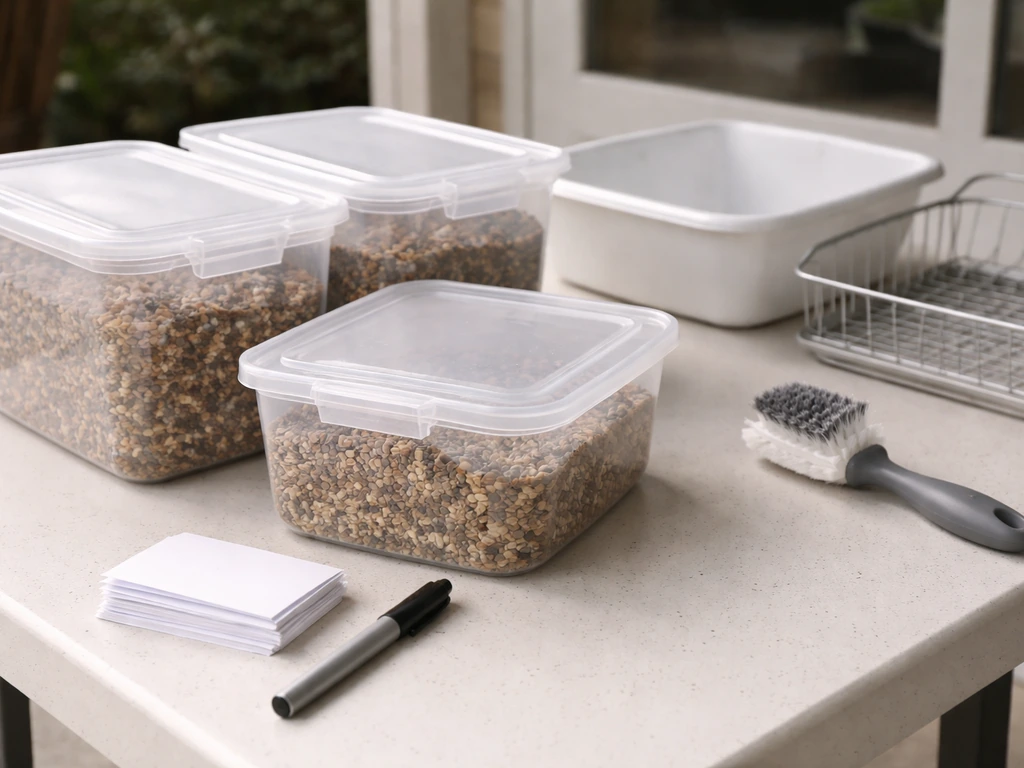
Storage is where many people lose seed before it even reaches the feeder. Keep seed in a hard-sided airtight container, either metal or thick plastic, in a cool, dry location. Garages work if temperatures don't swing dramatically; avoid storing seed in direct sunlight or near heat sources, since heat accelerates oil rancidity. Buy seed in quantities you'll use within four to six weeks, particularly for high-fat seeds like nyjer or peanuts, which go rancid faster than sunflower.
One final thing: if you're repeatedly dealing with the same problem (mold returning fast, the same pests showing up, certain birds never visiting), the issue is usually the feeder location, feeder type, or seed mix rather than cleaning frequency alone. Running through the diagnosis table at the top of this article and matching your recurring symptom to its root cause will point you toward the right fix faster than cleaning more often. If you are also wondering why is there a bird seed shortage, the same kind of careful root-cause thinking can help you figure out whether the issue is spoilage, pests, or broader supply problems rather than a feeder-only cause diagnosis table.
FAQ
How can I tell if the seed is rancid versus just dusty, without smelling it directly?
Look for a persistent oily residue on feeder parts and seed hulls (especially near the outlet of hopper or tube feeders). If the residue is slick and birds are turning away from the mix, treat it as rancid even if visible mold is absent, then clean and replace the batch. Smell tests are helpful but not necessary if the feeder shows oil buildup.
Is it safe to compost or throw out moldy bird seed in place, or should I bag it?
Bag it and discard it in regular trash or sealed compostable packaging. Avoid shaking or spreading contaminated seed, because dried mold dust and spores can become airborne. Also keep pets and wildlife from scavenging the discarded material by using a sealed container until trash pickup.
Can I just scrape off the moldy top layer and keep the rest of the bag?
Usually no. With fungi contamination, mold growth and toxins can extend beyond what you can see. The practical rule is, if the bag or feeder contents show fuzz, clumping, or musty odor, discard the entire lot and do a full feeder and storage-container cleanup.
What if my feeder keeps getting mold even after I clean it, is it a feeder placement issue?
Yes, most persistent mold is driven by moisture trapping and slow drying. Roofed feeders in shaded spots, direct rain exposure, and seed that stays warm in still air all increase recurrence. If mold returns quickly, switch to a drier feeder style (covered hopper or tube), shorten refill intervals, and ensure the feeder fully drains before refilling.
If I clean with bleach, do I need to rinse after the solution dries?
Let the disinfecting solution sit as directed during cleaning, then ensure the feeder is thoroughly dry before refilling. If you notice any lingering chemical odor, do an extra rinse with clean water and air-dry completely. Residual bleach can discourage birds and can also irritate pets that later contact feeder surfaces.
How long should I wait after cleaning before putting new seed back?
Wait until every wet surface is completely dry, including hard-to-reach seams and feeder ports. Even a small amount of trapped moisture can reactivate spore growth. If you cannot guarantee full dryness, extend the air-drying time in a well-ventilated area.
What’s the best way to deal with grain weevils or moths if they keep appearing after I replaced the bag?
Do a two-part approach, clean the feeder and eliminate the source in your storage container area. Empty the storage container completely, wipe and dry it, and check nearby pantry shelves for loose seed, kernels, or spilled bits. Also freeze any new bulk seed for a few days before first use if your household has a history of infestations.
Are seed mites or insect larvae safe to leave in the feeder if the birds seem to eat them?
Treat them as a sign of seed degradation and contamination risk. Even if birds peck around, the presence of larvae or webbing suggests compromised seed and possible microbial growth. Discard the affected seed, clean the feeder thoroughly, and replace with a fresh batch from a faster-turnover source.
How can I reduce waste without switching to a completely different feeder?
Match the opening to the seed size and reduce overfill time. For example, refill smaller amounts more frequently, and use a feeder design that minimizes scatter (tube feeders with appropriately sized ports or covered styles). If you see consistent debris under the feeder, adjust both the feeder type and how much you put out, not just the seed.
What should I do if the birds I want suddenly stop visiting after I changed seed?
Many species are reluctant to switch immediately, especially if you changed seed type drastically. Try a short transition period by mixing a small portion of the new seed into the old favorite, gradually increasing the ratio over several refills. Also confirm the new mix matches your target species and you are not introducing filler grains that birds ignore.
Is feeder disinfection with heat or boiling water an option instead of bleach or dishwasher?
Only for components that are truly heat-safe and can be fully dried afterward. Many plastics can warp, and porous parts can hold moisture and spores even if the surface looks clean. If you want an alternative to bleach, use dishwasher-safe parts on a hot cycle where manufacturer instructions permit, then ensure complete drying.
If a dog or cat ate a few pieces from a contaminated feeder, what’s the safest next step?
Contact your veterinarian or an animal poison helpline, especially if you suspect mold, aflatoxin, or seed containing raisins or similar dried fruit ingredients. While a few pieces of fresh, normal seed usually causes no emergency, moldy or high-toxin batches can produce rapid, serious illness. Bring the seed packaging or a photo of the contamination.
Can I handle moldy seed without gloves if I wash my hands after?
Gloves are recommended because handling can spread spores to skin and you might touch your face before washing. If you do not wear gloves, the minimum safe approach is to avoid contact with your face, use a mask rated for dust if available, then wash thoroughly with soap and water immediately after. For visibly moldy seed, gloves are the safer default.
What should I do with seed stuck in cracks, crevices, or old trays under the feeder?
Remove it completely and clean the surrounding surfaces. Small leftover kernels and hull fragments act like a continuous food source for insects and a moisture trap for mold. A simple tip is to inspect after cleaning with a flashlight, then wipe and dry all tray edges, not just the main feeding area.
Could a hawk appearing regularly mean my feeder is unsafe to keep up?
Not automatically, but repeated successful hunting can reduce overall bird traffic. If other birds stop visiting because the risk feels constant, take the feeder down for a few days to break the routine, then reintroduce it. Also consider adding nearby escape cover like shrubs, so smaller birds have a quick refuge.
How often should I do deep cleaning versus quick rinse-and-refill?
If everything looks clean and you are not seeing mold, odor, or pests, a light clean during refills is usually fine. Deep cleaning should happen whenever you switch seed types, notice any clumping or musty smell, or after any pest episode. For recurring bird seed problems, deep cleaning the feeder and storage area together is more effective than cleaning only the feeder.
Next Article
Bird Seed That Does Not Sprout: Prevention and Best Options
Stop birdseed sprouting with seed choices and storage, feeder, and ground tips that prevent mold and keep pets safe.