The bird seeds least likely to sprout in your backyard are Nyjer (niger/thistle), shelled sunflower chips, shelled peanuts, and suet cakes. Of these, Nyjer is the gold standard because every bag sold in North America is required to be heat-sterilized at 248°F (120°C) for 15 minutes before import, which kills the seed's ability to germinate. The others can technically still sprout if conditions are right, but shelled and processed seeds have a much lower germination rate than whole, intact seeds. If you want the most practical answer right now: switch to Nyjer, shelled sunflower chips, or suet, and pair that with the right feeder and a bit of ground management. If you are also noticing fewer bags on shelves or higher prices, you may be wondering why there is a bird seed shortage why is there a bird seed shortage. That combination will get you very close to a sprout-free yard.
Bird Seed That Does Not Sprout: Prevention and Best Options

Why bird seed sprouts in the first place
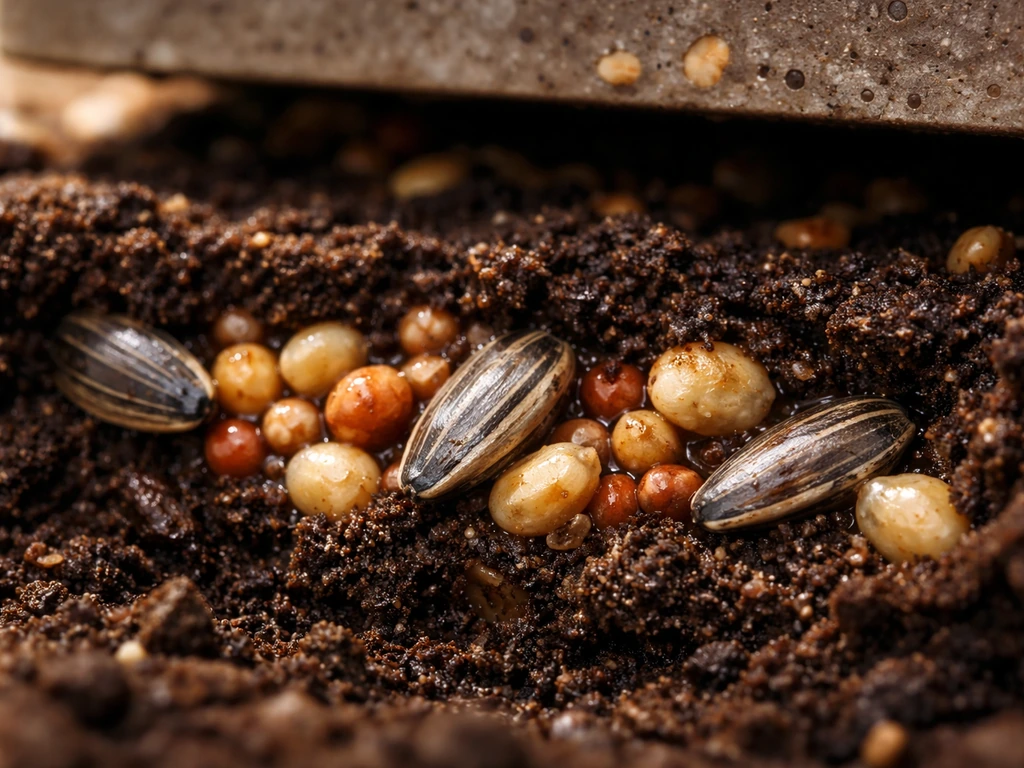
Seeds sprout when three things line up: moisture, warmth, and oxygen. Under a feeder, all three are usually available. Rain soaks fallen seed, the ground warms up, and seeds that land intact with their coat undamaged have everything they need to germinate. Seed that stays wet long enough will either sprout or begin to rot, and often both happen at once in the same pile.
The seed's moisture content is the critical variable. Research on stored grain makes this concrete: mold and biological activity in stored seeds ramp up sharply when moisture content climbs above roughly 13 to 15 percent, depending on the seed type. Below that threshold, seeds stay dormant and stable. Above it, germination, mold growth, and insect activity all accelerate. Temperature matters too, because warmth lowers the moisture threshold needed to trigger germination. A seed that sits inert through a cold winter can sprout in days once spring temperatures arrive and rain hits the ground.
Seed coat integrity also plays a role. Whole seeds with hard, intact coats can resist moisture penetration longer than cracked or shelled seeds. That sounds like a reason to avoid shelled seed, but the tradeoff works in your favor: shelled seeds that do get wet tend to rot rather than sprout, because the embryo is exposed and vulnerable. Either way, you want to minimize wet contact time for anything on the ground.
One more factor worth knowing: dormancy. Some seeds have a built-in delay before they can germinate, even with moisture and warmth present. Dry storage can actually reduce dormancy over time through a process called after-ripening, which means old seed sitting in your garage can become more ready to sprout, not less. This is another reason to buy fresh seed in reasonable quantities rather than storing a huge bag for months.
Seeds and foods that are least likely to germinate
Not all seeds are equal when it comes to germination risk. Here is how the most common bird foods stack up.
| Seed / Food | Germination Risk | Why |
|---|---|---|
| Nyjer (niger/thistle) | Very low | Legally required heat-sterilization at 248°F kills germination ability before sale |
| Shelled sunflower chips | Low | Embryo is damaged or exposed during shelling; sprouts rarely establish |
| Shelled peanuts (no hull) | Low | Hull removal and processing disrupts germination; prone to rot if wet rather than sprouting |
| Suet cakes | Negligible | Fat-based, no viable intact seeds in most formulations; seed inclusions are usually cracked |
| Whole black-oil sunflower | Moderate–High | Intact seed with viable embryo; will sprout readily if it lands on moist soil |
| Safflower (whole) | Moderate | Viable seed; lower germination rate than sunflower in typical yard conditions but can sprout |
| Millet (white proso) | Moderate–High | Small, viable, and germinates easily; a common source of yard weeds under feeders |
| Red milo / sorghum | Moderate | Most birds reject it and toss it to the ground, where it accumulates and can sprout |
| Cracked corn | Low–Moderate | Cracking damages many embryos; intact kernels in the mix can still sprout |
Nyjer deserves a special mention here. It is the only commonly sold wild bird food that has a mandatory sterilization process attached to it. The Wildlife Feeding Institute confirms that imported Nyjer goes through USDA-controlled heat treatment (treatment schedule T412-a) specifically to prevent germination. If you are dealing with a sprouting problem right now, this is the easiest single switch you can make. It is also a favorite of finches, so you are not giving anything up on the bird-attraction side. The site also covers which birds are drawn to thistle, which is worth reading if finches are your primary target. Among the birds that eat thistle seed, finches are often the biggest visitors to your feeder what bird eats thistle seed. Thistle bird seed is designed to germinate very poorly, so it is typically a low-weed option compared with many other birdseed types does thistle bird seed cause weeds.
If you want to keep offering sunflower, switching from whole black-oil sunflower to shelled sunflower chips removes the main sprouting risk. The chips are the same seed stripped of their husk, and the processing damages or exposes the embryo enough that they rarely establish a sprout even when wet. Birds eat them just as eagerly, and you also eliminate the mess of hulls piling up under the feeder.
Red milo is worth avoiding for a different reason: most North American songbirds reject it and fling it out of the feeder onto the ground, where it sits wet and eventually sprouts or rots. Many cheap bulk mixes use red milo as filler. If you are buying a blend and seeing lots of sprouting, check the ingredient list for milo.
What to look for when buying
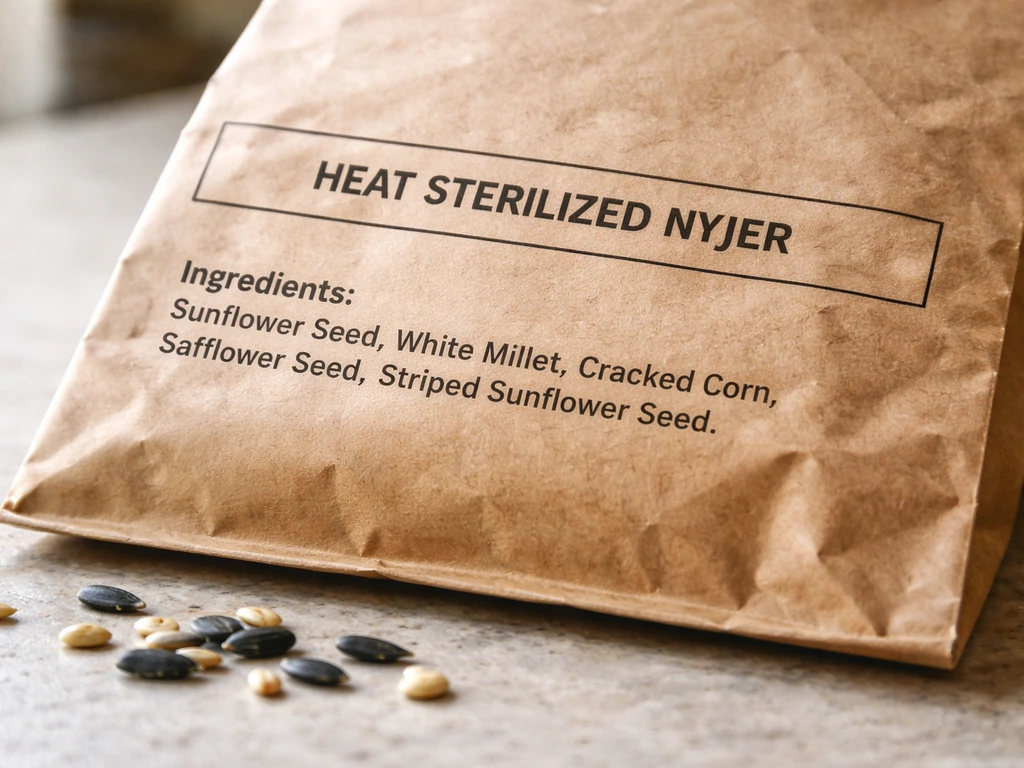
The label is your first filter. For Nyjer, look for the terms 'heat sterilized' or 'heat treated' on the bag. Reputable Nyjer products sold in the U.S. and Canada will typically state this, and some bags reference the USDA treatment standard. If a bag of Nyjer does not mention sterilization, that is a red flag, as it may be an off-brand or improperly sourced product.
For blended mixes, read the ingredient list rather than relying on the front-of-bag marketing. Avoid blends that list red milo, wheat, oats, or whole sorghum prominently, as those are both low-value to most birds and high-germination if they fall to the ground. A good mix for a sprout-conscious yard will lead with Nyjer, sunflower chips, or shelled peanuts. Under USDA and APHIS labeling rules, treated seed containers are required to indicate the treatment process used, so look for that language if you are buying specialty or treated seed.
Quality matters beyond the sprouting question. BTO recommends always buying peanuts from a reputable source and rejecting any that show visible mold. Aflatoxin, a toxic compound produced by mold fungi, is a real hazard in improperly stored nuts and grains. OSU Extension specifically advises against feeding grain or seed showing visible mold because it may carry aflatoxin risk, which can harm birds, small mammals, and pets that eat contaminated seed. Buying from established wild-bird specialty retailers rather than discount bulk sources reduces this risk considerably.
Finally, buy in quantities you can use within four to six weeks during warm months, and within two to three months during cooler periods. Large bags that sit open in a shed or garage accumulate moisture and lose quality fast, and as noted earlier, extended dry storage can actually reduce dormancy in some seeds, making them more likely to germinate the next time they get wet.
How to store and handle seed to prevent moisture and spoilage
Proper storage is not complicated, but it does require a few specific practices. The core goal is keeping moisture content low, because once seed moisture climbs above roughly 13 to 15 percent, mold and biological activity kick in. Temperature swings are the sneaky enemy here: when warm air meets a cool seed container, condensation forms on the seed surface. That moisture is enough to trigger mold and, for intact viable seeds, to start the germination clock.
- Store seed in a hard-sided, airtight container (metal or thick plastic). Bags left open invite moisture and pests.
- Keep the container in a cool, stable-temperature location. Avoid garages or sheds with big daily temperature swings, especially in spring and summer.
- Do not pour new seed on top of old seed. Empty and dry the container between refills to prevent old damp seed from contaminating fresh seed.
- If you notice any clumping, musty smell, or visible mold, discard that seed immediately. Do not try to dry it out and reuse it.
- In humid climates or during summer, consider buying smaller bags more frequently rather than stockpiling. Fresh seed with low baseline moisture is easier to keep stable.
Aeration research from UMN Extension confirms that airflow helps reduce moisture migration and mold development in stored grain, and the same principle applies at a backyard scale. A container with a tight seal stops outside humidity from getting in, but it also means any residual moisture from damp seed stays trapped. This is why drying your container thoroughly before each refill matters as much as the seal itself.
Feeder setup and managing fallen seed on the ground
Even with the right seed, a poorly placed or designed feeder will create a pile of wet seed on the ground underneath it. That pile is where almost all backyard sprouting actually happens. Managing it is a two-part job: reduce how much seed falls, and deal with what does fall before it gets wet and warm enough to sprout.
Feeder design choices that help
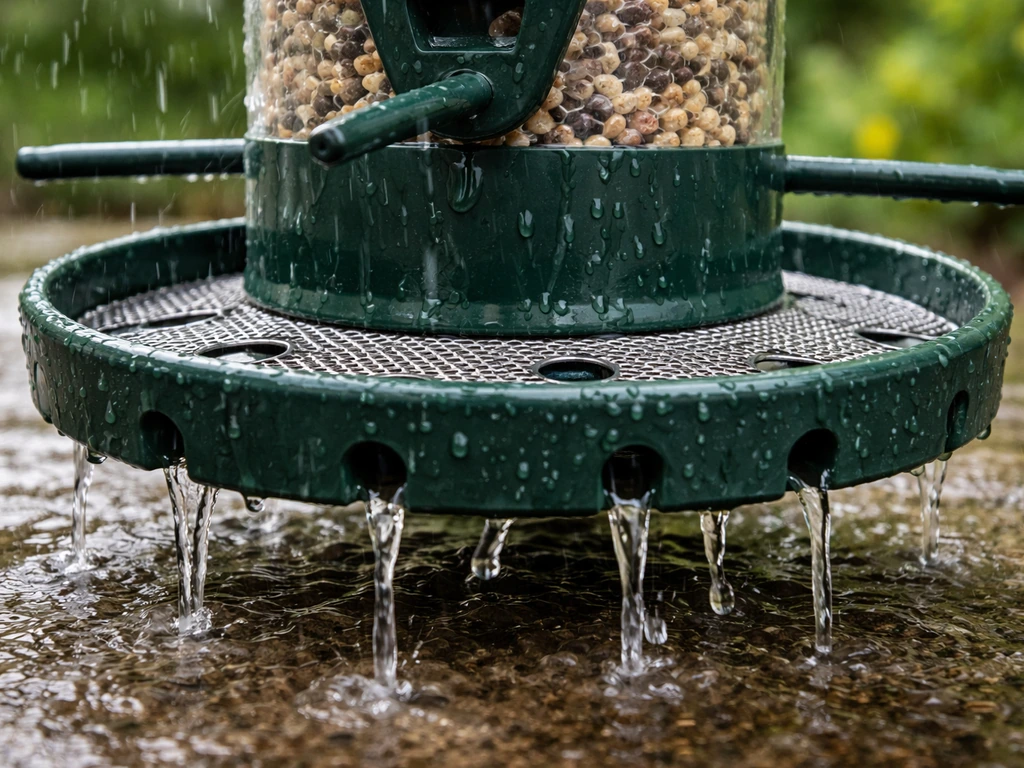
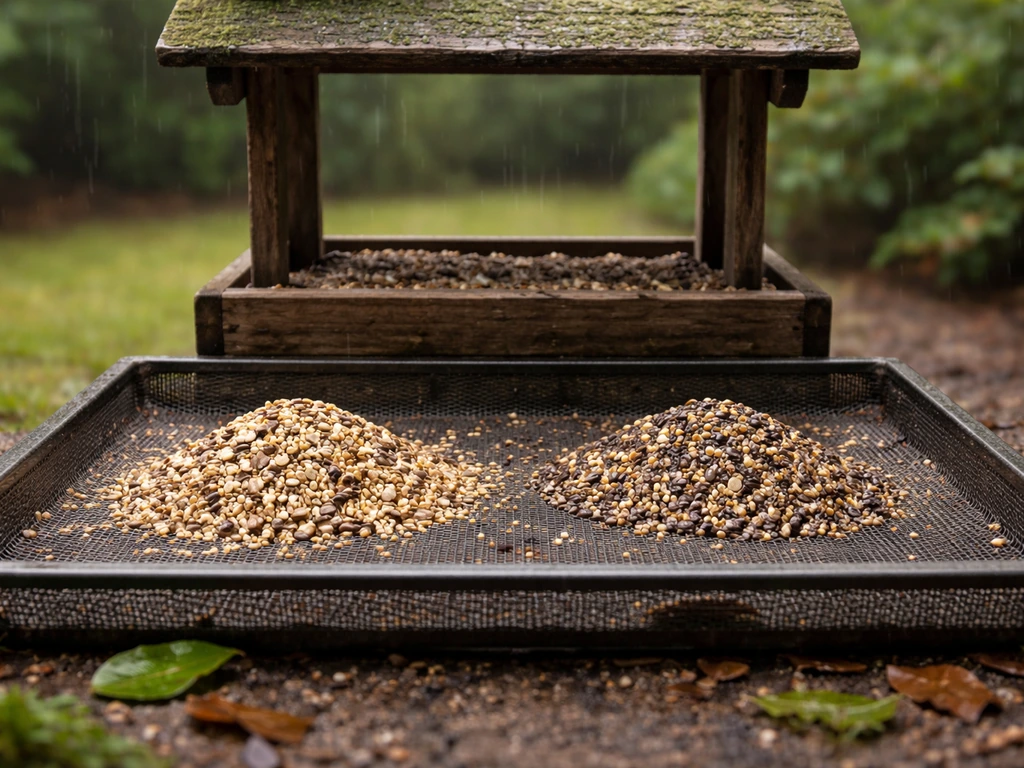
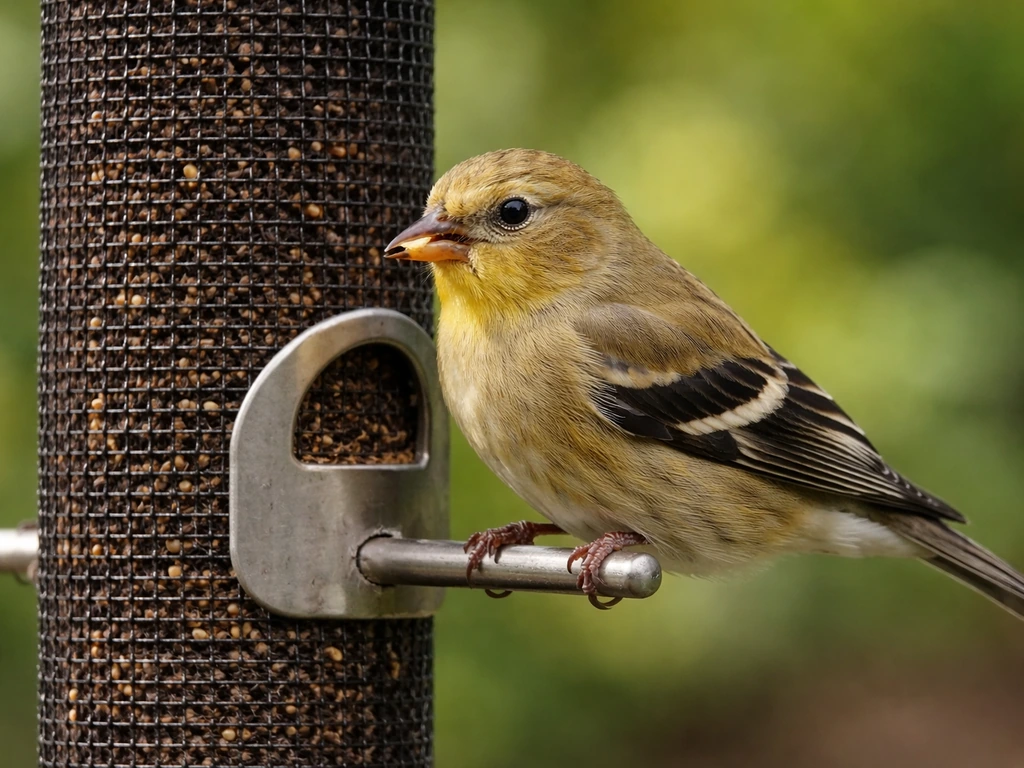
Choose feeders with drainage holes or mesh bases so rain passes through rather than pooling around the seed. RSPB specifically recommends feeders designed to prevent rain getting in and to limit condensation inside the feeder. Tube feeders with small ports are better than open platform feeders for this reason. Project FeederWatch notes that nyjer needs special small feeder ports designed to prevent waste and spillage Tube feeders with small ports. Hopper-style and fly-through designs can work well if they have overhangs or roofs to shed rain. Minnesota DNR recommends hopper-type feeders as a practical choice for keeping seed drier.
Avoid flat open tray feeders in rainy climates unless you are willing to empty and dry them after every rain event. They collect water, and wet seed on a tray will begin to mold within a day or two in warm weather.
Placement and ground management
Florida Wildlife Commission recommends suspending feeders at least 10 feet from the ground and 4 feet from attachment points to reduce access by ground-foraging wildlife and to limit the concentration of fallen seed in one spot. Placing feeders over a hard surface (patio, deck, or a patch of gravel) rather than directly over soil makes it much easier to clean up fallen seed, and seed that lands on gravel or concrete has far less contact with the moisture and soil nutrients it needs to sprout.
Scrape or rake the area under feeders at least once a week, and more often during wet weather. Old hulls and seed debris accumulate moisture and create a sprouting and molding bed even if the fresh seed above it is dry. BTO advises moving feeders periodically to prevent the buildup of waste and droppings in one spot, which also helps break any established sprouting cycle in that patch of ground.
If you are using shelled seed or Nyjer and still seeing material accumulate, consider placing a catch tray under the feeder that you can remove and rinse rather than letting debris fall directly to the ground. Just remember to empty and clean the tray regularly, because even non-sprouting seed sitting wet in a tray is a mold risk.
Safety for birds, pets, and other wildlife
Sprouting is not just a lawn-care annoyance. Wet, sprouting seed is also seed that is on its way to becoming moldy seed, and moldy seed is genuinely hazardous. Mold fungi produce mycotoxins, including aflatoxins, which are toxic to birds, small mammals, dogs, cats, and wildlife that forage under feeders. MSU Extension notes that aflatoxin production is favored by hot, humid conditions, which are exactly the conditions that also favor sprouting. In other words, the same environment that grows sprouts also grows the mold that can poison animals.
Dogs and cats that sniff around under bird feeders are at real risk if they eat sprouted or moldy seed. Small mammals like squirrels, chipmunks, and rabbits that clean up fallen seed are also exposed. If you have pets that access the yard, keeping the ground under your feeder clean is not optional. It is a safety measure. If you notice your pet eating fallen seed, consider moving the feeder to an area they cannot access, or switching entirely to suet hung at height.
For the birds themselves, RSPB advises that if birds appear sick or you notice unusual die-offs near your feeder, you should stop feeding immediately and leave the feeder empty and clean for at least two weeks. The RSPB also advises keeping bird food as dry as possible and cleaning away old food and droppings beneath feeders to reduce disease risk Keeping bird food as dry as possible and cleaning away old food/droppings beneath feeders. Sick birds congregate at feeders and can spread disease rapidly in a confined feeding area. This is a good reason to rotate feeder placement, as BTO recommends, rather than keeping birds returning to the same spot indefinitely.
A quick safety checklist for responsible feeding:
- Never offer seed with visible mold, clumping, or an off smell
- Clean feeders with hot soapy water every two weeks at minimum, more often in summer or humid conditions
- Completely dry the feeder before refilling it
- Rake fallen seed and hulls at least weekly
- Keep pets away from the ground under feeders, or use a feeder design and placement that minimizes ground debris
- If you see sick birds at the feeder, stop feeding and clean thoroughly before resuming
Still seeing sprouts? Here is how to troubleshoot
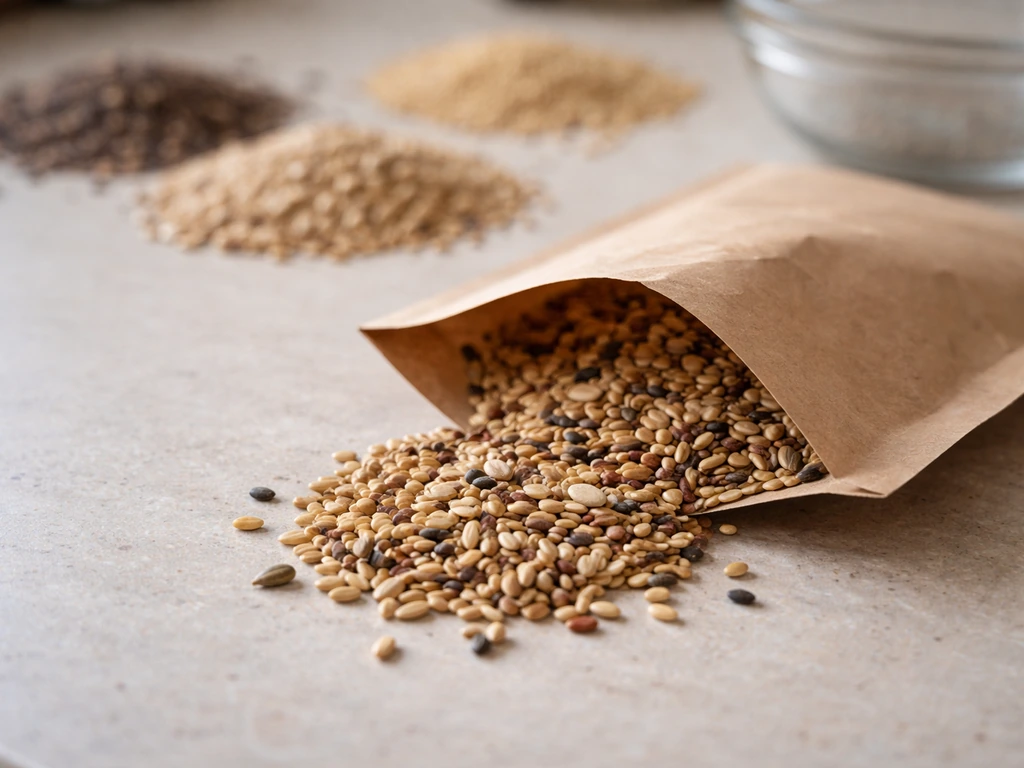
If you have already switched to lower-germination seed and you are still finding sprouts, work through this checklist to identify what is going wrong.
- Check the seed you are actually using. Open the bag and look at the ingredients. If the blend contains whole millet, whole sunflower, or red milo, those are almost certainly the source. Switch to a Nyjer-only, shelled chip, or suet setup.
- Check your Nyjer bag for a heat-sterilization statement. Not all Nyjer sold at discount retailers meets the USDA standard. If the bag does not confirm heat treatment, replace it with a product from a known wild-bird specialty brand.
- Look at where the sprouts are appearing. If they are all in one spot directly under the feeder, you have a ground accumulation problem. Move the feeder, clean the area thoroughly, and add gravel or a hard surface underneath.
- Check how much seed is being wasted. If birds are flicking seed out of the feeder constantly, switch to a smaller-port tube feeder or a feeder with a catch tray, and offer shelled seed that birds are less likely to sort through.
- Check your storage container. If you are storing seed in an open bag or a container with poor sealing, moisture is getting in before the seed even hits the feeder. Transfer to an airtight metal or thick-plastic bin.
- If sprouts keep coming back in the same patch of ground, the seeds already in that soil may continue germinating even after you change feeders and seed. Lay landscape fabric or a layer of gravel over the affected area to physically block light and reduce the soil contact that allows sprouts to establish.
- Consider a temporary feeding break of one to two weeks. This allows you to clean the area completely, let any established sprouts die back, and start fresh with new seed and new protocols.
One thing worth setting realistic expectations about: even a perfect setup with Nyjer and shelled seed in a well-designed feeder will occasionally produce a stray sprout from a seed that somehow made it through processing with viability intact, or from a seed that was blown in from somewhere else. The goal is not zero sprouts forever, it is a yard where sprouts are rare enough to pull by hand when they appear, not a recurring lawn problem. Most people who switch to Nyjer and shelled chips and manage the ground underneath find that sprouts essentially stop being an issue within a season. If you are wondering about bird seed benefits for humans too, the same careful feeding practices can help limit mess and spoilage around your yard bird seeds.
If you are also curious about the broader range of issues that can come with bird feeding setups, the bird seed problems topic on this site covers additional challenges beyond germination, from feeder competition to spoilage scenarios worth knowing about.
FAQ
If I switch to Nyjer or shelled sunflower chips, will I completely stop sprouts forever?
No. Even heat-treated or processed seed can occasionally contain a tiny number of viable kernels, and wind can bring in untreated seed from nearby lawns or fields. The practical goal is “rare sprouts,” so keep pulling any strays by hand and stay strict about removing wet seed from under the feeder.
Why am I still seeing sprouts even though my seed bag says it is heat-treated?
Most sprouting persistence comes from feeder placement and debris, not the label. Check whether rain is getting into the feeder, whether condensation is forming inside it, and whether you have a hidden seed pile under the perch, ports, or baffle. A catch tray that you empty and rinse regularly often reveals the real source.
Can I fix sprouting by letting the seed fall on the ground dry out more?
Not reliably. Drying reduces germination risk, but if seed gets wet during rain or morning dew and then warms up, moisture is enough to trigger sprouting or mold. Focus on preventing wet contact time (drainage, off-soil placement, and faster cleanup) rather than trying to “wait it out.”
Is it safe to feed birds if some of the seed under the feeder is sprouted?
Generally, no. Sprouted seed is often moving toward mold, and mold can produce mycotoxins that are harmful to birds and also to pets or wildlife that forage under the feeder. The safer approach is to stop feeding immediately, clean the area, and only resume once the feeder and ground are dry and debris-free.
How can I tell whether what I’m seeing is sprouting versus moldy seed?
Sprouts usually show small green shoots or visible emerging roots. Mold is more likely to look fuzzy, discolored, or smell musty. If you suspect mold, do not try to “rescue” the seed, remove it, and disinfect the feeder and catch tray before refilling.
Does after-ripening mean old seed is more likely to sprout, even if I store it dry?
Yes, old seed can become more ready to germinate over time because dormancy can lessen through after-ripening. Even if you keep storage moisture low, buying within a few weeks during warm weather and a couple months during cooler periods reduces the “more germination potential when wet again” problem.
What storage container actually helps reduce sprouting and mold risk?
A tight-seal container helps, but only if it is completely dry before you refill. Condensation often forms when warm humid air hits a cool container, so avoid storing seed where temperatures swing a lot (like an uninsulated shed). If you can, use airflow during storage and keep the container out of direct weather exposure.
Are shelled peanuts and sunflower chips always lower sprout risk than whole seeds?
Usually, but the key detail is what happens when they get wet. Shelled seed lacks an intact coat, so when it does get moisture it tends to rot rather than successfully establish sprouts. Still, any wet debris under a feeder is a problem, so cleanup and feeder drainage matter for both.
How often should I clean or scrape the area under the feeder to prevent sprouts?
At least weekly, and more often during wet weather. If you are in a rainy climate or you notice debris building up, increase frequency. Also rotate feeder locations occasionally so waste does not accumulate into a consistently “sprout-friendly” patch.
Is it better to use a tray under the feeder or to let seed drop directly to the ground?
A removable catch tray is usually better because you can remove and rinse debris instead of letting it soak into soil or collect in cracks. If you use a tray, treat it as a maintenance item, empty it regularly, and keep it clean because wet seed in a tray can still grow mold.
What feeder type best reduces sprouting in the real world?
Tube feeders with small ports, hopper-style feeders with roofs or overhangs, and designs with drainage or mesh bases tend to outperform open platform trays in rainy climates. The biggest win is limiting how much seed stays wet near the ports long enough to warm and germinate.
Should I stop feeding entirely if there’s a sprouting outbreak under my feeder?
If sprouts come with signs of mold, you should stop feeding and clean first. Rinse and dry the feeder and remove fallen seed. Then wait long enough to let everything dry before restarting, ideally after a couple of weeks of empty cleaning if birds have appeared ill nearby.
Can sprouted or moldy bird seed harm my pets?
Yes. Dogs and cats can be at risk if they eat fallen sprouts or moldy seed. Keep the ground under feeders clean, consider moving feeding higher, and keep pets away from the feeding area, especially after rain when debris stays wet.
My blend includes milo or wheat. Is that automatically bad for sprouting control?
It can be. Many songbirds reject red milo and fling it to the ground, where it stays long enough to sprout or rot. Check the ingredient list, and if sprouting is your priority, reduce or eliminate high-germination fillers that are likely to end up on the ground.
What’s the fastest troubleshooting order when I suddenly start seeing sprouts?
Start with three checks: (1) is rain or condensation getting into the feeder, (2) is seed debris accumulating under ports or perches, and (3) are you cleaning the area frequently enough after wet weather. Then verify the bag claims, and finally review storage (moisture, temperature swings, and container dryness) for any batch that might have picked up humidity.
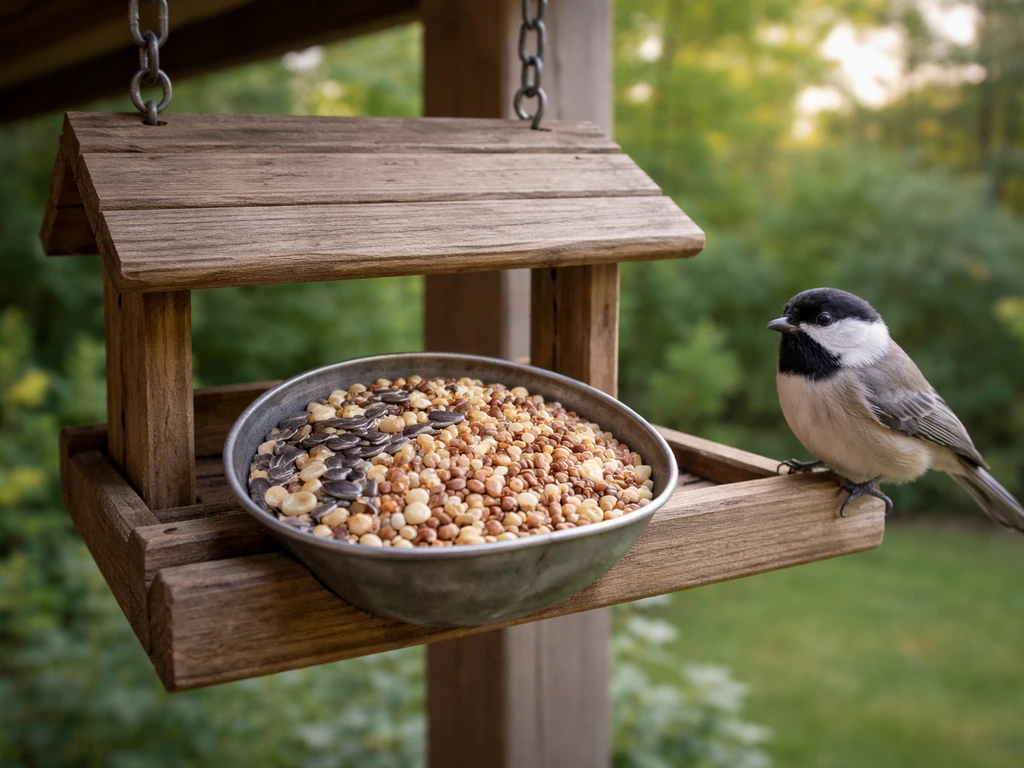
Learn if sorghum is in bird seed, which birds eat it, safety risks like mold or pesticides, and pet precautions.
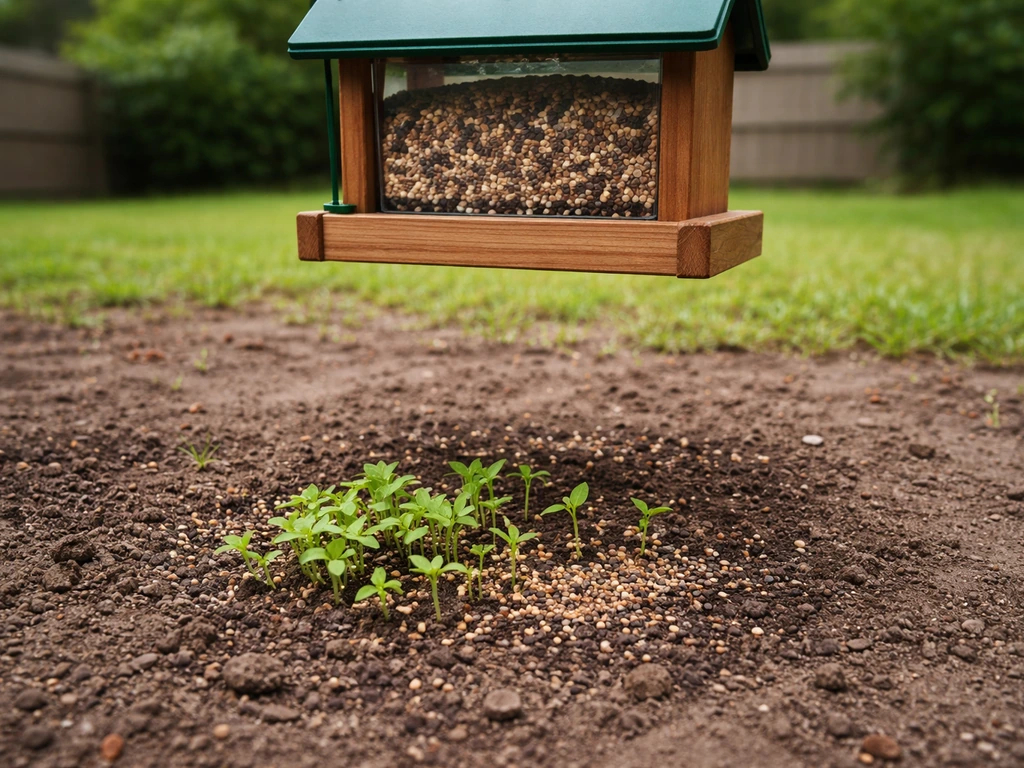
Learn if thistle bird seed causes weeds, why volunteer plants sprout, and how to stop seed spillage today safely.
Identify the birds that eat thistle or nyjer seed, set up feeders, and troubleshoot visits safely.