How birds find food: scent vs sight vs movement
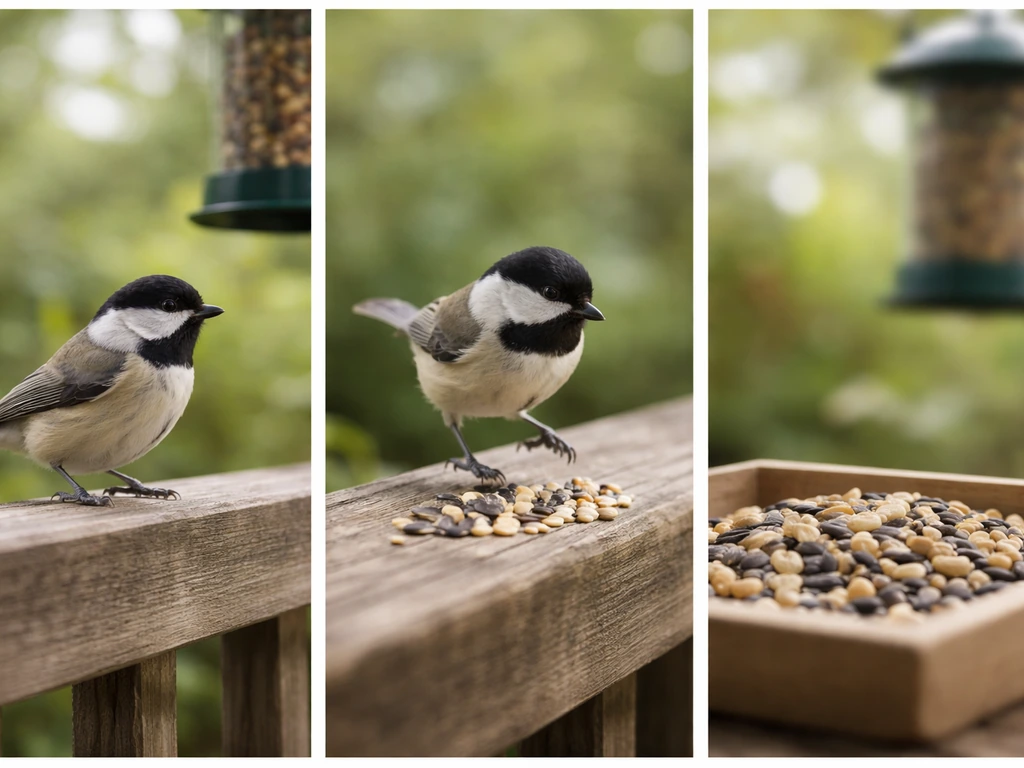
Most songbirds that visit backyard feeders, think house finches, chickadees, sparrows, and nuthatches, are primarily visual foragers. They scan for color, shape, and the movement of other birds already feeding. If your feeder is in a spot they can see from a perch or flight path, that visual cue is what initially pulls them in. Scent is more of a secondary confirmation once they're already close.
Memory is also huge. Birds remember productive feeding locations across seasons. A feeder that's been reliably stocked becomes a known resource, and birds will return to it by route and recall, not by sniffing it out from a distance. This is why a new feeder sometimes takes weeks to get its first visitors even when it's full of fresh seed.
Scent matters more than people expect in certain situations. Turkey vultures, for example, can locate hidden food by smell alone with impressive speed. All About Birds discusses how turkey vultures can locate carcasses using smell, with olfaction varying alongside other strategies such as vision Turkey vultures can locate hidden food by smell alone. Controlled experiments with peregrine falcons showed they also use olfaction to detect food in test settings. These are raptors, not your typical feeder birds, but they illustrate that avian olfaction is a real functional sense across many species. Research also found that urban birds tend to prioritize olfactory cues over visual ones compared to their forest counterparts, which is interesting if your feeder is in a city or suburban yard: those birds may be relying on scent more than you'd expect.
The practical takeaway is that smell alone won't bring birds to your feeder from across the yard, but it can influence whether they stay, return, and eat enthusiastically once they've arrived. And a bad smell, from mold or rancid oils, can absolutely drive them away.
What affects bird seed smell
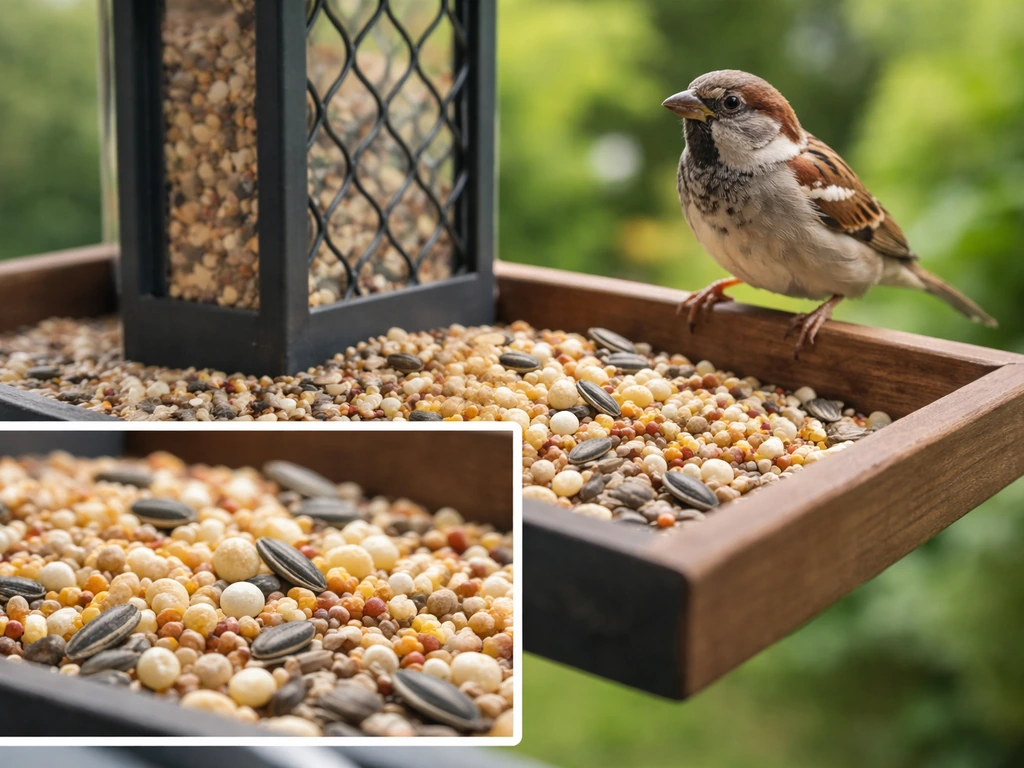
Fresh seed has a mild, nutty, slightly oily scent. Most birds find this appealing. The problems start when that scent changes because of heat, humidity, or time.
Rancid oils
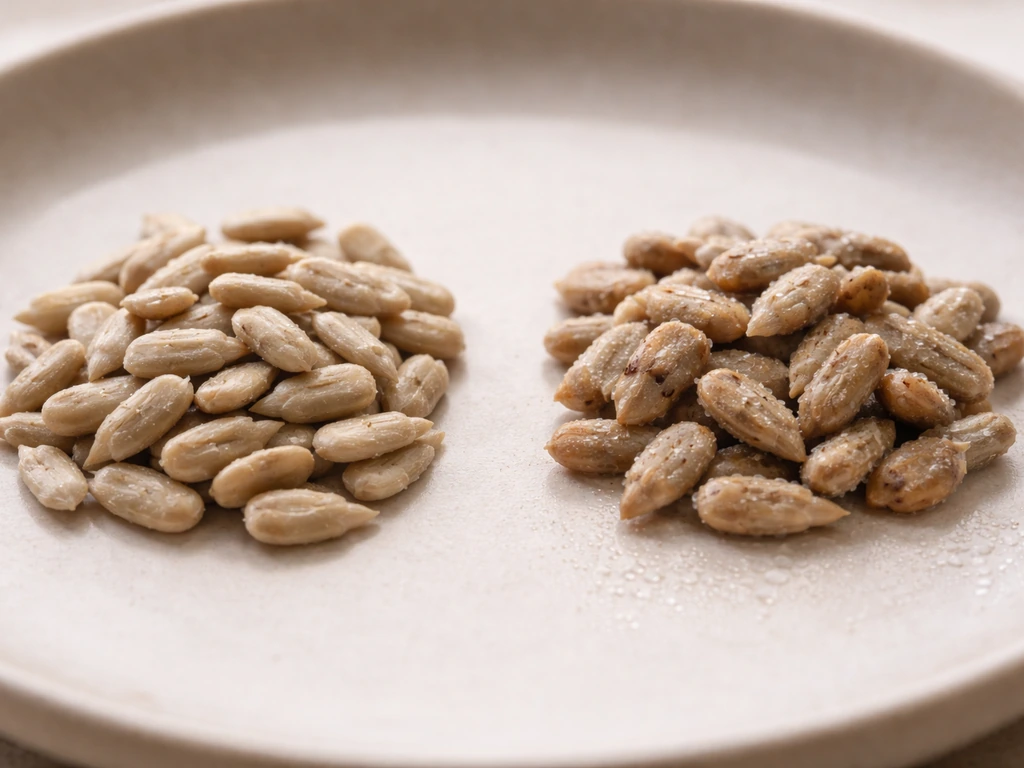
Sunflower seeds, peanuts, and safflower all contain natural oils that go rancid when exposed to heat and air. Rancid seed smells sour, musty, or paint-like. Birds will often reject it outright. If you've ever wondered why a full feeder is being ignored, rancid seed is one of the first things to check. A quick sniff test tells you a lot: if the seed smells off to you, it probably smells worse to a bird.
Humidity and moisture
Moisture is the fastest path from fresh seed to spoiled seed. When seed gets wet, fungal growth can begin within 24 to 48 hours under warm conditions. Damp seed clumps together, smells musty, and can develop visible mold. Humidity alone, without direct rain, is enough to speed this process if your feeder doesn't have good ventilation.
Spilled seed on the ground
Seed that falls below the feeder gets wet, stepped on, and contaminated with droppings much faster than seed in the feeder itself. This spilled seed produces a strong, often unpleasant fermented or moldy smell that can actually mask the fresh seed odor above it. Worse, it draws rodents, raccoons, and squirrels, creating a different set of problems.
Heat and direct sunlight
A feeder baking in direct afternoon sun can accelerate oil oxidation significantly. In summer, seed in a south-facing metal feeder can reach temperatures that break down seed quality within a few days. This is a common and overlooked reason feeders go quiet in warmer months.
Troubleshooting: make seed more findable for birds
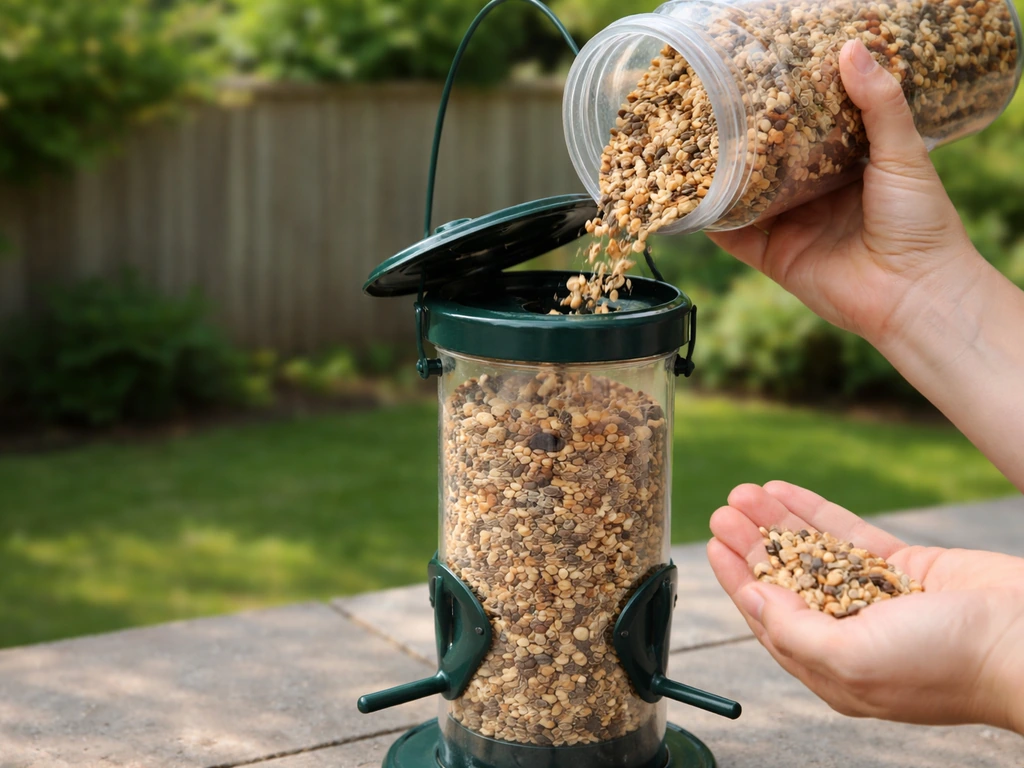
If birds aren't showing up, or they showed up once and stopped coming, here's how to work through the most likely causes. It's rarely a scent problem alone, but scent is part of the picture.
- Do a smell test first. Open the feeder and sniff the seed. Fresh seed smells nutty and mild. Sour, musty, or sharp odors mean the seed has turned. Replace it immediately.
- Check for clumping. Clumped seed almost always means moisture got in. Dump the feeder, let it dry completely, and refill with fresh, dry seed.
- Add visual attractors. Hang a bright, colorful feeder near existing vegetation. The color red and yellow are particularly visible to birds. A new feeder may need a few weeks to be discovered.
- Mimic activity. Placing a small mirror near the feeder or positioning it where birds from a nearby tree can see other birds eating can jump-start visits. Birds follow other birds.
- Use high-oil fresh seed. Black-oil sunflower seed has a strong, appealing natural scent when fresh and is attractive to the widest range of backyard species. Buy small quantities and rotate stock frequently.
- Keep the area tidy. Rake and dispose of spilled seed under the feeder every few days. A clean feeding area smells better and signals to birds that the spot is well-maintained.
One thing people sometimes try is adding attractants with a spicy kick. It's worth knowing that birds react differently to spicy bird seed than mammals do, which is actually why hot pepper additives are marketed as squirrel deterrents. Birds don't register capsaicin the same way, so it doesn't enhance or hurt the seed's appeal to them from a scent standpoint.
Feeder placement tips that actually increase visits
Where you put the feeder matters as much as what's in it. Here are the placement factors that make a consistent difference.
- Place feeders within 10 feet of shrubs or trees so birds have a nearby perch to land and observe before approaching. Birds don't like to commit to an exposed feeder with no escape route.
- Keep feeders at least 30 feet from windows to reduce collision risk, or within 3 feet so any collision is too slow to cause injury.
- Avoid full afternoon sun exposure. A spot with morning sun and afternoon shade keeps seed fresher longer and makes the feeder more comfortable for birds in hot weather.
- Use multiple feeders spaced at least 6 to 10 feet apart to reduce competition and allow timid species to eat without being chased off.
- Position at least one feeder at ground level or on a low platform for ground-feeding species like doves, juncos, and native sparrows who rarely use hanging feeders.
- Consider placing feeders near a water source. Birds that visit for water often discover nearby feeders and become regular visitors.
Safety warnings: moldy seed, pets, and wildlife
Spoiled seed isn't just unappealing, it can be genuinely dangerous. Mold species including Aspergillus can grow on damp seed and produce aflatoxins, which are toxic to birds. A bird eating heavily contaminated seed can develop aspergillosis, a respiratory infection that's often fatal. If you see seed with visible mold (white, grey, or green fuzz), discard the entire batch in a sealed bag. Do not compost it.
The smell of spoiled seed also attracts animals you probably don't want. Raccoons are drawn to fermented or rotten food odors. Rats and mice are attracted to both the smell and the fallen seed under feeders. If you have outdoor pets, especially dogs, be aware that dogs will often eat spilled or moldy seed directly off the ground. Moldy seed can cause mycotoxin poisoning in dogs, with symptoms including vomiting, tremors, and in severe cases, seizures. Keep feeding areas clean and feeders inaccessible to ground-level pets.
It's also worth thinking about what your feeder attracts in terms of predators. Raptors and neighborhood cats are drawn to concentrations of small birds. This isn't a reason to stop feeding, but it's a reason to place feeders thoughtfully and not let spilled seed create a ground-level buffet that keeps birds stationary and vulnerable.
Understanding what birds can actually taste also helps here: birds do have taste receptors, but they're less sensitive to some flavor cues than mammals. This means birds won't always self-select away from mildly spoiled seed the way a mammal might. That puts the responsibility on you to check seed quality regularly.
If you're wondering whether capsaicin-based deterrents affect birds negatively, the research is reassuring. Spicy bird seed doesn't hurt birds because they lack the receptor that makes capsaicin painful for mammals. But that's separate from the mold and rancidity risks, which are real concerns regardless of seed type.
Storage, cleaning, and keeping seed fresh
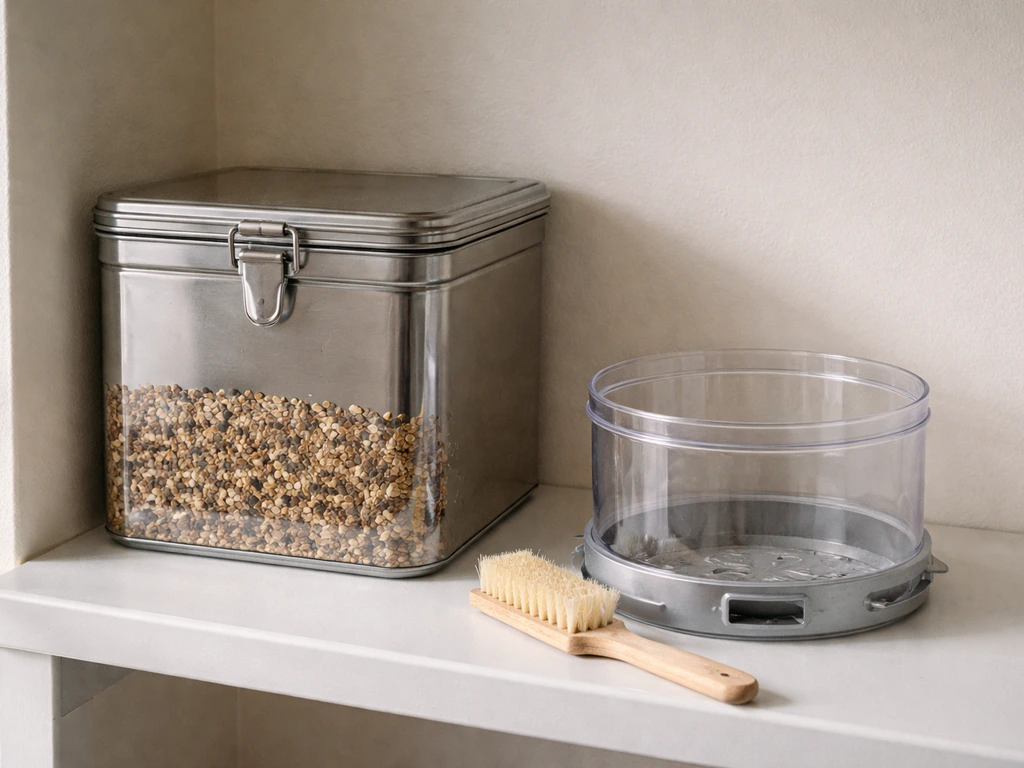
Most of the smell and safety problems with bird seed come down to three things: buying too much at once, storing it poorly, and not cleaning feeders often enough. Here's what actually works.
Seed storage
Store seed in a hard-sided, airtight container, metal or thick plastic, in a cool, dry location. Garages and sheds that get hot in summer are not ideal; a cool basement or shaded area works much better. Most seed stays fresh for 6 to 12 months under good storage conditions. Buy no more than a one to two month supply at a time if you're in a humid climate or during summer. Check the storage container every time you refill the feeder. If the seed smells different from when you bought it, trust that instinct.
Feeder cleaning schedule
Clean your feeder at least once a month during cool, dry weather, and once every one to two weeks in summer or humid conditions. A 10% bleach solution (one part bleach to nine parts water) scrubbed into all surfaces and then rinsed thoroughly is effective. Let the feeder dry completely before refilling. Wet seed in a recently rinsed feeder will mold faster than dry seed in a dry feeder. This single habit prevents most of the seed-quality and smell complaints I hear from people who can't figure out why birds stopped coming.
Reducing moisture and waste
Use a feeder with drainage holes or a sloped roof to shed rain. Add a weather guard (a dome or baffle above the feeder) if you live in a rainy climate. Only fill the feeder with as much seed as birds will eat in two to three days so nothing sits long enough to go bad. Scatter or remove spilled seed from the ground every few days.
When smell helps vs when it won't
Here's a quick summary of when bird seed smell is working for or against you:
| Situation | What scent does | What to do |
|---|
| Fresh, dry seed in a clean feeder | Mildly attractive scent; supports birds already in the area | Keep it fresh, refill every 2 to 3 days |
| Rancid seed (oily, sour smell) | Repels birds; may drive away regulars | Discard and replace; clean feeder before refilling |
| Moldy or wet seed (musty smell) | Repels birds; dangerous to their health | Discard in sealed bag; bleach-clean feeder; dry fully |
| Spilled seed below feeder | Attracts rodents, raccoons, and predators; masks fresh seed scent | Rake and remove every 2 to 3 days |
| New feeder, no established visitors | Scent alone won't attract first visitors | Rely on visual cues and placement; wait 2 to 4 weeks |
| Urban setting with regular visitors | Scent may be more influential than in rural/forest settings | Fresh, high-oil seed increases scent appeal; keep feeder clean |
Birds can smell. It's not a superpower for most backyard species, but it's a real sense that influences their behavior at the feeder. Fresh seed that smells right is a genuine draw. Spoiled seed that smells wrong is a real deterrent, and a safety hazard on top of that. The practical goal isn't to make your feeder smell stronger; it's to keep the seed fresh enough that the natural scent stays appealing and never tips into territory that warns birds away or harms the ones that ignore the warning.
If you're curious about the deeper biology of how birds process flavor and scent signals, there's interesting nuance in how birds experience spicy food at a sensory level, which connects to how their taste and smell systems differ from ours in ways that directly affect feeder behavior. And for a specific quirk of fruit-based seed mixes, it's also worth knowing why bird seed sometimes smells like grape, which has to do with added attractants rather than natural seed chemistry.