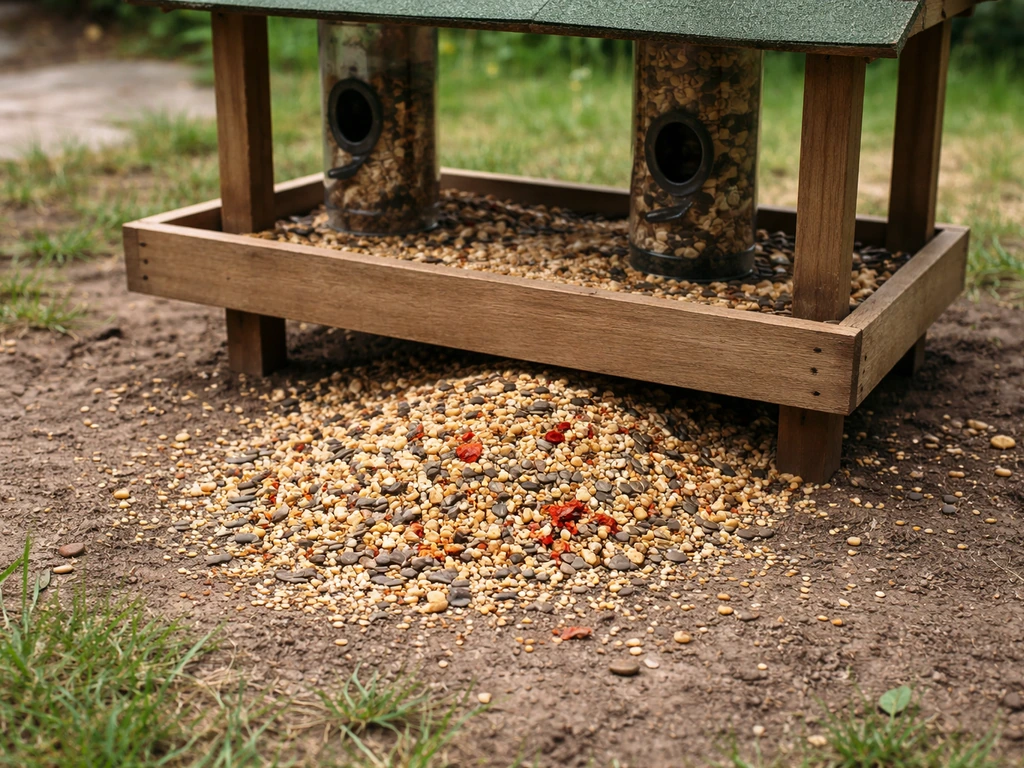
Birds can taste, but not the way you do. They have functional taste buds that respond to salt, bitterness, sourness, and even sweetness through receptor pathways different from mammals. What they lack is the broad, nuanced flavor palette humans rely on. That gap matters for backyard feeding: birds make food choices using a mix of taste, smell, texture, and learned behavior, not a refined palate. Understanding that mix helps you troubleshoot why birds avoid your feeder, why spoiled seed is still dangerous even if birds eat it anyway, and how to protect your pets and local wildlife from contaminated food.
Can Birds Taste? How They Smell, Detect Food, and Avoid Bad Seed
Maya Henderson
18 May 2026
How bird taste actually compares to human taste
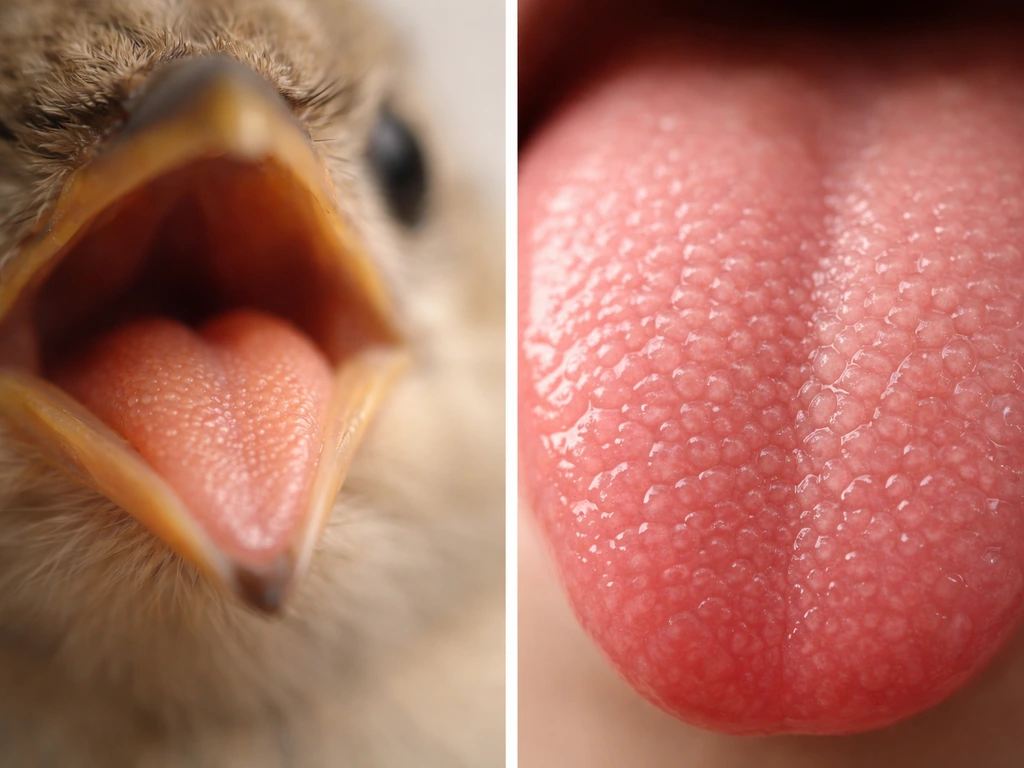
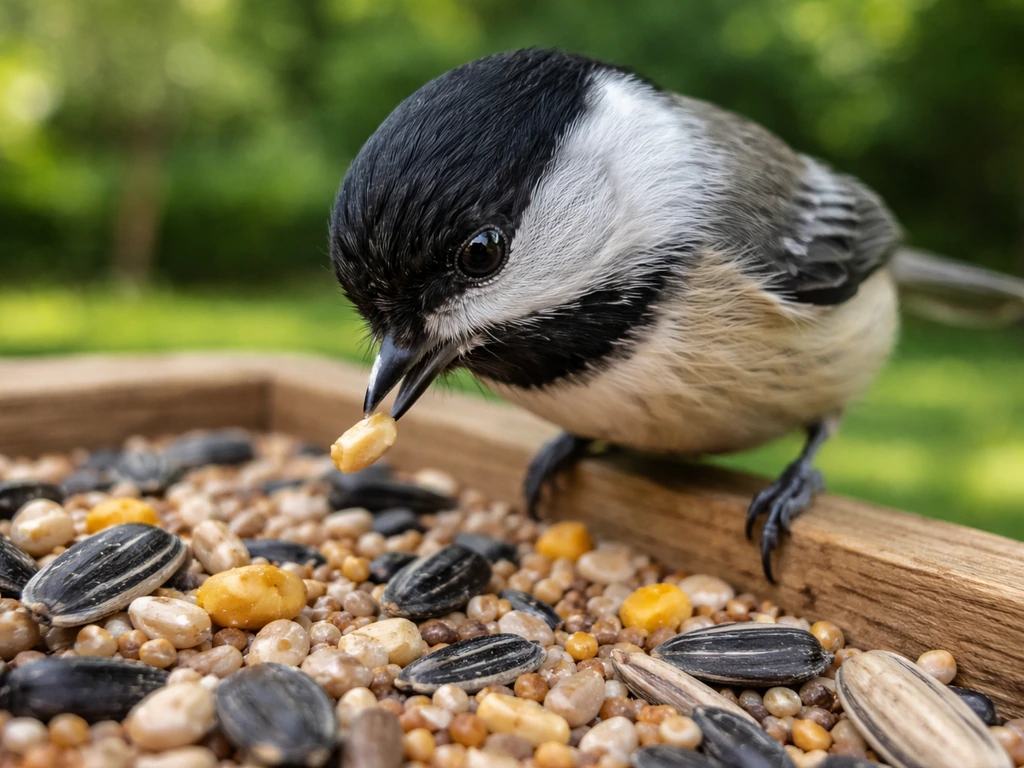
Birds have taste buds, and those buds are fully functional from the time they hatch. A 2023 review in Frontiers in Physiology confirmed that avian taste cells are responsive to taste stimuli and structurally similar to mammalian ones, even if the cell-type breakdown differs. So when someone says "birds can't taste," that's simply wrong. The more accurate picture is that they taste differently and detect fewer flavor categories with precision.
One of the biggest differences is sweetness. Birds lack the T1R2 gene, the mammalian subunit behind the canonical sweet receptor. Research on hummingbirds showed that birds evolved a workaround: mutations in their umami receptors (T1R1 and T1R3) allow sugar detection through an alternative pathway. So birds can perceive sweetness, just not through the same route. For seed-eating backyard birds, this means added sweeteners in processed seed mixes don't work on bird taste the way a marketer might hope.
Bitterness is another area where birds diverge sharply from humans. Genomic studies show birds carry a much smaller repertoire of bitter taste receptor genes (TAS2Rs) compared to humans. This means birds are less sensitive to many bitter compounds that would immediately turn off a human. Practically speaking, this is why birds can eat seeds that are mildly bitter to us, and it's part of why capsaicin (the compound in hot peppers) doesn't bother birds at all while squirrels and mammals avoid it. The topic of birds and spicy food goes deeper in a related discussion on whether spicy bird seed hurts birds.
Beyond receptors, birds rely heavily on visual cues when selecting food. Britannica's chemoreception overview notes that in most birds, sight dominates food recognition. Smell plays a supporting role too, and the question of whether birds can smell their seed well enough to avoid bad food is a real one worth exploring separately. The bottom line: taste is one signal in a multi-sensory system, not the whole story.
What actually drives a bird's food choices at your feeder
Several specific flavor-related factors influence whether birds accept or reject a food. These aren't abstract chemistry, they show up in real feeding behavior at real feeders.
Salt
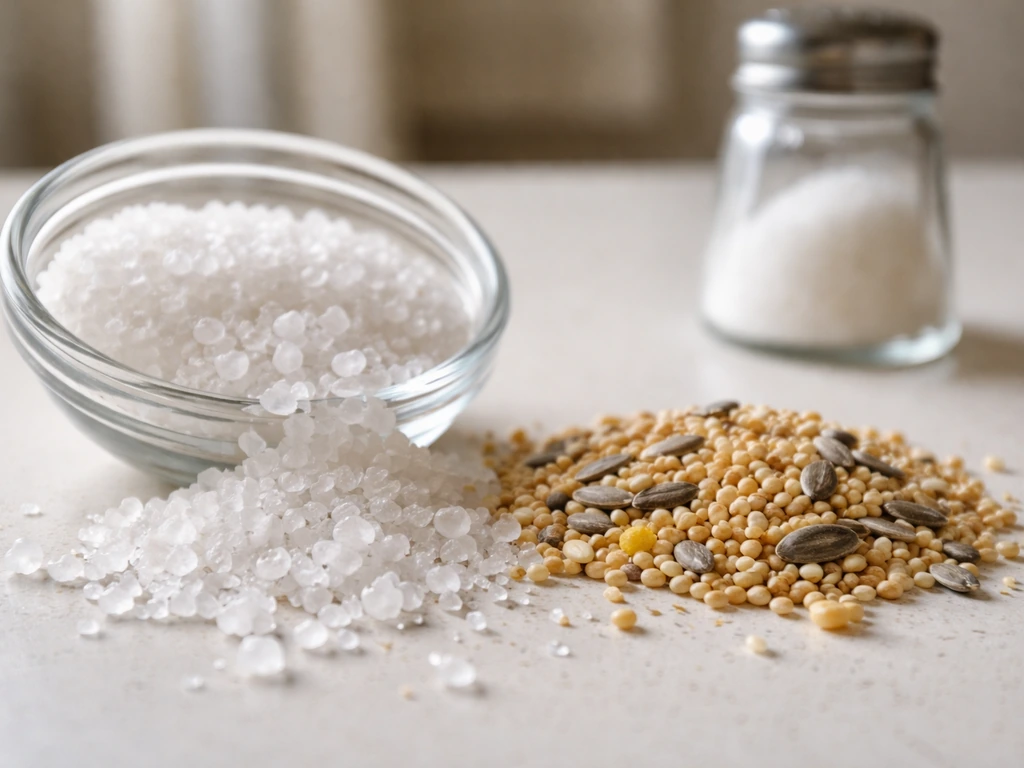
Birds detect salt, and their response is concentration-dependent. USGS experiments showed that birds' responses to sucrose solutions changed when sodium chloride was added, indicating that salt level directly shapes feeding choices. The 2023 avian taste review also described experiments where ostrich chicks preferred feed with added salt (around 14 g/kg) over plain feed. But at high concentrations, salt becomes a deterrent. This means small amounts of salt in a seed mix might actually attract birds, while large amounts would push them away. It also means salted human snacks near feeders are genuinely risky, not because birds can't taste salt, but because they may eat more than is safe before their chemosensory signals kick in.
Bitterness and plant compounds
Because birds have fewer bitter receptor genes than mammals, they're less likely to reject mildly bitter seeds. However, some species still show preferences related to bitterness-adjacent compounds. Seed hull chemistry matters. If you're wondering why certain birds reject safflower seed initially but accept it after exposure, that's partly taste and partly learned behavior, which we'll get to shortly.
Fats and oils
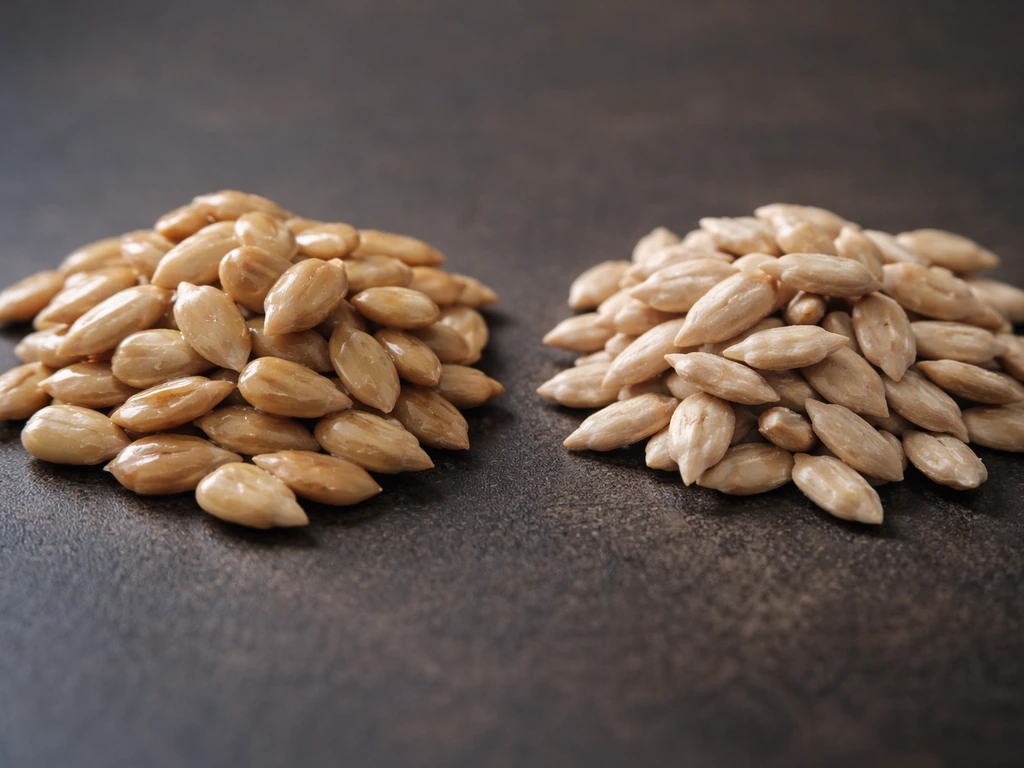
Fat content is a genuinely strong driver of seed preference. Research on red-winged blackbirds showed that sunflower seeds with higher oil concentration were preferred over lower-oil varieties. Birds seeking calorie-dense food are drawn to fat-rich seeds, and this is why black oil sunflower seed is so widely effective. The oil content is measurable and real, not just a marketing claim.
Sweeteners and additives
Processed seed mixes sometimes include coatings or flavor additives meant to attract birds. Given that birds perceive sweetness through a different receptor pathway than mammals, standard sugar coatings may have limited effect. Additives that primarily appeal to human shoppers (artificial flavors, dyes) don't have a proven track record of improving bird feeding outcomes. Stick to high-quality, minimally processed seed.
Texture
Texture is underrated in seed selection discussions. Birds use their beaks to physically assess food before swallowing it. Hard, intact seed shells signal freshness. Soft, crumbly, or sticky seeds can signal moisture damage or decomposition, and birds often discard these, though not always reliably enough to protect themselves.
How seed ingredients interact with taste over time
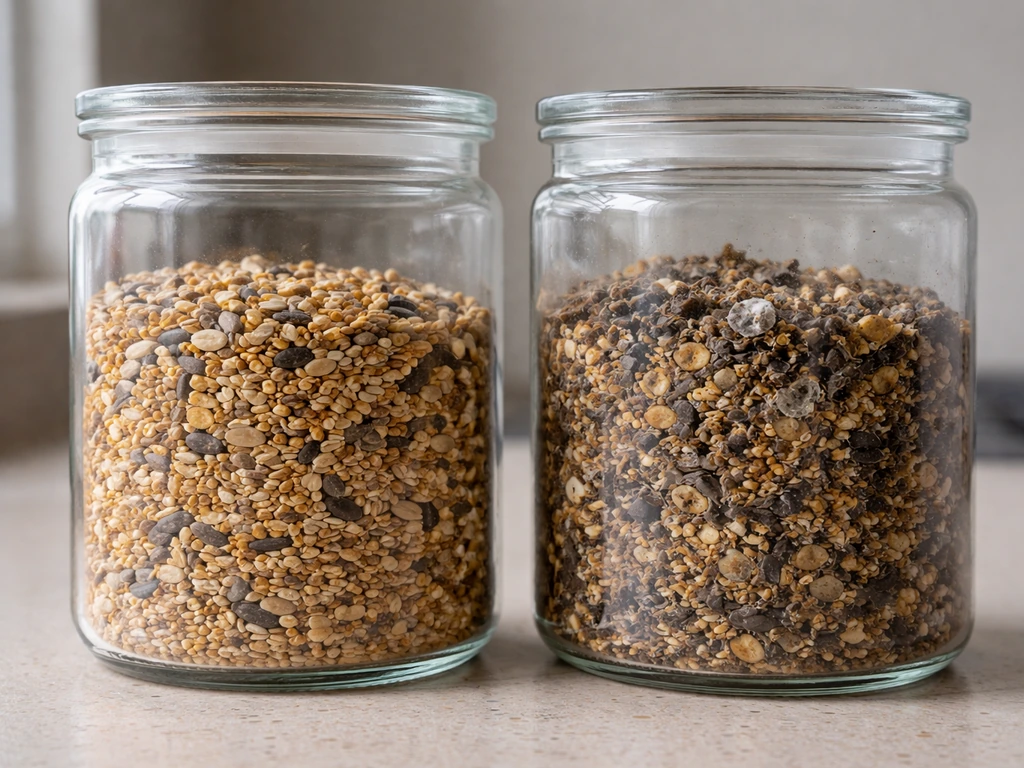
The ingredients in bird seed don't stay stable forever. Fats are especially volatile. When oils in seeds react with oxygen, they produce rancid, off-flavor compounds. USDA ARS research identified specific oxygenated byproducts from fat oxidation in stored grains that reduce palatability. A bag of sunflower seed left in a hot garage all summer doesn't just smell bad to you. It likely produces flavor-detracting compounds that birds can detect, at least partially, though their detection threshold may be higher than yours.
Sweeteners and flavor coatings in commercial mixes can also degrade over time, especially in heat and humidity. Sticky coatings trap moisture, which accelerates mold growth. Leftover seed that's been sitting in a tray feeder through rain and sun is not the same product you poured out of the bag. The chemistry has changed, and not for the better. This also helps explain why bird seed can shift in flavor, including cases where it seems to stop tasting like grape after storage or processing changes why bird stop taste like grape.
The practical rule: oil-containing seeds (sunflower, peanuts, nyjer) go rancid faster than low-fat seeds. Buy in quantities you'll use within four to six weeks, store in a cool, dry, airtight container, and never mix old seed with fresh. When in doubt, smell it. Rancid seed has a noticeably stale or sour oil smell. If you notice it, assume the seed is no longer at its best.
Why spoiled seed is a serious hazard, not just a preference issue
This is where "can birds taste" stops being academic and becomes a safety question. Birds may reject spoiled seed, but they don't do so reliably. And the consequences of eating moldy or rancid seed go well beyond an upset stomach.
Moldy seed can harbor Aspergillus fungi, which produce aflatoxins. Cornell's wildlife health lab notes that birds are susceptible to Aspergillus infections, and illness can be acute or chronic. Texas Parks and Wildlife cited 2003 research showing that commercially purchased bird seed can already contain aflatoxin, and the risk increases dramatically when seed is left in feeders for a week or more in warm, humid conditions. K-State Extension warns that moldy feed in warm weather is associated with fatal avian respiratory disease.
Here's the critical point: birds may keep eating moldy seed even as it makes them sick, because their taste system isn't sensitive enough to the mold compounds to trigger reliable avoidance. The absence of rejection behavior is not a safety signal. "The birds are still eating it" does not mean the seed is fine.
How to check your seed right now
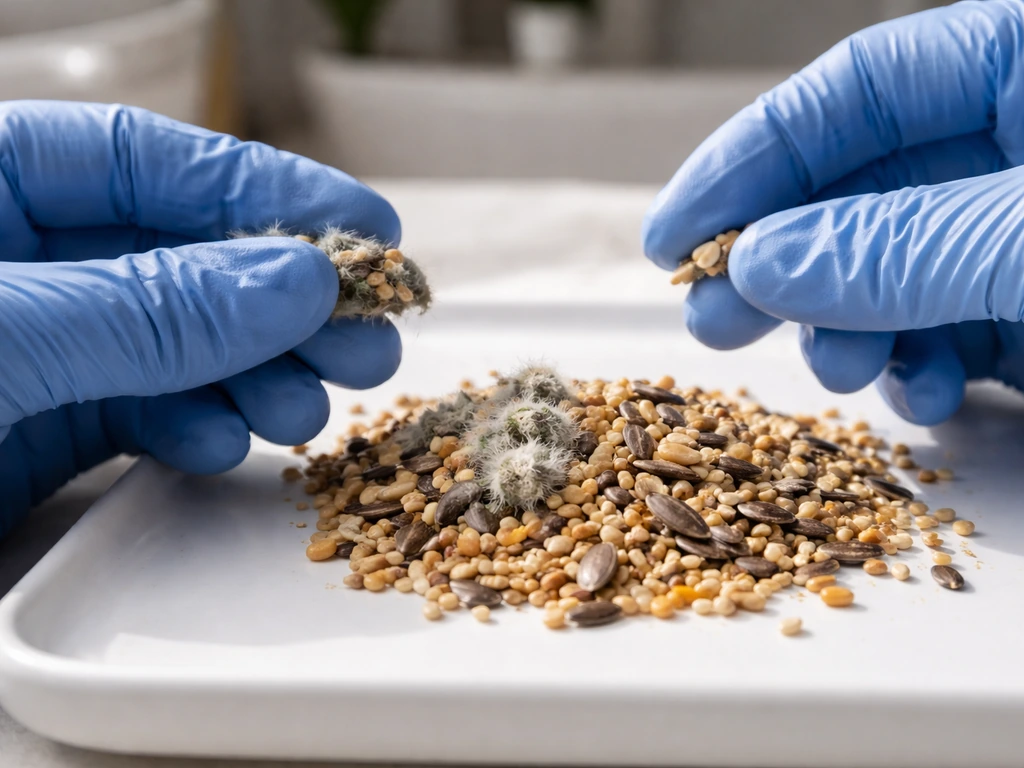
- Look for visible mold: any gray, black, white, or green fuzz on seed or hulls means the whole feeder load needs to go out.
- Smell the seed directly. Rancid oil smells stale or slightly sour. Moldy seed can smell musty or earthy. Either is a discard signal.
- Check for clumping. Seed that sticks together has absorbed moisture, and wet seed is a mold incubator.
- Feel the texture. Soft or crumbly kernels where they should be firm indicate moisture damage.
- Check the feeder itself. Hull debris, droppings, and old seed in crevices are mold substrates even when new seed looks clean on top.
Feeder cleaning and drying steps that actually matter
- Empty the feeder completely. Don't just top it off.
- Discard all old, wet, or suspect seed. Don't compost moldy seed where pets or wildlife can reach it.
- Scrub the feeder with a diluted bleach solution (one part bleach to nine parts water) or hot soapy water, getting into all corners and perches.
- Rinse thoroughly so no cleaning residue remains.
- Let the feeder dry completely before refilling. This step is non-negotiable. Audubon and Wild Bird Unlimited both emphasize full drying as the step most people skip. A damp feeder just grows mold faster with fresh seed in it.
- In humid or hot weather, clean every one to two weeks instead of monthly. Virginia DWR and Audubon both recommend more frequent cleaning in summer.
Seed storage that prevents the problem in the first place
- Store seed in a sealed, hard-sided container (metal or thick plastic) in a cool, dry location out of direct sunlight.
- Buy only what you'll use in four to six weeks, especially for oil-rich seeds like sunflower and nyjer.
- Never pour new seed on top of old seed in storage containers. Empty and wipe the container first.
- If seed gets wet in storage, discard it. Don't try to dry it out and use it anyway.
- Oklahoma State University Extension specifically recommends prompt removal of uneaten grain, especially if wet, as a core step in reducing aflatoxin exposure risk.
Can birds actually learn to pick better seed?
Yes, and this is one of the more practical insights from bird behavior research. Birds don't just respond to immediate taste signals. They learn through trial and error. Oxford research on starlings showed that preference behavior can be driven by prior association and learned context, not just the immediate sensory experience. A bird that has found consistently good seed at your feeder will return and preferentially feed there. A bird that associates your feeder with bad experiences may avoid it.
This has a direct application: if birds are avoiding your feeder, don't just add more seed. Investigate what the last batch was like. Rancid or moldy seed can train birds to avoid a feeder location over time. The solution is a full clean, complete seed replacement, and consistency with fresh, quality seed going forward. Birds will re-learn a good association faster than you'd expect.
Species also differ in how adventurous or conservative they are with new foods. Some birds (crows, jays) are bold experimenters. Others (finches, doves) tend to be more conservative and may take longer to accept a new seed type or feeder location. If you switch seed types, give it two to three weeks before concluding birds don't like it. The taste connection to spicy seed specifically, including why birds tolerate capsaicin while mammals avoid it, is worth looking at in the related piece on whether birds like spicy bird seed. Capsaicin is one of the compounds people add to spicy bird seed, but it can still be risky if the seed is spoiled or contaminated whether birds like spicy bird seed. That question also helps explain why birds can tolerate capsaicin, even though many mammals avoid it spicy bird seed.
Protecting pets and other wildlife from your feeder's risks
Your feeder doesn't just feed birds. Fallen seed, debris, and moldy hulls on the ground are accessible to dogs, cats, squirrels, raccoons, and other wildlife. Those animals don't have birds' tolerance for certain compounds, and the mold risks are even more severe for them.
The FDA is direct about aflatoxin: it can cause liver failure in pets. To prevent mycotoxins from becoming an animal health hazard, FDA requires animal food manufacturers to conduct hazard analysis and implement preventive controls and monitoring for mycotoxins in animal food The FDA is direct about aflatoxin. Signs of aflatoxin poisoning include loss of appetite, vomiting, jaundice, diarrhea, and liver injury. The Pet Poison Helpline flags moldy food as a mycotoxin risk for dogs specifically. The Merck Veterinary Manual notes there are no specific antidotes for mycotoxins, so prevention and decontamination are the only tools. Removing the source quickly is everything.
Steps to reduce risk for pets and wildlife right now
- Place feeders high enough that dogs and cats can't reach fallen seed directly from the ground below.
- Clean up ground-level seed debris and hulls at least weekly, more often in wet or warm weather.
- If you find moldy seed on the ground or in the feeder, bag it and put it in the trash immediately. Don't leave it in an open compost pile or on the lawn.
- Keep pets supervised near feeder areas, especially if you have a feeder with a tray that collects debris.
- If you use peanuts or corn in your mix, be especially vigilant. These are highest-risk foods for aflatoxin contamination, and the FDA specifically calls them out.
- If your dog or cat eats moldy seed or debris from around a feeder and shows any of the symptoms above, contact a vet promptly. Time matters with mycotoxin exposure.
Urban and suburban wildlife like raccoons and squirrels will raid feeders and eat fallen seed, including spoiled material. King County Public Health specifically warns against leaving damp or moldy seed accessible because it attracts rodents and poses contamination risks. If you're managing a feeder in a wildlife-heavy area, consider a no-waste seed mix (hulled seed that leaves less debris), a catch tray you clean daily, or temporarily stopping feeding during the hottest and most humid weeks of summer when mold risk is highest.
The bigger picture: bird feeding is genuinely beneficial for birds and satisfying for you, but it comes with real responsibilities. Understanding that birds have a limited ability to taste their way out of danger means the safety burden falls on you as the feeder manager. Fresh seed, clean feeders, dry storage, and prompt cleanup aren't optional extras. They're the core of responsible feeding.
FAQ
If birds can taste, why do they sometimes eat spoiled or moldy seed anyway?
Because their taste system is less reliable at detecting and rejecting certain harmful compounds. Taste is only one signal, and moldy or rancid seeds can still look acceptable (and may even smell muted enough) while they continue to be consumed before illness shows up.
How can I tell whether my seed is rancid if I already can’t smell much because it’s inside the bag?
Rancid oils often smell noticeably stale or sour once you open the container. Also check for dustiness, wet clumps, or a “sticky” feel in oil-rich mixes, those are common signs that heat and moisture have started degrading fats even before visible mold appears.
Should I remove birds from the feeder area if I suspect contamination?
You do not need to chase birds away, but you should stop adding new seed and remove the source promptly. Replace with fresh seed after a full cleanup of the feeder and any tray, especially if the seed looks damp, has moldy hulls, or the feeder has been wet from rain.
Is it safer to use hulled seed or no-waste blends to reduce mold risk?
Hulled or no-waste blends can reduce the amount of debris that sits and traps moisture on the ground. Less leftover material generally means fewer micro-sites where mold can develop and fewer “hidden” contaminated pieces for dogs and wildlife to access.
Can I just spot-clean the feeder and keep using the same location?
Spot-cleaning is usually not enough if seed has been stored in place for days. Mold spores and oil residues can remain, so a thorough wash, drying, and replacing the seed is safer, and drying the area helps prevent recurrence.
Why do birds sometimes avoid one feeder but not another, even with the same seed?
They may associate the location with an unpleasant sensory history, such as rancid seed, damp trays, or repeated spoilage. If one spot got repeatedly wet or left to sit, birds may return less even when the current batch is fine, so consistency and cleanup matter more than switching products.
How long should I wait after changing seed before deciding birds don’t like it?
Give most species about two to three weeks to adjust, because acceptance can be slow and depends on prior learning. Also factor in weather, feeder cleanliness, and whether competitors are consuming the new seed first.
Are sugar coatings or sweeteners in commercial mixes a good way to attract birds?
Not necessarily. Birds do not detect sweetness through the same pathway as mammals, so marketing-oriented sugar coatings may have limited impact on feeding choices. High-quality, fresh seed with good fat profile and low contamination risk typically outperforms heavily flavored mixes.
What seed types go rancid fastest, and how does that change what I should buy?
Oil-rich seeds like sunflower and peanuts generally degrade faster than low-fat seeds. Buy smaller quantities you can use within four to six weeks, and never top off an old tray with new seed without removing the old material.
Can feeding birds increase the risk to my pets, even if birds seem fine?
Yes. Fallen seed, hulls, and damp or moldy bits can be accessible to dogs and cats, and pets can have severe mycotoxin risk. Keep pets away from the ground under feeders, and clean up spilled seed daily if you have animals that scavenge.
What are early signs that I should stop feeding immediately due to spoilage risk?
Stop adding seed and clean right away if you see damp clumping, fuzzy or dusty mold on hulls, a sour or rancid oil smell, or lots of leftover wet seed in the tray. If birds look lethargic or show respiratory issues after exposure, treat it as an urgent food safety problem, not normal variation.
Next Article
Does Spicy Bird Seed Hurt Birds? Safe Answer and Fix
Does spicy bird seed hurt birds? Learn risks from chili blends, what to stop, and how to switch and clean feeders.