Yes, most backyard birds will eat spicy seed, and they do so without the burning sensation mammals experience. That is the short answer. But whether spicy seed is actually useful for you depends on why you are using it: to attract specific birds, to stop squirrels, or both. This guide breaks down what the science says, which species behave how, and what practical steps you can take today to get real, safe results.
Do Birds Like Spicy Bird Seed? What to Expect and Do

Maya Henderson
15 Apr 2026
Why birds handle spicy seed differently than mammals
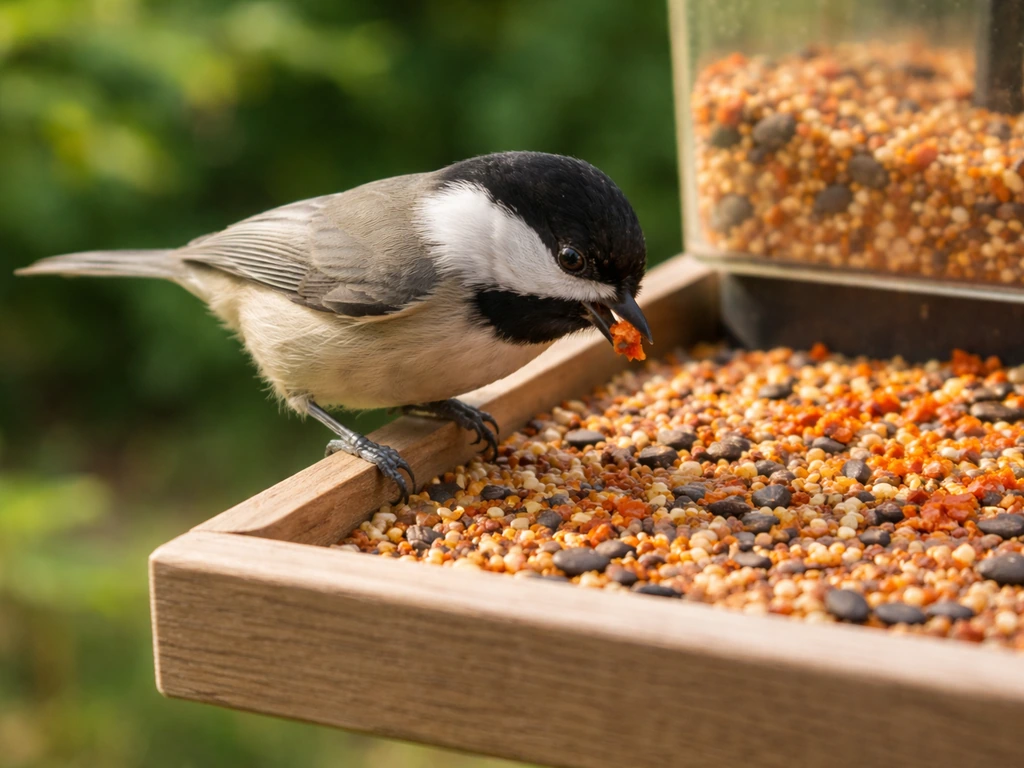
The key is capsaicin, the compound responsible for heat in chili peppers. In mammals, capsaicin binds to a pain receptor called TRPV1, which triggers the burning sensation you feel when you eat a hot pepper. Birds have a different version of TRPV1 with a single amino-acid difference that dramatically reduces their sensitivity to capsaicin. Essentially, their receptor does not respond to capsaicin the same way a mammal's does. This is why squirrels find hot pepper seed intolerable while most birds eat it without issue.
It is worth knowing, though, that whether birds can taste at all is a more nuanced question than many people realize. Birds have far fewer taste buds than mammals, and their sensory priorities are different. But this does not mean they are completely blind to chemical compounds in food. Research on European starlings showed they can detect capsaicin at concentrations around 1.0% by mass under controlled conditions. So the idea that birds have zero response to capsaicin is a slight oversimplification.
Will birds actually eat spicy seed
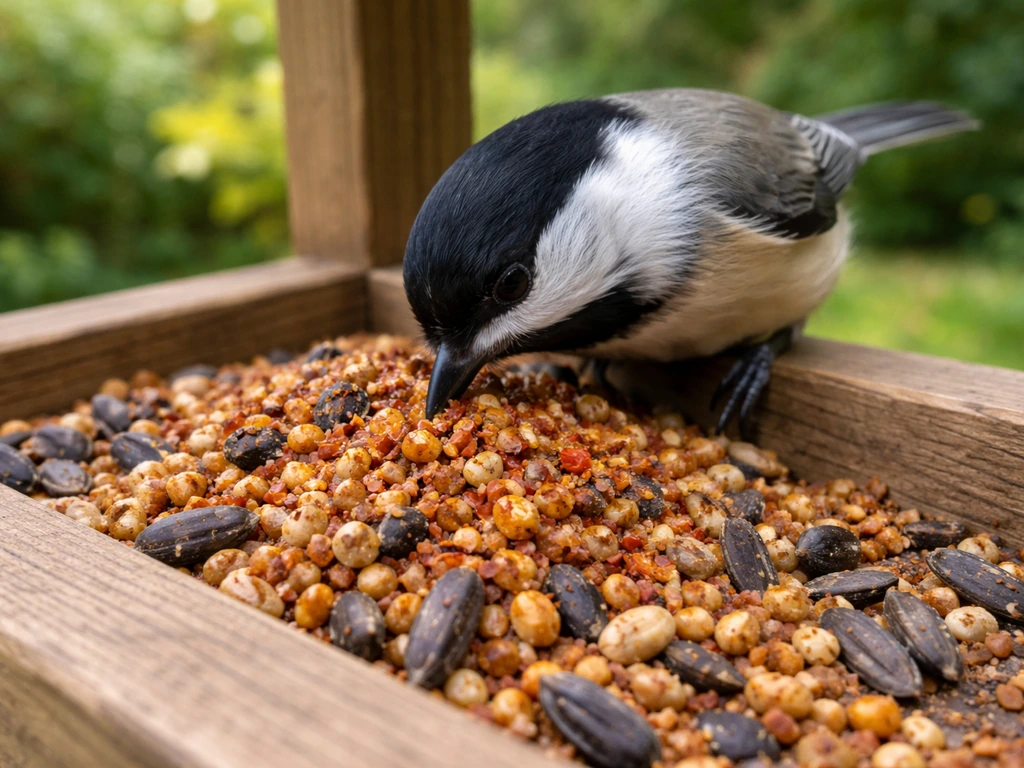
The practical answer from wildlife researchers and feeder users alike is yes, most wild birds will eat capsaicin-coated or chili-pepper-infused seed. A feeding study cited by UW-Madison found that birds eating capsaicin-coated seed did not lose weight and were not visibly harmed. Wild Birds Unlimited, which sells several hot pepper blends commercially, states plainly that many birds will eat hot pepper products while squirrels avoid them. Anecdotal reports from backyard feeders largely back this up.
However, there is an important qualifier: going too spicy can backfire. Wildlife ecologists have noted that if capsaicin concentration is too high, even birds may start avoiding the feeder. Some Reddit users have reported birds disappearing for months after introducing a hot pepper seed cylinder, then returning only after switching back to regular seed. So "birds tolerate capsaicin" does not mean "birds will eat any amount of it indefinitely."
What "spicy" actually means in bird seed
When people say spicy bird seed, they usually mean one of three things: seed mixed with dried chili flakes, seed dusted with cayenne or chili powder, or commercially produced seed coated with capsaicin extract (as a powder or oil). These are not all the same thing. Dried chili flakes and powders contain capsaicin along with other compounds, while commercial products like Duncraft Hot Pepper Chips or Wild Birds Unlimited's Fiery Feast use concentrated capsaicin added specifically to deter mammals. The mechanism is the same, but the concentration and consistency vary widely.
If you are mixing your own, a commonly cited starting ratio is about one tablespoon of cayenne per cup of seed. That is a reasonable starting point for deterring squirrels without overdoing it. Capsaicin is also added as an oil in some products, which coats the seed more evenly but can transfer to feeders and your hands, so handling it carefully matters. More on that below.
It is also worth understanding how birds experience spicy flavors at a sensory level, because it changes how you should think about whether capsaicin is truly neutral to them or just less aversive than it is to mammals.
Species breakdown: finches, cardinals, woodpeckers, jays, and parrots
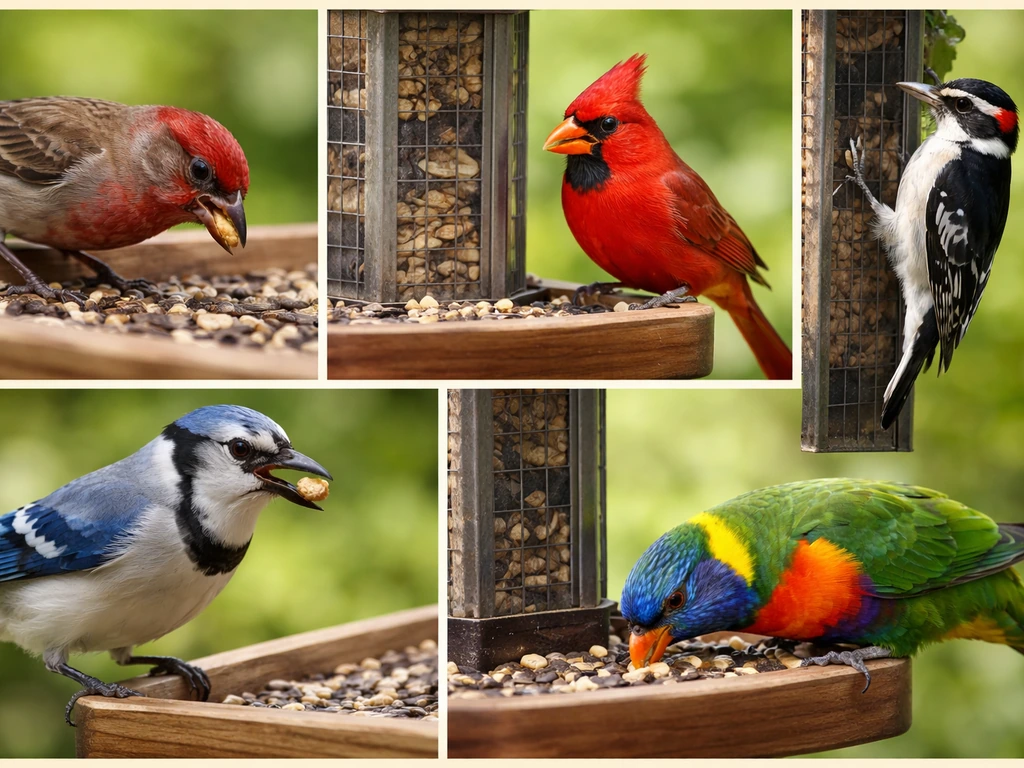
Bird behavior around spicy seed is not uniform across species. Here is what you can generally expect from common feeder visitors:
| Species | Typical Response to Spicy Seed | Notes |
|---|---|---|
| Finches (house, goldfinch) | Generally tolerant, will eat capsaicin-coated seed | Seed-eaters by nature; less likely to show avoidance at moderate concentrations |
| Cardinals | Usually tolerant, active at feeders with hot pepper blends | Strong seed-eaters; anecdotally among the birds least deterred by spicy coatings |
| Woodpeckers | Tolerant; often attracted to suet-based hot pepper products | Will take hot pepper suet cakes; capsaicin does not appear to deter them |
| Blue Jays | Generally eat spicy seed, though more cautious with novel foods | Opportunistic feeders; may investigate before committing, but typically not deterred |
| Parrots (pet/captive) | Tolerate capsaicin well biologically, but owners should introduce gradually | Same TRPV1 difference applies; however, other spices or additives may be present in mixes—check ingredients carefully before offering any commercial spicy blend to a pet bird |
The key takeaway is that common seed-eating songbirds are unlikely to be driven off by spicy seed at normal commercial concentrations. Species that are already more cautious with new foods (like some jays) may take longer to accept it. Parrots share the same basic biology, but commercial wild-bird spicy blends are not formulated for captive birds and may contain additives or preservatives that are not appropriate for them.
How to test spicy seed safely at home
Before you commit to fully replacing your regular seed with a spicy blend, run a small test. This lets you observe how your specific local birds respond without wasting money or disrupting your feeder population.
- Start small: Mix one tablespoon of cayenne per cup of your regular seed, or buy a small bag (5 lb or less) of a commercial hot pepper blend.
- Offer both: Put the spicy mix in one feeder and your regular seed in a second feeder placed nearby. This gives birds a choice and lets you compare visit rates directly.
- Observe for at least one week: Watch which species visit which feeder, how long they stay, and whether any birds seem to hesitate or leave quickly after trying the spicy seed.
- Check seed condition daily: Spicy-coated seed can clump if it gets wet, especially oil-based coatings. Remove any clumped or discolored seed immediately.
- Stop if bird visits drop significantly: If your usual feeder regulars stop coming to both feeders for more than a few days, pull the spicy blend and go back to your standard mix.
One useful thing to notice during your test is whether birds approach by sight or smell. Whether birds rely on their sense of smell to find bird seed is actually debated, and it matters here because it affects whether scent-based deterrents (like strong chili powder) influence approach behavior before a bird even takes a bite.
When spicy seed can backfire
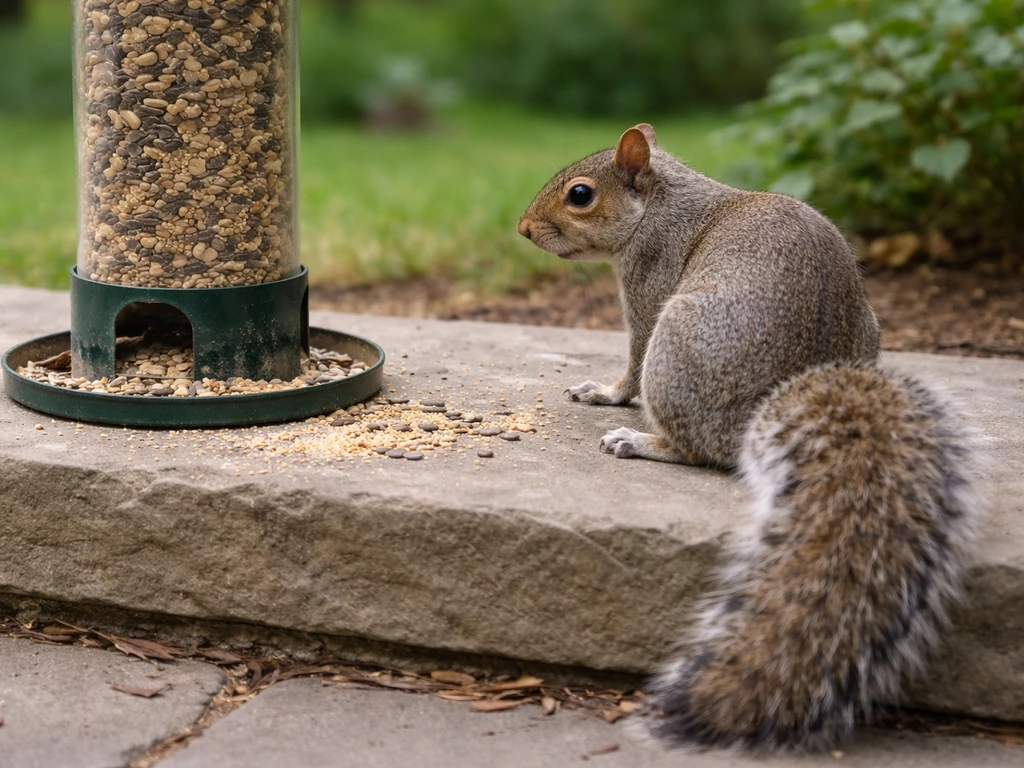
Spicy seed is not a guaranteed win. There are a few scenarios where it makes things worse rather than better. High capsaicin concentrations can deter birds just as they deter squirrels. This is the most common failure point: someone buys the hottest blend available or adds too much cayenne, and bird visits drop off. If that happens, dilute the mix or switch back to regular seed and wait for birds to return.
Pepper spray and aerosol capsaicin products meant for pest deterrence are a different matter entirely and should never be used on or near feeders. Concentrated capsaicin sprays are respiratory and eye irritants for birds and can cause real harm at close range. The NPIC (Oregon State University) notes that capsaicin exposure can cause severe irritation to skin, eyes, and respiratory systems, and while this profile is primarily relevant to humans handling it, it is a good reason to treat high-concentration products with care around any animal.
Another backfire scenario: spilled spicy seed on the ground can attract more ground-foraging wildlife (raccoons, deer, or birds you were not trying to attract) and may cause problems for pets or small animals that encounter it. If you notice a lot of seed falling under the feeder, switch to a no-mess feeder or a tray attachment to reduce ground accumulation.
There is also the question of whether capsaicin causes any long-term harm to birds. Research and commercial feeder experience both suggest it does not at normal concentrations. But if you are ever wondering whether spicy bird seed actually hurts birds, that is worth looking into directly before you scale up your use.
Safe feeding practices: keeping spicy seed fresh and feeders clean
Spicy seed has the same spoilage risks as regular seed, with a couple of added wrinkles. Oil-coated capsaicin seed can go rancid faster in heat and humidity. Powder-coated seed can clump when wet, creating conditions where mold grows quickly. Both are problems for birds and for your feeder.
- Store spicy seed in a sealed container in a cool, dry place. Do not leave it in a bag outdoors or in a hot garage.
- Fill feeders in smaller quantities (enough for 2 to 3 days) rather than topping off a large hopper that sits for a week.
- Inspect seed in the feeder every 2 to 3 days. Discard any seed that is clumped, discolored, or smells musty or off.
- Clean feeders regularly. Audubon recommends a bleach solution of 9 parts water to 1 part bleach, rinsing thoroughly and allowing the feeder to dry completely before refilling.
- Wear gloves when handling oil-based capsaicin products and avoid touching your face. Capsaicin oil transfers easily from hands to eyes, and that irritation is no fun.
- Do not mix large batches of DIY spicy seed in advance. Make what you will use within a week to avoid the powder absorbing moisture and clumping.
Moldy or spoiled seed is a health risk for birds regardless of whether it is spicy or plain. Wet seed at the bottom of a hopper or tube feeder is the most common source of mold, and it can harbor bacteria and fungi that make birds sick. If you find moldy seed, remove all of it, clean the feeder with the bleach solution, and let it dry fully before you add fresh seed. For hummingbird feeders, a strong option is to clean them using a 1:9 bleach-to-water dilution, with emphasis on rinsing thoroughly and letting the feeder dry fully blank" rel="noopener noreferrer">How to Clean a Hummingbird Feeder. Audubon recommends disinfecting feeders by soaking them in a diluted bleach solution (1 part bleach to 9 parts water) for about 15 minutes, then rinsing thoroughly blank" rel="noopener noreferrer">clean the feeder with the bleach solution.
Using spicy seed as a deterrent: realistic expectations
This is where most people have questions: will spicy seed actually stop squirrels? The honest answer is that it works well for most squirrels most of the time, but it is not 100% reliable. Squirrels and other mammals experience real burning pain from capsaicin because their TRPV1 receptors bind to it strongly. This is why products like Wild Birds Unlimited's Fiery Feast and Duncraft Hot Pepper Chips are marketed specifically as squirrel deterrents. The biology behind the claim is solid.
In practice, most squirrels will stop eating capsaicin-coated seed after a few encounters. Some persistent individuals will keep trying, especially if food is scarce. Chipmunks and raccoons generally respond similarly to squirrels, avoiding the spicy seed after initial exposure. Deer are a mixed result, since their pain tolerance and feeding pressure vary with season and food availability.
For birds you want to deter (like European starlings dominating a feeder), spicy seed is not the right tool. Starlings can detect capsaicin and may learn to avoid it under some conditions, but they are also persistent and adaptable. The difference between a bird that tolerates capsaicin biologically and one that will actually walk away from a food source is also shaped by hunger, habit, and competition. A better approach for starling management is feeder type (using feeders that exclude large birds) rather than spice.
One thing that sometimes surprises people is that flavor perception in birds can be more complex than the TRPV1 story suggests. Why some birds stop responding to certain flavors is a real phenomenon linked to habituation and taste adaptation, and it is relevant here because even mammals that initially avoid spicy seed sometimes return to it over time if hunger outweighs aversion.
The bottom line on deterrence: spicy seed is one of the more effective non-mechanical tools for reducing squirrel access to feeders, and it does not harm the birds you are trying to feed. But it works best as part of a broader feeding strategy that includes proper feeder placement, regular cleaning, and monitoring. Treat it as a useful tool with realistic limits, not a complete solution.
FAQ
How long should I wait to see whether birds will accept spicy seed?
Plan on a few days to a couple of weeks for the first clear pattern. If birds are cautious with new foods, the “learning” and habituation window can be longer, especially with jays or other dominant, wary species. If you see a sharp drop in bird visits after the first few feedings, lower the spiciness or switch back to plain seed instead of waiting indefinitely.
Will spicy bird seed make birds avoid my feeder long-term?
At typical feeder product concentrations, it usually does not cause permanent avoidance, but it can if the dose is too high or the feeder becomes dominated by aversion behavior. Persistent loss of visits for weeks after switching to spicy seed is a sign the mix is likely too strong for your local birds, so dilute, rotate in plain seed, and clean the feeder.
Can I use spicy seed only when squirrels are active, then switch back?
Yes, and it often helps prevent overexposure while keeping squirrel deterrence during peak pressure. Use a short-term test schedule (for example, evenings or daytime periods when squirrels are most active), then revert to regular seed if bird activity drops. Consistent reintroduction is better than abrupt changes every day, since birds may take time to resume feeding.
Does spicy seed work equally in all feeder types?
No. Tube and hopper feeders with minimal spillage tend to work better because less product hits the ground, reducing secondary attraction for ground-foraging animals and lowering mess. Platform feeders spill more easily, which increases waste, rancidity risk, and the chance of deterring or attracting unintended wildlife.
Is there a safer way to start than mixing cayenne right away?
Start with the mildest approach you have access to. If you are making your own mix, use a low dose first (and increase only if squirrels persist), because the biggest backfire is using a too-hot blend. For oil-based or capsaicin-extract products, measure carefully and avoid soaking seed so you do not end up with concentrated “hot spots.”
Can spicy seed be harmful to pets if they eat dropped seed?
It can be a risk, mainly if a pet mouths or chews spicy residue from spilled seed. Birds are less sensitive than mammals, but dogs and cats can still experience irritation. If you have pets that roam outside, focus on no-mess feeders, reduce ground accumulation, and clean up fallen seed promptly.
What should I do if the seed clumps or looks wet after rain or humid weather?
Remove any clumped or damp seed. Powder-coated capsaicin mixes can clump when exposed to moisture, and wet seed is where mold and bacteria risks jump. Empty the hopper, clean thoroughly, dry completely, and then refill with fresh, dry seed.
Can I use pepper products from the kitchen, like hot sauce or crushed peppers?
Generally avoid wet or sticky pepper products, such as sauces, because they increase spoilage, can create residue buildup, and are harder to control for dose and even coating. If you want to DIY, use dry chili powders or flakes mixed into seed in measured amounts, and test in small batches first.
Will spicy seed deter birds as well as it deters squirrels?
Usually not at normal commercial concentrations, but it can if the dose is too high for your local mix of species. If you notice that birds stop coming while squirrels remain, the blend may be too hot for some of your visitors, or the feeder area may be too exposed. Diluting and switching back to plain seed is the quickest corrective step.
What is the best cleanup routine when using capsaicin-coated seed?
Wear gloves when handling capsaicin products, since residue can transfer to hands and other surfaces. After switching back to plain seed or stopping the test, fully empty the feeder, wipe down residue, and then wash and dry. This reduces lingering spicy contamination that could affect later bird acceptance or irritate pets during cleanup.