Birds cannot taste capsaicin the way mammals do. The short answer is that the heat-sensing receptor responsible for that burning sensation in humans and other mammals simply does not respond to capsaicin in birds. That difference is why hot pepper birdseed products exist at all: they keep squirrels and rodents away while leaving birds completely unbothered. But "completely unbothered" comes with some nuance worth knowing, especially if you have already offered spicy food at your feeder or you have pets nearby.
Can Birds Taste Spicy? What Happens at Feeders and Safety Tips

Maya Henderson
15 Apr 2026
What "Spicy" Actually Means for a Bird
When people say "spicy," they almost always mean capsaicin, the active compound found in chili peppers and hot sauce. Capsaicin is not technically a flavor in the way sweet or salty are. In mammals it works by activating a protein called TRPV1 (the transient receptor potential vanilloid 1 channel), which is the same receptor that fires when you touch something painfully hot. That is why eating a ghost pepper feels like burning: your body is interpreting a chemical signal as physical heat and pain. Other irritating compounds like piperine in black pepper work through related but slightly different mechanisms.
For birds, the story is different at the molecular level. Birds do have the TRPV1 receptor, but according to the National Pesticide Information Center, it is not activated by capsaicin. Stanford research on chicken TRPV1 confirms that avian versions of this receptor show a decreased response to capsaicin compared to mammalian versions. So the biological alarm system that makes spicy food painful for you and your dog simply does not go off the same way in a bird's nervous system.
Can Birds Actually Detect Heat or Spice?
This is where things get a little more interesting than a simple yes or no. If you want to understand the full picture of what birds can taste in general, their palate is genuinely limited compared to mammals. Birds have far fewer taste buds, typically a few hundred versus the thousands in a human mouth, and their flavor perception is tuned mostly to things that matter for foraging: detecting bitterness that might signal toxins, preferring sweet nectar, and sometimes sensing salt.
When it comes to capsaicin specifically, the research is fairly consistent. A Wilson Bulletin study concluded that birds do not appear to respond to capsaicin as an irritant. A study on seed dispersal in chilies found that capsaicin discourages mammalian predators without deterring birds, which is actually an evolutionary strategy: chili plants want birds to eat and disperse their seeds, so they developed a compound that repels mammals but leaves birds unaffected. Audubon has reported that more research is still needed to confirm whether any bird aversion to capsaicin is based on taste or some other sensory factor, but the current evidence points strongly toward birds not detecting the "heat" the way mammals do.
How Birds Behave Around Spicy Foods at Feeders
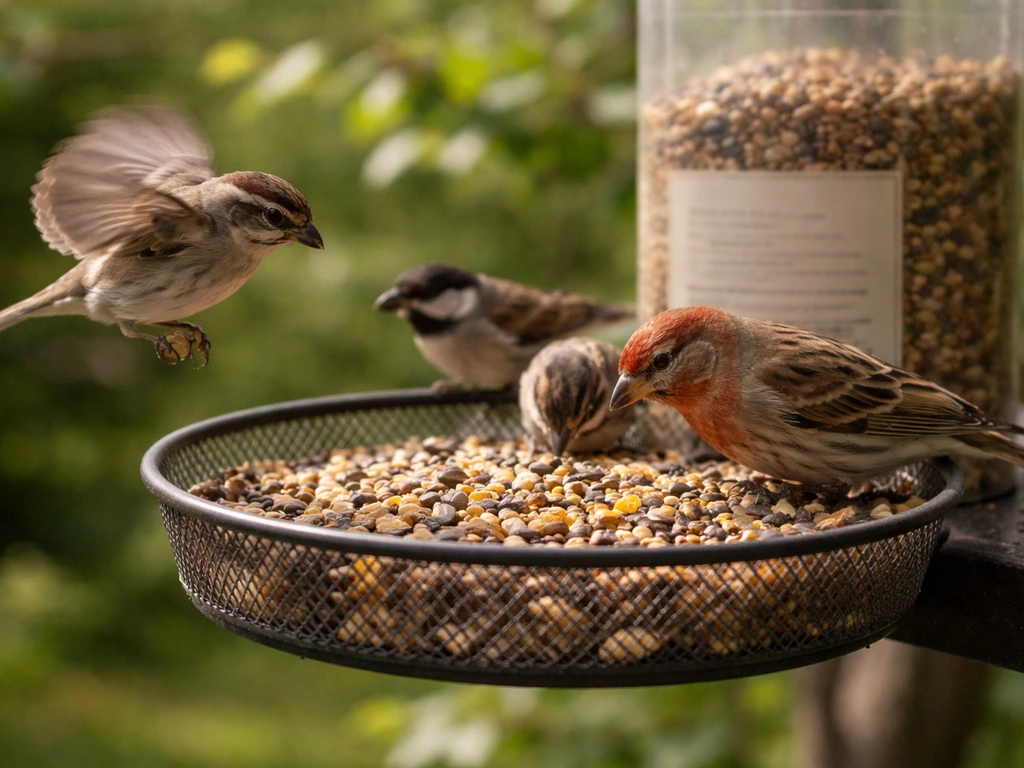
In practice, most backyard birds eat capsaicin-treated seed without hesitation. Experimental capsaicin birdseed products are widely sold precisely because birds tolerate them while squirrels and rodents avoid the burning sensation. If you are curious whether birds are drawn to these products, the short answer is that birds generally do like spicy bird seed just as much as plain seed, because to them there is no meaningful difference in taste or sensation.
That said, there is some species-level variation worth noting. A study on feral pigeons found that capsaicin gel repellents were ineffective at deterring them, which is consistent with the overall pattern. Seed-eating birds like sparrows, finches, chickadees, and nuthatches show no measurable avoidance of capsaicin-treated seed in field trials. Nectar-drinkers like hummingbirds are not typically offered pepper-treated foods, but there is no evidence they would be harmed by trace exposure. Frugivores in the wild already eat wild chilies as a natural food source.
One behavioral nuance: if birds stop visiting a feeder after you added something new, it is more likely related to seed freshness, feeder contamination, or other sensory cues like smell rather than capsaicin detection. Interestingly, birds have a limited ability to smell bird seed, so strong odors from additives could potentially play a minor role, though this is not well-studied.
Is Spicy Food Harmful to Birds or Just Mildly Unpleasant?
For capsaicin specifically, the harm risk to birds is very low. A safety assessment of phenylcapsaicin (a capsaicin analog) in broiler chicken feed found no negative effects on performance, clinical chemistry, or pathology at doses up to 150 mg per kilogram of feed. Birds in the wild eat wild chili fruits as a natural part of their diet without ill effects. The deterrence angle is well-documented: capsaicin is described in research as unpalatable to mammals but apparently undetectable by birds.
The more relevant concern is not capsaicin itself but what else might come with spicy human food. Hot sauce, spicy suet mixes prepared for human consumption, or seasoned leftovers can contain salt, garlic, onion, or other additives that are genuinely toxic to birds. If you are wondering whether a specific spicy food could hurt your feeder birds, the honest answer is that spicy bird seed does not typically hurt birds when it is a purpose-made product, but human spicy food can be dangerous because of the other ingredients it carries.
| Spicy food type | Capsaicin risk to birds | Other ingredient risk | Verdict |
|---|---|---|---|
| Commercial hot pepper birdseed | Negligible (receptor insensitivity) | Low (designed for birds) | Safe to use |
| Dried chili flakes (plain, no salt) | Negligible | Low if pure | Generally okay in small amounts |
| Hot sauce (e.g., Tabasco, Sriracha) | Negligible capsaicin risk | High: salt, garlic, vinegar | Do not offer |
| Spicy suet or seasoned human food | Negligible capsaicin risk | High: salt, onion, garlic, preservatives | Do not offer |
| Raw or dried hot peppers (unseasoned) | Negligible | Low | Occasional use is fine |
What to Do If You Already Offered Spicy Foods Today
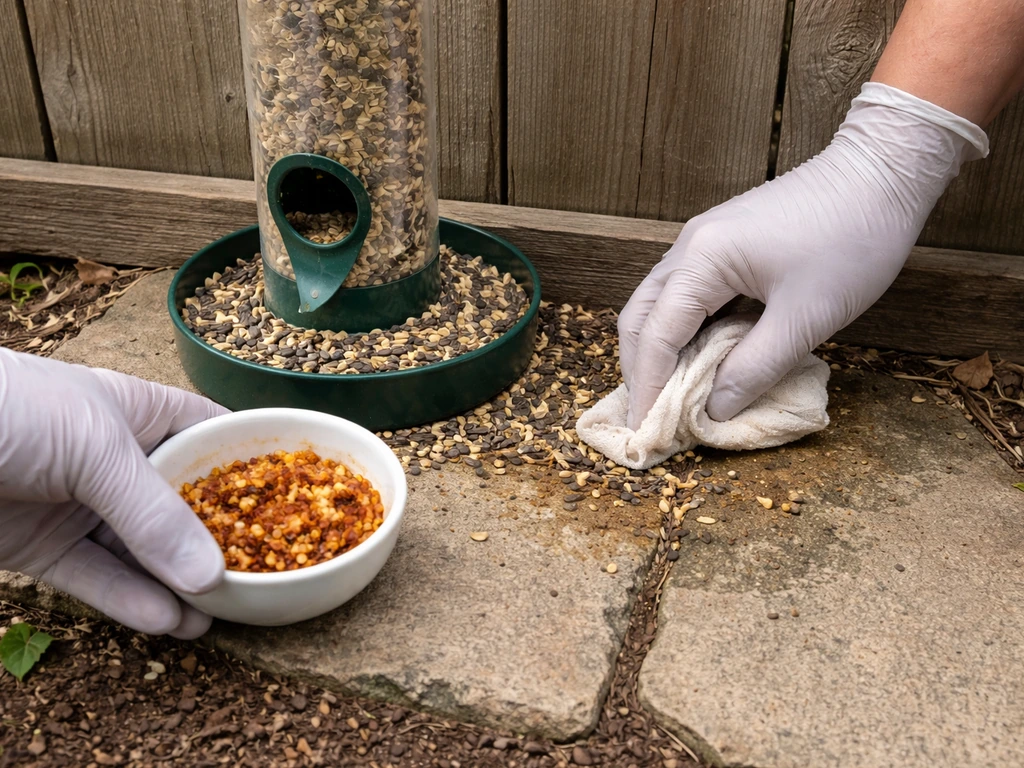
If you already put out capsaicin-based commercial seed, you do not need to panic. That product is made to be bird-safe. But if you offered hot sauce, spicy table scraps, or heavily seasoned food, act now rather than waiting to see how birds respond.
- Remove the spicy food from the feeder immediately. Do not leave it out hoping birds will avoid it on their own.
- Empty the feeder completely, including any residue stuck to the tray or ports.
- Wash the feeder with soap and water, then sanitize it. A solution of 1 part bleach to 9 parts water (or 1 part bleach to 32 parts water for a longer 10-minute soak) both work well. Rinse thoroughly and let it dry completely before refilling.
- Check the ingredient list on anything you plan to offer. If it contains salt, garlic, onion, artificial flavors, or preservatives, it is not appropriate for birds.
- Refill with fresh, appropriate seed appropriate for your target species. Discard any seed that smells musty or looks clumped, which is a sign of mold.
- Monitor the feeder for the next day or two. If birds seem lethargic, fluffed up, or are not returning at normal rates, contact a licensed wildlife rehabilitator in your area.
Also worth knowing: some people notice that certain grape-flavored bird products, like specific deterrent sprays, have their own taste profile questions. There is interesting science behind why bird stop tastes like grape, which connects to similar ideas about how chemical repellents are designed around bird versus mammal sensory differences.
Better Ways to Attract Birds Without the Spice Question
If your goal is attracting more birds rather than deterring squirrels, you have plenty of effective non-spicy options. Birds respond to nutritional cues, seed texture, and feeder placement far more than to flavor novelty. Here is what actually works:
- Black-oil sunflower seed: the single most universally attractive seed for a wide range of backyard species, from finches to woodpeckers.
- Nyjer (thistle) seed in a tube feeder: specifically attractive to goldfinches, pine siskins, and redpolls.
- Suet cakes (plain, unflavored or with dried fruit/insects): high-fat energy source that draws woodpeckers, nuthatches, and wrens, especially in cooler months.
- Safflower seed: less attractive to squirrels naturally, without needing any capsaicin treatment, and popular with cardinals and chickadees.
- Fresh or dried mealworms: excellent for attracting bluebirds and robins, especially during nesting season.
- Clean water source: a shallow birdbath with fresh water often attracts more species than any particular seed.
If squirrel deterrence is your actual goal, a purpose-made hot pepper seed blend is a reasonable and bird-safe tool. Just buy it from a reputable source rather than making your own with kitchen spices, where the salt and additive risk is harder to control.
What About Your Pets and Local Wildlife?
This is where the spice question gets more complicated. Birds may not feel capsaicin, but your dog, cat, or the raccoon raiding your feeder at night definitely will. Capsaicin irritates mammalian mucous membranes including the mouth, throat, and GI tract. If your dog sniffs around a feeder where capsaicin-treated seed has been spilled and gets it in their nose or mouth, expect sneezing, drooling, pawing at the face, or vomiting.
The San Diego Humane Society notes that chili powder and capsaicin work as non-toxic irritants to deter mammals like raccoons, skunks, and opossums. "Non-toxic" does not mean harmless in the moment. An animal that ingests a significant quantity, especially a small cat or dog, can show signs of GI upset including vomiting, drooling, and discomfort. If your pet eats a large amount of capsaicin-treated seed or gets into hot sauce that dripped onto the feeder tray, the ASPCA Animal Poison Control hotline (888-426-4435) is the right first call. The MSD Veterinary Manual notes that irritant exposures can cause excessive drooling, difficulty breathing in severe cases, and local irritation to mucous membranes.
For wildlife like rats, squirrels, and raccoons, the deterrent effect of capsaicin is actually a benefit in a feeder context. Rodents find capsaicin strongly aversive, and a field evaluation of capsaicin as a rodent aversion agent confirmed it effectively deters rodents from treated feed. So using commercial hot pepper birdseed near the feeder can reduce rodent attraction, which is one of the most common feeder-related wildlife coexistence problems. That said, placing feeders at a height where cats cannot easily reach the spilled seed below is always good practice regardless of what you are offering.
One practical tip: if you use capsaicin-treated seed, avoid handling it with bare hands and then touching your face. Wash your hands immediately after filling the feeder. People with asthma or respiratory sensitivity should also avoid breathing in the fine powder from capsaicin-coated seed, as inhalation can be an irritant even when ingestion is not.
Keeping Your Feeder Setup Safe for Everyone
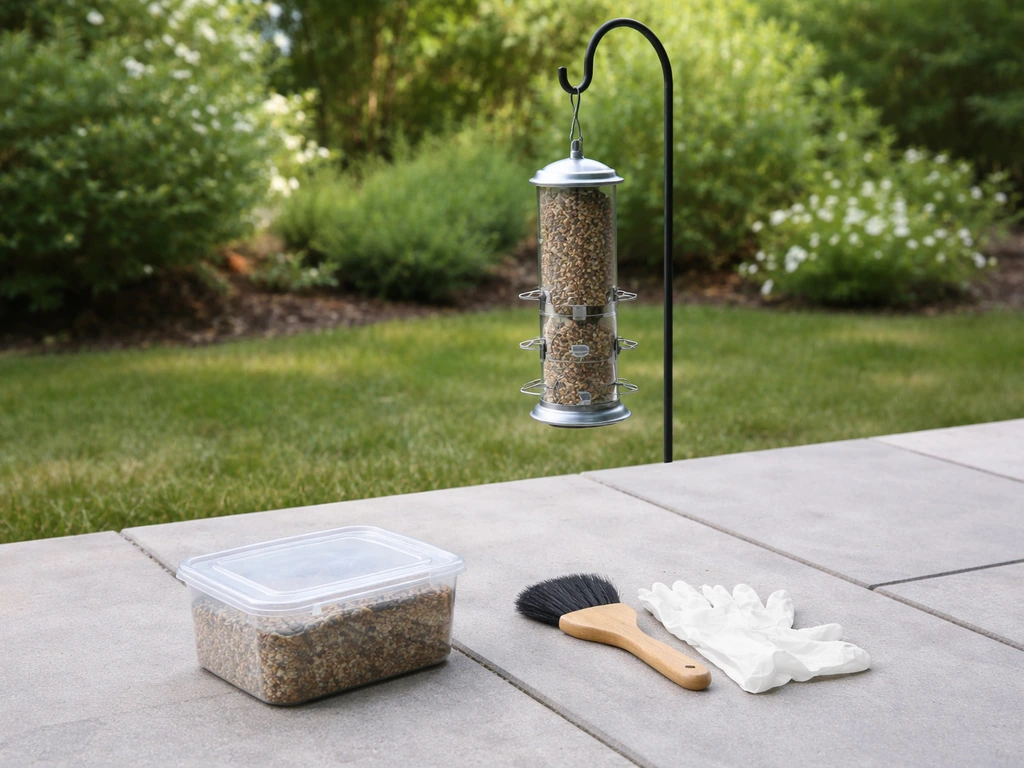
The capsaicin question is really part of a bigger feeder safety picture. Spilled seed on the ground, infrequent cleaning, and offering inappropriate foods are all risks that compound each other. Whether you are using hot pepper seed or standard mixes, clean your feeders every two weeks as a baseline, or more often in hot and humid weather. A 1:9 bleach-to-water solution scrubbed into all surfaces, followed by a thorough rinse and complete drying before refilling, is the standard recommended by multiple ornithological sources. Store seed in a cool, dry place and discard it immediately if it smells musty or shows any clumping, which is a sign of mold that can be genuinely toxic to birds regardless of any spice content.
The bottom line: birds are not going to suffer from capsaicin the way mammals do, and commercially made hot pepper birdseed is a legitimate feeder tool. Where you need to be careful is with human spicy food (too much salt and too many additives), pet exposure to spilled treated seed, and keeping the overall feeder environment clean. Get those three things right, and your feeder setup is in good shape.
FAQ
If birds stop visiting after I add spicy seed, is it because they can taste the capsaicin?
Birds are generally not deterred by capsaicin, but some species will still stop coming if the feeder environment changes. If you added pepper seed and saw fewer birds, check seed freshness, wash the feeder ports and perches, and look for a new strong odor from the product that may be coming from the container rather than the capsaicin itself.
How can I introduce capsaicin birdseed gradually without scaring birds off?
If you want to “test” without losing visitors, mix spicy and plain seed for a week (for example, half and half) and monitor which species still feed. This helps you distinguish true aversion from unrelated issues like moldy seed, a dirty tray, or weather-driven changes in visitation.
Is any spicy food safe for birds to eat at the feeder, even if it is mostly pepper?
Don’t assume all “spicy” products are the same. Kitchen chili powder and hot sauce can contain salt and additives (onion, garlic, sugars, or preservatives) that are risky for birds, even if the capsaicin portion would not be. Stick to products made specifically as bird-safe deterrent seed.
What if a little hot sauce or seasoned table scraps accidentally gets on the feeder?
Trace exposure from occasional drips or a small amount of human spicy food on the feeder is usually a low risk compared with consistent feeding. The bigger concern is repeated access to salty, seasoned, or greasy leftovers that can lead to long-term nutritional imbalance or irritate the gut.
Can capsaicin-treated seed affect pets indirectly through spilled seed?
Yes, but the practical strategy is hygiene, not switching seed. Clean any spilled seed more often than you would with standard mixes, especially under perches and on the tray, and use gloves when filling if the product sheds powder. Washing hands after handling is important for pets and for people who touch their face.
My dog keeps eating spilled birdseed, does that change how I should use spicy birdseed?
For dogs and cats, the main concern is irritation if they inhale or lick capsaicin powder from the tray or eat a significant amount. Avoid letting pets “clean up” spilled seed, and if you suspect ingestion, call a veterinary poison service promptly rather than waiting for symptoms.
How do I know whether capsaicin birdseed is still safe to use?
If the seed develops clumps, off odors (musty or sour), or visible mold, discard it immediately regardless of whether it is spicy or plain. Mold is a genuine bird health risk that can outweigh any deterrent-related benefits.
Is capsaicin birdseed safe to handle if I have asthma or respiratory sensitivity?
Even if birds tolerate capsaicin, inhaling fine powder can bother sensitive people. Wear a mask if you are handling a very dusty product, avoid shaking bags over your face, and store it sealed to reduce airborne particles.
Will capsaicin birdseed work for squirrels and raccoons if I only change the seed?
Commercial hot pepper birdseed is designed to deter rodents, but placement still matters. Keep feeders elevated enough that cats cannot reach spilled seed underneath, and remove old seed daily during heavy squirrel activity because rodents can still exploit openings near the tray.
If birds do not taste capsaicin, why do people still avoid offering it near pets?
Birds and mammals differ, so you should still aim for bird-friendly feeding practices. Use the safest option available for your goal: spicy deterrent seed for rodent problems, and non-spicy seed for pure attraction, with feeder cleaning as the constant.