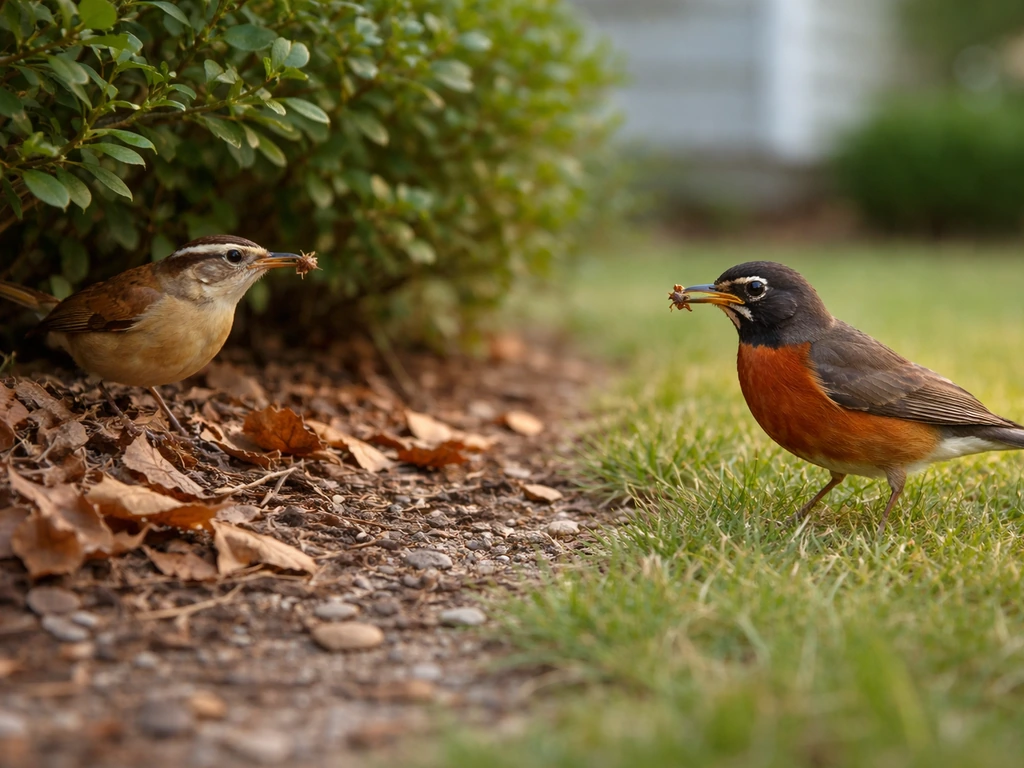
Several common backyard birds eat crickets, and the ones you're most likely to see near your home are Carolina Wrens, American Robins, Northern Mockingbirds, Brown Thrashers, and European Starlings. Of these, the Carolina Wren is probably the most dedicated cricket hunter in a suburban yard. Crickets make up a significant chunk of its diet year-round, and if you have leaf litter, dense shrubs, or a brush pile anywhere near your house, wrens are almost certainly already working it.
What Bird Eats Crickets? Identify and Feed Safely
Maya Henderson
14 May 2026
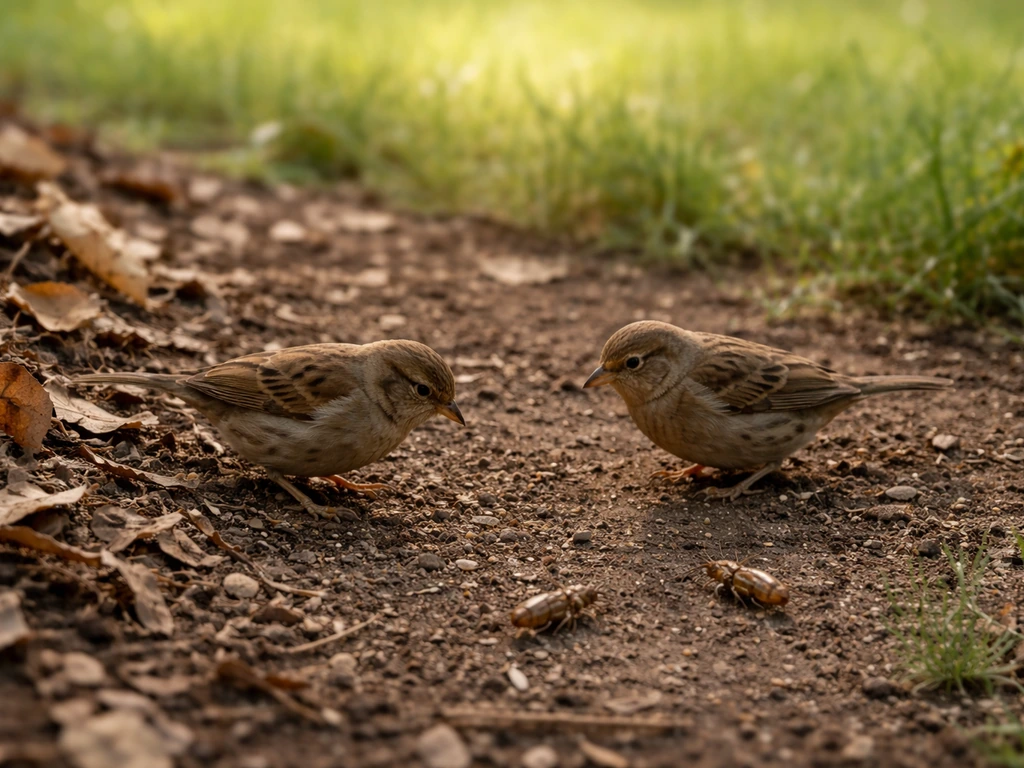
Birds most likely to eat crickets near your home
Not every insect-eating bird bothers with crickets, but the ones that do tend to be ground foragers or low-shrub hunters. Here are the species worth knowing about in most North American suburbs.
| Bird | Cricket habit | Where you'll see it foraging | Notes |
|---|---|---|---|
| Carolina Wren | Strong, year-round | Leaf litter, low tangles, bark, ground | Audubon lists crickets explicitly in its diet; forages in pairs |
| American Robin | Seasonal (spring/summer) | Open lawn, soil surface | Hunts ground invertebrates heavily in early summer |
| Northern Mockingbird | Opportunistic | Ground near perches, open turf | Flies down from perch to pounce; common in suburbs |
| Brown Thrasher | Strong, ground-focused | Dense leaf litter, shrub edges | Bills through leaves and soil to dig up insects |
| European Starling | Opportunistic | Open ground, lawns | Takes grasshoppers and related insects including crickets |
The Grasshopper Sparrow is a specialist when it comes to orthopterans (the insect group that includes both crickets and grasshoppers), but it's primarily a bird of open grasslands rather than suburban yards. Sparrows are insect-eaters too, and many will take small prey like crickets when they can find it Grasshopper Sparrow. If you're in a rural or semi-rural setting near meadows, it's worth knowing, but most people searching this question are dealing with a yard bird, not a field bird.
How to tell which bird is eating your crickets
Behavior is the fastest way to ID your cricket-eating visitor. Each species has a hunting style that's pretty distinctive once you know what to look for.
Carolina Wren
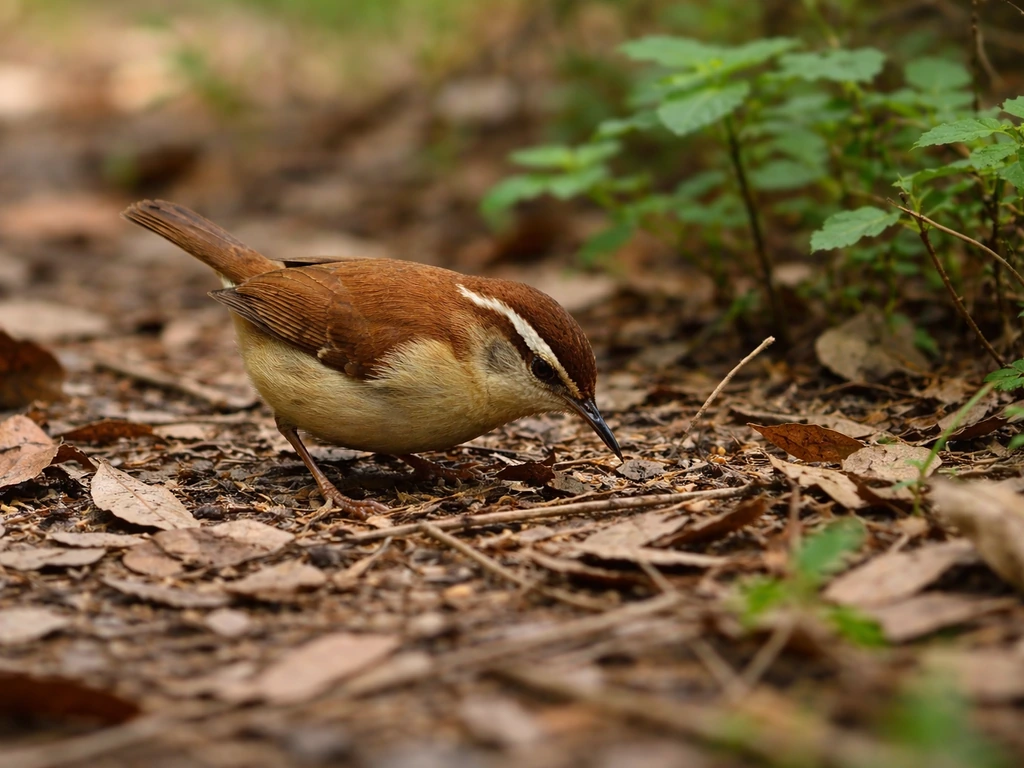
Small, rust-brown, loud. Carolina Wrens scamper and flit around low brush, tree bases, and leaf piles in a constantly busy way. They'll disappear into a brush pile and come out the other side. You'll usually hear them before you see them. They forage in pairs and stay low, rarely going above mid-shrub height. If something is working through your leaf litter at warp speed, it's probably this bird.
American Robin
Robins hunt in the open. They walk across lawn in short bursts, stop, tilt their head to one side (the classic "head-cock" to listen or see better), and then drive their bill into the ground. This is the same technique they use for earthworms, and crickets get caught the same way. If you see this on an open patch of turf, especially in spring or early summer, that's a robin hunting.
Northern Mockingbird
Mockingbirds perch up on a fence post, wire, or shrub top, then fly straight down to grab something from the ground. They also do a distinctive "wing flash" where they half-open their wings to show white patches, which is thought to startle insects into moving. If you see a gray bird with white wing flashes dropping repeatedly to the ground, that's a mockingbird hunting.
Brown Thrasher
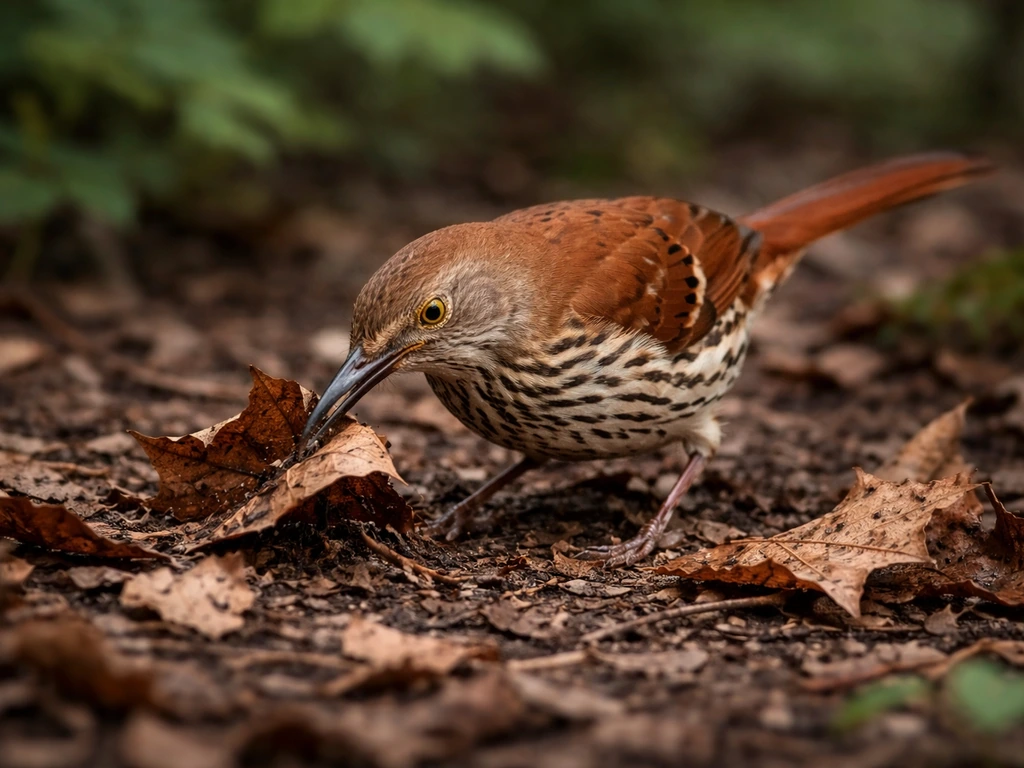
The thrasher's hunting style gives it its name. It sweeps its long bill side-to-side through leaf litter and thick ground cover, flipping leaves aside and sometimes digging into loose soil. If you see a large, rufous-colored bird basically raking your mulch pile, that's your thrasher. They tend to stay near cover and are a bit shyer than robins or mockingbirds.
Where cricket-eating birds actually forage
These birds are not all hunting in the same vertical zone, which matters if you want to set up feeders or habitat features that attract them.
- Ground layer (0 to 6 inches): Brown Thrashers and Carolina Wrens work leaf litter, soil edges, and the bases of shrubs. This is the primary cricket zone because crickets are ground-dwelling insects.
- Open turf: American Robins and Northern Mockingbirds cross open lawn, especially in the morning when dew is present and insects are less mobile.
- Low shrubs and tangles (up to about 3 feet): Carolina Wrens also hunt at this level, flitting into dense shrubby growth and along bark.
- Feeders: Almost none of these birds will come to a standard tube or hopper feeder for crickets. They are active hunters, not feeder birds when it comes to insects. Platform or ground-level setups are the exception.
Audubon recommends matching feeder type to the feeding guild. For ground-foraging insectivores, that means table or platform feeders low to the ground, or simply placing food directly on the ground in a clean, observable spot. The birds that eat crickets are not the same birds that hang off tube feeders for sunflower seeds.
How to attract cricket-eating birds safely
Habitat first, feeders second
The single most effective thing you can do is create or keep a leaf litter layer in part of your yard, ideally near a brush pile or dense native shrubs. This does two things: it attracts crickets naturally, and it gives birds like wrens and thrashers the exact foraging environment they prefer. Native plantings that create understory structure are worth more than any feeder when it comes to these species. Some birds also eat acorns and other plant foods, which helps them support tree growth Native plantings.
Water placement
A low, shallow bird bath placed near the ground or on a low pedestal close to shrub cover will pull in wrens and thrashers far more reliably than a feeder. Keep the water fresh and change it every two to three days. Dirty, stagnant water attracts disease and mosquitoes, which is a risk you don't want near a space you're actively managing.
Offering live or dried crickets
You can offer crickets directly, and some people do this with good results. Dried crickets sold for reptile feeding work fine and are easier to handle than live ones. Place them on a low platform feeder or a flat stone in the open, close enough to cover that birds feel safe but visible enough that you can watch. Early morning is the best time since that's when most of these birds are actively foraging. Don't put out more than you'd expect birds to clean up in about an hour, especially in warm weather.
Timing by season
Cricket-eating bird activity peaks in spring and summer when insects are abundant and adults are raising nestlings that need high-protein food. Some birds also eat berries, and if you're looking for what bird eats holly berries, the best approach is to match habitat and local species to the fruiting season berry. This is also when natural cricket populations are highest. In late summer and fall, crickets become even more active and vocal, so bird foraging for them tends to pick up again. Winter is the quietest period for this type of activity, though Carolina Wrens do hunt insects year-round in warmer climates.
Do's and don'ts with live and dried crickets around pets and wildlife
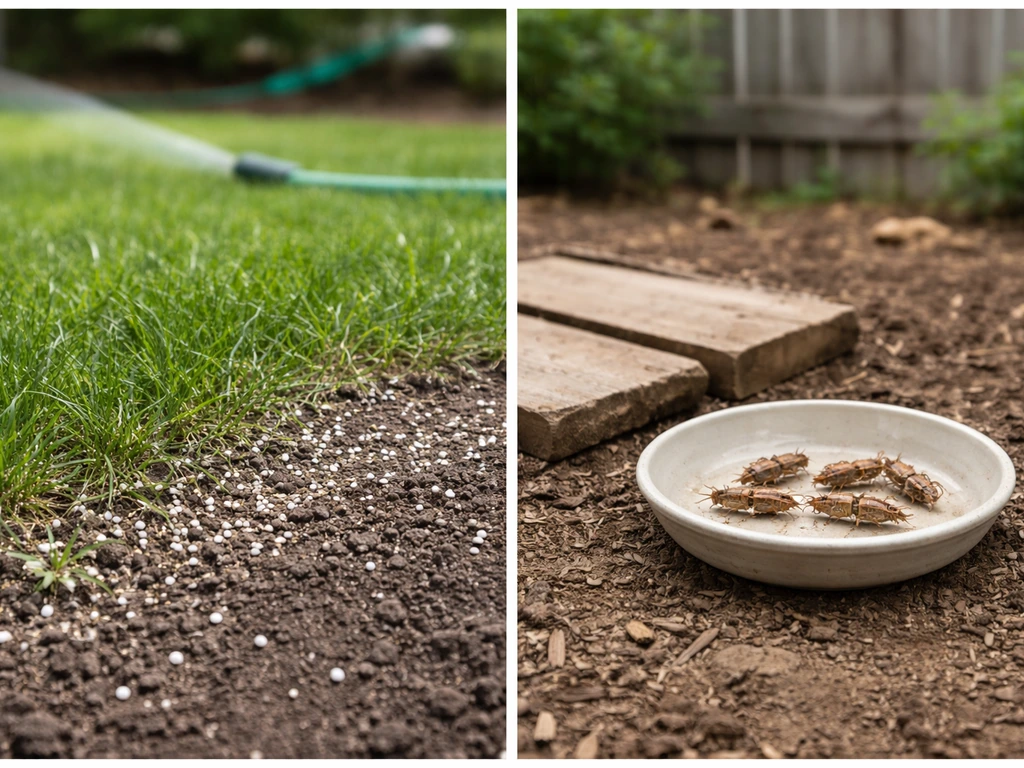
This is where backyard cricket feeding intersects with real safety concerns. The risks are manageable, but they're worth taking seriously.
The pesticide problem
The biggest hazard is pesticide-contaminated insects. Fipronil, a common insecticide used in granular lawn treatments and some pet flea products, is highly toxic to birds, and some species are especially sensitive to it. If crickets in your yard have been exposed to fipronil-based turf treatments or granular bait products, birds eating those crickets can be harmed. The same risk applies to any broad-spectrum insecticide applied to the lawn. If you've recently treated your yard, don't offer crickets and don't encourage foraging in treated areas.
Pet safety
Cats and dogs can and will eat crickets, live or dried. A cricket or two is generally not a problem, but if a pet eats a large quantity, expect potential GI upset. The bigger concern is if those crickets came from a treated area or were part of a commercial pest-control bait product. Keep pets away from any area where you've placed crickets as bird food, and never use commercial cricket-bait pest products near bird feeding areas.
Practical do's and don'ts
- Do use dried crickets from a reputable reptile or pet supply source. They're clean, free of pesticides, and much easier to store than live ones.
- Do place offerings on a clean platform or flat surface that you can rinse regularly.
- Do remove uneaten crickets after about an hour in warm weather. Decaying insects attract flies and can introduce bacteria.
- Don't use crickets or insect bait products that contain pesticides or attractant chemicals near your bird feeding area.
- Don't assume crickets from your lawn are safe if you've applied any insecticide in the past few weeks.
- Don't leave live crickets loose in large quantities. They can attract rats, raccoons, and other wildlife you may not want encouraging near your home.
- Don't put dried crickets in a tube or hopper feeder. They'll mold and clump. Use open, easy-to-clean surfaces only.
Feeder hygiene basics
Any feeder or platform used for insect feeding needs more frequent cleaning than a standard seed feeder. Rinse it after every use. Do a full clean with a diluted bleach solution (about 10% bleach in water) at least once a month, or more often in hot, humid weather. Wear gloves when cleaning, and wash your hands thoroughly afterward. This isn't just good practice for crickets. The CDC has documented salmonella outbreaks linked to wild songbirds at feeders, and keeping things clean is the most direct way to reduce that risk.
Troubleshooting: not seeing birds after trying
If you've set up habitat, offered crickets, and still aren't seeing birds, here's a practical checklist to work through. Some scavenging birds, like crows and ravens, are also known for eating roadkill.
- Check your timing. Most insect-hunting birds are most active in the first two hours after sunrise. If you're checking at noon, you're probably missing the activity window.
- Look at your cover situation. If your yard is mostly open lawn with no shrubs, brush, or leaf litter, birds don't feel safe foraging there. Add a brush pile or leave a section of leaves under a shrub.
- Consider predator pressure. If you have outdoor cats, or a hawk is working your area regularly, birds will avoid your yard regardless of what you offer. Keep cats indoors if you want bird activity. Place offerings near escape cover, not in the open center of your lawn.
- Evaluate your water source. A clean, fresh, low bird bath often pulls in insectivores faster than food. If you don't have one, add it before adding more food.
- Think about the season. In winter, cricket-eating bird activity drops significantly in northern areas. Carolina Wrens persist year-round in the South, but if you're in the North in January, this isn't peak season for this behavior.
- Check for pesticide use nearby. Your neighbor's lawn treatment can affect insect and bird activity in your yard. If local insect populations are suppressed, the birds that eat them will move elsewhere.
- Don't over-feed. A huge pile of crickets can attract rats or raccoons, which then deter the birds. Offer small amounts and see what happens within a short observation window.
- If nothing works after a few weeks of consistent effort, stop feeding and shift to observation. Note where natural foraging is happening in your neighborhood, then work backward to replicate that habitat in your yard.
Sometimes the most useful thing you can do is put down the food and just watch. If you spot a Carolina Wren or a Brown Thrasher foraging naturally in your yard already, you don't need to supplement at all. Those birds have already found what they need. Watching where they go tells you more about your yard's insect habitat than any feeder setup will. If you're interested in the broader picture of which birds eat which insects, the overlap with birds that hunt grasshoppers is significant since grasshoppers and crickets are closely related and the same species tend to hunt both. Sparrowhawks are different from backyard cricket-eating songbirds, and their hunting style affects whether they eat the whole bird or just certain parts. If you’re specifically wondering what do bird grasshoppers eat, look at their feeding style and habitat preferences because many of the same ground and low-shrub hunters will go after grasshoppers too hunting grasshoppers. Many of the same bird species that eat crickets also eat grasshoppers, including several common backyard foragers.
FAQ
Can I attract birds by putting out live crickets instead of dried ones?
Yes, live crickets can work, but dried crickets are easier to control and less likely to end up hiding in tall grass or leaf litter where birds cannot find them. If you use live crickets, put them on a low, open platform (or a flat stone) and remove anything not eaten after about an hour, especially in warm weather when they can spread quickly.
What time of day should I put out crickets for the best chance of seeing birds?
Early morning is usually the most productive because many of the cricket hunters described in the article forage more actively then. If you do not see activity after 30 to 60 minutes, try the next day with the same setup rather than leaving food out longer, since that increases spoilage and insect contamination risk.
How much cricket food should I offer so I do not create a bigger pest problem?
Start small, only enough that you expect birds to finish in roughly an hour. In warm weather, leaving lots of crickets out can lead to unchecked cricket survival (they hide, reproduce, and spread), which is the opposite of the controlled, bird-friendly feeding you want.
Do I need to provide water too, or is placing crickets enough?
Water usually improves results, especially for ground and low-shrub foragers like wrens and thrashers. A shallow bath placed near shrub cover, with water changed every two to three days, helps birds stay in the area longer to feed and watch for additional insects.
How can I tell whether the birds I am seeing are actually eating the crickets I put out?
Watch for repeated, targeted foraging behavior at the exact feeding spot, not just casual passing. For example, wrens typically work through leaf litter and low cover constantly, while robins use short lawn walks and repeated bill-digging. If you do not see that same behavior around the cricket placement, birds may be finding insects elsewhere.
Is it safe to feed crickets if I used any pesticide in the last few weeks?
If you have treated your yard recently with insecticides, especially granular products or broad-spectrum lawn applications, do not offer crickets. Residue can contaminate insects and create a poisoning route for birds, so the safest approach is to wait until you are confident treated areas have fully resolved before feeding or encouraging foraging there.
What should I do if I only have tube feeders or hanging feeders?
Tube feeders are generally a poor match for cricket-eating ground and low-shrub foragers, which typically do not hang off feeders. Instead, use platform feeders low to the ground or place food directly on the ground in a clean, visible spot near cover. For water, keep it low and close to shrubs to support the same vertical zone they prefer.
Are there any bird species risks or food-safety steps beyond cleaning feeders?
Yes. Use dedicated tools (a scoop or tongs) for insect feeding, and rinse surfaces and containers after each use to prevent cross-contamination with pet food or household chemicals. Also, do not mix insect feeding stations with seed stations that attract lots of different species, because higher traffic increases mess and the chance of contamination if cleaning is inconsistent.
Will cats or dogs get sick from eating crickets I put out?
They can, especially if they consume many crickets, which may cause gastrointestinal upset. The bigger safety concern is if the crickets came from a treated area or commercial bait product. Keep pets away from the cricket feeding area and never use pest bait products near bird feeding setups.
If I do not see birds eating crickets, what is the most common mistake?
Often it is placement. Cricket hunters described here tend to require cover and the right foraging zone, so food that is placed too high, too far from shrubs, or on bare pavement is less likely to be used. Adjust by moving the feeding point closer to leaf litter or dense native understory and offering small amounts so birds have a clear, safe target.