Sparrows eat a wide variety of foods depending on the season, their life stage, and what's available in their habitat. The short answer: seeds and grains make up the bulk of their diet for most of the year, but insects become critical in spring and summer, especially when adults are feeding chicks. If you're setting up a feeder or just trying to understand what's showing up in your yard, here's everything you need to know.
What Sparrow Birds Eat: Seasonal Diet and Safe Feeding
Maya Henderson
7 Apr 2026
Sparrow diet basics: seeds, grains, and foraging
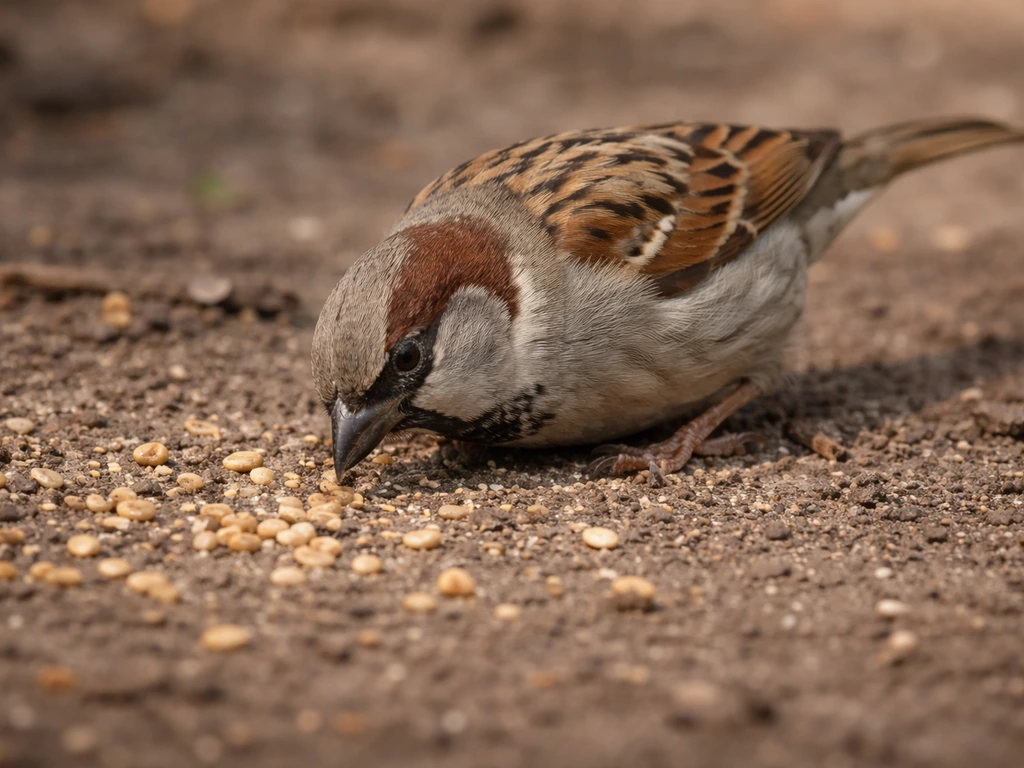
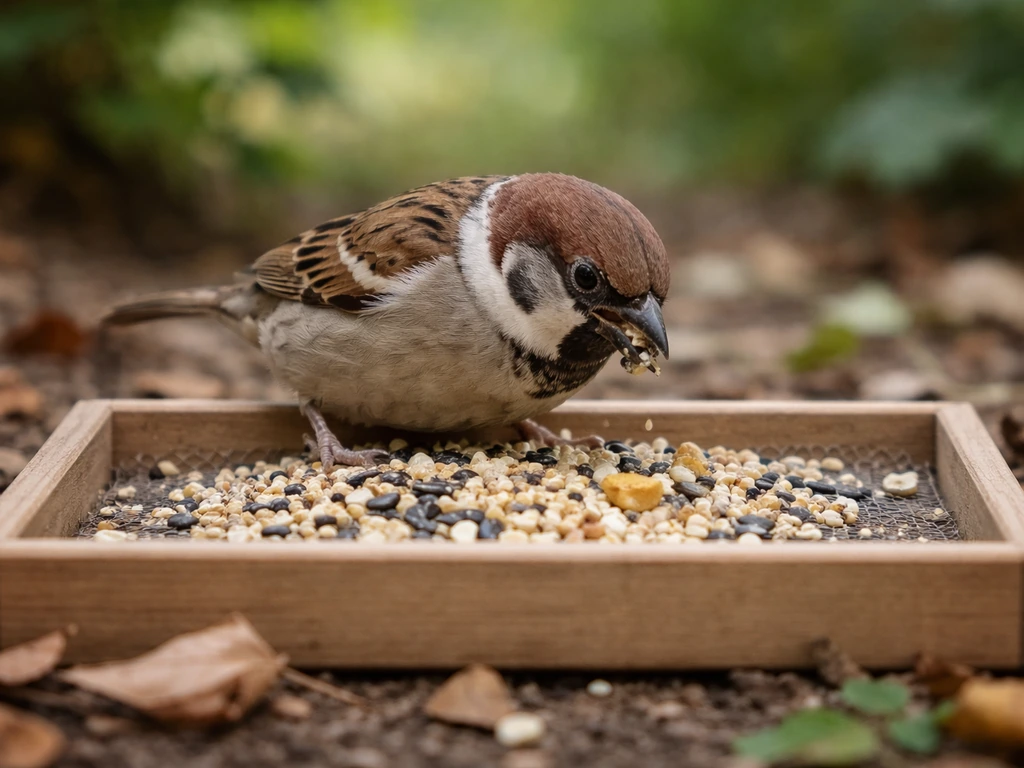
Seeds and grains are the foundation of a sparrow's diet across most of the year. House sparrows eat mostly grains and seeds and will readily take millet, corn, and sunflower seed at feeders. Field sparrows rely heavily on grass seeds through winter, while chipping sparrows go after the seeds of grasses and annual plants year-round. Song sparrows forage on the ground or among low vegetation, pecking and hopping to find small seeds and whatever else turns up.
One thing worth knowing: sparrows often swallow grit (tiny bits of sand or gravel) alongside seeds. The grit sits in the gizzard and helps grind down hard seeds the bird can't digest otherwise. Chipping sparrows are even known to feed grit to their young for the same reason. If you're feeding on the ground, a patch of loose, gritty soil nearby actually supports sparrows naturally.
In urban yards, sparrows are opportunistic foragers. They'll work through leaf litter, peck around garden beds, and scavenge dropped crumbs near outdoor eating areas. This foraging behavior is normal and healthy; it's part of why sparrows do so well in suburban environments.
Insects and protein: why sparrows need more than seed
Seeds are great for maintenance energy, but protein is what sparrows need during breeding season and chick-rearing. When chipping sparrows are nesting, insects make up a large part of their summer diet. Field sparrow parents feed nestlings spiders and a range of insects including caterpillars, flies, bees, beetles, and grasshoppers. These are dense in protein and much easier for a nestling to digest than raw seed.
This matters practically: if you want to support sparrows through the breeding season (roughly April through July in most of North America), leaving some areas of your yard unmowed and avoiding broad pesticide sprays helps keep the insect supply healthy. Sparrows will hunt for prey actively, so a yard with no insects is a yard that's less attractive to them during their most critical time of year.
Sparrows aren't the only backyard birds going after creepy-crawlies. Crickets are another common prey item for a range of small birds that forage similarly to sparrows, so if you're seeing hunting behavior in your yard, that context helps explain it.
Seasonal shifts: summer diet vs winter diet
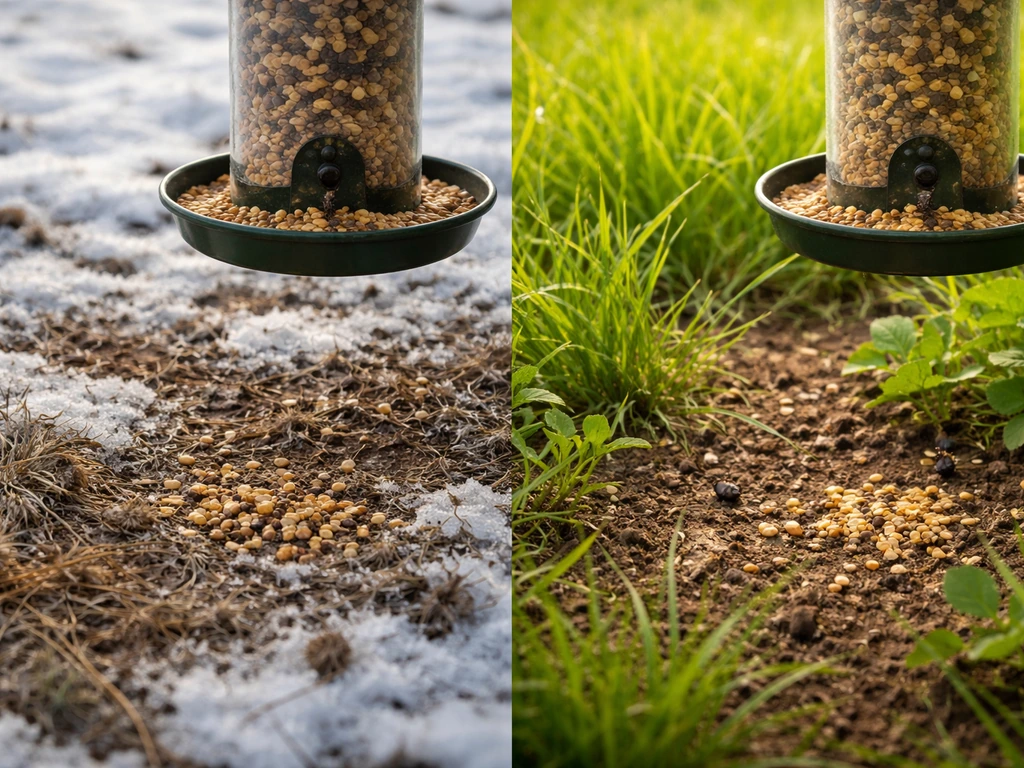
Sparrow diets shift meaningfully with the calendar. Here's how the two main seasons break down:
| Season | Primary Foods | Feeder Relevance |
|---|---|---|
| Winter | Grass seeds, grain seeds, weed seeds | High — feeders are a key food source when natural seeds are buried or depleted |
| Spring/Summer | Insects, caterpillars, spiders, mixed seeds | Moderate — sparrows supplement feeder visits with active insect hunting |
| Fall | Transitioning back to seeds and berries | Moderate to high — birds are building fat reserves before cold weather |
Field sparrows are a good example of this pattern: they eat mainly grass seeds through the cold months, then shift to a blend of seeds and insect prey as temperatures rise. In practical terms, you'll likely see more sparrow activity at your feeder in winter, and less during the peak of summer when insects are plentiful outdoors.
Fall is actually a great time to put out extra seed, since sparrows and other small birds are actively trying to build up energy reserves. If you're curious how other foragers handle seasonal shifts, it's interesting to note that some birds like acorn-eating species actually influence their landscape through their foraging habits in autumn.
What sparrows eat from feeders (and how to serve it well)
If you want sparrows at your feeder, you don't need anything fancy. They're not picky. House sparrows especially will take a wide range of seed mixes, but certain types consistently outperform others.
- White millet: the top choice for most sparrow species, including house, song, and chipping sparrows
- Cracked corn: widely accepted, especially by house sparrows and ground-foraging species
- Black oil sunflower seed: a reliable all-around pick that attracts multiple sparrow types
- Nyjer (thistle) seed: better for finches but sparrows will take it occasionally
- Mixed seed blends: work well as long as millet is prominently included
Serving method matters too. Sparrows are ground-foragers by instinct, so a tray feeder or a scattering of seed on a flat surface often works better than a tube feeder. If you do use a tube feeder, pick one with a tray attachment or wide perch. The goal is to mimic how sparrows naturally eat: low to the ground, with space to hop around and pick.
Foods to avoid and dangers to know
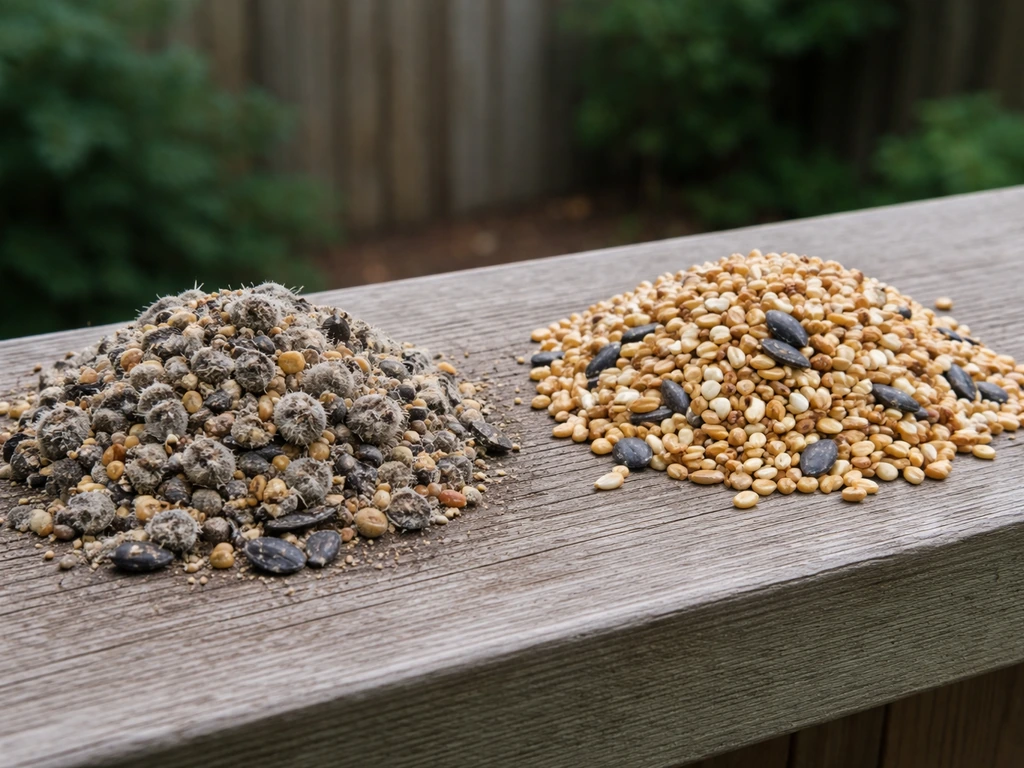
Not everything sparrows might pick at is safe for them. Some common hazards come from feeders themselves, and others come from well-meaning but misguided offerings.
Moldy or spoiled seed is the biggest risk most backyard feeders create without realizing it. Wet seed clumps quickly, especially in tray feeders or on the ground, and mold produces aflatoxins that can sicken or kill birds. If seed has been sitting damp for more than a day or two, throw it out. Similarly, berries or fruit left in a feeder past their prime can grow mold fast in warm weather. While you might be curious about wild foraging like birds that eat holly berries, controlled feeder fruit is a different situation where spoilage is a real concern.
Beyond mold, here are foods to keep away from sparrows entirely:
- Salty snacks or processed human food (chips, crackers, bread): excess sodium is toxic to small birds
- Avocado: contains persin, which is toxic to birds
- Chocolate or anything with caffeine
- Onion or garlic in any form
- Spoiled, clumped, or visibly moldy seed of any kind
- Seed treated with pesticides or fungicides (some commercial birdseed uses coated seed meant for planting, not feeding)
One thing people overlook: if there's a local disease outbreak affecting wild birds in your area, it's worth temporarily taking feeders down. Feeders concentrate birds and can speed the spread of illnesses like salmonellosis or avian pox.
Feeder setup, hygiene, and keeping things safe for pets and other wildlife
The U.S. Fish & Wildlife Service recommends cleaning feeders once every two weeks, and scrubbing the ground below feeders regularly to prevent buildup of moldy or spoiled food. In practice, that means a quick check every few days to remove wet or caked seed, and a proper wash (with a dilute bleach solution, then a thorough rinse and dry) every two weeks. Soak bird feeders in a dilute bleach solution of 9 parts water to 1 part bleach for 10 minutes, then rinse thoroughly, which matches Virginia DWR’s safe-bird-feeding guidance a proper wash (with a dilute bleach solution, then a thorough rinse and dry) every two weeks.. Don't skip the rinse and dry step; residual bleach can harm birds.
If you have pets, especially cats, feeder placement is critical. Sparrows feed low to the ground, which puts them right in the danger zone. Place ground-level trays inside a protective cage or mesh enclosure, or elevate feeders at least four to five feet off the ground and away from anything a cat could use to crouch and spring from. Dogs are less of a direct threat but can scare sparrows off a feeding area entirely.
Rodents are attracted to spilled seed under feeders. Rats and mice can move in quickly if seed accumulates on the ground. Sweeping up spilled seed at the end of the day helps keep rodent pressure low. Some people worry about larger scavengers showing up; it's worth knowing that animals like birds that eat roadkill are unlikely to be drawn to seed feeders specifically, but keeping a clean feeding area discourages opportunistic wildlife in general.
One predator that's specifically relevant to sparrows is the sparrowhawk. If you're losing sparrows to a hawk at or near your feeder, placing feeders near shrub cover gives sparrows an escape route. For context on how raptors hunt, it's useful to understand whether sparrowhawks eat the whole bird, which helps explain why you might only find feathers and no carcass after an attack.
Why sparrows won't show up (and what to adjust)
If you've set up a feeder and sparrows aren't coming, here are the most common reasons and fixes:
- Wrong seed type: if your mix is heavy on safflower or nyjer with very little millet, sparrows may pass on it. Add white millet specifically.
- Feeder height: sparrows prefer to feed low. A tube feeder with no tray isn't appealing. Switch to a platform or tray feeder.
- Too much foot traffic or noise nearby: sparrows are cautious. Place feeders in a quieter area, ideally near shrubby cover they can retreat to.
- Predator pressure: cats, hawks, or even aggressive squirrels nearby can keep sparrows away. Address the threat or relocate the feeder.
- Old or moldy seed: sparrows will ignore or abandon a feeder with bad seed. Replace it and clean the feeder before refilling.
- Competition from dominant species: house sparrows can crowd out native sparrow species. Using multiple feeders spaced apart helps reduce competition.
- Time of year: in summer, natural food (insects, fresh seeds) is abundant. Feeder traffic genuinely drops. Don't read this as failure; try again in fall.
Sparrows are also more likely to visit yards that have some structural diversity: a mix of open ground, low shrubs, and a bit of unmowed grass. Gardens that look too manicured can feel exposed and unsafe to a bird that relies on cover for protection. A yard that supports the kinds of insects that grasshoppers and other ground-level prey depend on is also a yard that's going to attract more insect-hunting sparrows during breeding season.
If you're troubleshooting a specific sparrow species, the behavior of similar ground-foraging birds can give useful clues. For instance, understanding how gray bird grasshoppers behave in your region can tell you when sparrows are most likely to be actively hunting versus resting at feeders, since their hunting activity tracks insect availability.
The bottom line: sparrows are easy to feed and quick to show up once conditions are right. Millet on a tray feeder, clean seed, and a bit of shrubby cover is usually all it takes. Get those basics right, keep the feeder clean on a two-week cycle, and you'll have a reliable crew of sparrows working your yard through most of the year.
FAQ
What sparrow bird eat besides seeds and grains, and what should I offer in spring?
Most sparrows will eat the same basic feeder foods, but which seed matters can differ by species. If you do not know whether you have house or field or song sparrows, offer a mix that includes millet plus sunflower, then watch which ones land and feed most at your tray.
Do sparrows need insects to feed their babies, or is seed enough?
For breeding season, the fastest way to help without buying animal protein is to increase natural insect availability. Leave some grass and low plants unmowed, avoid broad-spectrum pesticides, and put seed out only to supplement, since chicks often need insects more than extra seed adults can carry.
My feeder has seed, but sparrows are not eating it. What’s usually wrong?
If your feeder is attracting birds that look like sparrows but they are not taking the seed, the issue is often seed type and presentation. Swap to millet or small-grain mixes for ground feeding, and scatter a thin layer on a flat tray instead of piling it deep, since wet or caked layers reduce access and cause spoilage.
Is bread okay to feed sparrows?
Do not offer bread as a regular food. It is low in the nutrients sparrows need, it can spoil quickly when left out, and it can attract larger, more aggressive scavengers that compete with small birds.
How can I tell if my bird seed is unsafe for sparrows?
Avoid any seed that smells musty, looks clumped, or has visible mold. As a practical rule, discard anything that has been wet or damp for more than a day or two, then dry and clean the feeder so you do not keep re-exposing birds to spores.
Can I add berries or fruit to a sparrow feeder?
Feeder fruit can attract mold, especially in warm weather, even if you add only a little. If you want to try fruit, use it in tiny portions, remove leftovers within a few hours (or sooner if it warms up), and clean the feeder well to prevent repeated contamination.
Is it safe to scatter seed on the ground for sparrows?
Yes, but only if the food stays dry and you clean frequently. If you put seed directly on the ground, keep a small feeding zone and scrape away caked seed. Wet ground seed becomes a mold risk and also draws rodents, so more frequent checks matter than they do with a covered tray.
Where should I place a tray feeder so sparrows feel safe?
Try to place the tray so birds can hop and access food quickly, then offer cover nearby. Dense shrub cover within a few feet helps sparrows escape from predators, but keep the cover from fully trapping birds at the feeder (leave an open approach lane).
How do I protect sparrows at the feeder from cats?
If cats are around, do not rely only on distance. Use a protective mesh enclosure for ground trays, or elevate the feeder at least 4 to 5 feet and position it where a cat cannot crouch near it. Even then, keep the setup away from surfaces cats can climb onto.
What’s the best way to clean feeders if weather is humid?
Clean-up timing matters as much as cleaning intervals. Remove wet or caked seed within a few days of spotting it, then do a deeper wash on schedule. Also rinse and dry the feeder thoroughly after disinfecting, because leftover chemical residue can irritate birds.
Next Article
Do Seagulls Eat Bird Seed? How to Stop Them
Yes, seagulls often eat bird seed. Learn why they show up and how to block them while keeping feeding safe.