The birds most likely to eat grasshoppers in a North American backyard are bluebirds (eastern, western, and mountain), grasshopper sparrows, brown thrashers, barn swallows, and black-capped chickadees. You'll see this behavior most often in summer and early fall, when grasshoppers are abundant and birds are either feeding nestlings or building up fat reserves. If you're watching a bird drop to the ground from a fence post, snatch something, and fly back up, there's a good chance you're watching a grasshopper hunt.
What Bird Eats Grasshoppers? How to Spot and Attract Them

Maya Henderson
14 Apr 2026
Top birds that eat grasshoppers
Eastern, Western, and Mountain Bluebirds
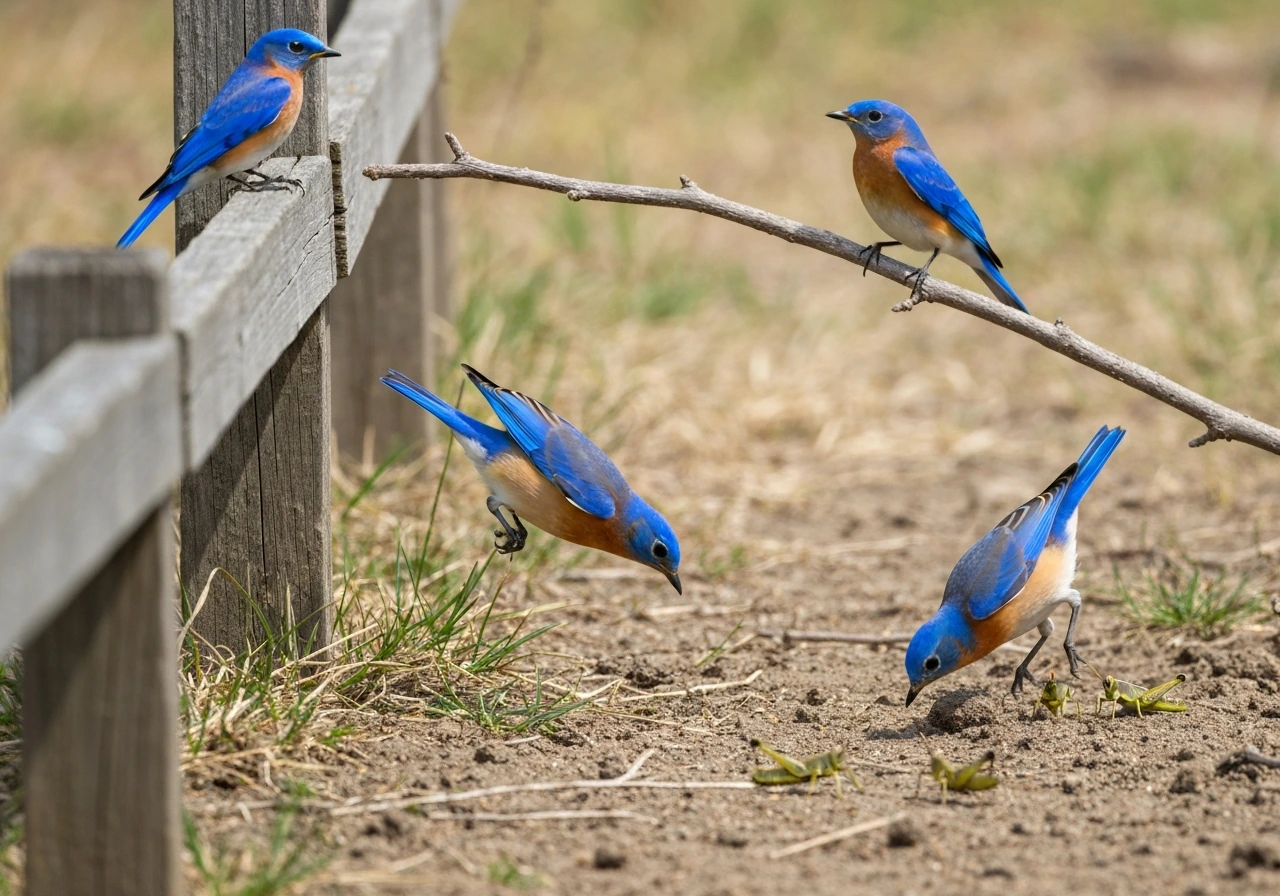
All three bluebird species are serious grasshopper hunters. Stomach-content studies of 66 adult western bluebirds and 66 adult mountain bluebirds each showed grasshoppers making up about 23% of their diet. Eastern bluebirds are in the same category: grasshoppers and crickets are listed among the most frequently consumed arthropods in their diet, and Orthoptera (the insect order that includes both) accounts for roughly 25% of what eastern bluebird nestlings are fed. If you have bluebirds nesting nearby, they are almost certainly hunting grasshoppers in your yard or a neighboring field all summer long. Bluebirds rarely eat seed, so if you see one at a seed feeder, it's just passing through. Their real hunting happens in open ground.
Grasshopper Sparrow
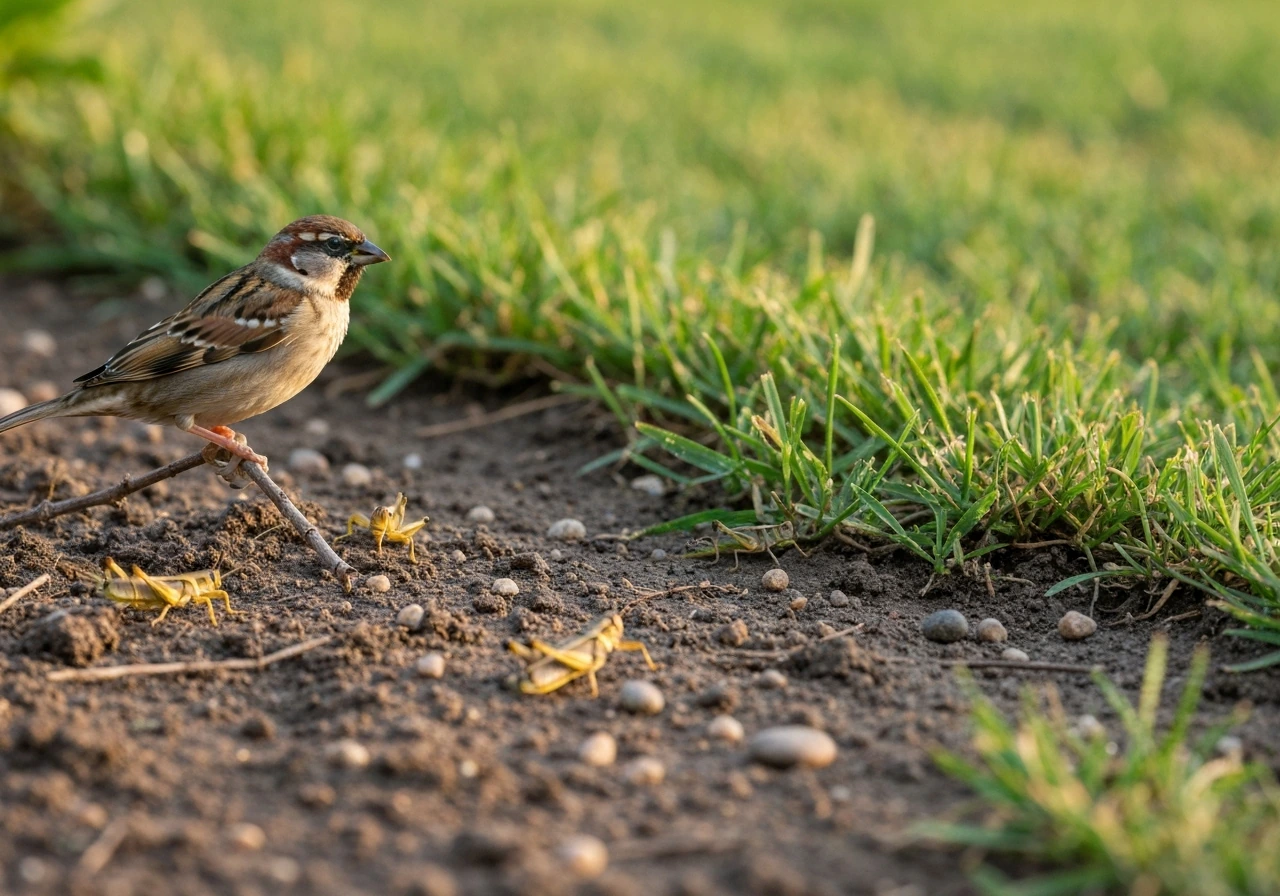
The grasshopper sparrow earned its name honestly. Adults regularly choose grasshoppers as prey alongside beetles and caterpillars. What makes this bird particularly interesting is how it handles a large grasshopper: it grabs the insect behind the head, shakes the legs off, and then either eats it whole or feeds it to young. If you're curious about whether gray bird grasshoppers can bite, that leg-shaking behavior is exactly why birds deal with them carefully. Grasshopper sparrows are ground foragers, so look for them in weedy meadows or grassy field edges rather than at your feeder.
Brown Thrasher
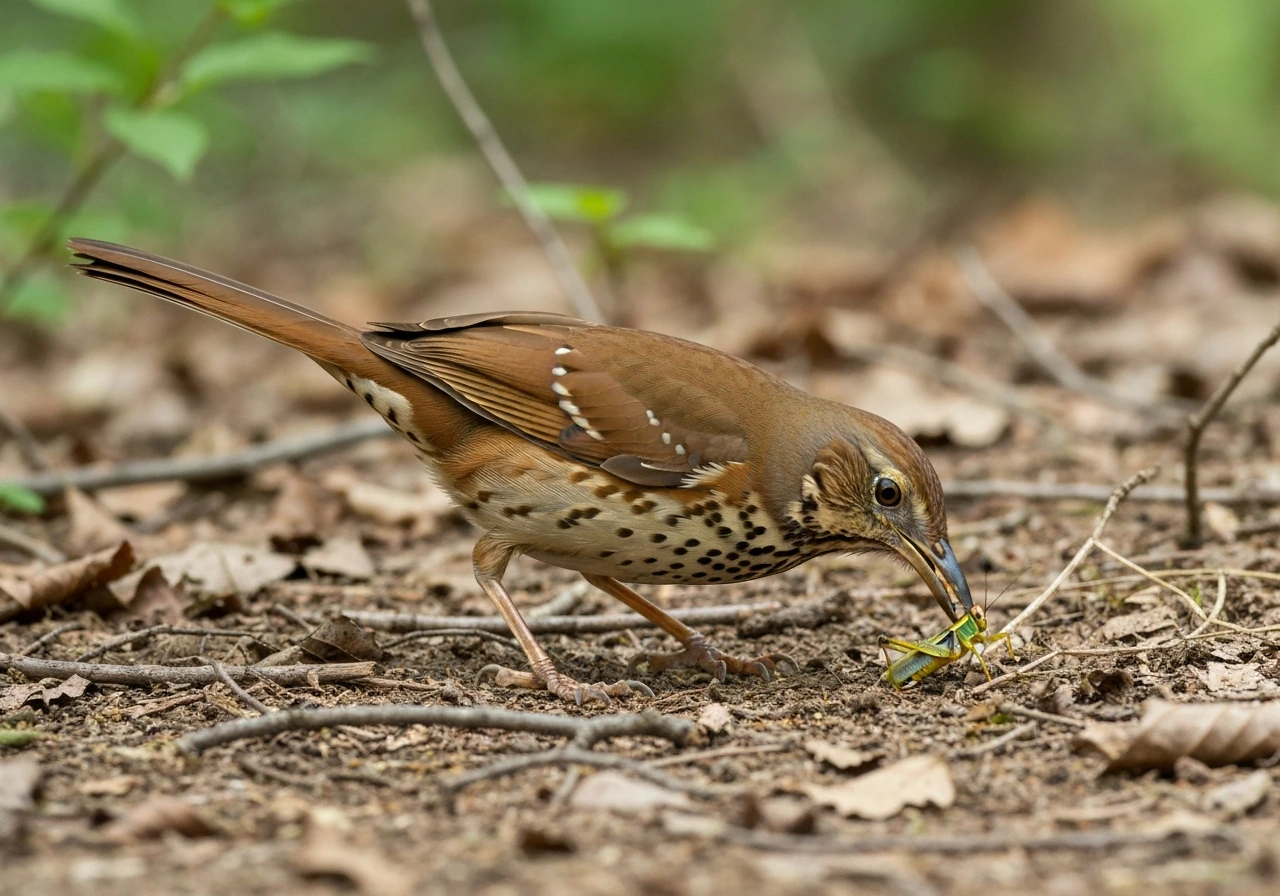
Brown thrashers are one of the more underrated grasshopper hunters. A stomach-content study from Iowa found that grasshoppers made up about 20% of their summer diet. They forage by raking through leaf litter and soil with that long, curved bill, which is a distinctly different technique from the bluebird's perch-and-drop approach. If you see a large, rusty-brown bird thrashing through ground cover at the edge of your yard, it's probably hunting.
Barn Swallow
Barn swallows hunt grasshoppers aerially, snatching them mid-flight over fields, open water, and barnyards during the breeding season. They don't glean from surfaces the way bluebirds or thrashers do. Instead, they dart and wheel continuously above open ground. Grasshoppers are part of their insect prey mix, though barn swallows are less selective than a bird like the grasshopper sparrow. If you have open lawn or live near fields, you'll often see them foraging at dusk.
Black-capped Chickadee
Chickadees are primarily seed eaters in winter but shift hard toward insects during spring, summer, and fall. During those warmer months, insects and spiders make up 80 to 90% of their diet. They glean insects from bark, branches, and foliage rather than hunting from the air or the ground, so they'll take smaller grasshoppers and nymphs when they're on vegetation. Chickadees are year-round feeder visitors, which makes them easy to observe as they switch between seed and insect hunting depending on the season.
How to confirm the bird you're seeing is actually hunting grasshoppers
The clearest sign is the hunting method. Bluebirds perch on a fence, low branch, or post, watch the ground, and then drop straight down onto prey. If you see that drop-and-return pattern, especially in grassy areas, it's almost always insect hunting. Grasshopper sparrows and brown thrashers stay on the ground and work systematically through vegetation, so they look like they're searching rather than flying. Barn swallows never land to hunt; if a swallow-shaped bird is continuously banking over open ground, it's hawking flying insects.
The season matters too. Grasshopper populations peak in late summer, typically July through September in most of North America. That's when you'll see the heaviest insect hunting from all these species. If you want to understand more about what bird grasshoppers actually eat themselves, it can help you predict where both the grasshoppers and the birds hunting them will concentrate in your yard.
One more useful check: watch what the bird does after it catches something. Bluebirds and thrashers will often beat prey against a surface to immobilize it before swallowing. Grasshopper sparrows do the leg-shake. These handling behaviors are hard to mistake for anything else.
What makes certain birds hunt grasshoppers (habitat, season, and prey availability)
Grasshopper hunting is almost entirely seasonal. Grasshoppers overwinter as eggs and are largely absent as prey until late spring, peaking mid to late summer. That timing lines up with breeding season for most of these birds, which is not a coincidence. Nestlings need protein-rich food, and a fat grasshopper delivers it efficiently. Eastern bluebird parents, for example, prioritize arthropods like grasshoppers and crickets specifically to meet their nestlings' nutritional needs during this window.
Habitat drives everything else. Grasshoppers concentrate in weedy field edges, unmowed grass, hedgerows, and open ground with some low vegetation cover. Birds that eat grasshoppers evolved to hunt in exactly these environments. Bluebirds need perch points with open ground below them. Grasshopper sparrows need dense grassland with enough cover to hide in. Brown thrashers need shrubby edges with accumulated leaf litter. Barn swallows need open airspace over fields or water.
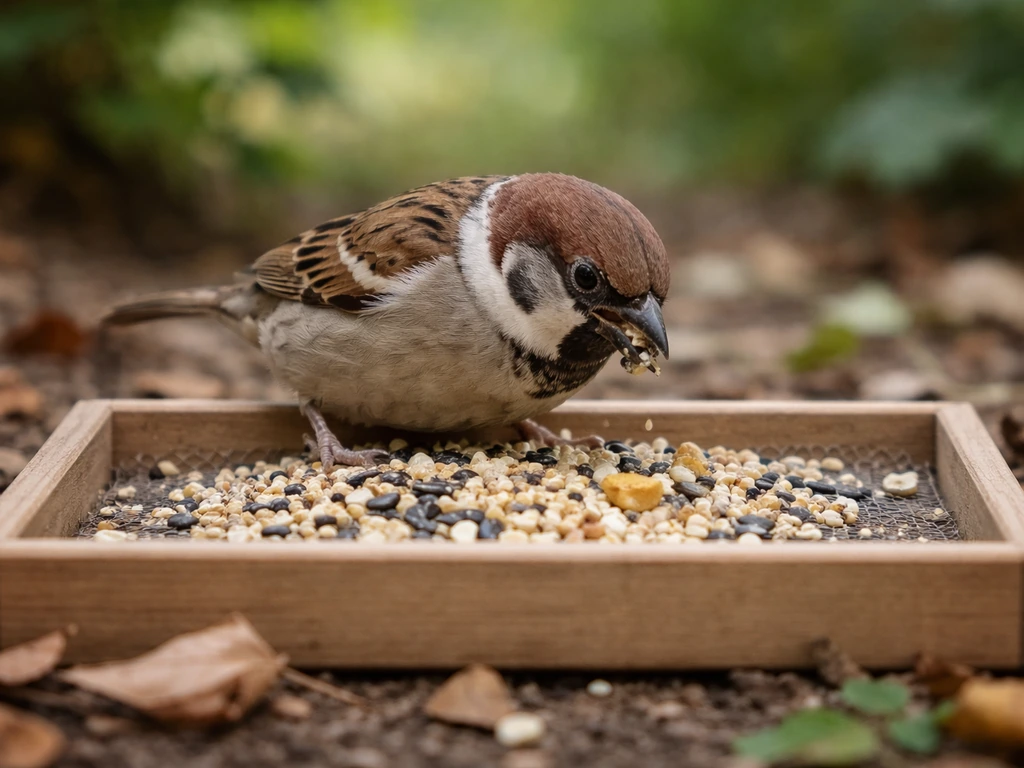
Prey availability also triggers behavioral shifts. When grasshopper numbers are high, even normally seed-heavy birds like sparrows shift their foraging focus. This is why what sparrow birds eat changes noticeably by season, with insects dominating summer diets even for species you'd normally think of as seed eaters.
Attracting grasshopper-eaters safely
The most effective thing you can do is manage your yard's habitat, not add more seed. These are insectivores, and most of them won't come to a seed feeder. What they respond to is structure: perch points, open ground, water, and native plants that support insect populations.
- Leave a section of lawn unmowed from May through September. Even a 10-by-20-foot strip of longer grass creates enough grasshopper habitat to attract hunting birds.
- Add low fence posts, stakes, or dead snags at the edge of open ground. Bluebirds hunt from these perch points and will use them immediately if the habitat below supports prey.
- Install a shallow birdbath (2 inches deep maximum) with a dripper or wiggler. Moving water attracts insect-eating birds far more reliably than still water.
- Plant native grasses and wildflowers along your yard's edges. Native plantings support the insect populations that grasshopper-hunting birds depend on, and they also attract other wildlife worth watching.
- Avoid broad-spectrum pesticide applications in areas where these birds hunt. If you're spraying to kill grasshoppers, you're removing the food source you're trying to attract birds to eat.
Bluebird nest boxes are worth considering if you have the right open habitat. A mounted box on a pole (with a baffle to prevent climbing predators) can bring a breeding pair to your yard, and a nesting pair will hunt grasshoppers aggressively all summer. The National Wildlife Federation consistently recommends native plants over feeders as the more reliable and lower-risk strategy for attracting wildlife, and for grasshopper-eating birds specifically, that advice is especially accurate.
The National Wildlife Federation’s Garden for Wildlife tip sheet frames feeders as supplemental rather than the primary source, recommending native plants that support insects and other natural foods [The National Wildlife Federation consistently recommends native plants over feeders as the more reliable and lower-risk strategy for attracting wildlife](https://www. nwf. org/-/media/Documents/PDFs/Garden-for-Wildlife/Tip-Sheets/Bird-Feeders. ashx?
hash=32616F574B873DF0DADD40299AF4AF1CF04A0F35&la=en).
If you do want to offer supplemental food for insectivorous birds, mealworms (live or dried) are the most effective option. Bluebirds and chickadees both take them readily from a small dish feeder. Keep quantities modest and offer them in the morning so they're consumed quickly rather than sitting out in heat. Just as you'd think about what bird eats holly berries and plan your plantings accordingly, matching your yard's offerings to what insectivores actually need is more productive than general seed feeding.
Protecting pets and preventing hazards near bird feeding
If you're running a feeding station or attracting more birds to your yard, there are a few hazards worth taking seriously, especially if you have cats or dogs.
Cats are a direct threat to ground-foraging birds like grasshopper sparrows and brown thrashers, but wild birds also pose a risk to cats. The ASPCA recommends keeping cats from coming into contact with sick or deceased wild birds, including monitoring for respiratory or neurological signs if you think your cat has had contact. Keeping cats indoors or in a contained outdoor enclosure is the cleanest solution on both sides of that equation.
Feeder hygiene is non-negotiable. Seed feeders can harbor bacteria, mold, and disease if they're not cleaned regularly. The Minnesota DNR recommends cleaning feeders with 2 ounces of bleach per gallon of water, and also clearing old seed hulls and spilled seed from the ground below feeders. Project FeederWatch recommends cleaning every two weeks as a minimum. The CDC is specific about one thing: don't clean feeders in your kitchen or any food-prep area, because the contamination risk extends to people and pets, not just birds.
Moldy or spoiled seed is a real hazard, especially in summer heat and humidity. Wet seed can grow mold within 24 to 48 hours. Use smaller quantities that birds can finish in a day or two, and inspect feeders regularly. If seed is clumping or smells off, discard it completely rather than topping up the feeder. This matters for the same reason that what bird eats roadkill matters in a broader wildlife health context: contaminated food sources create cascading risks for multiple species.
Keep pet food and water indoors, especially at night. The USDA APHIS recommends this specifically because outdoor pet food attracts non-target wildlife, which can increase disease transmission risk among animals and to people. A feeding station that also doubles as a buffet for raccoons, opossums, or rodents creates problems well beyond the birds you intended to attract. How sparrowhawks eat their prey is a good reminder that active raptors will also follow dense bird concentrations, which can create pressure on both small birds and small pets in the yard.
When you don't need to feed at all
If your goal is to reduce grasshoppers in your yard, you don't need to manage feeders at all. You need habitat that supports the birds that naturally hunt grasshoppers. Those birds will show up on their own if the conditions are right. Supplemental feeding for insectivores during summer is largely unnecessary when natural prey is abundant: a yard with a grasshopper problem is already offering these birds exactly what they want.
The National Park Service is direct about this: the best way for wildlife to maintain a healthy diet is through natural foraging. Human-provided food can increase certain populations artificially, which in turn increases predation pressure and disease risk. If you're feeding primarily to watch birds rather than to solve a pest problem, that's a reasonable goal, but it comes with the maintenance responsibilities above.
The US Forest Service also notes that food-conditioning wildlife can cause animals to associate people and yards with food, which leads to aggressive begging behavior and attracts predators. That dynamic applies most to mammals, but it's worth keeping in mind as a general principle for any backyard wildlife program.
For grasshopper control specifically, the better long-term strategy is habitat management: reduce bare, compacted soil (where grasshoppers lay eggs), diversify plantings so no single grass type dominates, and tolerate the perch structures and open areas that bring hunting birds in. Some birds that hunt insects also take very different prey depending on the season. Understanding what bird eats crickets overlaps heavily with this list, since the same species that hunt grasshoppers almost always take crickets too. And if you're thinking longer-term about your yard's ecology, looking at what bird eats acorns and plants trees can give you a sense of how bird behavior and plant diversity reinforce each other over time.
Quick comparison: top grasshopper-eating birds
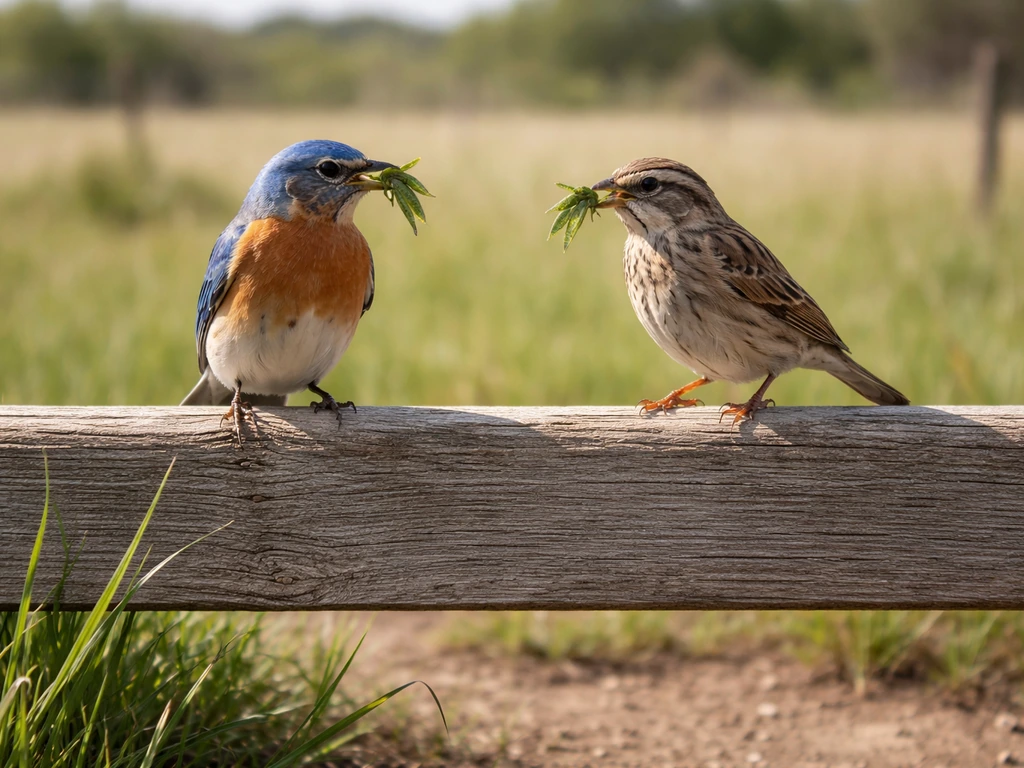
| Bird | Hunting Method | Habitat | Peak Season | Will Come to Feeders? |
|---|---|---|---|---|
| Eastern Bluebird | Perch-and-drop to ground | Open fields, fence lines | May–September | Mealworm dish only |
| Western/Mountain Bluebird | Perch-and-drop to ground | Open meadows, rangelands | May–September | Mealworm dish only |
| Grasshopper Sparrow | Ground foraging | Grassy meadows, weedy fields | June–August | Rarely |
| Brown Thrasher | Ground raking through litter | Shrubby edges, hedgerows | May–August | Sometimes (fruit/seed) |
| Barn Swallow | Aerial hawking | Open fields, water, barnyards | April–September | No |
| Black-capped Chickadee | Gleaning from vegetation | Woodland edges, yards | April–October | Yes (seed + mealworms) |
FAQ
How can I tell the difference between a bird that eats grasshoppers and one that’s just grabbing other insects?
Focus on the combination of behavior and setting. Grasshopper hunters often use the same repeatable pattern (fence-or-post drop for bluebirds, ground raking for thrashers, continuous aerial hawking with no landings for barn swallows) and concentrate in weedy field edges or open ground during peak late-summer grasshopper numbers. If the bird keeps taking food from vegetation without a clear hunting pattern, it may be targeting smaller insects instead.
Do these birds eat grasshoppers year-round?
Most grasshopper-focused feeding is seasonal. Grasshoppers are largely absent as active prey until late spring and then peak through mid to late summer (often July to September). After that window, the same species usually switch to whatever insects are available and, for some birds, more seed or other foods.
Will a grasshopper sparrow show up at my seed feeder if I put out lots of seed?
Usually not. Grasshopper sparrows mainly forage on the ground in grassland or weedy field edges, and their grasshopper handling behavior fits that habitat. Seed can bring other species, but it is unlikely to reliably attract this bird for grasshopper hunting, especially away from dense cover.
If I provide mealworms, will that replace the need for grasshopper habitat?
It can supplement feeding, but it does not recreate the full hunting conditions that bring grasshopper-eating birds in naturally. Mealworms are best viewed as short-term support during insect-scarce stretches or for observation. For long-term grasshopper control, habitat features that support grasshoppers and hunting (perches, open ground, native plants) still matter most.
Why do some bluebirds keep visiting a feeder but not staying?
Bluebirds that pass through feeders are typically moving between hunting bouts. They often ignore seed as a regular food source because they prefer arthropods, so you may see them briefly at a feeder and then return to open ground where grasshoppers and other prey are easier to catch.
What landscaping changes help grasshoppers and their predators without making your yard a mess?
Target structure instead of total cleanup. Leave small patches of unmowed grass or weedy edges, add low native plants that host insect activity, and keep some leaf litter in shrub borders for thrashers. You can control the overall look by containing these areas to a corner or perimeter while still providing the cover grasshoppers and insectivores use.
Will bird nest boxes guarantee that bluebirds will hunt grasshoppers in my yard?
They improve the odds if you have open foraging habitat nearby, but they do not guarantee occupancy. Bluebirds still need suitable hunting ground below perches and enough insects during the breeding window. If the area is too enclosed or heavily shaded, nest-box success and grasshopper hunting can both drop.
Is it safe to clean feeders if I have pets at home?
Yes, with precautions. Keep pet food and water indoors, and clean feeders in a dedicated area, not in a kitchen or food-prep space. Also remove old hulls and spilled seed under feeders to reduce mold and disease risk that could affect pets and people, not just birds.
What should I do if I suspect grasshoppers are laying eggs in my yard?
Eggs are typically laid in bare, compacted soil. To reduce future grasshopper pressure, reduce compaction (for example, limit foot traffic on bare patches) and diversify vegetation so the yard is less uniformly grass-dominated and less suitable for egg laying.
Could attracting grasshopper-eating birds increase predators near my yard?
It can. When birds concentrate for insects, raptors and other predators may visit as well. This is another reason to prioritize habitat that supports natural foraging rather than heavy supplemental feeding that can create large, predictable prey concentrations.
Next Article
What Sparrow Birds Eat: Seasonal Diet and Safe Feeding
Learn what sparrows eat by season, including insects and chick food, plus safe seed choices and what to never feed.