The birds most likely eating your holly berries are American robins, cedar waxwings, and (in the UK or Northeast woodlands) thrushes like the mistle thrush, song thrush, redwing, and fieldfare. You might also wonder what sparrow birds eat, since sparrows and thrushes use different natural foods in winter what sparrow bird eat. Mockingbirds, bluebirds, catbirds, mourning doves, and wild turkeys also consume holly berries depending on your region. Holly is a prime winter food source, so most visitors show up between late November and March when other food is scarce.
What Bird Eats Holly Berries? Identify and Stay Safe
Maya Henderson
1 May 2026
The birds most likely raiding your holly
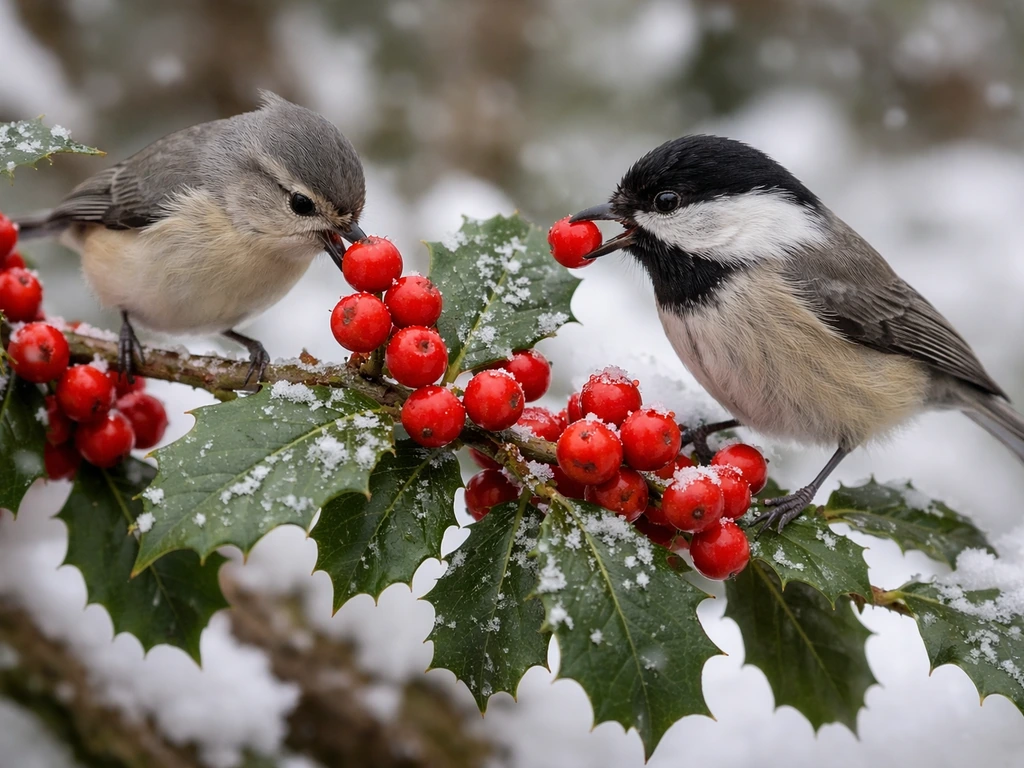
Holly berries (genus Ilex) attract a surprisingly long list of species. The USDA has documented at least 18 bird species eating American holly (Ilex opaca) fruit alone. That said, a handful of regulars account for most of the action you'll actually see in a typical backyard or woodland edge.
| Bird | Region | Feeding style | Notable field mark |
|---|---|---|---|
| Cedar Waxwing | North America, widespread | Flocks; plucks and swallows berries whole | Black mask, yellow tail tip, waxy red wing spots |
| American Robin | North America, widespread | Solitary or small groups; swallows berries whole | Rusty-orange breast, gray-brown back, white belly patch |
| Mistle Thrush | UK/Europe | Solitary; aggressively guards the tree | Large pale-spotted thrush, upright stance |
| Song Thrush | UK/Europe | Quieter forager; visits shrubs and ground | Spotted cream breast, smaller than mistle thrush |
| Redwing | UK/Europe (winter visitor) | Flocks; strips berries fast | Cream eyestripe, rusty-red flanks |
| Fieldfare | UK/Europe (winter visitor) | Noisy flocks; bold forager | Gray head, chestnut back, spotted chest |
| Blackbird | UK/Europe | Hops on ground for dropped berries | Male all-black with yellow bill; female brown |
| Blackcap | UK/Europe | Quick and agile in foliage | Small warbler; male has black cap, female brown cap |
| Northern Mockingbird | North America, South/East | Territorial; defends berry supply alone | Gray, long tail, white wing patches |
| Eastern Bluebird | North America, East | Perches and sallies to berry clusters | Vivid blue back, rusty breast |
| Gray Catbird | North America, East/Midwest | Skulks in dense shrubs | Slate gray, black cap, rusty undertail |
| Mourning Dove / Wild Turkey | North America | Picks fallen or low berries | Familiar; ground feeders |
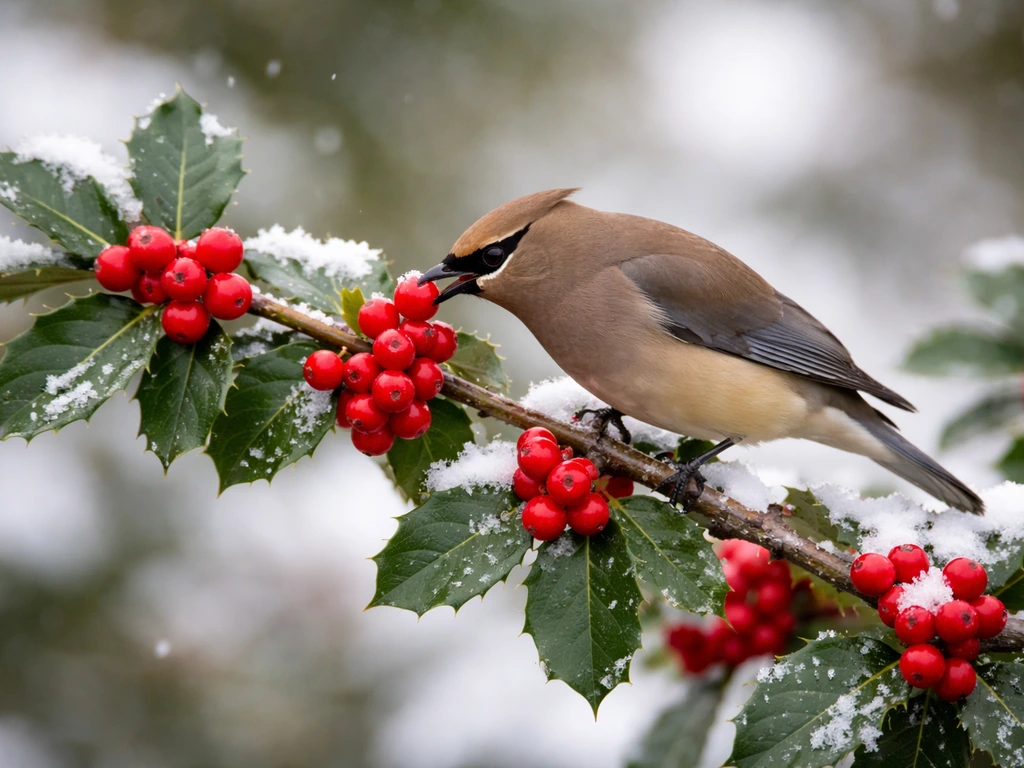
Cedar waxwings are the species I'd put money on if you're seeing a holly tree get stripped quickly. They arrive in tight, chattering flocks and can empty a whole bush in an afternoon. Robins are the other main suspect, especially in late winter. Some birds that eat insects, like grasshoppers, include species such as robins and mockingbirds. They shift from earthworms and insects in the morning to fruit in the afternoon, so you'll often see them descending on berry sources as the day wears on. If you are also trying to identify insect-eaters, you might be wondering what bird eats crickets, since some species switch to insects when berries are less available.
Why ripeness and habitat decide who shows up
Holly berries are unusual because they stay on the plant for months and actually get more palatable after a hard frost softens them slightly. They're not a first-choice food for most birds when other options are available, which is why the peak feeding action happens mid-winter, typically January through March, when other berries are long gone. If your holly is loaded in November and untouched, that's normal. Give it time.
Habitat matters too. A holly tree at the edge of a woodland or hedgerow will draw thrushes and waxwings that move through in flocks. A single holly shrub in a suburban yard is more likely to attract robins and mockingbirds, especially if those species are already resident. Winterberry holly (Ilex verticillata), which is native to the eastern US and commonly planted in gardens, tends to be consumed by mid-winter songbirds including thrushes, robins, catbirds, and bluebirds.
One quirk worth knowing: mistle thrushes (and similarly, northern mockingbirds in the US) will sometimes claim a holly tree as a personal winter larder and chase every other bird away. If you're seeing one bold bird sitting on top of a holly and dive-bombing visitors, that's almost certainly what's happening. The Woodland Trust specifically notes mistle thrushes guarding holly bushes closely during winter.
How to figure out which bird is visiting
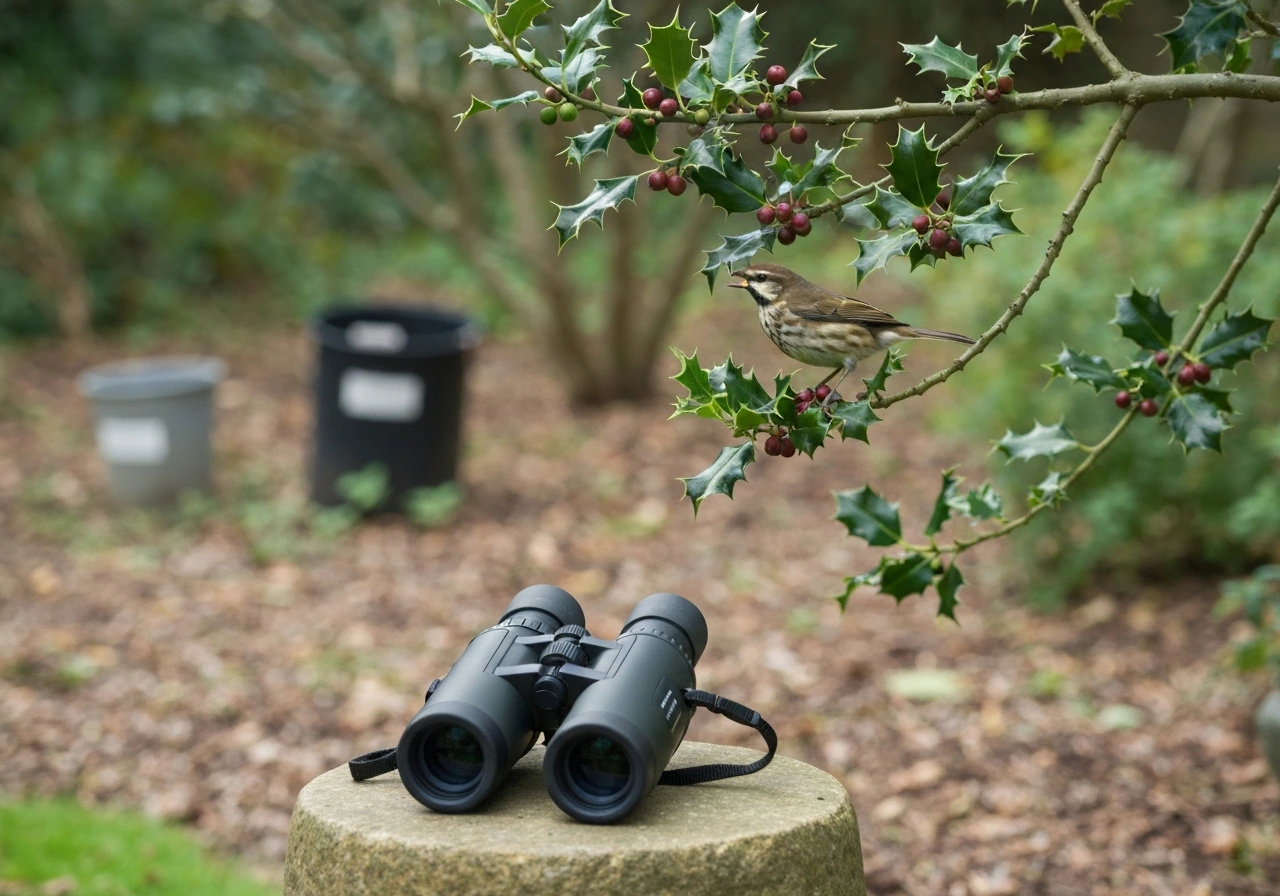
You don't always get a clear look at the bird. If you are also wondering what bird eats acorns and plants trees, look for jays, which bury acorns and help spread oak seedlings bird is visiting. The good news is that feeding behavior, droppings, and nearby clues can narrow it down fast.
Watch the feeding behavior
- Flock descends suddenly, feeds frantically, and moves on within minutes: almost certainly cedar waxwings or a winter thrush flock (redwings or fieldfares in the UK).
- Single bird guarding the tree and chasing others: mistle thrush in the UK, mockingbird in the US.
- Bird perches and plucks berries one at a time, swallowing each whole: cedar waxwing (this is their signature move).
- Hopping on the ground under the holly picking up fallen berries: American robin, blackbird, or mourning dove.
- Quick in-and-out visits to dense foliage, small bird: blackcap or catbird.
- Large birds on or near the ground: wild turkey or mourning dove.
Check the droppings
Berry-eating birds swallow holly berries whole and pass the seeds intact. If you find small dark droppings under or near the holly that contain tiny seeds or seed fragments, you've confirmed a berry-eater. Cedar waxwings in particular deposit seeds in their droppings as they digest the flesh. Larger, messier droppings with visible red pigment staining suggest robins or thrushes. Droppings directly on or under the tree point to a perching feeder; droppings scattered wider suggest a ground-hopper like a blackbird or dove. If you are seeing gray bird activity on grasshoppers, it's worth checking whether they are actually being eaten or just scavenged ground-hopper like a blackbird or dove. If you are curious about other common backyard insects, bird grasshoppers are known for their diet as well.
Field marks to confirm the ID
If you do get a look, focus on these: Cedar waxwings have a distinctive black mask, a peachy-brown head and chest, a pale yellow belly, and a bright yellow band at the tail tip. Adults show small waxy red dots on the secondary wing feathers (that's where the name comes from). American robins are easier: rusty-orange breast, gray-brown back, white lower belly. In the UK, mistle thrushes are large and upright with heavy dark spots on the breast; redwings have a bold cream eyestripe and rusty-red flanks; fieldfares are noisy with a gray head and chestnut back.
Is holly safe for birds, and what about your pets?
Holly berries are perfectly fine for wild birds. Audubon notes that American holly fruits are enjoyed by many bird and mammal species Holly berries are perfectly fine for wild birds.. Their digestive systems handle the compounds in Ilex berries without any trouble, and these berries are a genuine and important winter food source for many species. The problem is when those berries land in spaces where dogs, cats, or small children can get to them.
Holly (all Ilex species) is toxic to dogs and cats. The ASPCA lists it as a toxic plant, with clinical signs that include vomiting, diarrhea, and depression. The berries are the most dangerous part. The Pet Poison Helpline flags holly as a significant holiday-season hazard. The Pet Poison Helpline states that ingestion of holly leaves or berries can cause nausea, vomiting, and diarrhea in companion animals. It doesn't take many berries to cause symptoms: poison control data shows some children have had gastrointestinal reactions after eating as few as two berries, and pets are similarly sensitive. If your bird feeders are near a holly, fallen berries will accumulate on the ground. That's the main hazard. A dog nosing around under a holly or a cat batting at berries on the ground is a real risk.
How to attract the right birds without creating hazards
If you want cedar waxwings, robins, or thrushes visiting your holly, the single best thing you do is nothing: let the holly ripen undisturbed through early winter. Don't cut it back aggressively in fall. If you have a female holly, make sure there's a male plant nearby for pollination (no berries without both). Planting winterberry holly (Ilex verticillata) is a great option if you're in the eastern US: it's native, loses its leaves so the berries are exposed and easy for birds to find, and it's highly attractive to bluebirds, robins, and catbirds.
If you're also running a seed feeder nearby, keep it clean. Moldy or wet seed under a feeder creates a food-safety risk for the same birds visiting your holly. Rake up spoiled seed regularly, especially during wet winter weather. You want to attract birds, not make them sick from a dirty feeder. Keep water available too: a shallow heated bird bath near the holly will pull in more winter visitors than almost anything else.
- Plant both male and female holly for berry production.
- Leave holly unpruned through fall and winter.
- Add a heated bird bath nearby to boost winter visits.
- Keep feeders clean and free of moldy seed.
- Consider native winterberry holly for maximum wildlife value.
- Avoid pesticide sprays near the holly during berry season.
What to do if the wrong animal is eating the berries
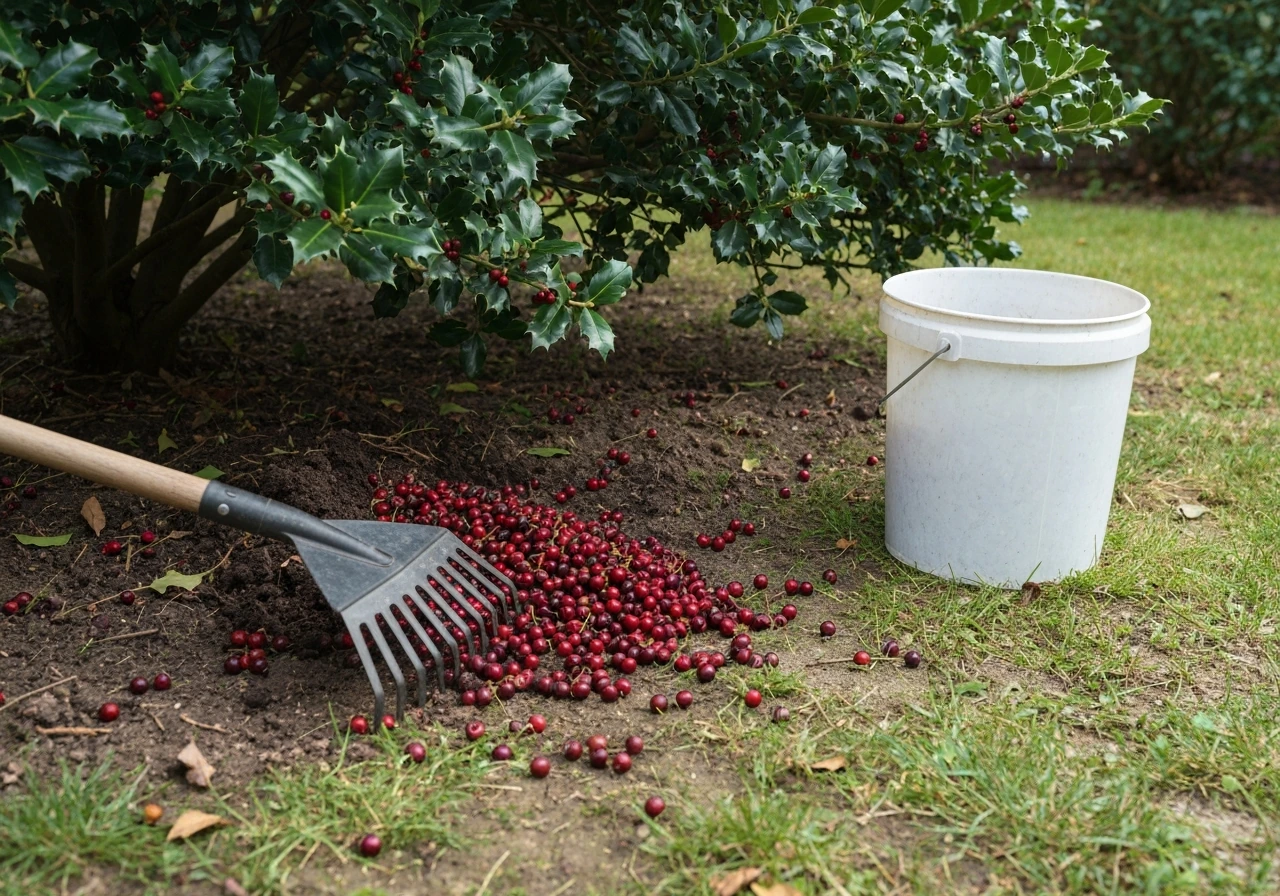
If your dog or cat has access to fallen holly berries, that's the situation to fix first. Rake up fallen berries from under the holly regularly, especially after wind or heavy bird feeding activity. You can use a simple wire or garden edging barrier around the base of the plant to limit pet access without disturbing the birds above. If the holly is in a spot where you can't keep pets away reliably, consider whether it's the right location, or whether the plant should be fenced.
Squirrels and deer occasionally go after holly berries too, though they're not the primary consumers. If you're seeing a larger animal stripping the berries, look for deer browse (broken branches, whole-branch damage) or squirrel scratch marks on bark. Deer can be deterred with motion-activated sprinklers or commercial repellent sprays applied to the lower branches before berry season. If pests or rodents are being attracted to fallen berries under a bird feeder setup, tighten up your feeder hygiene: switch to a no-mess seed mix, use a tray catcher under the feeder, and clean up fallen debris daily.
When to call for help or check for a toxic risk
Most holly-bird interactions are completely benign, but a few situations call for a quick phone call or vet visit.
- Your pet (dog or cat) has eaten holly berries: call your vet or the ASPCA Animal Poison Control Center (888-426-4435) immediately. Don't wait for symptoms to appear.
- A child has eaten holly berries: call Poison Control (1-800-222-1222 in the US) right away. Even a small number of berries can cause vomiting and nausea.
- You find multiple dead or sick birds under or near the holly: this is unusual. Holly is safe for birds, so a die-off likely points to something else (moldy seed, pesticide exposure, or disease). Contact your local wildlife rehabilitation center or state wildlife agency.
- You're unsure whether what your pet ate was holly or another plant: take a photo, collect a sample if safe, and call your vet. Don't guess with plant ID when toxicity is the concern.
- A wild bird is behaving abnormally (seizures, inability to fly) under your feeder or near the holly: contact a licensed wildlife rehabilitator. Do not attempt to treat a wild bird yourself.
For routine bird watching around holly, no help is needed. Enjoy it. If you are curious about what bird eats roadkill, scavengers like crows and ravens are common Enjoy it.. Watching a flock of cedar waxwings hit a holly tree in January is one of the better backyard wildlife moments you can have. Just stay on top of fallen berry cleanup if pets share the space, keep your feeders sanitary, and you're covering the main bases.
FAQ
If I see holly being eaten, how can I know whether it is cedar waxwings vs robins?
In most backyards it is cedar waxwings or American robins, and in parts of the UK or Northeast US thrushes are common. The fastest way to tell is to look at timing (waxwings often arrive in flocks and strip quickly) and droppings (waxwings tend to leave seed-containing droppings beneath the perches).
What if only a few holly berries are disappearing, does that still mean birds are eating them?
If you only find one berry snagged here and there, it may be smaller birds sampling or berries dropping after wind. Look for a pattern, repeated visits over several days, and seed-containing droppings rather than just missing berries.
Can birds that eat holly berries cause holly to spread around my yard?
Yes. Many berry-eaters swallow the fruit and pass seeds, so seeds can sprout if conditions fit. Avoid assuming seedlings mean birds are visiting today, because seeds can come from past droppings that survived the winter.
How reliable are droppings for identifying the bird that ate the holly berries?
Look for the feeding location. Messy, larger droppings right under a branch often indicate a percher like a robin or thrush. Droppings spread farther away or under shrubs can suggest multiple visits and ground activity, such as doves or blackbirds foraging.
Why do birds sometimes ignore a holly bush in November and then hit it later?
Cedar waxwings often show up when berries have softened after frost, but you can also see feeding earlier if other food sources are limited. If berries remain untouched until mid-winter, that usually means the natural food landscape nearby was sufficient at first.
Are holly berries dangerous to birds, or is the main danger only to pets and people?
For birds, yes, the holly itself is generally fine. The practical risk is what falls to the ground where dogs, cats, and small children can reach it, especially after strong winds or heavy feeding days.
What is the safest way to keep pets from fallen berries without scaring birds away?
Barriers help if they prevent reaching fallen berries, but be sure they do not block adult birds from landing and perching. A ring of garden edging or a wire barrier around the base, placed far enough from the trunk that birds can access above, is usually the best compromise.
If I cannot find droppings, could squirrels or deer be eating my holly instead of birds?
If you are seeing larger, abrupt damage, it could be squirrels or deer. Deer often leave broken branches or whole-branch stripping, while squirrels leave scratch marks on bark. Birds usually remove fruit while leaving branches largely intact.
How long should I watch my holly before I conclude which bird is responsible?
Yes. Bird activity can shift quickly with weather and daylight, and some species visit briefly. Use a simple log (date, time of day, flock size, and whether you see perching birds vs ground foraging) for 3 to 7 days to confirm patterns.
Should I remove fallen berries immediately, or will that stop the birds from visiting?
Cleaning the area helps pets, but do it in a bird-friendly way. Rake up fallen berries regularly, but avoid disturbing the plant during peak bird visits, and keep bird feeders clean so you are not attracting the same animals to a messier food source.