No, sparrowhawks do not eat the whole bird. They pluck and eat the breast muscle and other meaty parts, but they routinely leave behind feathers, feet, the head, and larger bones. What you find on the ground is usually a neat pile of plucked feathers, sometimes with a few scattered bones or body fragments nearby, rather than anything resembling a complete carcass. Bird grasshoppers also need suitable food like grasses and other plant material, depending on the species and habitat bird grasshoppers eat.
Do Sparrowhawks Eat the Whole Bird? What You’ll See

Maya Henderson
28 Apr 2026
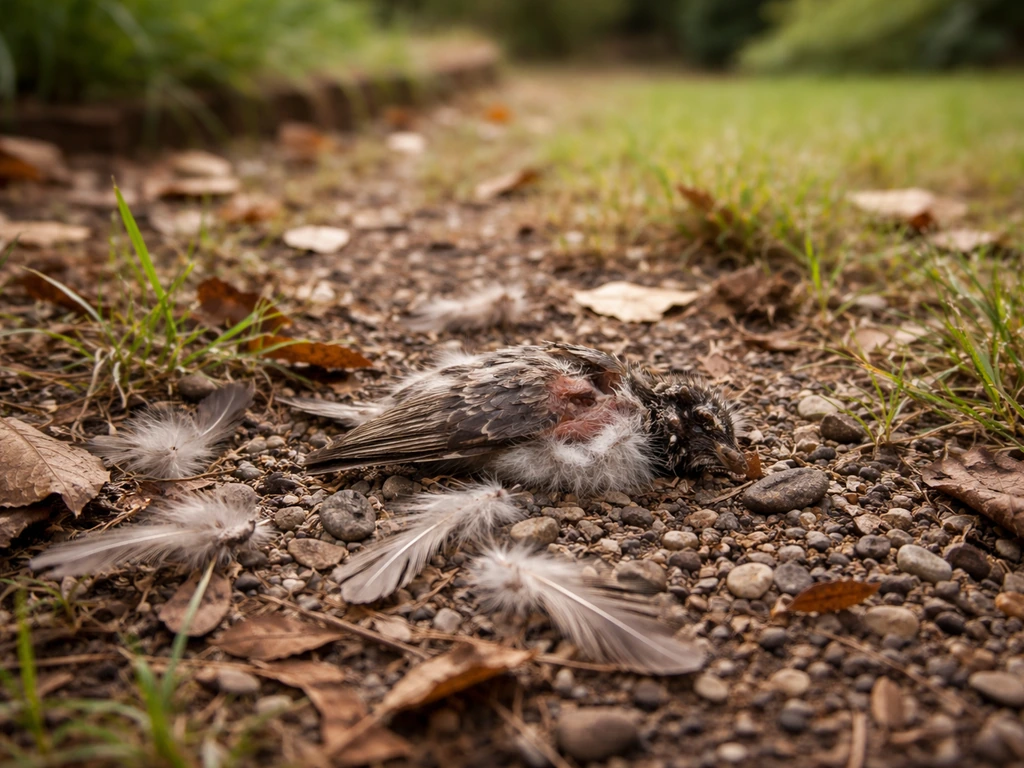
What you usually find after a sparrowhawk kill
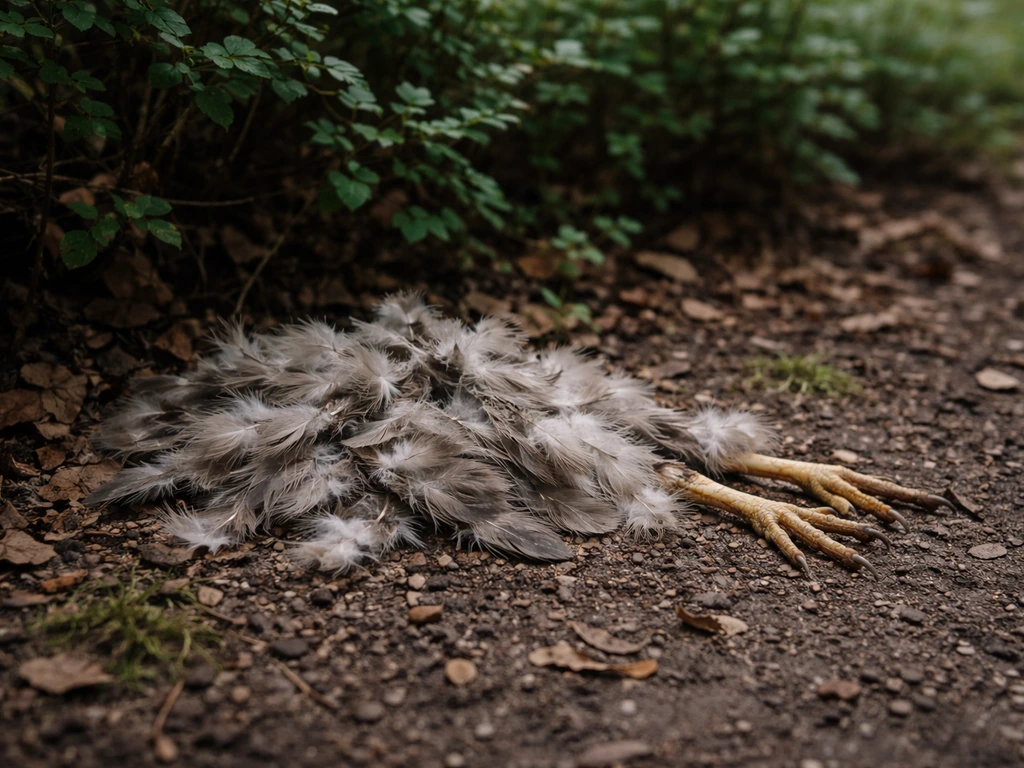
The most obvious sign is feathers. A lot of them, often in a tight cluster near a low stump, log, thick shrub, or dense patch of ground cover. Sparrowhawks are methodical feeders. They carry prey to a regular feeding spot (sometimes called a plucking stool) and systematically strip feathers before eating. You might find dozens of breast feathers in one spot with very little else visible. The flesh is eaten, the feathers are not.
Beyond the feather pile, common leftovers include the feet and legs, the head (especially with smaller prey), and the larger wing feathers. The breastbone may be left partially or fully cleaned. Stomach contents, gut, and feathers are typically discarded rather than consumed. If you find a small bird that is missing its breast meat but still has intact feet and head, a sparrowhawk is a very plausible explanation.
Why they leave parts behind
Sparrowhawks have strong, sharp bills designed for tearing flesh, not grinding bone or digesting feathers. Plucking is a practical step: feathers are indigestible and reduce the caloric value of a meal if swallowed. By removing them first at a dedicated spot, the hawk gets clean access to the pectoral muscle, which is the densest and most energy-rich part of a small bird. This is why you rarely find random feathers spread across a garden. The hawk is tidy and purposeful, pulling feathers with a grip that characteristically splits the feather shaft, leaving a clean break rather than a ragged tear.
Carry-away behavior also explains partial remains. If a sparrowhawk is disturbed mid-meal, it may carry off the meaty sections and leave the rest. Larger prey items are sometimes cached or eaten in stages. Smaller prey like sparrows or tits can be consumed almost entirely, leaving little beyond the feather pile, while a larger thrush or starling kill will leave noticeably more skeletal material.
How to tell sparrowhawk remains from a cat, owl, or scavenger
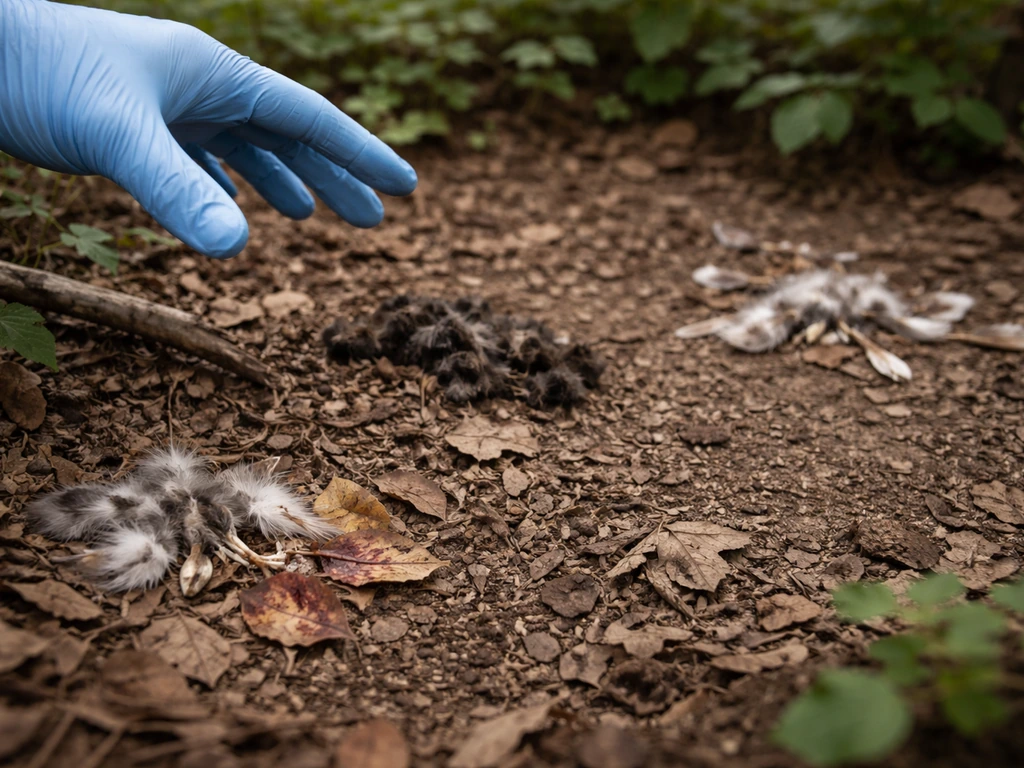
The type of damage and what is left behind varies significantly between predators. Some plants, like holly, are also eaten by particular birds, so you can look up what bird eats holly berries to narrow down the species. Many birds, including carrion eaters, can take roadkill, but the exact species depends on what is available nearby what bird eats roadkill.
Some birds also spread oak trees by eating acorns and storing them, which can lead to new tree growth what bird eats acorns and plants trees. Many birds eat grasshoppers as part of their insect diet what bird eats grasshoppers. Bird grasshoppers are mostly eaten by birds that hunt insects, so you can also ask what bird grasshoppers eat to understand the full food chain eat grasshoppers.
Many birds also eat insects such as crickets, depending on the species and local food availability eat grasshoppers as part of their insect diet. Many songbirds eat insects too, including crickets, depending on the species. Use this quick comparison to work out what you are most likely looking at.
| Predator | Feather condition | Typical remains | Kill location |
|---|---|---|---|
| Sparrowhawk | Shaft split cleanly by bill; feathers pulled in clusters at a plucking stool | Feather pile, feet, head, cleaned breastbone | Near low stumps, logs, dense shrubs, or low branches |
| Cat | Feathers often scattered randomly; may show tooth punctures or saliva | Whole carcass or large fragments; fur/feathers dragged around | Open ground, lawns, near fences or bushes |
| Owl | Prey often swallowed whole or in large pieces; few loose feathers | Regurgitated pellets with intact bones and fur/feathers compressed inside | Under roost sites, barns, hollow trees |
| Scavenger (corvid/fox) | Feathers spread over a wider area; sometimes scattered by dragging | Fragments spread out, gnawed bones, possible scat nearby | Variable, often more chaotic than a raptor kill |
The key sparrowhawk signatures are the split feather shafts (where the bill gripped each feather) and the concentrated pile at a specific low-level plucking spot. Cats typically leave more evidence of a struggle, with feathers spread more widely and tooth marks visible on bones. Owls do not leave feather piles in the same way because they swallow prey whole and later regurgitate compact pellets containing compressed feathers, bones, and fur. Scavengers tend to create messier scenes with bones spread over a larger area.
What to do today if you find remains in your garden
Finding a kill site is unsettling, but it is a normal part of wildlife coexistence. Here is what to do immediately and over the next few days.
- Do not touch feathers, carcass fragments, or remains with bare hands. Use disposable gloves if you need to move anything, and wash your hands thoroughly with soap and water afterward.
- Double-bag any remains before putting them in the bin. Do not compost bird carcasses.
- If a bird appears sick or injured rather than killed by a predator, do not attempt to pick it up before contacting a local wildlife rehabilitator or your nearest wildlife authority. The U.S. Fish and Wildlife Service advises against trapping an injured bird before getting professional guidance.
- Keep pets (especially cats) away from the remains until the area is cleaned up. This limits both contamination risk and the chance of pets disturbing any ongoing predator activity.
- Temporarily take down or move feeders closest to the kill site for a few days. Sparrowhawks learn reliable hunting spots. A short break disrupts the pattern and gives small birds time to redistribute.
- After cleaning up, disinfect any hard surfaces near the kill site (decking, a plucking stool/log) with a dilute bleach solution and rinse well before allowing pets near the area.
If you find multiple kills over a short period and suspect disease rather than predation (birds appearing lethargic, fluffed up, or dying without obvious wounds), contact your county or local health department. Mass die-offs near feeders can indicate illness spreading through the local flock, which is a separate problem from normal predation.
How to reduce small-bird risk around your feeders safely
Feeders concentrate small birds, and concentrated prey attracts predators. This is straightforward ecology, not a flaw in your setup. But there are practical adjustments that reduce risk without creating new hazards or pushing birds away entirely.
Give small birds somewhere to escape to
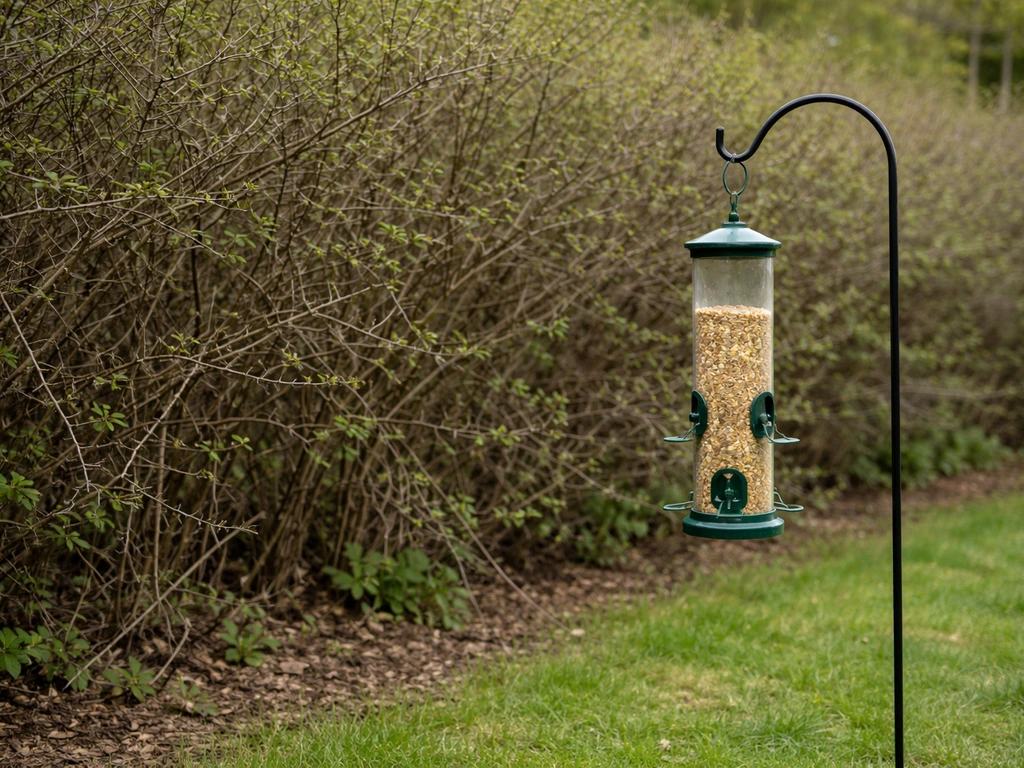
Place feeders within about 15 to 20 feet of dense shrubs, hedges, or thorny cover that small birds can dart into quickly. Hawthorn, pyracantha, and similar dense-branching shrubs are ideal. Sparrowhawks are agile hunters but cannot chase prey into tight, thorny cover the way a small songbird can. The cover needs to be genuinely dense, not just a nearby tree with open branches. If you are wondering what sparrow birds eat, start with the kinds of seeds, insects, and other small foods they naturally forage for in your area what sparrow bird eat.
Adjust feeder placement and height
Avoid placing feeders where birds have a long, open flight path to reach them. A sparrowhawk hunting near feeders typically uses a surprise approach along hedgerows or fences. Feeders tucked close to cover on multiple sides, rather than mounted on a post in the middle of an open lawn, are harder to ambush from. Height also matters: ground feeders in the open are the most vulnerable positions for small birds.
Take feeders down briefly if a hawk is actively hunting
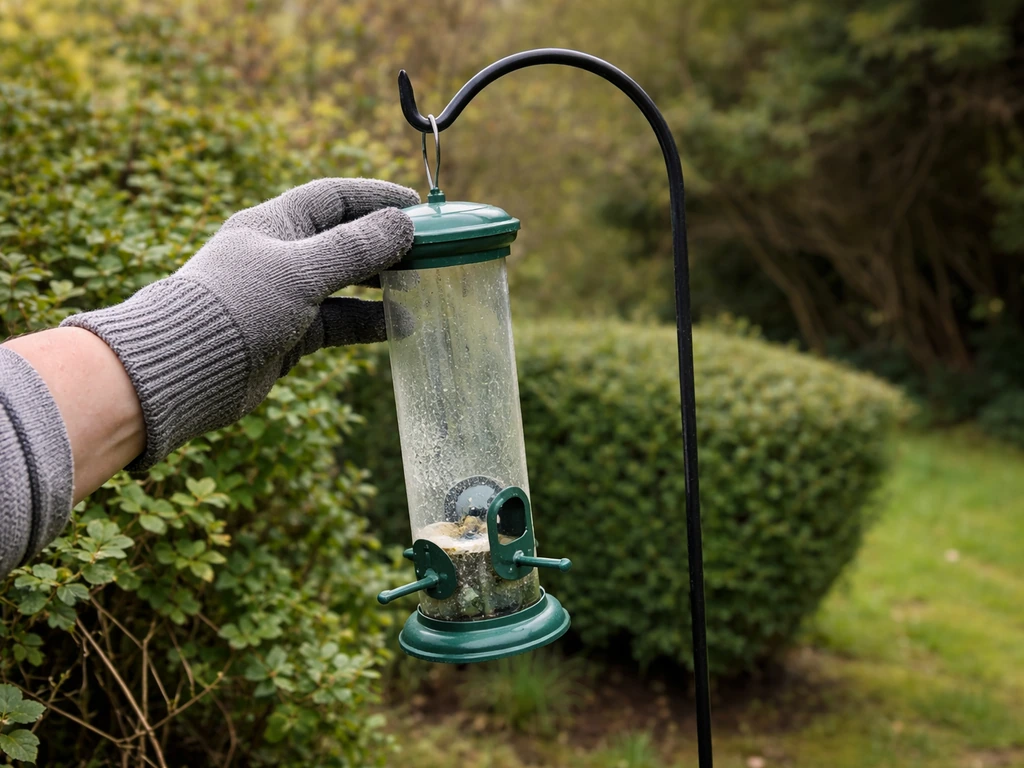
If you notice a sparrowhawk returning repeatedly over several days, removing feeders for a week or two is the simplest and most effective deterrent. The hawk will move on once the reliable food source (the concentrated songbirds) disappears. This is not a long-term change, just a reset that breaks the hunting habit at your specific site.
Avoid practices that create new hazards
- Do not scatter seed on the ground near areas where you have found kills. Ground feeding creates the most vulnerable situation for small birds.
- Keep feeders clean and remove moldy or damp seed promptly. Sick birds linger near feeders longer than healthy ones, making them easier targets and creating a disease risk that has nothing to do with predators.
- Do not attempt to trap or deter a sparrowhawk physically. They are a protected species in the UK and covered by similar protections in many other regions. Harassment is illegal and ineffective.
- If you have cats, keep them indoors or in a run during peak small-bird feeding times (early morning and late afternoon). Cats and injured or distracted birds near feeders are a separate but significant risk.
Sparrowhawks are a natural part of the ecosystem around backyard feeders. If you are curious about other garden hunters and their diets, see also what bird eats grasshoppers natural part of the ecosystem. Legislation. The Washington Department of Fish & Wildlife emphasizes following Washington laws when dealing with wildlife and warns that attempting to handle or trap nuisance wildlife may be illegal [Legislation.
](https://wdfw. wa. gov/species-habitats/living/nuisance-wildlife/trapping). uk summarizes the [Wildlife and Countryside Act 1981](https://legislation.
uk/wildlife-and-countryside-act-1981) as the key UK law that sets out offences and protections relating to wild birds and protected species. Their presence is usually a sign that your feeding setup is attracting a healthy range of small birds. The goal is not to eliminate the hawk but to give your garden birds a fair chance to escape, and to keep your feeding practices from accidentally stacking the odds against them.
FAQ
If I find a mostly “clean” small bird carcass, could it still be from a sparrowhawk?
Usually yes, but it is not automatic. Sparrowhawks most often remove the breast meat and leave feathers, but they can sometimes finish more of a smaller bird, especially if they were able to feed undisturbed for longer. If you see a clear feather pile at a plucking spot, with feet, head, or wing parts still present, that pattern still points to a sparrowhawk even if remains look “too complete.”
How can I tell a sparrowhawk kill from a cat kill more confidently?
Plucking feathers with a neat, concentrated break is the key clue, but a second check helps. Look for a consistent low feeding spot used more than once, and check whether feather shafts look neatly split rather than randomly torn. If remains are scattered widely with tooth impressions or dragged furrows, that shifts the odds toward a cat or other predator.
How do I know the kill I found is from a sparrowhawk and not just scavengers later?
Don’t assume a single incident equals sparrowhawk activity. Other birds can leave feather fragments, and carrion feeders can rearrange remains later. To avoid misidentifying, check whether you have repeated kills on different days at the same type of plucking location, and whether feathers are concentrated rather than spread evenly across the ground.
If I already have feeders near bushes, what else should I change to reduce sparrowhawk attacks?
It depends on your access point and the position of cover. If feeders are already near dense shrubs but birds still look exposed, the likely issue is the approach route (long open flight line) or feeder height, not just distance to cover. Repositioning feeders to create cover on multiple sides, or moving from open-ground to near thick edging, reduces ambush success more than changing the feed type.
Is it better to remove feeders briefly or stop feeding permanently if sparrowhawks keep coming back?
In most cases, it is better to stop “feeding the kill zone” rather than stop feeding entirely forever. Removing feeders for about a week to two weeks breaks the regular foraging habit, but after you restart, keep the feeder placement close to genuinely dense cover and avoid open lawn placements. If you stop for too long, birds may reassign to different spots, and the hawk could establish a new routine elsewhere.
Can I estimate when a sparrowhawk made the kill based on what I find?
Sometimes, but timing matters. If you only find remains on the morning, the kill could have occurred overnight. Look for how tidy the feather pile is (intact, concentrated, and not heavily scattered by wind or other animals). If you see mostly early disturbance signs, such as scattered feathers and dragged bones, the carcass may have been visited multiple times after the initial kill.
What differences should I expect if the prey bird was larger than a sparrow or tit?
Yes, especially if the prey was slightly larger than typical. For larger small birds, you may find more bones or wing pieces, but sparrowhawks still tend to leave feathers and stomach contents behind rather than consuming a full carcass. The “missing breast meat plus many feathers” pattern remains more diagnostic than whether every bone is present.
Should I remove the remains immediately, or is there value in leaving them for a while?
Be careful not to move remains if you plan to keep monitoring. The most useful thing is to note the exact spot, take a quick photo for later comparison, and observe whether the same low perch or plucking area gets reused. If you must clean up, do it after observation, and wear gloves if there are feathers or fluids, since carcasses can carry pathogens.
Do certain types of bird feeders or food make sparrowhawk predation more or less likely?
Feeder changes can reduce risk, but they can also have unintended effects. If you switch to attracting only a very narrow group of birds, you may still concentrate the hawk if those birds are the prey most available locally. The safer approach is spatial: keep feeders close to dense escape cover and avoid open flight corridors, then use the existing seed mix that attracts a broad range of small birds rather than one “easy target.”
What signs suggest the deaths are from disease rather than sparrowhawk predation near feeders?
If you suspect disease, don’t rely on the remains pattern alone. Sparrowhawk kills tend to show predator-specific leftovers at a plucking spot, while illness-related events often involve multiple birds appearing lethargic, fluffed, or dying without obvious predation wounds. A practical next step is to increase feeder hygiene (cleaning) and contact your local health authority if you see several sick birds across a short window, especially at multiple feeder sites.
Next Articles
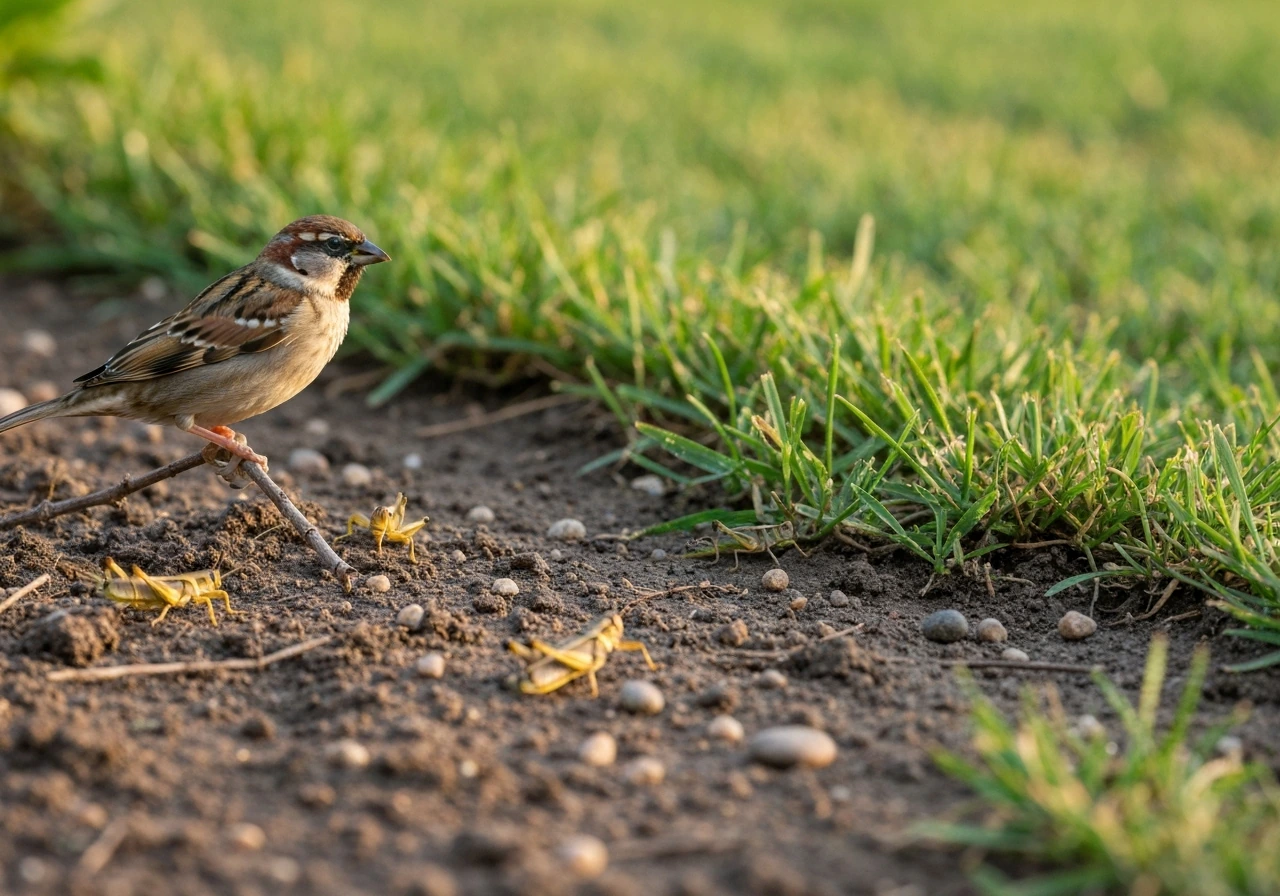
What Bird Eats Grasshoppers? How to Spot and Attract Them
Learn which birds eat grasshoppers, how to spot them, and how to attract safely with smart backyard habitat tips.
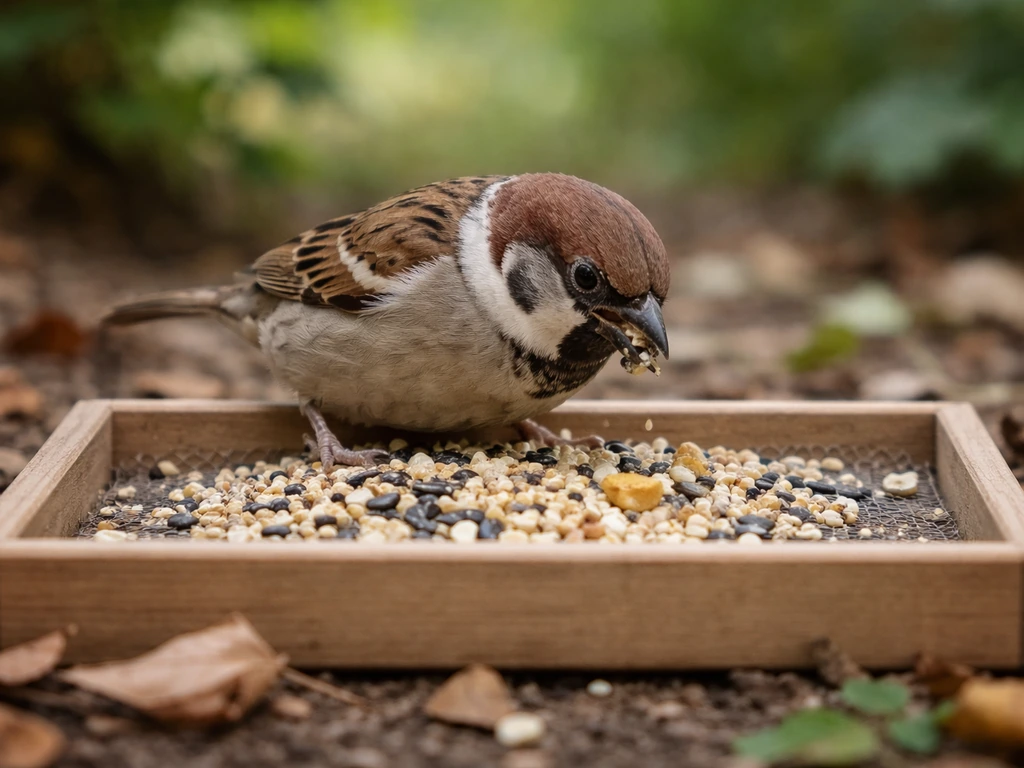
What Sparrow Birds Eat: Seasonal Diet and Safe Feeding
Learn what sparrows eat by season, including insects and chick food, plus safe seed choices and what to never feed.
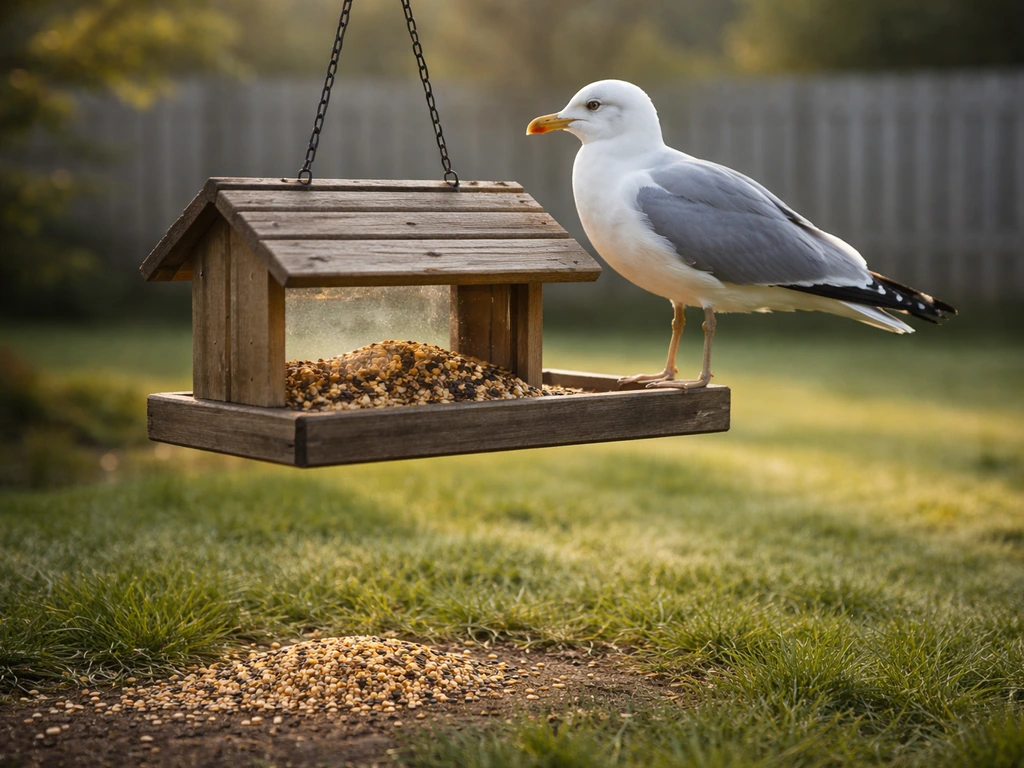
Do Seagulls Eat Bird Seed? How to Stop Them
Yes, seagulls often eat bird seed. Learn why they show up and how to block them while keeping feeding safe.