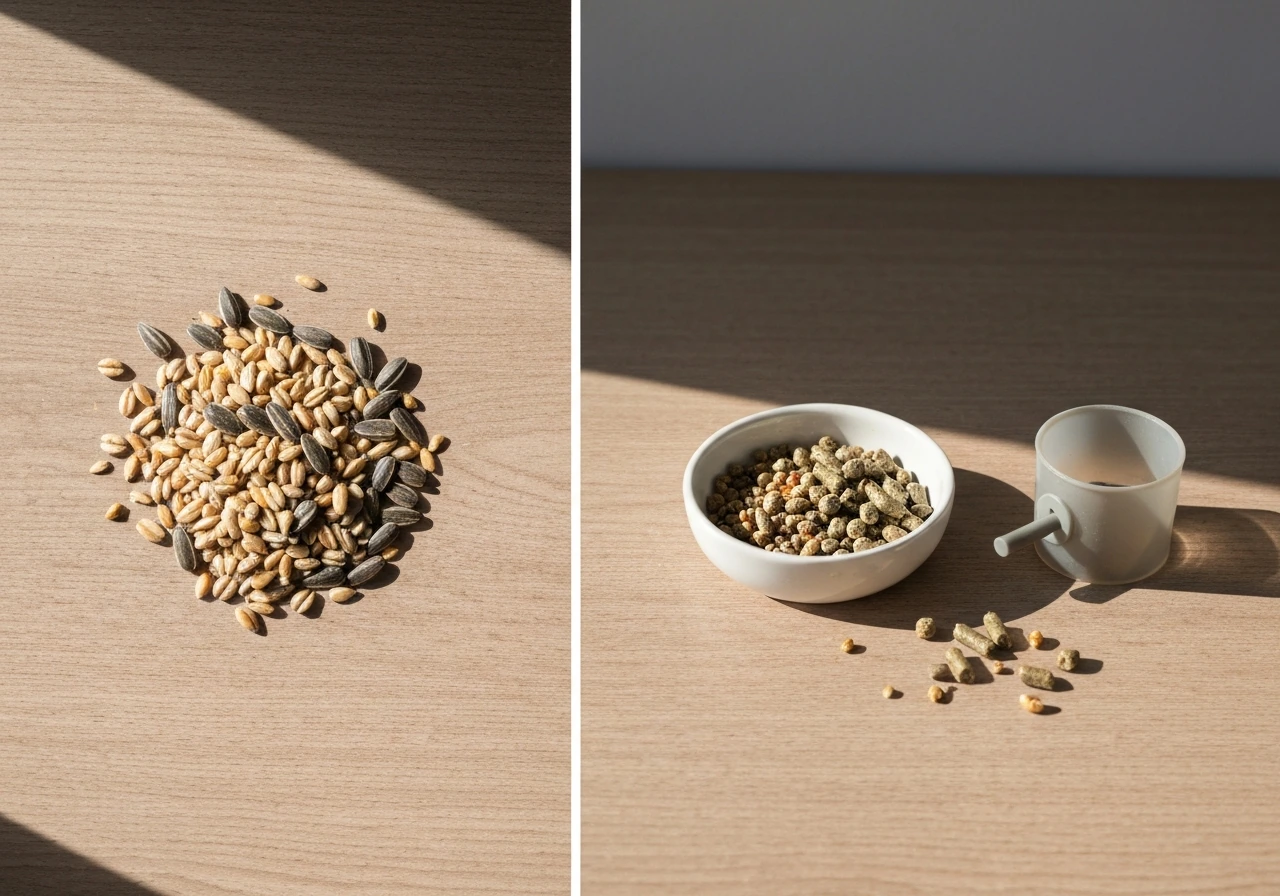
The short answer: no, wild bird seed is not a good food for parakeets, and you should avoid making it a regular part of their diet. It is not outright poisonous in every case, but it carries real risks that are easy to overlook, and it simply is not formulated for what a parakeet needs nutritionally. That said, the longer answer has some nuance worth understanding, especially if you are already keeping backyard feeders or you have found yourself in a pinch.
Can Parakeets Eat Wild Bird Seed Safely? Risks and Alternatives
Maya Henderson
6 Apr 2026
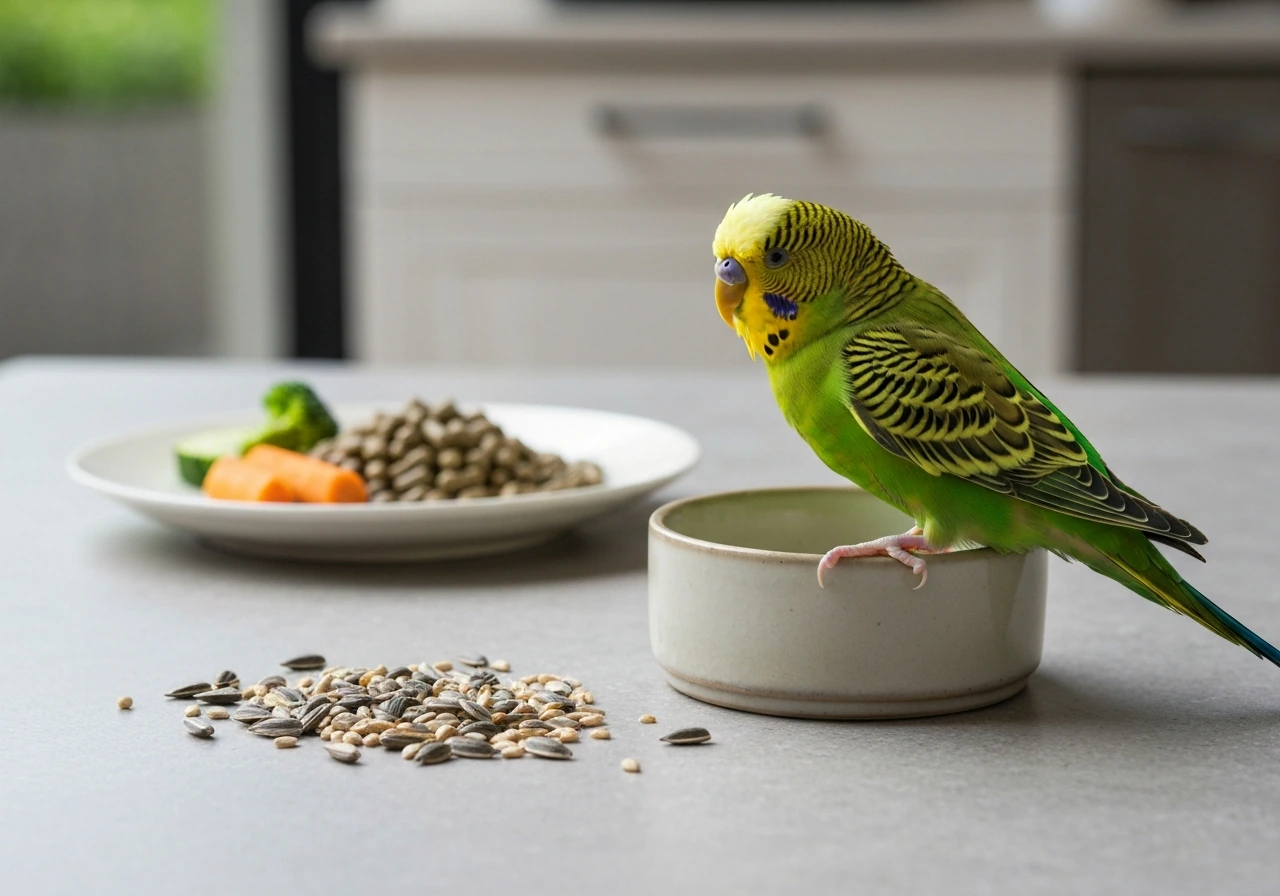
The direct answer on wild bird seed and parakeets
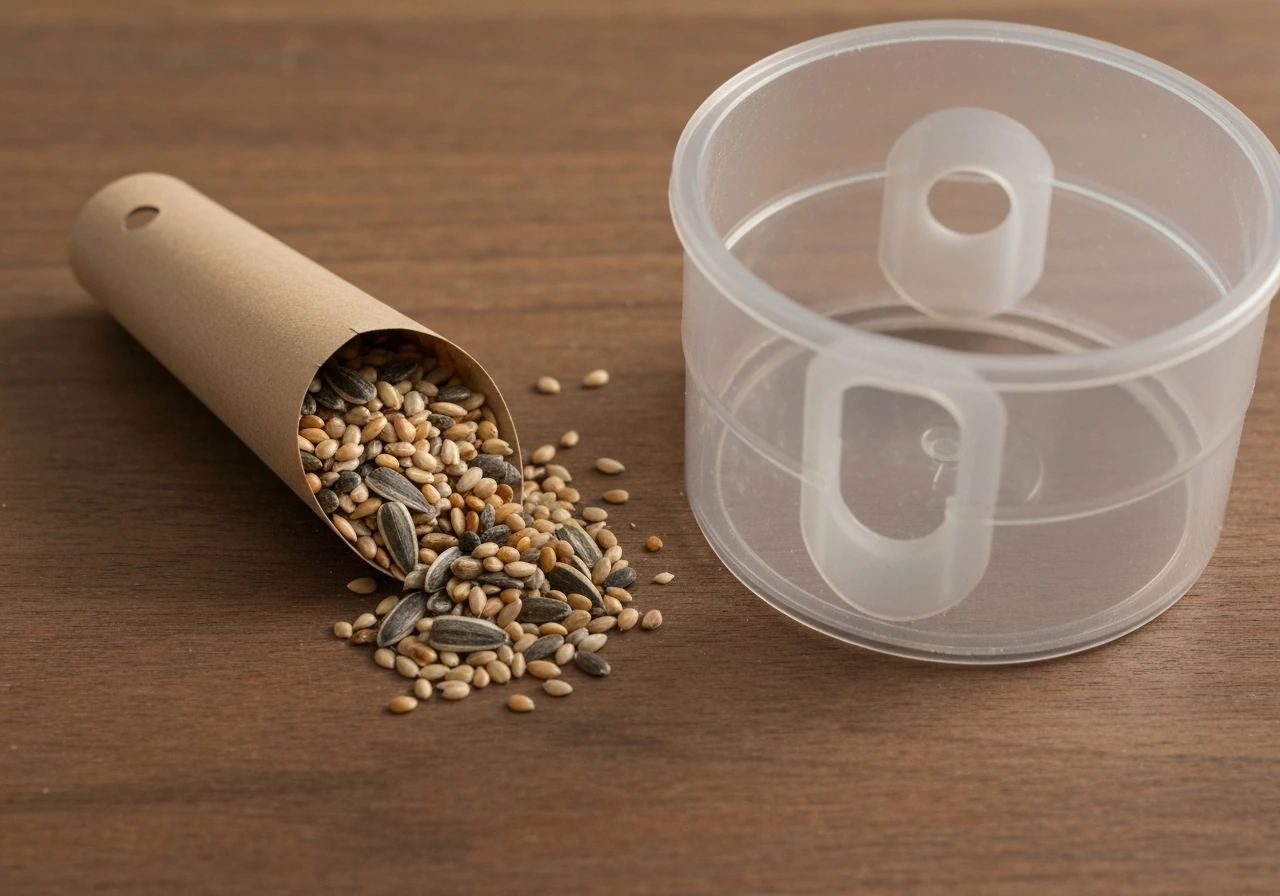
Wild bird seed blends are designed for wild birds, full stop. The seed types, proportions, and quality standards used in those mixes are built around the needs of house sparrows, finches, doves, and similar species, not pet parakeets. Omlet's parakeet guidance puts it plainly: "Your parakeet isn't wild, so don't feed it wild bird seed! " That is not just a formality.
Pet parakeets (budgerigars) have different nutritional requirements, a smaller body size that makes mineral and fat imbalances hit faster, and none of the behavioral foraging behavior that helps wild birds self-regulate their intake. Beyond the nutritional mismatch, wild bird seed also carries hygiene and contamination risks that are much more concerning for a small, indoor pet bird than for the wildlife it was made for.
If someone told you this was fine, or you have been doing it without obvious problems, that does not mean the risk is zero. It means you have been lucky so far, or the issues are building slowly in ways that are not yet visible. Either way, it is worth switching to something better.
Why wild bird seed is risky for your parakeet
Mold, aflatoxins, and spoilage
The biggest hidden danger in wild bird seed is mold. Bags of wild birdseed often sit in warehouses, garden centers, or garages for months, and seeds that have been exposed to any moisture can start growing mold long before they look obviously bad. The mold Aspergillus flavus produces aflatoxins, which the FDA classifies as toxins that can grow on grains, peanuts, and corn, all common ingredients in wild bird mixes.
These toxins primarily damage the liver and, in acute cases in birds, can cause depression, jaundice, lethargy, and death. That is not a theoretical risk. It is well-documented in livestock and companion animals. A small parakeet has far less body mass to buffer against that kind of toxic load than a large animal.
Sunflower seeds are a staple in wild bird mixes, and while parakeets do enjoy them, sunflower seeds have a highly unfavorable calcium-to-phosphorus ratio, roughly 8 parts phosphorus to 1 part calcium. Over time, that mineral imbalance contributes to bone and metabolic problems. Wild mixes are not corrected for this the way formulated parakeet diets are.
Contamination and additives
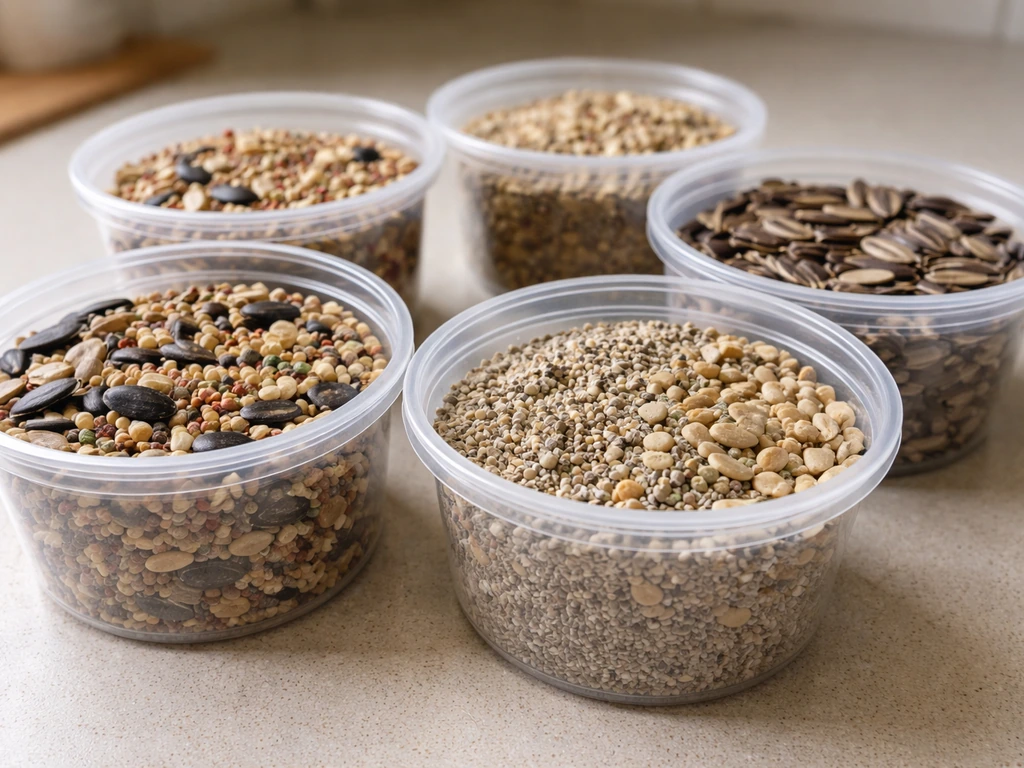
Wild bird seed may also contain additives, preservatives, or pest-control treatments that are fine for outdoor wildlife but are not safe for an indoor pet bird in an enclosed space. Outdoor feeders also expose seed to rain, rodent droppings, wild bird feces, and other environmental contaminants. Even if you are buying a sealed bag and pouring it straight into your parakeet's dish, the blend itself may include seeds that are too large, too fatty, or too low in the specific amino acids a parakeet needs.
The seed-only diet problem
Even species-appropriate seed mixes are not nutritionally complete on their own. The RSPCA Australia states directly that an all-seed diet actively contributes to deaths of pet birds, and that most avian vets recommend a diet of roughly 60% formulated (pelleted) food and 40% vegetables, with seed and fruit used only as treats. The RSPCA UK echoes this, warning that seed-only diets lead to obesity, fatty liver syndrome, and vitamin A and calcium deficiency. Wild bird seed, being even less tailored to parakeet needs than a parakeet-specific seed mix, compounds all of those problems.
What to feed your parakeet instead
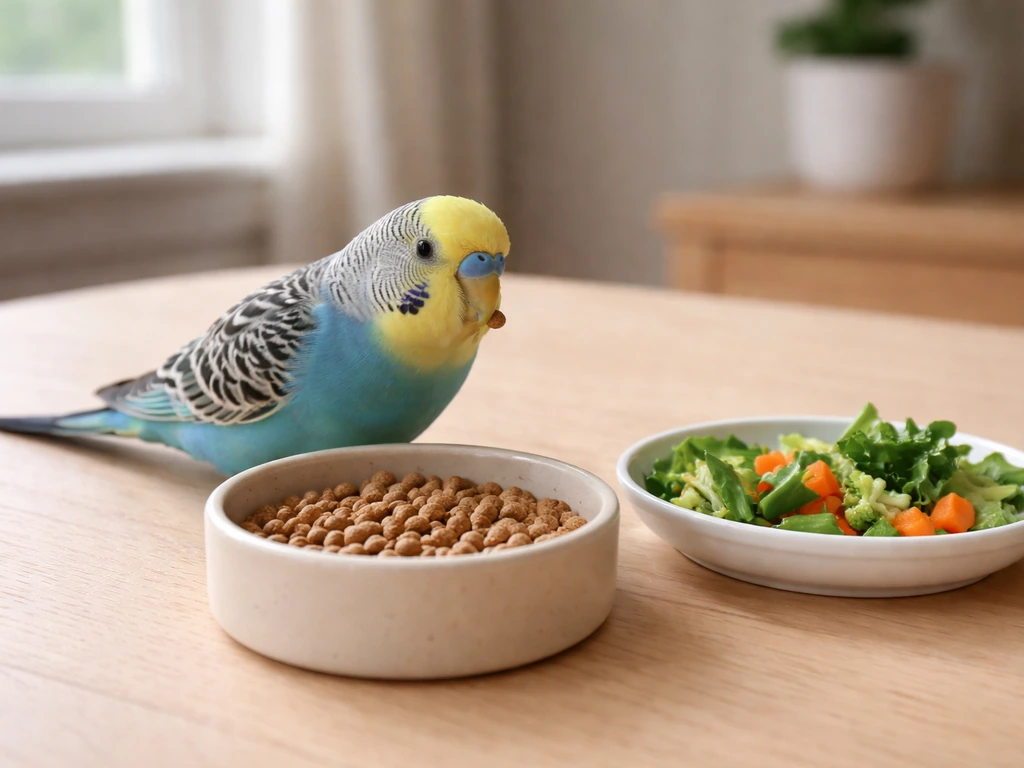
The best base diet for a parakeet today is a high-quality formulated pellet, supplemented with fresh vegetables and small amounts of parakeet-specific seed as a treat. NorthPaws Animal Hospital's avian diet guidelines position pellets as accounting for 20 to 70% of a bird's overall diet, with seeds and treats kept to around 25 to 30%. That is a wide range because individual birds, health status, and life stage matter, but the point is clear: pellets are the foundation, not an afterthought.
If you want to know more about what else can round out your parakeet's menu beyond seed-based options, there is a useful overview of what parakeets can eat besides bird food that covers safe fruits, vegetables, and protein sources worth exploring. The key principle is variety and balance, not relying on any single food category.
- High-quality pellets formulated for small parrots or budgies: these should make up the majority of the diet
- Fresh leafy greens like romaine, spinach, and kale: offered daily in small amounts
- Vegetables like cooked sweet potato, carrots, and broccoli: rotate for variety
- Parakeet-specific seed mix (not wild bird seed): treat quantities only, around 10 to 30% of total intake depending on your vet's guidance
- Safe fruits like apple slices (no seeds), blueberries, or melon: small amounts as occasional treats
- Clean, fresh water: changed daily, always available
One note on pellets: the Idaho Humane Society's budgie care sheet actually advises against pellets for budgerigars specifically and recommends a quality commercial seed mix at around 10 to 35% of the diet. This illustrates that guidance does vary by species and organization, so if you are unsure, talking to an avian vet familiar with budgies is the best move. The consensus does lean heavily toward pellets for most parrots, but budgies are a slightly different case.
If you really must use wild bird seed, here is how to do it more safely
Maybe you have a bag on hand and need to bridge a gap before you can get proper parakeet food. Or you are curious whether a small amount as an occasional treat is truly harmful. If you are going to offer wild bird seed to your parakeet at all, keep it to a very small quantity (a pinch, not a full dish) and treat it like a one-off rather than a routine. Here is how to reduce the risk as much as possible:
- Source it carefully: buy from a reputable supplier with good stock turnover, not a dusty bag that has been sitting in a shed since last winter
- Check the seed before you offer it: if it smells musty, looks clumped, or has any visible discoloration or moisture damage, discard it immediately
- Avoid mixes with large seeds, peanuts, or corn heavy blends: these are the highest-risk ingredients for aflatoxin contamination and are not appropriate for a parakeet's beak or digestive size
- Store it properly: airtight container, cool and dry location, and use within 4 to 6 weeks of opening
- Never offer seed that has been in an outdoor feeder: it will have been exposed to wild bird feces, rain, and other contamination
- Keep the portion tiny: a pinch as a rare treat, not a regular meal replacement
- Clean the dish thoroughly after: do not let any uneaten seed sit in the bowl and attract mold
Oregon State University advises that if seed in a feeder has gotten wet and compacted, remove and discard it entirely. That same rule applies even more strictly to any seed going near your pet bird. When in doubt, throw it out.
Parakeets vs. parrots: does the guidance change?
"Parakeet" and "parrot" are terms people use somewhat interchangeably, but they do refer to different birds with different risk profiles. Parakeets (most commonly budgerigars) are small birds, typically around 25 to 35 grams. Larger parrots like African greys, cockatoos, Amazons, and macaws range from 250 to 1,000+ grams. PetMD notes that seed-based diets are not recommended for larger parrots either, and pellets are framed as the healthier base for most companion birds across size categories. So the core guidance is the same: wild bird seed is not appropriate for any pet parrot species.
The main difference is scale. A budgie eating a small amount of contaminated seed has almost no buffer. A larger parrot might handle the same exposure somewhat better by sheer body mass, but that is not an argument for giving them wild bird seed, it is just a matter of how fast things can go wrong. The nutritional mismatch and contamination risk apply across the board. If you are also keeping cockatiels and wondering whether their situation is similar, the guidance for whether cockatiels can eat wild bird food follows much the same logic, since cockatiels are also small parrots with comparable dietary needs.
For a broader look at this question across species, whether pet birds can eat wild bird food in general is a question that comes up often for all kinds of companion birds, and the answer is consistently the same: wild bird food is not formulated for pets and should not be their dietary staple.
Signs something is wrong: when to call an avian vet
If your parakeet has eaten wild bird seed or any seed you are now suspicious about, watch closely for the following warning signs. Birds are prey animals and instinctively hide illness, so by the time symptoms are visible, things can already be serious.
- Lethargy or unusual stillness: a healthy parakeet is active and vocal; a quiet, fluffed-up bird sitting on the cage floor is a red flag
- Loss of appetite or not eating: skipping meals is abnormal for a parakeet
- Regurgitation or vomiting: occasional regurgitation to a mate is normal, repeated vomiting is not
- Diarrhea or changes in droppings: watery, discolored, or dramatically changed droppings warrant attention
- Labored or noisy breathing: any respiratory distress is an emergency
- Jaundice-like signs: yellowing around the skin or vent area can indicate liver damage
- Depression or lack of responsiveness: a bird that is not reacting normally to you or its environment needs to be seen
These symptoms can overlap with mycotoxin poisoning, aflatoxicosis, fungal infection, or other feed-related illness. Merck's veterinary guidance on mycotic diseases in pet birds lists weight loss, regurgitation, diarrhea, and depression as clinical signs of mold-related illness. If you see any combination of these signs within 24 to 48 hours of a dietary change or after suspected exposure to contaminated seed, contact an avian vet, not a general small animal vet, as avian medicine is a specialty. Do not wait it out.
Backyard feeders, wild birds, and keeping your parakeet safe
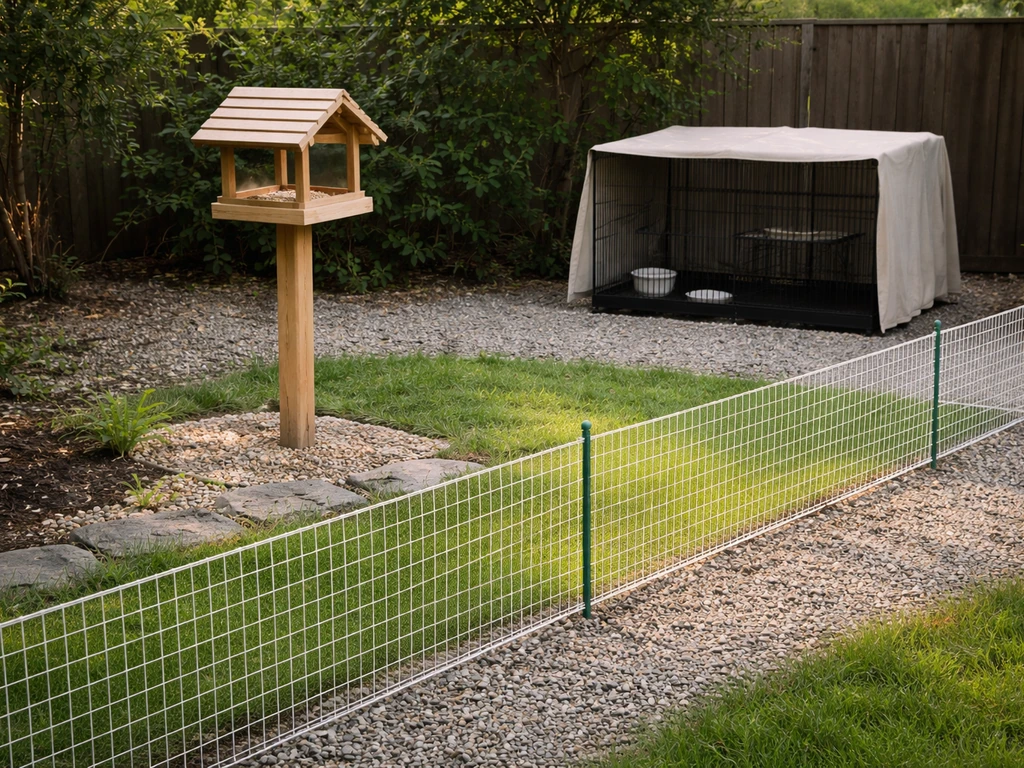
If you keep outdoor bird feeders and also have a pet parakeet, there are a few things you should know about cross-contamination and disease risk. Wild birds that visit your feeders can carry pathogens that are dangerous to pet parrots, including avian influenza. OSU Extension also emphasizes discarding leftover seed and maintaining feeder hygiene to help reduce disease risk for birds at feeders. California's wildlife guidelines state directly that when captive birds such as parrots are in a household, feeders and bird baths should be removed or avoided to reduce disease transmission from wildlife to pets. That is a strong recommendation and worth taking seriously, particularly during periods of elevated avian influenza activity.
If you do maintain feeders, basic hygiene practices matter enormously. The U.S. Fish & Wildlife Service, citing Cornell Lab of Ornithology, recommends cleaning your outdoor feeder at least once every two weeks. The National Wildlife Federation advises keeping the ground beneath feeders swept clean to reduce seed and dropping buildup, which is a major vector for disease. Audubon also stresses regular feeder cleaning and warns against approaching or handling sick or dead wild birds. These are good practices for wildlife health and even more critical when you have a pet bird in the same environment.
Never take seed from an outdoor feeder and offer it directly to your parakeet. The hygiene gap between those two contexts is significant. Seed that has been sitting in an open outdoor feeder has been touched by wild bird beaks, exposed to droppings, and potentially rained on and dried multiple times. Interestingly, while feeders attract the birds we want to see, they can also draw in unexpected visitors.
If you have wondered whether larger ground-foraging birds end up at your setup, it is worth knowing that species like pheasants that eat wild bird seed and even peacocks that eat bird seed can sometimes visit backyard feeders, especially in semi-rural areas. These larger birds can dramatically increase fecal contamination around your feeder area, which is one more reason to keep that zone clean and completely separate from anything your pet bird could access.
The bottom line
Wild bird seed is not what your parakeet needs, and the risks, especially mold, aflatoxins, mineral imbalances, and outdoor contamination, are real enough to avoid it as anything more than a rare pinch in an absolute pinch. Build your parakeet's diet around quality pellets and fresh vegetables, use parakeet-appropriate seed sparingly as a treat, and keep your outdoor feeders and indoor bird space as separate as possible. If your bird shows any signs of illness after eating something questionable, get to an avian vet quickly. Small birds do not have the time to wait.
FAQ
If my parakeet already ate wild bird seed a few times, should I stop immediately or wait and see?
Stop offering it right away and switch back to a pellet-based diet plus vegetables. Then monitor for signs within 24 to 48 hours, since mold and mycotoxins can cause symptoms that are easy to miss early (weight loss, regurgitation, diarrhea, depression). If anything seems off, contact an avian vet rather than waiting it out.
Is a one-time pinch of wild bird seed different from feeding it regularly?
Yes, risk is much lower for a tiny one-off portion, but it is not risk-free because mold and toxins can be present in the bag regardless of quantity. If you do it at all, use a very small amount (not a full dish) and do not use it again if the bag has been exposed to any moisture or humidity.
Can I “rinse” or “bake” wild bird seed to make it safe for a parakeet?
No. Washing does not reliably remove mold toxins, and heating is not a dependable way to neutralize aflatoxins. The safest approach is to discard any seed that might have gotten wet, compacted, or stored in damp areas.
What if the wild bird seed looks fine, how can I tell if it might be contaminated?
Avoid relying on appearance. Seed can harbor mold before it becomes visually obvious, especially if bags sat in garages, sheds, or storage rooms. If you smell any musty or sour odor, see clumping from moisture, or notice discoloration, discard it.
Is the danger only mold and aflatoxins, or are there other problems in wild blends?
There are other concerns too, including mineral imbalance from common ingredients like sunflower seeds (often an unfavorable calcium to phosphorus ratio) and hygiene contamination from outdoor context. Some blends can also include additives or pesticide residues that are inappropriate for an indoor bird.
Can I feed my parakeet sunflower seeds from the wild bird mix as a treat?
Sunflower seeds are a common favorite, but portion control matters. Use parakeet-appropriate seed in small amounts, and don’t treat sunflower from a mixed wild blend as automatically safe, since the rest of the mix still may be nutritionally skewed or contaminated.
If I keep a backyard feeder, is it okay if my parakeet shares the same room?
Sharing the same room is a separate issue from sharing the same food surface. Even if the parakeet never eats feeder seed, keep the feeder zone and any bird-accessible areas clean and avoid contact between pet bird equipment and anything from the outdoor setup (seed trays, bowls, birdbath water).
Can I give my parakeet seed collected from the ground under the feeder?
No. Ground seed is the most contaminated option because it has been exposed to droppings, rain, and repeated drying cycles. Even if your parakeet eats it accidentally, remove the food source and monitor closely for illness.
What should I watch for if my parakeet ate suspected moldy seed?
Watch for behavior and digestion changes such as decreased appetite, regurgitation, diarrhea, depression or lethargy, and rapid weight loss. Because birds hide illness, act quickly if symptoms appear within 24 to 48 hours and seek an avian vet.
How much safer are parakeet-specific seed mixes compared with wild bird seed?
They are safer mainly because they are formulated closer to a parakeet’s needs and are less likely to include random outdoor contaminants. Still, seed-based diets should not be the foundation, pellets (and vegetables) should make up most of the diet, and treats should remain limited.
My avian vet gave me a pellet brand and schedule, but my bird refuses pellets. What’s a practical next step?
Try gradual transition rather than switching abruptly. Mix a small amount of pellets into the current diet, offer fresh vegetables daily, and keep treats limited. If refusal continues, ask your avian vet about pellet size, soaking method (if appropriate), and whether a different formulation or brand is better for your bird’s preferences.
Next Article
Can Pet Birds Eat Wild Bird Food? Safety Guide
Get clear yes/no on can pet birds or wild birds eat the other’s seed, plus mold, additives, and feeder safety steps.