Dogs eat bird seed for the same reason they eat plenty of things they shouldn't: it smells interesting, it's on the ground, and nobody stopped them the first time. That's the short answer. The longer answer involves a mix of natural scavenging instinct, boredom, curiosity, and the fact that bird seed is genuinely full of fats and proteins that smell appealing to a dog's nose. If your dog is raiding the area under your feeder, you're not alone, and there's a clear path forward. Here's what's driving the behavior and exactly what you should do today.
Why Does My Dog Eat Bird Seed? What to Do Today

Maya Henderson
14 Apr 2026
Why dogs go after bird seed
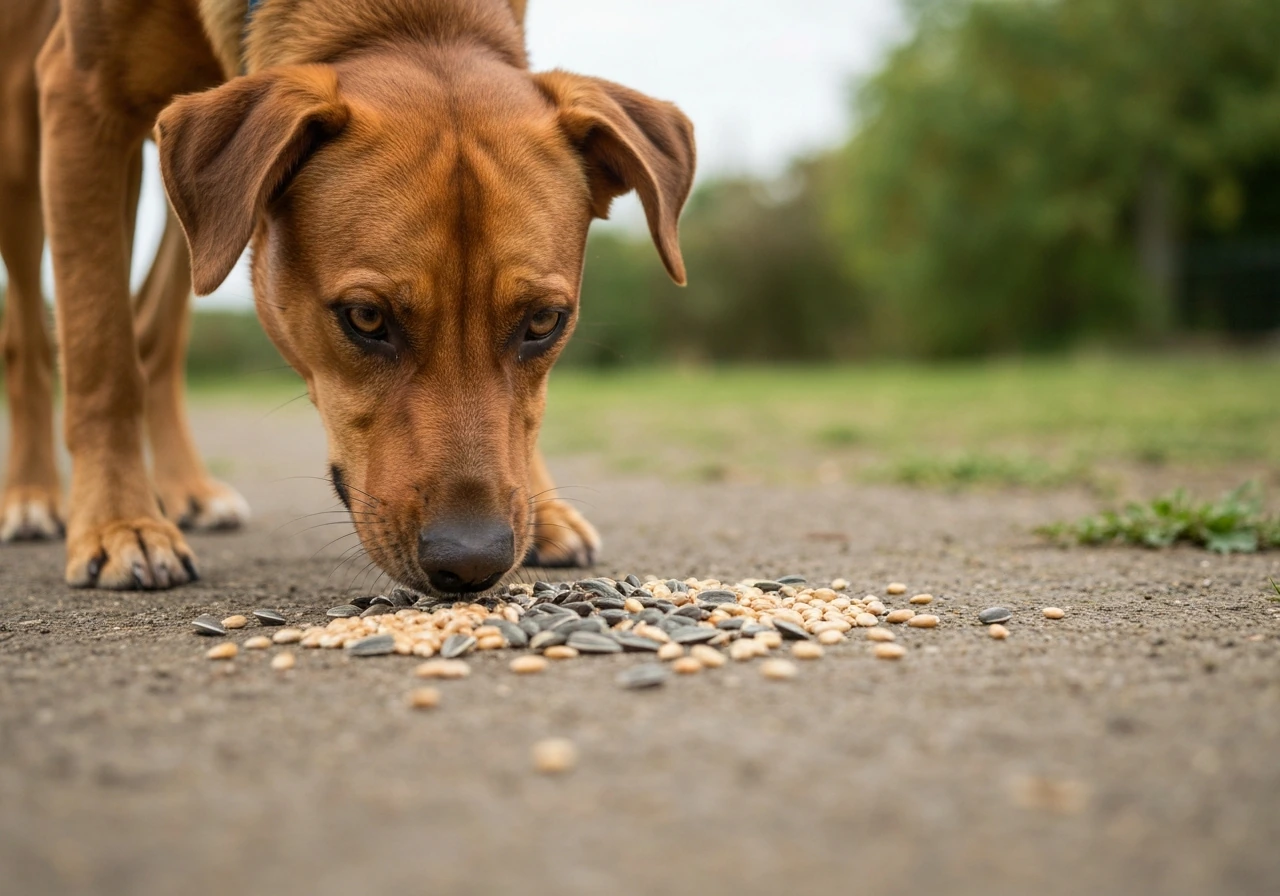
Dogs are opportunistic foragers by nature. When they smell something calorie-dense on the ground, their instinct says "eat it first, ask questions never." Bird seed, especially mixes containing sunflower seeds, peanuts, or millet, is rich in fat and protein. To your dog's nose, that's basically a snack pile sitting right at ground level. It doesn't matter that it's meant for birds.
Beyond pure instinct, a few specific triggers push dogs toward bird seed. Hunger and boredom are big ones. A dog that isn't getting enough mental stimulation or isn't fully satisfied by their meals will explore and forage more aggressively. Puppies do it out of curiosity. High-drive breeds do it because anything on the ground is fair game in their minds. Some dogs have also learned that heading to the feeder area gets them attention from their owner, even if that attention is a firm "no" every single time. Negative attention is still attention, and dogs are smart enough to figure that out.
There's also a competition angle. If you have wildlife visiting your yard (squirrels, raccoons, other birds), the activity and smell around a feeder can trigger a dog's prey drive and territorial instincts. They're not necessarily going for the seed specifically. They're going for what's happening in that spot.
Common triggers in your backyard setup
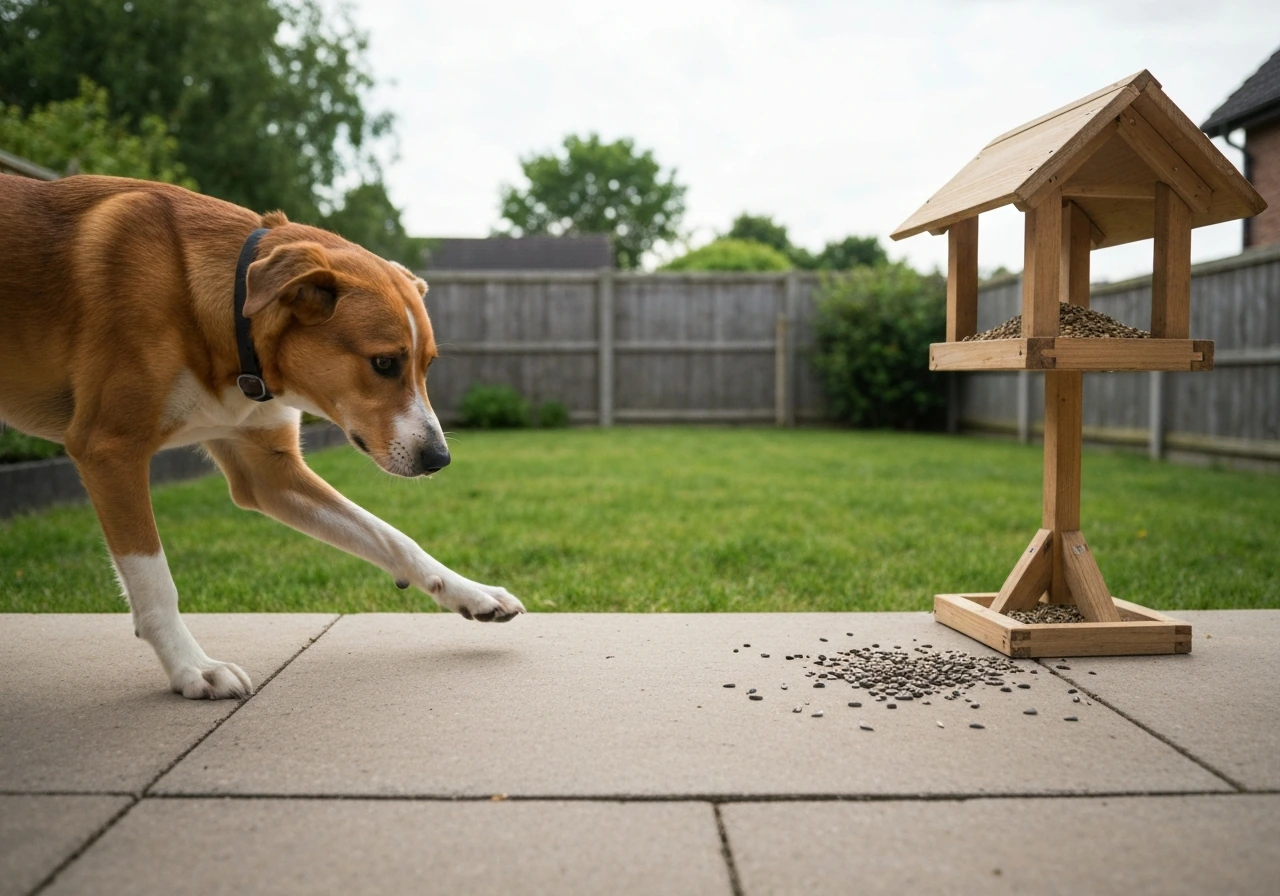
Your feeder placement and maintenance habits matter more than most people realize. The most common scenario, as the AKC points out, is dogs eating seed that has fallen directly underneath a feeder. That spilled seed sits on the ground and accumulates, and it brings dogs right into contact with bird droppings as well. That combination is where the real risk starts.
Low-hanging feeders, feeders placed near fences or raised garden beds (easy jumping access), and feeders positioned in areas your dog already frequents all make the problem worse. A feeder at dog-nose height is basically an open invitation. Similarly, if you're using a seed mix with a strong smell, like one containing dried fruit, peanuts, or suet pellets, you're amplifying the draw. The smell carries, and curious dogs will follow it.
Infrequent cleaning is another trigger. When hulls, old seed, and waste pile up under a feeder, the smell intensifies and so does the dog's interest. It also creates conditions for mold and pests, which brings us to the next problem.
Health risks from bird seed (mold, pests, ingredients)
Most of the time, a dog eating a small amount of fresh bird seed won't cause serious harm. But "most of the time" leaves a lot of room for problems, and there are specific risks worth knowing about before you dismiss it.
Mold and aflatoxins
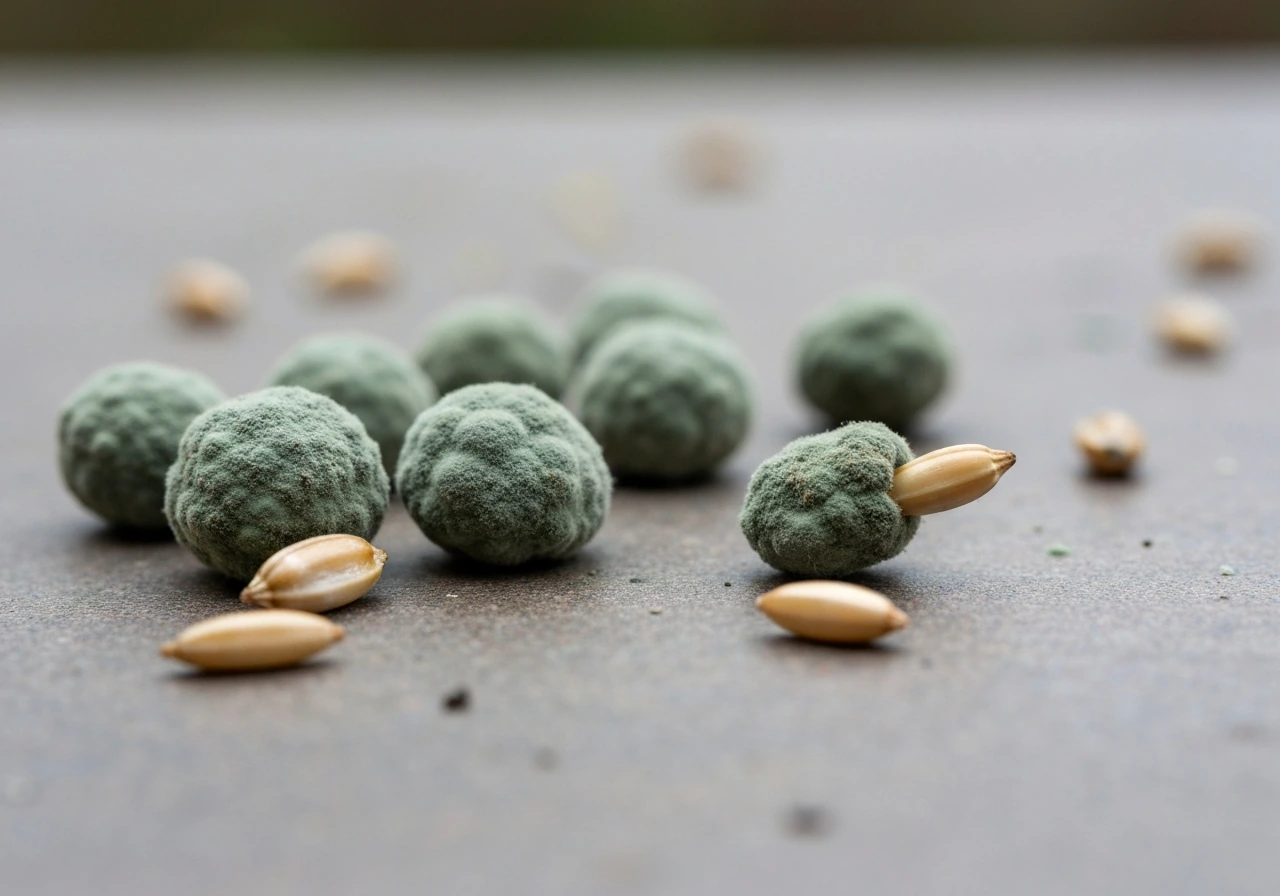
Spoiled or improperly stored bird seed can develop mold, and certain molds produce aflatoxins, which are toxic to dogs even in relatively small amounts. The FDA describes aflatoxin poisoning signs in pets as sluggishness, loss of appetite, vomiting, jaundice (yellow eyes, gums, or skin from liver damage), unexplained bruising or bleeding, and diarrhea. These symptoms can show up days after exposure, which makes them easy to miss or misattribute. If you've noticed your dog visiting an old or neglected feeder and they start looking "off," mold contamination should be on your radar.
Bird droppings and infection risk
Seed that falls to the ground gets mixed with bird droppings almost immediately. According to the AKC, those droppings can cause infections that range from mild to very serious, with blank" rel="noopener noreferrer">attacks of diarrhea and vomiting being the most common result. If your dog is experiencing diarrhea after getting into bird seed, there's a real chance the droppings in that area are part of the problem, not the seed itself.
Unsafe ingredients in some seed mixes
Most standard bird seed (sunflower seeds, millet, safflower) isn't acutely toxic to dogs, but some specialty mixes or suet products can include ingredients that are problematic. Chocolate-flavored suet, raisins or dried fruit blends, and certain additives are genuinely dangerous for dogs. It's also worth knowing that large volumes of seed, especially hard-shelled varieties, can create a GI obstruction risk. Cornell Veterinary Medicine explains that GI obstructions occur when non-digestible material lodges in the stomach or small intestine, and these situations can escalate into emergencies requiring prompt veterinary care. Bulk seed consumption is less common but not impossible in a very food-motivated dog.
Pests that come with the seed
Old seed and feeder areas attract insects, beetles, and rodents. A dog nosing around a feeder isn't just eating seed. They may be eating whatever else has moved in. That's an additional contamination risk that's easy to overlook.
What to do immediately if your dog already ate it
Don't panic, but do act. Here's what to do right now if your dog has already gotten into bird seed.
- Figure out how much they ate and what type of seed it was. Check the feeder and the area underneath. Was it fresh seed or old, possibly moldy seed? Specialty mix or plain sunflower? This information matters when you call for help.
- Check for symptoms: vomiting, diarrhea, lethargy, loss of appetite, yellow tinge to eyes or gums, or any signs of distress. Note the time the seed was eaten if you know it.
- If they ate a small amount of fresh, plain seed and seem completely fine, monitor them closely for the next 24 to 48 hours. Watch for any GI upset.
- If the amount was large, if the seed was visibly old or moldy, if the mix contained unknown ingredients, or if your dog is already showing symptoms, call your vet or an animal poison control line immediately. Do not wait to see if they improve on their own.
- Contact options: your vet, the ASPCA Animal Poison Control Center at (888) 426-4435, or the Pet Poison Helpline, which operates 24/7. These are the right resources for accurate, up-to-date advice specific to your dog's situation.
- Stop your dog from going back to the feeder area while you're sorting this out.
If you're wondering about the full picture of what can happen after a dog eats bird seed, what happens when dogs eat bird seed covers the range of outcomes from mild GI upset to more serious concerns, so you know what you're watching for.
How to stop the behavior today (training and management)
Stopping this behavior requires both management (removing access) and training (teaching your dog what to do instead). Neither works well without the other.
Management first
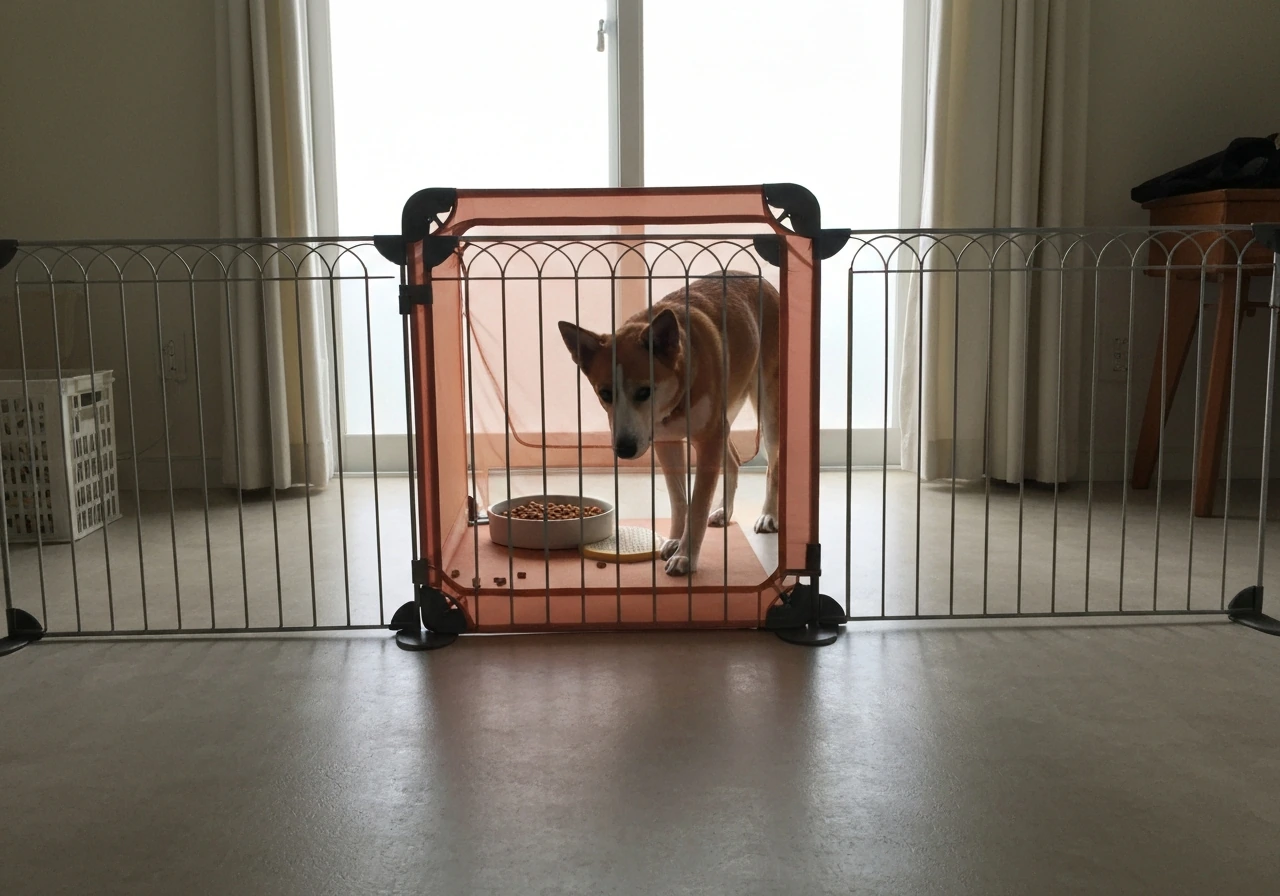
Before any training can work, the opportunity has to be reduced. Block or fence off the feeder area so your dog physically cannot get to it unsupervised. Use a portable exercise pen, a garden barrier, or move the feeder entirely to a location your dog can't access. This is your immediate fix for today.
Training the "leave it" cue
"Leave it" is the most practical cue for this situation. Start inside with low-value treats on the floor and reward your dog heavily for looking away from the treat on your cue. Build up to doing this outside near the feeder area with the seed, starting with your dog on leash. Every time they orient toward the seed and look back at you instead, that's a win. Repeat this consistently over several days before giving more freedom in that area.
For puppies and high-drive dogs
Puppies will explore with their mouths no matter what, so management is more important than training at that stage. Don't expect a 4-month-old puppy to consistently "leave it" around interesting smells outdoors. Keep them on a leash in the backyard near the feeder until they're older and better trained. High-drive dogs (terriers, hounds, sporting breeds) need the same approach but for longer. Their nose overrides their training in high-stimulation environments. Physical barriers are non-negotiable for these dogs until the behavior is very well established.
Address boredom and hunger
If your dog is foraging out of boredom or isn't fully satisfied by meals, that needs attention too. Increase daily exercise, add enrichment activities (puzzle feeders, sniff work, training sessions), and check with your vet that your dog's diet is appropriate for their age and activity level. A mentally tired dog is a much less scavenging-prone dog.
Safer bird-feeding practices to reduce dog access
You don't have to choose between having a bird feeder and having a dog-safe yard. You just need to be smarter about setup.
Feeder height and placement
Mount feeders high enough and far enough away that spilled seed lands in an area your dog can't reach, or land outside their normal roaming zone. The Humane Society recommends positioning feeders at least 12 feet away from shrubs and ground cover. Apply the same logic to your dog: position feeders so the drop zone is outside your dog's access area. Pole-mounted feeders with baffles (metal cone-shaped guards) are useful here. The Michigan DNR recommends using a baffle on pole-mounted feeders to help prevent unwanted access from below, which works for dogs just as well as it does for squirrels.
Clean up spills consistently
This is probably the single biggest practical change you can make. The National Wildlife Federation recommends keeping the area under feeders clean by picking up spilled food and droppings regularly, using a broom, shovel, or wet-dry vacuum. All About Birds extends this to cleaning not just the feeder itself but also the ground below it to prevent buildup of hulls, uneaten seeds, and waste. Doing this daily or every other day removes the temptation and also reduces the mold and pest risk. It takes about two minutes and makes a significant difference.
Choose the right feeder type
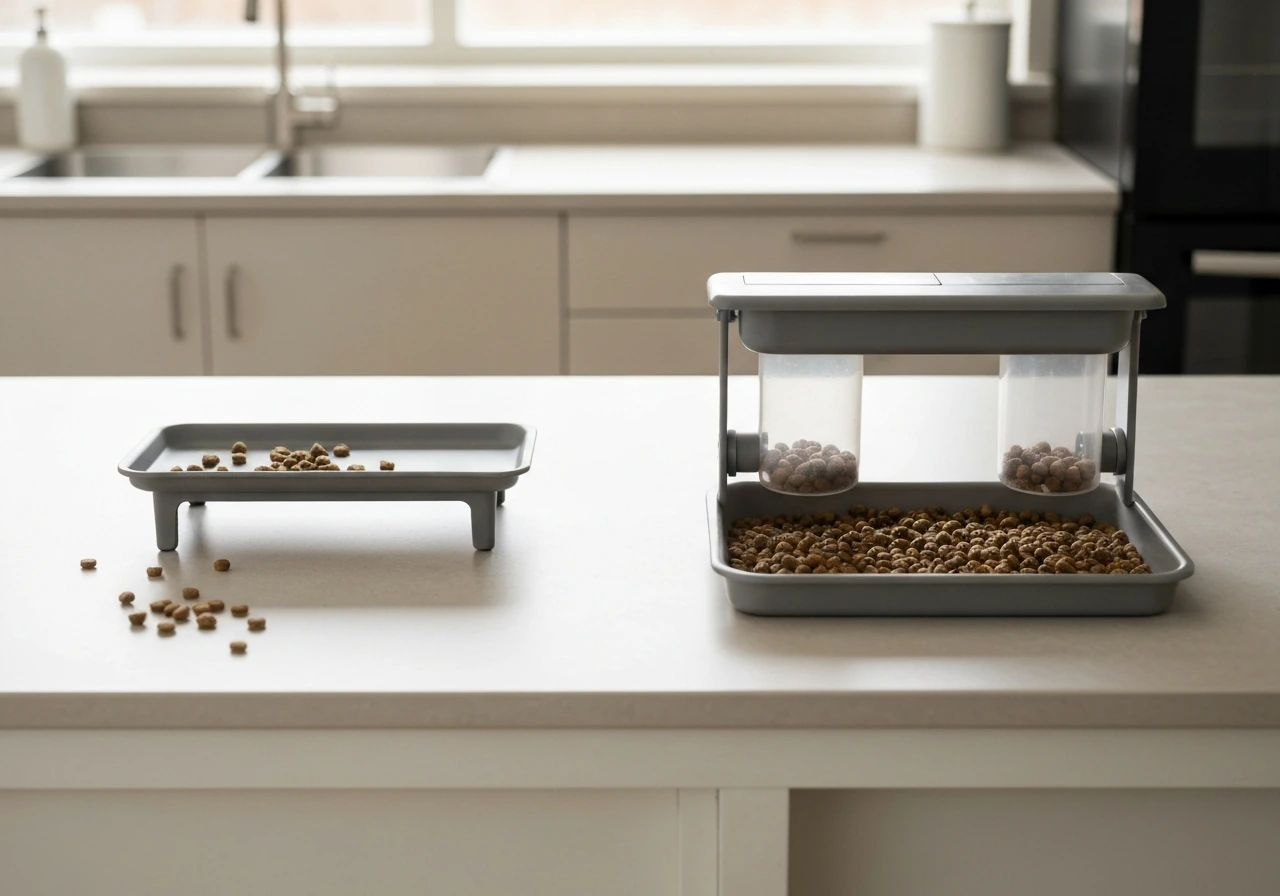
Tube feeders and feeders with catch trays are better than open platform feeders for reducing ground scatter. Catch trays collect spilled seed so it doesn't fall to the ground. You can also switch to no-mess seed mixes (hulled seeds or shelled peanuts) that produce less debris. Less debris means less ground seed, which means less dog interest.
Store seed securely
Keep your seed supply in a sealed, hard-sided container, ideally a metal trash can with a locking lid. Dogs can and will chew through plastic bags and thin plastic bins. Secure storage also keeps the seed fresh longer, which reduces mold risk.
Think about suet separately
Suet feeders present their own set of concerns. The fats and flavors used in suet cakes are often even more attractive to dogs than seed, and some suet products contain ingredients that aren't safe for pets. If you use suet, it's worth understanding what risks suet poses to dogs before placing that feeder anywhere your dog can reach it.
A quick comparison: feeder setups and dog-access risk
| Feeder Type | Ground Scatter Level | Dog Access Risk | Best Practice |
|---|---|---|---|
| Open platform feeder | High | High | Avoid if possible, or place out of dog's zone |
| Tube feeder (no tray) | Moderate | Moderate | Add a catch tray and clean underneath daily |
| Tube feeder (with catch tray) | Low | Low to moderate | Best general option; clean tray regularly |
| Pole-mounted feeder with baffle | Low to moderate | Low (if height is sufficient) | Best for keeping dogs and squirrels out |
| Suet cage feeder | Very low | Low (if mounted high) | Check suet ingredients carefully for dog safety |
| Window-mounted feeder | Low | Very low | Good option if indoors access is blocked |
When to call the vet and what to ask
Call your vet (or an animal poison control line) right away if any of the following apply. Do not wait for symptoms to worsen.
- Your dog ate a large quantity of seed (more than a small handful)
- The seed was visibly old, clumped, or smelled musty (signs of mold)
- The mix contained unfamiliar ingredients, especially anything like chocolate, raisins, or dried fruit
- Your dog is already showing vomiting, diarrhea, lethargy, or loss of appetite
- Your dog's eyes or gums look yellowish (this points to possible liver involvement from aflatoxins)
- You're not sure what type of seed or mix it was
- Your dog is very small, very young, elderly, or has existing health conditions
When you call, have this information ready: your dog's weight and age, the approximate amount eaten, the type of seed or product name if you know it, when it happened, and what symptoms (if any) you're seeing. The more specific you are, the faster and more accurately they can help you. The ASPCA Poison Control line is (888) 426-4435. The Pet Poison Helpline is also available 24/7. If you're not sure whether the situation is serious enough to call, call anyway. As the FDA advises for suspected aflatoxin exposure specifically, symptoms are nonspecific and a vet may recommend testing, so don't try to wait it out and guess.
One thing that sometimes surprises people: bird seed isn't just a dog problem. If you've ever wondered what would happen if a person accidentally ate bird seed, the answer is a bit different from the dog scenario, but the contamination concerns (mold, droppings, storage conditions) overlap in interesting ways.
The bottom line is this: your dog is going after bird seed because it smells good, it's accessible, and nothing has stopped them yet. Fix the access, train the "leave it," clean under your feeder consistently, and if they already got into it and you're not 100% sure it was fresh and safe, call your vet. That's the whole plan, and it works.
FAQ
How long after my dog eats bird seed should I watch for symptoms?
If you only suspect a little seed was eaten and your dog is acting normal, monitor closely for 48 to 72 hours, since mold or droppings-related issues may not show up immediately. If you see vomiting, diarrhea, yellowing of the eyes or gums, unusual sleepiness, or not eating, stop watching and call your vet right away.
Can bird seed be dangerous even if it seems fresh and dry?
Yes, mold is a bigger concern when the seed was stored poorly or has been sitting under a feeder through damp weather. Even if the seed looks okay, aflatoxin risk depends on contamination, so treat “old feeder area” as higher risk than “fresh seed from the bag.” When in doubt, call poison control or your vet with the product details and timing.
If my dog gets diarrhea, is it definitely from bird droppings or could it be the seed itself?
Bird droppings can be contaminated with germs that cause GI upset, but they do not explain all cases. Sunflower or millet can also cause irritation, especially if your dog eats fast or a lot, so focus on symptoms and exposure details rather than assuming it must be “just the seed.”
What signs suggest bird seed ingestion could be a GI obstruction?
Small amounts are often tolerated, but hard-shelled varieties and bulky mixes raise the odds of stomach or small intestine blockage if your dog ate a large handful or is a compulsive eater. If your dog is gagging, has repeated retching without producing anything, bloats, has a swollen belly, or seems painful, treat it as urgent and get veterinary care immediately.
Do certain types of bird feeders make it worse for dogs?
Feeder type matters. Open platform feeders throw seed onto the ground more often, while tube feeders or feeders with catch trays reduce ground scatter. If you have an at-risk dog, the most practical upgrade is a catch tray plus a strict “no access” barrier during unsupervised times.
Why does my dog still ignore “leave it” near the feeder?
Yes. “Leave it” training can fail if you practice near the feeder without a leash, barriers, and high-value rewards. A common mistake is repeating the cue when the dog is already locked on to the seed, which can teach the dog that the cue equals more temptation. Use distance, leash control, and short sessions, then gradually reduce the gap.
Does risk change in the winter or rainy months?
Seasonal changes increase the risk. In wet or snowy weather, seed and hulls clump, smell stronger, and mold can develop faster, while pests like rodents and beetles also increase. During these periods, clean more frequently and consider switching to less debris-producing seed.
If my dog is on a good diet, why are they still eating bird seed?
If the dog is actively eating fallen seed, treat it as an access-management issue first. A well-fed dog can still scavenge if the feeder area is attractive, but hunger and under-stimulation can amplify the behavior. Many owners need both, meal adequacy checks plus enrichment (sniff work, puzzle feeders) plus physical barriers to break the habit.
What should make me call right away instead of monitoring at home?
Don’t wait for the “next dose” of symptoms if you suspect something unsafe. Call your vet or a pet poison helpline immediately if you know your dog got into suet cakes, chocolate-flavored products, raisin or dried fruit mixes, or any product with additives, since ingredients can be toxic even when small amounts were eaten.
What information should I have ready when contacting my vet or poison control?
When you call, include the exact product name from the bag or suet label, your dog’s weight, the best estimate of how much was eaten, when it happened, whether you saw them swallow or just mouth it, and any visible symptoms. If possible, bring a photo of the feeder area and any remaining seed.
Would changing the type of bird seed solve the problem by itself?
Switching seed types can help, but it should not replace cleanup and access control. Hulled or shelled options reduce debris, and catching trays reduce what hits the ground, but dogs can still investigate odors at the drop zone. The best plan is “less scatter plus tighter management,” especially for high-drive dogs.
Next Articles
Do Seagulls Eat Bird Seed? How to Stop Them
Yes, seagulls often eat bird seed. Learn why they show up and how to block them while keeping feeding safe.
Do Pigeons Eat Bird Seed? Safe Feeding Tips and Risks
Yes, pigeons eat many seeds, but mold and mess make it risky. Learn safe bird seed storage, feeding, and placement.
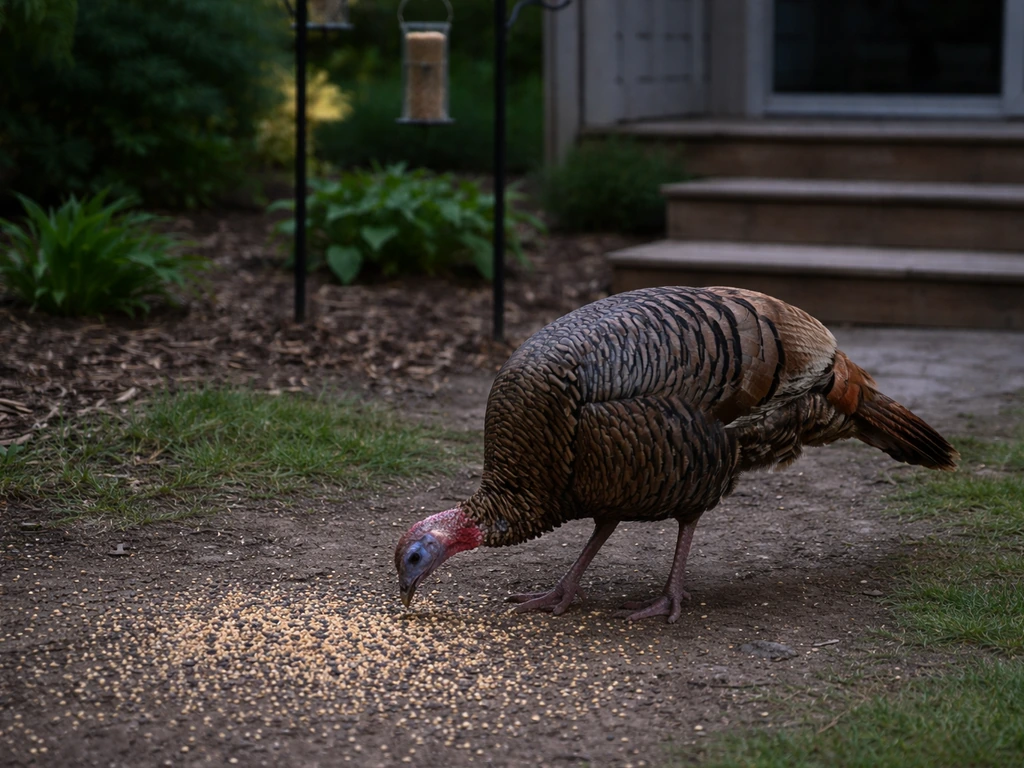
Do Turkeys Eat Bird Seed? What to Do for Safety
Do turkeys eat bird seed? Learn what attracts them, seed ingredients to avoid, and safety steps to stop mold and disease