Yes, rats will eat hot pepper bird seed. I know that's not what you were hoping to hear, but it's the honest answer. Unlike birds, rats do have capsaicin receptors, which means spicy seed should bother them in theory. In practice, though, hungry rats are opportunistic enough to push through mild irritation when food is reliably available. Hot pepper bird seed can reduce rat visits in some yards, but it's not a guaranteed fix on its own, and relying on it alone usually leads to frustration.
Will Rats Eat Hot Pepper Bird Seed? Practical Fixes

Maya Henderson
19 Apr 2026
Why rats may still eat spicy bird seed
Rats are among the most adaptable foragers on the planet. They're motivated by caloric density and reliable food sources, and bird seed, especially sunflower seeds, millet, and nyjer, checks both boxes. When a rat discovers your feeder or the seed that's fallen beneath it, it's found a predictable, high-energy buffet. The spiciness of the seed is one factor weighed against hunger, competition, and habit. In urban environments especially, rats are accustomed to encountering novel foods and smells, so a new odor or mild irritation is less likely to turn them away than it would a more cautious wild animal.
The real draw is almost always spilled seed on the ground, not the feeder itself. Rats are ground foragers by preference. They rarely climb feeders when they can simply clean up what the birds drop below. This means that even if your feeder is loaded with capsaicin-coated seed, rats may be feeding on the non-treated spillage underneath, bypassing the deterrent entirely.
What 'hot pepper' actually does to rats (and what it doesn't)
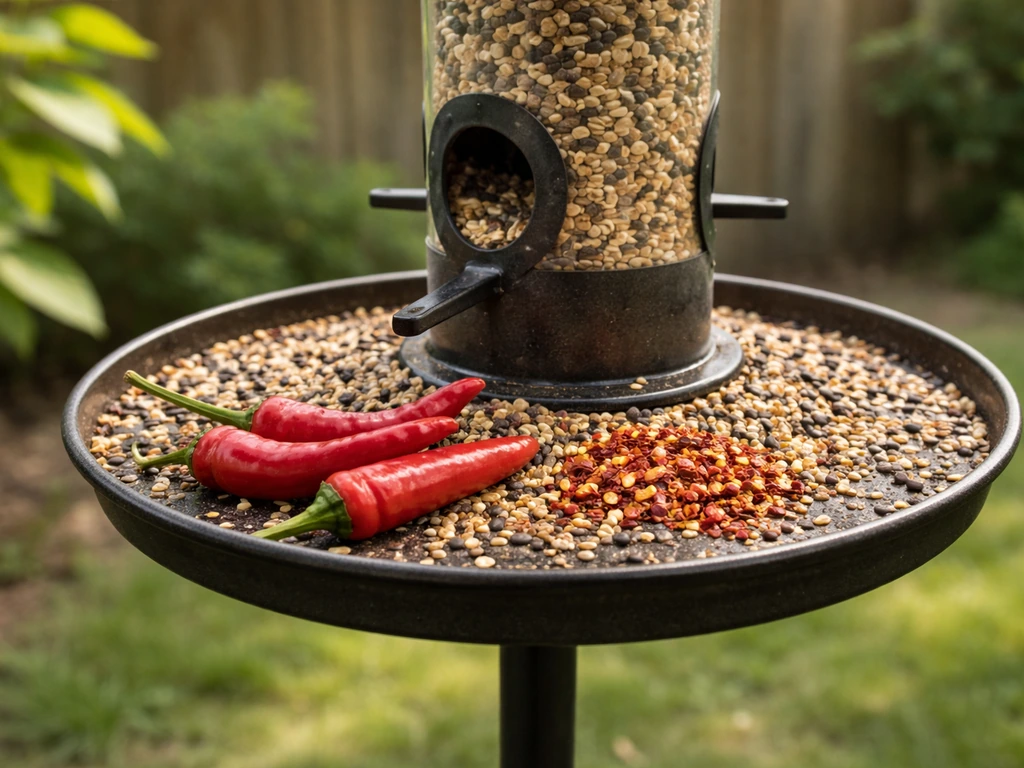
Capsaicin, the active compound in hot peppers, causes a burning sensation in mammals by binding to pain receptors called TRPV1 receptors. Birds lack functional TRPV1 receptors for capsaicin, which is why they can eat chili peppers without any discomfort. Rats, like all mammals, do have these receptors, so capsaicin genuinely irritates them. On paper, that sounds like a solid deterrent.
The complication is dosage and consistency. Commercial hot pepper bird seed typically coats seeds with a capsaicin oil solution. The concentration varies by product, and the coating can wear off with moisture or handling. The Internet Center for Wildlife Damage Management (ICWDM) is direct about this: cayenne pepper in bird seed doesn't always work.
Cayenne pepper is a type of bird pepper, but it is still best treated as a capsaicin product rather than a guaranteed rat repellent is bird pepper the same as cayenne pepper. Academic research specifically testing capsaicin as a birdseed repellent has explored this inconsistency, and the overall conclusion from wildlife management professionals is that it's an unreliable standalone solution. ICWDM (Internet Center for Wildlife Damage Management) notes that [cayenne pepper in bird seed doesn't always work](https://icwdm.
org/management/prevention/bird-feeders/), since squirrels may avoid it or take only a tiny amount while birds may still prefer the mix. Think of it as raising the bar slightly, not building a wall.
That said, spicy seed is not useless. Used alongside physical exclusion and good feeder hygiene, it can add one more layer of discouragement. The problem is when people treat it as the only step they need to take.
Signs rats are feeding and how to confirm the source
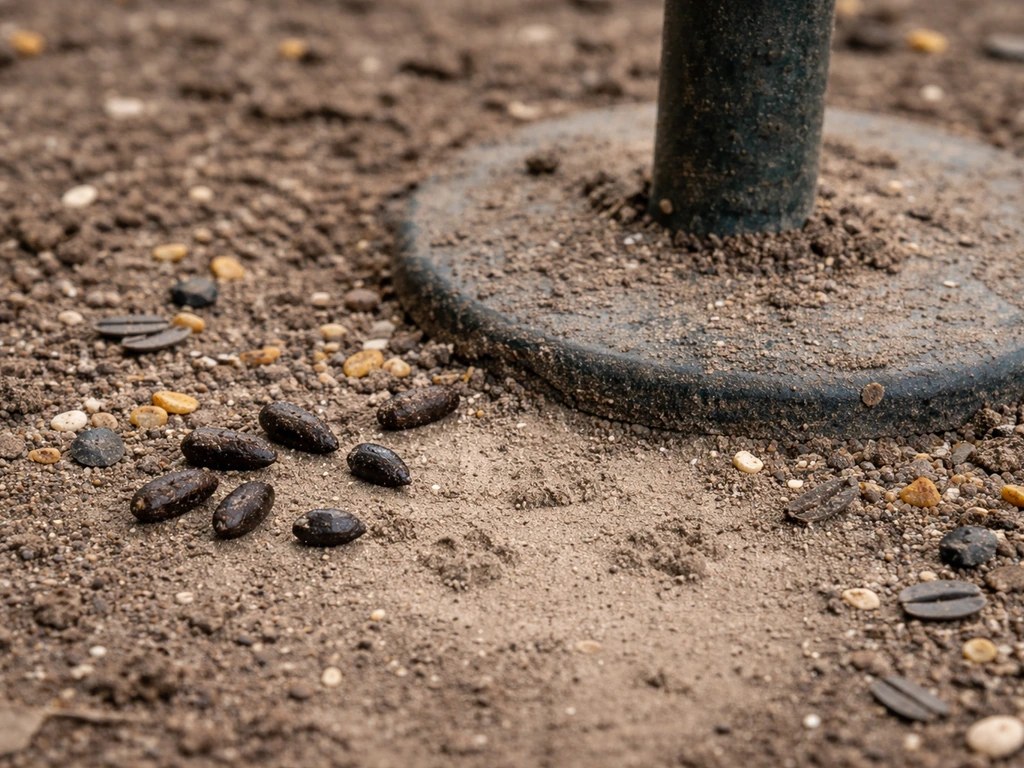
Before you overhaul your whole setup, it helps to confirm you're actually dealing with rats and that the feeder is the source. Rats leave a pretty clear trail once you know what to look for.
- Droppings near the feeder base or along fence lines: rat droppings are roughly 1/2 to 3/4 inch long, dark, and capsule-shaped (mouse droppings are smaller at about 1/4 inch)
- Gnaw marks on feeder components, storage containers, or nearby wood
- Shallow burrows or tunnels along walls, under sheds, or near garden beds close to the feeder
- Seed shells or husks piled in small stashes away from the feeder (rats cache food)
- Runways: dark, greasy smear marks along walls or fence rails where rats travel repeatedly
- Activity at dawn and dusk, or during the night if you have a motion-activated camera
A motion-activated trail camera pointed at your feeder base for two or three nights is the fastest way to confirm rats versus squirrels, raccoons, or other nighttime visitors. This matters because the control strategy differs depending on which animal you're dealing with. Raccoons, for example, require a different approach than rats. Raccoons can also be attracted to bird seed, so the same food control and exclusion steps matter for them too.
Fast cleanup and feeder changes to cut off the food supply
The single most effective thing you can do today is eliminate the food source that's actually feeding the rats. In most cases, that means the ground below the feeder, not the feeder itself.
- Rake up and bag all spilled seed, shells, and debris beneath and around the feeder immediately. Don't compost it, as the smell will linger.
- Add a seed-catcher tray or basin directly below the feeder opening to catch shells and dropped seed before it hits the ground. The ICWDM specifically recommends this modification.
- Switch to no-waste seed: hulled sunflower seeds, hulled millet, or nyjer (thistle) leave almost no shell debris on the ground.
- Reduce or eliminate the amount of seed you put out at one time. Only fill the feeder with what birds will eat in a day.
- Stop putting out loose seed mixes that contain millet or cracked corn on the ground. Ground-feeding setups are essentially rat restaurants.
- Remove water sources near the feeder that may be attracting rodents for drinking.
If rats are already established in your yard, these steps alone won't eliminate them overnight, but cutting off the food source is the foundation of every other control method. Deterrents and traps are far less effective when unlimited food is still available.
Best deterrents and exclusion methods that actually work
Physical exclusion: baffles and feeder placement
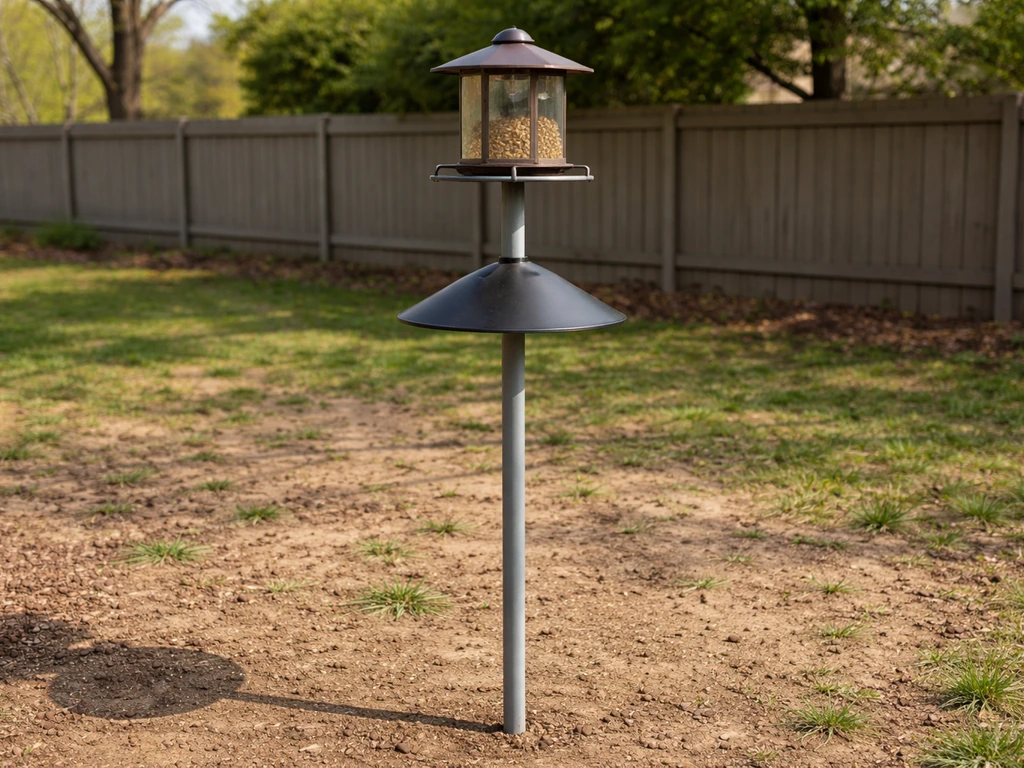
Physical exclusion is significantly more reliable than any repellent, including hot pepper seed. Rats are excellent climbers and jumpers, so placement and barriers both matter.
- Mount feeders on smooth metal poles at least 5 feet off the ground, away from fences, trees, and structures. Rats can jump horizontally about 4 feet and vertically about 3 feet from a standing position.
- Install a squirrel/rat baffle on the pole, at least 18 inches wide and placed about 4 feet off the ground. Torpedo-style or dome baffles work well on poles. Without a baffle, a smooth metal pole is still climbable.
- Keep feeders at least 10 feet away from trees, fences, rooflines, or anything a rat could use to leap onto the feeder or its hanging wire.
- If your feeder hangs on a wire, thread the wire through sections of PVC pipe or use spinning cylinder baffles to prevent climbing from above.
- Avoid wooden feeder poles, which are easy for rats to gnaw and climb.
Storage and yard hygiene
Where you store your seed matters almost as much as how you hang your feeder. Rats will chew through thin plastic bags and even some plastic bins to reach stored seed. Use metal trash cans or heavy-gauge airtight containers with latching lids stored in a garage or shed. Clear out brush piles, wood stacks, and dense ground cover within a few feet of feeding areas, since these provide shelter and nesting spots for rats close to the food source.
Other deterrents worth considering
- Predator urine (fox or coyote, available at garden centers): can work as a short-term deterrent but needs reapplication after rain and loses effectiveness over time as rats habituate
- Electronic ultrasonic repellers: limited evidence of long-term effectiveness; rats habituate quickly
- Motion-activated sprinklers: more effective than ultrasonic devices and safe for wildlife, though they also scare away birds temporarily
- Keep cats indoors: outdoor cats do kill rodents, but free-roaming cats pose serious risks to birds at feeders and are not a recommended rat control strategy
Using pepper-based repellents safely around birds and pets
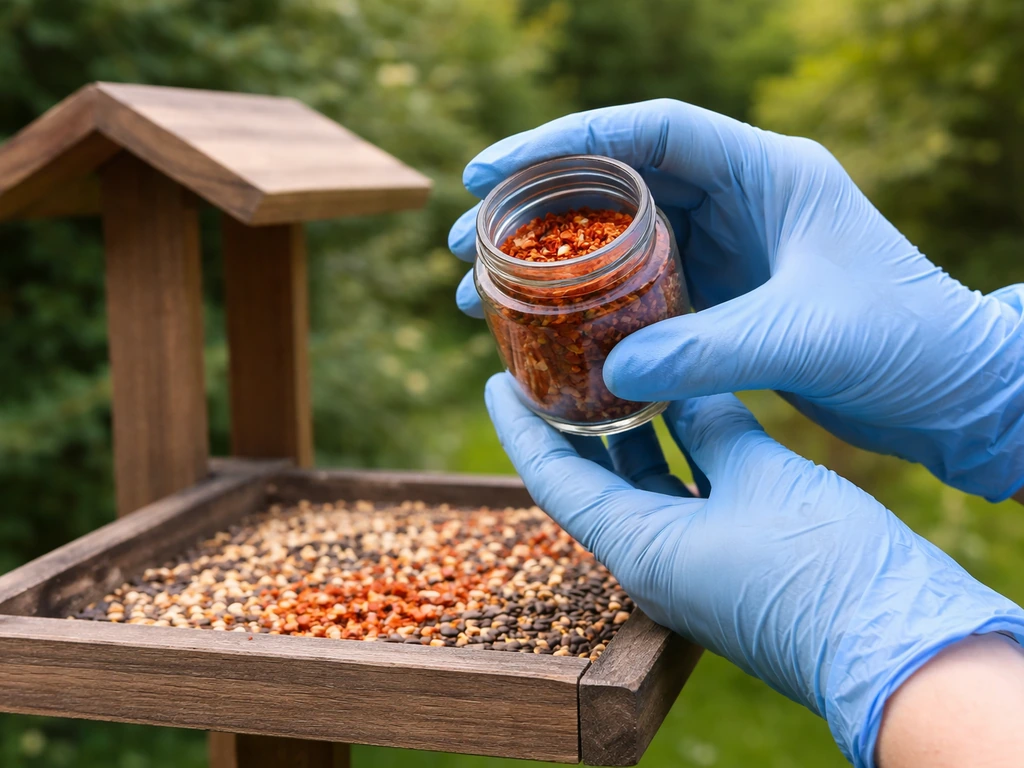
If you do want to use hot pepper seed or add capsaicin to your feeder setup, there are a few safety points worth knowing. Birds are genuinely unaffected by capsaicin, so hot pepper seed is safe for them. The risk is to you during handling and to pets or other mammals that might come into contact with treated seed or residue.
- Wear gloves and avoid touching your face when handling cayenne-coated seed or mixing capsaicin powder into seed. The ICWDM notes that capsaicin causes topical irritation to the person doing the mixing, which is a very real annoyance.
- Keep dogs and cats away from areas where cayenne-coated seed has fallen on the ground. Sniffing or ingesting loose cayenne pepper can cause eye and nasal irritation, drooling, and GI distress in pets.
- Do not use hot sauce (liquid) on seed. It can go rancid, promote mold growth, and coat seeds unevenly, and the liquid base can cause seeds to clump and spoil faster.
- If you have a dog that forages under your feeder, hot pepper seed on the ground is a bigger hazard to your dog than to the rats.
- Keep treated seed contained in the feeder, not broadcast on the ground, to minimize pet and non-target animal exposure.
Hot pepper seed works best as a targeted discouragement in the feeder itself, not as a ground deterrent. Spraying or scattering cayenne powder on soil or around the feeder base is messy, washes away with rain, and poses unnecessary risk to pets and curious wildlife.
How this compares to the mice situation
If you're also dealing with mice at your feeders, the behavior and deterrent logic is essentially the same: capsaicin has limited and inconsistent deterrent effect on mice as well. Mice are even smaller and more nimble than rats, making physical exclusion harder but food source elimination just as important. The control steps above apply to both species, and the two often coexist in the same yard.
When to escalate: repeat problems and when to call for help
If you've cleaned up consistently, modified your feeder setup with baffles and proper placement, and switched to low-waste seed, but rats are still showing up after two to three weeks, the problem has likely moved beyond casual foraging. At this point, you may be dealing with an established colony that has nested nearby and is no longer just visiting for bird seed.
Trapping: what you need to know
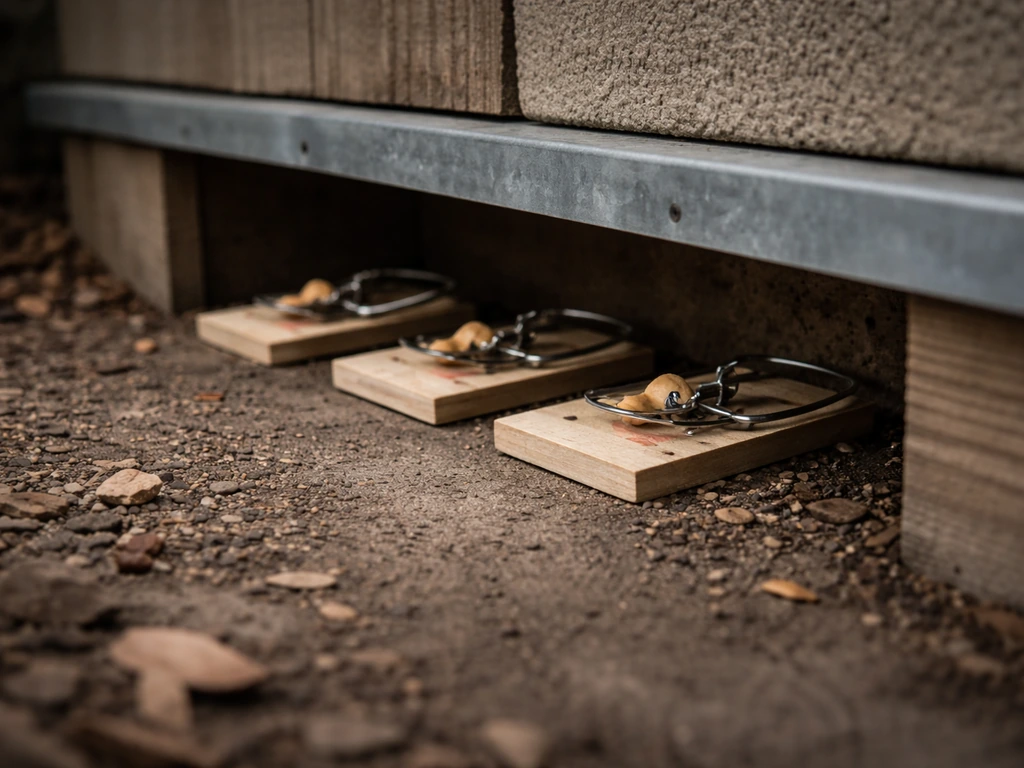
Snap traps remain the most effective and humane quick-kill method for rats when used correctly. Place them in covered locations (along walls, under structures) away from areas where children, pets, and birds can access them. Peanut butter or nesting material works well as bait. Check and reset traps daily. Live-catch traps are generally not recommended for rats because relocating rats rarely solves the problem and can spread rats to new areas. In most regions, there are no legal protections for Norway rats or roof rats, but check your local regulations before setting traps.
When to contact wildlife or pest control
Contact a licensed pest control operator or your local wildlife management office if you see rats during daytime (a sign of large population or disease), find evidence of indoor entry (chewing around foundations, inside sheds or garages), or have active burrows despite ongoing control efforts. Some municipalities offer free or low-cost rat abatement programs, especially in urban areas. Do not use rodenticide bait stations near bird feeders: anticoagulant rodenticides are a significant cause of secondary poisoning in raptors and other birds of prey that eat poisoned rodents. The Pennsylvania Game Commission explains that secondary toxicity occurs when predators or scavengers eat an animal that previously ingested rodenticide secondary poisoning in raptors.
Quick decision checklist: what to try first
| Step | Priority | Notes |
|---|---|---|
| Remove all ground spill and debris | Do today | Most impactful single action |
| Add seed-catcher tray to feeder | Do today | Stops ground accumulation |
| Switch to no-waste seed (hulled) | This week | Eliminates shell debris |
| Install pole baffle and reposition feeder | This week | Best physical deterrent |
| Store seed in sealed metal containers | This week | Removes secondary food source |
| Try hot pepper seed in feeder only | Optional add-on | Not a standalone fix; keep pets away from ground area |
| Set snap traps if activity continues | After 2-3 weeks with no improvement | Away from pets and birds; check daily |
| Contact pest control or wildlife agency | If daytime activity or indoor access occurs | Do not use rodenticide near feeders |
Hot pepper bird seed is worth trying as part of a broader strategy, but treating it as the solution will leave you disappointed. The rats in your yard are there because they found reliable food. Remove that food, block their access, and maintain good feeder hygiene, and most casual rat visitors will move on within a week or two. The ones that don't are telling you the problem needs a more hands-on response.
FAQ
If the seed has hot pepper in it, why do I still see rats under the feeder at night?
Rats often eat the spilled seed on the ground, where the treated coating may be diluted, rubbed off, or unevenly distributed. Also, if rats have other nearby food, they may treat your feeder area as a regular route rather than their main meal source. The practical check is to compare rat activity directly at the feeder base versus areas farther away (trail camera helps).
Will hot pepper bird seed work better if I put it only in the feeder and avoid spills?
It can help slightly, but only when you reduce ground access. Use a feeder design and placement that minimizes dropped seed, add a catcher tray only if it prevents accessible ground piles, and clean up fallen seed daily. Without daily cleanup, treated seed in the hopper does little against ground foraging.
Does cayenne pepper powder work the same as hot pepper bird seed?
Not reliably. Powder can wash off quickly, spreads unpredictably, and can create residue that pets, children, or non-target wildlife contact. If you use capsaicin products, use them in a targeted way at the feeder or as the product is intended, not as a soil border.
Will hot pepper bird seed repel rats immediately, or does it take time?
Expect inconsistent results day to day. Rats may test the area within hours, especially if they are hungry or have established routines. If you have not cut off the food source and cleaned up spills, you might see continued visits for more than a week, even with treated seed.
How can I tell whether squirrels, raccoons, or rats are eating my birdseed?
Watch entry points and movement patterns. Rats tend to use low, protected travel routes and focus on the ground under feeders, while squirrels usually climb and manipulate feeders and branches. A motion-activated trail camera aimed at the feeder base for 2 to 3 nights is one of the fastest ways to confirm.
What is the biggest mistake people make when trying hot pepper seed for rats?
Treating it like a standalone solution. If spilled seed remains available, rats can overcome mild irritation and keep feeding. The most effective sequence is remove spilled food daily, improve exclusion (baffles and placement), secure stored seed, then use hot pepper seed as a supplementary deterrent.
Is it safe for my birds if I use hot pepper bird seed?
Birds generally tolerate capsaicin, so the primary concern is not harm to the birds. The risk is for you during handling (skin and eye irritation) and for mammals that might contact residue. Wash hands after handling and prevent pets from chewing treated packaging or discarded seed.
Could hot pepper seed affect my dog or cat?
Yes, indirectly. If pets lick residue from the feeder area, paws, or fallen seed, they can experience mouth or stomach irritation. Keep pets away from the feeder zone while you set up, and clean up any treated debris so residue does not build up around the house or patio.
Will hot pepper seed also deter mice, or do I need a different plan?
The deterrent logic is similar but more difficult to rely on because mice are smaller and more agile. You still want the core steps, eliminate ground food, secure storage, and use physical exclusion where possible. If mice are active, look for gaps near foundations and consider plugging entry points after activity drops.
At what point should I stop experimenting and switch to traps or professional help?
If you have consistently removed spilled seed, corrected feeder placement and baffles, and maintained hygiene for about 2 to 3 weeks with continued rat activity, it may indicate nesting nearby or an established colony. At that point, snap trapping and/or a licensed pest control professional becomes the more reliable next step.
Are live-catch traps worth it for rats?
Usually not. Relocating rats commonly fails because they can return, and releasing them can spread the problem to other areas. If you use trapping, the article’s guidance favors quick-kill snap traps used correctly, with daily checks and secure placement to avoid access by birds, pets, and children.
Is rodenticide ever appropriate if I am also feeding birds?
Generally avoid it near bird feeding areas. Anticoagulant rodententicides can cause secondary poisoning when raptors or other wildlife eat poisoned rodents. If you pursue chemical control, coordinate with a pest professional and follow local regulations.
Next Articles
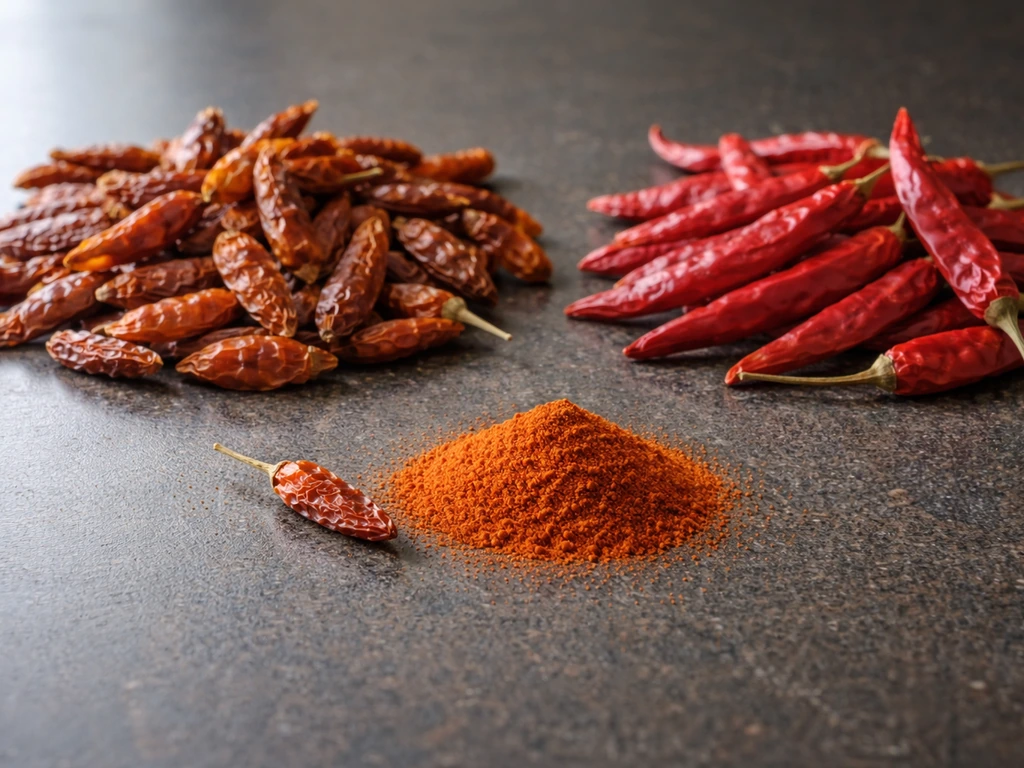
African Bird Pepper vs Cayenne Pepper: Differences and ID
African bird pepper vs cayenne: spot the real pod or powder, compare heat and flavor, substitute safely for birds and pe
Will Mice Eat Hot Pepper Bird Seed? What to Do
Will mice eat hot pepper bird seed? Learn what to do to deter them safely, protect birds, and clean feeders.
Do Seagulls Eat Bird Seed? How to Stop Them
Yes, seagulls often eat bird seed. Learn why they show up and how to block them while keeping feeding safe.