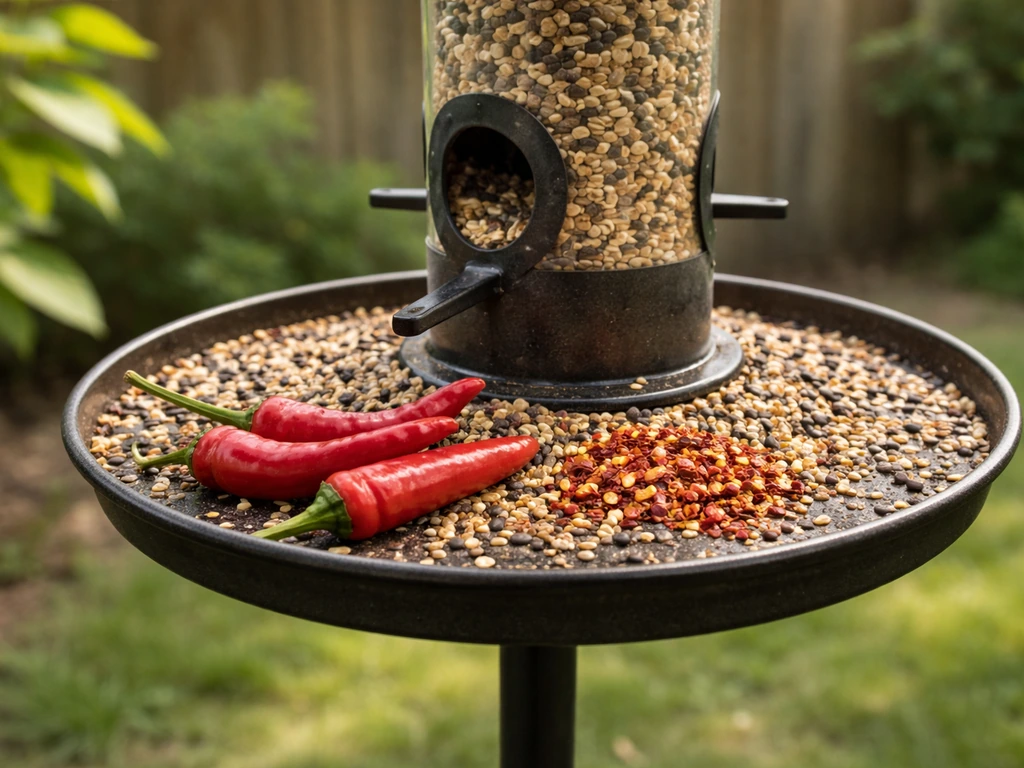
If something is eating your chillies, birds are almost certainly responsible. The most likely culprits in a typical backyard are thrushes, starlings, sparrows, mockingbirds, robins, and house finches, all fruit or seed eaters that will happily peck through a ripe chilli pepper. Birds can eat chillies without any ill effects because capsaicin, the compound that makes peppers hot, simply doesn't trigger pain receptors in birds the way it does in mammals. That's actually by design: pepper plants evolved to attract birds as seed dispersers while putting off mammals that would crush and destroy the seeds.
Which Bird Eats Chillies? Identify and Stop It Fast

Maya Henderson
1 May 2026
The most likely chilli-eating birds in your garden
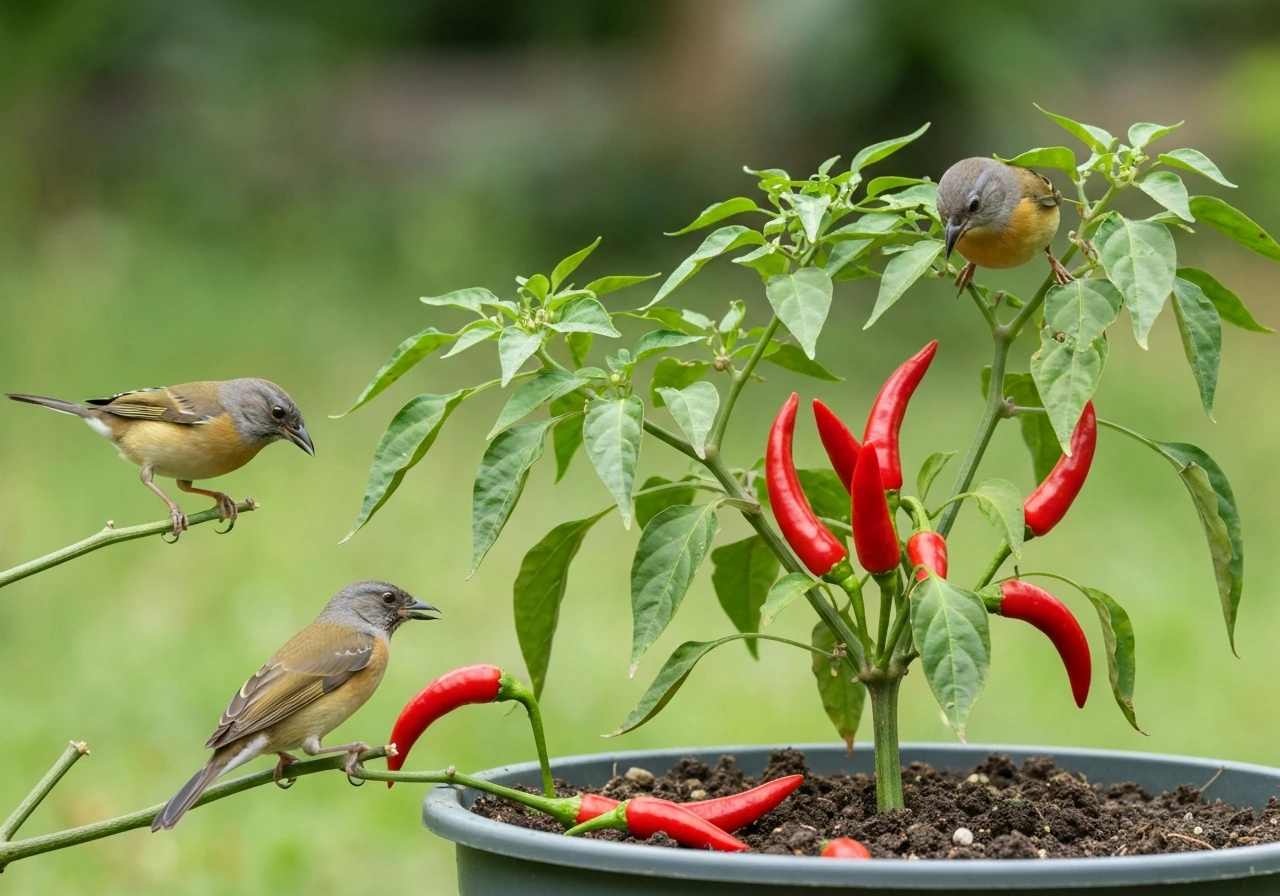
The exact species depends on where you live, but a handful of birds consistently top the list of chilli raiders across most temperate and subtropical regions.
| Bird | What they eat on chillies | When you'll see them | Range |
|---|---|---|---|
| Thrushes (e.g., American Robin, Song Thrush) | Ripe red flesh and seeds | Morning and late afternoon | North America, Europe, widespread |
| Starlings | Flesh and seeds, often in flocks | Any time of day | Widespread, introduced globally |
| House Finches / Goldfinches | Seeds inside the pepper | Morning | North America, Europe |
| Mockingbirds | Ripe fruit flesh | Morning | North and Central America |
| Sparrows (House, White-crowned) | Seeds and soft flesh | Morning and midday | Widespread globally |
| Parakeets / Parrots (urban areas) | Flesh and seeds aggressively | Morning | Urban tropics, introduced UK, Australia |
| Woodpeckers | Pecked entry holes into fruit to reach seeds | Morning | North America, Europe |
If you're in a region where wild parakeets or parrots have established populations (parts of the UK, southern Australia, Florida, or California), they're worth suspecting immediately, they can strip a chilli plant faster than almost any other garden bird.
How to figure out exactly which bird is responsible
You don't need to set up a camera trap to narrow it down, though that helps. A few quick checks on the damage itself and the feeding behavior will usually point you to the right species.
Look at the damage pattern
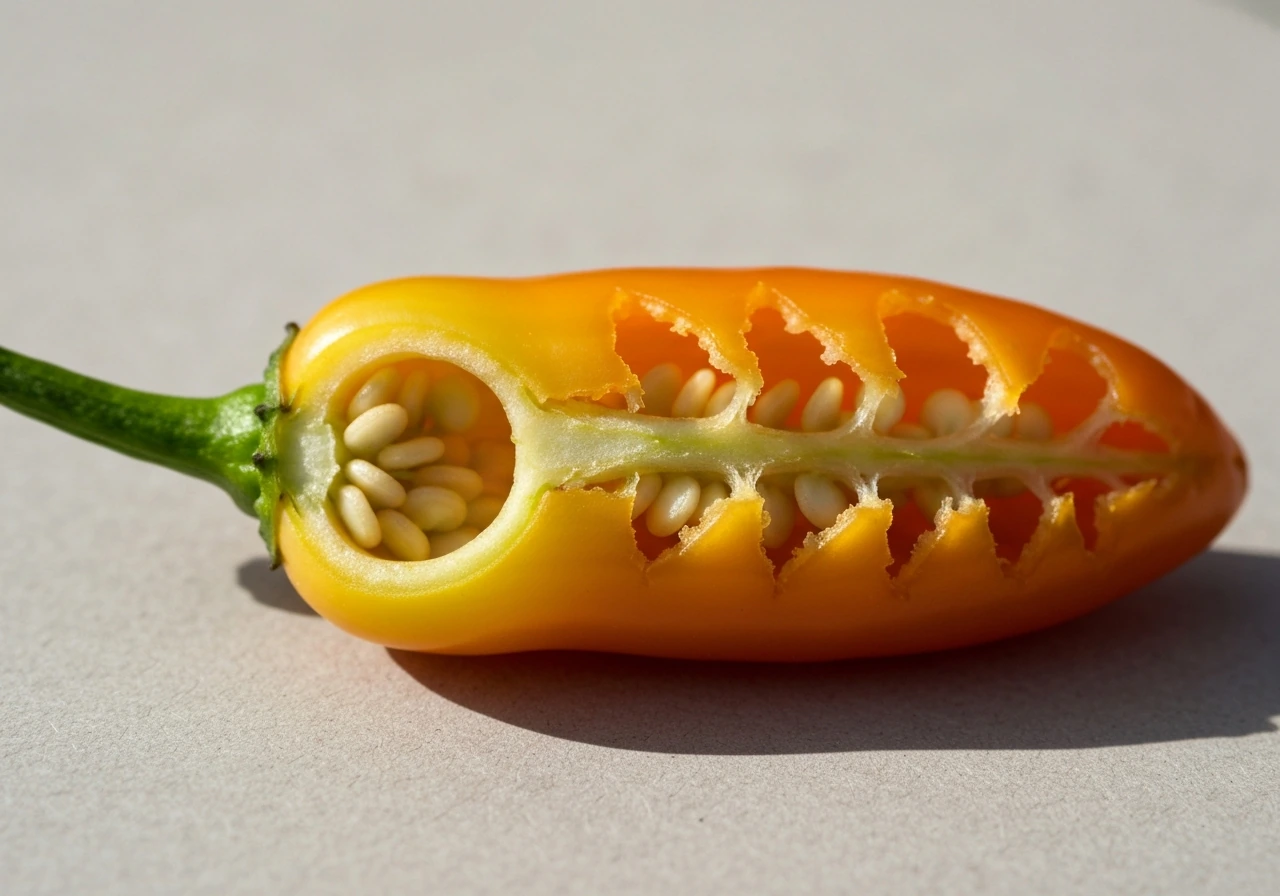
- Clean, hollowed-out peppers with the flesh eaten from inside: finches or sparrows working through to the seeds
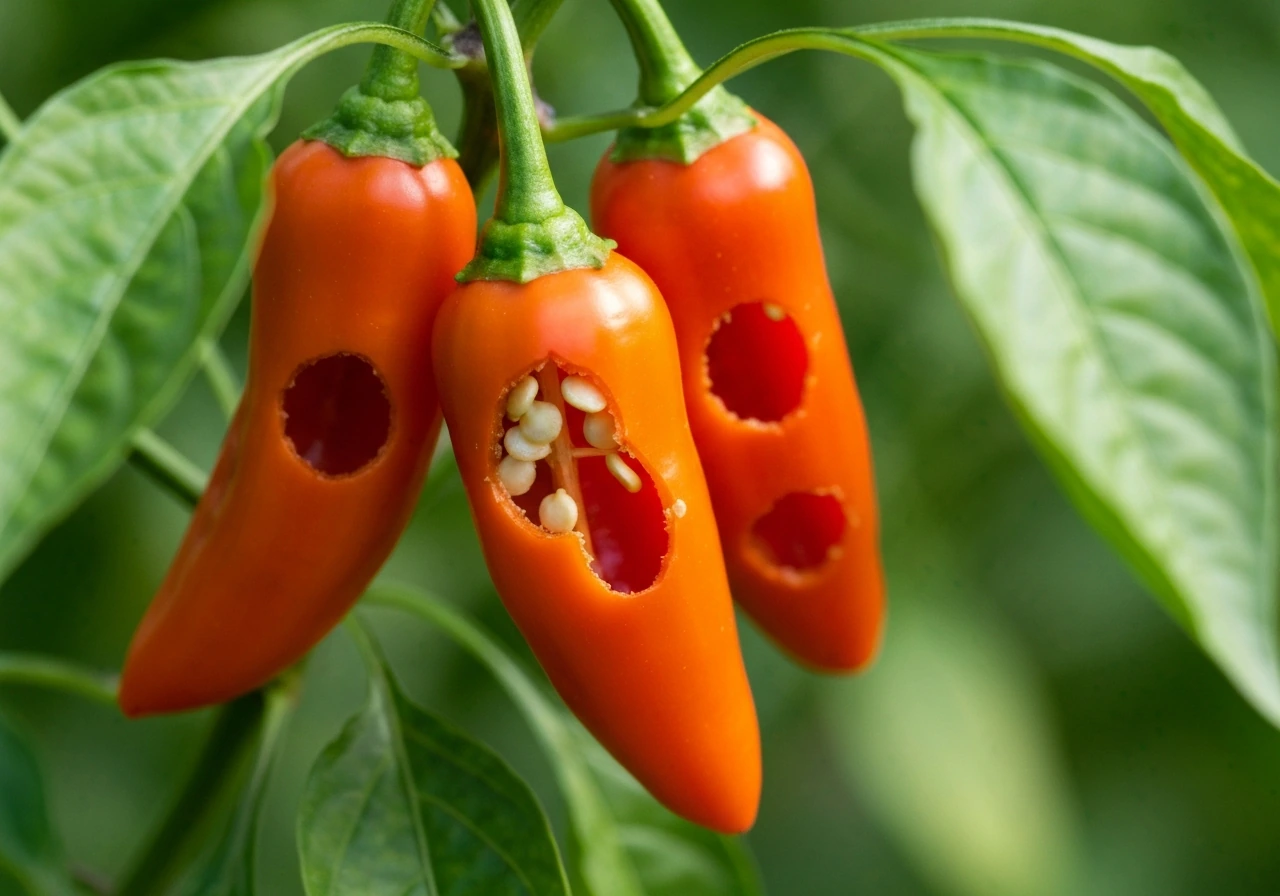
- Ragged pecked holes in the side of the fruit: thrushes or starlings going after flesh
- Whole small peppers disappearing entirely: a larger bird like a mockingbird or starling carrying them off
- Small neat entry holes with seed debris around the base of the plant: woodpecker-style feeding
- Multiple peppers partially eaten in one visit: starlings or parakeets, which tend to feed in groups and move erratically through a crop
Watch the beak shape
Beak shape is one of the most reliable identification shortcuts. Finches and sparrows have short, thick, conical beaks built for cracking seeds open, you'll see them working on the inside of the pepper rather than the skin. Thrushes and robins have slender, medium-length beaks suited for pulling at soft fruit flesh. Starlings have long, pointed beaks they use like tweezers to probe and tear. Parakeets and parrots have unmistakable hooked beaks and will use their feet to hold the pepper while they work on it.
Time of day and flock size
Most songbirds like thrushes, finches, and sparrows feed in the early morning. If you're seeing damage overnight or at dusk, it's worth checking whether it's actually birds at all, squirrels and rats are nocturnal and also target peppers. Starlings almost always arrive in noisy groups. If you see a lone bird working carefully through the plant, think thrush, mockingbird, or robin. If it's a chaotic group stripping the plant fast, it's almost certainly starlings or parakeets.
Why birds eat chillies in the first place
Birds aren't being brave or adventurous when they eat chillies. They genuinely can't feel the heat. Capsaicin binds to a pain receptor called TRPV1, but birds have a version of that receptor that doesn't respond to capsaicin the way mammal receptors do. Research from UW–Madison confirmed that birds fed capsaicin-coated foods showed no negative effects and didn't avoid the food, they were perfectly fine.
This isn't a fluke; it's a co-evolutionary relationship. Pepper plants produce capsaicin specifically to deter mammals like rodents (which grind up seeds and destroy viability) while keeping their fruit attractive to birds, which swallow seeds whole and pass them intact, dispersing them across a much wider area. [Audubon has documented birds as the primary seed dispersers for many wild pepper species for exactly this reason. ](https://www.
audubon. org/native-plants/species/peppervine)
Beyond the biology, ripe red or orange chillies are simply visually attractive to fruit-eating birds. Bright colors signal ripeness and high sugar content in nature. A ripe red chilli hanging in your garden looks, to a thrush or mockingbird, like exactly the kind of food they're looking for.
Stopping birds from eating your chillies
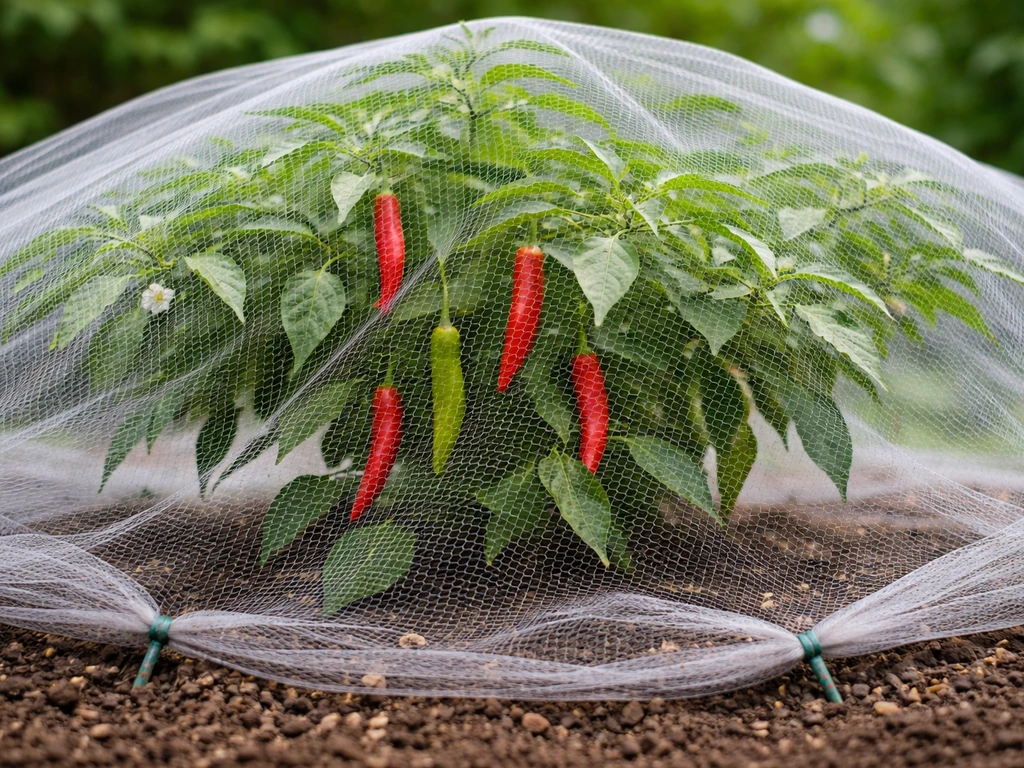
If the birds are raiding your crop and you want them gone, you have a few reliable options. The key is using them in combination rather than relying on any single method.
Physical barriers (most effective)
Netting is the most reliably effective method for protecting fruit crops from birds, and the same applies to chillies. Penn State Extension recommends fine mesh netting draped directly over the plants or supported on a frame above them. Use netting with openings no larger than 1 cm to exclude small birds as well as large ones. Make sure it's secured at the base so birds can't slip underneath. Row cover fabric works in a similar way and has the added benefit of protecting from late frosts.
Visual deterrents (useful but limited)
Reflective tape, old CDs hung from strings, and predator decoys (plastic owls or hawks) can work in the short term. The catch is that birds habituate to static deterrents within a few days to a couple of weeks. If you use them, move them every few days to maintain the effect. Some gardeners combine a static owl decoy with intermittent noise (a motion-activated speaker or wind chimes) to make the deterrent feel more realistic.
Timing and harvest
Birds are most attracted to fully ripe, brightly colored fruit. Harvesting chillies as soon as they turn red (rather than leaving them to hang) significantly reduces the window of opportunity. Is bird pepper the same as cayenne pepper Harvesting chillies as soon as they turn red. If you're growing ornamental chillies, this approach isn't practical, but for edible crops it's one of the simplest fixes.
What doesn't work
- Sprinkling cayenne or chilli powder around the plant — birds aren't deterred by capsaicin at all, so this is completely ineffective
- Leaving other food out to distract them — this often just attracts more birds overall
- Single static scarecrows left in place for weeks — birds learn to ignore them quickly
Attracting chilli-eating birds on purpose
If you want to encourage birds rather than chase them off, whether for pest control, birdwatching, or supporting local wildlife, chillies are actually a useful tool. Dried chilli peppers and chilli-infused bird seed mixes are widely sold specifically because capsaicin deters squirrels and rats while having zero effect on birds. You can hang dried whole chillies near a feeder or mix crushed dried chilli flakes into a standard seed mix to make it more bird-friendly and mammal-resistant.
If you're growing chillies in a dedicated wildlife patch, plant varieties with smaller, brighter fruit, these tend to be more attractive to birds and are closer to wild pepper species. African bird pepper is a specific type of chilli, and it is often compared with cayenne pepper for flavor and heat differences. Position plants where you can observe them easily but where cats can't use them as ambush cover.
Safety checks before you encourage or deter anything
Whether you're trying to attract birds or push them away, a few safety basics apply to any backyard feeding or wildlife situation.
Chillies are safe for birds, but watch for mold
Fresh chillies are completely non-toxic to birds and the capsaicin causes no harm. The risk comes when peppers or seeds are left out and allowed to go moldy. Moldy seed and rotting fruit can carry aflatoxins and other fungal toxins that are genuinely harmful to birds. If you're leaving out dried chillies or a chilli-infused seed mix, check it regularly and remove anything that looks damp, discolored, or smells off. This applies to standard feeders too, the same rules around feeder hygiene cover chilli-based mixes.
Protect your pets
Capsaicin is a real irritant for dogs and cats. If birds are eating chillies in your garden and dropping pieces, or if you're using chilli seed mixes in a feeder, make sure your pets can't access fallen seed or fruit scraps on the ground. Chilli plant leaves and stems also contain solanine and other alkaloids that can cause digestive upset in dogs if eaten in quantity. Keep feeders and chilli plants out of reach, and clean up any fallen fruit or seed regularly.
Don't create pest attractors
Fallen or rotting chillies on the ground don't just attract birds, they attract rats and mice too. This is worth keeping in mind if you've noticed rodent activity in your garden. Hot pepper bird seed is sometimes marketed as a rodent deterrent, but the evidence for whether mice and rats truly avoid it varies.
If you’re wondering whether mice eat hot pepper bird seed, the key takeaway is that the evidence is mixed and it may still attract rodents whether mice and rats truly avoid it. Keeping the ground under feeders and chilli plants clean is the safest approach regardless. Related to this: raccoons are also opportunistic feeders and may investigate any concentrated food source in your garden, hot peppers included.
Yes, raccoons will often eat hot pepper bird seed if it is available, since they are opportunistic feeders do raccoons eat hot pepper bird seed. Raccoons can also target hot pepper bird seed, so it's smart to consider deterrents if they're showing up near your feeder.
Quick safety checklist
- Remove fallen or rotting fruit from the ground at least every two to three days
- Never leave out moldy seed or decomposing chilli plant material near feeders
- Keep pet food and water bowls indoors or well away from bird feeding areas
- Check netting regularly to make sure no birds or small animals are trapped
- Move visual deterrents every few days so birds don't habituate
- If using chilli bird seed mixes, store unused seed in a sealed, dry container
The bottom line is that birds eating your chillies are doing exactly what nature designed them to do, and with a bit of observation you can usually identify the culprit within a day or two of watching. Whether you want to protect your crop or lean into it and create a wildlife-friendly corner of the garden, the steps above will give you a clear path forward.
FAQ
How can I tell whether birds are pecking from the outside versus eating the pepper interior?
Yes. If the pods are mostly intact, the bird is likely eating the interior and leaving partial skin behind. If you find pepper skins pecked and dragged away, that often points to starlings (probing) or finches/sparrows (cracking the inside). If entire plants are quickly stripped with little hesitation, parakeets or parrots are more likely than a single lone songbird.
If I’m seeing chili damage at night, is it still birds?
Overnight damage or dusk-only activity can be birds that forage at those times, but it also overlaps with squirrels and rats. A practical check is what you find on the plant and ground: birds typically leave small droppings and fragments near the feeding spot, while rodents often chew stems or leave gnawed, larger clumps and may pull whole peppers to feed elsewhere.
What are the most reliable clues if beak shape is hard to see?
Beak shape is helpful, but weather and plant stage can confuse things. Another reliable clue is group behavior and timing, starlings often show up in noisy flocks, finches and sparrows tend to work single plants methodically, parrots/parakeets move quickly and may use feet to stabilize the pepper.
Do reflective tape or plastic owl decoys actually work long term for chili theft?
Feeding deterrents like reflective tape and decoys often fail after birds habituate. If you try them, set a schedule to rotate positions every few days, and pair them with a physical barrier like fine netting for the period when chillies are turning color (when risk is highest).
What mistakes make bird netting ineffective on chilli plants?
Netting is the strongest option, but only if it’s installed correctly. Ensure it’s tight with no gaps at the base, don’t leave slack that birds can reach into, and check after storms because sagging openings can appear within a day.
If birds are targeting ripe chillies, when should I harvest to reduce losses without ruining flavor?
Cutting peppers early can help, but taste and heat development can vary by variety. If you harvest as soon as they start turning red or orange, plan to test one plant at multiple stages (early turning, mostly ripe, fully ripe) to find the balance between harvest quality and bird pressure.
Will chili debris on the ground attract more pests or cause pet issues?
Yes, especially if you leave lots of fallen pepper fragments or seed on the ground. Pick up scraps daily during a raid, and keep feeders and any chilli-based mixes well away from pets and from where cats can ambush.
Is chilli-based bird seed safe and effective if it gets damp or moldy?
Capsaicin-based deterrent products are meant to deter mammals like squirrels and rats, but moldy seed or rotting fruit can still be harmful. For anything you leave out, inspect regularly, remove damp or discolored parts, and avoid storing chilli seed mixes in humid conditions.
How can I encourage birds with chillies without creating a mess that draws rodents or irritates pets?
If you want to encourage birds, avoid using fresh chillies on feeding sites intended for mammals. Use dried chillies or chilli-infused seed mixes in a controlled area, and place it where you can clean up easily and where pets cannot reach fallen bits.
What should I do if birds still eat my chillies even after I set up deterrents?
Chillies can still be eaten by birds even if you’ve had deterrents in place, because the birds may learn where the barrier fails. Do a quick inspection after heavy winds or rain, look for tiny gaps, and confirm there’s still no access point around supports, stakes, or plant edges.
Next Article
Will Rats Eat Hot Pepper Bird Seed? Practical Fixes
Learn if rats eat hot pepper bird seed and stop feeder raids with practical cleanup, exclusion, and safer deterrent step