Raccoons will absolutely eat hot pepper bird seed. Unlike birds, raccoons can detect capsaicin and may find it unpleasant at first, but they often push through it anyway, especially if they're hungry or have already decided your feeder is worth investigating. Capsaicin-based deterrents are not a reliable long-term fix for raccoons at bird feeders. They can buy you a little time, but exclusion methods like baffles, caged feeders, and smarter placement are what actually solve the problem.
Do Raccoons Eat Hot Pepper Bird Seed? Fix It Today

Maya Henderson
12 May 2026
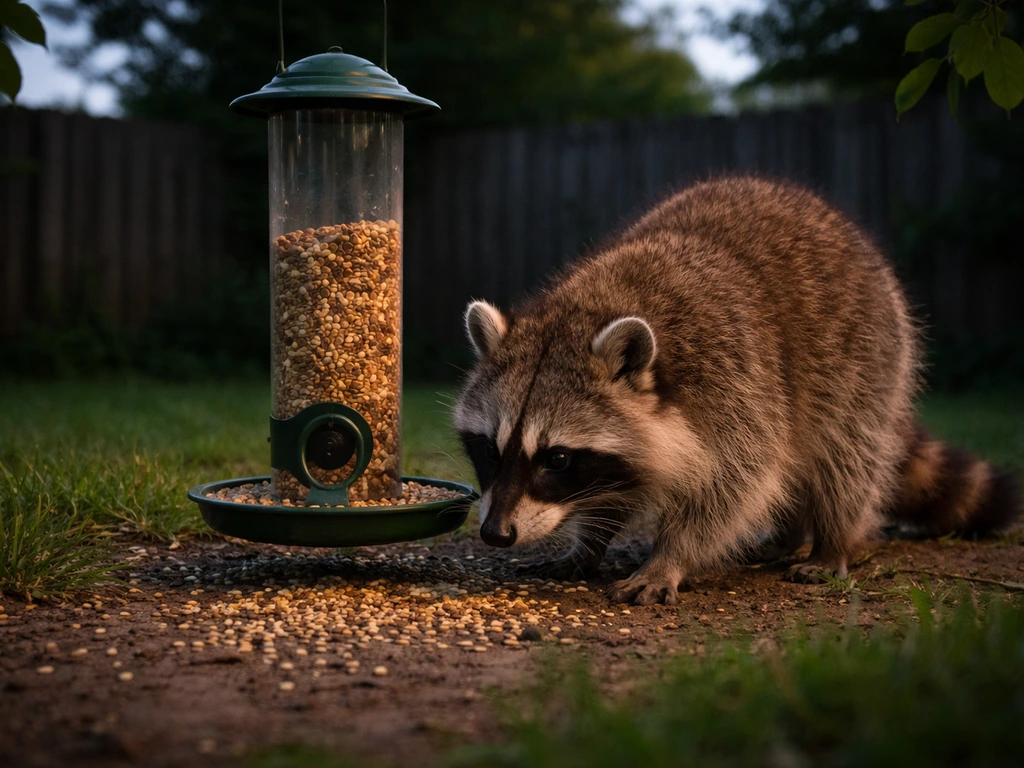
Raccoons and bird feeders: yes, they absolutely go together
Raccoons are opportunistic omnivores with a strong preference for easy, calorie-dense food. Indiana DNR specifically lists bird feeders among the "choice food spots" raccoons visit, and the U.S. Fish and Wildlife Service has documented raccoons raiding feeders directly. Their diet in the wild includes bird eggs, fish, insects, fruit, and whatever they can scavenge near people, so a feeder full of sunflower seeds, peanuts, or suet is basically a free meal to them.
The timing matters too. Research from the USDA Forest Service notes that raccoon feeding activity peaks before midnight, which is why many people wake up to a tipped or emptied feeder without ever catching the culprit. If your feeder keeps getting raided overnight, raccoons are a very likely suspect.
Will raccoons eat bird seed treated with hot pepper?
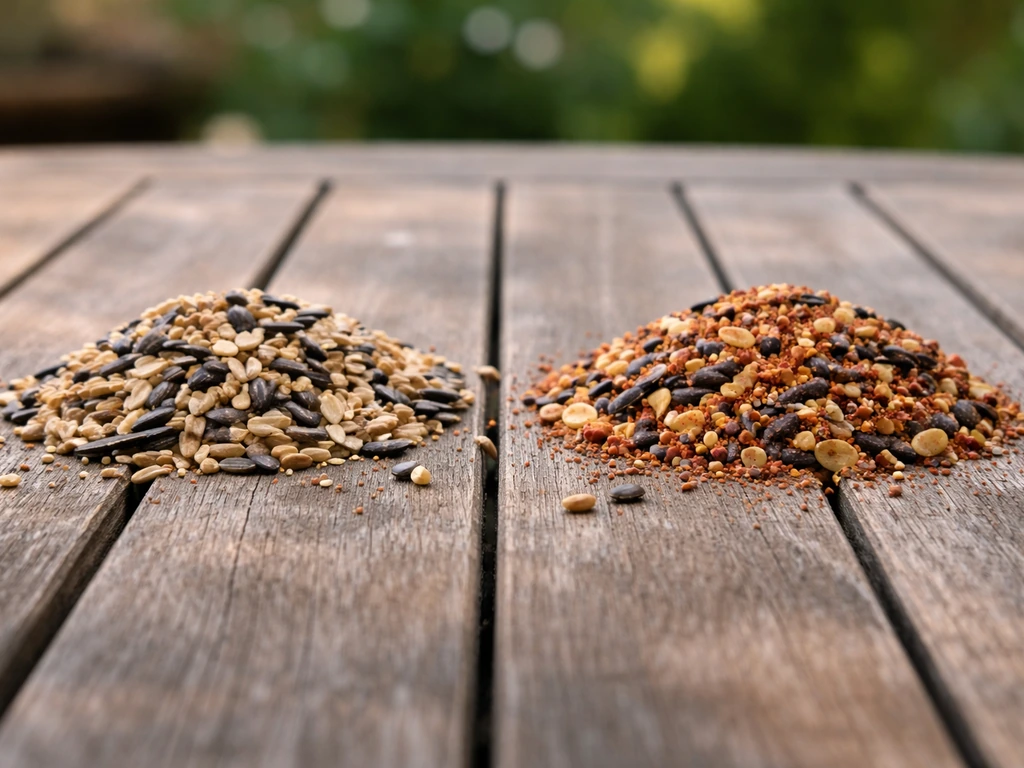
Some raccoons will back off from heavily capsaicin-treated seed initially. Others won't bother. The honest answer is that it depends on the individual animal, how hungry it is, and how long it's been visiting your yard. Studies on capsaicin-treated seed show it can reduce consumption by squirrels, but raccoons are more persistent and more motivated by scent and learned behavior than pure taste aversion. The Internet Center for Wildlife Damage Management states plainly that cayenne pepper in bird seed doesn't always work as a deterrent.
The reason the biology works differently for birds is worth understanding. Birds lack the receptors that register capsaicin as an irritant, so spicy seed is completely neutral to them. That's why hot pepper seed exists as a product at all. It's genuinely safe for birds and genuinely unpleasant for most mammals. If you are curious which bird eats chillies, it is worth checking how different species respond to capsaicin in their diet hot pepper. But "unpleasant" doesn't mean "impossible to ignore," and raccoons are stubborn foragers.
How to tell if it's actually raccoons hitting your feeder
Before you invest time and money in a solution, it's worth confirming who's actually raiding your feeder. Raccoons leave pretty clear evidence.
- Hand-shaped tracks: Raccoon prints look remarkably like small human handprints, with five fingers spread out. You'll often find them in mud or soft soil near the base of a feeder pole or on a deck railing.
- Latrines nearby: Raccoons tend to defecate in the same spots repeatedly, often near food sources. K-State Extension even notes raccoons sometimes defecate in feeders themselves. Scat is usually tubular, 2 to 3 inches long, and may contain seed hulls or fruit remnants.
- Tipped or knocked-down feeders: Raccoons are strong enough to pull a hanging feeder down or tip a platform feeder completely over. Squirrels tend to chew; raccoons tend to grab and pull.
- Night-only activity: If your feeder is full at dusk and empty by morning, that pattern strongly suggests a nocturnal visitor like a raccoon rather than birds or daytime squirrels.
- Smeared or sticky residue: Raccoons handle food with their paws and often wet them, leaving smeared surfaces on feeders or feeder poles.
If you're still unsure, a cheap trail camera pointed at your feeder overnight will confirm it within a night or two. It's the fastest way to rule out other suspects like opossums, rats, or even neighborhood cats. Rats may also eat hot pepper bird seed, especially if they are hungry and the feeder is easy to access opossums, rats, or even neighborhood cats.
Why hot pepper often stops working over time
Even when capsaicin-treated seed does discourage a raccoon initially, that effect tends to fade. Virginia Tech's extension guidance on raccoon management explains this clearly: chemical repellents can lose effectiveness through habituation. If the raccoon decides there's no real consequence to pushing through the unpleasant experience, and there's food on the other side, it will start ignoring the deterrent. The Wildlife Center of Virginia puts it even more directly, noting that taste and scent deterrents work short-term at best, and that repeated application is necessary, especially after rain washes the capsaicin away.
This is the core problem with relying on hot pepper seed as your main strategy: you're working against a smart, adaptable animal that learns quickly. A raccoon that's been visiting your yard for weeks has already figured out the layout, the timing, and the rewards. Adding cayenne to the mix is an inconvenience, not a barrier. If you're wondering whether bird pepper is the same as cayenne pepper, the ingredients and heat level can be different, so it's worth checking the label before you substitute Adding cayenne. The same habituation dynamic applies to other repellents like predator urine sprays or motion-activated lights, which is why exclusion is ultimately the only method wildlife experts call a long-term solution.
Feeder changes that actually keep raccoons out
The Wildlife Center of Virginia states outright that thorough exclusion is the only permanent solution to raccoon access. That's the honest bottom line. Here's what exclusion actually looks like in practice at a bird feeder.
Pole placement and height
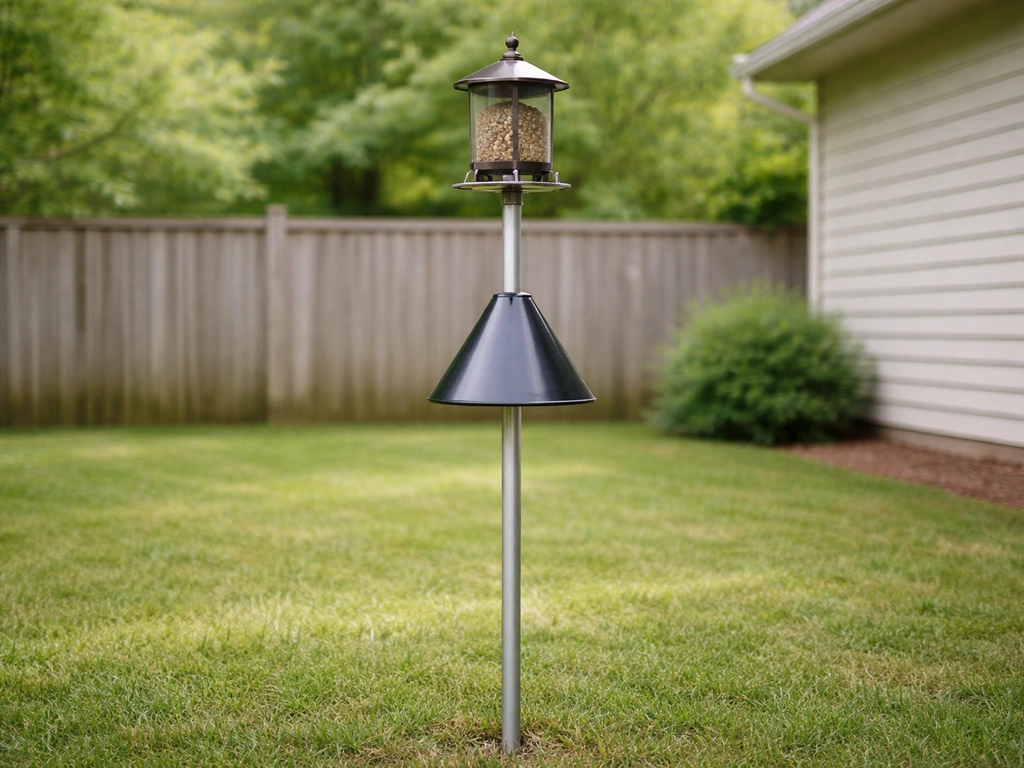
Mount your feeder on a smooth metal pole at least 5 to 6 feet off the ground. Raccoons are good climbers but struggle with smooth surfaces. Keep the pole at least 10 feet away from trees, fences, rooflines, and anything else they can use as a launch point. If your current pole is wooden or textured, switching to metal makes a real difference.
Baffles
A cone or cylinder baffle mounted on the pole below the feeder is one of the most effective single upgrades you can make. A baffle should be at least 17 inches in diameter to prevent raccoons from reaching around it. Mount it 4 to 5 feet off the ground. Stovepipe baffles (the cylindrical style) tend to outperform cone baffles for raccoons specifically because they can't hook a paw over the edge.
Caged feeders
Feeders encased in a wire cage with openings sized for small birds but too small for raccoon paws are a practical option, especially for tube feeders. The cage surrounds the seed ports so the raccoon simply can't reach in. These work well for songbirds and are available commercially. They also deter squirrels.
Bring feeders in at night
Since raccoon peak feeding activity is before midnight, bringing hanging feeders inside in the evening and putting them back out in the morning eliminates nighttime access completely. This isn't convenient for everyone, but it's the simplest and most reliable short-term fix while you set up a more permanent exclusion system.
Clean up spilled seed
Seed on the ground under your feeder is a major attractant. Even if a raccoon can't reach your feeder, it may keep visiting the area for ground-level leftovers. Using a tray or catcher that contains spillage, and sweeping or raking under the feeder regularly, removes the scent trail that keeps drawing them back.
Safety risks: birds, pets, and other wildlife around treated seed
Hot pepper seed is generally considered safe for birds, and that's well-supported. The ICWDM notes there's no evidence that birds register capsaicin as an irritant even at concentrations up to 20,000 ppm. So if you're using a commercially produced capsaicin-coated seed, you don't need to worry about harming your songbirds.
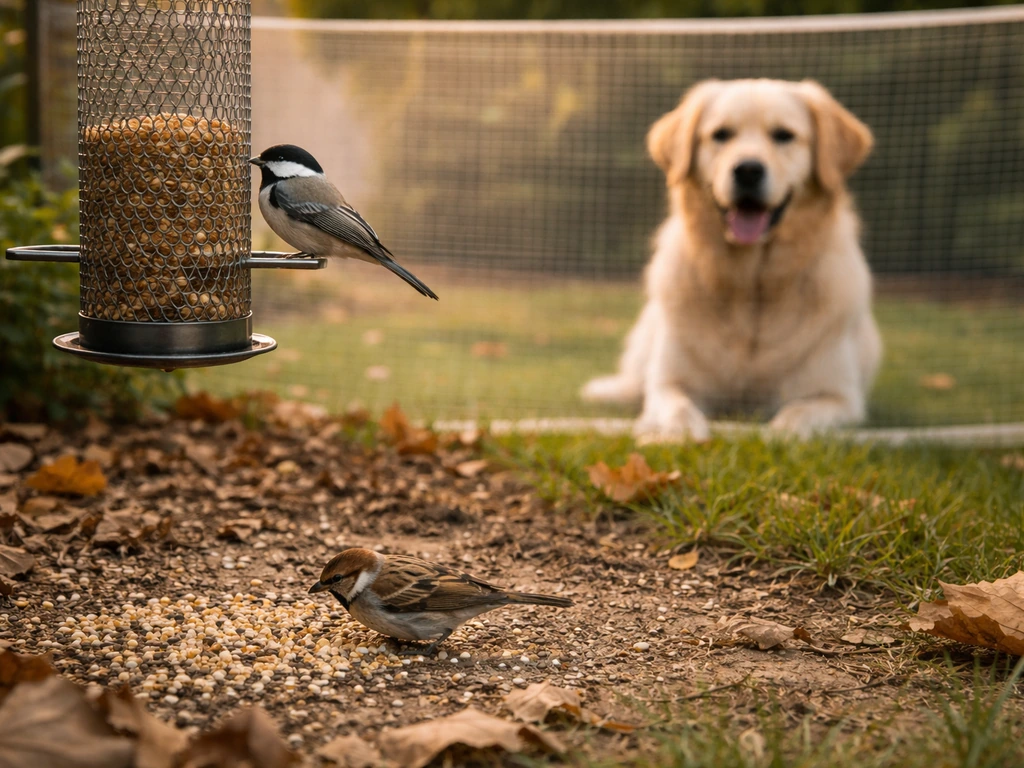
Pets are a different story. Dogs and cats that sniff at or mouth spilled hot pepper seed can experience eye and mouth irritation, excessive drooling, or pawing at the face. It's not toxic in small amounts, but it's unpleasant and can cause real discomfort. If you have dogs or outdoor cats, keep the area under your feeder clean and consider where spillage might land. Related questions come up about whether other mammals like mice or rats will eat hot pepper seed, and the short answer is similar: they can detect capsaicin but may still eat treated seed when hungry enough.
Moldy seed is a more serious concern that often follows raccoon raids. When a raccoon knocks a feeder around, cracks open shells, or leaves debris behind, it creates conditions where moisture and organic matter combine and mold grows quickly. The USDA notes that mold can produce dangerous mycotoxins, and the general guidance is clear: when seed is visibly moldy or wet and clumped, discard it entirely. Don't just top it off. Clean the feeder with a 10% bleach solution, rinse it thoroughly, and refill with fresh dry seed. This applies any time you notice seed looking dark, wet, or smelling off, not just after a raccoon visit.
What to do right now, today
If raccoons hit your feeder last night and you want to act immediately, here's the practical sequence.
- Bring the feeder in tonight. Don't wait to install a baffle. Just take it inside before dark.
- Clean the feeder. Discard any seed that's been disturbed, wetted, or left out overnight. Wash with a dilute bleach solution and dry completely before refilling.
- Clean up spilled seed from the ground. Rake or sweep the area under and around where the feeder hangs.
- Check your pole or hanging setup. If it's mounted near a tree, fence, or structure a raccoon can jump from, plan to relocate it to a more open spot.
- Order or buy a stovepipe baffle this week. Install it at 4 to 5 feet on a smooth metal pole, at least 10 feet from any structure.
- If you want to use hot pepper seed in the meantime, go ahead, but treat it as a temporary inconvenience for the raccoon, not a permanent fix. Reapply or replace it after any rain.
- Set a trail camera if you're unsure who's raiding the feeder. One night of footage saves a lot of guesswork.
- If raccoon activity is persistent and causing real problems, contact a local wildlife control operator for exclusion help. Virginia Tech extension recommends this route when DIY exclusion isn't enough.
The honest takeaway is that hot pepper seed is a minor deterrent at best for raccoons, not a solution. Smart placement, a good baffle, and keeping the area clean will do far more to protect your feeder and keep birds safe than any spice additive. Raccoons are smart enough to figure out your yard eventually, but making your feeder physically inaccessible is something they can't adapt their way past.
FAQ
If hot pepper seed scares raccoons, why do they come back anyway?
Yes, raccoons can eat it and they can do so repeatedly. If you still want to use hot pepper seed, treat it as a short-term “speed bump,” not a fix, and rely on a baffle, feeder cage, or better placement to actually stop access.
How can I tell whether it was raccoons or another animal eating my bird seed?
Look for patterns like seed scattered on the ground, feeder tipped or dragged, and paw marks on the pole or sides. Raccoons often work from the feeder outward and leave cracked shells or debris, while many bird-focused pests (like some squirrels) may focus on grabbing one port rather than dismantling the setup.
What’s the quickest way to confirm who is raiding my feeder before I change products?
Do not assume it was raccoons just because you saw activity once. Rats, opossums, and even neighborhood cats can raid feeders, and they can also be attracted by spilled seed under the feeder. A trail camera overnight is the fastest way to confirm.
Does rain or wet weather make hot pepper bird seed less effective?
If you have rain, fresh “deterrent” performance can drop because the active compound gets washed off or diluted. After heavy wet weather, re-check your setup for gaps and spillage, and expect you may need to reapply deterrent seed or switch to a physical barrier.
How long does hot pepper bird seed usually deter raccoons before it stops working?
In practice, capsaicin deterrents usually stop working because raccoons habituate to the unpleasant taste or smell. Once a raccoon has mapped your feeder’s timing and learned there is still reward on the other side, it keeps coming even if it initially backed off.
Is bird pepper the same as cayenne, and will any hot seed work?
Switching brands can matter. “Bird pepper,” “cayenne,” and “hot pepper blend” are not guaranteed to have the same heat level or formulation as cayenne-only products, so a replacement seed may be less spicy than you think. Check the label for what’s actually coated and follow the manufacturer instructions.
If I can’t stop them from reaching the feeder, how do I stop them from feeding on spilled seed?
Clean-up is part of the deterrence. If seed falls below the feeder, raccoons may keep visiting the yard for the easiest calories even if they cannot reach the tray or ports. Use a catcher/tray, rake or sweep frequently, and keep the ground area managed daily until you add exclusion.
Is hot pepper bird seed safe around pets, especially if it spills?
Yes, dogs and cats can get irritated. Mouth or eye irritation, drooling, and pawing at the face are possible if they mouth spilled treated seed. Keep spillage contained and choose placement where pets cannot reach the ground-level leftovers easily.
What should I do with seed after a raccoon knocks the feeder over or leaves debris?
Discard seed that looks wet, clumped, or moldy, and do not just top it off. After a feeder raid, mold risk rises because cracked shells and debris create moisture and organic material. Clean the feeder thoroughly with a proper bleach solution, rinse well, and refill with dry, fresh seed.
What exclusion setup works best if I want to stop raccoons permanently instead of using hot pepper seed?
Height and launch-point clearance can make or break results. Use a smooth metal pole, place the feeder far from trees, fences, and rooflines, and aim for a pole height of several feet so a raccoon cannot easily reach or grab a path around the deterrent.
Will a baffle or caged feeder work even if I’m already using hot pepper seed?
It depends, but many raccoons can learn around partial fixes. If you try a baffle, make sure there is no reachable gap below it, and ensure the baffle blocks paw access. A cage-style feeder works well for preventing direct access to seed ports.
Next Articles
Which Bird Eats Chillies? Identify and Stop It Fast
Find which bird pecks your chillies using beak and feeding clues, then deter quickly and safely or attract the right bir
Will Rats Eat Hot Pepper Bird Seed? Practical Fixes
Learn if rats eat hot pepper bird seed and stop feeder raids with practical cleanup, exclusion, and safer deterrent step
African Bird Pepper vs Cayenne Pepper: Differences and ID
African bird pepper vs cayenne: spot the real pod or powder, compare heat and flavor, substitute safely for birds and pe