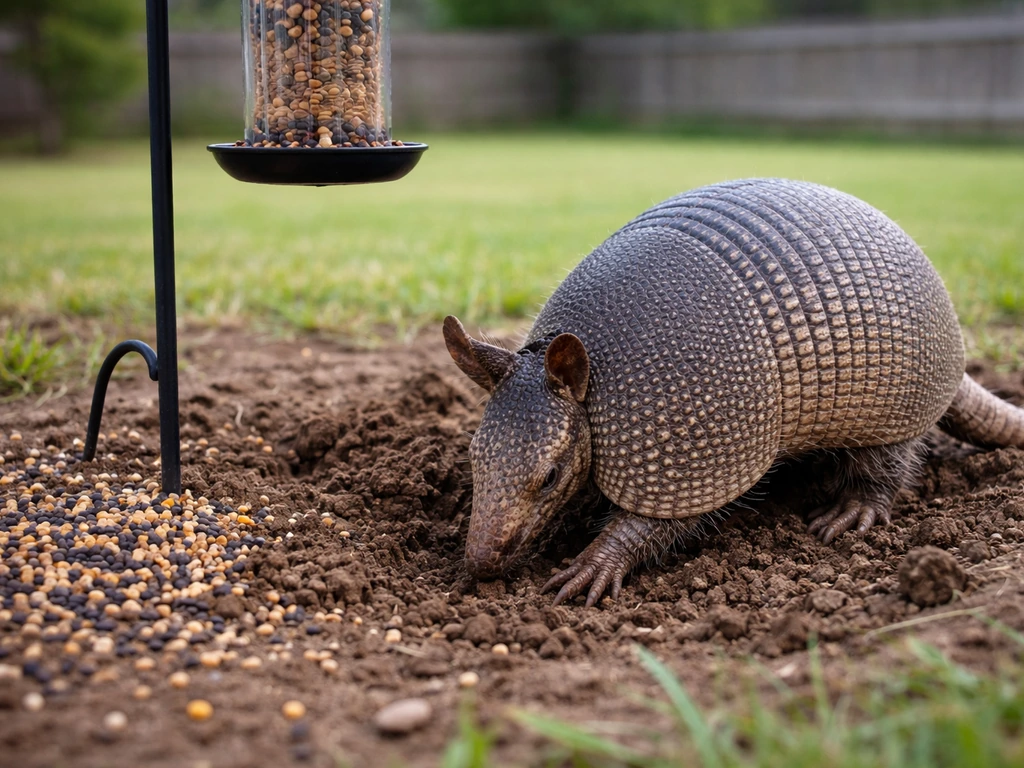
Yes, armadillos will eat bird seed, but it is not their main goal. They are primarily after insects, grubs, and earthworms in the soil beneath and around your feeder. The bird seed itself is an opportunistic bonus, easy calories sitting on the ground. Yes, that same spilled seed and ground-level access can also attract sandhill cranes to bird seed when they are foraging nearby do sandhill cranes eat bird seed. If you are finding scattered seed, small digging pits, and the mess appears overnight, there is a good chance an armadillo is working your feeder area.
Do Armadillos Eat Bird Seed? What to Do in Your Yard

Maya Henderson
25 Apr 2026
What armadillos actually eat
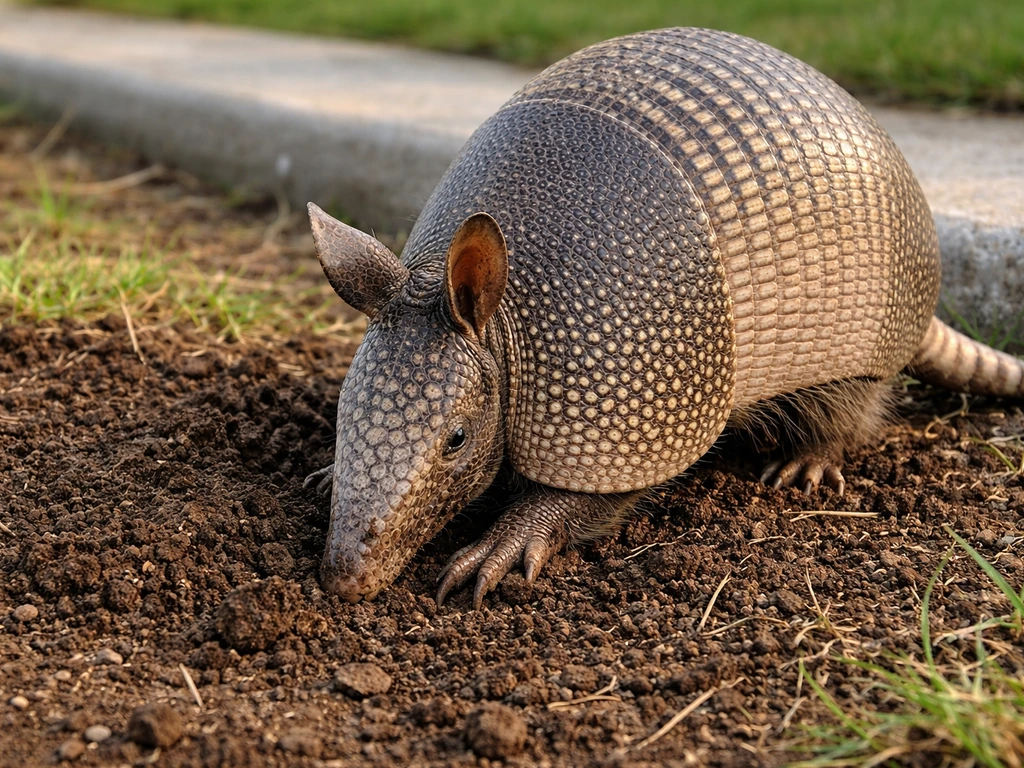
Nine-banded armadillos are insect-eating mammals first and foremost. Their diet is blank" rel="noopener noreferrer">built around invertebrates: beetle larvae, grubs, earthworms, ants, and termites. They find this food by smell and use their long claws to dig in loose, moist soil, often creating foraging pits up to about 5 inches deep. They do occasionally eat berries and bird eggs when they come across them, which tells you they are opportunistic enough to eat whatever is easy and accessible, including spilled bird seed.
The main thing that draws an armadillo to your feeder area is not the seed itself, it is the combination of moist, soft soil underneath (which holds grubs and worms) plus an easy pile of grain on the ground. Once they find that setup, they will keep coming back. Armadillos do not store fat reserves the way some animals do, so they forage repeatedly and regularly, meaning one visit often turns into many.
When do armadillos forage?
Armadillos are most active in the evening and at night during warm months, and on warm winter afternoons or overcast days when temperatures stay comfortable. On cloudy or rainy warm days they may root around throughout daylight hours. When it gets hot, they retreat to their burrows and come back around twilight. That timing matters a lot when you are trying to figure out what is raiding your feeder.
Armadillo vs. bird activity: how to tell who is the culprit
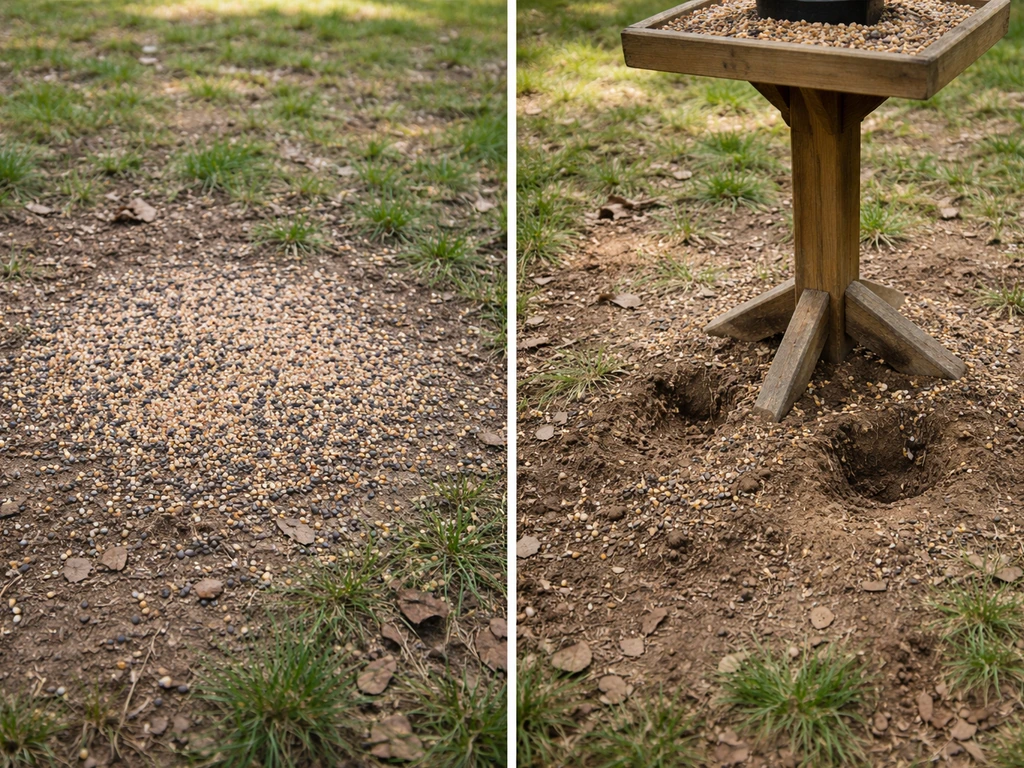
Birds and armadillos leave very different signs. Seed scatter from birds is messy but tends to stay on the surface, and you will see it throughout the day as birds come and go. Armadillo activity shows up as something different and more destructive. Here is what to look for: Mourning doves can also feed at bird feeders, so it helps to understand what attracts them when you are troubleshooting feeder visitors do mourning doves eat from bird feeders.
- Small digging pits in the soil around or underneath the feeder, often 2 to 5 inches deep, in moist or soft ground
- Seed scattered or pushed aside overnight, with no daytime explanation
- Claw scratch marks in soft dirt or mulch
- Narrow, pointed tracks about 3 inches wide with claw impressions at the tip of each toe
- Burrow entrances concealed under nearby shrubs, decks, or low structures
- No activity visible on a camera during daylight hours, but mess present in the morning
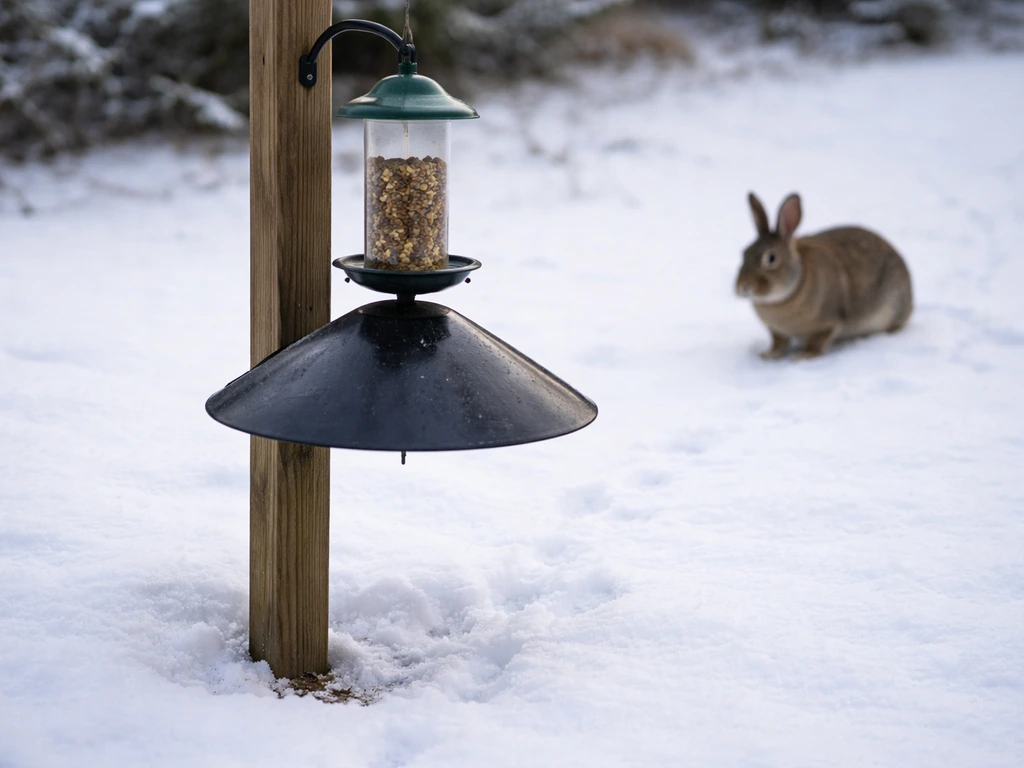
A trail camera set to record from dusk to dawn will confirm it quickly. Armadillos are not subtle, they rootle around visibly and often stay in one spot for several minutes. If your camera shows nothing at night but you still find digging, consider rabbits or squirrels (which are daytime foragers). In winter, rabbits may also eat spilled bird seed if it is available at ground level rabbits or squirrels.
Deer will also knock feeders around, but they leave hoof prints and rarely dig. In winter, deer may also eat bird seed if it is available at ground level and easy to reach Deer will also knock feeders around. Deer will also knock feeders around, but they leave hoof prints and rarely dig will killdeer eat bird seed.
That said, bird seed can also attract deer, since spilled seed is easy to reach at ground level can bird seed kill deer. Other nighttime wildlife like raccoons and opossums are messier and tend to disturb the feeder itself rather than just the ground beneath it.
Risks of leaving bird seed out: mold, contamination, and problem wildlife
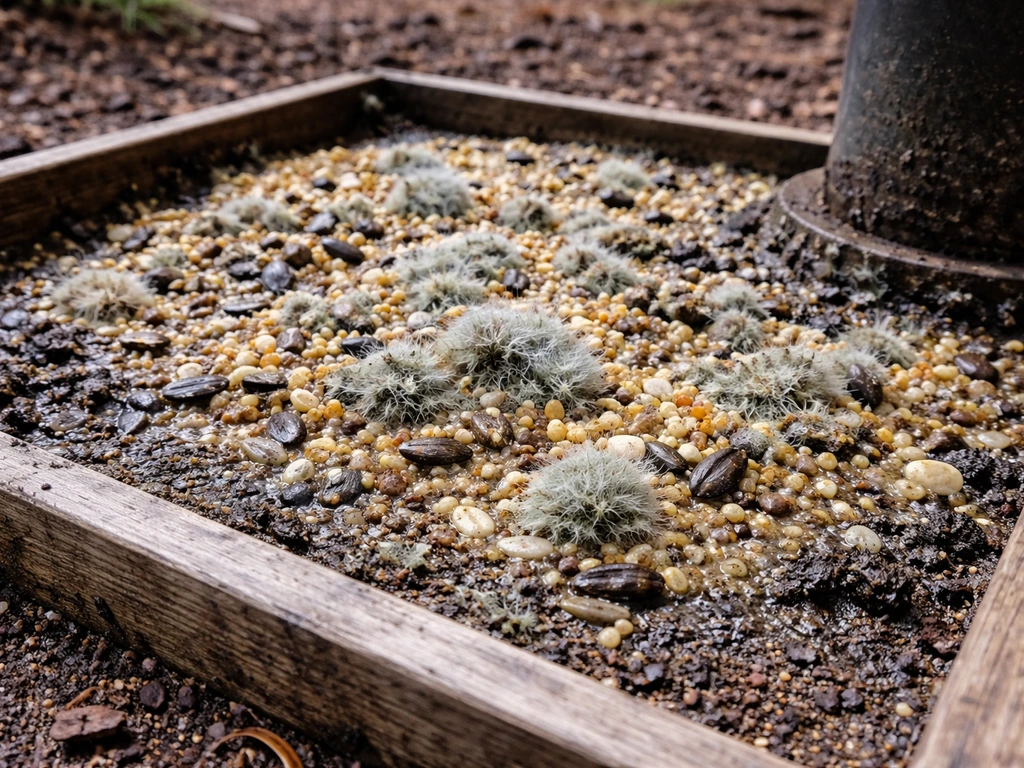
This is where the issue gets more serious than just seed disappearing. Spilled seed on the ground gets wet, and wet seed molds fast. Mold and bacteria, including salmonella, can grow in damp, spoiled seed and in the bird droppings that accumulate underneath feeders. That contaminated ground-level seed is exactly what an armadillo is rooting through, and it is also what a curious dog or cat might sniff out and eat.
Salmonella is the main concern here. It can thrive in the wet seed-and-droppings mix under a feeder, and it can make birds, wildlife, and pets sick. The U.S. Fish and Wildlife Service flags the ground below feeders as a real disease risk, not just the feeder itself. Moldy seed is also simply bad nutrition for any animal eating it, and birds that eat spoiled food can carry and spread illness across your yard and into local flocks.
The broader problem is that a ground-level food source does not just attract armadillos. It draws rodents, which can then attract larger predators. Leaving spilled seed to accumulate is how a backyard feeder setup quietly becomes a wildlife management problem.
How to stop armadillos from getting to your bird seed
The most effective strategy is cutting off their access to spilled seed and making the soil under the feeder less hospitable. You do not need to trap or relocate the animal to solve the problem, removing the attractant is usually enough since armadillos move on when an area stops producing easy food.
Daily and weekly cleanup habits
- Sweep or rake up spilled seed from the ground under your feeder every evening before dark, before armadillos start their foraging run
- Use a tray or seed catcher under tube feeders to intercept fallen seed, and empty that tray daily
- Clean your feeder thoroughly every two weeks minimum — more often during wet or warm weather when mold grows faster
- Use a 9-to-1 water-to-bleach solution to scrub feeders and rinse well before refilling
- Remove any wet or clumped seed from the feeder immediately, as that material molds within 24 to 48 hours in humid conditions
Feeder design and placement changes
- Mount feeders on a pole at least 5 feet off the ground — armadillos cannot jump and rely on what falls to the ground
- Avoid platform or tray feeders at ground level, which give direct access to seed and require the most frequent cleaning
- Use no-waste seed mixes (like hulled sunflower chips or nyjer) that produce less shell litter on the ground
- Add a baffle below the feeder to prevent other animals from climbing the pole
Fencing and physical exclusion
If armadillos are persistent, a fence around the feeder area is the most reliable deterrent. A fence taller than 12 inches will stop most armadillos, but it needs to fit closely at the base since they will exploit any gap. Armadillos can also dig under fencing, so the most effective setup includes a buried apron: extend the bottom of the fence a few inches underground and bend it outward at an angle so they cannot dig straight under. Hardware cloth or heavy wire mesh works well for this.
If fencing is not practical, reducing the insect population in the soil under your feeder, through appropriate lawn treatment, can also discourage armadillos from returning, since it removes the other half of what they are searching for.
Setting up your feeding area to be safer long-term
The cleanest bird-feeding setup is one where very little seed ever reaches the ground. Yes, spilled bird seed can also affect other plants and might contribute to grass getting damaged over time does bird seed kill grass. That means choosing the right feeder style, the right seed, and building a cleanup routine into your schedule, not doing it when you notice a problem, but before one starts.
| Feeder Type | Ground Spill Risk | Wildlife Attraction Risk | Cleaning Frequency Needed |
|---|---|---|---|
| Tube feeder (with seed catcher) | Low | Low to moderate | Every 2 weeks |
| Platform/tray feeder | High | High | Every few days or more |
| Hopper feeder | Moderate | Moderate | Every 2 weeks |
| Ground feeding (scattered) | Extreme | Extreme | Daily — not recommended |
Tube feeders with a seed-catcher tray, emptied daily, are the most practical choice for minimizing armadillo and other wildlife issues. Ground feeding is the worst option if you are having armadillo problems, it essentially sets out a buffet at exactly the height armadillos prefer.
Store your seed in a sealed, airtight container indoors or in a garage. Seed stored in open bags outside or in sheds can attract rodents and also gets damp, which accelerates mold. Keep it dry and sealed, and only put out as much as birds will eat in a day or two during warm weather.
Similar principles apply if you are dealing with other wildlife visiting your feeders. Deer, rabbits, and squirrels are all drawn to spilled seed for the same reasons as armadillos, easy calories at ground level. Keeping things clean and off the ground helps across the board.
Keeping pets and neighbors safe, and knowing when to call for help
If you have dogs or cats with access to the yard, the contaminated ground under a feeder is a real health risk. Dogs in particular tend to sniff out and eat seed, hulls, and droppings from underneath feeders. That material can carry salmonella from bird feces, and a dog that eats contaminated seed or soil can develop bacterial illness. Watch for vomiting, diarrhea, or lethargy after time outdoors near the feeder area, and contact your vet if symptoms appear.
Armadillos themselves are not aggressive animals, but they are associated with leprosy transmission in the U.S. South, though actual human infection through casual yard contact is rare, it is still a reason not to handle them or let pets investigate them closely. Keep pets away from armadillo burrows and foraging areas.
Here is when the situation has moved beyond DIY fixes and it is time to contact local wildlife control or your state fish and wildlife agency:
- An armadillo is active during midday, which can signal illness or unusual stress
- You find a burrow under your foundation, deck, or HVAC unit — armadillo digging can cause structural damage
- Your cleanup and fencing efforts have not reduced activity after two to three weeks
- You are seeing multiple armadillos, which may indicate a local population issue
- A pet has had direct contact with an armadillo or has been digging in armadillo burrow areas and is showing health symptoms
Most wildlife agencies offer non-lethal guidance first, including cage trapping and relocation options where legal. Cage trapping is worth considering when fencing is not feasible, but check your state regulations, in some states you need a permit to trap and relocate armadillos, and releasing them too close by just brings them back. Your county cooperative extension office is often the fastest source of local, practical advice on this.
The bottom line: armadillos eating bird seed is a fixable problem, and you usually do not need to do anything dramatic. Eliminate the ground-level spill, add a fence if needed, clean regularly, and the armadillo will find somewhere more productive to forage. Your birds keep eating, your yard stays cleaner, and the problem solves itself.
FAQ
If I only see a little seed missing, does that still mean an armadillo is visiting at night?
Not necessarily. A small amount missing can be from birds tossing seed, wind, or squirrels dropping hulls. Armadillo activity is more consistent with overnight scatter plus visible soil disturbance (digging pits or loosened ground) near the feeder, especially right where the soil is moist beneath the tray or platform.
What feeder types are least likely to attract armadillos in the first place?
Avoid platform and open ground-feeding setups where seed collects on the ground. Tube feeders with a seed-catcher tray emptied daily are typically easiest to manage because they limit the time seed is available at armadillo foraging height and reduce the wet, mold-prone spill beneath the feeder.
How often should I clean the area under the feeder to reduce health risk to pets and birds?
Aim to remove spilled seed and droppings daily when you suspect ground foraging, not just when it becomes obvious. Wet seed and droppings can spoil quickly and increase bacterial and mold growth, so a short daily cleanup routine is more protective than letting material accumulate for several days.
Are sunflower seeds or specific seed types more likely to be eaten by armadillos?
The seed type matters less than how easily it is accessible at ground level. Armadillos are opportunistic and will eat spilled grain, but their main pull is the soil food source. Choosing feeders that prevent seed from reaching the ground usually helps regardless of the seed mix.
Do armadillos use the same feeding spot every night, or do they move around?
They often return to the same area once they find a reliable combination of moist soil and available food. If the attractant disappears (no spill, cleaner ground, less hospitable soil), they typically shift elsewhere rather than repeatedly testing a spot that no longer produces easy calories.
Can I use mothballs, sprays, or ammonia to repel armadillos safely?
It usually is not a reliable or safe strategy. Repellents can wash off, fail to address the real attractant (spilled seed and the invertebrates in the soil), and some products may be harmful to pets, birds, and beneficial insects. The most dependable approach is removing ground seed, improving feeder design, and using physical exclusion like fencing with a buried apron when needed.
If I put a fence around the feeder, how do I prevent armadillos from digging under it?
Make sure the barrier is sealed at the base. Use a buried apron, extending the bottom edge a few inches underground and bending it outward, so they cannot dig straight under. Also ensure there are no gaps at the perimeter, because armadillos can exploit small openings even when the fence height is adequate.
Will getting rid of spilled seed also reduce other wildlife like raccoons or squirrels?
Yes, it helps broadly because many backyard visitors exploit the same easy ground-level calories. Reducing or eliminating spill reduces attraction for rodents and scavengers, which also lowers the chance that larger predators become interested in the yard because the food source is gone.
If my trail camera shows no armadillos, what else could be causing digging or seed scatter?
Several animals overlap in signs. Rabbits and squirrels are often daytime foragers, and deer may knock feeders with hoof prints rather than doing repeated rooting pits. Also consider that birds can create surface scatter during the day, so match timing (night versus day) and look for soil disturbance depth and pattern.
My dog keeps eating seed and bits of hulls under the feeder. What should I do immediately?
Treat it as a health risk and stop access to the contaminated ground area. Clean underneath the feeder promptly, remove spilled seed, and supervise or restrict yard access until the ground is fully cleared. Watch for vomiting, diarrhea, or lethargy, and contact your vet if symptoms appear, since contaminated wet seed and droppings can carry harmful bacteria.
Is it safe to handle or move an armadillo I found near the yard?
It is best not to handle it. Armadillos are not typically aggressive, but they can carry diseases, and it is still smart to avoid close contact. If a burrow is involved, keep pets away and use deterrence or non-lethal wildlife guidance rather than trying to relocate it yourself.
When should I contact wildlife control instead of continuing DIY deterrents?
If armadillos keep returning after you have eliminated seed spill, improved the feeder setup, and tried exclusion measures, it is time to get local guidance. Also contact a professional if you cannot safely install barriers, if you suspect an established burrow nearby, or if local regulations affect any non-lethal trapping or relocation options.
Next Article
Do Rabbits Eat Bird Seed in Winter? What to Do
Learn if rabbits eat bird seed in winter and how to keep feeders safe with smarter placement and cleanup.