Best feeder types and placement for mourning doves
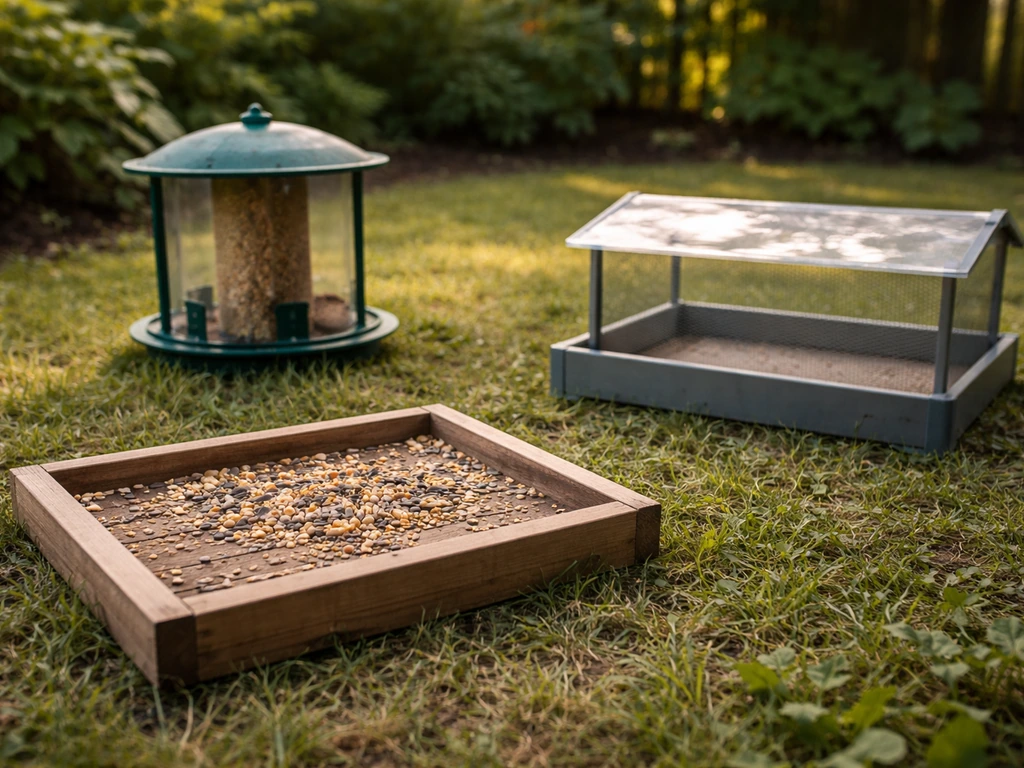
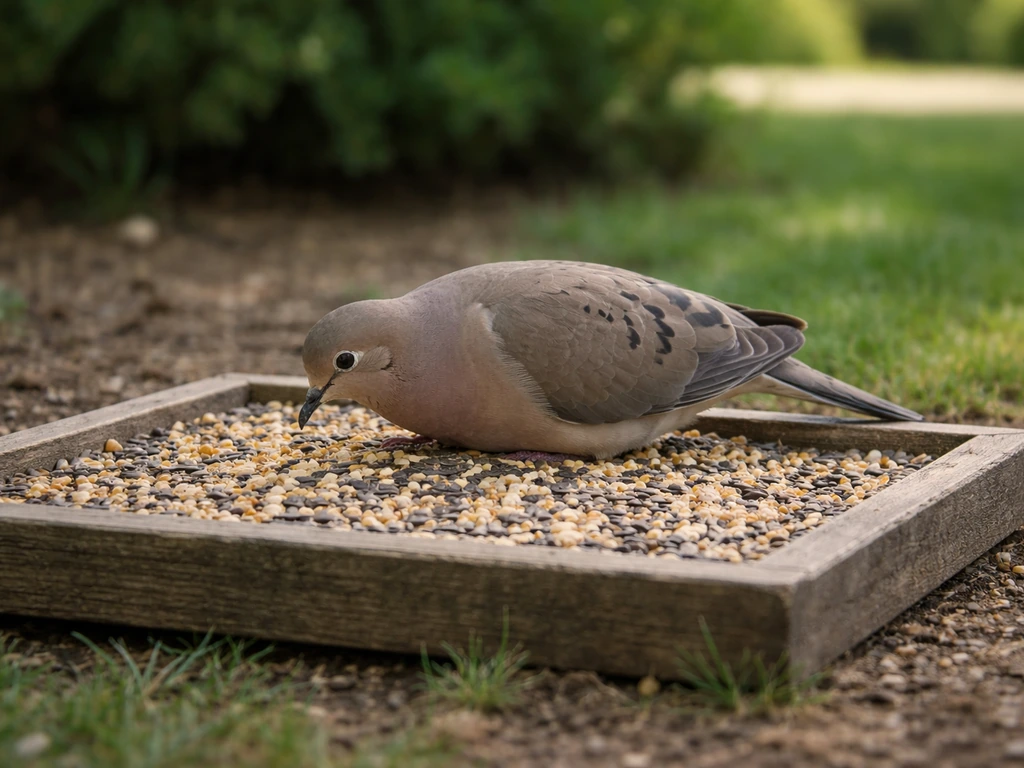
Platform feeders are the clear winner for mourning doves. These are open, flat surfaces with no barriers, which lets doves walk around and pick seeds in the same way they would forage on bare ground. Place the platform low, ideally at ground level or no more than a foot or two off the ground. Doves are not acrobatic birds and they are not going to cling to a hanging finch feeder or squeeze onto a tiny perch.
If you want to keep things even simpler, scatter seed directly on the ground in a clear, open patch. If you are also trying to keep grass growing, you may wonder whether bird seed can kill grass. Bare ground works especially well because doves actually need open ground to forage effectively. Dense leaf litter, thick grass, or heavy ground cover will discourage them. Texas Parks and Wildlife notes that mourning doves cannot easily move through dense vegetation or litter when feeding, so a clean patch of dirt, gravel, or short grass near your feeder area makes a real difference.
For placement, choose a spot that is open with some clear sightlines around it. Doves are cautious birds and they like to be able to see predators approaching. Position the feeder or feeding patch within about 10 to 15 feet of shrubs or low trees so they have a quick escape route, but not directly under dense cover where hawks or cats can hide. A spot in partial sun near a fence line or low shrub border tends to work well.
What seed (and food) mourning doves actually eat
Millet is the top choice, specifically white proso millet. Mourning doves eat it eagerly and it is inexpensive. Safflower seed is another solid option and has the added benefit of being less attractive to squirrels. Sunflower seeds, particularly hulled sunflower chips, work well because doves can swallow them easily without needing to crack shells. Cracked corn is also accepted, though it can attract unwanted guests faster than millet or safflower.
Avoid heavily mixed birdseed blends that are loaded with filler seeds like red milo or oat groats. Doves will kick a lot of that aside, leaving waste seed on the ground that rots quickly. Stick to a simple mix of white millet and sunflower chips and you will reduce waste and spoilage significantly.
One thing to never put in a dove feeder: bread, crackers, or processed human food. These provide no real nutrition and can ferment or mold fast, creating a health risk for the birds and potentially attracting rodents. Stick to raw, dry, quality birdseed only.
| Seed Type | Dove Appeal | Notes |
|---|
| White proso millet | Very high | Top choice, affordable, low waste |
| Hulled sunflower chips | High | Easy to eat, no shell debris |
| Safflower seed | Moderate to high | Squirrel-resistant, good all-around |
| Cracked corn | Moderate | Accepted but can attract pests faster |
| Nyjer/thistle seed | Very low | Not suitable for doves |
| Mixed fillers (milo, oats) | Low | High waste, spoils quickly, skip it |
How to get them to visit today (timing, weather, location)
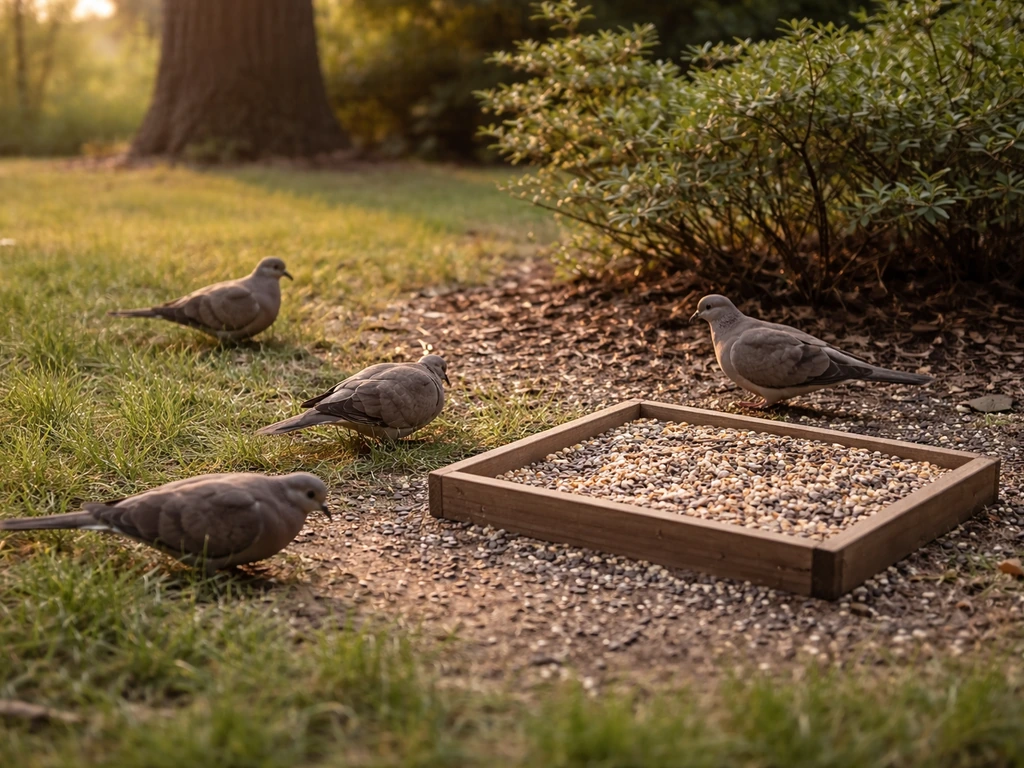
If you set up a ground-level platform feeder or seed patch today, give it two to seven days before expecting regular visits. Doves are creatures of habit and they tend to use established foraging routes. Once a scout finds your setup, others will follow. I have seen doves show up within 48 hours of placing fresh millet on a clean patch of bare ground, but a week is a more realistic expectation in areas without existing dove traffic.
Timing matters. Mourning doves tend to feed most actively in the early morning and again in the late afternoon. They are also known to visit water sources in the morning and evening around their feeding times, so adding a shallow birdbath near your feeding area can noticeably increase traffic. Keep the birdbath water fresh and clean, and place it within a few feet of the seed area.
Weather also plays a role. Doves tend to feed more urgently in cold or wet weather when natural seed sources are harder to find. In spring (like right now in late April), natural food is becoming more available, so competition for your feeder is lower but so is urgency. Placing seed consistently at the same spot and time every day is the best strategy for building a reliable visit pattern any time of year.
- Clear a patch of bare or short-grass ground (at least 2 feet square) or place a low platform feeder in an open area
- Fill with white proso millet or hulled sunflower chips
- Add a shallow birdbath within a few feet of the feeding area
- Refresh seed and water every morning for the first week
- Wait two to seven days for doves to find and begin using the spot consistently
Feeder safety: prevent moldy seed and unwanted pests
Ground feeding and platform feeders are great for doves, but they come with a real risk that enclosed feeders avoid: wet seed. Seed sitting on an open surface gets rained on, damp conditions cause mold fast, and moldy seed can make birds seriously sick. Aspergillosis, a fungal respiratory illness, is a real risk from moldy seed at ground-level setups.
The fix is simple but requires consistency. Offer only as much seed as doves can eat in one sitting, roughly a small handful per bird per visit. Rake or sweep away leftover seed every day or two. If seed gets wet, remove it immediately and let the surface dry before adding fresh seed. A platform feeder with drainage holes or a mesh bottom helps a lot because it lets moisture pass through rather than pool under the seed.
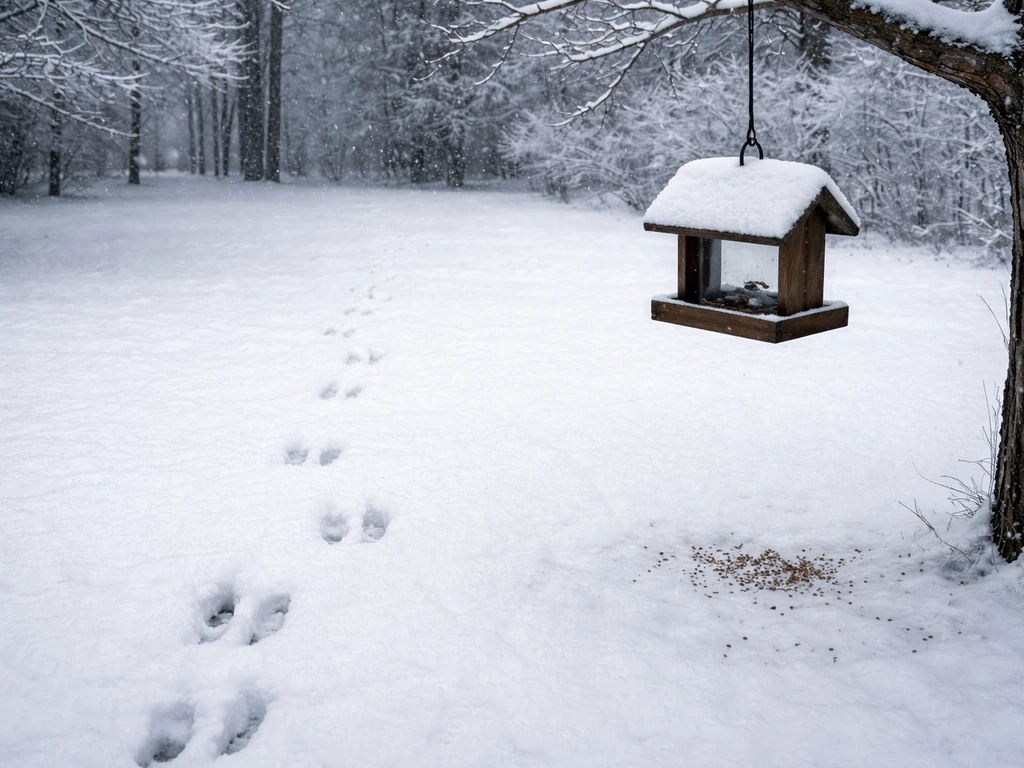
Ground feeding also attracts rodents, especially if seed is left overnight. The practical rule: put seed out in the morning, remove or reduce it by evening. Rats and mice are primarily nocturnal, so cutting off the food source after dusk dramatically reduces the problem. Deer can also be drawn to ground-level birdseed, much like the situations discussed when people ask whether deer eat bird seed in the winter, so keeping quantities modest and cleaning up at night helps avoid turning your yard into a wildlife buffet you did not intend to host.
- Use a platform feeder with drainage holes or a mesh bottom to reduce moisture buildup
- Offer small amounts of seed at a time, enough for one to two visits
- Remove leftover seed and debris daily, especially before rain
- Rake the ground under feeders every few days to clear hulls and droppings
- Store seed in a sealed, dry container away from the feeding area
- Never put out seed that smells musty, clumps together, or shows visible mold
Pet and wildlife safety tips around dove feeding
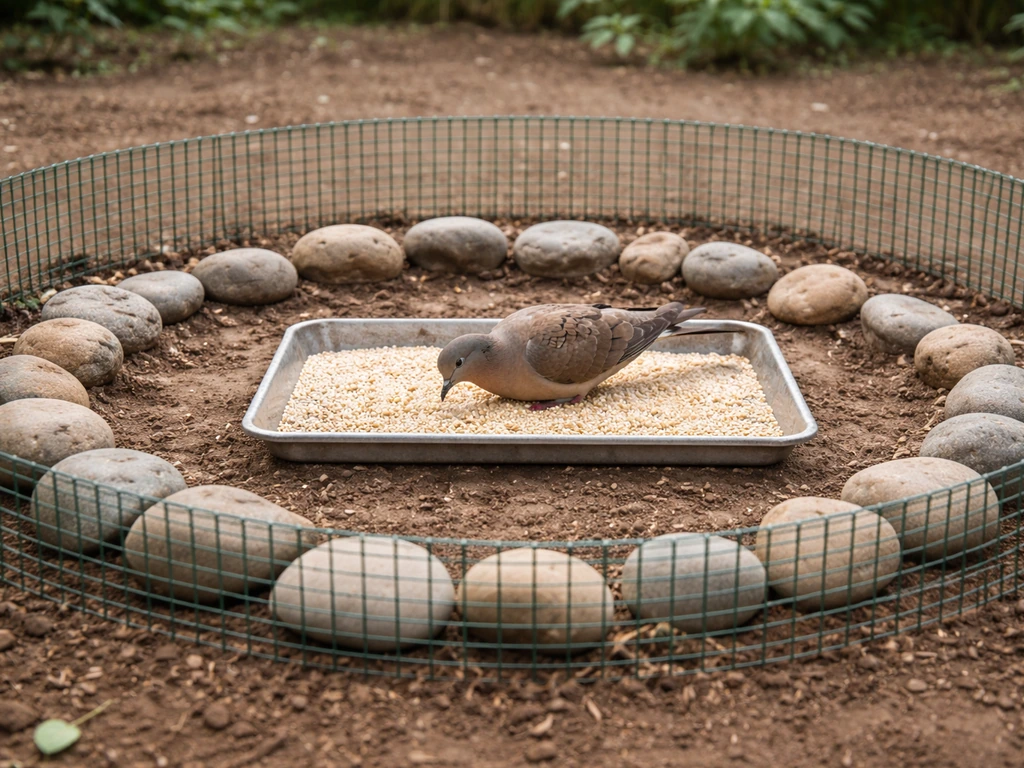
If you have cats or dogs, ground-level feeding setups require some thought. Cats are a serious predator threat to mourning doves, which feed on the ground and are not the quickest to react. Keep outdoor cats away from the feeding area entirely. If you cannot supervise, consider a platform feeder raised 18 to 24 inches off the ground on a post with a predator baffle rather than scattering seed directly on the ground.
For dogs, the main concern is access to the seed itself. Plain white millet and hulled sunflower seeds are not toxic to dogs in small amounts, but eating large quantities of birdseed can cause digestive upset and, depending on the mix, there can be ingredients like certain spices or additives in commercial blends that are harder on pets. Keep dogs away from the feeding area and do not let them vacuum up spilled seed as a snack.
Rabbits and squirrels will also visit ground-level setups regularly. Rabbits eating birdseed is generally low risk for them, but their presence can deter doves. Squirrels are more aggressive and will dominate a platform feeder quickly. Using safflower seed helps reduce squirrel interest. For rabbits, simply maintaining a clean feeding area and not leaving large amounts of seed overnight tends to keep competition manageable.
One broader point worth keeping in mind: any ground-level feeding setup is essentially an open invitation to multiple species. Because ground-level seed spills can attract more than just deer and raccoons, it is also smart to know whether armadillos eat bird seed before you leave any seed out. That is not necessarily a problem, but it is worth being intentional about what you are putting out and how much, especially if you live in an area with larger wildlife like deer, raccoons, or armadillos that might be attracted to seed spills.
Troubleshooting: why doves aren't coming or stop showing up
The most common reason doves do not show up is feeder placement. In winter, you can also keep doves coming by putting out bird seed consistently at ground level Feeder placement. If your feeder is hanging, enclosed, or elevated with small perches, doves are simply not built to use it. Switch to a ground-level platform or bare ground scatter and the problem usually resolves within a week.
The second most common issue is cover. If the feeding area is surrounded by dense shrubs, overgrown grass, or anything that limits sightlines, doves will avoid it. They need open space around them when they feed. Trim back vegetation within a few feet of the feeding spot and make sure there is a clear path to land and walk.
If doves were visiting and then suddenly stopped, consider what changed. A new outdoor cat in the neighborhood, a hawk taking up a perch nearby, or even a change in the type of seed can disrupt established patterns. Will killdeer eat bird seed too, and how to set up seed so you attract the birds you want without inviting unwanted pests. Predator pressure is the most common culprit for sudden disappearance. Check for signs of a hawk hunting in the area and give it a few days. Doves often return once the threat moves on.
Moldy or stale seed is another reason doves will abandon a feeder. They have a good sense of what is fresh and will skip a setup if the seed quality drops. If you have not refreshed the seed in more than a couple of days, especially after rain, clean the feeder completely, let it dry, and start with fresh seed.
- Feeder is hanging or has small perches: switch to a platform or ground scatter
- Too much cover around the feeder: open up the immediate area so doves have clear sightlines
- Doves stopped coming suddenly: look for predator activity (hawks, cats) nearby
- Seed smells off or looks clumped: discard it, clean the feeder, and refill with fresh seed
- No birdbath nearby: add a shallow water source to increase the appeal of the area
- Seed type is wrong: confirm you are using white millet, hulled sunflower chips, or safflower rather than filler-heavy mixes