Do rabbits actually eat bird seed in winter
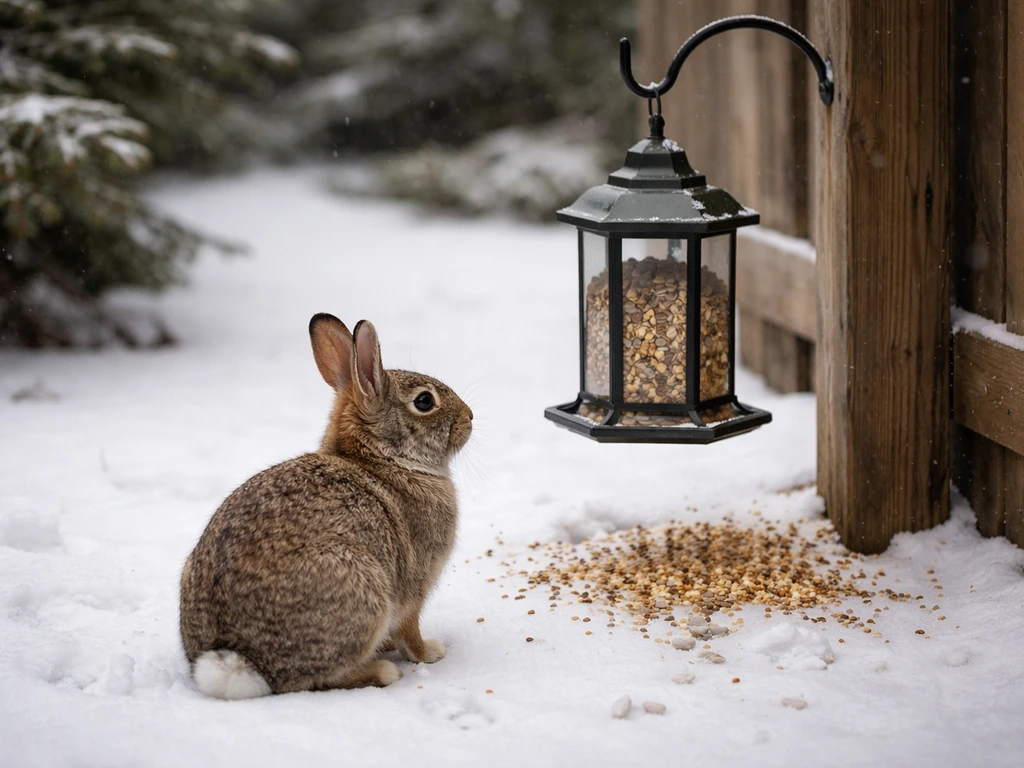
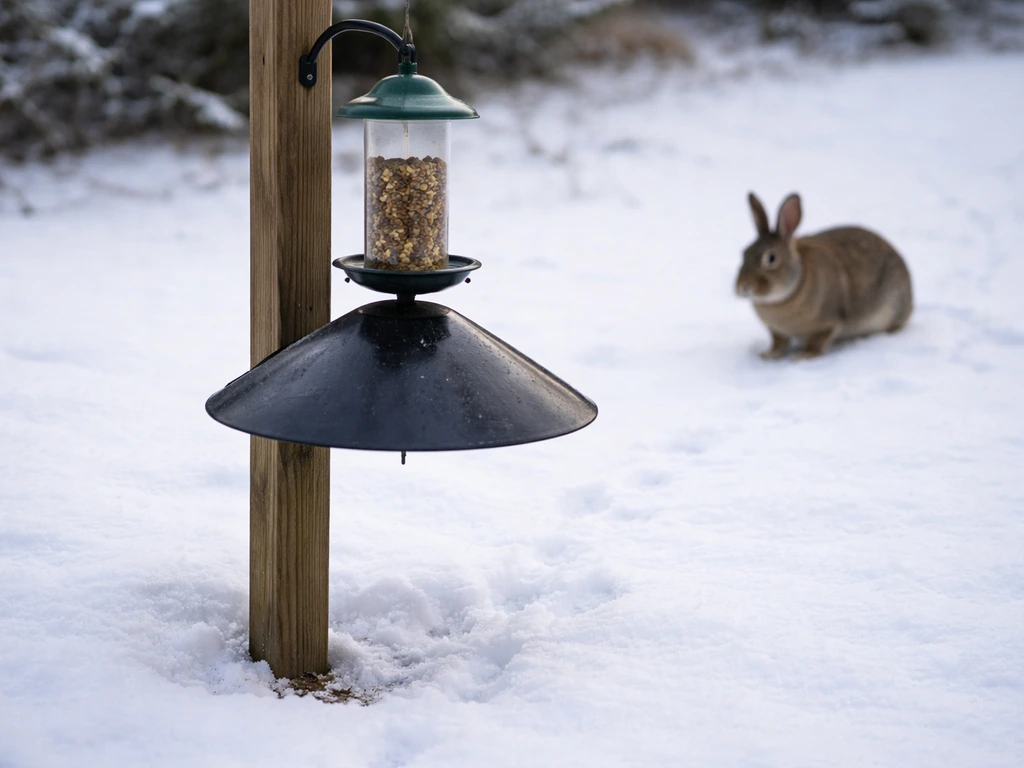
Yes, rabbits eat bird seed, and winter is actually when you're most likely to see it happen. Wild cottontails are opportunistic foragers, and when snow covers their usual food sources like grasses, clover, and bark, a bird feeder becomes an attractive alternative. There are documented cases of cottontail rabbits climbing directly onto feeder trays to eat sunflower seeds and millet, not just picking up what falls on the ground. Will killdeer eat bird seed is another common question because some seed types and feeder setups can attract unexpected ground-feeding birds. So if you've noticed seed disappearing faster than your birds can account for, a rabbit is a very real suspect.
This matters because rabbit visits aren't just a curiosity. They can increase seed consumption and waste, raise disease-spread risks when animals congregate around feeders, and create problems with spoiled seed if spilled seed isn't cleaned up. The good news is that with a few practical changes to how you manage your feeder setup, you can keep feeding birds without turning your yard into an all-winter rabbit buffet.
Wild vs. backyard rabbits: foraging behavior near feeders
Wild cottontails are the rabbits you're most likely dealing with, though in some rural areas you might also see snowshoe hares. Both species shift their foraging strategy in winter when plant-based food gets scarce. The NPS notes that Eastern cottontails shift diets seasonally, eating grasses and clover in summer but switching to bark, buds, and twigs in winter when plant-based foods become harder to find plant-based food gets scarce. They typically forage at dawn and dusk, so if you're not catching them in the act, check for tracks in the snow under your feeder in the morning. They tend to feed on the ground first, cleaning up spilled seed, and will move closer to the feeder itself if the pickings are good enough.
This behavior is different from squirrels, who are more likely to figure out how to raid a hanging feeder. Rabbits mostly work the ground level and low platform feeders. That's actually useful information if you're trying to stop them, because the solution is simpler than dealing with squirrels. You're not fighting an acrobat, you're just managing ground access and spill zones. If you have a backyard pet rabbit that roams outdoors, that's a separate situation, but the safety concerns around seed are similar.
Which bird seeds rabbits are most likely to eat (and what they ignore)
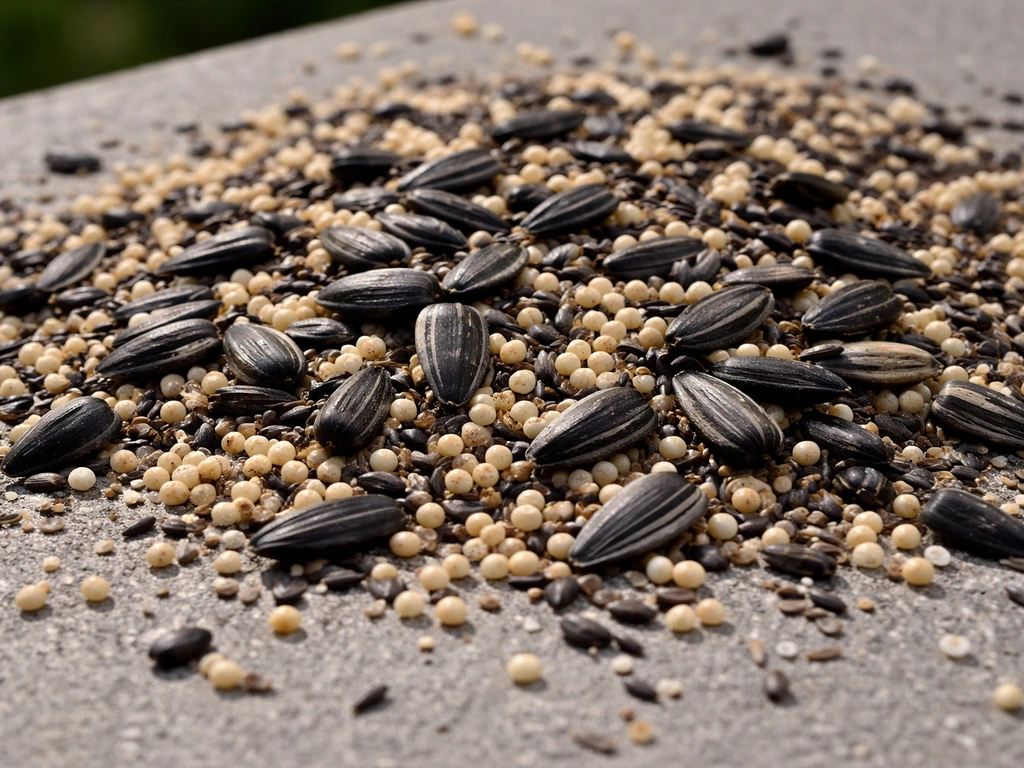
Rabbits go after what most birds also prefer, which is part of why this is such a common problem. Black oil sunflower seeds and white millet are the two seeds that attract the widest variety of birds, and they're also the two seeds rabbits most consistently eat. Sunflower seeds are calorie-dense and easy to crack open, and millet scattered on the ground is basically a rabbit's version of a grain salad. Peanuts and cracked corn are also attractive to rabbits if those are part of your mix. Do sandhill cranes eat bird seed too, or do they mostly stick to other natural foods?
Rabbits are less interested in nyjer (thistle) seed, which is very small and oily and typically used in tube feeders for finches. Safflower seed is also something many rabbits tend to skip, which is useful to know because safflower is still well-loved by cardinals and chickadees. If you're trying to deter rabbits while still attracting birds, leaning heavier on safflower in your ground-accessible feeders is a reasonable strategy.
| Seed Type | Rabbit Interest | Bird Attraction | Deterrence Value |
|---|
| Black oil sunflower | High | Very high (wide variety) | Low |
| White millet | High | High (sparrows, doves, juncos) | Low |
| Cracked corn | High | Moderate | Low |
| Peanuts (shelled) | Moderate to high | High (jays, woodpeckers) | Low |
| Safflower | Low | Good (cardinals, chickadees) | High |
| Nyjer/thistle | Very low | High (finches) | High |
Is bird seed safe if rabbits are eating it? Risks from moldy and spoiled seed
Fresh bird seed isn't toxic to rabbits in a meaningful way, but the real hazard isn't the seed itself. It's what happens to seed that sits outside in winter conditions. Seed exposed to morning dew, rain, or snow can become wet and moldy within days. Moldy seed can cause aspergillosis, a serious respiratory disease, in birds. It can also make other wildlife sick. In winter, seed that falls on the ground and gets buried under a light snowmelt-and-refreeze cycle becomes wet and clumps together, which is a perfect environment for mold to grow fast.
Rabbits grazing around the spill zone are directly exposed to whatever condition that seed is in. If the seed is contaminated or heavily soiled with bird droppings, which are also concentrated under busy feeders, that's a real health risk for both the rabbits and any other animals in the area, including outdoor pets. Virginia's Department of Wildlife Resources specifically flags bird feeders as places where disease spreads more easily when non-target animals congregate, and cottontails foraging under a feeder all winter are exactly the kind of unintended congregation they're describing.
The practical takeaway: bird seed left on the ground in winter creates a compounding hazard. It starts as wasted seed, becomes a rabbit attractant, and ends as a mold and disease risk for every animal that visits. That's why the cleanup advice matters so much, and it's not just about keeping things tidy.
How to stop rabbits from raiding feeders (without stopping birds)
You don't need to choose between feeding birds and deterring rabbits. The two goals work together pretty well if you approach it with the right feeder setup and habits. Here are the most effective strategies: Virginia DWR recommends that if sick or dead birds are observed around a bird feeder, the feeder should be removed for several weeks and thoroughly disinfected.
- Raise your feeder. Rabbits work at ground level. A feeder hung or mounted at least 18 to 24 inches off the ground on a pole is already much harder for them to access. Platform feeders placed on the ground are the worst option if rabbits are a problem.
- Clean up spilled seed daily. This is the single most effective step. Rabbits are attracted to the spill zone more than the feeder itself. If there's no pile of seed on the ground each morning, there's much less reason for them to stick around.
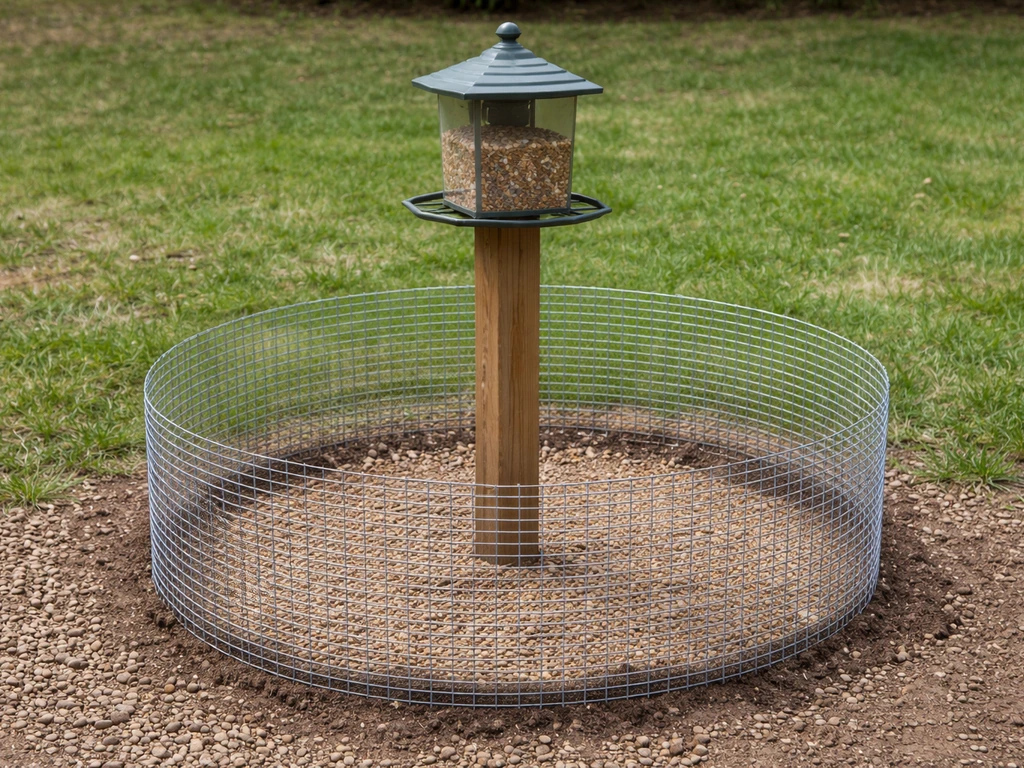
- Use a baffle or fencing around ground-level setups. A simple wire fence (hardware cloth or chicken wire) around the base of a pole feeder keeps rabbits from accessing the spill area directly below. Make sure it extends at least 6 to 8 inches into the ground if you're in an area where rabbits dig.
- Switch to a seed catcher tray. These attach under the feeder and catch spill before it hits the ground. They also make cleanup easier. Just dump the tray daily rather than raking under the feeder.
- Cut back ground-level cover near your feeder. Rabbits need cover to feel safe while feeding. Tall grass, brush piles, and dense shrubs close to the feeder give them the security they need to linger. Mowing and clearing that zone reduces their confidence in the area.
- Avoid corn and millet on the ground. If you currently scatter seed directly on the ground for birds like juncos and sparrows, that's essentially a rabbit feeding station in winter. Switch to a low platform feeder with a roof and sides, or use a tray feeder raised on a pole instead.
One thing worth skipping: there's a claim that rabbit urine or similar deterrents will repel other animals or keep rabbits away. Research on this is weak and unreliable, and it could attract other wildlife instead. Stick to physical barriers and habitat management, which actually work.
Safer winter feeding practices: clean-up, feeder design, and placement
Winter creates specific feeder hygiene problems that don't apply in warmer months. In winter, you may even notice that birds eat less seed if it is getting spoiled faster, so keeping feeders clean matters do birds eat bird seed in the winter. Seed gets wet faster, feeders get used more heavily, and the cold can actually mask spoilage because you don't smell mold as easily as you do in summer. Here's what good winter feeder management looks like:
- Fill feeders with only as much seed as birds will eat in one to two days. This keeps the seed fresher and reduces the amount that falls to the ground.
- Rake or sweep under feeders every day or two, especially after snow or rain. Wet, compacted seed on the ground is where mold takes hold quickest.
- Discard any seed that has gotten wet inside the feeder. Wet seed that looks clumped or discolored should go in the trash, not back in the feeder.
- Clean feeders with a diluted bleach solution (roughly one part bleach to nine parts water) at least once a month. In wet winter conditions, once every two weeks is better. Rinse thoroughly and let the feeder dry completely before refilling.
- Store your seed supply in a sealed, waterproof container in a cool, dry location. A metal trash can with a locking lid works well and also keeps rodents out.
- Check tube feeders for seed clumping at the bottom, which is a common winter problem when condensation builds up inside the tube.
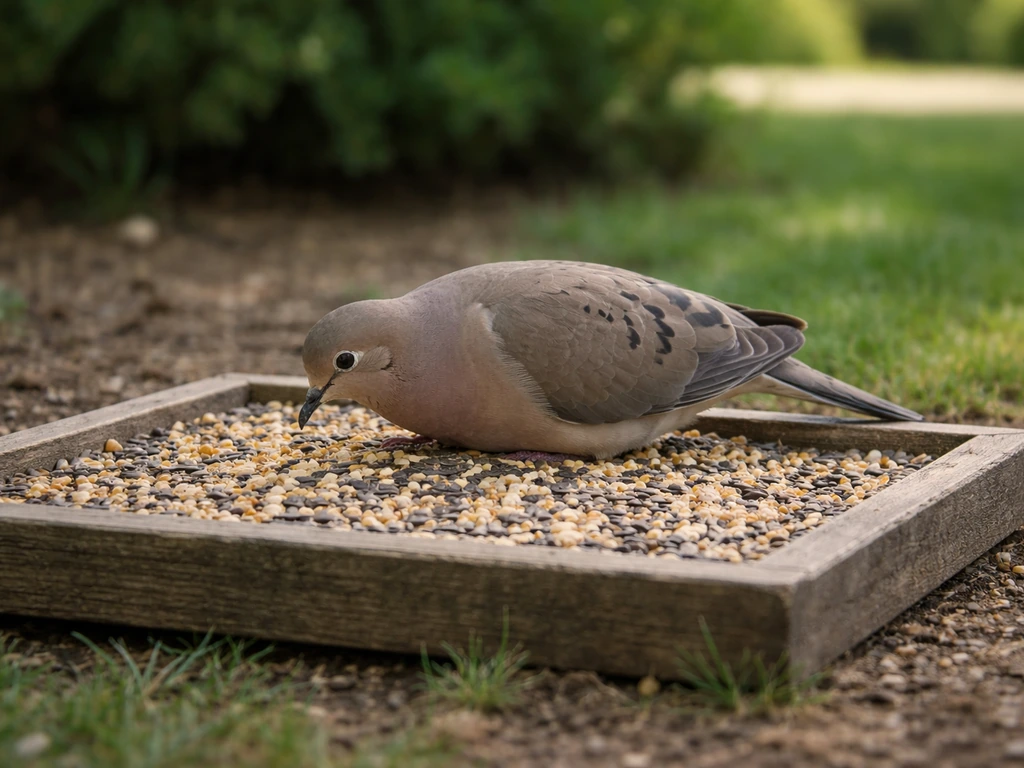
Feeder design matters too. Covered feeders, like hopper feeders with a roof or tube feeders with tight ports, protect seed from snow and rain far better than open platform feeders. If you're feeding ground-foraging birds like juncos or mourning doves, a covered low tray on a stand is a better winter option than scattering seed directly on the ground. It keeps seed cleaner and makes it much harder for rabbits to settle in for a long meal.
What to do if rabbits keep coming or pets might get into the seed
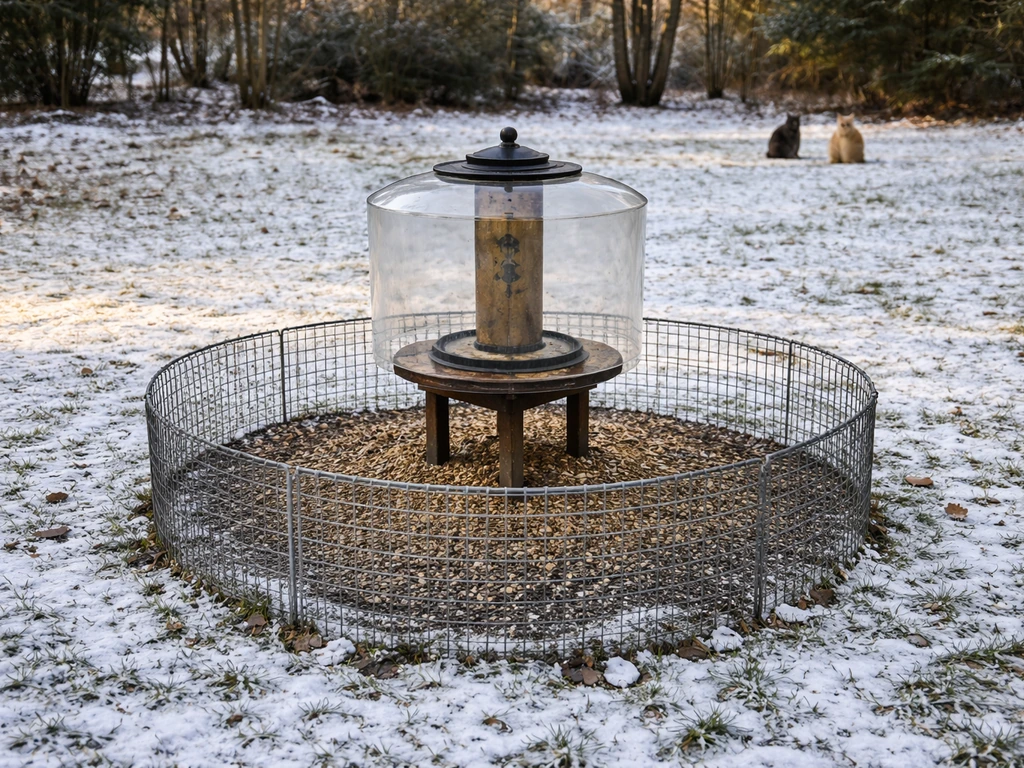
If you've tightened up your cleanup routine and adjusted feeder placement and rabbits are still visiting, the next step is a physical barrier around the feeder area. A simple cylinder of hardware cloth (half-inch mesh), about 2 feet tall and wide enough to surround the feeder pole and its spill zone, will stop most cottontails. Stake the bottom into the ground to prevent them from nosing underneath. This doesn't affect birds at all since they fly in from above.
If you have dogs or cats that go outdoors, they may sniff out and eat spilled seed or encounter whatever wildlife is visiting the feeder. Fresh bird seed in small quantities is not typically toxic to dogs or cats, but moldy seed absolutely can be. Mycotoxins from moldy grain are a known hazard for dogs especially, causing symptoms ranging from vomiting to tremors. If your dog is prone to sniffing out and eating things in the yard, keep the spill zone clean and consider fencing off the feeder area as you would for rabbits. If your pet does eat a significant amount of moldy seed and shows any signs of illness, contact your vet promptly.
It's also worth noting that a feeder that regularly attracts rabbits may also attract other wildlife drawn to the same resources, including deer in some regions. Do deer eat bird seed in the winter? Yes, especially when other food sources are scarce. If you’re wondering about deer specifically, bird seed can be risky when it becomes moldy or contaminated, especially in winter spill zones deer in some regions. Like rabbits, deer are most likely to visit bird feeders in winter when other food is scarce, and similar management steps (cleanup, height, barriers) apply across species. The core principle is consistent: a well-managed feeder is less likely to attract unintended guests, and whatever does visit is less likely to encounter spoiled or contaminated seed.
If you genuinely enjoy watching the rabbits and aren't bothered by their presence, that's a reasonable choice too. Just keep the seed fresh, clean up regularly, and accept that you're running a multi-species winter feeding station. Armadillos can also rummage for food around bird feeders, so if you suspect activity, it helps to keep seed clean and reduce accessible spill zones multi-species winter feeding station. The hazards come from neglect and spoilage, not from the rabbits themselves.