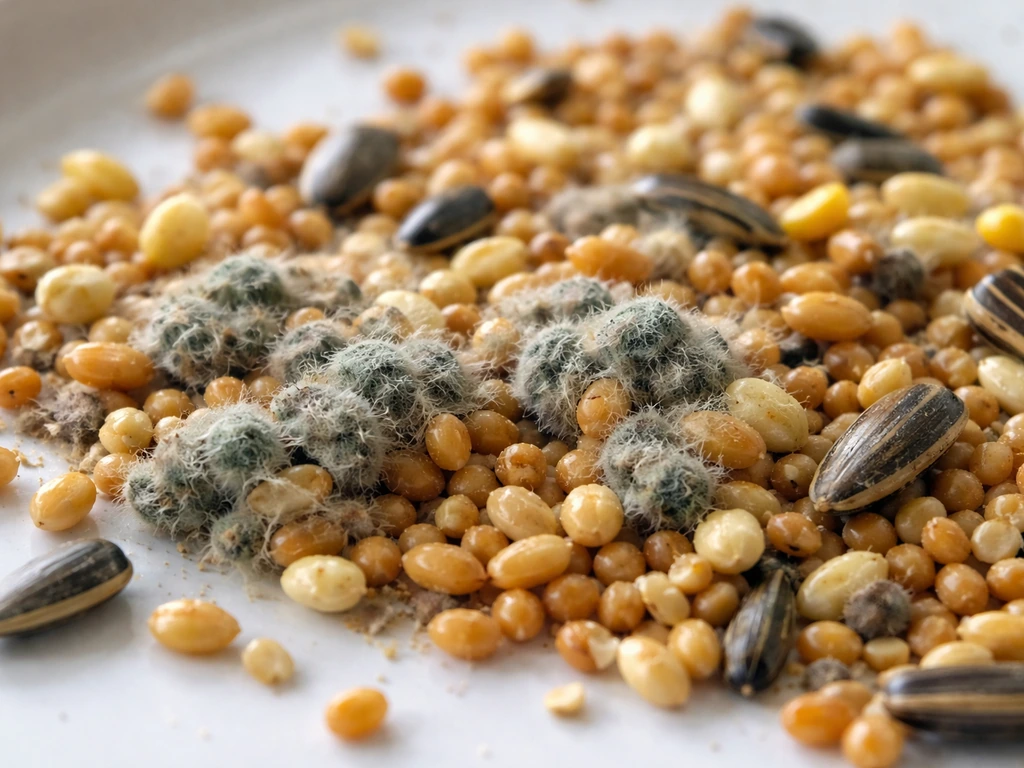
Moldy bird seed usually looks like one or more of these things: fuzzy white, gray, green, or black patches growing on the seed surface; clumps of seed stuck together in a damp mass; a powdery coating dusting individual kernels; or a webby, cobweb-like film threading through the seed. If you open your seed bag or feeder tray and something looks off, trust that instinct. This guide will walk you through exactly what to look for, what to do about it right now, and how to make sure it doesn't happen again.
What Moldy Bird Seed Looks Like and What to Do Today

Maya Henderson
10 Apr 2026
Quick ID: What Moldy Bird Seed Actually Looks Like
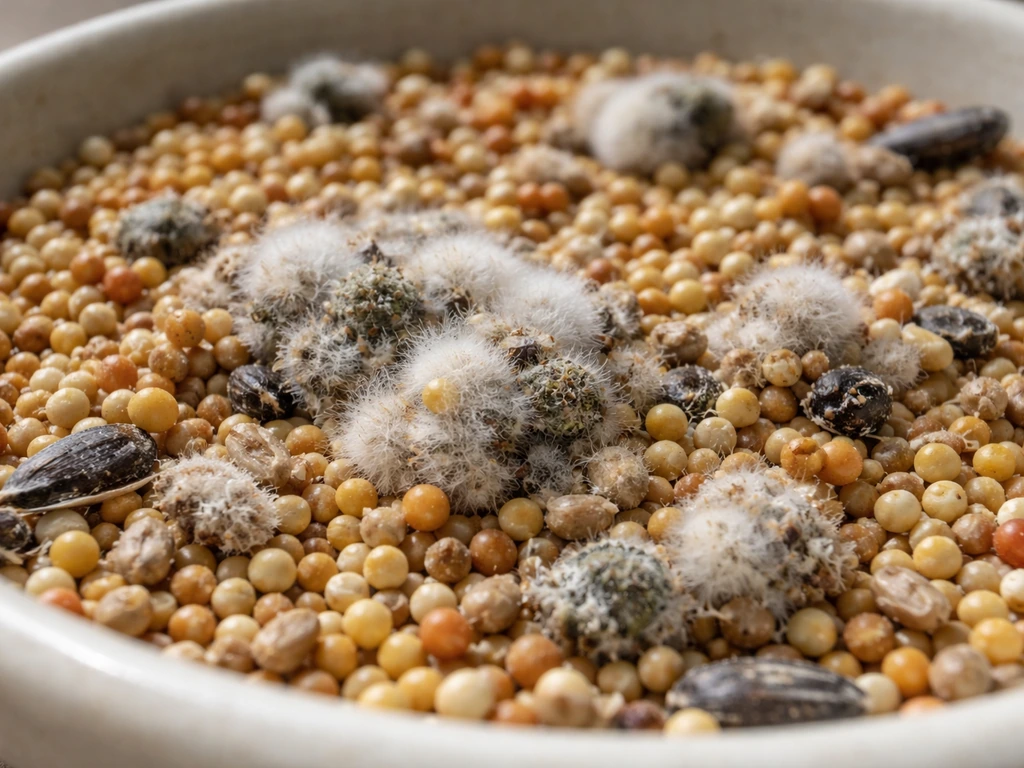
The most reliable visual cues are color and texture. Healthy dry seed has a clean, matte surface. Mold breaks both of those rules. Here are the specific signs to look for when you open a bag or check a feeder:
- White or grayish fuzzy growth: Often the first sign, especially in humid conditions. Looks like a thin layer of cotton or felt on the seed surface.
- Green or blue-green patches: Classic Aspergillus or Penicillium mold. Can look almost dusty or powdery. This is a serious flag and the type most commonly associated with illness in birds.
- Black mold: Less common on seed but appears in very damp feeders or containers. Often seen on feeder walls and trays before it spreads to seed.
- Clumping: Seeds sticking together in solid chunks or mats. This happens because moisture has penetrated and mold is growing between kernels. If you squeeze the clump and it holds its shape, that's mold, not just humidity.
- Musty, sour, or earthy odor: Healthy seed smells faintly nutty or neutral. A strong musty or fermented smell is a reliable nose-test for mold even before you see visible growth.
- Powdery coating: A fine dust over seeds can indicate sporulating mold. Breathing near this is the riskiest moment, so don't shake or blow on the seed.
- Cobweb-like film: A thin, wispy, web-textured coating threading through the seed. This can look like insect webbing but has a faint musty smell rather than the dusty, grain-like smell of insect debris.
Mold vs. Look-Alikes: Don't Overreact or Underreact
Not everything that looks alarming on bird seed is mold, and not everything that looks fine is safe. A few common look-alikes confuse people regularly.
Normal Aging and Sun Bleaching
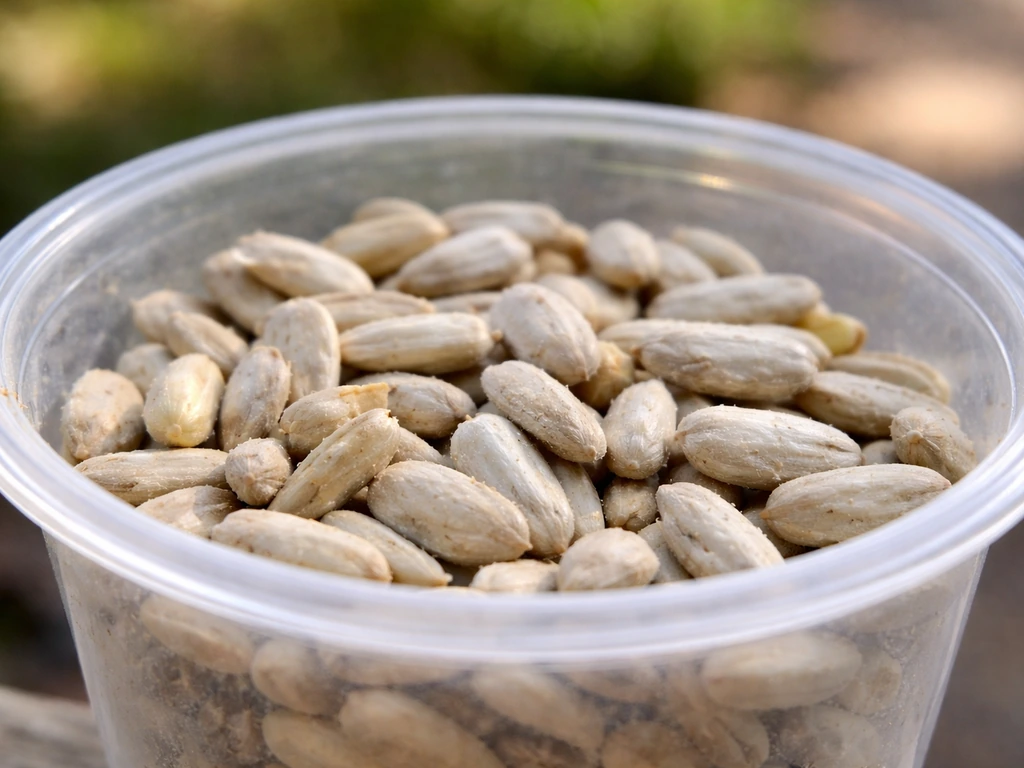
Seed that has been sitting in a sunny feeder for a few weeks can fade or develop a chalky, pale appearance. That's sun bleaching, not mold. The seed will look washed out but will still smell neutral, won't clump, and won't have any fuzzy growth. Old seed can also lose its oily sheen. As long as it's dry and odorless, this is a quality issue rather than a safety emergency, though birds will often reject stale seed on their own.
Condensation and Moisture Beads
If you bring a cold bag of seed indoors, condensation can form on the surface of kernels. This looks like a slight wet sheen and disappears as the seed warms up. This is not mold. However, it is a warning sign: if that moisture isn't allowed to evaporate, mold will start growing within 24 to 48 hours. Spread the seed on a tray and let it dry completely before returning it to storage.
Insect Webbing and Debris
If you notice webbing in your seed, it might not be mold at all. Bird seed moths spin silky webbing through stored seed that looks almost identical to certain types of mold film. The difference: moth webbing has no odor and you may spot small larvae or adult moths nearby. Similarly, weevil bugs in bird seed leave behind a dusty frass (insect waste) that can be mistaken for powdery mold. Insect debris won't have that musty smell, and it tends to be drier and grainier in texture than mold spore dust.
A Side-by-Side Comparison
| What You See | Likely Cause | Smell? | Safe to Use? |
|---|---|---|---|
| Fuzzy white, gray, or green patches | Mold (likely Aspergillus or Penicillium) | Yes, musty/sour | No, discard immediately |
| Seed clumped in a solid mass | Moisture + mold growth | Often musty | No, discard |
| Powdery fine dust on seeds | Sporulating mold or insect frass | Musty = mold; neutral = insects | No if musty, inspect if neutral |
| Silky webbing threads through seed | Moth larvae or early mold film | Neutral = moths; musty = mold | No to moths either; discard |
| Pale, chalky, faded color | Sun bleaching or age | Neutral or faintly nutty | Okay but birds may reject it |
| Wet sheen, no growth | Condensation | None | Dry thoroughly first, then check |
| Grainy dusty debris, no smell | Weevil frass | None | No, discard and clean container |
What Mold on Bird Seed Can Actually Do to Birds, Pets, and People
The biggest concern with moldy bird seed is a group of fungi in the genus Aspergillus. According to the New York State Department of Environmental Conservation, aspergillosis, the disease caused by these fungi, affects the respiratory tract of birds and mammals, with Aspergillus fumigatus being the most commonly involved species. Birds inhale the microscopic spores when feeding on contaminated seed, and the infection can cause serious respiratory distress. Signs in birds include labored breathing, tail bobbing, lethargy, and reduced feeding at the feeder. Infected birds can also shed spores and spread disease through feeders to other birds visiting the same spot.
For pets, the risk is real but context-dependent. Dogs that root through spilled seed or cats that sniff around a moldy feeder base can inhale spores. The more immediate concern is a dog eating moldy seed directly, which can cause digestive upset and, in some cases, mycotoxin poisoning depending on the mold species involved. If you think your pet ate contaminated seed, contact your vet.
People face their own risks. The CDC is clear that breathing Aspergillus spores is how aspergillosis starts in humans, and while most healthy people can handle brief exposure without becoming ill, the American Lung Association and the EPA both note that people with weakened immune systems, asthma, or underlying lung conditions are at significantly higher risk for complications.
Las personas con sistemas inmunitarios debilitados o enfermedades pulmonares tienen el mayor riesgo de desarrollar síntomas o complicaciones de la aspergilosis personas con sistemas inmunitarios debilitados o enfermedades pulmonares tienen un riesgo significativamente mayor.
The Mayo Clinic also specifically flags asthma and cystic fibrosis as conditions that raise the odds of an allergic response to Aspergillus mold. If someone in your household fits that profile, they should not handle the cleanup described below, and humans getting sick from bird feeders is a real, documented concern that's worth taking seriously.
What to Do Right Now: Safe Removal and Disposal
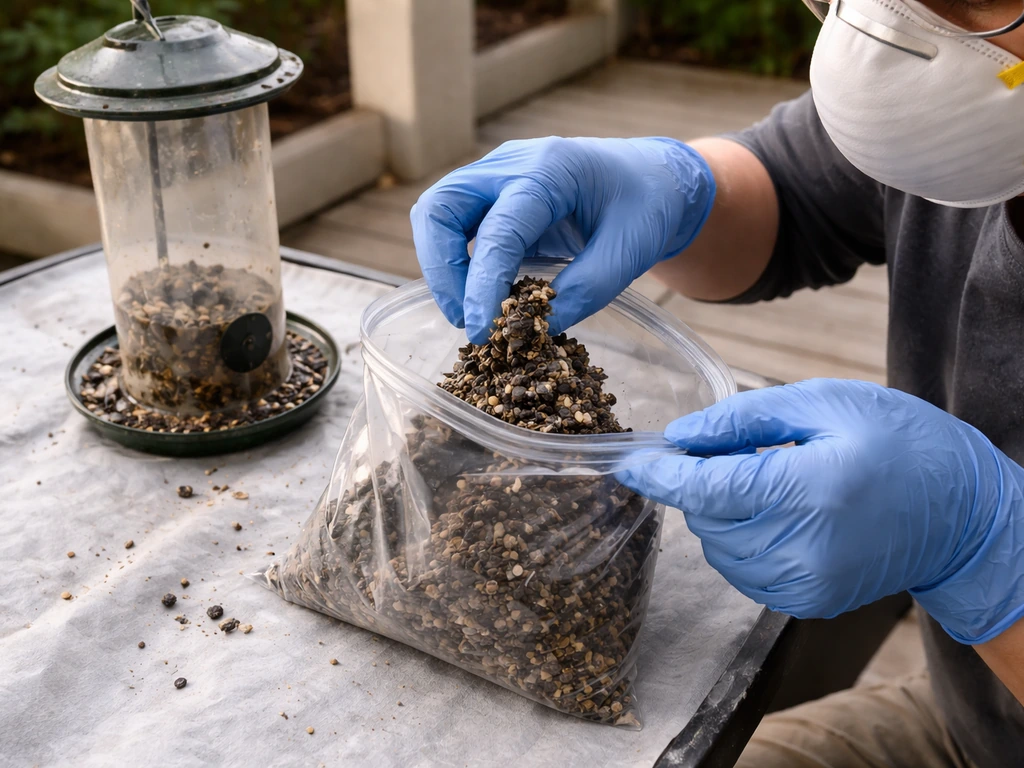
If you've confirmed you have moldy seed, here's how to deal with it safely today. The main goal is to remove the seed without spreading spores, disinfect the feeder, and get rid of the contaminated material without exposing yourself, your pets, or other birds to it.
- Put on gloves and a dust mask (N95 if you have one, especially if you're in a high-risk health category). Do not blow, shake, or fan the seed, which launches spores into the air.
- Take the feeder down and move it away from the feeding area before doing anything else. Don't dump the seed on the ground near where birds feed.
- Seal the moldy seed in a plastic bag before disposal. Do not compost it. Place it in your trash.
- Empty the feeder completely. Scrape out any stuck seed or residue with a stiff brush. Do this outdoors, not over your kitchen sink.
- Wash the feeder with hot soapy water first to remove debris, then disinfect using one of two tested solutions: the Minnesota DNR recommends 2 ounces of bleach per 1 gallon of water, scrubbing the entire feeder surface; the Audubon Society cites National Wildlife Health Center guidance recommending a 9:1 water-to-bleach ratio. Either approach works. Scrub every surface, including perches, ports, and trays.
- Rinse the feeder thoroughly and let it air dry completely before refilling. This step matters: putting seed into a damp feeder restarts the mold cycle immediately.
- If the seed came from a bag or storage container, inspect the rest of the batch. If more than a small area is affected, discard the whole bag. Mold spreads by spore, so visible growth in one area means invisible spores throughout.
- Clean the area under the feeder: rake up spilled seed, droppings, and debris. Penn State Extension specifically recommends raking and removing debris around ground-feeding areas to reduce disease risk.
If you notice that your bird seed has bugs in it alongside the mold, handle both at the same time. Insect activity and mold often co-occur in improperly stored seed, and the cleanup process is essentially the same: seal, discard, disinfect.
How to Prevent Moldy Seed Going Forward
Storage: Container, Location, and Humidity
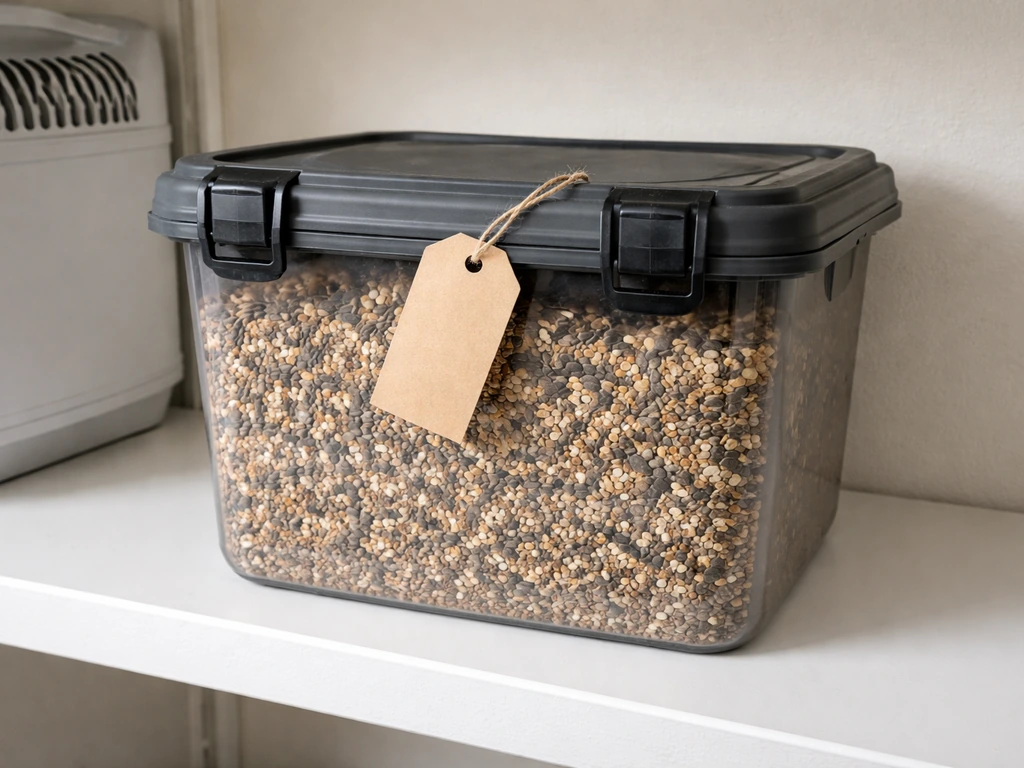
Mold needs moisture to grow, so the single most effective prevention step is keeping seed dry. Store seed in airtight, hard-sided containers, metal or heavy-duty plastic, rather than the paper or cloth bags it comes in. Keep the storage location cool and dry: a garage works if it doesn't get humid in summer, but a basement or shed can be too damp. Aim for relative humidity below 50% in the storage area if you can measure it. Penn State Extension's guidance is direct: store seed in a cool, dry place, and if it becomes moldy, do not use it.
Buy Small, Rotate Often
Buying seed in bulk feels economical but it's one of the fastest ways to end up with mold. The longer seed sits, especially through weather changes and humidity swings, the more likely you are to have problems. Buy amounts you can use within two to four weeks. For platform feeders or open trays, Penn State Extension recommends putting out only as much seed as birds can consume in a single day, which is practical advice that also cuts down on spoilage dramatically.
Feeder Design and Placement
Tube feeders and covered hopper feeders are more mold-resistant than open platform feeders in wet climates because they limit direct rain contact. That said, even tube feeders can trap moisture at the base where seeds sit against each other. Feeders with drainage holes or mesh bottoms help, and positioning feeders under an overhang or weather baffle reduces rain saturation. Avoid placing feeders directly over wet ground, mulch, or areas that stay damp after rain.
Cleaning Cadence
Audubon recommends cleaning seed feeders every two weeks as a baseline. Iowa DNR recommends a deep bleach-solution cleaning about once a month. Audubon, citing National Wildlife Health Center guidance, recommends cleaning bird baths and feeders with a 9 parts water to 1 part bleach solution. In practice, the right frequency depends on your climate: in hot, humid conditions, every week or two weeks is smarter. Audubon is explicit on this point, noting that cleaning more frequently is best in humid or hot weather. Whenever you refill, take a quick look inside the feeder for clumping, dark spots, or any smell. If you see or smell anything off, clean before refilling rather than topping up over contaminated seed.
When to Worry: Illness Signs in Birds, Pets, and People
Most healthy adults and pets who have brief contact with moldy seed will not get seriously ill. But there are situations where you should take immediate action rather than waiting to see what happens.
Birds at Your Feeder
If you notice birds at your feeder sitting fluffed up, breathing with their beaks open, or showing tail-bob breathing (a visible pumping motion at the tail with each breath), these are signs of respiratory distress. Lethargy, loss of balance, or birds found dead near the feeder are also serious flags. Stop feeding immediately, clean the feeder, and remove all seed from the area. A single sick bird can contaminate a feeder for others. You can report sick or dead wild birds to your state wildlife agency or local animal control.
Pets
If your dog or cat ate moldy seed and develops vomiting, diarrhea, excessive drooling, stumbling, or muscle tremors, call your vet or an animal poison control line right away. Mycotoxins produced by certain molds can act quickly, especially in smaller animals. Bring the seed bag or a sample if you can, or note the mold colors you observed.
Household Members
For most healthy adults, exposure to mold during feeder cleanup may cause temporary irritation: sneezing, a runny nose, or mild eye irritation that resolves quickly. However, if someone in your home has asthma, cystic fibrosis, or an immune-compromising condition such as chemotherapy treatment or an organ transplant, the CDC recommends they avoid environments with mold exposure entirely. MedlinePlus notes that aspergillosis usually occurs in people with lung diseases or weakened immune systems, which means these individuals should not handle moldy seed cleanup at all. Persistent coughing, shortness of breath, or fever following mold exposure in a high-risk person warrants a call to a doctor, not a wait-and-see approach.
FAQ
If my bird seed looks pale or chalky, is that moldy bird seed or sun damage?
Often it is, but check texture and moisture cues together. True mold typically looks like fuzzy growth, webby film, or powdery dust that stays put on kernels, and it usually comes with a musty or “earthy” odor. Sun-bleached seed tends to look pale or chalky while staying uniformly dry, not clumping, and it generally smells neutral.
Can bird seed be unsafe even if I do not clearly see fuzzy mold?
Yes. Mold spores can be present even when you cannot see bright colored patches. If the seed smells musty, shows any fuzzy or webby areas, or has clumped or damp sections, treat it as moldy and dispose of it rather than relying on appearance alone.
How can I tell condensation on seed from real mold?
Condensation is a common false alarm. If you opened a cold bag and noticed a temporary wet sheen that dries within a short time, it is likely moisture from temperature change. The key is preventing re-moistening, spread it on a tray until fully dry, and do not store it in the original bag while any dampness remains.
My seed has webbing, how do I know if it is mold or bird seed moths?
If the “webbing” has no musty odor and you spot small insects, larvae, or adult moths, it may be seed moth webbing. Another clue is that insect debris often looks dry and grainy (like dusty waste) rather than a consistent fuzzy or colored spore growth on kernels.
What should I do if I see both powdery spots and bugs in bird seed?
Not always. Some insects can be mixed in with mold, and both conditions share a cleanup goal. If you see insects, frass, or active webbing along with any fungal growth, handle it as a contaminated batch, seal and discard the seed, then disinfect the feeder to prevent both spore and insect reinfestation.
Who should avoid touching moldy bird seed or cleaning the feeder?
If you have anyone in the home with asthma, cystic fibrosis, or a weakened immune system, they should not do cleanup or handling during disposal. Use gloves and, ideally, a well-fitting mask if you must handle contaminated material, and avoid stirring the seed so you do not aerosolize spores.
Is it dangerous if my dog just ate a little moldy seed?
Yes, and the risk goes up if a pet is able to eat loose moldy seed during cleanup. Keep pets away from the feeder area, do not let them lick spilled seed from the ground, and if ingestion might have occurred call your vet, especially for vomiting, diarrhea, drooling, tremors, or stumbling.
Can I just top off the feeder with fresh seed instead of emptying it?
Start by removing all remaining seed and sealing it for disposal, then clean the feeder before refilling. If you only wipe a visibly contaminated spot and top off with fresh seed, you can leave mold behind in crevices, and new seed will pick up spores.
What is the most effective way to prevent moldy bird seed from coming back?
For prevention, the best measurable habit is moisture control. Store seed in airtight hard-sided containers, keep the storage area cool and dry, and if you can, aim for storage conditions below about 50% relative humidity. If your space is humid, consider smaller batch purchases to reduce how long seed sits.
Do tube and covered feeders prevent mold better than platform feeders?
If you are using an open tray or platform, mold is more likely because rain and night humidity can soak the seed surface. Switching to a covered feeder, adding a weather baffle, placing the feeder under an overhang, and reducing to one day of consumption can dramatically reduce moisture buildup.
What should I do if I cannot clean the feeder right away after spotting moldy seed?
If you cannot clean immediately, at minimum stop feeding and do not keep using the same seed source. Move the feeder away from the area where it was contaminated, cover and remove the seed, and plan to disinfect as soon as possible so spores do not keep being aerosolized every time birds visit.
Next Article
Do Seagulls Eat Bird Seed? How to Stop Them
Yes, seagulls often eat bird seed. Learn why they show up and how to block them while keeping feeding safe.