If you've spotted bugs in your bird seed, you're almost certainly looking at one of a handful of common grain pests: grain mites, Indianmeal moth larvae, seed beetles, or Angoumois grain moths. The seed may still be usable for birds if it's dry, smells normal, and shows no mold, but if there's webbing, a musty odor, or any sign of moisture damage, you need to toss it today. Here's exactly how to figure out what you're dealing with, whether to keep or dump the seed, and how to stop the problem from spreading to your feeder, your storage area, or your pets.
My Bird Seed Has Bugs: What to Do Today and How to Prevent It

Maya Henderson
26 Apr 2026
What bugs you're likely seeing in bird seed
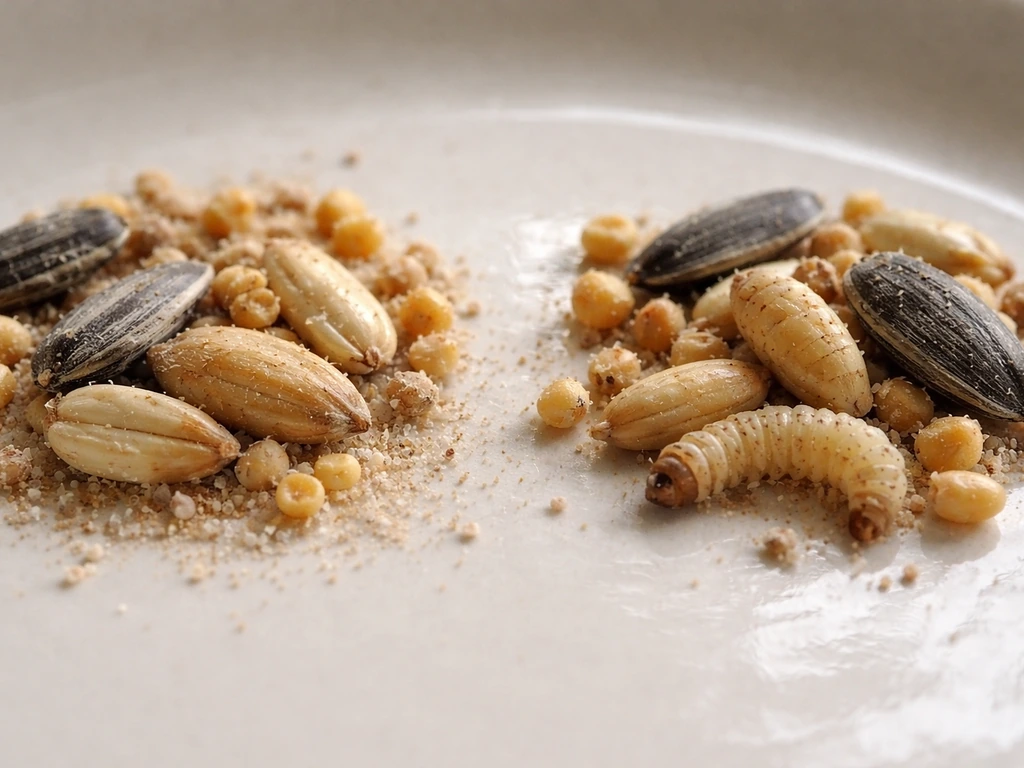
There are four main culprits that show up in stored bird seed, and they look very different from each other. Knowing which one you have changes what you need to do next.
| Pest | What it looks like | Telltale sign |
|---|---|---|
| Grain mites (Acarus siro) | Barely visible, pale white, almost dust-like | Seed dust that appears to be slowly moving on its own |
| Indianmeal moth larvae | Small cream-colored caterpillars, up to 1/2 inch | Silky webbing threaded through the seed, frass (brown specks), shed skins |
| Seed beetles / weevils (Bruchinae) | Oval brown or black beetles, roughly 1/4 inch long | Tiny round exit holes in individual seeds; hollow kernels |
| Angoumois grain moth | Small buff-colored moths; larvae are inside kernels | Adult moths flying near storage; hollow or damaged kernels with no visible entry point |
Grain mites are the sneakiest because you can miss them entirely until the infestation is huge. The classic sign is a thin layer of fine dust around the bag or container that seems to ripple or shift on its own. That movement is thousands of mites crawling through the material. Indianmeal moth larvae are much more obvious: look for silky, spiderweb-like threads clumping the seed together. Seed beetles and weevils tend to leave tiny round holes in individual seeds. The Angoumois grain moth is trickier because the larvae feed inside the kernel, so the outside of the seed can look fine while the inside is hollowed out.
How to tell a live infestation from harmless debris
Not everything you see in a seed bag is an active problem. Seed chaff, husks, and fine dust are totally normal. Here's how to tell whether you have a real infestation or just normal seed material.
- Movement: Stir the seed and watch the dust layer for a minute. If it shifts or drifts on its own, you likely have grain mites.
- Webbing: Real webbing from Indianmeal moth larvae looks like fine silk threads matted through the seed. Dust clumps don't stretch or hold shape the way webbing does.
- Actual insects: If you see small worm-like larvae, beetles, or moths flying out when you open the bag, the infestation is active.
- Hollow seeds: Pinch a handful of seeds between your fingers. If individual kernels crumble or feel empty, seed beetles or Angoumois moth larvae may have consumed them from the inside.
- Frass: Small brown or black specks that aren't seed fragments are insect droppings. This is a sign of an active or recent infestation.
- Cast skins: Papery, translucent shells left behind by molting larvae are another active-infestation flag.
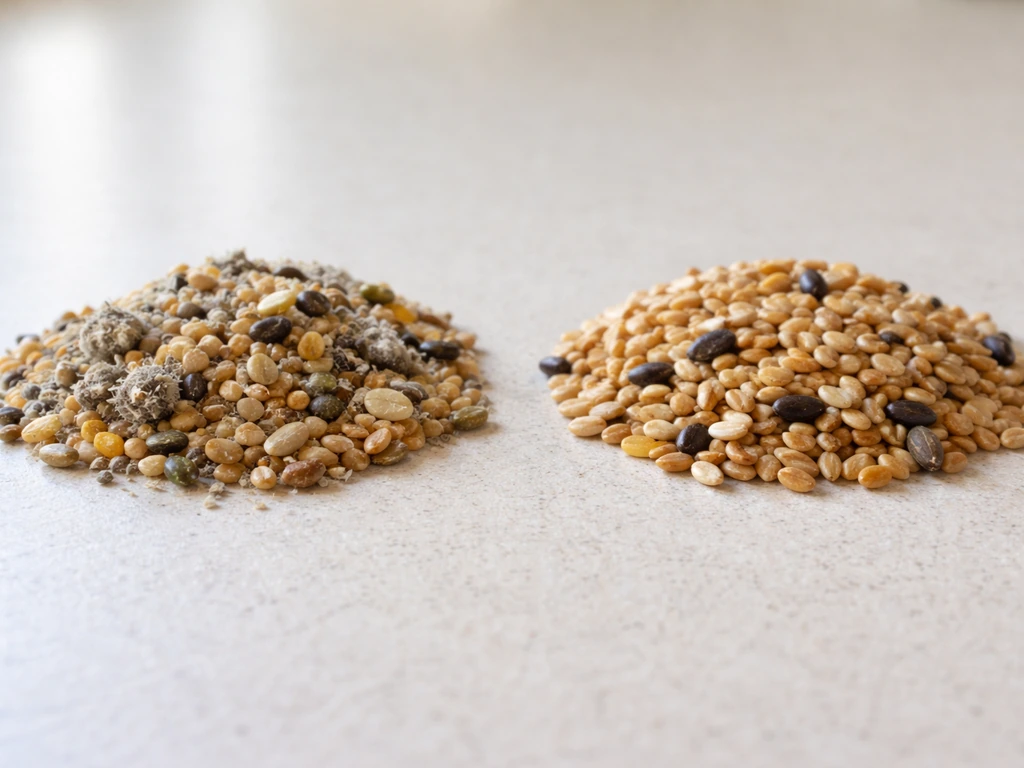
- Smell: Infested or mite-heavy seed often smells musty, sweet-sour, or simply "off." Fresh seed should smell neutral to slightly nutty.
If you only see a few small insects with no webbing, no hollow seeds, no frass, and the seed smells fine, the infestation may be minor or early-stage. That still warrants action, but it's different from a bag that's heavily webbed and musty.
Is the seed safe for birds and other wildlife?
This is where a lot of people get conflicting advice. The honest answer is: it depends on whether mold is involved. Bugs alone, particularly mites or moth larvae in a dry bag, don't make seed dangerous to birds. Many birds naturally eat insects, and small amounts of grain pests in otherwise clean seed are unlikely to harm them.
The real danger is mold. If insect activity has created moisture pockets, or if the seed smells musty or shows any discoloration, mold may have developed. Moldy seed can carry aflatoxins, toxins produced by Aspergillus molds that grow on grains and peanuts, and those are genuinely harmful to birds and wildlife. Penn State Extension and Oklahoma State University Extension are both clear: if seed shows visible mold, do not feed it.
Use these quick checks to decide whether to keep or discard the seed:
| What you find | Safe to feed? | Action |
|---|---|---|
| A few live mites or beetles, seed is dry, no odor, no mold | Probably yes, with caution | Remove affected seed, inspect the rest, store properly going forward |
| Heavy mite infestation, seed appears to be moving | No | Discard all of it |
| Indianmeal moth webbing, frass, and shed skins throughout | No | Discard and deep-clean storage area |
| Any musty, sour, or off smell | No | Discard — mold may be present even if not visible |
| Visible fuzzy or discolored patches on seed | No | Discard immediately — active mold, possible aflatoxins |
| Hollow or crumbling seeds from weevils or grain moths, seed still dry | Marginal — birds get little nutrition from hollow seed | Discard and replace with fresh seed |
What to do right now: stop feeding, isolate, and inspect
Stop filling your feeders from the suspect bag immediately. The goal right now is to contain the problem before it spreads to other stored seed, your feeder, or your home.
- Take the bag outside or to a garage away from your other stored food and seed.
- Seal it tightly (twist-tie, binder clip, or place the whole bag in a garbage bag) to stop any insects from escaping into the storage area.
- Look at the outside of the bag for webbing, moisture stains, or chew marks that might indicate how long the problem has been there.
- Open the bag in good light and go through the checklist above: check for movement, webbing, hollow seeds, frass, shed skins, and smell.
- Check any other bags or containers of seed stored nearby. Grain mites and Indianmeal moths spread readily to adjacent stored products.
- Look at the storage area itself: shelves, bins, garage floors. Indianmeal moth larvae are known to wander when ready to pupate, so you might find small larvae or cocoons on walls or ceiling corners near where the seed was stored.
- Make a decision: discard or continue. If the seed passes all the checks (dry, no mold, no heavy infestation, no smell), you can still use it but switch immediately to a proper airtight container.
Clean-up and disposal: feeders, trays, and storage areas
Even if your feeder looks fine from the outside, bugs and mold spores from contaminated seed may have already been loaded into it. This is a good time to do a full clean-up.
Disposing of infested seed
Bag the infested seed in a sealed garbage bag and put it in your outdoor trash bin rather than composting it. Composting grain-pest-infested material can spread the infestation to the compost pile and nearby areas. Do not dump it on the ground near your feeding station where wildlife, dogs, or cats might eat it.
Cleaning your feeders
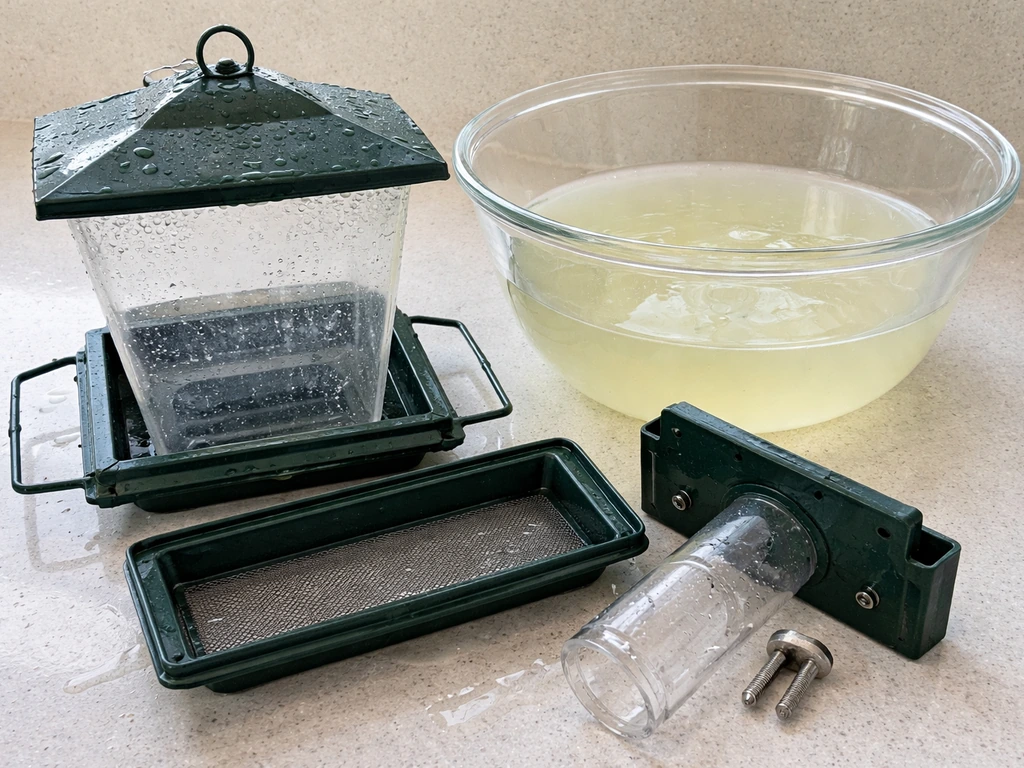
Take the feeder apart completely. Shake or brush out all old seed, husks, and debris. Then make a 10% bleach solution: 1 part bleach to 9 parts water. Soak feeder components for 10 minutes, scrub off any remaining debris, rinse thoroughly with clean water, and let everything air-dry completely before reassembling. This protocol is recommended by the Cornell Lab of Ornithology, the Ornithological Council, and the U.S. Fish and Wildlife Service. Letting the feeder dry completely matters a lot: refilling a damp feeder is one of the fastest ways to trigger mold growth in fresh seed.
Cleaning trays and storage areas
Wipe down any seed trays, catch trays, or flat feeders with the same bleach solution. For the storage area (garage shelf, cabinet, bin), vacuum up any seed debris and dust, then wipe the surfaces down. If you found Indianmeal moth larvae, check the corners, cracks, and ceiling of the storage space for small silk cocoons and remove them. Grain mite dust can also be an irritant, so wearing a dust mask while cleaning the storage space is a reasonable precaution, particularly if you have any respiratory sensitivities.
Pet safety and preventing accidental ingestion
If you have dogs or cats, this situation warrants extra attention. Dogs especially tend to sniff around feeders and eat seed that falls to the ground, and that seed is often mixed with bird droppings and can harbor mold. The FDA is clear that aflatoxin-contaminated grain products are dangerous to pets, and the AKC notes that seed under feeders may be old, damp, or moldy, making it a real risk for dogs who eat it opportunistically. If your dog has been eating seed from under a feeder that was filled from a contaminated bag, watch for symptoms like lethargy, vomiting, loss of appetite, or yellowing of the eyes or gums, and call your vet if you see any of those signs.
- Pick up any seed that has fallen under or around the feeder before allowing pets back into that area.
- Do not dump infested seed on the ground outdoors where dogs, cats, or wildlife can access it.
- Keep pets out of the storage area while you clean, since grain mite dust can be an irritant and allergen.
- If your cat has been chewing on a moth-infested bag, monitor for any digestive upset, though the insects themselves are unlikely to cause serious harm in small quantities.
- Wash your hands after handling infested seed before handling pet food or pet bowls.
It's also worth noting that the infested seed situation is related to broader feeder hygiene risks. If you keep the feeder stocked with contaminated seed or allow droppings to build up, it can contribute to the spread of germs. Bird feeders can spread disease among bird populations, and the ground around a feeder is often contaminated with droppings. Because bird feeders can also carry germs from droppings and moldy seed, people can get sick from regular exposure, so wash hands after handling seed or the feeder Bird feeders can spread disease among bird populations. Keeping pets away from that zone year-round (not just when seed is buggy) is genuinely good practice.
Prevention: how to store seed and keep bugs out
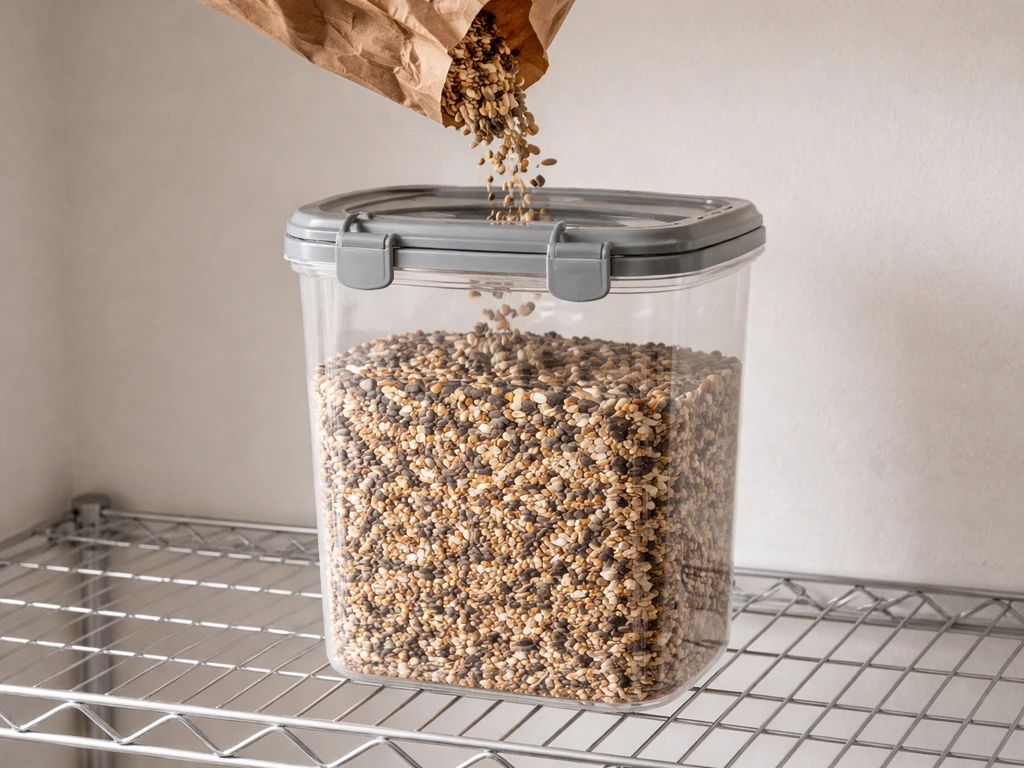
The single biggest reason bird seed gets infested is poor storage. Grain pests thrive in warm, humid conditions, and most of them can penetrate paper bags or thin plastic with ease. Here's what actually works.
Storage basics
- Transfer seed from paper bags into hard-sided, airtight containers (metal bins or heavy-duty plastic bins with locking lids) as soon as you get home.
- Store seed in a cool, dry place. Heat and humidity accelerate both mold growth and insect breeding cycles. A temperature-controlled basement or garage corner is better than a hot shed.
- Don't buy more seed than you can use in four to six weeks, especially in warm months. Rotating stock is one of the simplest ways to prevent infestation.
- If you're dealing with recurring moth or mite problems, consider freezing new seed for 48 to 72 hours before transferring it to your storage container. Freezing kills eggs and larvae that may have already been in the seed at purchase.
- Inspect new bags at the store before buying if possible, or inspect immediately when you get home. Look for webbing, unusual odor, or movement.
Feeder maintenance schedule
Project FeederWatch recommends cleaning seed feeders about every two weeks during normal conditions and more frequently during warm or wet weather. The Iowa DNR suggests a monthly cleaning as a baseline. The Iowa DNR also recommends cleaning bird feeders and waterers with a 10 percent bleach solution about once each month, and letting the feeder dry before refilling [The Iowa DNR suggests a monthly cleaning as a baseline. ](https://www.
iowadnr. gov/news-release/2025-04-22/plan-regular-cleanings-bird-feeders-waterers-and-baths). The point is to make cleaning a routine rather than a reaction to an obvious problem. Only fill feeders with as much seed as birds will consume in a day or two, especially in summer, so leftover seed doesn't sit and attract pests or grow mold.
This also reduces the risk of spreading disease among bird populations.
What to do and what to avoid
| Do this | Avoid this |
|---|---|
| Store seed in airtight, hard-sided containers | Leaving seed in the original paper or thin plastic bag |
| Buy seed in smaller quantities and rotate stock | Buying a 50-lb bag when you only go through 10 lbs a month |
| Clean feeders with bleach solution every 1 to 2 weeks | Topping off a feeder without ever cleaning it |
| Let feeders dry completely before refilling | Refilling a damp or wet feeder |
| Discard any seed that smells musty or shows mold | Feeding moldy or heavily infested seed hoping birds will "work through it" |
| Freeze new seed for 48 hours if you suspect eggs are present | Ignoring an infestation and just adding fresh seed on top |
| Keep pets away from the ground area under feeders | Allowing dogs to eat seed and debris off the ground freely |
One last thing worth knowing: Indianmeal moths don't just stay in your garage. If the infested seed was stored inside the house, the moths can spread to your pantry and infest other dry goods like flour, oats, or dried fruit. If you've been keeping bird seed in a kitchen cabinet or near your pantry, check those areas too. And if moths are a recurring problem in your bird seed specifically, that topic gets into more detail about the biology of those pests and how their lifecycle affects what you see in the bag. Some bird seed moth species can also be mistaken for household pests, but they do not typically eat clothes biology of those pests.
FAQ
Can I put the buggy bird seed back on the shelf after I pick out the bugs?
Usually no. If you can see active webbing, hollow seeds, or musty odor, the safest choice is to discard it. Picking out insects does not remove mold spores or toxins that may have formed in moisture pockets, and larvae can be hidden inside kernels even when the outside looks fine.
What if my seed only has a little dust but no mold smell or webbing?
Treat it as a low-level infestation and contain it. Do not pour it back into a previously opened container or into the feeder, because mite dust and tiny eggs can spread. Instead, keep the seed sealed outdoors or in a dedicated bin while you clean the feeder and storage area, then reassess based on how quickly you see new activity.
Is frass or tiny debris always a sign I should throw everything out?
Not necessarily. Some chaff and seed husk is normal, but frass that looks like granular droppings, especially with webbing, holes, or discoloration, suggests active feeding. Combine that with smell and texture checks, and if you notice any musty odor or any visible mold, discard immediately.
Can I freeze bird seed to kill the insects?
Freezing can kill many pests, but it is not a reliable fix if mold is involved. If you see any mold, musty smell, or moisture damage, freezing does not make it safe. If the seed is dry and odor is normal, freezing is sometimes used as an extra step after you clean and contain the batch, but you still should not reuse it in a way that spreads debris into other storage or feeders.
Should I worry if the bugs are only in the bag, but the feeder looks clean?
Yes, you still need to clean and protect. Bugs and mold spores can already be in the feeder seed and debris even if the feeder exterior looks fine. That is why a full disassembly, brushing out, and bleach wipe plus complete air-drying matters.
How do I clean safely if I have a dust allergy or asthma?
Avoid dry sweeping. Use a vacuum with a proper filter, wear a dust mask or respirator, and keep the area ventilated. After vacuuming, wipe surfaces with the bleach solution used for the feeder, then wash your hands and any exposed skin.
What is the safest way to handle the sealed bag of infested seed?
Seal it in a heavy garbage bag, keep it contained while you transport it, and put it in outdoor trash. Do not compost it and do not dump it near the feeding station, because dogs, cats, and wildlife can access it and because insect fragments and spores can spread during handling.
If my dog ate some of the seed under the feeder, what should I do right away?
First, stop additional exposure and collect any remaining seed so you do not refill the feeder. Monitor for early signs mentioned in the article such as vomiting, loss of appetite, lethargy, and yellowing of the eyes or gums. Call your veterinarian promptly if you suspect mold contamination, because toxin-related issues may need urgent guidance even if symptoms are mild at first.
Will a bleach solution harm feeder coatings or finishes?
It can, depending on the material and finish. If your feeder includes painted surfaces, wood, or delicate coatings, test a small hidden area first. Also follow the rinse and full air-dry steps carefully, because residue can affect birds and also trap moisture that promotes mold.
If I had Indianmeal moths, how do I prevent them from coming back in other pantry foods?
Check nearby dry goods for webbing, cocoons, or clumping, especially flour, oats, and dried fruit. Store remaining foods in airtight containers and clean the cabinet corners and crevices where cocoons can hide. Discard heavily infested items rather than trying to save them, since larvae can be in more than one product.
How often should I clean the feeder if bugs have happened once but I see nothing now?
Return to a routine cleaning schedule. During normal weather, a cleaning every couple of weeks is a practical baseline, and more frequent cleaning during warm or wet periods helps prevent leftover debris from becoming a new hotspot. Also limit how much you add, so seed does not sit for long periods.