If you're seeing tiny bugs crawling through your bird seed, there's a good chance you're dealing with weevils, specifically stored-product weevils from the genus Sitophilus. The two most common culprits are the rice weevil (Sitophilus oryzae) and the granary weevil (Sitophilus granarius). UMD Extension provides an educational resource specifically on rice and granary weevils, which are common stored-product pests rice weevil (Sitophilus oryzae) and the granary weevil (Sitophilus granarius). Both are harmless to handle, but they can ruin a bag of seed quickly and, under the right conditions, spread into your home's dry goods storage. Here's how to confirm what you're looking at, deal with it today, and make sure it doesn't come back.
Weevil Bugs in Bird Seed: Identify, Clean, and Prevent Fast

Maya Henderson
11 Apr 2026
What you're actually seeing: identifying weevils in bird seed
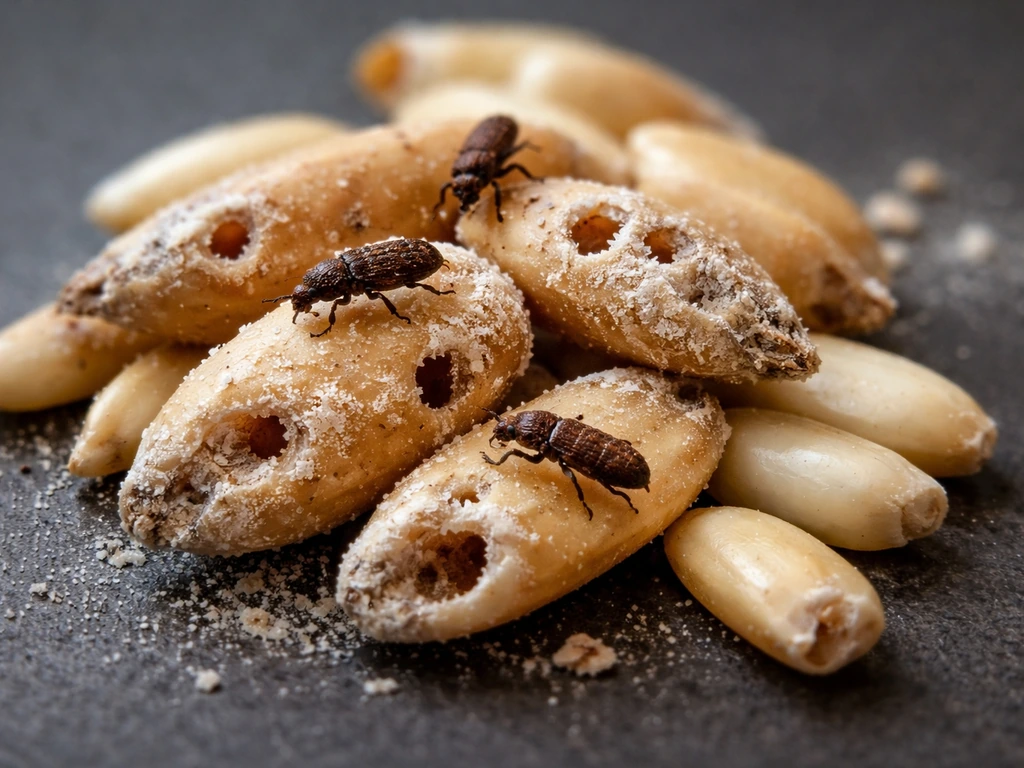
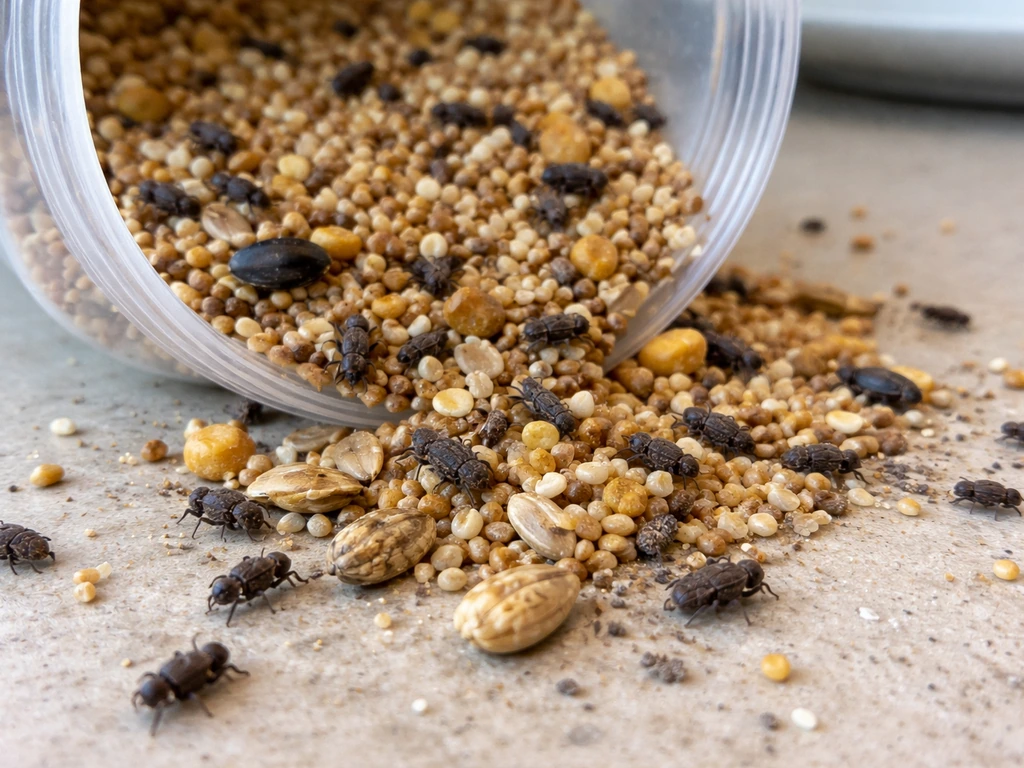
The most reliable way to confirm you have weevils rather than some other grain pest is to look closely at the bugs themselves and at the individual seed kernels. Rice weevil adults are small, only about 2 to 3 mm long, and are dull reddish-brown to black with four faint light spots on their wing covers. The feature that gives them away is the distinctive long snout, called a rostrum, that projects from the front of their head. Granary weevils are a bit larger at around 5 mm and dark brown, also with that same prominent snout. Neither one bites or stings.
Beyond the adult bugs, look at the seed kernels themselves. Weevils lay eggs inside individual kernels and seal the opening. The larvae feed internally, completely hidden, until they pupate and chew their way out as adults. This means you'll find kernels with small round or oblong exit holes. Rice weevil emergence holes tend to be smaller and rounder, while granary weevil holes are larger and more oblong. Here's the tricky part: because the larval stage happens entirely inside the kernel, there's often no visible external damage for about a month. You might see perfectly intact-looking seed while an infestation is already underway.
The first things most people notice are either the adult beetles crawling through the seed or, in more advanced infestations, webbing and worm-like larvae visible in the bag or container. If you're unsure whether what you have is weevils versus moths or other grain pests, that webbing is actually a key differentiator. bird seed moths produce much more obvious webbing and cocoon-like clumps; weevil infestations tend to look more like beetles crawling freely through loose seed with holed kernels scattered throughout.
Why weevils end up in your bird seed
Weevils almost always enter your supply from the source, not from your backyard. Rice weevils are common in grain storage facilities and processing plants, and it's very possible the seed you bought was already infested before you opened the bag. The eggs are laid inside kernels and are invisible to the naked eye, so there's no way to spot them at purchase. Once conditions are warm and humid enough, the population explodes.
Storage conditions determine how fast an infestation takes hold after that. Weevil development slows significantly in cool, dry conditions. Grain moisture above 14.5% and temperatures above 18°C (about 64°F) are the sweet spots where these insects thrive and reproduce rapidly. A garage, shed, or outdoor storage bin in spring or summer is often ideal weevil habitat. If you're storing a large bag of seed in a warm space without an airtight container, you're essentially incubating the problem. Humidity also matters because damp seed is the starting point for a secondary issue: mold. Weevil activity generates heat through respiration, which raises localized moisture and temperature in stored seed, which in turn accelerates spoilage.
Are weevils actually dangerous to birds, wildlife, and pets?
Weevils themselves are not toxic, venomous, or known to transmit disease to birds, wildlife, or pets. The insects are protein, and many birds will eat them without any problem. Wild birds consuming the occasional weevil or weevil-infested seed are not in meaningful danger from the weevil itself. That said, the situation is more complicated than 'weevils are fine, move on.'
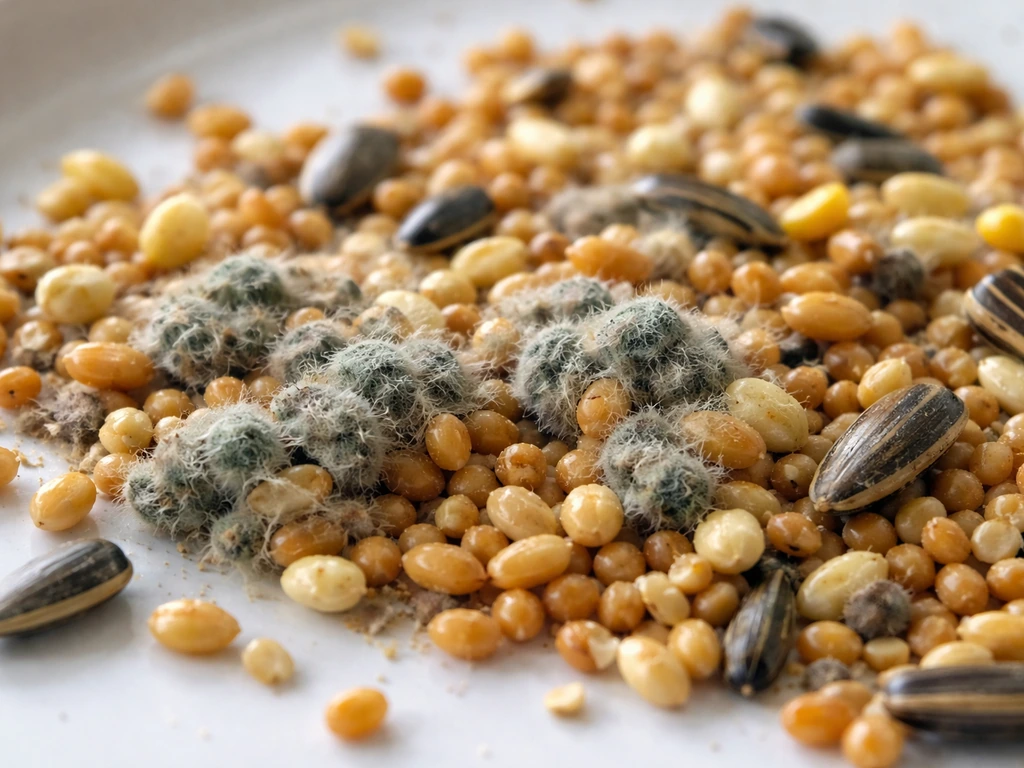
The real concern is what comes with a weevil infestation: contamination, spoilage, and mold. Heavily infested seed that has also gotten damp is a mold risk, and moldy seed is genuinely dangerous to birds. If you're already wondering what moldy bird seed looks like, that's worth checking before you decide whether to try to salvage any of your current supply.
For pets, specifically dogs and cats that might sniff around spilled seed or get into a storage container, ingesting weevil larvae or shed insect skins can cause gastrointestinal irritation. It's not likely to be a serious emergency, but it's enough reason to clean up spilled infested seed promptly and keep storage containers secured. If a pet gets into a large quantity of heavily infested seed and starts showing signs of GI distress, contact your vet.
Backyard bird feeders that stay chronically infested can also become a hygiene problem more broadly. While weevils themselves don't spread disease the way contaminated feeders can, a feeder full of rotting, insect-riddled seed creates conditions that do. If you're feeding birds regularly, it's worth understanding how bird feeders can spread disease through accumulated debris and spoiled food, which is exactly the environment a weevil infestation creates.
Do this right now: cleanup and disposal steps
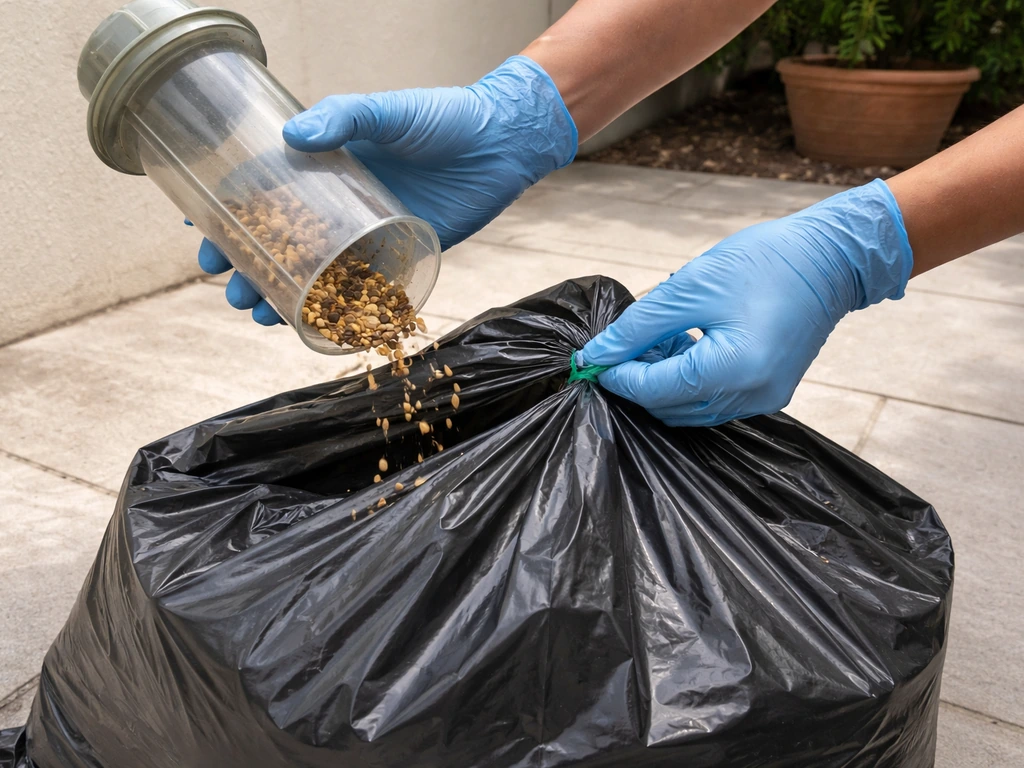
Don't leave infested seed sitting around while you figure out a plan. The longer it stays, the more eggs get laid and the harder the problem gets to resolve. Here's the immediate sequence:
- Remove and empty your feeders completely. Take them away from the feeding area before you open them so you're not dumping infested seed directly on the ground under the feeder.
- Put the infested seed into a sealed plastic bag. Double-bag it if you can. Take it directly outside to an outdoor trash bin, not to an indoor bin or garage can where adults can escape and re-infest other stored food.
- Inspect your storage container and any nearby stored seed. Look for adult beetles, webbing, or holed kernels. If a container is infested, it needs to go through the same disposal or treatment process.
- Clean the empty feeders with hot soapy water, rinse thoroughly, and let them dry completely before refilling. Pay attention to cracks, crevices, and seed ports where eggs or larvae can hide.
- Vacuum or wipe down your storage area, including shelves, corners, and cracks where infested seed dust or insect eggs may have settled.
- If seed spilled in your garage or storage space, clean that up immediately. Adult weevils will find new grain sources if left with the opportunity.
The discard-vs-save question comes up a lot, and the honest answer is: discard if the infestation is visible and widespread. If you find a small number of adult beetles in an otherwise dry, clean bag of seed with no larvae or webbing, you might be at the very early stages. But once you're seeing large numbers of adults, worm-like larvae, webbing, or damp clumped seed, toss it. It's not worth the contamination risk, and it's not worth re-seeding the next batch you buy. For more on identifying exactly what's going on inside a bag of suspicious seed, this guide on finding bugs in bird seed covers a wider range of what you might be dealing with.
How to actually stop the infestation
Freeze or heat treatment for seed you want to keep
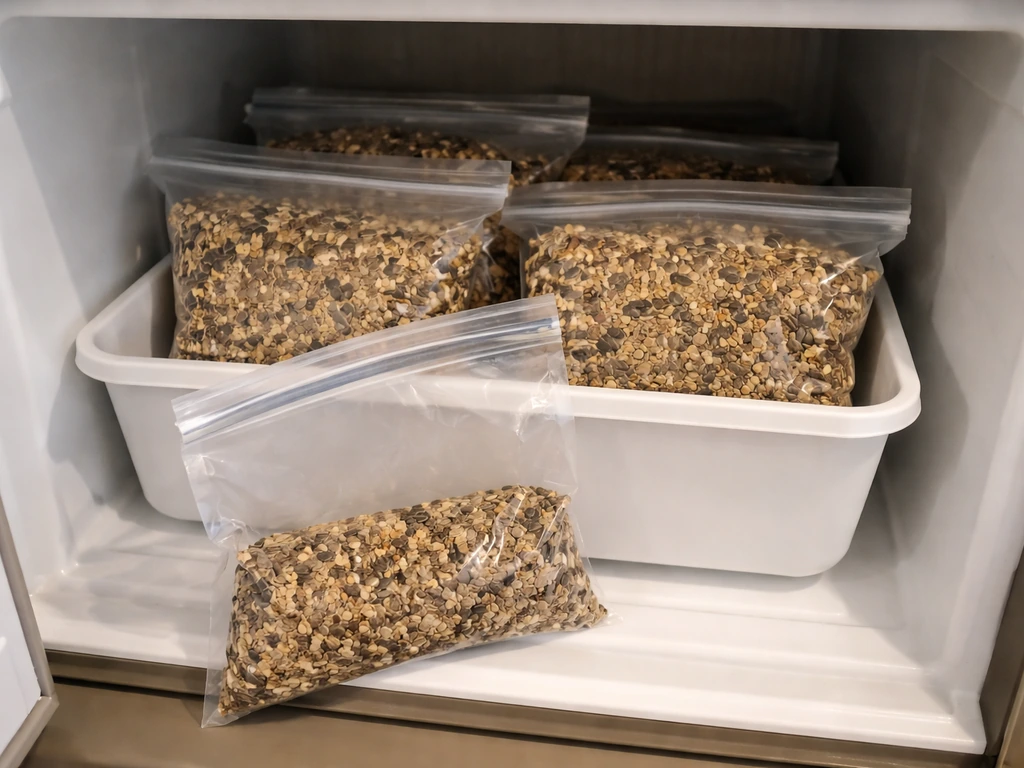
If you have a portion of seed that looks clean and you want to keep it, freezing is the safest practical option. If you have good reason to think food may be infested, UGA Extension recommends using freezing in a household freezer and/or a heat treatment as control steps before storing the seed [freezing the package in a household freezer and/or using a heat treatment](https://extension. uga. edu/content/dam/extension/programs-and-services/integrated-pest-management/documents/handbooks/2020-pmh-chapters/Stored%20Product%20Insect%20Management.
pdf). Place the seed in a sealed bag or airtight container first, then put it in your freezer. The target is 0°F (-18°C) for at least 4 days. This kills adults, larvae, and eggs.
The sealing step is important because it prevents condensation from forming on the cold seed when you take it back out, which would add moisture and create a mold risk. Make sure the entire bulk of seed reaches 0°F, not just the outer layer. If you have a large, dense container, give it extra time.
Heat treatment is the other option. Spreading seed in a thin layer on a baking sheet and heating it at 120°F (about 49°C) for 60 minutes will kill all life stages. Keep in mind this is a low, slow heat, not roasting temperature, and it works best for small quantities. Let the seed cool completely and dry before storing.
Storage that actually prevents re-infestation
After treatment or after buying fresh seed, storage is where most people fail and re-infestations start. Airtight hard-sided containers are non-negotiable. Weevils can chew through thin plastic bags. A metal or heavy-duty plastic container with a tight lid keeps adults out and also prevents any surviving eggs from hatching into a new population that escapes. Keep the container in a cool, dry location. Above 64°F and 14.5% grain moisture, the population can establish itself again quickly. A basement or climate-controlled indoor space beats a hot garage every time.
Do not spray insecticides into stored food, into feeders, or onto seed. University extension guidance is clear on this: insecticide sprays are not appropriate for controlling insects in stored food products. The solution is physical removal, treatment (freeze or heat), and proper storage conditions.
Smarter buying habits to avoid bringing weevils home
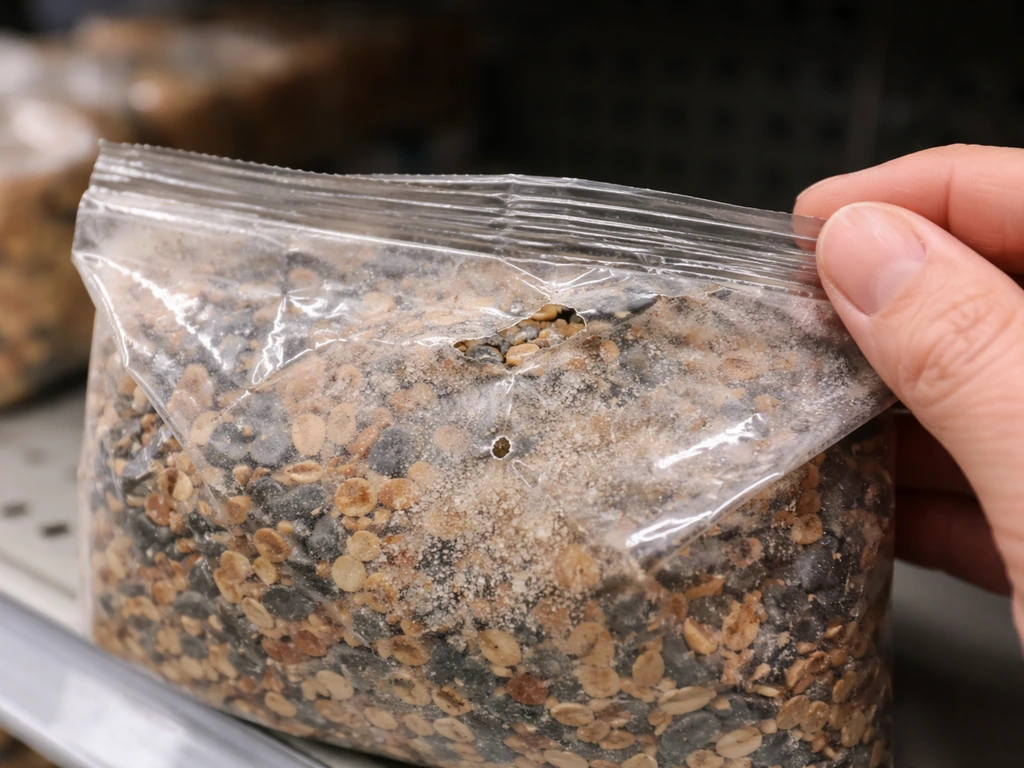
Since infestations often start at the source, what you buy and how you handle it at purchase matters a lot. Here's what to look for and do:
- Inspect packaging before buying. Avoid bags with tears, punctures, moisture stains, or that feel warm to the touch. Warm bags can indicate active insect respiration inside.
- Buy smaller quantities more frequently rather than one large bag that sits for months. A 5-pound bag used in 2 to 3 weeks is far less risky than a 40-pound bag that sits through summer.
- Check the seed when you get home. Open it and look before committing it to storage. Early detection is much easier to deal with.
- Rotate stock. Use older seed first, and don't add a fresh purchase on top of old remaining seed in the same container. That's how hidden eggs from the old batch infest the new supply.
- Source from reputable retailers with high turnover. Seed that has been sitting in a warehouse or on a shelf for months is more likely to carry an established population.
Long-term prevention and what to do if they keep coming back
If you're doing everything above and still finding weevils repeatedly, there are a few things to troubleshoot. First, check your storage container itself. Even a hard-sided container can harbor eggs and larvae in seams, lid gaskets, or scratched surfaces if it was previously infested and not cleaned thoroughly. Wash the container with hot soapy water, rinse, and dry completely before using it again.
Second, check humidity in your storage space. High ambient humidity can raise the moisture content of seed even in a sealed container over time. A small desiccant packet placed inside the container (not touching the seed directly) can help. If you're storing seed in a consistently humid environment, reconsider the location.
Third, look at your feeders. Seed debris, husks, and fines that accumulate in feeder trays and ports are a harborage point for weevils and other stored-product pests. Clean your feeders every one to two weeks, not just when you notice a problem. A dirty feeder isn't just a weevil issue either: accumulated wet seed debris is also how mold and bacterial contamination develop, which connects to a broader question about whether humans can get sick from bird feeders through contact with contaminated surfaces.
Mold and weevils often go together in poorly stored seed because both thrive under the same conditions: warmth and moisture. If you're troubleshooting a recurring problem, address the environment first. Cool, dry storage combined with clean feeders and good seed rotation eliminates about 95% of ongoing stored-product pest problems.
When to escalate to pest control or rethink your feeding setup
For most backyard birders, the steps above are enough to resolve a weevil problem completely. But there are situations where you need to think bigger.
If you've discarded all infested seed, cleaned thoroughly, and you're still finding adult weevils consistently, that's a sign the infestation has spread beyond your bird seed storage. Check your pantry and kitchen dry goods: rice, flour, cereal, pasta, and spices can all harbor the same stored-product weevil species. If you find infestation in multiple locations inside your home, that's when a licensed pest control professional can help. They can inspect wall voids, utility spaces, and other hidden harborage areas that you can't easily reach.
For building-specific issues, such as weevils coming in from a shared storage area in an apartment building or a commercial space nearby, individual cleanup won't be enough. That's a property management or pest control conversation.
If the logistics of managing seed storage are just too challenging in your current situation, consider switching to seed alternatives that are less attractive to stored-product pests. Suet cakes, nyjer (thistle) seed in tube feeders, or shelled peanuts in mesh feeders all attract a wide range of birds and present a much lower weevil risk because they don't involve storing loose bulk grain. It's also worth reconsidering feeder placement and feeder type: a tube feeder with a small seed capacity that you fill every few days will never develop the kind of built-up seed debris that sustains a chronic pest problem.
| Approach | Best for | Kills all life stages? | Main limitation |
|---|---|---|---|
| Freezing at 0°F for 4+ days | Sealed bags or containers of salvageable seed | Yes | Seed must be fully sealed to prevent condensation; entire bulk must reach 0°F |
| Heat at 120°F for 60 minutes | Small quantities spread in thin layers | Yes | Low throughput; must cool and dry before storage |
| Discard and replace | Heavily infested, damp, or moldy seed | N/A | No cost savings, but cleanest outcome |
| Airtight container storage | Ongoing prevention of re-infestation | No (prevents, not kills) | Must start with clean seed; container must be thoroughly cleaned first |
| Cool, dry storage conditions | Slowing/halting weevil development | No (suppresses) | Requires controlled environment; ineffective in hot garages or sheds |
The bottom line is that weevils in bird seed are a solvable problem, not a permanent condition. Identify them correctly, remove the infested seed promptly, clean your storage area and feeders thoroughly, and store any remaining or replacement seed in airtight containers in a cool, dry location. Do those things consistently and you'll almost certainly break the cycle.
FAQ
I found just one or two weevils in my bird seed, should I throw the whole bag away?
If you only see an occasional adult beetle in a mostly dry, clean bag and you do not see holed kernels, webbing, or larvae, treat it as an early-stage infestation. Freeze the portion you want to keep for 4 days at 0°F (-18°C), then switch to an airtight hard-sided container in a cool, dry spot. If you keep finding new adults after treatment, assume there are eggs in the supply or in the storage container and discard the remaining bulk seed.
If I freeze the seed, can I just refill the feeder right away without cleaning?
Do not pour the seed back into a feeder using the same messy tray. Empty the bulk seed into a trash bag, wipe the container, and clean the feeder parts and ports with hot soapy water, then dry completely before refilling. Residual fines and husks in feeder crevices can restart the problem even if you freeze treated seed.
How can I tell if my seed is already infested when kernels still look normal?
It is possible for tiny larvae or egg activity to be present even when the seed looks intact, which is why the freezer or heat step is the safer choice when you intend to keep any questionable seed. Look for exit holes, scattered holed kernels, and any damp clumping or webbing, but if you are already seeing adults repeatedly, assume more is going on than surface appearance shows.
Once I get weevils in bird seed, will they spread to my kitchen pantry?
Yes. Stored-product weevils can hide in other pantry grains and similar dry foods, especially rice, flour, cereal, pasta, spices, and even bird-friendly mixes that contain grains. When you have a confirmed infestation in seed, inspect nearby dry goods and store them in airtight containers too, then monitor for adult beetles over the next few weeks.
What mistakes ruin the freezer or heat method for weevil removal?
If you heat treat, spread seed in a thin layer so the full bulk reaches the target temperature, and do not use a high roasting temperature. After heating, let it cool completely before sealing, and avoid sealing while warm to reduce condensation. Moisture control after treatment is what prevents mold from becoming the next issue.
Are weevils dangerous to the birds that eat the seed?
In most cases, yes, birds can eat weevils without the insects posing a direct toxicity risk. The risk is contamination secondary issues, mainly mold from damp, compromised seed. If the seed is damp, clumped, or smells moldy, do not feed it at all, even if the birds seem interested.
Should I be worried if my dog or cat eats some weevil-infested seed?
For dogs and cats, the main concern is gastrointestinal upset from chewing larvae, eating insect fragments, or ingesting spoiled, possibly moldy seed. Small accidental amounts usually do not require emergency care, but if you see repeated vomiting, diarrhea, lethargy, or blood in stool, contact your veterinarian. Keep pets away from spilled seed while cleaning.
Is it safe for humans to handle or clean up after weevil-infested seed?
Pregnant or immunocompromised people generally should not handle moldy seed, and everyone should avoid prolonged skin contact with contaminated debris. Weevils themselves are not the hazard, mold and bacteria are. Wear gloves when cleaning, wash hands afterward, and bag up infested material promptly to reduce exposure to dust and debris.
Can I spray insecticide in my shed or on feeders to stop weevils?
Avoid insecticide sprays on seed and feeders, because they are not appropriate for food and can create residue or exposure risks for birds and pets. Instead, remove and treat the seed (freeze or heat), clean the feeder, and lock down storage with airtight containers plus cool, dry location. If you have a recurring infestation after that, escalate to pest control or inspect nearby dry goods and shared storage areas.
What are the most common reasons weevils keep coming back even after I cleaned everything?
If weevils keep appearing after you freeze or discard infested seed, the most common causes are: eggs in the storage container seams or lid gasket, high ambient humidity soaking into sealed storage over time, or unclean feeder trays with accumulating fines. Start by deep-cleaning and drying the container and feeder, then check the storage location for humidity.
What seed or feeder alternatives lower the chance of stored-product pests?
Yes, you can reduce risk by switching to feeding formats that do not involve storing loose bulk grain for long periods. Suet cakes, nyjer (thistle) in tube feeders, and shelled peanuts in mesh feeders generally lower weevil risk because there is less stored loose grain that can support an infestation. If you stick with bulk seed, use smaller quantities and refill more frequently to prevent “incubation time.”
Next Article
What Moldy Bird Seed Looks Like and What to Do Today
See moldy bird seed signs like fuzzy patches, clumps, odor, webby growth and get safe cleanup and prevention steps now.