No, bird seed moths do not eat clothes. The moths that infest stored bird seed (most commonly the Indian meal moth, Plodia interpunctella) feed strictly on dry food products like grains, seeds, nuts, and dried fruit. They have no interest in wool, silk, or any fabric. If you have moths around your bird seed AND holes appearing in your clothes, you are dealing with two separate problems caused by two very different insects.
Do Bird Seed Moths Eat Clothes? Identify and Stop Infestations

Maya Henderson
24 Apr 2026
What bird seed moths actually eat (and why clothes get blamed)
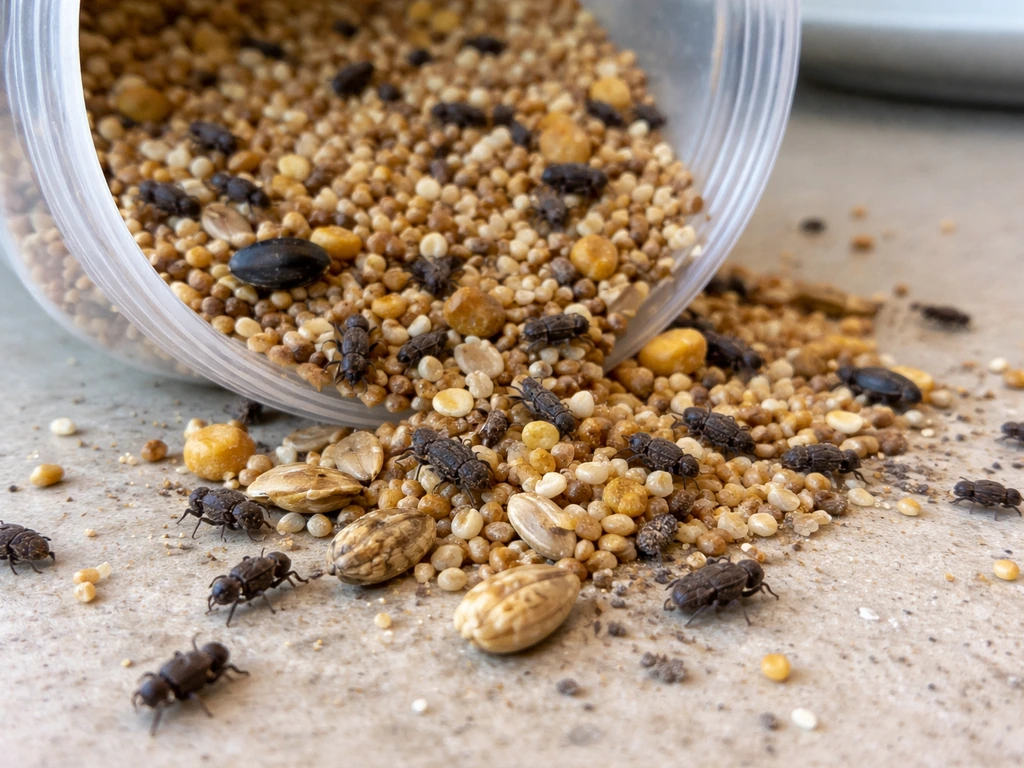
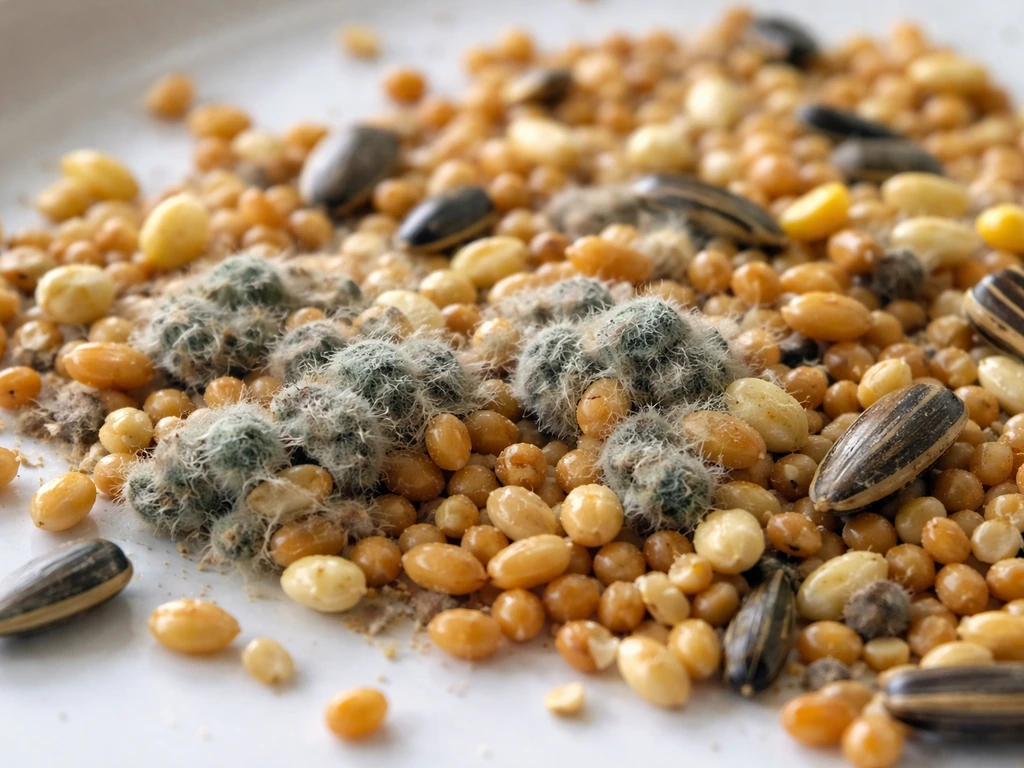
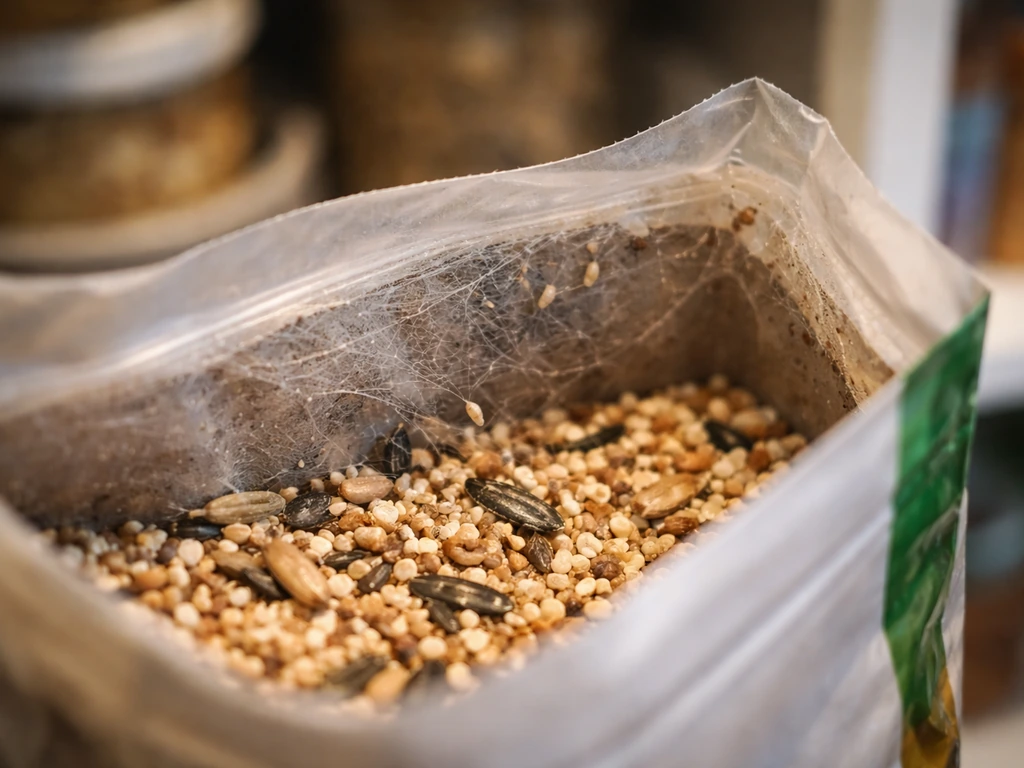
Indian meal moth larvae are food-product pests. Their menu includes cereals, nuts, seeds, dried fruit, crackers, chocolate, powdered milk, dried pet food, and yes, bird seed. When larvae feed, they spin fine silken webbing over and through the food, and they leave behind frass (tiny fecal pellets) and shed skins. That webbing is often the first visible clue something is wrong in a seed bag or storage bin. Moldy bird seed often looks clumped, discolored, and may have a musty odor, and it can even show fuzzy growth what does moldy bird seed look like.
The reason clothes sometimes get accused: pantry moth larvae occasionally wander away from the food source to find a sheltered spot to pupate, and they can end up tucked into fabric folds, corners of shelves, or inside boxes near the infested seed. Finding a larva or cocoon on or near clothing does not mean it was feeding on the fabric. It was just looking for a quiet place to transform. The feeding damage stays with the food, not your wardrobe.
How to tell bird seed moths from clothes moths
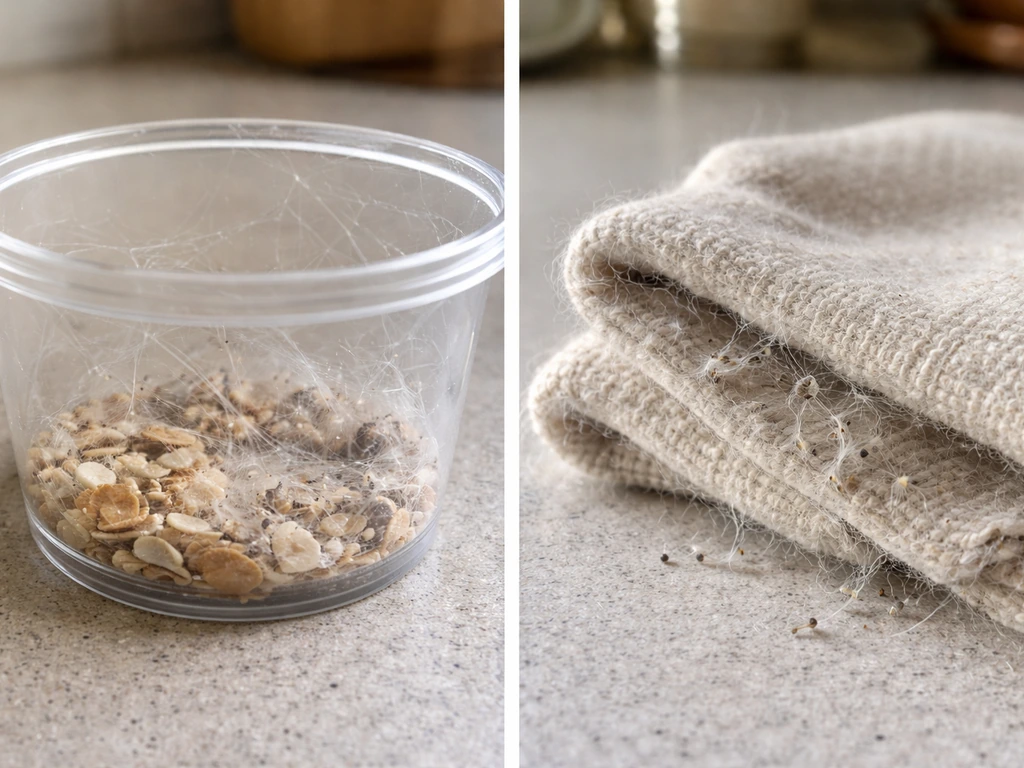
Getting the identification right matters because the cleanup strategy is completely different. Here are the key differences to look for.
| Feature | Bird Seed / Pantry Moth (Indian Meal Moth) | Clothes Moth (Webbing or Casemaking) |
|---|---|---|
| What larvae eat | Grains, seeds, nuts, dried food products | Wool, fur, silk, feathers, leather, hair |
| Where you find them | In or near stored food, seed bags, pantry shelves | In closets, under furniture, in stored woolens, carpets |
| Webbing location | On and through food, seed bags, shelf crevices | On fabric surfaces, silk tubes or cases on textiles |
| Adult appearance | Copper/bronze wing tips with pale gray base, about 3/4 inch wingspan | Pale golden or buff colored, about 1/2 inch, tend to avoid light |
| Adult behavior | Fly toward light, zigzag flight pattern | Avoid light, scuttle rather than fly when disturbed |
| Damage evidence | Webbing and frass in food, clumped seed | Holes in fabric, loss of carpet pile, silk tunnels on textiles |
| Egg-laying site | Directly on or near food, in seed crevices | On wool, fur, feathers, or other keratin-based materials |
The simplest test: check where you actually find the larvae and webbing. In the seed bag and on pantry shelves means pantry moths. On your wool sweaters or in the carpet pile means clothes moths. Clothes moths strongly avoid light and rarely fly around the room, while Indian meal moths will flutter toward lamps at night.
Signs of infestation: what to look for in feeders, seed storage, and closets
In bird seed and feeders
- Fine silken webbing clumped through the seed, especially in corners of the bag or bin
- Seed kernels stuck together in clumps from webbing
- Tiny worm-like larvae (creamy white with a dark head, about half an inch long) moving through the seed
- Fine powdery frass mixed in with the seed
- Small moths flying around the feeder area or near where you store seed
- Tiny holes poked through plastic seed bags
In closets and fabrics (if you suspect clothes moths instead)
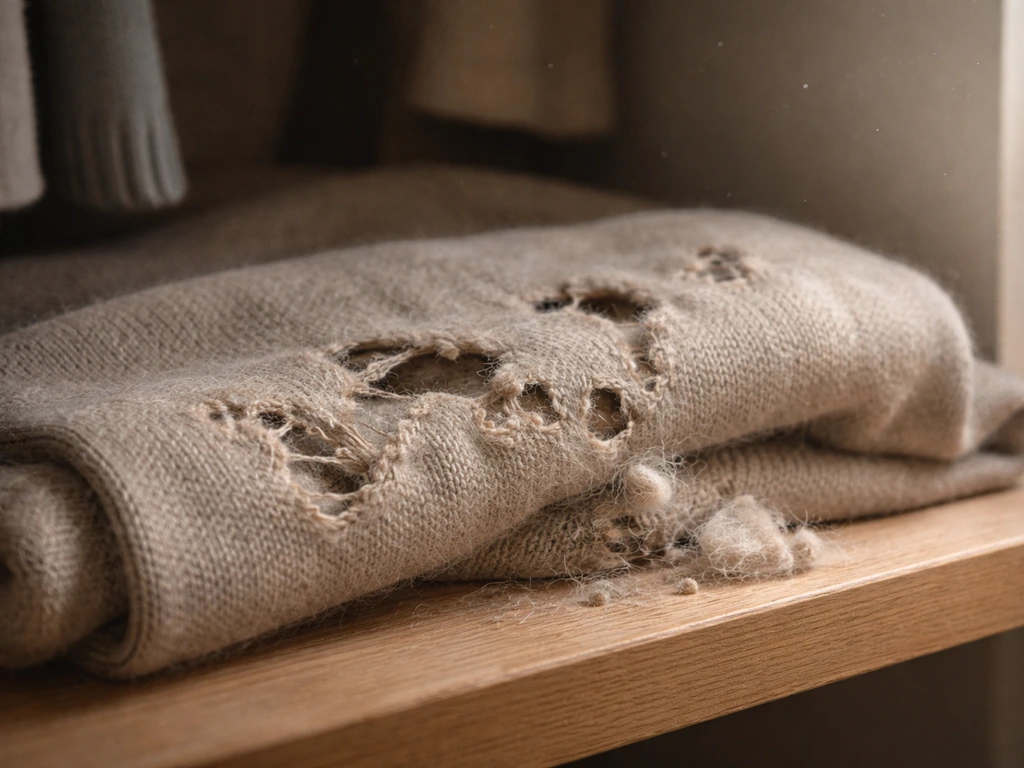
- Irregular holes in wool, cashmere, silk, or fur items
- Thinning or bare patches in wool rugs or carpet, especially in low-traffic corners
- Silken tubes or flat patches of webbing directly on the fabric surface
- Small pale larvae (about a quarter inch) inside silk cases on textile surfaces
- Adult moths that scuttle away from light rather than flying toward it
What to do today: remove seed, clean feeders, check storage
If you have confirmed or strongly suspect a bird seed moth infestation, act right away. If you’re seeing bugs in your bird seed, the first step is to remove the seed and inspect the bag and nearby pantry shelves for webbing and larvae. The Indian meal moth can complete its egg-to-pupa cycle in as little as six to eight weeks in warm conditions, so the longer you wait the further the infestation can spread to other stored foods in your home.
- Remove and discard all visibly infested seed. Do not just pick out the clumped bits and keep the rest. Bag the seed in a sealed plastic bag and put it in an outdoor trash bin immediately.
- Inspect every other dry food stored nearby: cereals, nuts, pet food, crackers, dried fruit, spices, chocolate. If you see webbing, larvae, or frass in any of it, it goes too.
- Empty and clean bird feeders thoroughly. Scrub with a 10% bleach solution (one part bleach to nine parts water), rinse completely, and let dry fully before refilling. This matters especially if larvae were found crawling in or on the feeder.
- Vacuum the storage area with a crevice attachment. Larvae and eggs hide in shelf cracks, corners, and along baseboards. A thorough vacuum pass removes them before they pupate and restart the cycle.
- Wipe down shelves with warm soapy water after vacuuming. Pay attention to cracks, shelf brackets, and any spots where seed debris has collected.
- Check your vacuum bag or canister immediately after. Seal the bag or empty the canister into a sealed bag outdoors so any live larvae or eggs do not re-infest the area.
- Move all remaining clean seed and dry food into airtight hard-sided containers. Thin plastic bags offer no barrier to larvae or adults laying eggs.
Prevention and control that's safe for pets and backyard wildlife
The safest and most effective long-term control for bird seed moths is sanitation and smart storage, not pesticides. Spraying chemicals near bird feeders or in areas where pets roam is not worth the risk, and it is rarely necessary when the infestation source has been removed.
- Store bird seed in airtight metal or hard plastic bins rather than the original paper or thin plastic bag. This is the single biggest prevention step.
- Buy seed in quantities you will use within two to four weeks, especially in warmer months when moths develop faster. Large bulk purchases are a bigger infestation risk.
- Keep seed storage areas cool and dry. Warmth speeds up moth development dramatically.
- Use Indian meal moth pheromone sticky traps inside seed storage areas. These attract and catch adult males, reducing reproduction, and they pose no chemical risk to pets or wildlife.
- Inspect new bags of seed before storing them. Infestations often begin right at the point of purchase, not in your home.
- Freeze new seed bags for at least four days before storing if you have had repeated problems. This kills eggs and early larvae.
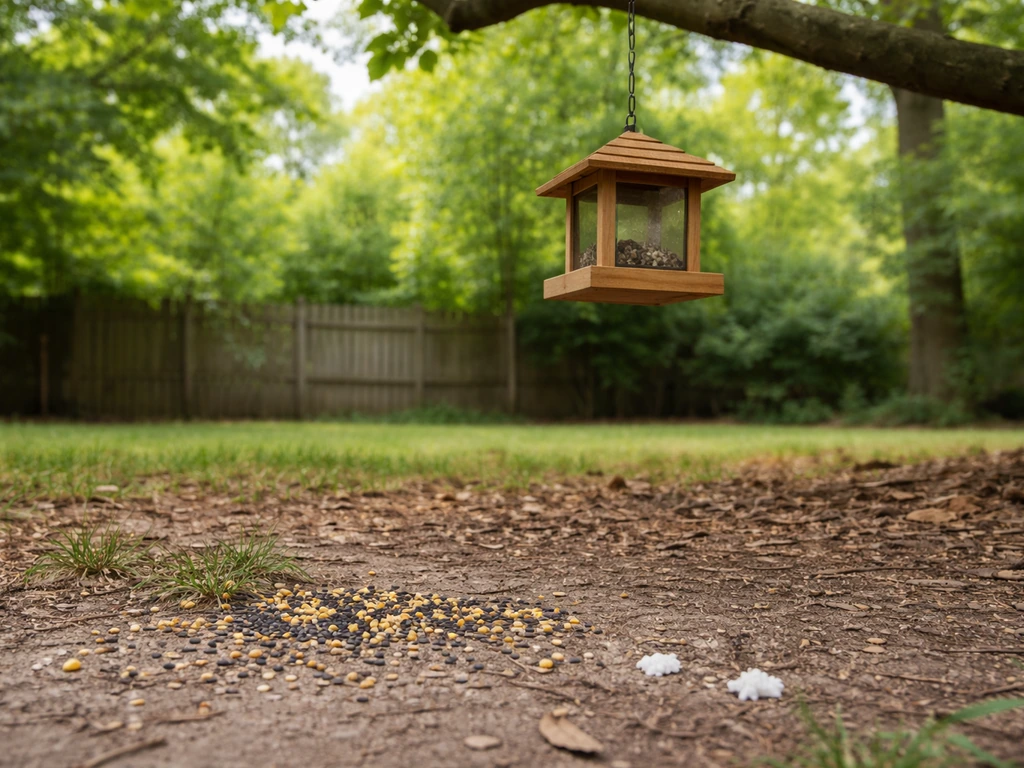
- Do not leave spilled seed on the ground under feeders for long. Clean up spills regularly to avoid attracting pests and reducing the food source available to larvae.
- Avoid using chemical pesticide sprays or foggers in feeder areas. These can leave residue that harms birds, beneficial insects, and pets.
It is also worth knowing that bird seed moths are part of a family of stored-product pests that can include grain weevils and other pantry insects. Can humans get sick from bird feeders? In most cases, bird seed moths are a nuisance food and storage pest rather than a direct cause of human illness. While they are mostly a nuisance, bird feeders can still contribute to health issues if mold and spoiled seed spread spores or contamination. If you have found bugs in your seed before, it is worth doing a more thorough audit of all your stored dry goods, not just the seed. Keeping everything in sealed containers eliminates the conditions all these pests need to establish themselves.
If it really is clothes moths: what to do with fabrics and laundry
If your investigation points to clothes moths rather than pantry moths, the approach shifts entirely to your textiles. Remember: it is the larvae causing all the damage, not the adults.
- Wash all affected washable items in hot water (at least 120 degrees Fahrenheit) or run them through a hot dryer cycle for 30 minutes. Heat kills larvae and eggs.
- For items that cannot be washed (fine wool, cashmere, antique textiles), place them in a sealed plastic bag and freeze them for at least two weeks. This is a safe, chemical-free method that kills all life stages.
- Dry clean wool or silk items that show active damage. Tell the cleaner what you suspect so they can treat accordingly.
- Vacuum carpets and rugs thoroughly, especially along edges, under furniture, and in low-traffic corners where larvae prefer to feed undisturbed. Use a HEPA-filter vacuum if you have one.
- Inspect and clean closet walls, baseboards, and shelving. Larvae can be found under shelf liners or in cracks along the floor.
- Store cleaned woolens in sealed garment bags or airtight plastic bins. Cedar blocks or lavender sachets can provide some deterrence but will not eliminate an active infestation on their own.
- Place clothes moth pheromone sticky traps in closets to monitor activity and reduce adult male populations.
- Do not apply pesticides directly to clothing or in closets without reading labels carefully. Many products are not safe for use on fabrics or in spaces where children and pets are present.
The key practical takeaway: if your wool and silk items show no damage and your seed storage is the only area with webbing and larvae, you almost certainly have a pantry moth situation and your clothes are fine. Address the seed source, clean thoroughly, upgrade your storage, and the problem will resolve without ever touching your closet.
FAQ
How can I tell if the moth in my closet is actually coming from my bird seed?
Adult Indian meal moths and their larvae do not feed on fabric, so you should not expect moths to “eat” clothes. If you are seeing a larva on clothing, it is typically a wandering larva looking for a quiet pupation spot, not fabric feeding, and the real evidence should be webbing, frass, and shed skins inside the seed or nearby pantry items.
What type of damage should I look for to confirm it is clothes moths, not pantry moths?
Clothes moth larvae cause persistent damage like irregular holes in wool, cashmere, fur, and feathers, often starting in seams, folds, or near lint. Pantry moth activity shows up as webbing through dry food and frass pellets inside bags or bins, not clean textile holes without a matching source in your pantry.
If I don’t act immediately, will the problem disappear on its own later?
During colder months, development can slow down, but the infestation can still survive and rebound when temperatures rise. If eggs and larvae are already in the seed, delaying action can let more generations emerge later, even if you do not see many bugs right now.
What should I clean besides the seed bag once I find webbing and larvae?
After discarding the infested seed, vacuuming alone is not enough. You should also wipe shelves, check cracks and corners, and remove other at-risk dry goods like nuts, crackers, pet food, and dried fruit, since larvae can already be present but not yet obvious.
What storage method works best to prevent pantry moths from spreading to other foods?
Use sealed, airtight containers for all dry goods (food and nonfood like bird food mixes and feeders’ replacement components). Airtight storage blocks adult moths from laying eggs and also reduces the chance that wandering larvae will find new hidden sites to pupate.
Should I freeze or discard bird seed once I find moths?
If you can find webbing, frass, or live larvae, that is a sign of an active pantry moth infestation and you should throw out the affected contents rather than freezing them. Freezing can kill larvae inside some sealed products, but it is easiest to apply when you can confidently isolate and treat the entire package without contamination.
Do moth traps solve the bird seed moth problem by themselves?
Pheromone traps can help you monitor adult activity, but they do not eliminate larvae in the infested seed or webbing in storage. For a reliable fix, traps should be used alongside removal of the source, sanitation, and airtight storage.
Are there behavioral signs that point to pantry moths versus clothes moths?
Clothes moths are the ones that strongly prefer natural fibers and typically avoid bright, open areas. Pantry moths are more likely to be seen around lights at night because adults move toward light, so a “where they show up” pattern is often more useful than just seeing one insect.
What if I find cocoons on packaging near clothes, could the clothes still be fine?
If you find cocoons or larvae on or inside a sweater box, do not assume the sweater is the food source. Check for nearby infested food first, then inspect other textiles carefully for actual feeding cases (holes, case damage), because those two insects can coexist.
Can bird seed moth infestations contribute to health problems through mold?
If you are also seeing fuzzy mold or clumped, musty seed, treat it as a mixed issue: remove the spoiled seed and sanitize the storage area. Mold can worsen allergies and irritate airways, even though bird seed moths themselves are mainly a storage nuisance rather than a direct health threat.