Bird seed is technically edible for humans in small amounts, but that doesn't mean it's safe to eat, especially once it's been sitting in a feeder or bag for a while. The real danger isn't the seeds themselves, it's what can grow on them: mold, bacteria, and toxins that don't always look or smell like anything obvious. If you, your dog, your cat, or a backyard critter just ate some, here's exactly what you need to know right now.
Is Bird Seed Edible? Safety, Risks, and What to Do Now
Maya Henderson
8 Apr 2026
What's actually in bird seed
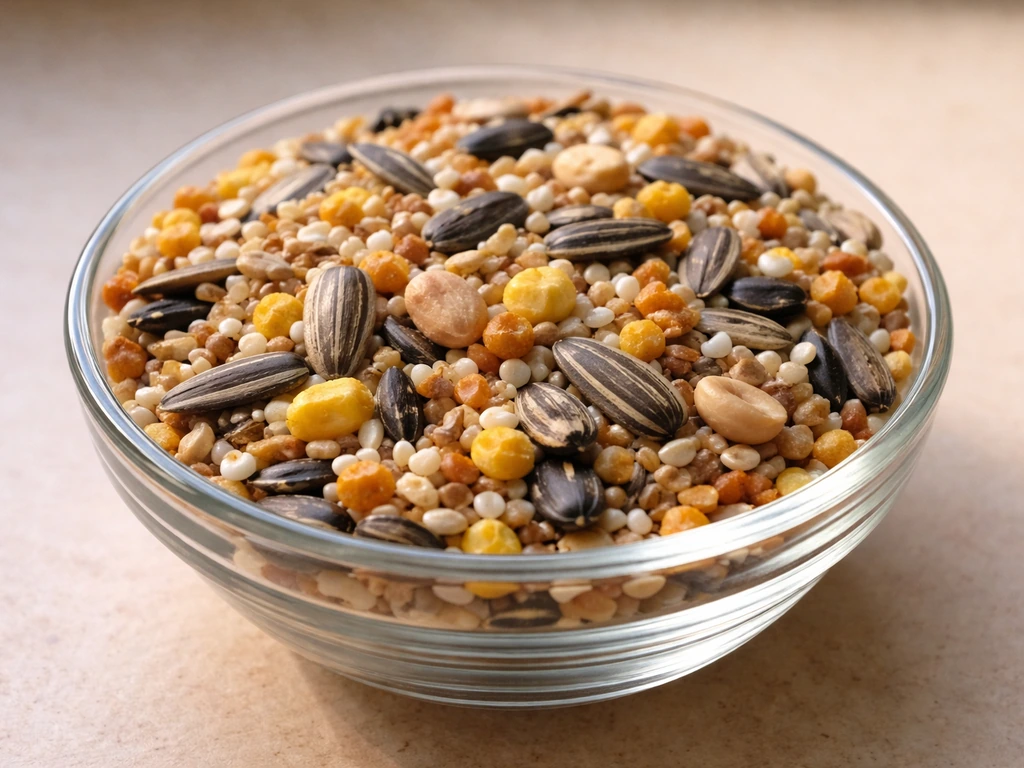
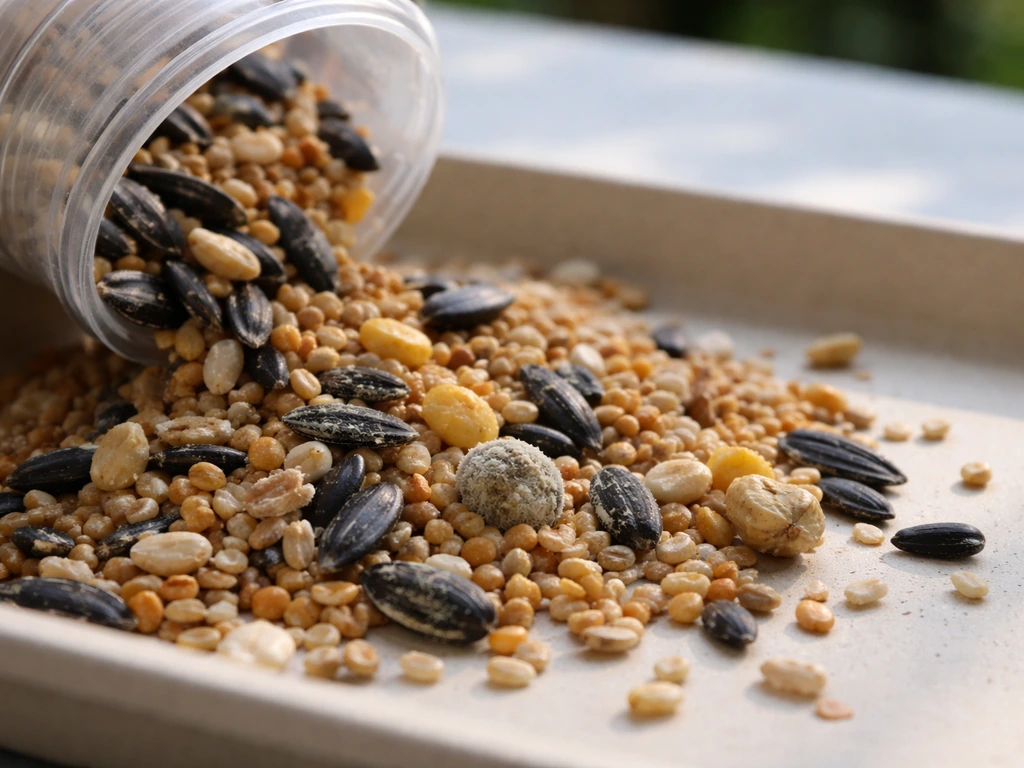
Most commercial wild bird mixes are built around a core of sunflower seeds (black oil and striped), millet, safflower, cracked corn, and peanuts. Premium blends go further, adding ingredients like hulled pumpkin seeds, raisins, mixed feed nuts, and dried fruit. A Pennington Ultra Nut & Fruit Blend, for example, lists sunflower chips, peanuts, oil sunflower, safflower, mixed feed nuts, raisins, striped sunflower, and hulled pumpkin seeds as components, along with vitamin supplements and potassium iodide.
On top of the seeds themselves, some brands apply proprietary coatings or enrichments. Pennington uses something called Bird-Kote, described as an exclusive enrichment added to certain seed blends. Suet-based products combine rendered fat with seeds, corn, and sometimes dried insects or fruit. Mealworms, peanut butter mixtures, and seed cakes (compressed blocks) are also common feeder offerings, each with a different ingredient profile and spoilage timeline.
One thing worth knowing: commercial bird seed is not formulated, tested, or regulated for human consumption. It may contain pesticide residues from agricultural production or seed treatments applied before packaging. Research on coated seeds notes that coating compounds can be present on the seed surface, and while specific risk depends on the active ingredient and dose, it's a real variable that doesn't apply to food-grade seeds you'd buy at a grocery store.
Is bird seed safe to eat? The honest answer
In a strict sense, many of the seeds in a bird mix, like sunflower seeds, pumpkin seeds, and peanuts, are the same species you'd find in human food. A small handful of fresh, dry, uncontaminated bird seed eaten by accident is unlikely to cause a serious problem for a healthy adult. But calling bird seed "edible" glosses over several real risks that make casual consumption a bad idea.
The biggest concern is aflatoxin. Aflatoxins are toxins produced by Aspergillus flavus and related molds, which grow readily on corn, peanuts, and other grains, especially when stored in warm or moist conditions. The FDA sets an action level of 20 parts per billion for aflatoxins in corn and peanut products. Eating a large amount of aflatoxin-contaminated food at once, or eating smaller amounts repeatedly, can cause liver failure and in extreme cases death. This isn't a theoretical risk: the FDA has specifically documented aflatoxin poisoning in pets that ate contaminated food made with corn and peanuts.
Beyond mold toxins, spoiled bird seed can carry Salmonella and other bacteria. Salmonella from bird feeders is well-documented as a hazard for both birds and humans who handle contaminated feeders or seed. There's also the issue of foreign material: grit, substrate particles, insect fragments, and rodent contamination can all be present in bulk seed. For someone asking is bird stop safe to eat, the answer hinges almost entirely on storage history and how fresh the seed is.
Bottom line: a pinch of fresh, properly stored bird seed eaten by accident is not an emergency. Old, damp, or visibly compromised seed is a different story and warrants real attention.
How to tell if bird seed has gone bad
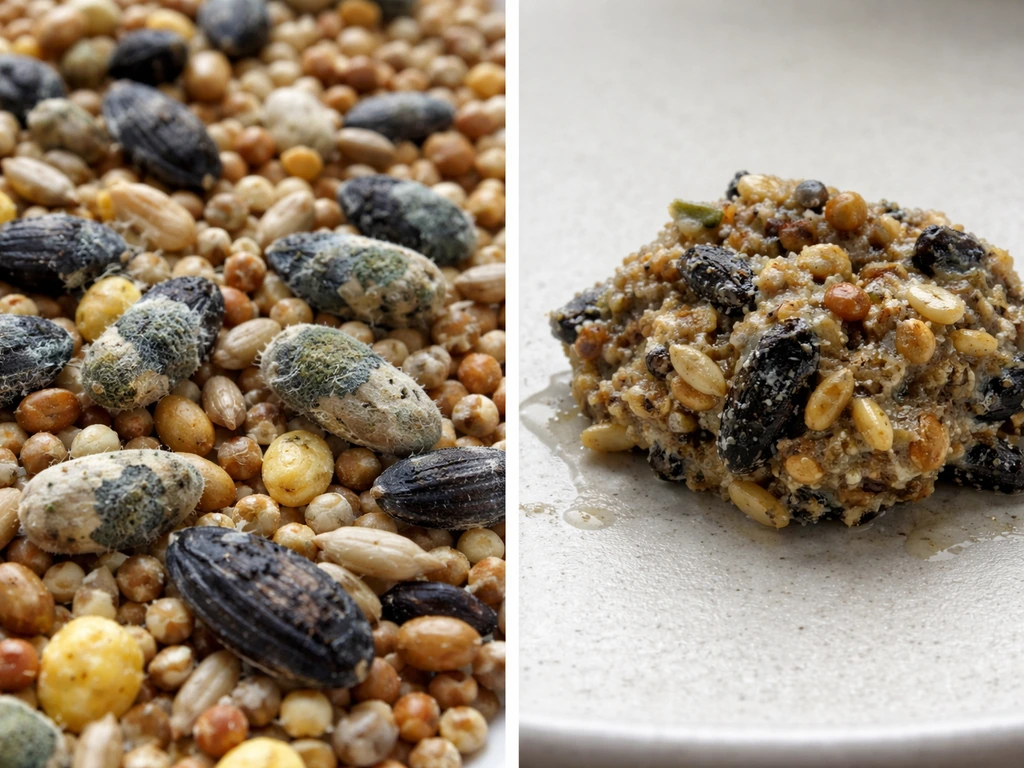
Spotting spoiled seed isn't always straightforward. Visible green or black mold is an obvious red flag, but aflatoxins can be present even without visible mold growth. A discolored kernel without obvious mold isn't automatically safe, and the risk can be real even if you're not directly looking at fungal growth. Here are the signs to check for before handling or after an accidental ingestion:
- Clumping or caking: seeds sticking together means moisture has gotten in, which is the main driver of mold and bacterial growth
- Musty, sour, or rancid smell: fresh seed should smell nutty and neutral; any off odor is a warning sign
- Visible mold: green, black, white, or fuzzy patches anywhere in the seed mass, including on the container walls
- Discoloration: shriveled, dark, or otherwise unusual-looking seeds or peanuts, even without visible mold
- Insect activity: weevils, moths, or larvae in the seed indicate a storage problem
- Signs of rodent access: droppings, gnaw marks, or tunneling in stored seed bags
- Excessive moisture or wet patches: especially in the bottom of a feeder or bag
The WHO specifically advises inspecting whole grains, nuts, and dried fruit for evidence of mold and discarding anything that looks moldy, discolored, or shriveled. That guidance applies here too. When in doubt, throw it out. Damaged seeds (cracked or broken hulls) are more prone to mold invasion, so inspect especially any cracked corn or broken sunflower pieces in the mix.
What to do right now if someone ate bird seed
If a person ate it
- Stop eating it immediately and remove any remaining seed from the mouth.
- Do not try to induce vomiting. Poison control guidance is explicit that you should not make the person throw up.
- Check the package if available. Having the product name, ingredient list, and any warning labels on hand will help poison control give you accurate advice.
- Call Poison Help at 1-800-222-1222 to speak with a poison expert right away. You can also use webPOISONCONTROL online for immediate guidance. Do not guess at what to do.
- If the person has collapsed, is having a seizure, has trouble breathing, or cannot be woken up, call 911 immediately.
- Watch for symptoms over the next 24 to 48 hours: nausea, vomiting, abdominal pain, jaundice (yellowing of skin or eyes, which could suggest liver involvement), or unusual fatigue.
If a dog or cat ate it
- Stay calm. A small amount of fresh, uncontaminated seed is unlikely to be immediately dangerous, but you still need to assess the situation.
- Note how much was eaten and whether the seed looked fresh or spoiled. Moldy or old seed is significantly more concerning than fresh seed.
- Call the ASPCA Animal Poison Control Center at 888-426-4435 (available 24/7) or contact your vet. Don't wait for symptoms to appear.
- Know that aflatoxin poisoning in dogs can damage the liver without showing obvious symptoms at first. The AKC specifically notes that some pets experience liver damage without visible signs.
- Watch for: lethargy, loss of appetite, vomiting, diarrhea, jaundice, or unusual bleeding. These warrant an emergency vet visit.
- Large amounts of seed can also pose a foreign body obstruction risk, particularly in smaller dogs, cats, or pocket pets, so mention the quantity when you call.
If you're wondering about a bird that may have eaten something it shouldn't, there are actually separate considerations. Questions like are bird diapers safe and the safety of various bird accessories and foods involve different hazards than seed toxicity, so treat them as separate issues.
Pet and wildlife safety around bird feeders
Dogs and cats that roam in yards with bird feeders will often help themselves to spilled seed, and most of the time nothing serious happens. The risk scales with two factors: the quality of the seed and how much was eaten. Fresh seed in moderate quantities is generally low risk. Old, wet, or moldy seed is a real hazard because of aflatoxin and Salmonella exposure.
Wildlife like squirrels, raccoons, deer, and rats are regular visitors to feeders and seed piles, and they're consuming the same potential contaminants. Moldy seed is unhealthy for birds themselves, and the same contaminated environment affects any animal eating at or near the feeder. This is one reason regular feeder cleaning matters beyond just aesthetics: moldy seeds and accumulated droppings around feeders can grow more mold, host bacteria, and spread disease through an entire backyard wildlife population.
Suet and peanut-based products deserve special mention. Suet can go rancid quickly in warm weather, and rancid fat is nauseating for pets and wildlife. Peanuts and corn are the two ingredients most associated with aflatoxin contamination, so any mixed seed with high peanut content that's been stored improperly is a higher-risk product. If you're thinking about whether specialty bird foods like bird kabobs are safe for your pet birds or backyard flock, the same spoilage and contamination logic applies.
Salmonella is worth flagging specifically. It's been documented at bird feeders and can affect both birds and the humans who handle feeders or seed without washing their hands. If you have young children, immunocompromised family members, or pets that eat near feeders, this is a good reason to keep the feeding area clean and keep kids away from the feeder cleanup task.
Bird seed vs. other bird foods: quick safety comparison
| Bird Food Type | Main Ingredients | Edible for Humans? | Pet Risk | Biggest Hazard |
|---|---|---|---|---|
| Seed mix | Sunflower, millet, corn, peanuts, safflower | Technically yes if fresh | Low if fresh, high if moldy | Aflatoxin, Salmonella, pesticide residue |
| Suet cakes | Rendered fat, seeds, corn, fruit | Not recommended | Rancidity risk in warm weather | Rancid fat, mold in wet conditions |
| Shelled peanuts | Peanuts (whole or pieces) | Yes if food-grade and fresh | Moderate (aflatoxin risk) | Aflatoxin from mold on peanuts |
| Dried mealworms | Insect larvae | Edible (consumed in many cultures) | Generally low | Bacterial contamination if improperly stored |
| Seed cakes/blocks | Compressed seed, fat, corn, fruit | Not recommended | Same as seed mix, amplified by binding agents | Mold, aflatoxin, spoilage of fat component |
Storage, handling, and responsible feeding
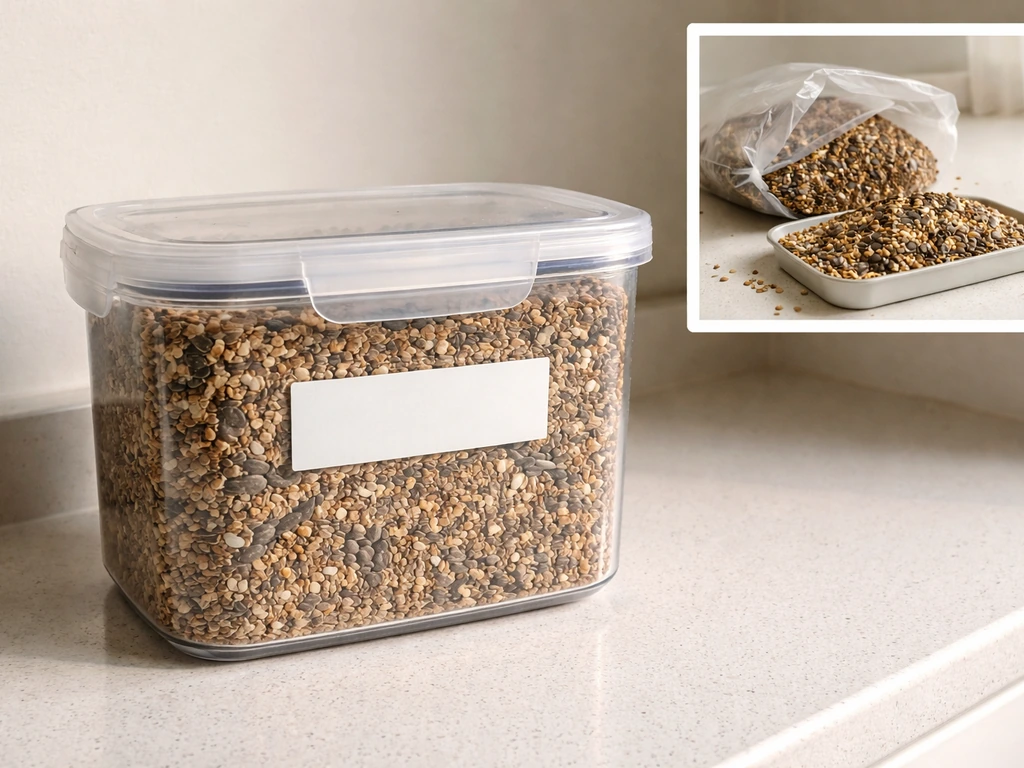
Almost every problem with bird seed, from aflatoxin to Salmonella to rancid suet, comes back to moisture and poor storage. Keeping seed dry and sealed is the single most effective thing you can do to reduce risk for birds, pets, wildlife, and yourself.
- Store seed in a cool, dry place in a sealed container. Reseal the original bag tightly, or transfer seed to an airtight container with a lid. Avoid storing it in garages or sheds that get warm and humid in summer.
- Discard old seed before refilling feeders. Don't layer fresh seed on top of old, potentially contaminated seed.
- Clean feeders regularly. Scrub with a dilute bleach solution, rinse thoroughly, and let the feeder dry completely before adding fresh seed. Mold from old seed residue contaminates new seed quickly.
- Don't let seed pile up on the ground. Wet ground seed spoils fast and becomes a higher-risk food source for pets and wildlife.
- Avoid buying in bulk quantities you can't use within 1 to 2 months, especially peanut or corn-heavy mixes that carry higher aflatoxin risk.
- Wash your hands after handling seed or cleaning feeders, before touching food or your face.
- If you feed birds fresh chopped produce (bird chop), storage is critical. Knowing how to freeze bird chop properly can help you prep safe portions without risking spoilage.
- Keep suet feeders in the shade and bring them in during hot weather. Rendered fat goes rancid quickly above 70°F.
- If you find seed that clumps, smells off, or shows any mold, don't try to salvage it. Bag it and put it in the trash.
One thing to keep in mind: aflatoxin risk doesn't require visible mold. Oklahoma State University Extension notes that aflatoxin production occurs when Aspergillus fungi access the sugars in grain, and it can happen during storage without ever showing obvious mold to the eye. Warm, moist storage conditions are the main driver, so even seed that looks fine can be problematic if it's been stored in a humid shed through summer.
There's been a lot of community discussion online around the safety of various bird-related products and foods, and you'll sometimes see conflicting opinions. If you want to see how others are weighing in on this specific topic, reading about what people are saying on forums about whether bird stop is safe to eat can offer a useful reality check alongside the science-based guidance.
Responsible backyard feeding is genuinely low-risk when you stay on top of storage and cleanliness. The hazards are real but avoidable. Keep seed dry, rotate it regularly, clean feeders consistently, and act quickly if a pet or person gets into something that looks or smells off. The Iowa DNR recommends cleaning bird feeders, waterers, and baths with a 10% bleach solution about once each month, and letting the feeder dry before refilling with seed clean feeders consistently. That covers most of what you need to keep everyone in your backyard, birds, pets, and people, safe.
FAQ
If bird seed is “edible,” how much is actually reasonable after an accidental bite?
Not necessarily. Even if the seeds are the same type used in human foods, the risk is largely about storage and contamination (mold toxins, bacteria, and pesticides from seed treatments). If the bird seed is old, smells musty, feels damp, or has any visible spoilage, treat it as unsafe for people.
I accidentally ate a little bird seed once. Should I taste again to see if it’s okay?
Throw it out and do not “test” it by tasting more. A one-off pinch is unlikely to cause problems for a healthy adult, but repeated eating increases exposure risk, and some toxins (like aflatoxins) can be present even when there is no obvious mold.
What symptoms should make me seek medical help after eating bird seed? (Human or pet)?
If you notice symptoms such as vomiting, diarrhea, fever, severe abdominal pain, jaundice (yellow eyes or skin), or you develop symptoms after eating a larger amount, contact a medical professional promptly. For pets, call a veterinarian, especially if the animal ate a lot or the seed was visibly spoiled.
How should I handle bird seed cleanup if someone already ate some, or if the seed looks questionable?
Do not handle contaminated seed with bare hands, and then avoid touching your eyes or mouth. Wash hands with soap and water after cleanup, and if you have immunocompromised people or young children at home, keep them away from the feeder area until you finish cleaning.
If I don’t see mold, does that mean aflatoxin risk is gone?
Yes, “no visible mold” does not guarantee safety because aflatoxins can form under warm, humid storage conditions without clear visual signs. When in doubt, especially with corn, peanuts, or high-peanut blends, discard the batch.
Is bird stop edible if it’s suet or a peanut-heavy mix?
Suet and high-oil blends need extra caution. In warm weather, suet can go rancid quickly, and rancid fat is more likely to cause gastrointestinal upset than dry seed. If suet smells sharp, sour, or rancid, discard it and clean the feeder.
What should I look for in a bird mix that might raise spoilage risk even if it looks mostly fine?
Yes, cracked kernels and broken pieces spoil faster and are more likely to develop mold issues. Check especially for broken sunflower pieces and cracked corn, and remove any heavily damaged or shriveled parts before use (or discard the entire batch if you cannot confidently assess freshness).
How often should I clean feeders if I’m concerned about humans or pets being exposed?
Spilled seed, droppings, and debris around feeders can increase bacterial and mold growth. Rinse and scrub feeders regularly, remove old seed from trays, and keep the feeding area dry to reduce ongoing contamination.
My dog often eats spilled seed near the feeder, what should I change to reduce risk?
With pets, the main decision point is the seed’s freshness and condition, plus the amount eaten. For pets that eat dropped seed outdoors, consider relocating feeders away from pet paths and use covered storage containers indoors or in a dry garage to prevent dampness.
Does the “bird stop” product meaningfully change the safety answer compared with regular bird seed?
No, “bird stop” should be treated according to its labeled purpose and ingredients. If it is a product designed to discourage birds, it may include non-food-grade additives, and you should not assume safety for humans or pets even if it contains “bird-friendly” components.
Next Article
Can You Freeze Bird Chop? Safe Storage and Thawing Tips
Yes, you can freeze bird chop. Learn safe steps, thawing, spoilage risks, and how long it stays good.