Bird kabobs are safe for backyard birds when made with fresh, unseasoned, species-appropriate ingredients and replaced before they spoil. The main risks are not the concept itself but the details: mold, rancid fat, the wrong ingredients (salt, sugar, additives), and letting them hang too long in warm or wet weather. Get those details right and kabobs are one of the better ways to offer birds a varied, enriching food source.
Are Bird Kabobs Safe? Rules to Prevent Poisoning and Spoilage

Maya Henderson
27 Apr 2026
What bird kabobs actually are (and who they're made for)
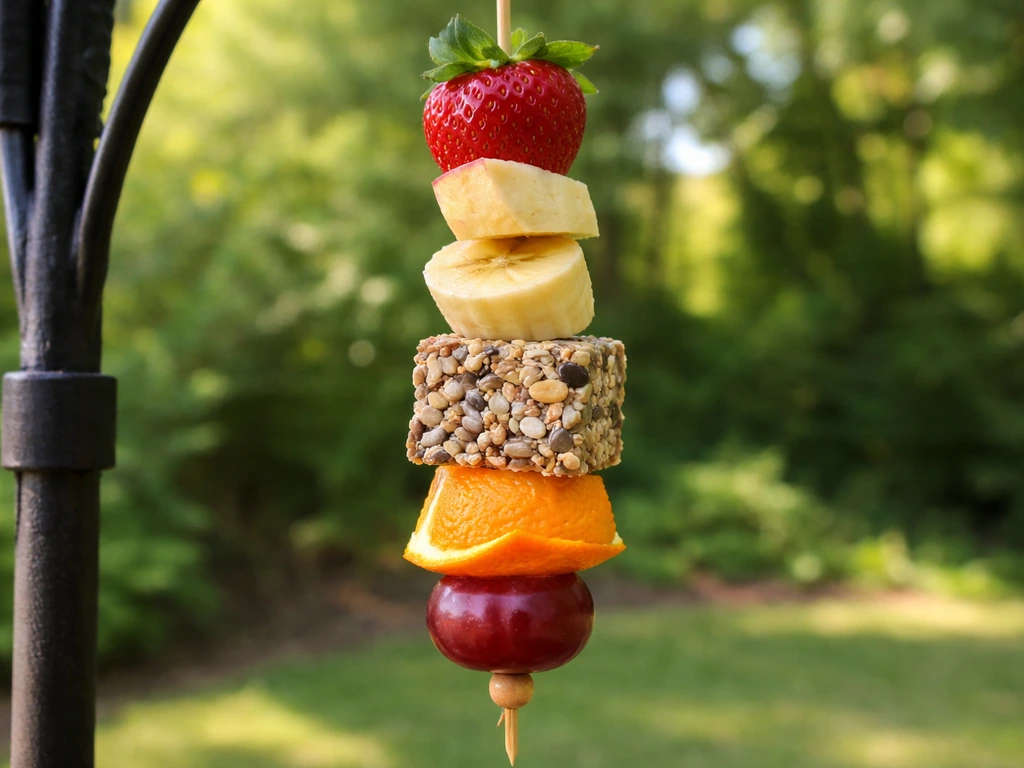
A bird kabob is essentially a skewer threaded with food items designed to attract backyard birds. You'll find them sold commercially in pet and garden stores, usually pre-threaded with items like dried fruits, corn chunks, peanuts, mealworms, or suet nuggets. DIY versions are just as common and typically use a wooden or metal skewer loaded with a combination of whole peanuts, apple or orange slices, dried cranberries, sunflower seeds compacted in a suet or peanut butter base, or mealworms.
They're made for a wide range of backyard visitors. Woodpeckers, nuthatches, chickadees, titmice, orioles, and bluebirds are frequent users depending on what's threaded on the skewer. Fruit-heavy kabobs tend to draw orioles and thrushes. Suet and peanut-based ones pull in the clinging birds. The skewer format encourages foraging behavior and lets you offer several food types at once without filling five separate feeders.
Safe or not? Here's the quick verdict
Yes, bird kabobs are safe under specific conditions. Bird kabobs can be safe, but only if you follow spoilage timing and ingredient rules safe under specific conditions. If you are trying to find out whether it is safe, you can also compare these guidelines to what people discuss on “is bird stop safe to eat” threads on Reddit is bird stop safe to eat reddit. No, they are not safe if you ignore spoilage windows, use the wrong ingredients, or let them sit out through rain and heat. Here's the clearest way to frame it:
| Scenario | Safe? | Why |
|---|---|---|
| Fresh kabob, under 7 days, cool/dry weather | Yes | Suet products are generally stable for up to 7 days in appropriate conditions |
| Suet/fat-based kabob in temperatures above 70°F (21°C) | No | Suet softens, goes rancid, and can foul bird feathers |
| Kabob made with unsalted, unseasoned ingredients | Yes | No salt or toxic additives that could harm smaller species |
| Kabob using salted peanuts or seasoned nuts | No | Excess salt is toxic and can be fatal to small birds |
| Peanut-based kabob using quality peanuts | Yes (with care) | Poor-quality peanuts can carry aflatoxin, which can kill birds |
| Wet or moldy kabob left out too long | No | Moldy feed can cause aspergillosis, a potentially fatal respiratory disease in birds |
| Kabob with chocolate, xylitol, or artificial sweeteners | Never | These are toxic to birds and dangerous to any pet that might access them |
The real hazards, explained
Mold and spoilage
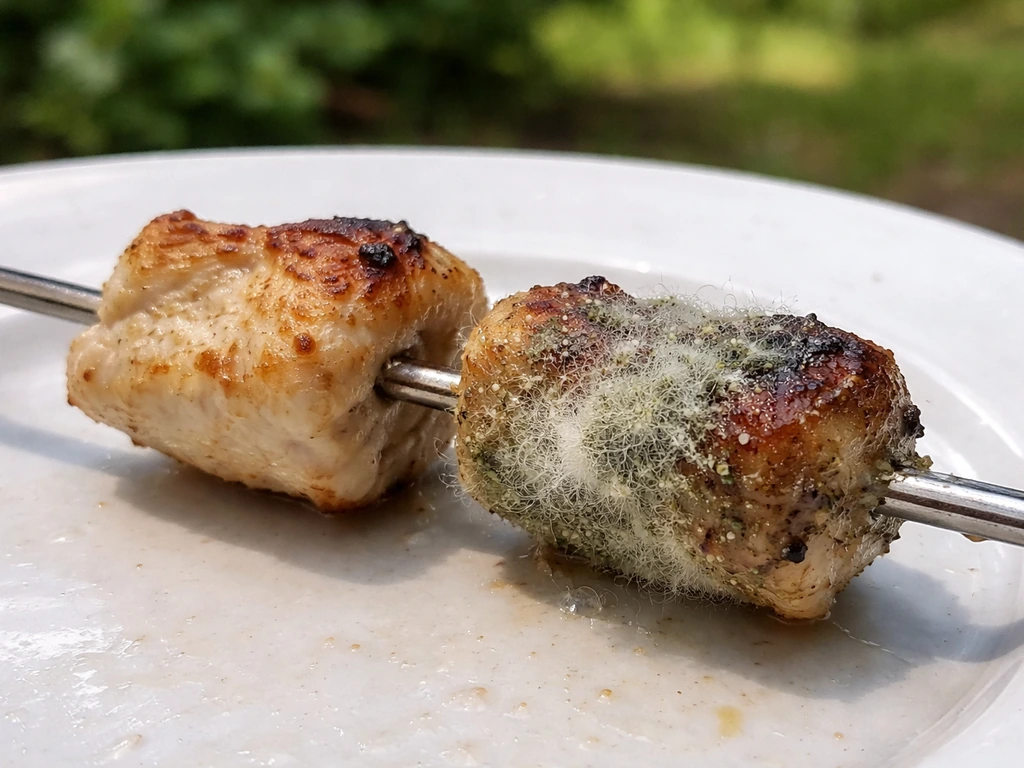
This is the biggest risk. Uneaten seed or fruit on a kabob can become soggy after rain and grow mold within days. That mold can transmit aspergillosis, a serious respiratory disease, to the birds feeding on it. The risk goes up dramatically in humid summer months. If a kabob looks slimy, smells off, or has visible mold, it needs to come down immediately. Don't just scrape off the bad part and rehang it.
Rancid fat
Suet and peanut butter are the two most common fat-based kabob binders. In cool weather they're stable, but once temperatures climb above roughly 70°F (21°C), suet softens, melts, and can smear onto bird feathers, which is a real problem because it interferes with insulation and preening. Worse, fat goes rancid when it oxidizes, and rancid fat is genuinely harmful. The simple rule: take down fat-heavy kabobs in warm weather, or switch to rendered (no-melt) suet products labeled for warmer temperatures.
Additives, salt, and seasonings
This catches a lot of people out. It seems natural to grab peanuts or dried fruit from the kitchen, but anything salted, roasted with seasoning, or sweetened is wrong for birds. Salted peanuts are a particular problem: overconsumption of salt is toxic and can be fatal to smaller species. Dried fruits with added sugar or sulfites, honey-roasted nuts, and anything with spice coatings should all stay out of the kabob. Stick to plain, unsalted, unseasoned ingredients only.
On the pet-safety side of this, xylitol (an artificial sweetener found in many peanut butters and snack foods) is extremely dangerous to dogs and cats. It can cause hypoglycemia and liver failure even in small amounts. If you're making DIY kabobs with peanut butter, check the label and use only plain peanut butter with no added sweeteners.
Hygiene and cross-contamination
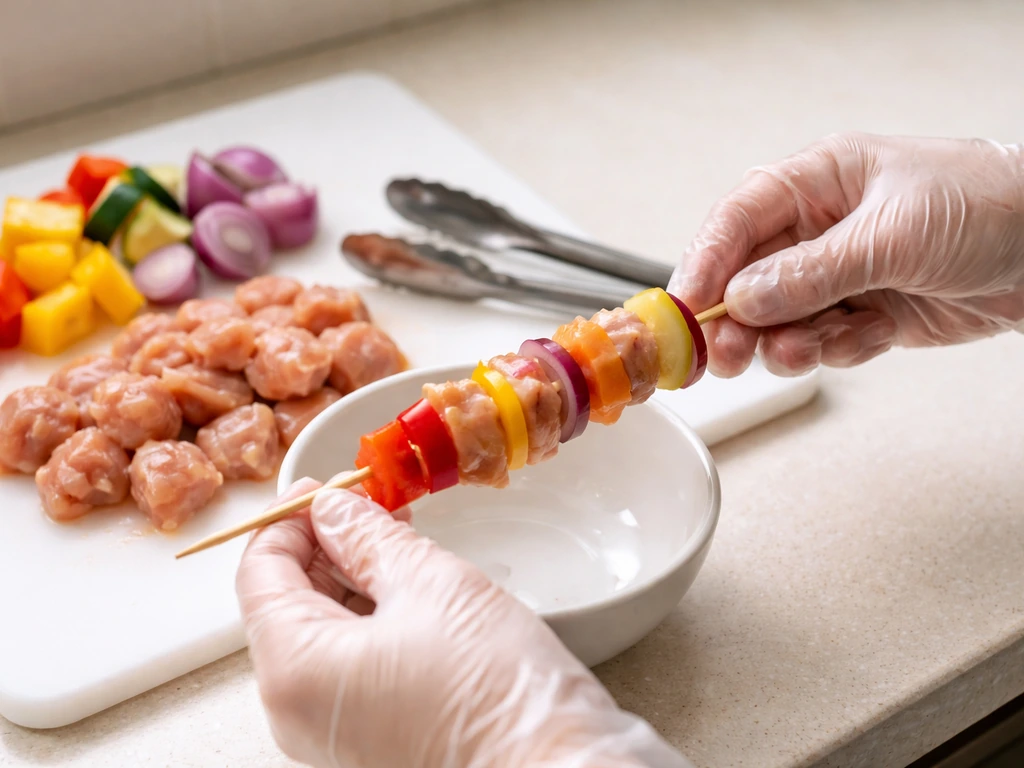
Birds congregating at feeders create a sanitation problem fast. Droppings falling into or near food sources allow bacteria to spread and can make birds sick. The skewer or hook holding the kabob needs regular cleaning, not just replacement of the food. Use a 1-part bleach to 9-parts water solution (a 10% bleach solution) to clean any holder, hook, or feeder equipment, and let it dry completely before rehanging anything. Project FeederWatch also recommends cleaning feeders and washing hands after cleaning or filling them to help reduce the spread of avian disease.
How to make or buy kabobs that are actually safe
Choosing ingredients
- Peanut butter: plain only, no salt, no added sugar, no xylitol. Mix it with cornmeal to create a firmer, less messy texture that holds better on the skewer.
- Peanuts: buy from a reputable bird-food supplier. Poor-quality peanuts can carry aflatoxin mold, which can kill birds. Don't use salted or roasted kitchen peanuts.
- Suet: use rendered suet products (commercial or homemade). In warm weather, use specifically labeled no-melt suet.
- Fruit: fresh apple, orange, or grape halves are great. Avoid canned fruit in syrup or dried fruit with added sugar or sulfites.
- Mealworms: dried or live, both work well. Avoid any flavored or seasoned versions.
- Seeds: plain unsalted sunflower seeds, safflower, or nyjer are all appropriate.
- Never include: chocolate, anything with xylitol, salted or seasoned nuts, onion, garlic, avocado, or anything processed for human snacking.
Handling and preparation
- Wash your hands before assembling and use clean utensils. Cross-contamination from raw meat or kitchen surfaces is a real hygiene risk.
- Use food-safe skewers (stainless steel is easiest to clean; if using wood, replace the skewer every time).
- Prepare kabobs in small batches so nothing sits in the fridge too long before going outside.
- Refrigerate fat-based or protein-based kabobs (mealworm, suet, peanut butter) if you're not hanging them immediately.
- Label with the prep date so you know exactly when to replace them.
Buying commercial kabobs
If buying store-bought kabobs, check the ingredient list the same way you'd check DIY ingredients. Look for no added salt, no artificial preservatives, and a clear best-by date. Avoid anything with dyes, coatings, or mystery "flavor enhancers." Reputable wild bird food brands generally keep things simple, which is exactly what you want.
Placement matters more than most people think
Where you hang a kabob affects both bird safety and what else you attract to your yard. Suet-style and seed kabobs work best mounted several feet off the ground, ideally on a pole or hanging from a feeder arm, not directly against a fence or wall where cats can ambush visiting birds. Woodpeckers and nuthatches prefer vertical hanging surfaces, so a kabob suspended from a hook suits them naturally.
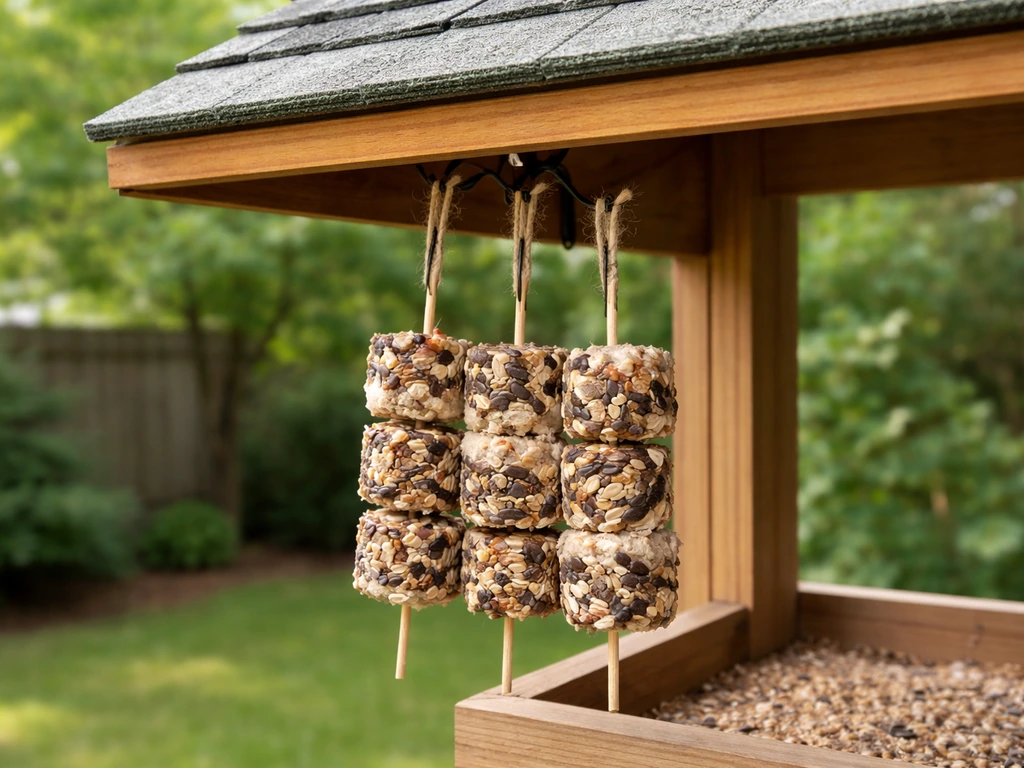
Hang kabobs under a roof overhang or in a sheltered spot when possible. Direct rain exposure is one of the fastest ways to ruin a kabob: wet seeds mold quickly, and wet suet goes rancid. If your yard gets a lot of weather, a covered feeder station makes a real difference.
Be aware that food scraps falling from kabobs land on the ground, and that ground litter attracts rodents. Project FeederWatch specifically flags this as a coexistence problem. Use a tray or catch platform below the kabob, and clean up fallen debris regularly. Also keep in mind that concentrating birds at one feeding spot can attract hawks and other predators. Healthy birds can usually evade them, but placing kabobs near dense shrubs or cover gives birds an escape route.
Protecting your pets from kabob hazards
Dogs are the main risk here. A dog that gets into a fallen bird kabob or knocks down a suet-based one is likely to eat it fast. Suet and high-fat food can cause digestive upset due to the fat content, and in some cases more serious GI symptoms. Bird kabobs should also be taken down quickly if they spoil, since uneaten food on a skewer can become unsafe to eat. If your dog ate a plain suet or seed kabob, watch for vomiting, decreased appetite, or reluctance to go outside, and call your vet if symptoms persist or worsen.
The higher-stakes scenario is if the kabob contained xylitol (from certain peanut butters) or chocolate, which is toxic to dogs. Even small amounts of xylitol can cause low blood sugar and potentially liver failure. If you suspect your dog ate anything containing xylitol or chocolate, call the ASPCA Animal Poison Control Center at (888) 426-4435 immediately. They operate 24 hours a day, 365 days a year.
To reduce the risk to pets in general: hang kabobs out of jumping reach, clean up fallen pieces daily, and never leave a kabob unattended on the ground. If you have cats, keep them indoors while birds are actively feeding. That protects both the birds and limits your cat's exposure to any spoiled food that might have dropped.
It's worth noting that spoiled bird food is a hazard for outdoor pets too, not just wildlife. Moldy seed and rancid fat are unhealthy for dogs and cats that sniff around the feeder area, so keeping the ground clean beneath your kabob setup is as much a pet-safety step as a bird-safety one.
How to inspect, refresh, and dispose of kabobs
Regular inspection
Check your kabob every two to three days in warm or humid weather. In cool, dry conditions you have a bit more time, but suet products should still come down within 7 days. What you're looking for: visible mold, unusual smell (rancid or sour), slimy texture on any ingredient, or fat that has melted and pooled. If you are wondering whether you can freeze bird chop, make sure it is wrapped to prevent freezer burn and use it safely after thawing. Any of those signs means the kabob comes down now.
Refreshing vs. replacing
You can remove individual pieces that have gone bad and replace them, but only if the skewer itself is still clean and dry and the remaining ingredients look and smell fresh. If there's any doubt, replace the whole thing. It's not worth the risk of leaving even one moldy piece that birds will continue to peck at.
Disposal and cleaning
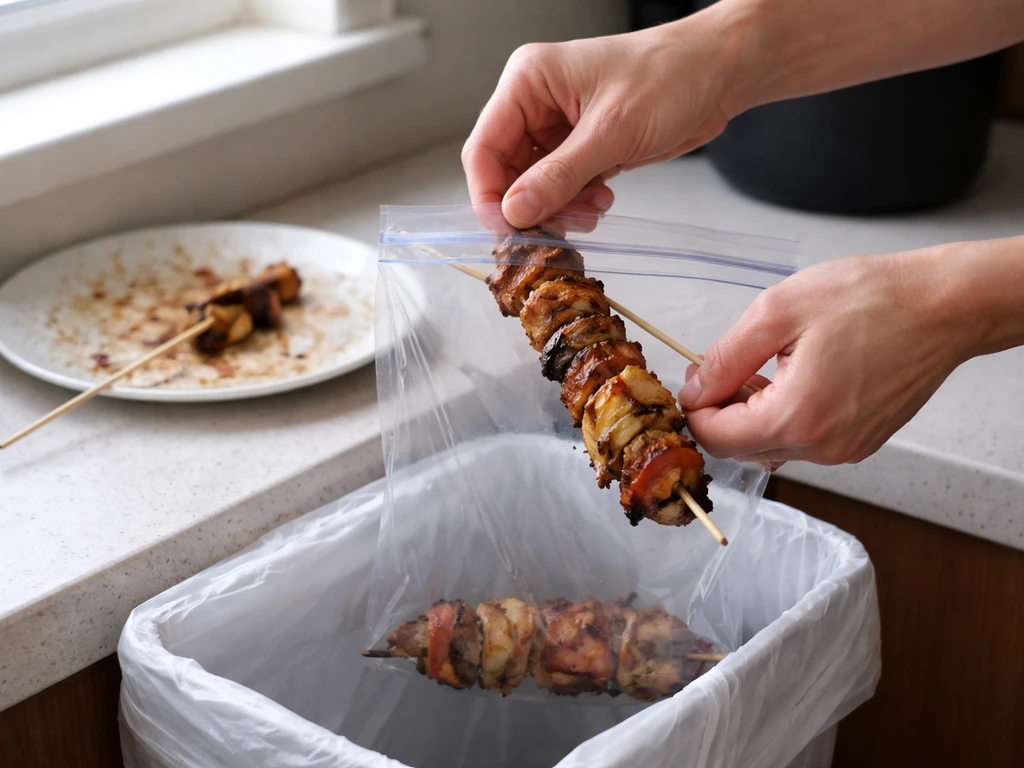
- Remove the kabob and place it in a sealed bag before putting it in the trash. Don't compost moldy bird food.
- Clean the skewer (if reusable) or discard a wooden skewer entirely.
- Clean the hook, arm, or holder with hot soapy water first to remove grease and debris, then sanitize with a 1-part bleach to 9-parts water solution.
- Rinse thoroughly and let it air dry completely before rehanging a fresh kabob.
- Aim to clean holders every two weeks as a baseline, and more often in hot, humid conditions.
When to stop feeding entirely
If you're seeing sick birds near your feeder area (birds sitting puffed up on the ground, stumbling, or showing respiratory symptoms), take everything down and do a full cleaning before putting anything back out. Disease can spread quickly through a flock once it takes hold at a feeding station. Similarly, if you find a dead bird near your setup, remove it with gloves, bag it, and clean the area thoroughly before resuming feeding.
If something goes wrong
For birds: if you're seeing repeated illness or mortality near your feeder, contact your local wildlife rehabilitator or state wildlife agency. They can advise on whether a disease event is occurring in your area and whether you should pause feeding temporarily.
For pets: if your dog or cat has eaten a kabob that contained potentially toxic ingredients (xylitol, chocolate, heavily salted food), don't wait for symptoms to appear. Call the ASPCA Animal Poison Control Center at (888) 426-4435 or your vet immediately. Time matters with these toxins.
FAQ
Are bird kabobs safe in hot weather if they look fine?
They can still be unsafe even if the surface looks normal. In warm conditions, suet can melt and smear into feathers, and fat can start oxidizing into rancid oil before visible mold appears. Take fat-based kabobs down sooner (roughly daily or at least within 1 to 3 days in heat), and check the holder for softened, oily residue.
Can I re-use a skewer after a kabob has molded or smelled bad?
Only if the skewer and any mounting parts are fully cleaned and dried. Mold spores can remain on metal or porous surfaces, and oily residues can keep going rancid. Wash thoroughly, disinfect, then let everything dry completely before re-threading fresh ingredients.
Is it safe to cut off the bad pieces and leave the rest on the kabob?
Usually not. Birds may keep pecking at nearby “good-looking” items that have been exposed to moisture, condensation, or contaminated drips from the spoiled section. If any portion is moldy, slimy, or smells off, replace the whole kabob assembly (or at minimum remove every ingredient that was on the skewer during the spoilage event).
How long can a bird kabob sit out after rain?
Shorter than most people think. Rain can make seeds and fruit soggy and accelerate mold, often within a few days in humid weather. If the kabob was exposed to repeated wetting, treat it as time-expired and replace it rather than waiting for symptoms to appear.
What should I do if I notice sliminess but there is no visible mold yet?
Remove it immediately and switch to a fresh, dry setup. A slimy texture on seeds or fruit often indicates moisture retention and microbial growth that may not be obvious at first, especially in summer humidity.
Are store-bought kabobs always safe compared with DIY?
Not automatically. Some commercial mixes include salted, sweetened, flavored, dyed, or coated components that are not bird-appropriate. Even with a reputable brand, you still need to read the ingredient list, verify no added salt or sweeteners, and confirm the product has a clear best-by date.
Are sunflower seeds, peanuts, or suet safe if they were previously opened and stored at home?
They can be, but only if they stayed dry and smell fresh. Once opened, seeds and fats can absorb moisture and turn rancid, particularly in warm kitchens or garages. If storage conditions were questionable, discard and replace instead of trying to “use up” ingredients.
Can I use flavored peanut butter or sweetened suet for bird kabobs?
No. The safest choice is plain peanut butter with no added sweeteners, and unseasoned suet products that match the temperature and melt guidance on the label. Avoid honey-roasted, cinnamon or spice coated, sugar added, or any flavored spreads.
Is it safe if a kabob gets eaten slowly over several days?
Slow consumption does not make it safe if conditions are poor. The key issue is how long uneaten portions remain exposed to humidity, heat, and droppings below the feeder. If the kabob is still hanging and uneaten parts are present after the recommended interval, replace it rather than stretching the time.
Do bird kabobs pose a risk to my pets even if they do not eat them?
Yes. Pets can be affected indirectly by moldy or rancid food that falls underneath the feeder. Keep the ground clean, use a tray or catch platform, and prevent cats and dogs from sniffing or scavenging around spoiled debris.
If my dog ate a bird kabob, how do I decide whether it was urgent?
Urgency depends on the ingredients. If there is any chance of xylitol-containing peanut butter, chocolate, or heavily salted foods, treat it as an emergency and contact a poison resource or your vet immediately, even if your dog seems fine. For plain unsalted seed or plain suet, monitor for vomiting or appetite changes, but still call if symptoms persist.
What symptoms suggest spoiled bird food is making birds sick at the feeder?
Look for repeated illness patterns after feeding, plus obvious respiratory distress signs (like labored breathing) or unusual behavior such as puffed-up birds and staggering. If you see a cluster of sick birds, take all feeders down and do a full cleaning before restarting.
Can bird kabobs attract predators, and does that change how I should hang them?
They can, because concentrating birds in one spot also concentrates hunting opportunities. Place kabobs where birds have quick escape cover, avoid directly against dense cover that predators can ambush from, and keep the feeding area tidy so birds are not lingering around piles on the ground.
Next Article
Are Bird Diapers Safe? Fit, Risks, and Safe Use Tips
Are bird diapers safe? Learn fit, key risks, hygiene steps, and red flags for secure, low-stress use.