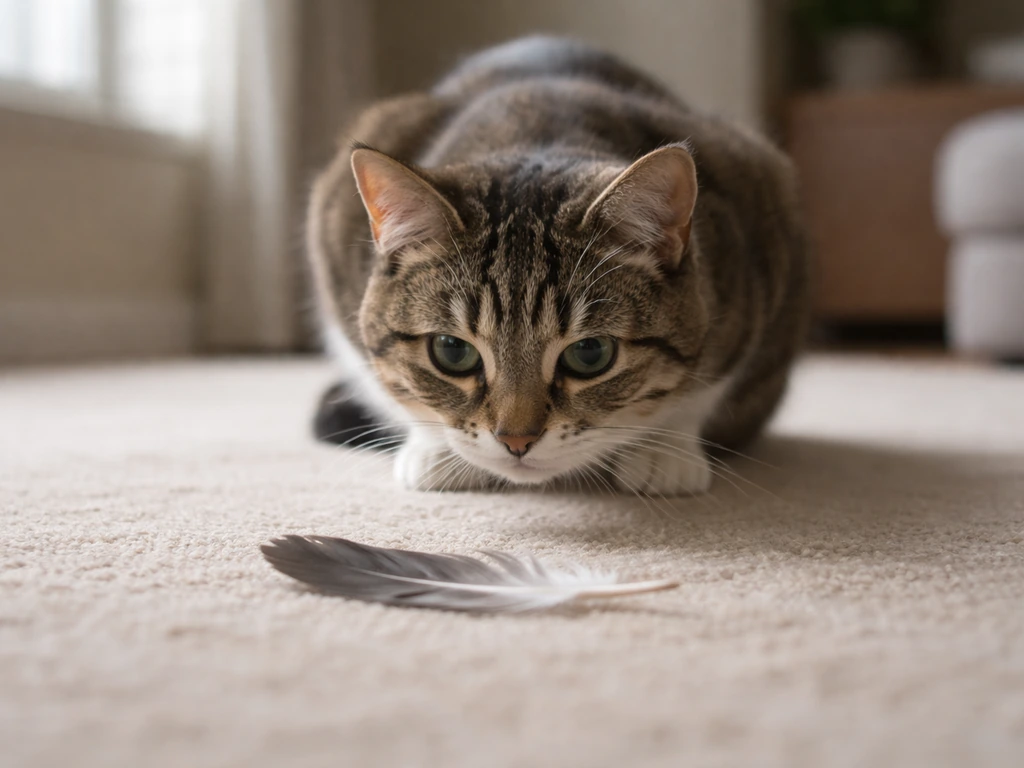
Bird feathers are not straightforwardly safe for cats. A brief bat or sniff at a feather is usually fine, but chewing, shredding, or swallowing feathers carries real risks: physical hazards like choking and intestinal obstruction, plus contamination from parasites, bacteria, and droppings, especially if the feather came from outdoors or near a bird feeder. The good news is that most healthy cats who mouth a feather briefly will be fine. The concern kicks in once they start pulling apart and ingesting pieces, or if the feather came from a wild bird.
Are Bird Feathers Safe for Cats? Risks and What to Do

Maya Henderson
15 May 2026
The physical risks: choking, obstruction, and irritation
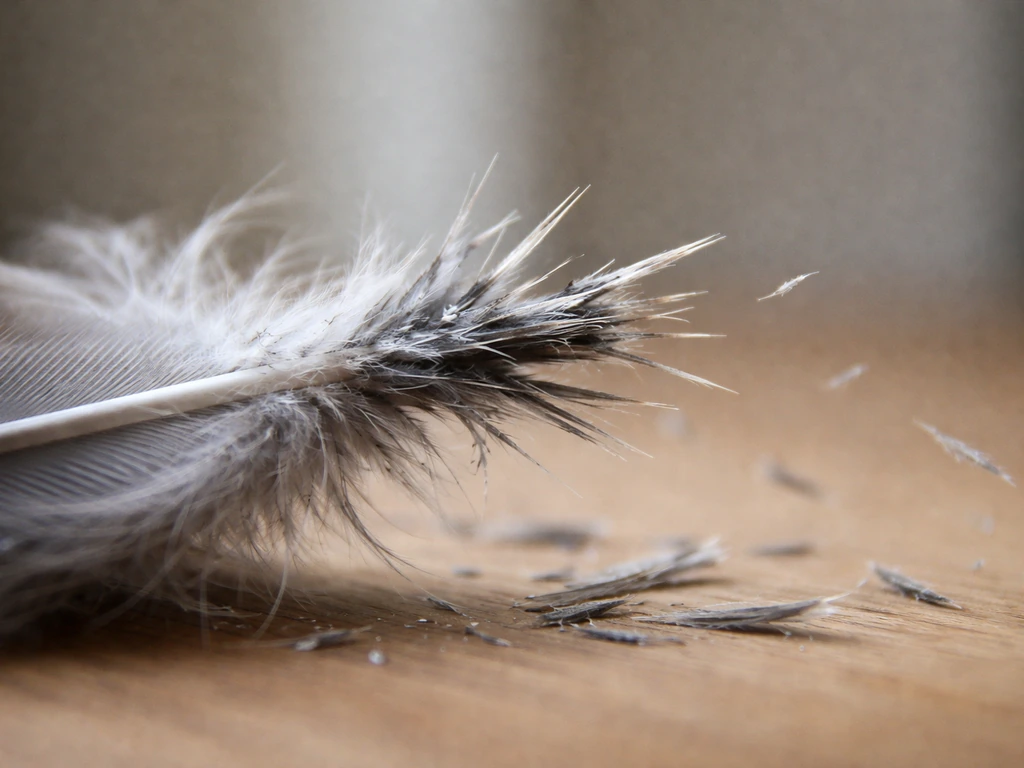
A feather might look soft and harmless, but once a cat starts chewing it breaks into smaller pieces with stiff quill fragments and sharp barbs. Those fragments can scratch the mouth and throat, and cats being cats, they tend to swallow rather than spit. Once ingested, larger pieces or a clump of fibers can cause a partial or full obstruction in the esophagus or intestines. According to the Merck Veterinary Manual and clinical guidance from PetMD, esophageal obstructions from swallowed foreign material can produce vomiting, gagging, and a sudden drop in appetite, and partial blockages are tricky because a cat may still seem to eat a little while the material slowly causes trouble.
Even if a feather makes it through the esophagus, the fibrous barbs and down can mat together in the stomach or intestines in a way that resembles a severe hairball. Unlike actual hair, which cats have some digestive adaptation for, feather material is stiffer and doesn't break down as easily. This raises the blockage risk more than you'd expect from something that looks so lightweight.
- Choking on small quill pieces or clumped down fibers
- Esophageal or intestinal obstruction from swallowed fragments
- Throat and mouth irritation from sharp barbs and quill shards
- Stomach upset and indigestion from indigestible feather material
- Hairball-like compaction from ingested feather down
Contamination risks you probably haven't thought about
This is where feathers get genuinely concerning, especially ones found outdoors. A feather that landed near a bird feeder or in your yard has likely been in contact with bird droppings, soil bacteria, mold spores, and whatever the bird was carrying. Wild birds can harbor Salmonella, Campylobacter, and other bacteria that transfer easily to a cat who mouths or chews a contaminated feather. This is especially relevant in backyard settings where feeders attract lots of birds to the same small area.
Feather mites are another issue worth knowing about. The Merck Veterinary Manual notes that feather mites are occasionally found on pet birds, and wild birds can carry them too. If a cat handles a feather from an infested bird, there's a small but real possibility of mite transfer. Lice and other external parasites can survive briefly on shed feathers as well.
There's also an indirect contamination angle that connects directly to backyard birding: feathers that land near feeders can pick up moldy seed residue, bird droppings concentrated around feeding stations, or even pesticide and rodenticide residue if those products are used anywhere nearby. If you manage a backyard feeding setup, it's worth thinking about what's on the ground under your feeder, because that's exactly where feathers collect and where a curious cat will investigate.
Wild bird feathers vs. pet bird feathers vs. craft feathers: does the source matter?
Yes, the source matters quite a bit. Not all feathers carry the same level of risk, so it helps to think about where the feather actually came from before deciding how worried to be.
| Feather Source | Contamination Risk | Parasite Risk | Physical Risk | Overall Concern |
|---|---|---|---|---|
| Wild bird (yard/feeder) | High — droppings, bacteria, mold from environment | Moderate — mites, lice possible | Moderate — sharp quills, barbs | High |
| Pet bird (in the home) | Low-moderate — depends on bird's health and hygiene | Low — mites rare per Merck Vet Manual | Moderate — same physical hazards | Moderate |
| Craft/store-bought feathers | Low — usually cleaned and processed | Very low — treated | Moderate — dyes/chemicals possible concern | Low-moderate |
| Nest material/stored feathers | High — mold, dust, accumulated droppings | Moderate | Moderate | High |
Wild feathers found in the yard or near a feeder are the highest-risk category by far. Pet bird feathers (from your own healthy, vet-checked bird) are less likely to carry disease but still pose the same physical hazards. Craft feathers from a hobby store have usually been cleaned, though dyes and chemical treatments are a minor consideration.
The real sleeper risk is feathers from nests or stored materials, these can be dense with mold, droppings, dust, and parasites that have had time to accumulate. If you are wondering about cat hair in particular, it can also be risky as a nesting material because pets can shed hair that may carry contaminants or be pulled apart and swallowed cat hair for bird nests.
Bird nest fern can also be a safety concern for cats, so check whether it is considered toxic where you live before bringing it near pet areas is bird nest fern toxic to cats.
What to do if your cat chews or swallows a feather
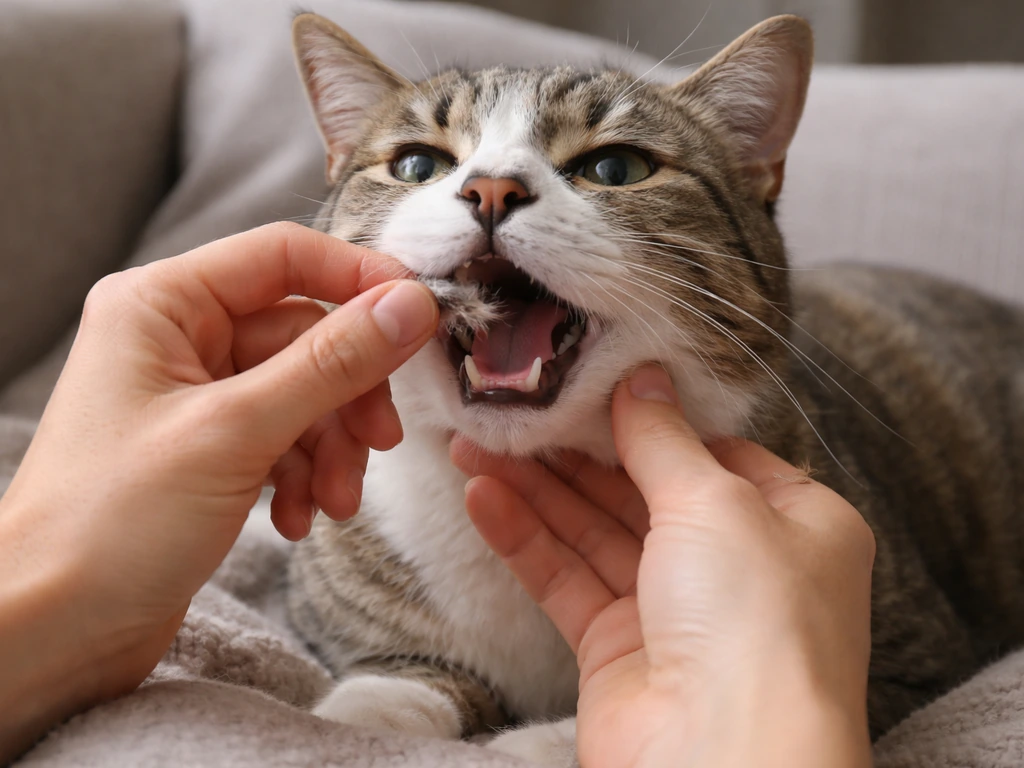
First, stay calm and assess what actually happened. There's a big difference between a cat that batted at a feather and a cat that shredded and swallowed a significant chunk of one.
At-home checks to do right now
- Remove the feather (or what's left of it) immediately so your cat can't continue chewing.
- Check your cat's mouth quickly for any quill fragments caught in the gums, tongue, or between teeth — remove gently if you can do so safely.
- Note approximately how much feather material is gone and where the feather came from (wild, pet bird, or craft).
- Watch your cat's behavior closely for the next 24 to 48 hours.
- Make sure your cat is drinking water and eating normally — reduced appetite is a warning sign.
- Look for any gagging, repeated swallowing, or pawing at the mouth in the hours after the incident.
Red flags that mean call a vet now
- Vomiting repeatedly or unable to keep water down
- Visible gagging, retching, or drooling excessively
- No appetite or refusing food for more than 12 to 24 hours
- Coughing or labored breathing
- Straining, hunching, or signs of abdominal pain
- Lethargy or sudden behavior change
- Any suspicion the feather came from near pesticide or rodenticide use
If you're dealing with a potential toxin exposure (for instance, the feather was near a treated area or you're unsure), don't wait for symptoms. If you [suspect poisoning](https://www. vet. cornell.
edu/departments-centers-and-institutes/cornell-feline-health-center/health-information/feline-health-topics/poisons), Cornell Feline Health Center advises contacting a veterinarian immediately or calling the ASPCA Animal Poison Control Center at 888-426-4435. If you are asking specifically whether a white bird plant is toxic to cats, the key point is that toxicity depends on the exact plant species, so confirm the name with a vet or a pet poison resource white bird plant toxic to cats.
You can reach the ASPCA Animal Poison Control Center 24 hours a day at blank" rel="noopener noreferrer">(888) 426-4435, or call your regular vet.
When in doubt, it's always better to make the call and be reassured than to wait and watch a situation worsen.
Keeping feathers away from your cat around the backyard
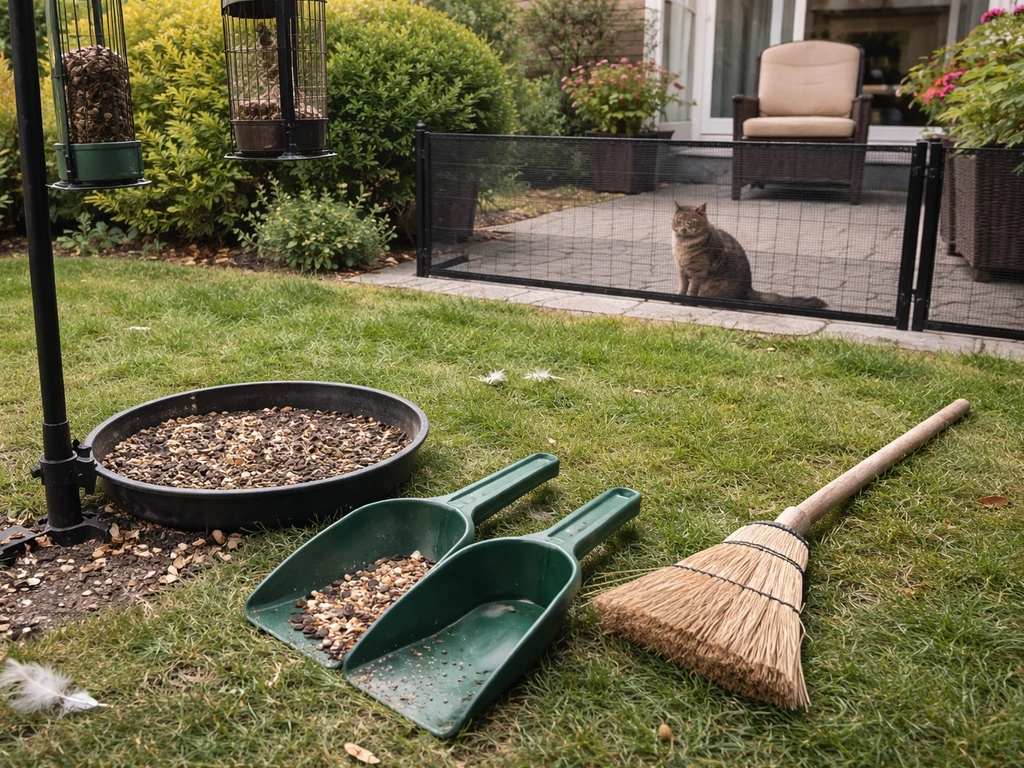
If you run a backyard feeding station, feathers are going to end up on the ground. Birds preen, fight, and lose feathers constantly, and certain predators like hawks will leave piles of them during a meal. A few practical steps make a real difference in keeping your cat away from this material.
- Clean under and around feeders at least once a week, sweeping up dropped seed hulls, feathers, and droppings — this reduces the overall contamination load on the ground.
- Keep cats indoors or supervised when they're in areas where birds regularly visit — this is the single most effective step.
- Place feeders high enough (at least 5 to 6 feet) and away from surfaces cats can easily jump from, which limits both access and feline ambush of birds.
- If a bird has been taken by a predator near your yard, collect and dispose of the scattered feathers in a sealed bag rather than leaving them.
- Store any craft feathers, feather toys, or pet-bird materials in closed containers that a curious cat can't access unsupervised.
- Check the yard after storms or heavy bird activity and clear any accumulated feathers before letting your cat outside.
Safer alternatives to feathers for play
If your cat loves chasing feather wand toys, you don't have to give that up entirely. Supervised play with commercial feather wands is generally fine because you're controlling the toy and can take it away before your cat starts shredding it. The risk increases sharply when a cat has unsupervised access to a feather toy and can chew it apart. Look for wand toys with a sealed feather attachment or synthetic feather replacements that don't break down into sharp fragments. Silicone or rubber crinkle toys, fabric mice, and tunnel toys all give a cat the pouncing and hunting satisfaction without the ingestion risk.
It's also worth thinking about the broader picture of what your cat encounters around the yard. Feathers are one piece of it, but bird seed that falls to the ground, moldy seed in the feeder, and other wildlife materials can all pose risks. Bird seed that falls on the ground can expose cats to mold and bacteria, and it should be treated as a potential contamination risk bird seed that falls to the ground. If you're already being careful about feathers, you're probably the kind of cat owner who also thinks about what else your backyard visitors leave behind.
FAQ
If my cat just sniffed or mouthed a feather, should I treat it as an emergency?
Usually no, if there was no chewing, shredding, or swallowing, most cats will be fine. Still, watch closely for gagging, repeated swallowing, drooling, lethargy, or refusal to eat over the next several hours, and remove any remaining feather pieces from the area.
What signs suggest a swallowed feather is stuck in the esophagus versus the intestines?
Esophagus problems often show up as sudden gagging, retching, pawing at the mouth, drooling, and reduced appetite. Intestinal obstruction can look like repeated vomiting, increasing abdominal discomfort, constipation or no stool, and worsening behavior over time, even if the cat initially seems “okay.”
How do I respond right away if I saw my cat swallow feather pieces?
Remove the rest of the feather material immediately, prevent further access, and call your vet for guidance. Do not try home remedies like forcing food or water, and do not induce vomiting, because a sharp quill or partial blockage can worsen with inappropriate handling.
Would a feather from my own pet bird be safer than a wild feather?
It is usually lower risk for germs because your bird is vet-checked and you control the environment, but the physical hazards are the same. If your cat is a shredder who tends to swallow, you should still keep feathers out of reach and avoid letting your cat play with loose real feathers unattended.
Can feather mites, lice, or other parasites transfer from a shed feather to my cat?
They can, particularly if the feather came from a wild bird or a source with infested nesting material. If you notice your cat starting to itch or develops unusual skin irritation, contact your vet and mention the feather exposure so they can decide whether a parasite-directed treatment is needed.
Do feathers pose a higher risk if they were found near a bird feeder or under the nest area?
Yes. Feathers collected around feeding stations are more likely to be contaminated with droppings, moldy seed residue, and soil bacteria. Nest-adjacent feathers also tend to accumulate dust, debris, and parasites over time, raising both the infection risk and the chance of ingesting a dense, fiber clump.
Are feather wand toys safe if my cat chews them during supervised play?
Supervised play helps, but if your cat is chewing long enough to tear the attachment or create small, stiff fragments, it becomes the same ingestion risk as loose feathers. Prefer wand designs with sealed attachments and swap to synthetic, non-fraying replacements, and stop play at the first sign of shredding.
What should I do if a feather is stuck in my cat’s mouth or throat?
Try to open the mouth only if you can see the feather clearly and safely remove it. If you cannot remove it easily, or if your cat is drooling, gagging, or breathing oddly, go to a vet right away, because swallowing and irritation can worsen quickly.
Could bird droppings on feathers make my cat sick even if the feather never gets eaten?
Yes, contamination can be an issue if your cat licks its fur after contacting the feather or rubs against dirty debris. The safest approach is to keep your cat off the contaminated spot, wipe the area if possible, and monitor for vomiting, diarrhea, fever, or loss of appetite.
What about feather exposure from craft supplies, dyed feathers, or “art” feathers?
Physical hazards still apply if the cat can shred and swallow pieces, but chemical risk depends on how the feathers were treated. If you know the feathers were heavily dyed, sprayed, or treated, treat the event like a possible toxin exposure and call your vet, especially if you think your cat ingested more than a tiny bit.
Is “bird nest fern” or nest material the real danger, more than the feather itself?
Nest materials can be risky because they may include plant debris, mold, droppings, and tangled fibers that are easier to swallow as a clump. If your cat is nosing or nibbling at nest plant material, verify the specific species and toxicity with your vet, since common names can refer to different plants.
When should I call poison control versus just calling my vet about the feather?
Call poison control or your vet immediately if you suspect any exposure beyond the feather, such as pesticide or rodenticide residue in the yard, treated-area contact, or uncertainty about nearby chemicals. For purely physical ingestion concerns, your vet is the fastest route, but poison control can help if contaminants are unclear.