The short answer: probably fine in tiny amounts, but it depends
If you accidentally nibbled a small amount of dry, fresh-smelling bird seed mix, you are very unlikely to be in any danger. Most bird seed ingredients, such as sunflower seeds, millet, safflower, and peanuts, are human-edible foods in their raw forms. A quick accidental taste of clean, uncontaminated seed is not a medical emergency. That said, "bird safe" and "human safe" are not the same thing. Bird seed is not produced under food-grade standards for human consumption, and a number of real hazards can build up in the seed itself, the storage bag, or the feeder environment. The rest of this article walks you through exactly what those hazards are, when to worry, and what to do next.
What's actually in bird seed that could be risky for you
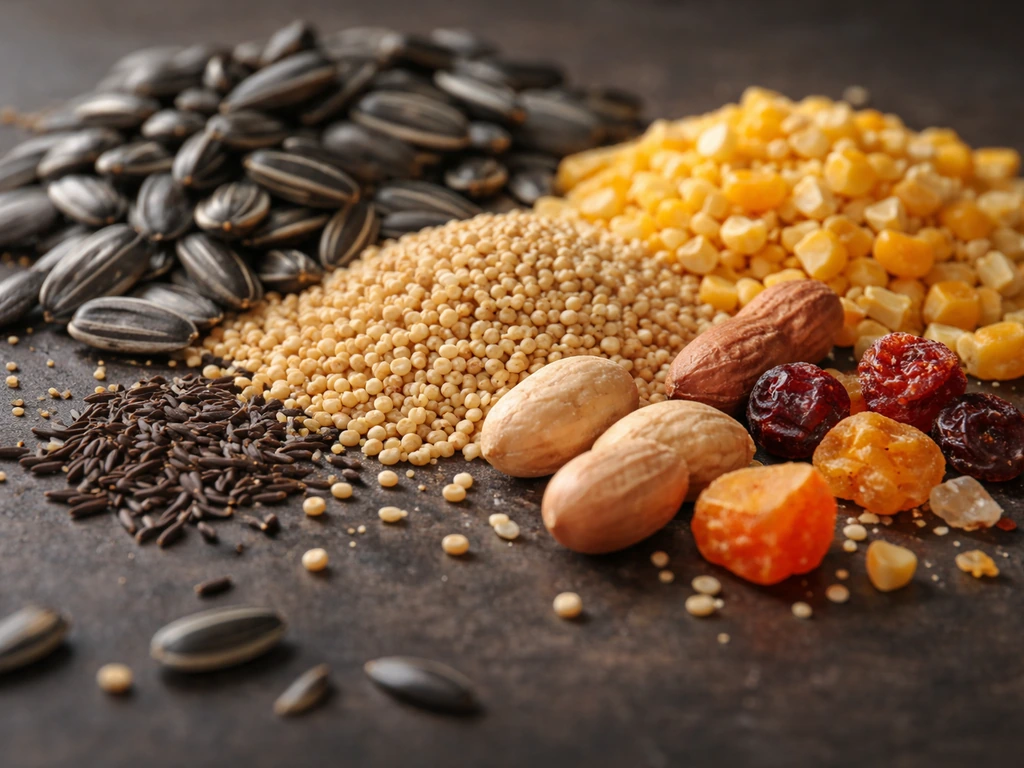
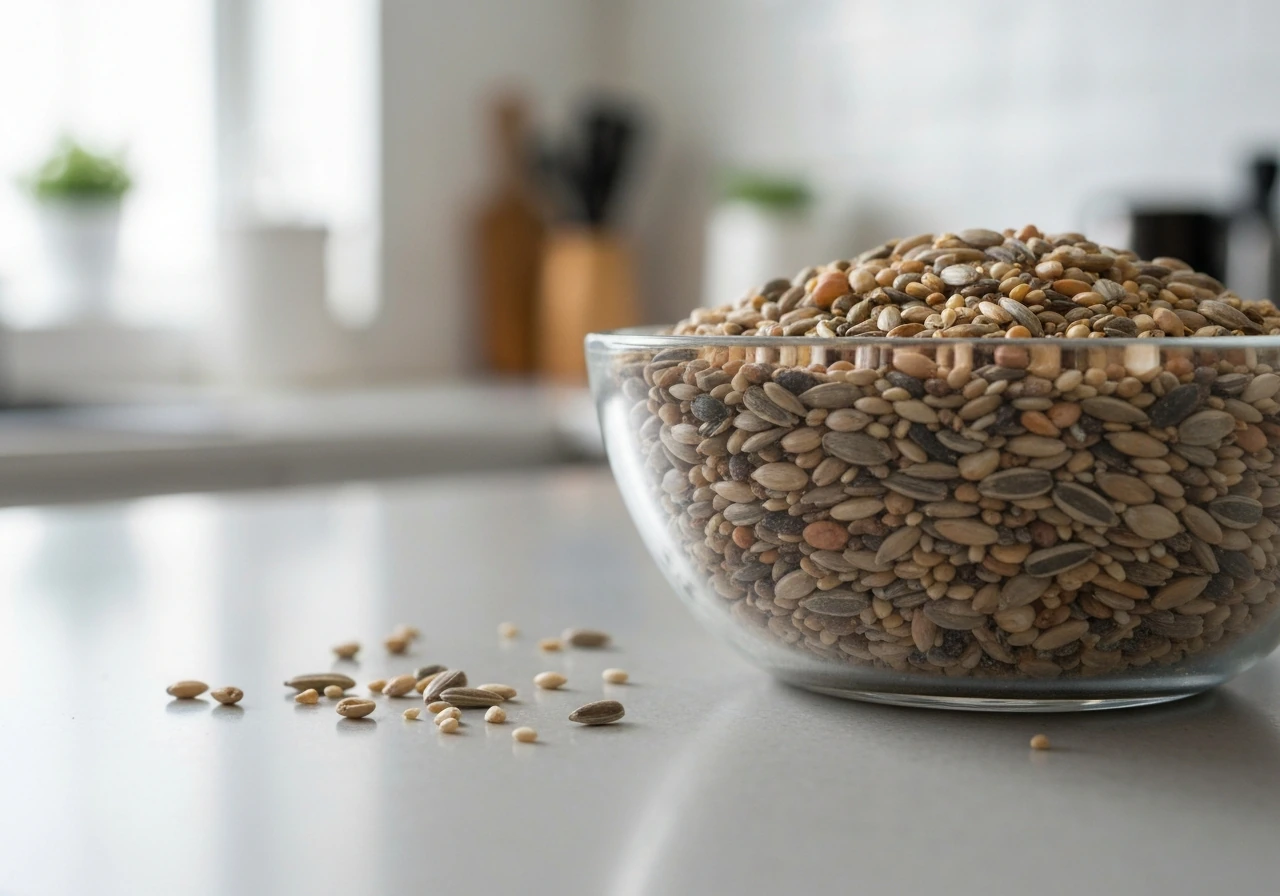
Standard bird seed mixes typically contain sunflower seeds, millet, safflower, cracked corn, peanuts, and sometimes dried fruit or nyjer (thistle) seed. On their own, most of those are edible by humans. The risk comes from how these ingredients are sourced, processed, and stored, not what they inherently are.
Here are the specific hazards worth knowing about:
- Mycotoxins and aflatoxins: Molds from the genus Aspergillus can colonize stored corn, peanuts, and grain under warm, humid conditions and produce aflatoxins, which are among the most dangerous mycotoxins known. Texas Parks and Wildlife notes that corn, peanuts, and cottonseed in bird mixes are among the most commonly affected crops, and that seed with aflatoxin levels above 50 ppb is considered unsafe even for wildlife feeding. You cannot see, smell, or taste aflatoxins reliably once they are present.
- Chemical residues and pesticide-treated seed: Some seed sold for agricultural or planting purposes may be treated with pesticides or fungicides. The U.S. EPA has documented that treated seed exposed on soil surfaces can be hazardous to birds and mammals, and that concern applies to any residues that might remain in improperly labeled or mislabeled bags. Always check that the seed you are handling is sold specifically for bird feeding, not for planting.
- Preservatives and additives: Some commercial bird food blends use antioxidant preservatives, including ethoxyquin, in the oils or fats mixed into the product. While the levels used are generally low, these additives are formulated for animal feed rather than human consumption.
- Allergens: Peanuts, tree nuts, and sesame seeds appear in many mixes. If you have known nut allergies, even incidental contact with bird seed mix deserves attention.
- Hard shells and choking risk: Many seeds have tough hulls that are not meant to be swallowed whole by humans. This is a minor but real physical hazard, especially for young children.
When bird seed crosses from risky to genuinely unsafe
Fresh, dry, properly stored bird seed sits at the low end of the risk spectrum. The danger rises sharply once moisture gets involved. According to FAO post-harvest guidance on grain storage, storage fungi need a relative humidity of at least 65 percent, or a water activity of around 0.65, to grow. That corresponds to a grain moisture content of roughly 13 percent for cereal-type seeds. In practical terms, that means seed that has been stored in a hot shed, left in an open bag in the rain, or left sitting in a feeder through a wet week can hit those thresholds quickly.
Signs that bird seed has gone unsafe for anyone to handle, let alone taste:
- Musty, sour, or off smell when you open the bag or feeder
- Clumping or caking, which means moisture has already penetrated
- Visible gray, green, white, or black fuzz, which is active mold
- Insect activity: weevils, moths, or larvae in the seed
- Oily or rancid smell, especially in mixes with peanuts or suet
Beyond the seed itself, the feeder environment adds another layer of contamination risk. Project FeederWatch points out that birds can become ill from leftover moldy seed and droppings that accumulate on feeder trays, and feeder areas can also attract rodents because spilled seed collects on the ground beneath them. Rodent activity and bird droppings together raise the risk of bacterial contamination, including Salmonella. The Wild Bird Feeding Institute notes that Salmonella can be transmitted between birds and humans via contaminated surfaces, and while transmission is rare, it is a documented pathway. Similarly, dried bird droppings disturbed during handling can release Histoplasma spores, which the CDC has identified as a risk factor for histoplasmosis when dusty, droppings-contaminated environments are disturbed. This is less about eating the seed and more about breathing in debris while you dig around in a contaminated bag or feeder.
You accidentally ate some bird seed: what to do right now
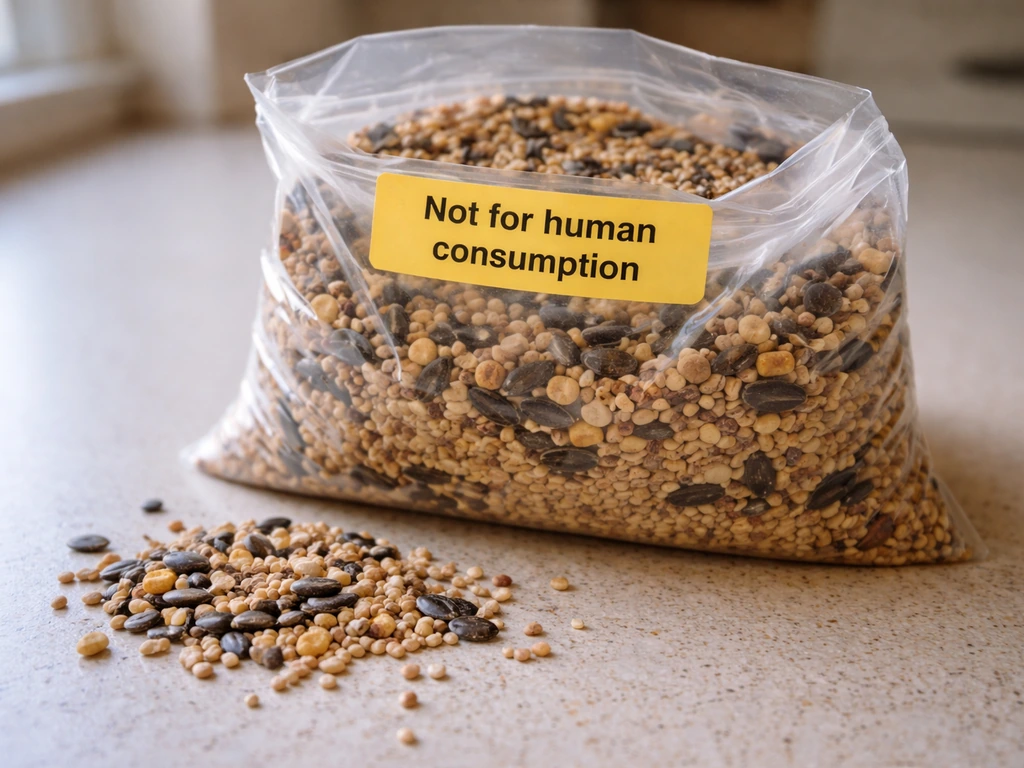
First, take a breath. A small accidental nibble of dry, uncontaminated bird seed is not a poison emergency. Here is a practical, step-by-step response based on what the exposure actually was:
- Spit out any remaining seed and rinse your mouth thoroughly with water.
- Look at the seed you were handling. Was it dry and fresh-smelling, or was it clumped, discolored, or musty? This matters a lot for what comes next.
- If the seed was visibly moldy, had a foul smell, or came from a feeder area with obvious droppings contamination, call the U.S. Poison Control network at 1-800-222-1222. You can also use the online tool at webPOISONCONTROL (Poison.org) to get guided next steps for your specific situation. These are free, confidential resources staffed by toxicologists.
- Do not try to induce vomiting on your own. The American Academy of Family Physicians specifically advises against home use of ipecac, and emergency toxicology guidance makes clear that decontamination decisions should be directed by a poison center or medical professional, not attempted independently.
- Watch for symptoms over the next few hours: nausea, vomiting, stomach cramps, diarrhea, or any allergic reaction (hives, swelling, difficulty breathing). Any of these, especially allergic symptoms, means go to urgent care or an emergency room.
- If you are unsure about what was in the seed, a call to Poison Control is always the right move. You do not need to wait for symptoms to appear before calling.
For context on where to draw the line: a single seed accidentally put in your mouth and immediately spit out is a very different situation from swallowing a handful of seed from a feeder tray that has not been cleaned in months. When in doubt, call.
Thinking about eating bird seed on purpose? Here's why that's not a great idea
People sometimes look into bird seed as a survival food, a foraging option, or a cheap source of calories. The ingredients are not poisonous by nature, but there are a few practical reasons why intentionally eating bird seed mix is not a sensible regular habit.
Bird seed is not produced or regulated under human food-grade standards. There is no guarantee about pesticide levels, mycotoxin testing, or the presence of additives like ethoxyquin that are approved for animal feed but not specifically for direct human consumption. The bags are not tested against FDA food safety thresholds. That does not mean every bag is dangerous, but it does mean you are taking on unknowns that you would not face with a food product from the grocery store.
If you are genuinely interested in eating seeds, the actual ingredients in bird seed, sunflower seeds, millet, pumpkin seeds, hemp seeds, and peanuts, are all available as human-grade food at low cost. Raw or roasted sunflower seeds from the snack aisle, human-grade peanuts, and hulled millet from the bulk section are all nutritionally equivalent to what is in the bird seed bag, without the regulatory gap. That is a much cleaner path than eating feed product directly.
It is also worth noting that bird seed is nutritionally optimized for birds, not people. Some mixes are heavy in fat and low in the fiber, vitamins, and micronutrients humans need. Nyjer seed in particular is sometimes treated with sterilization processes (to prevent germination) that have no effect on birds but make it non-viable as a human food ingredient. And while we are on the subject of which creatures can actually benefit from these seeds, fledglings eating bird seed is itself a nuanced topic, since even young birds cannot safely handle all seed types without some preparation.
How bird seed compares: fresh and clean vs. compromised
| Scenario | Risk Level | Key Hazard | Recommended Action |
|---|
| Small nibble of dry, fresh, uncontaminated seed | Low | Minor allergen risk; hard shells | Rinse mouth, monitor for symptoms |
| Seed with musty smell or visible clumping | Moderate | Possible mycotoxins or mold | Do not eat; call Poison Control if ingested |
| Visibly moldy seed with fuzz or discoloration | High | Aflatoxins, Aspergillus mold | Do not eat; call Poison Control immediately if ingested |
| Seed from contaminated feeder with droppings | High | Salmonella, bacterial contamination | Do not eat; call Poison Control if ingested |
| Intentional eating of bird seed mix regularly | Moderate-High (cumulative) | No food-grade testing, additive unknowns, pesticide residues | Switch to human-grade seed ingredients instead |
Safe storage and handling that protects everyone, including your pets and backyard wildlife
Good seed storage is the single most effective way to prevent the mold, contamination, and pest problems that turn low-risk bird seed into a genuine hazard. These steps apply whether you are worried about your own exposure, your kids, or your pets accidentally getting into the supply.
Storing seed properly
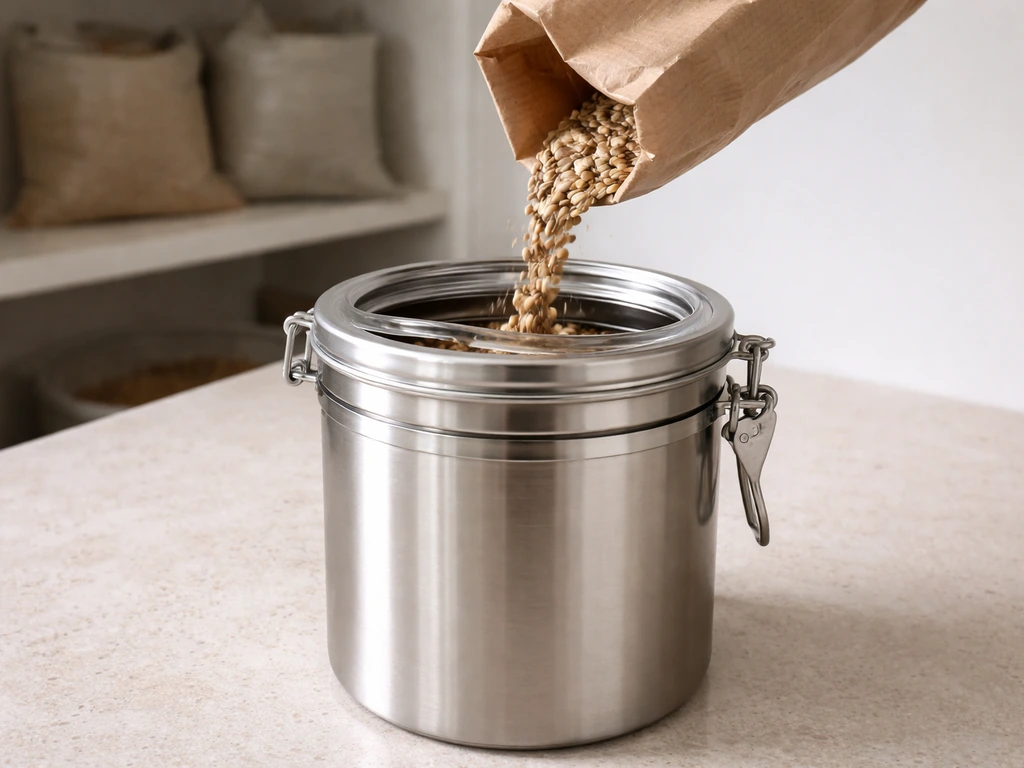
- Keep seed in a sealed, airtight container, preferably metal or hard plastic to block rodents. Avoid leaving bags open or loosely folded.
- Store in a cool, dry location. Heat and humidity are the main drivers of mold growth. Avoid garages that get hot in summer or sheds without ventilation.
- Buy seed in quantities you can use within 4 to 6 weeks. Older seed is more likely to develop moisture and mold problems.
- Never add new seed on top of old seed. Empty and clean the container between refills.
- Inspect every batch before filling feeders. If it smells off or looks clumped, discard it.
Cleaning feeders to reduce contamination risk
Cornell Lab's All About Birds recommends cleaning bird feeders at least once every two weeks, and more often during wet weather, heavy use periods, or if sick birds have been spotted in your area. For cleaning, they recommend either hand-washing with soap and boiling water, or soaking the feeder in a dilute bleach solution of no more than 1 part bleach to 9 parts water. The Wild Bird Feeding Institute and Audubon both recommend the same 9:1 water-to-bleach ratio, with at least 10 to 15 minutes of soaking contact time, followed by thorough rinsing and drying before refilling.
Project FeederWatch recommends wearing gloves when handling feeders and washing your hands thoroughly afterward, which is good advice whether or not you are concerned about seed safety specifically. These are the same basic hygiene steps that protect people, pets, and the birds themselves.
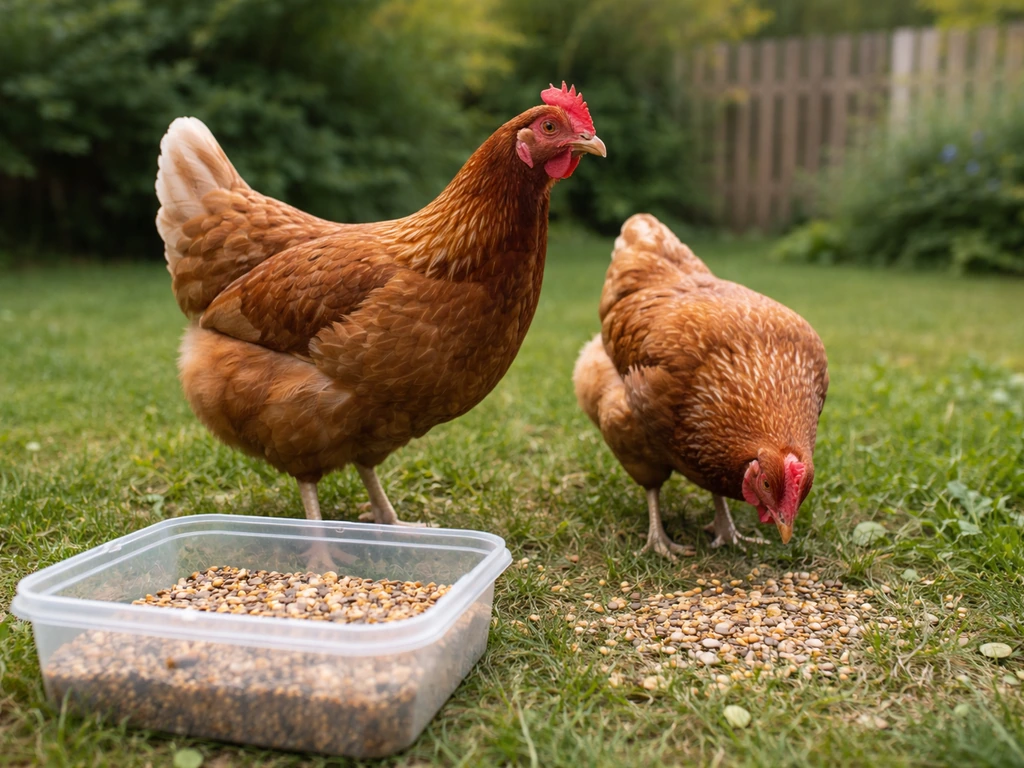
Speaking of pets: if you keep backyard chickens, it is worth knowing that chickens and bird seed have their own safety considerations, since some seed ingredients and mold risks that matter for humans also apply to poultry. Similarly, small household pets like hamsters often encounter bird seed in unexpected ways, and understanding whether hamsters can safely eat bird seed involves a lot of the same mold and allergen questions that apply here. Even backyard wildlife like turtles may come into contact with spilled seed, and the risks around turtles eating bird seed follow from the same contamination and spoilage principles.
Reducing feeder area contamination
- Place a tray or catch under feeders to reduce seed drop and ground accumulation, which is a primary attractor for rats and mice.
- Rake up and discard spilled seed beneath feeders regularly. Damp, ground-level seed is a fast route to mold and rodent activity.
- If you are cleaning a heavily contaminated feeder or disturbing dried droppings-heavy debris, do it outdoors with gloves and avoid creating dust clouds. The CDC specifically warns that disturbing dried bird or bat droppings can aerosolize Histoplasma spores.
- Keep children away from feeder cleaning tasks and always supervise hand-washing after any contact with feeders or spilled seed.
Taking these steps consistently means that if a child or pet accidentally gets into the seed supply, or you accidentally taste something while refilling a feeder, the baseline contamination risk is already as low as it can reasonably be. That is the best practical protection you can give yourself and the animals sharing your yard.