Fledglings can technically peck at bird seed they find on the ground, but that does not mean you should offer it to them, and in most cases you should not feed a fledgling at all. The short answer: leave the bird alone, keep pets away, and let the parents do their job. Bird seed is not appropriate food for most fledglings, and some common feeder ingredients carry real risks for young birds. Here is exactly what to do right now.
Can Fledglings Eat Bird Seed? What to Feed Instead
Maya Henderson
16 Apr 2026
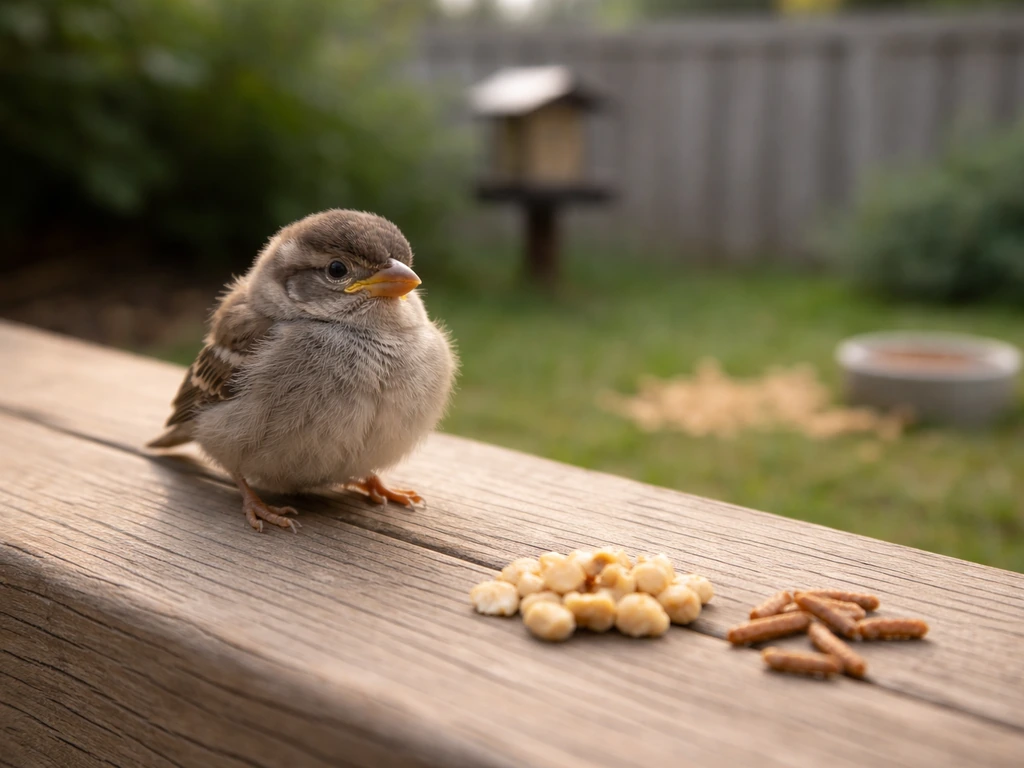
Bird seed and fledglings: the honest answer
A fledgling is a young bird that has left the nest but is not yet fully independent. It has feathers, can hop around, and may flutter short distances. This is completely normal behavior, not a sign that the bird is abandoned or in trouble. Cornell Lab of Ornithology is clear on this: if the bird is fully feathered and on the ground, leave it alone. Its parents are almost certainly nearby, watching and returning regularly to feed it.
Audubon's guidance goes even further: blank" rel="noopener noreferrer">do not ever attempt to feed or give water to young birds. Tufts Cummings School of Veterinary Medicine echoes this directly, saying 'don't attempt to feed the baby, its parents can do a much better job. Tufts Cummings (Tufts Wildlife Clinic) also notes that a young bird’s best chance for survival is with its parents, and that fledglings are normal when on the ground blank" rel="noopener noreferrer">Tufts Cummings School of Veterinary Medicine echoes this directly, saying 'don't attempt to feed the baby, its parents can do a much better job.. ' The instinct to help is understandable, but feeding a fledgling yourself is rarely helpful and can cause real harm.
That said, it is worth understanding why bird seed specifically is a poor choice, because the reasoning helps you make better decisions if you are ever in a situation where a licensed rehabilitator has actually authorized supplemental feeding.
Why certain bird seeds are risky for young birds
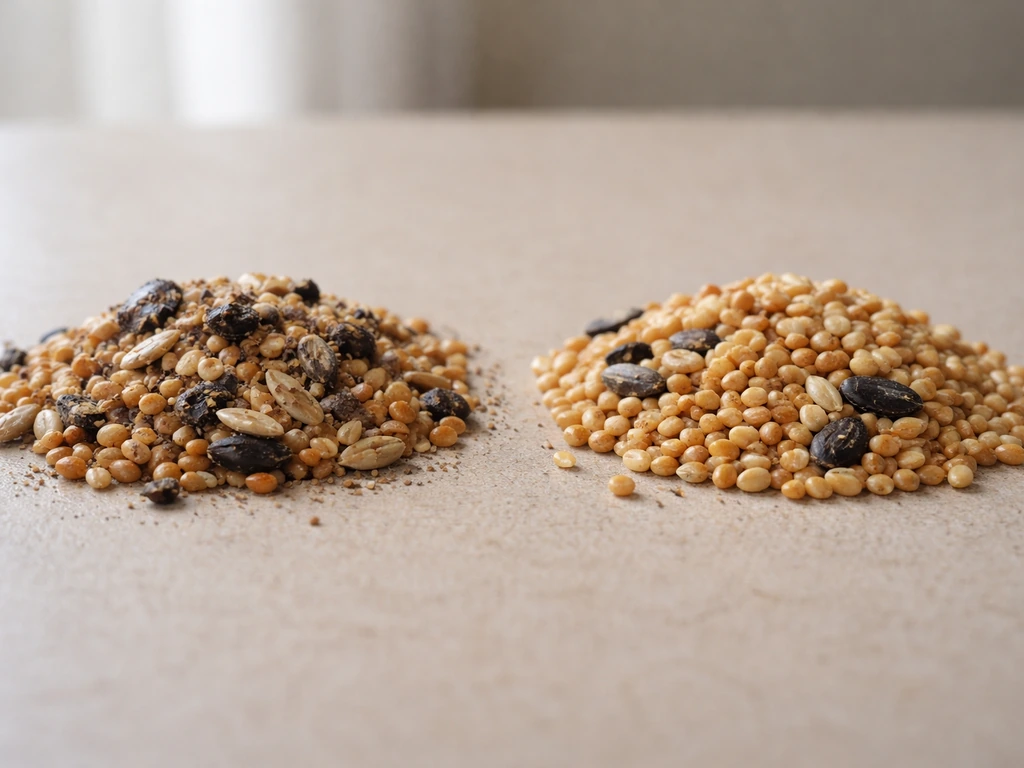
Most commercial bird seed mixes are formulated for adult birds with fully developed digestive systems. Fledglings, depending on the species, are built to eat soft insects, worms, berries, or regurgitated food from their parents. Hard, dry seeds are not part of that diet at this stage. Beyond the diet mismatch, there are specific physical hazards in what ends up in and around feeders.
Mold and spoilage
Damp or old seed goes moldy fast, especially in spring when humidity is high and temperatures are inconsistent. Aflatoxins produced by mold in stored grain are toxic to birds and can be lethal in small amounts. Fledglings are lighter and smaller than adult birds, so even a modest amount of contaminated seed can cause serious harm. If you see discolored, clumped, or foul-smelling seed near your feeder, remove it immediately.
Mixed seed blends with additives
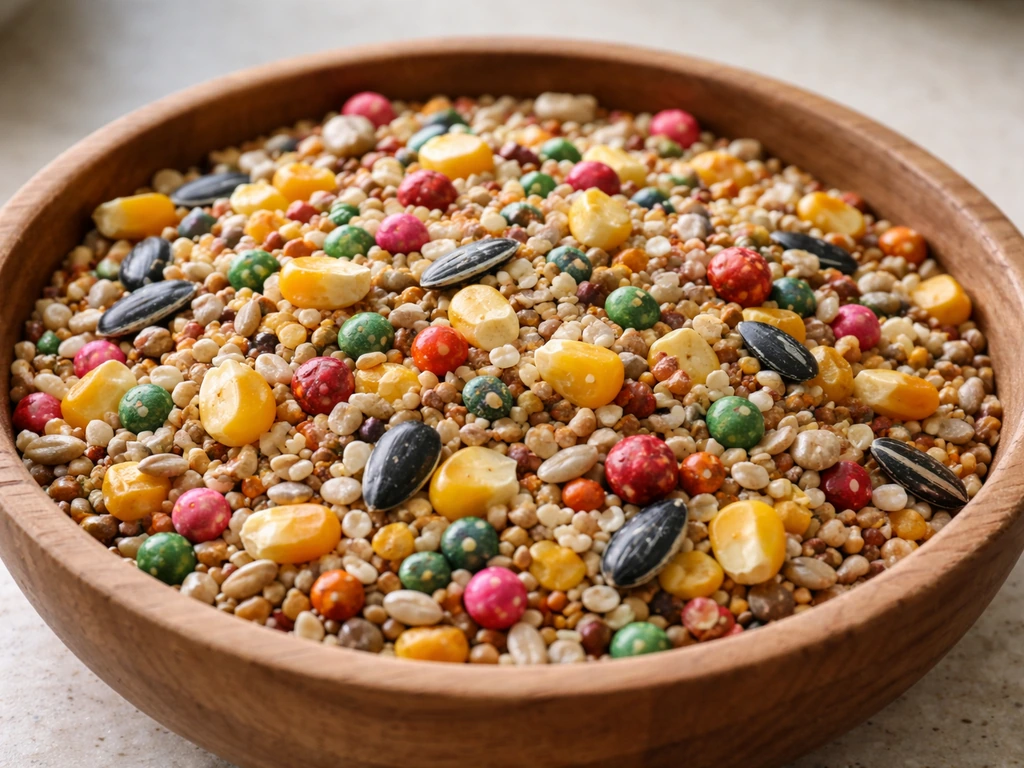
Many commercial mixes contain cracked corn, which is a common vehicle for mold and spoilage. Others include dyed seeds, artificial coatings, or fillers that offer little nutritional value. Plain black oil sunflower seed and white millet are among the cleanest options in commercial mixes, but they are still not appropriate for fledglings who need soft, high-protein food. Even 'premium' mixes are not a substitute for what a parent bird brings to a chick.
Contamination from droppings and weather
Seed that accumulates under a feeder or sits in a wet feeder tray is a concentrated source of Salmonella and other pathogens. Adult birds are exposed too, but a fledgling hopping around on the ground directly beneath a feeder is in much closer contact with contaminated debris. This is one of the less obvious reasons to keep the area under your feeder clean, especially during nesting season.
What to feed a fledgling instead (and when not to feed at all)
In the vast majority of cases, the right answer is: do not feed the fledgling anything. The U.S. Fish and Wildlife Service states plainly that if you find a baby bird, it likely does not need your help unless it is featherless or has its eyes closed. A fledgling on the ground with feathers is not in that category. It looks vulnerable, but its parents are doing the work.
If you have confirmed the bird is genuinely orphaned (both parents confirmed dead, no parental contact for more than a few hours, bird is weak or injured), contact a licensed wildlife rehabilitator before attempting any feeding. They will tell you exactly what to offer based on the species. As a general reference by diet type, here is what appropriate fledgling food looks like, but again, do not attempt this without professional guidance:
| Fledgling diet type | Natural food source | Emergency substitute (rehab-guided only) | Never offer |
|---|---|---|---|
| Insectivore (robins, wrens, swallows) | Earthworms, soft insects | Mealworms (live or rehydrated) | Bird seed, bread, milk |
| Omnivore (starlings, crows) | Insects, berries, soft matter | Moistened puppy kibble, mealworms | Dry seed, crackers, processed food |
| Granivore (sparrows, finches) | Soft seeds, insects in early life | Soaked finch seed, mealworms | Hard dry seed mixes, cracked corn |
| Frugivore (waxwings, thrushes) | Soft berries, fruit | Mashed blueberries or grape pieces | Hard seed, bread, dairy |
Notice that even granivore fledglings (birds that eat seeds as adults) still need soft, protein-rich food early in life. Hard, dry bird seed from a backyard feeder is not appropriate even for them at this stage.
What about water?
Do not try to give water directly to a fledgling by hand. Young birds can easily aspirate liquid into their lungs, which is fatal. Their parents provide hydration through the food they bring. If you are working with a rehabilitator, they will advise on hydration as part of the full care plan.
How to actually help right now without causing harm
The most useful thing you can do today is create a safe buffer around the fledgling and step back. Here is the practical sequence to follow:
- Keep people, especially children, from approaching or handling the bird. Stress from handling can be fatal to fledglings even when the bird looks uninjured.
- Bring pets inside or keep them away from the area. Dogs and cats are among the leading causes of fledgling death, even when they appear just curious. The U.S. Fish and Wildlife Service specifically lists keeping pets away as one of the most important steps.
- Watch from a distance for one to two hours. Look for a parent bird visiting periodically to feed the fledgling. This is normal and means everything is fine.
- Do not move the bird unless it is in immediate danger, such as in the middle of a road or directly threatened by a predator. Moving it to a nearby shrub within a few feet is acceptable if necessary.
- Do not offer food or water. Do not give bread, milk, crackers, sugar water, or any bird seed. None of these are appropriate and all carry risk.
- Do not attempt to put the bird back in a nest unless the nest is clearly visible and accessible and the bird is a true nestling (no feathers, eyes closed). A fledgling on the ground is supposed to be there.
When to call a wildlife rehabilitator
Most fledglings do not need intervention, but some do. RSPCA guidance is to monitor the bird carefully, because that monitoring is what tells you whether it genuinely needs help. Call a licensed wildlife rehabilitator if you see any of the following:
- The bird is featherless or has its eyes closed (this is a nestling, not a fledgling, and needs immediate help)
- The bird has a visible injury such as a drooping wing, bleeding, or an abnormal posture it cannot correct
- The bird has been in the same spot for more than two to three hours with no parental contact observed
- A cat or dog has had physical contact with the bird, even if there is no visible wound (bacteria in cat saliva can cause fatal infection within hours)
- The bird is panting, shaking, lying on its side, or completely unresponsive to nearby movement
- You have confirmed both parent birds are dead
To find a licensed wildlife rehabilitator near you, contact your state wildlife agency, the National Wildlife Rehabilitators Association (NWRA), or the Wildlife Center of Virginia's national directory. Do not attempt to keep the bird yourself as a long-term solution. In the U.S., keeping most wild birds without a permit is illegal under the Migratory Bird Treaty Act.
Keep your backyard safe while the fledgling is nearby
If you have a fledgling in your yard and active feeders, there are a few practical steps to take right now to make the environment safer. These are also just good general practices for responsible backyard feeding year-round.
- Check feeders for damp or clumped seed and remove it immediately. Moldy seed under or inside feeders is a contamination risk for all wildlife in the area.
- Clean feeder trays and ports with a 10% bleach solution (one part bleach to nine parts water), rinse thoroughly, and allow to dry completely before refilling.
- Rake up seed debris and hulls from the ground beneath feeders. This debris is a Salmonella vector and fledglings hop directly through it.
- Pause or reduce feeder filling temporarily if the fledgling is spending time near the feeder base. You do not want it eating inappropriate food or being exposed to high-traffic areas with cats or other predators.
- Keep cats indoors during fledgling season, typically April through August in most of North America. Even a single brief encounter can be fatal.
- If you have dogs, supervise all outdoor time and use a leash or fence boundary near any area where a fledgling has been spotted.
It is also worth thinking about who else in your household or yard might be interacting with your feeders or seeds. If you have backyard chickens, for instance, you may already know that chickens and bird seeds have their own set of considerations around diet appropriateness and mold risk. The same contamination and spoilage concerns that apply to fledglings apply to many other animals that come into contact with feeder areas.
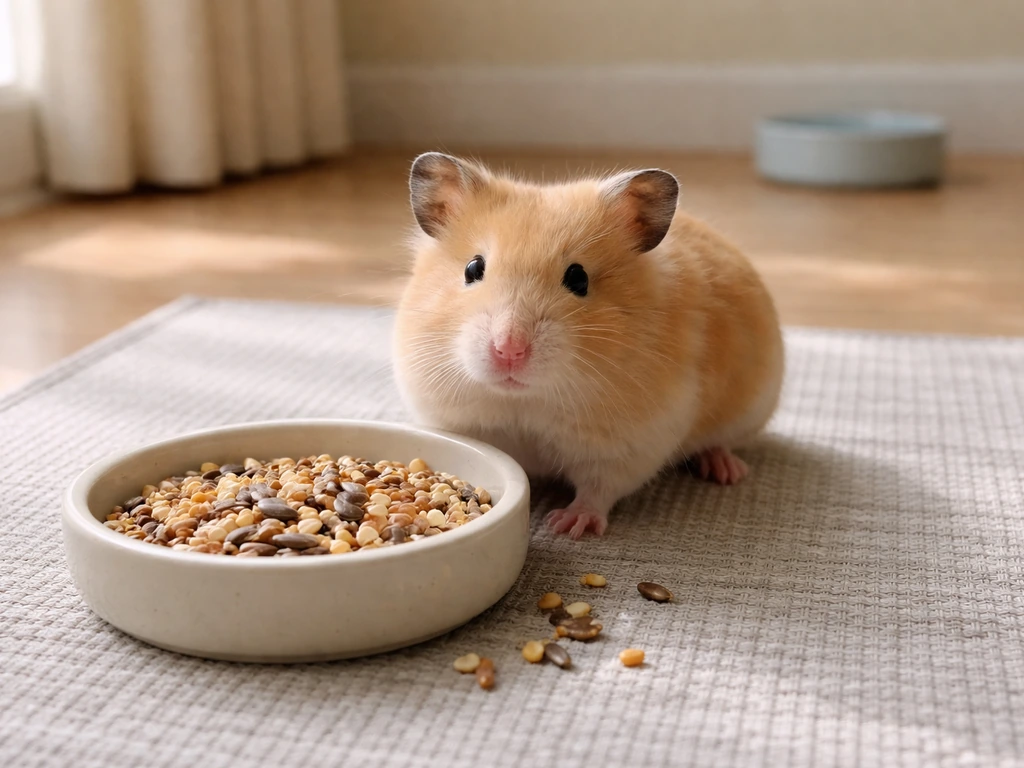
If you have small pets like hamsters roaming near spilled feeder seed, it is worth knowing that hamsters eating bird seeds carries its own set of risks, particularly around mold and seed mix ingredients that are not species-appropriate. The general principle holds across a wide range of animals: commercial bird seed is formulated for adult wild birds, and most other animals should not be eating it freely.
And if you have ever been curious about seed safety beyond wildlife, you may be surprised to learn that humans eating bird seed is more nuanced than it sounds, touching on the same mold and contamination concerns that make bad seed dangerous for fledglings too. Even turtles and bird seed is a topic worth reviewing if you have a backyard pond or outdoor turtle enclosure near a feeder, since seed debris in water accelerates spoilage and creates hazards for reptiles.
The bottom line
If you find a fledgling near your feeder today, the most helpful thing you can do is nothing, at least in terms of feeding. Keep pets away, watch from a distance, skip the bird seed entirely, and let the parents work. If the bird shows genuine distress or injury, call a wildlife rehabilitator rather than trying to manage it yourself. Clean up your feeder area as a precaution, and resist the urge to intervene beyond that. The fledgling almost certainly does not need food from you. It needs space, quiet, and time.
FAQ
If the parents do not come right away, does that mean my fledgling needs to eat bird seed from me?
Usually, no. A fully feathered fledgling on the ground is often being fed by its parents nearby, even if it seems quiet or you do not see them return. You can sit farther away and watch for adult visits (often multiple times over a few hours). If adults never show up, or the bird is weak, bleeding, or unable to hop/stand, then switch from “leave it” to calling a wildlife rehabilitator.
What should I do with my bird feeder if a fledgling is nearby?
If you have a bird feeder, the safest move is to remove the problematic seed and debris under the feeder, not to feed the fledgling. Moldy or clumped seed should be taken away promptly, and any wet tray or damp area should be emptied and cleaned. This reduces pathogen buildup so the fledgling is less exposed while still allowing the parents to feed it.
Is it ever okay to hand-feed a fledgling bird seed so it survives the night?
Do not place bird seed, mealworms, or any hand-fed items into the fledgling’s mouth. Feeding methods can cause choking or aspiration, and giving the wrong texture or ingredient can lead to digestive problems. If a rehabilitator tells you supplemental feeding is necessary, they will specify exact food type, portion size, and how to administer it.
Can I offer a fledgling water in a dish or drop it onto its beak?
No, you should not give water directly. Young birds can aspirate liquid into their lungs, which can be fatal. If hydration advice is needed, it should come from a licensed wildlife rehabilitator, because the safest hydration approach depends on the bird’s species and condition.
What if the fledgling is in the middle of my yard, on the sidewalk, or where a cat can reach it?
If you must move it to reduce immediate danger, do it as minimally as possible. Gently place the fledgling back into the nearest safe, sheltered spot parents can access, such as a low shrub or branch close to where it was found, and avoid squeezing or handling for long. If it is injured, chilled, or cannot right itself, skip relocating and contact a rehabilitator.
How can I tell if a fledgling is truly orphaned or just hiding from me?
Do not assume “orphaned” just because you cannot find the nest. Many parents forage nearby and only approach briefly. Stronger indicators include both adults being confirmed dead, no parental contact for an extended period (for example, most of the daylight window), or the bird showing clear injury or severe weakness. When in doubt, call a rehabilitator rather than feeding.
Is plain sunflower seed or millet okay for fledglings if it is “just seed”?
Bird seed is usually too hard and dry, and many mixes include ingredients that add contamination risk (moldy clumps from damp storage, cracked corn, dyed coatings, fillers). Even “clean” seed is not the right early-life diet for most fledglings, which typically need soft, high-protein food. Supplemental feeding should be guided by a rehabilitator with species-specific recommendations.
What help is actually useful if I see a fledgling under my feeder?
The main mistake is stopping at “feed it.” If you want to help, create safety: keep pets indoors or secured, block access to feeders, and clear seed and droppings from the ground under and around feeders. This reduces pathogen exposure and scavenger pressure while you monitor from a distance.
How long should I keep cats or other pets away from the fledgling?
If you have outdoor cats or dogs, treat the area around the fledgling like an emergency zone. Bring pets indoors, use a closed gate, and pick up any dropped seed so it does not attract predators or increase animal traffic. The goal is to reduce risk without interfering with feeding by the parents.
If the bird seems desperate, can I keep it at home overnight until I call someone?
Try not to keep the bird yourself, even temporarily beyond first aid or emergency transfer. In the U.S., keeping wild birds without the right permits is generally illegal, and improper housing or diet can quickly worsen a bird’s condition. Contact a rehabilitator promptly if you see injury, visible weakness, or no parental activity.
Does cleaning my feeder actually reduce disease risk, or is it overkill?
Cleanup matters for more than just fledglings. Remove old, wet, or moldy seed, empty trays, and wash feeders so pathogens do not build up. If you frequently use feeders during nesting season, consider temporarily pausing feeding in that immediate area to reduce ground contamination.
Do seed-eating species fledglings (like sparrows) make bird seed more appropriate?
For “granivore” fledglings (species that eat seeds as adults), the early diet is still not hard, dry seed. They may need soft, protein-rich food during the nestling to early fledgling period. If you have a specific species and are unsure, a rehabilitator can confirm the correct diet for that life stage.
Next Article
Can Hamsters Eat Bird Seed Safely? Risks and What to Do
Yes or no on hamsters eating bird seed, plus risks from fat, hulls, and mold, and what to do if it happens.