Yes, birds can eat popcorn, but only under very specific conditions. Plain, air-popped popcorn with zero added salt, butter, oil, sugar, or seasoning is generally safe for most pet birds in tiny amounts. The moment you introduce any topping, flavoring, or coating, the answer flips to no. If you are dealing with a bird that already ate some popcorn off the floor, or you want to offer it as an intentional treat, here is everything you need to know to make the right call quickly.
Can Bird Eat Popcorn? Safe Guidelines for Pet Birds

Maya Henderson
22 Mar 2026
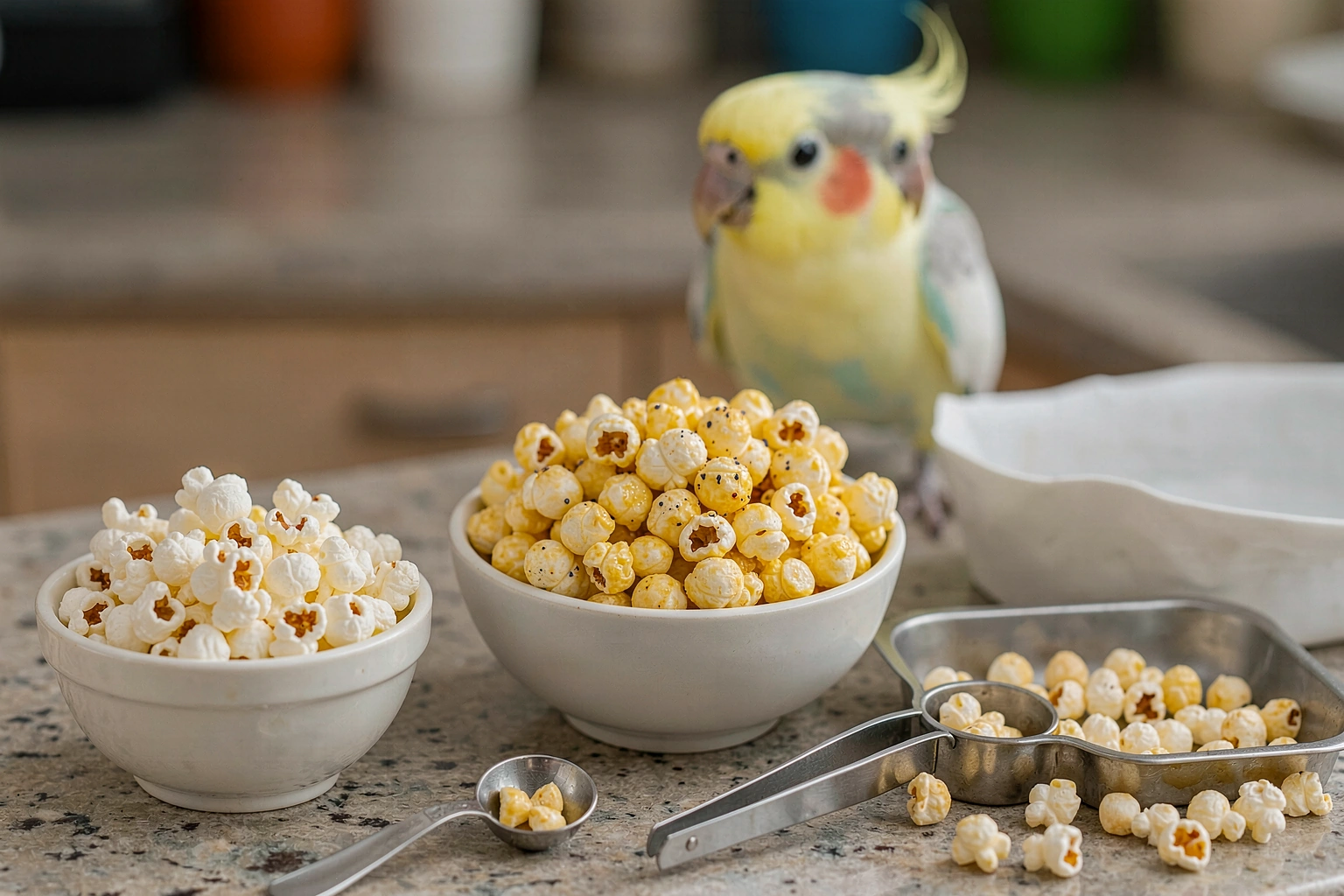
Plain popcorn vs. flavored popcorn: the quick answer
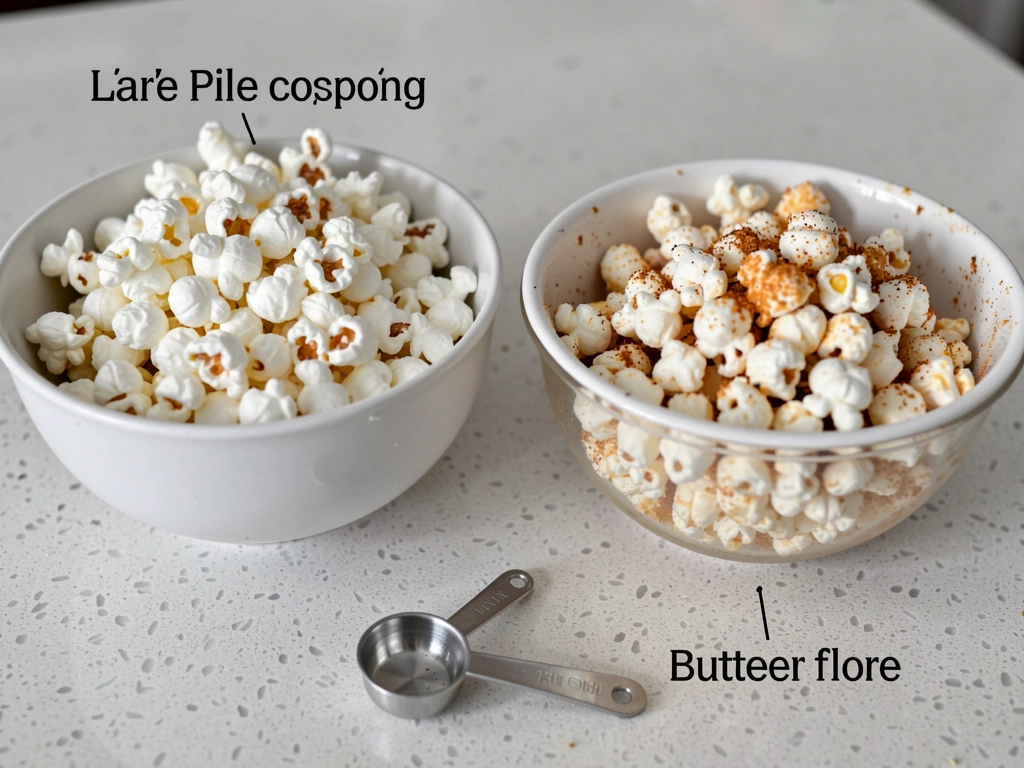
The type of popcorn matters enormously. Air-popped popcorn made from plain corn with nothing added is the only version that is reasonable to offer a bird. Even then, it should be treated as an occasional novelty, not a staple. Anything that comes from a microwave bag, a movie theater, or a pre-seasoned package is off the table entirely.
| Popcorn Type | Safe for Birds? | Reason |
|---|---|---|
| Plain, air-popped, no toppings | Yes, in small amounts | No harmful additives; corn is a bird-safe grain |
| Microwave bag popcorn | No | Contains oils, salt, artificial butter flavor, and chemical coatings |
| Butter popcorn | No | Dairy and saturated fat are harmful to bird digestion |
| Salted popcorn | No | Excess sodium causes kidney damage and toxicity in birds |
| Kettle corn / sweet popcorn | No | Sugar and caramel coatings are inappropriate for birds |
| Spiced or seasoned popcorn | No | Spices like garlic powder, onion, or chili are toxic to birds |
| Pre-packaged flavored varieties | No | Artificial additives and chemical flavorings pose serious risks |
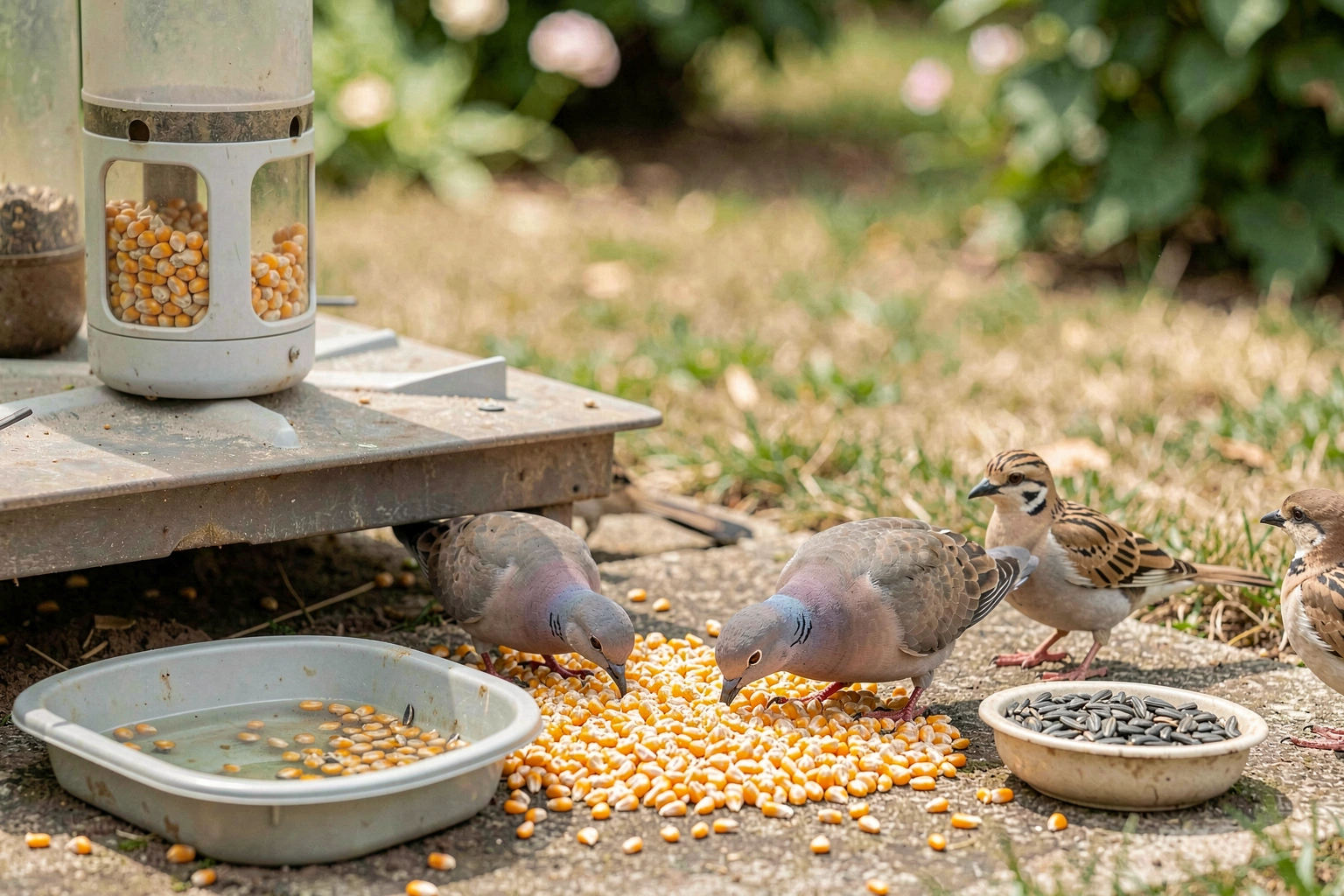
For wild birds, the picture is similar. Plain popcorn dropped on the ground will not cause immediate harm if a wild bird pecks at a few pieces. However, regularly feeding popcorn or other people-food to wild waterfowl has been linked to a developmental wing condition called angel wing, according to the Tufts Wildlife Clinic. So even plain popcorn is not something to make a habit of putting out for wild birds.
Why ingredients matter so much
Birds have metabolisms and organ systems that handle certain compounds very differently from humans or even dogs and cats. What seems like a tiny pinch of salt or a light drizzle of butter is proportionally enormous when you are feeding a cockatiel that weighs 90 grams. Here is what each common popcorn ingredient actually does to a bird's body.
Salt
Salt is one of the most straightforward dangers. Birds' kidneys cannot handle the sodium load that humans can. Even small amounts of added salt can disrupt electrolyte balance, cause excessive thirst and urination, and in serious cases lead to kidney damage or failure. Salted popcorn is genuinely dangerous, not just mildly inappropriate.
Butter and oils
Butter introduces dairy fat, which birds cannot digest properly. High-fat foods in general can contribute to fatty liver disease over time in pet birds, particularly parrots and cockatiels. The oils used in microwave popcorn are also often partially hydrogenated or chemically treated, which adds another layer of risk. Even natural cooking oils, when used in excess, create an unnecessary fat burden for a bird's small digestive system.
Sugar and sweet coatings
Sugar itself is not acutely toxic to birds the way it is for some animals, but it contributes to obesity, yeast overgrowth (especially in the crop), and nutritional displacement. Caramel or kettle corn coatings are sticky, which creates an additional choking and crop-blockage concern on top of the sugar problem.
Spices and artificial additives
This is where things get genuinely toxic. Garlic and onion powder, both common in flavored popcorn blends, are toxic to birds. Avian veterinary sources consistently list garlic and onion among dangerous foods for birds, in the same category as chocolate, avocado, and caffeine. Artificial flavorings and chemical preservatives found in packaged popcorn are poorly studied in birds and should be avoided entirely on precautionary grounds. Chili or spice-flavored varieties add yet another variable that is simply not worth the risk.
Choking risks and physical safety
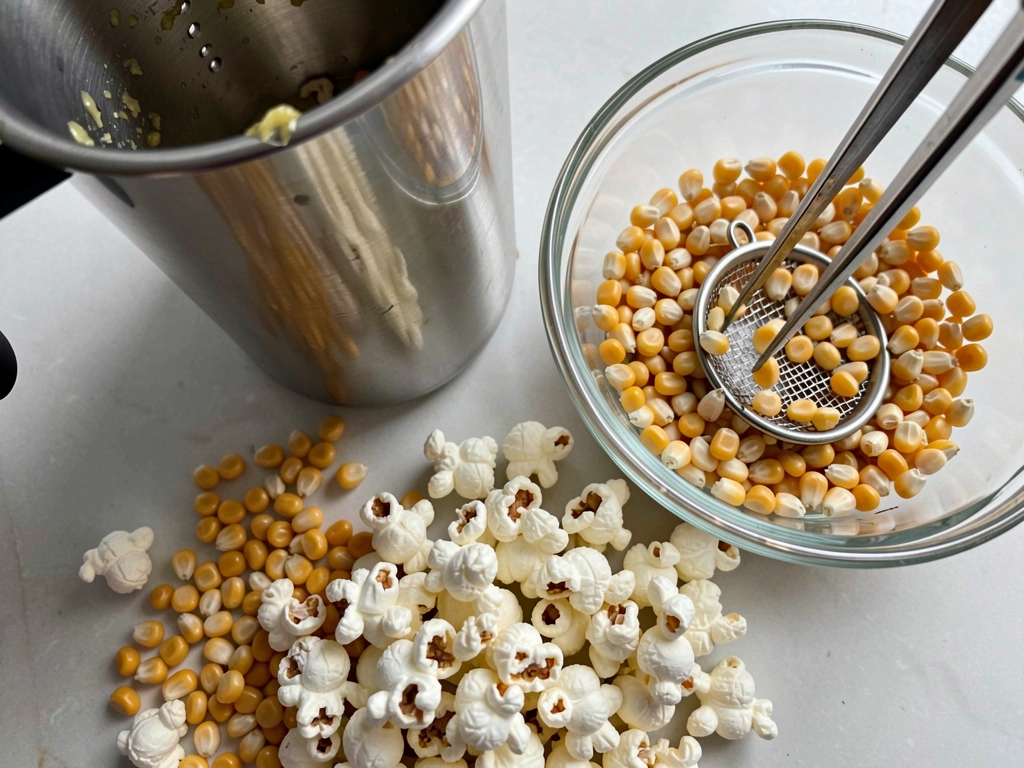
Ingredients are not the only concern. The physical form of popcorn presents its own hazards, and these apply even to plain, unseasoned varieties.
Unpopped and partially popped kernels
Those hard, dense kernels at the bottom of the bowl are a serious choking hazard for birds. Even for a large parrot, an unpopped kernel is a dense, sharp-edged object that can get lodged in the throat or cause damage on the way down. Always remove every unpopped or partially popped kernel before offering any popcorn to a bird. This is not optional.
Hard or chewy pieces
Popcorn that has gone stale or partially lost its puff becomes denser and harder to swallow safely. Freshly air-popped corn is lighter and easier for a bird to manage. Stale popcorn should not be offered.
Portion size matters
Even fully popped, light pieces can accumulate in the crop and cause issues if a bird eats too much. The crop is a small pouch at the base of a bird's throat where food is stored before digestion. Fibrous or starchy foods in large quantities can slow crop emptying or contribute to impaction. Limiting the amount is as important as controlling what is in it.
How to feed popcorn safely if you choose to
If you decide plain air-popped popcorn is something you want to offer your bird, here is how to do it responsibly. Think of it as a very occasional treat, not a regular part of their diet.
- Use only plain, air-popped popcorn: no oil in the popper, no salt, no butter, no seasoning of any kind added before or after popping.
- Remove every unpopped kernel and any pieces that look dense, chewy, or only partially expanded.
- Break larger pieces into smaller bits appropriate to your bird's size. A budgie needs much smaller pieces than an African grey.
- Offer only a few pieces at a time: a reasonable guideline is two to four small pieces for a medium-sized parrot, once or twice a week at most.
- Serve it fresh. Do not offer leftover popcorn that has been sitting out and getting stale.
- Stay close and supervise while your bird eats it. Watch for any signs of difficulty swallowing or distress.
- Remove uneaten popcorn from the cage promptly. It should not be left in the cage for extended periods, especially in warmer or humid environments where mold can develop quickly.
It is also worth noting that Lafeber, a well-known bird nutrition company, has developed a commercial product called Popcorn Nutri-Berries specifically formulated for parrots. That product is nutritionally balanced and designed for birds, which is a very different thing from handing your parrot a handful of your movie-night popcorn. If you want a popcorn-adjacent treat that has been properly developed for birds, that kind of purpose-made product is a better choice than preparing something at home and guessing at the safety. Even commercially produced bird treats can be subject to recalls, though, so checking current product status is always a smart habit.
Your bird already ate popcorn: here is what to do
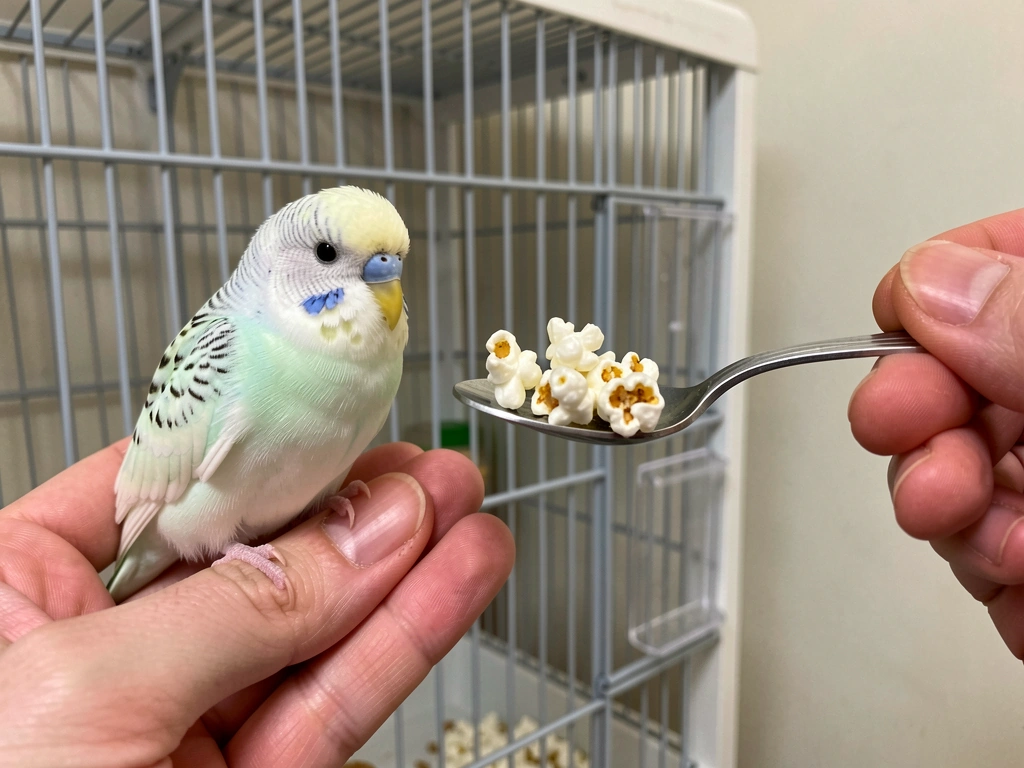
If your bird got into some popcorn before you could stop it, the first thing to do is figure out exactly what kind it was. Plain air-popped popcorn in a small amount is unlikely to cause serious harm. Seasoned, salted, buttered, or microwave popcorn is more concerning and warrants closer monitoring.
What to watch for
- Difficulty breathing or labored breathing (open-mouth breathing, tail bobbing): this is an emergency, contact a vet immediately
- Choking, gagging, or repeated head shaking
- Vomiting or regurgitation (distinct from normal mate-feeding regurgitation in parrots)
- Swollen or distended crop that does not empty within a few hours
- Lethargy, fluffed feathers, or sitting at the bottom of the cage
- Diarrhea or significant change in droppings
- Loss of balance or neurological signs like tremors
If your bird is showing breathing difficulty, choking, or signs of a foreign body lodged in the throat, that is a veterinary emergency and you should call an avian vet or emergency animal clinic immediately. Do not try to dislodge anything yourself. For less acute signs like mild lethargy or a change in droppings after eating seasoned popcorn, calling your vet within a few hours is the right move. The ASPCA Animal Poison Control Center (available 24/7) and the Pet Poison Helpline are also resources you can call if you cannot reach your regular vet quickly. Be ready to describe exactly what your bird ate, how much, and when.
If your bird ate a small amount of plain popcorn and is acting completely normal, eating, drinking, and moving around as usual, the risk is low. Still keep an eye on crop emptying over the next several hours and watch droppings for the next 24 hours. Normal droppings are a good sign. Any significant change is a reason to call your vet.
Better snack options and what to avoid
Popcorn, at its very best, is a low-nutrition treat with zero meaningful benefits for birds beyond novelty and enrichment. If you want to give your bird something to snack on or forage with, there are much better choices that offer actual nutritional value without the risks. The same idea applies to other starchy human foods, like rice, where preparation and portion size matter for a bird’s safety. If you are wondering about a bird eating rice, the answer depends just as much on portion size and what is added, so avoid risky seasonings and monitor for any trouble.
Safer and more nutritious alternatives
- Fresh vegetables: leafy greens like kale, spinach, and romaine; bell peppers; broccoli; cucumber; and carrots are all excellent choices for most pet birds
- Fresh fruits in small amounts: apple (no seeds), mango, papaya, berries, and melon are well-tolerated by most parrots and cockatiels
- Cooked whole grains: plain cooked brown rice, oats, or quinoa (with nothing added) are digestible and nutritious (corn is also in this category, and plain whole corn on the cob is a better corn-based option than popcorn)
- Sprouted seeds: higher in nutrients than dry seeds and easier to digest
- Commercially formulated bird pellets and species-appropriate treats from reputable bird nutrition brands
Foods to avoid completely
- Avocado: toxic to birds
- Chocolate and anything containing caffeine
- Onion and garlic in any form, including powder
- Salt in any significant amount
- Alcohol
- Tomato or potato leaves and stems
- Yeast dough
- Anything artificially sweetened
If you are interested in what other grains and human foods are safe for birds, the same principles that apply to popcorn generally apply to things like oats and corn in other forms. That same idea applies to oats too: make sure they are plain, and keep portions small. The preparation method and what is added to a food matter as much as the base ingredient itself.
The short version: your go-to checklist
Here is a simple rule-of-thumb you can apply any time you are wondering whether a specific piece of popcorn is okay to share with your bird.
- Is it plain and air-popped with nothing added? If yes, proceed cautiously. If no, stop here.
- Have you removed every unpopped or partially popped kernel? If not, do that first.
- Is the amount very small (a few pieces, not a handful)? Keep it minimal.
- Is this a once-in-a-while treat rather than a daily offering? It should be.
- Are you able to supervise your bird while it eats? Stay present.
- Is your bird healthy with no known respiratory or digestive issues? Birds with pre-existing health conditions should skip this treat entirely.
- If your bird ate flavored or seasoned popcorn: watch closely for 24 hours and call your vet if anything seems off.
The bottom line: plain air-popped popcorn is not toxic to birds and can be offered in very small amounts occasionally. Anything with added salt, butter, oil, sugar, spices, or artificial flavorings is not safe and should not be given. When in doubt, skip it and reach for something that actually benefits your bird's health instead. Yes, birds can eat rice in some situations, but the safest approach depends on the type of rice and how it is prepared.
FAQ
Can bird eat popcorn if it is buttered but I give only one kernel?
If it is pre-seasoned or microwave theater-style popcorn, treat it as unsafe even if you scrape off toppings. Flavorings, oils, and preservatives can be present throughout, and a small bird could still have a risk from sodium, fat load, or crop irritation.
How much popcorn is a safe amount for my pet bird?
Offer no more than a couple of popped pieces for most small birds, then stop. Larger birds can take slightly more, but the key is to avoid a second “handful” the same day, since crop slowing and impaction risk rises with total volume.
Can bird eat popcorn from a microwave popcorn bag if I choose the least salty flavor?
No, and plain meaning plain corn kernels that you air-popped. “Microwave popcorn” in a bag is rarely just corn, because it typically includes added salt, oils, flavor systems, and sometimes chemical processing aids.
Is kettle corn or caramel popcorn ever okay for birds?
Avoid it. Even if it is labeled “natural,” kettle corn and caramel popcorn are sticky and sugar coated, which increases the chance of crop blockage and yeast-related issues. If you want the treat, use only plain air-popped kernels.
My bird grabbed a few pieces from the couch, what should I watch for?
If your bird already ate it, don’t panic if it was plain popcorn and the bird is acting normal. Still, monitor closely for crop emptying and for changes in droppings over the next 24 hours, because stale, dense kernels or added ingredients can cause problems even without immediate choking.
Can bird eat stale popcorn that is already cooled and a bit hard?
Stale popcorn is a different hazard than freshly popped popcorn because it becomes denser and harder to swallow safely. Instead of testing “a little,” discard stale pieces, because an unpopped or partially puffed kernel can lodge in the throat.
Is popcorn safe if I serve it right after popping while it is still warm?
Most birds tolerate small amounts better at room temperature, not hot. Very warm popcorn can irritate the mouth or throat and increase swallowing problems, so let it cool fully and remove any unpopped kernels.
Can I leave popcorn out so my bird can peck at it slowly?
Yes for the bird to avoid inhalation, but set the goal as “tiny pieces.” Put popcorn in a shallow dish, supervise, and remove what is left after a short session so the bird does not keep picking over hours and building up in the crop.
What are the signs of choking after popcorn and what should I do first?
If your bird is coughing, mouth open, gasping, head bobbing, or acting like it cannot swallow, treat it as an emergency. Do not try to pull kernels out yourself, because forcing movement can worsen a blockage.
Does popcorn safety change by bird species or size?
Yes, different species have different risk tolerance. Small-bodied birds like cockatiels and budgies reach a risky sodium and fat dose faster than larger parrots, so keep portions smaller and be more conservative if the bird has any kidney or digestive history.
How can I tell if popcorn is safe when the ingredient list is unclear?
If you are unsure about ingredients, assume it is unsafe. A “seasoning dust” does not have to be obvious to include salt, spice blends, garlic or onion powder, or flavor chemicals that are not worth the precautionary risk.
Does the same guidance apply to other human snack grains like chips or crackers?
Birds can eat certain grains in limited ways, but the safety depends on preparation. The same rule applies, plain and unseasoned is best, avoid salt, oil, sugar, and any spice blends, and never feed a large quantity because of crop and impaction risk.
Next Article
Can Birds Eat Corn? Safe Feeding Guide by Bird Type
Can bird eat corn? Learn which species can safely, how to prep unseasoned corn, amounts, and safety tips.