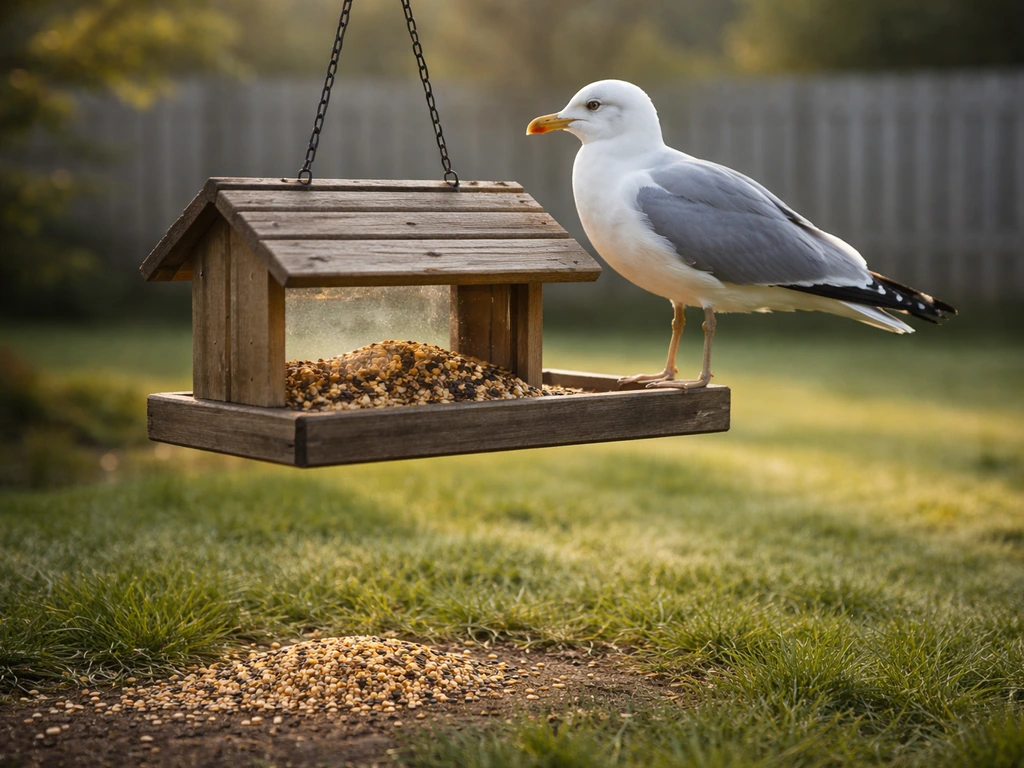
Yes, seagulls will eat bird seed. They are opportunistic scavengers, and if there is seed available at or near your feeder, especially on the ground, a gull will absolutely take it. That said, seagulls are not typical feeder birds, and the conditions that bring them to your yard are largely within your control. If you are dealing with gulls raiding your setup right now, the fix is mostly about feeder placement, seed choice, and cleaning up spilled seed before gulls spot it.
Do Seagulls Eat Bird Seed? How to Stop Them
Maya Henderson
16 Apr 2026
Do seagulls actually eat bird seed?
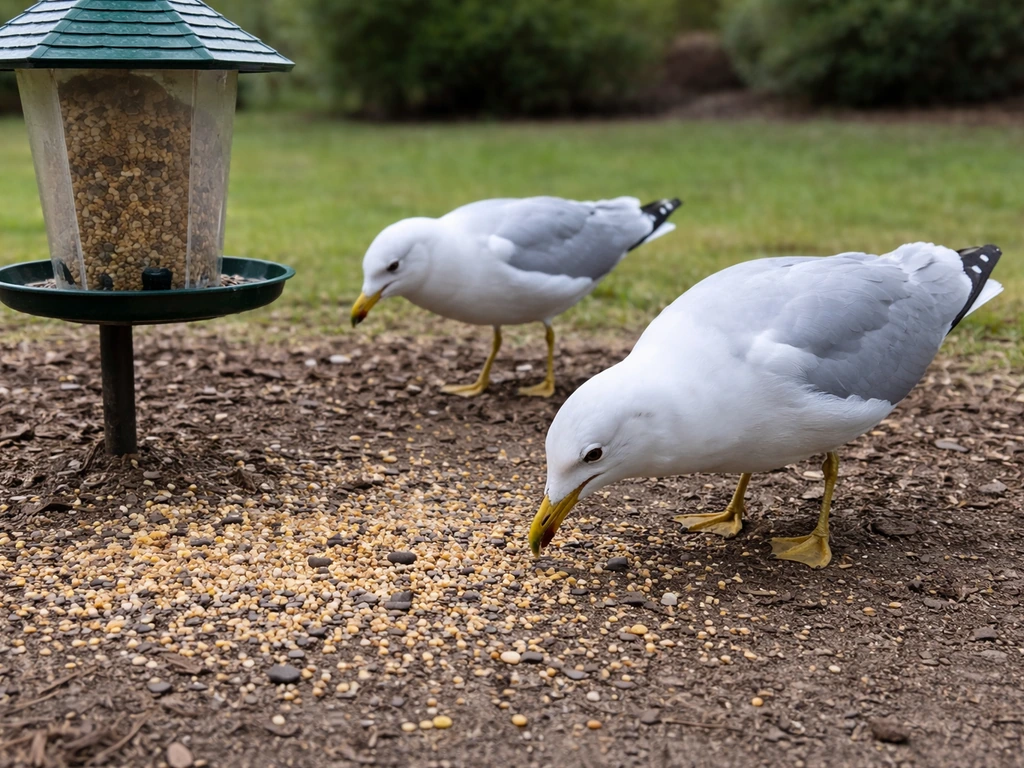
Technically, yes. Ring-billed gulls, the species most likely to show up in suburban or urban backyards away from the coast, include grain in their regular diet. Cornell Lab of Ornithology confirms that ring-billed gulls eat grain alongside fish, insects, rodents, and refuse. Audubon backs this up, noting grain as part of their documented diet. So while your backyard feeder is not exactly prime gull habitat, a gull will eat seeds if the opportunity is there.
The keyword is "opportunity." Gulls are not usually hunting for nyjer or safflower at elevated tube feeders. What they are hunting for is an easy, food-rich spot. Spilled seed on the ground, an open platform feeder at low height, or a broad tray feeder packed with mixed seed are all things that look like a meal to a gull flying overhead. If you are in a coastal area, near a lake, or even in an inland city with a large gull population, the risk of gull visits at your feeder goes up significantly.
Why gulls go after your feeder in the first place
Gulls are wired to exploit food-rich environments. The American Birding Association has even run community science projects specifically documenting gulls eating practically anything, noting that they commonly feed in places like parking lots, wherever food accumulates easily. Your feeder, from a gull's perspective, is just another food-rich spot. Ring-billed gulls are also nimble and quick at picking up food items, so a pile of spilled seed under your feeder is not a challenge for them at all.
The main behavioral triggers are visibility and accessibility. A ground-level pile of seed, mixed hulls, and droppings under a feeder is basically a signal fire for scavenging birds. Gulls scan wide areas for these patches, so once one finds your feeder, others often follow. This is especially worth thinking about if you live near water or in a city where gull populations are already dense and bold around human food sources.
It is also worth knowing that seagulls are not the only large, unexpected visitor seed can attract. Coyotes are also drawn to areas with accumulated bird seed, so managing your feeder well protects against more than just gulls.
The real risks when gulls are around your feeder
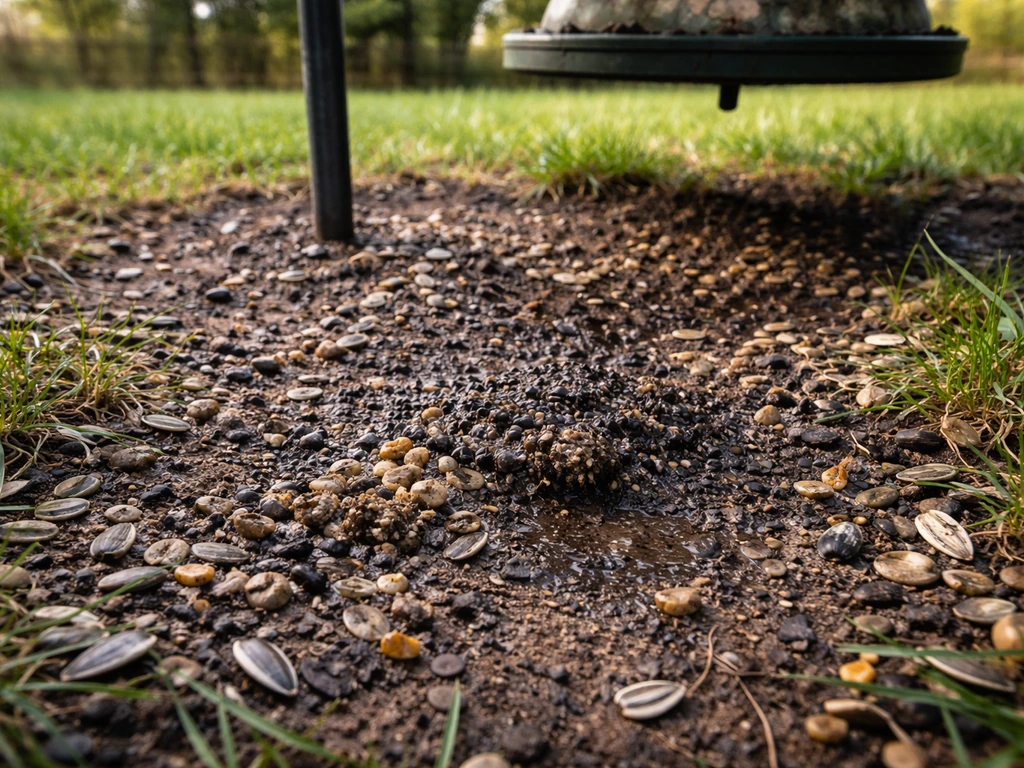
The first risk is disease. Mass.gov, which has studied gull behavior at food sites, points out that feeding gulls (or any scenario that draws gulls into close contact with people and other birds) increases the chance of pathogen spread. The USDA APHIS discourages feeding gulls specifically because of public health concerns around wildlife-human contact at food sites. More birds at your feeder, especially large scavenging ones, means more droppings, more contamination risk, and a greater chance of disease spreading to your target songbirds.
The second risk is mold and spoiled seed. Gulls are messy eaters. They scatter seed, knock feeders around, and leave droppings directly in and around your feeding area. Wet seed mixed with droppings is exactly the right environment for mold to grow, and Audubon warns that moldy food can transmit aspergillosis, a serious fungal respiratory disease in birds. If you are seeing seed accumulate and get wet under your feeder, that is a problem whether gulls are involved or not.
The third risk is attracting other unwanted wildlife. King County Public Health notes that bird feeders and accumulated seed attract rats, and the same logic applies to other scavengers. Gulls themselves can also stress smaller birds away from your feeder entirely. Geese can similarly push smaller birds out of a feeding area, and the same dynamic happens with gulls. Once a large bird moves in, your sparrows and finches tend to disappear.
Finally, if you have pets spending time in the yard, a congregation of bold scavenging gulls can create stress and conflict. Gulls become surprisingly aggressive around food, and a group of ring-billed gulls at a feeder is not a relaxed situation for a dog or cat trying to use the same space.
How to keep gulls from taking over your feeder
Raise the feeder up and use the right design
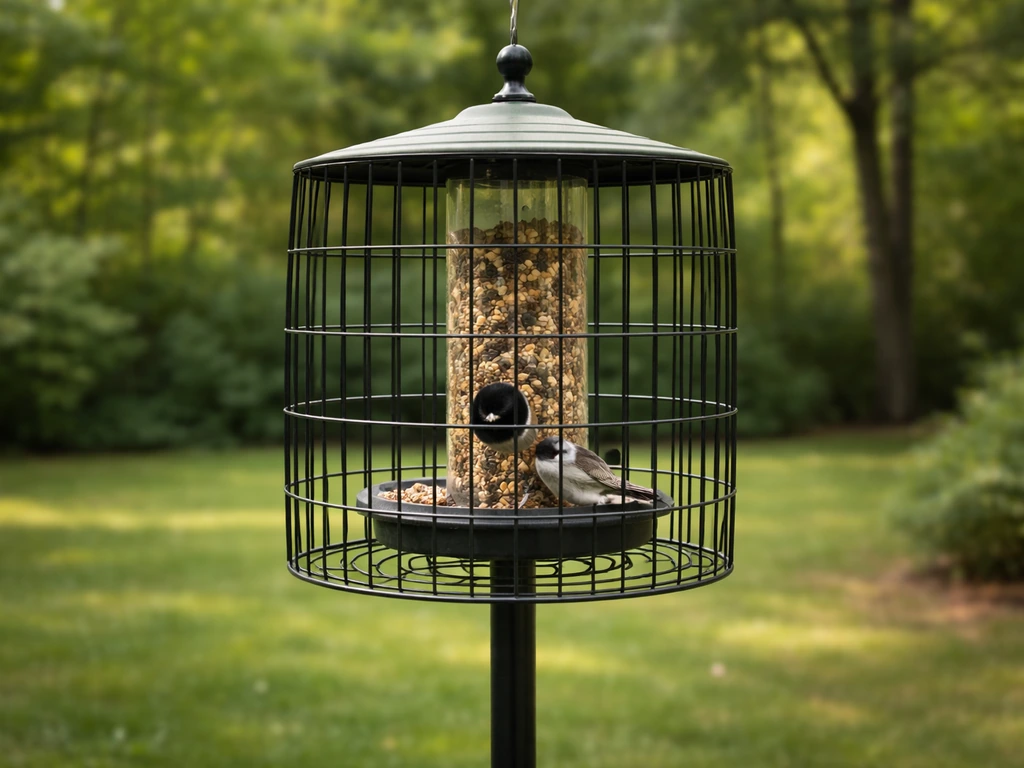
Elevation is one of your best tools. Guidance from the North Central Texas Council of Governments specifically points to placing feeders at least 5 feet off the ground as a baseline for keeping large birds and wildlife from accessing them easily. Gulls are not going to perch comfortably on a narrow tube feeder hanging high on a pole. They need space to land, and they need food at a level where they can easily grab it. A hanging tube feeder or a covered feeder with small perch ports is far less accessible to a gull than a flat platform tray at waist height.
Covered or caged feeders take this further. A wire cage around a feeder lets small birds in and physically blocks larger birds. These are widely available and work well for the typical songbird mix. If you are currently using an open tray or platform feeder, switching to a caged or covered design is probably the single biggest change you can make right now.
Stop the ground pile before it starts
The Florida Fish and Wildlife Conservation Commission recommends using shelled seed and avoiding types like red milo that birds toss out of feeders, because unshelled seed accumulates on the ground and attracts wildlife. This is directly relevant to gulls. The less seed that ends up on the ground under your feeder, the less reason a gull has to stop there. Use a seed catcher tray attached to your feeder pole to collect what falls before it hits the ground, and sweep or rake the area under your feeder regularly.
King County Public Health recommends cleaning up waste and cleaning your feeder regularly to reduce scavenger attraction. This is practical, fast, and free advice: do not let a layer of hulls, droppings, and half-eaten seed build up beneath your feeder. That pile is the main reason gulls (and rats) show up.
Seed and feeder types that help reduce gull visits
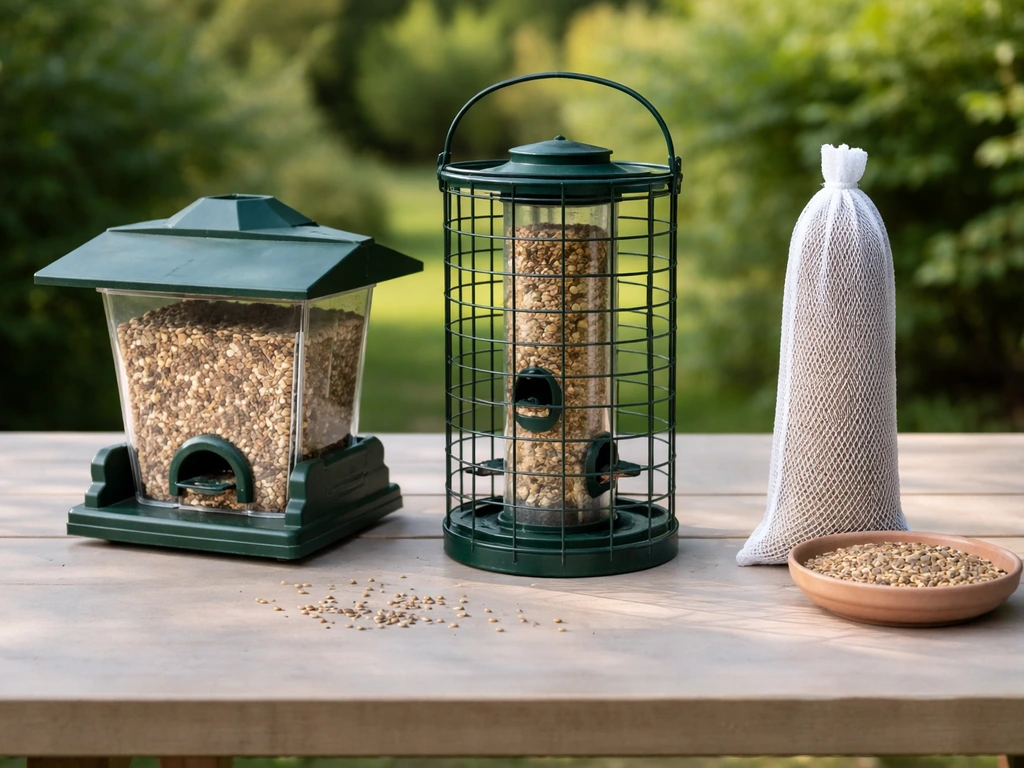
Not all seed is equally attractive to gulls, and not all feeders make things equally easy for them. Here is a quick comparison of common feeder setups and how they stack up for keeping gulls out while still feeding smaller birds.
| Feeder / Seed Type | Gull Access Risk | Good for Songbirds | Notes |
|---|---|---|---|
| Open platform / tray feeder with mixed seed | High | Yes | Easy landing zone; seed spills and accumulates |
| Ground feeding / scattered seed | Very High | Some species | Directly invites gulls and other scavengers |
| Hanging tube feeder with small ports | Low | Yes | Gulls cannot perch; good for finches and chickadees |
| Caged / covered feeder | Very Low | Yes | Best option for excluding large birds physically |
| Shelled sunflower or nyjer seed | Low | Yes | Less waste on ground; less appeal to large scavengers |
| Mixed seed with milo or filler grains | Medium-High | Limited | Filler gets tossed to ground; avoid near gull zones |
| Suet cage (mounted high) | Low | Yes | Woodpeckers and small clinging birds; gulls rarely exploit |
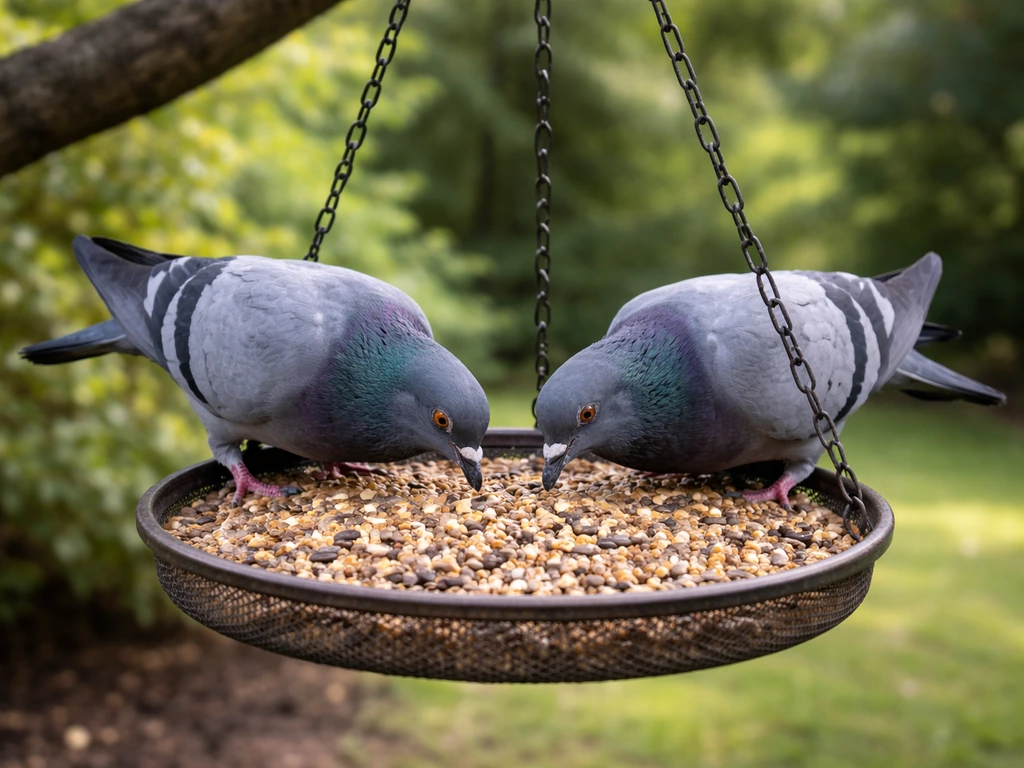
The recommendation here is straightforward: switch to shelled sunflower, nyjer, or safflower in a caged hanging feeder, and drop the open platform and mixed-filler seed if you are dealing with gull pressure. You will lose some ground-feeding species temporarily, but you will also stop the seed pile that keeps gulls coming back. Pigeons often create similar problems to gulls at open feeders, and understanding how pigeons interact with bird seed can help you design a setup that discourages both.
UC ANR's bird-feeding guidance puts it simply: use feeders, do not spread seed on the ground. That one rule eliminates a large part of the gull problem before it starts.
Your day-to-day routine: cleaning, timing, and monitoring
How often to clean
Project FeederWatch, run by Cornell Lab and Birds Canada, advises cleaning seed feeders about once every two weeks under normal conditions, and more often during warm or damp weather. The National Wildlife Federation suggests taking feeders down about once a week and soaking them in a dilute bleach solution to prevent disease buildup. At minimum, rinse your feeder with water and let it dry completely before refilling, as the U.S. Fish and Wildlife Service recommends. Wet seed in a dirty feeder is where mold starts, and mold is the hazard that turns a well-meaning feeder into a health risk for the birds you are trying to help.
Under your feeder, rake or sweep up hulls and spilled seed at least once a week. The USDA Forest Service flags that accumulated seed and spillage around feeders draws wildlife you did not intend to attract, and the area under a feeder is where that accumulation happens fastest.
Timing your feeding to reduce gull exposure
Gulls are most active during daylight hours and tend to be bolder in the morning when they are actively foraging. If you are in a high-gull area, consider filling feeders in the morning and bringing them in (or closing off access) by mid-afternoon. This is especially practical if you are using a hanging feeder you can take indoors or a feeder with a close-off mechanism. It is more effort, but it significantly reduces the window during which gulls can find and monopolize your feeder.
What to do if you see sick birds or disease signs
If you notice sick or dead birds near your feeder, take the feeder down immediately. BC SPCA recommends removing feeders right away and keeping them down for at least one to two weeks before putting them back up clean and filled with fresh seed. Garden Wildlife Health guidance suggests waiting until you have seen no signs of illness for two to four weeks before gradually resuming feeding. Gulls clustering at a feeder increase the chance that a sick bird will contaminate the feeding area, so this is a situation where your regular monitoring actually matters.
Signs to watch for include cloudy or black-mold contamination in any water or liquid feeders, seed that smells off or looks clumped and damp, visible droppings buildup inside the feeder, and any birds appearing lethargic or uncoordinated near the feeder. Project FeederWatch notes that cloudy water or black mold are clear signals to discard the contents and clean immediately.
Quick daily checklist
- Check for seed accumulation on the ground under your feeder and sweep it up.
- Look at the seed in your feeder for any clumping, discoloration, or damp patches.
- Check for droppings inside or on the lip of the feeder and wipe them off.
- Confirm feeder is hanging at least 5 feet off the ground and is not accessible from a nearby ledge or branch at gull height.
- Look for any signs of sick birds near the feeder area.
- Remove any spilled seed from nearby hard surfaces like decks or steps.
Keeping birds fed without the gull problem
The goal is not to stop feeding birds. It is to feed the birds you want to attract while removing the conditions that make your yard a target for gulls and other scavengers. A caged tube feeder at proper height, filled with shelled sunflower or nyjer, with a clean ground surface underneath, is a setup that works well for most songbirds and is genuinely unappealing to a gull. Turkeys are another large bird that can disrupt backyard feeding setups in some regions, and knowing how turkeys interact with bird seed follows the same practical logic: manage the seed, manage the access, and the problem largely manages itself.
Seagulls are not malicious. They are just very good at finding food. If your feeder looks like an easy meal, they will use it. Change the setup so it does not look like an easy meal for a large bird, keep the area clean, and stay consistent with your cleaning routine. That is the whole answer.
FAQ
If I use a high tube feeder, will gulls still eat bird seed?
They can, but it is harder for most gulls to access seed from a narrow, elevated tube. The bigger issue is what falls below the feeder, so you still need a seed catcher or frequent cleanup to prevent a ground spill pile from forming.
Will safflower, nyjer, or shelled sunflower stop gulls completely?
They reduce the appeal, but they do not guarantee zero visits. Gulls may still scavenge if there is other exposed food, significant spilled seed, or if they learn that your yard consistently provides an easy meal.
How quickly will gull visits drop after I change feeder placement or switch feeders?
Often within days, but gulls can take time to “unlearn” a reliable food spot. If you previously had a visible seed pile under the feeder, removal and cleanup need to happen immediately, and you may see intermittent checking for a week or two.
Do I need to stop feeding entirely during a gull surge?
Not necessarily. A practical compromise is to switch to a caged feeder that limits large-bird access and keep seed amounts small, then stop or close the feeder during peak gull foraging hours (commonly morning through midday in busy areas).
What’s the safest way to clean a feeder that gulls have been using?
Before refilling, remove all old seed and hulls, scrub surfaces, and allow complete drying to prevent mold. If you see heavy droppings or damp, clumped seed, empty the contents and clean more thoroughly before restarting.
Can gulls spread disease to my target birds through the feeder even if I never feed on the ground?
Yes. Disease risk can increase when large birds visit and leave droppings and contaminated debris around the feeding area. Even if seed stays off the ground, you still want to keep the area under the feeder clean and avoid letting waste build up.
Are seed cakes, suet, or fruit feeders more likely to attract gulls?
Often, yes. Large, open trays with easy access and sticky foods can be more tempting because they are easier for gulls to grab and because food remains visible longer. If you use them, choose enclosed designs or place them where large birds cannot land comfortably.
How do I prevent gulls from tearing up a feeder or scattering seed?
Use sturdier feeder hardware, avoid overly flat or wide trays, and consider a caged or covered feeder. Also use a seed catcher and remove any loose seed from the surrounding area, since spilled hulls are what gulls exploit most.
What should I do if gulls start showing up when I’m not feeding?
Check for other attractants, such as spilled seed, uncovered trash, pet food outdoors, or birdbaths with accessible spillover. Also look for any nearby ground-feeding or fallen seed from other households that might be pulling gulls into your yard.
Will bringing feeders in at certain times help, or does it just move the problem?
It helps if gulls rely on your feeder’s schedule. Bringing feeders in during peak gull hours removes the predictable food window and reduces time for them to learn the location, but ensure the feeder is cleaned before restocking after you bring it back out.
Is it okay to place feeding stations far from my patio or lawn instead of closer?
Yes. Increasing the distance and using fewer, more controlled feeders can help. The goal is to reduce the “instant landing zone” where a gull can park, grab seed, and then leave a messy residue that attracts more scavengers.
What if gulls are also making my birdbath dirty?
Birdbaths can become contamination points if they get splashed with droppings. Clean and refresh water more frequently, keep bath surfaces free of debris, and consider reducing or pausing the bath if it stays visibly contaminated.
Next Article
Do Pigeons Eat Bird Seed? Safe Feeding Tips and Risks
Yes, pigeons eat many seeds, but mold and mess make it risky. Learn safe bird seed storage, feeding, and placement.