The short answer: no, you should not leave all food types in your bird's cage all day. Whether you can leave food out depends almost entirely on what kind of food it is. Dry seed or pellets in a clean, dry dish can sit for several hours without much risk. Fresh fruit, vegetables, cooked foods, or anything moist? Those need to come out within 2 to 4 hours, sometimes sooner. Getting this right is one of the most practical things you can do to keep your bird healthy.
Should I Leave Food in My Bird Cage? Safe Timing Guide
Maya Henderson
22 Mar 2026
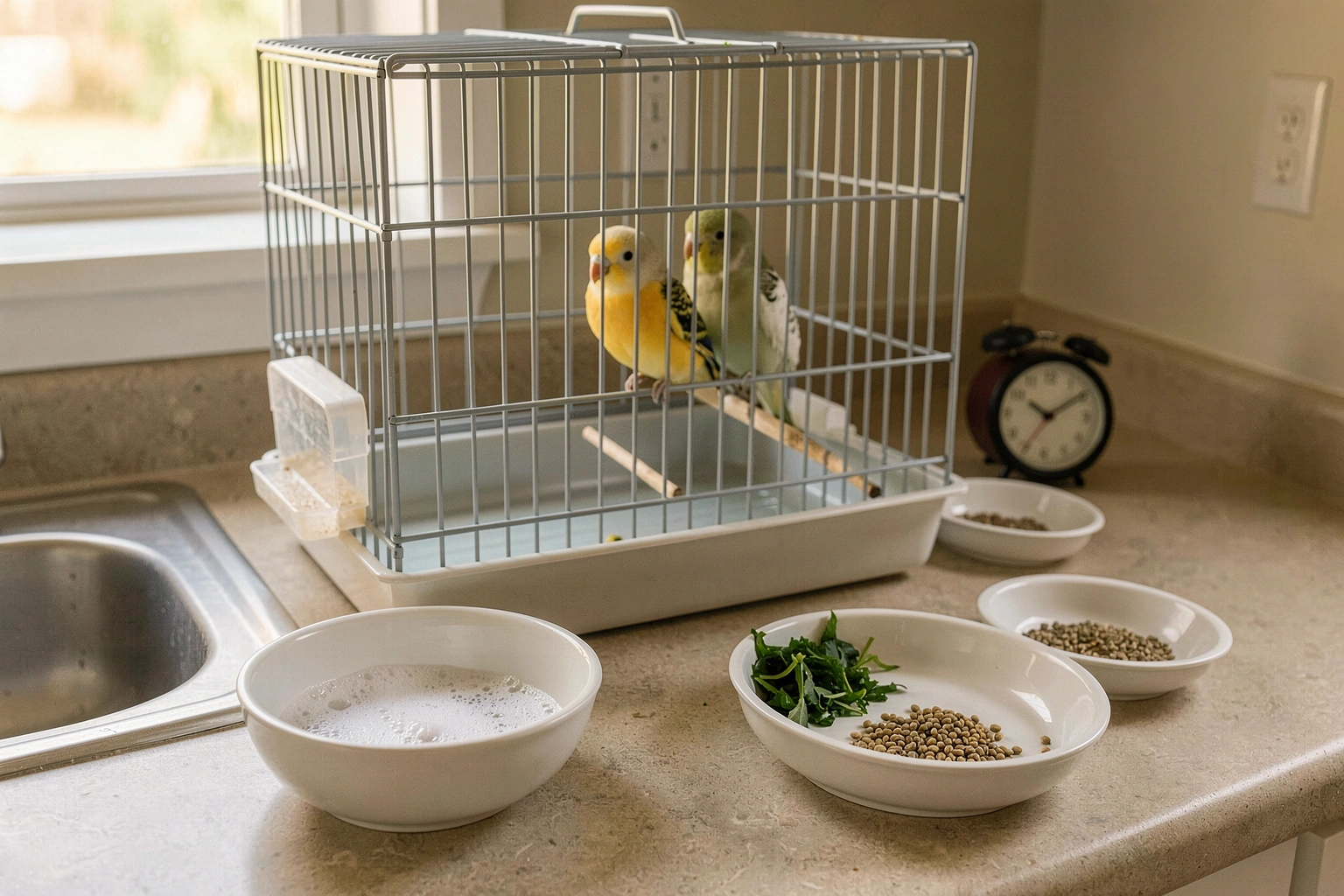
How long to leave food in a bird cage (and when to remove it)
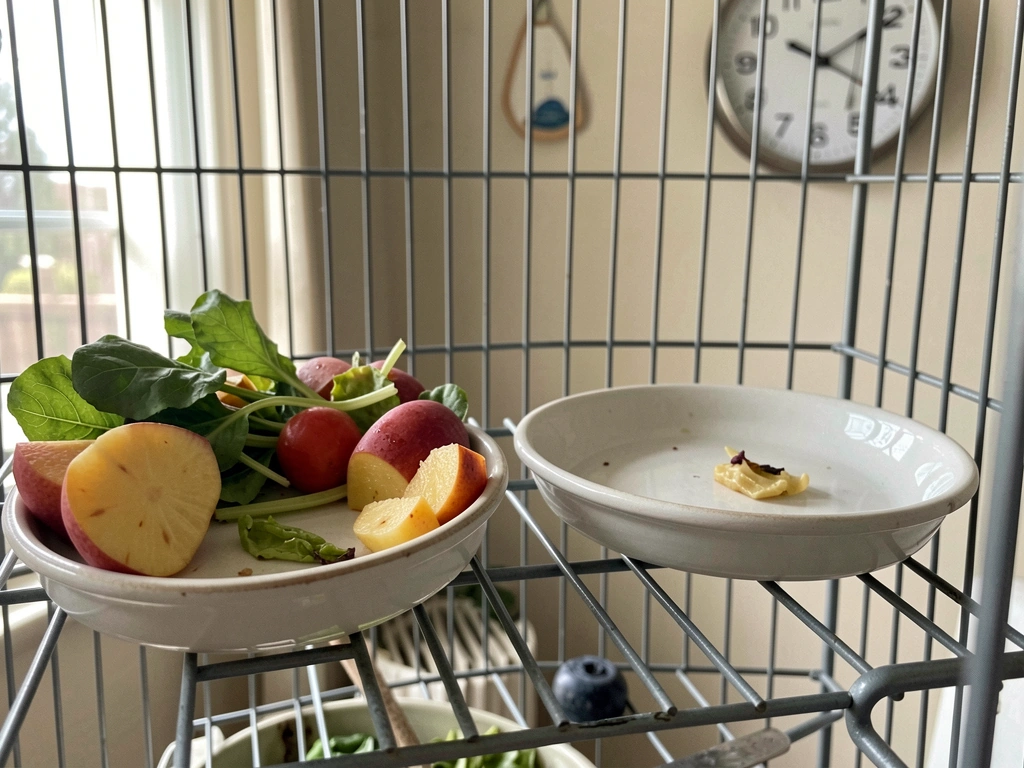
The time limit on food in a cage is not arbitrary. It is driven by how fast bacteria and mold can colonize food at room temperature, and how sensitive birds are to those contaminants. Here is the working framework most avian care professionals use:
| Food Type | Safe Time in Cage | Action After Time Limit |
|---|---|---|
| Fresh fruit and vegetables | 2 to 4 hours (some sources say up to 8 hours max) | Remove, discard, clean dish |
| Moistened or wet pellets | 2 to 3 hours | Remove immediately when wet; never leave overnight |
| Dry pellets (unmoistened) | Up to 8 hours (in a clean, dry cage) | Remove at end of day; replace fresh daily |
| Dry seed mix | Up to 8 hours; monitor for moisture | Remove uneaten portions daily; clean dish |
| Cooked foods (grains, legumes, egg) | 2 hours maximum | Remove promptly; treat like perishable human food |
A couple of research-backed numbers worth knowing: the Hagen Avicultural Research Institute (HARI) specifically flags 2 to 3 hours as the window for moist foods before bacterial growth becomes a spoilage concern. Bay Area Bird and Exotics Hospital extends that window to 4 to 8 hours for fruits and vegetables in general, but Parrot Island recommends the tighter 2 to 3 hour limit for anything moist. When in doubt, use the shorter window. On the stricter end, some structured feeding protocols recommend leaving food out for only 15 to 30 minutes at a time, then removing it to encourage eating on a predictable schedule.
Safe feeding vs spoiled food risks
Leaving food in a cage too long is not just wasteful. It creates real health risks. The main threats are bacterial growth, mold, and the mycotoxins that mold produces. Mycotoxins can cause clinical signs within 2 to 3 hours of ingestion and the effects can last for days. One of the most serious mold-related illnesses in birds is aspergillosis, a respiratory disease caused by inhaling spores from moldy organic material, including damp or stale seed. Predisposing factors include blank" rel="noopener noreferrer">exposure to moldy bedding or feed. Moldy bird seed is not safe, because mold can produce mycotoxins and can also lead to respiratory illness like aspergillosis moldy organic material, including damp or stale seed. This is not a rare edge case. It is a documented risk when food hygiene is neglected.
Beyond mold, old food in the cage attracts pests. Uneaten food debris, especially seed hulls and fresh food scraps, draws rodents and insects, which introduce their own health hazards. Leaving food out also creates a feedback problem: if your bird eats from a contaminated dish without showing immediate signs, the damage can still accumulate over days and weeks.
The safest mindset is to treat your bird's food the way you would treat your own. Seed can be safe for humans to eat, but it is not always safe for humans to consume as bird seed because it may include additives or spoilage hazards meant for birds is bird seed safe for humans. You would not leave a bowl of cut fruit on your counter for eight hours and then eat it. Your bird should not have to either.
A simple daily routine for portioning, refilling, and cleaning up
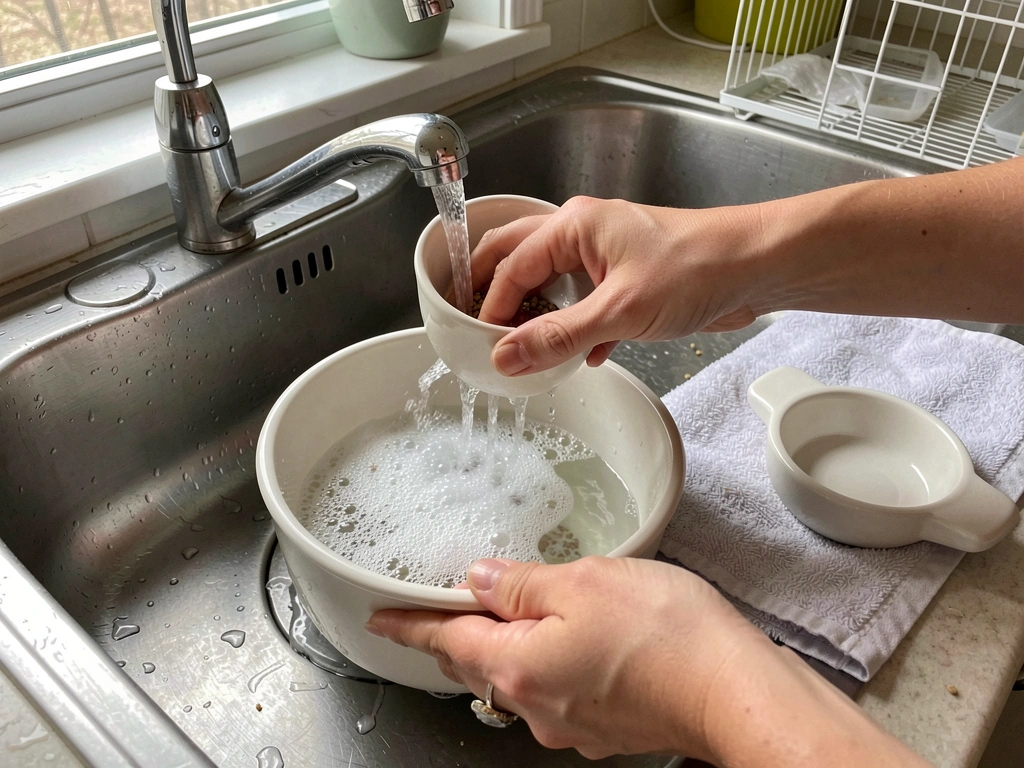
A structured routine is the most effective way to prevent food-related illness. Merck Veterinary Manual explains that prevention focuses on using feed and ingredients free of mycotoxins and on management practices that prevent mold growth and mycotoxin formation during feed transport and storage. This does not have to be complicated. Most bird owners can manage everything in under ten minutes per day.
- Morning (within 30 minutes of your bird waking): Remove any overnight water and food dishes. Wash them with hot water and dish soap. Dry thoroughly before refilling.
- Portion fresh food: offer a small amount of whatever fresh produce or cooked food is on the menu. Only put out what your bird can reasonably eat in 2 to 3 hours.
- After 2 to 3 hours: remove any uneaten fresh or moist food. This is non-negotiable regardless of whether the food looks fine.
- Midday check: refresh water. Check the dry food dish for moisture, debris, or contamination. Remove seed hulls from the top of the dish so your bird is not picking through empties.
- Evening meal: Bay Area Bird and Exotics Hospital recommends offering food twice daily, morning and evening, with each session lasting roughly one hour. Offer fresh or dry food, then remove it after the meal window.
- Before bed: remove all remaining food. Clean dishes again if fresh or moist food was served. Leave only fresh water overnight unless your avian vet advises otherwise.
One useful trick from HARI: if you are trying to get your bird to accept a new food, remove the old food about one hour before you plan to offer the new item. A bird with a slightly piqued appetite is more likely to try something unfamiliar. This also reinforces the habit of scheduled feeding rather than all-day grazing.
What changes by food type
Pellets
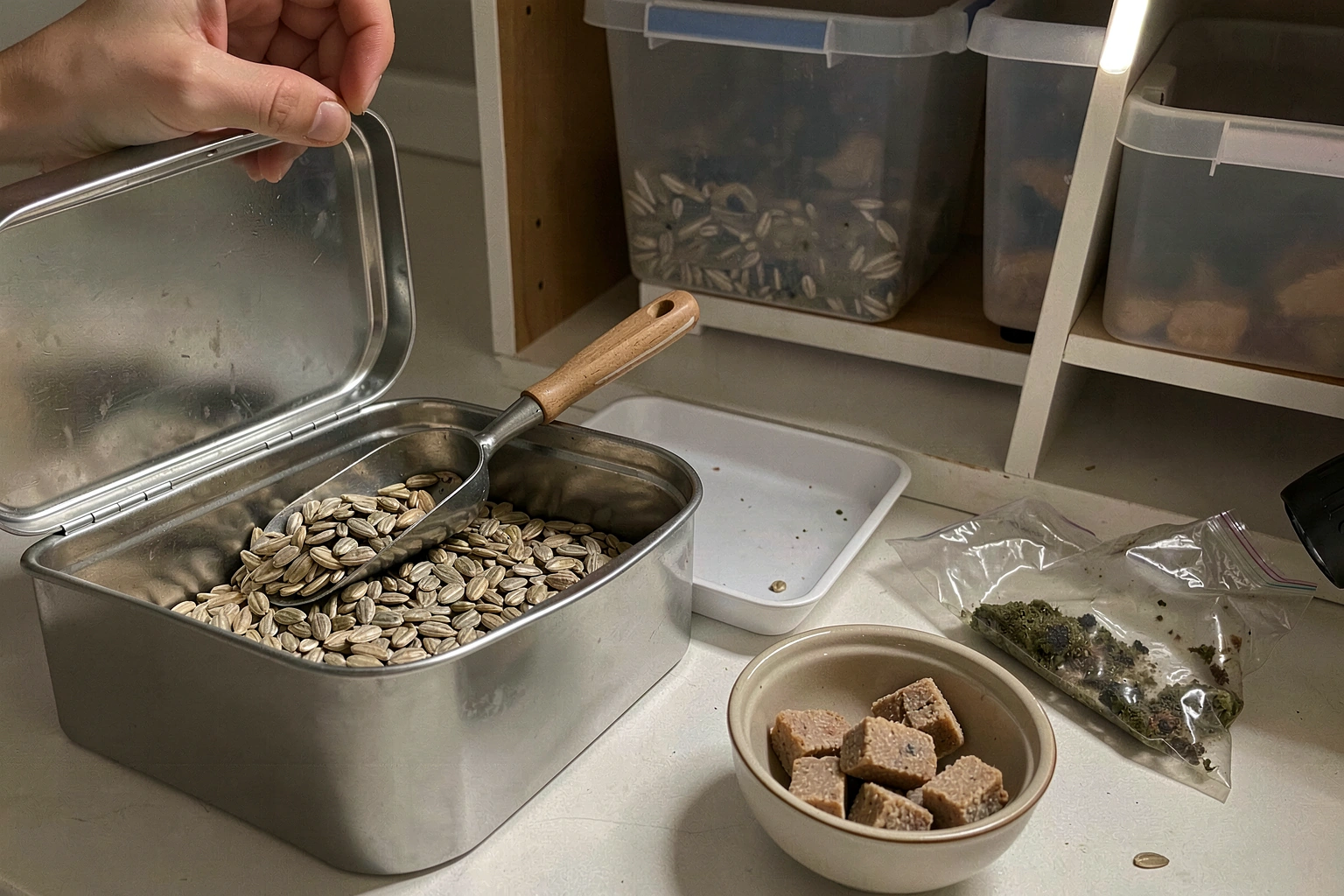
Dry pellets are the most forgiving food in terms of time, but they have one critical vulnerability: moisture. The moment a pellet gets wet, from water dripping, a bird dunking it, or humid cage conditions, the clock starts. Moistened pellets should come out after 2 to 3 hours at the absolute latest. Zeigler's feeding guidance puts it plainly: always remove any diet that has become wet. Dry pellets in a clean, dry dish can reasonably stay for up to 8 hours, but replace them fresh each day and never reuse pellets that sat overnight.
Seed mixes
Seed is more resistant to spoilage than fresh food, but it is not immune. is hot bird seed bad for birds. Since seed can go bad as well, it helps to know what affects spoilage in storage and how long it stays safe can bird seed go bad. The main risks are moisture (which triggers mold) and the accumulation of empty hulls that can hide uneaten seed underneath. Remove uneaten seed at the end of each day, wash the dish, and start fresh the next morning. In humid conditions, or if you notice any clumping, remove it sooner. If you are curious about whether moldy bird seed is bad for birds over time in storage, that is a related topic worth looking into separately.
Fresh produce
Fruits and vegetables need the most attention. Remove them after 2 to 4 hours on the conservative end, and no longer than 8 hours even under the most relaxed guidelines. In warm weather or a warm room, cut that window in half. Fresh produce is also the most likely food type to develop mold quickly once it starts to break down, so do not give it the benefit of the doubt if it has been sitting for a while.
Cooked foods
Cooked grains, legumes, eggs, and similar foods behave like perishable human food because they essentially are. Two hours is the outer limit. After that, bacterial growth is a genuine concern. Serve small portions, watch your bird eat, and clear the dish promptly. Never reheat and re-serve cooked food that has been sitting in the cage.
Signs your bird is eating less or not interested in food
If you notice your bird is leaving more food than usual, it is worth thinking through a few possible causes before jumping to a health concern. Reduced eating is often about the food itself, not the bird.
- Freshness: if food has been sitting too long, birds will often ignore it. Try replacing it with a fresh portion and see if interest picks up.
- Variety: birds can get bored with the same food presented the same way. Try chopping produce differently, mixing in a small amount of something new, or rotating what you offer.
- Portion size: if you are offering too much, it can look like a bird is not eating when it actually just does not need more. Try reducing portions to better match what gets eaten.
- Placement: some birds are reluctant to eat from a dish that is too close to a perch, too far from a perch, or positioned at an uncomfortable height. Experiment with dish placement.
- Timing: birds often have preferred eating times, typically morning and evening. Offering food outside those windows may result in less interest.
- Stress or environment changes: a new cage position, a change in household routine, or a new object in the room can suppress appetite temporarily.
If you have ruled out all of the above and your bird is consistently eating less over several days, that warrants more attention. Reduced appetite combined with other behavioral or physical changes is a signal to look more carefully.
Health and safety red flags: mold, bacteria, and signs of illness
Some situations call for immediate action rather than troubleshooting. These are the red flags to know:
- Visible mold on food or in the dish: discard all food, scrub the dish thoroughly, and check whether your storage conditions are contributing (humidity, unsealed containers, damp seed).
- Foul or sour smell from food or water: remove and replace everything. A bad smell means bacterial or fungal activity is already underway.
- Wet or clumped seed: do not assume it will dry out. Remove it and clean the dish.
- Food contaminated by droppings: remove immediately. Droppings introduce bacteria directly to the food supply.
- Pests: if you see insects or evidence of rodents near the cage or in food storage, that is a hygiene problem that needs to be addressed at the source, not just cleaned up once.
- Bird appears fluffed up or hunched: this is a classic sign that something is wrong. A bird sitting with feathers puffed out and posture hunched is telling you it does not feel well.
- Open-mouth breathing or labored breathing: this is an urgent symptom that needs same-day veterinary attention.
- Visible lethargy, loss of balance, or changes in droppings alongside reduced eating: these together suggest illness rather than a preference issue.
Mold is worth treating seriously. The aspergillosis risk from moldy grain and damp organic material is documented in bird health resources, and mycotoxin exposure can cause rapid and lasting harm. If you find mold in your bird's cage or food supply, that is not something to watch and wait on.
When to call a vet or set up a structured feeding schedule
Contact an avian vet promptly if your bird shows any of the physical symptoms listed above, particularly fluffed posture, breathing changes, or lethargy alongside reduced eating. These are not wait-and-see situations. Birds are prey animals and they mask illness well, so by the time symptoms are obvious, the problem has often been developing for a while.
A structured feeding schedule, meaning set meal times rather than constant food availability, is worth considering in a few specific situations. If your bird is overweight and grazing on seed all day, a timed feeding routine can help. If you are transitioning your bird from seed to pellets, a schedule makes the process more predictable and effective. If you are dealing with repeated food spoilage because your bird eats slowly or unpredictably, portioned meal times reduce waste and contamination risk. Your avian vet can help you build a schedule that fits your bird's species, size, and health status. Some species do better with more frequent small meals; others adapt well to two structured sessions per day.
If you do not already have an avian vet, finding one before you need one urgently is a genuinely good idea. Not all veterinary practices have avian expertise, and in an emergency you do not want to be searching while your bird is in distress.
FAQ
Is it ever okay to leave dry seed in the cage overnight if the dish stays clean and covered?
It’s safer not to leave it overnight, even if it looks dry. Overnight time increases the chance of moisture from humidity, condensation, or splashed water, and uneaten seed hulls can trap stale seed. A better approach is to remove seed daily, wash the dish, and refill fresh each morning.
What should I do if my bird’s water drips into the food dish and the pellets or seed get slightly wet?
Remove the affected food immediately. Even “barely damp” pellets should be treated as moistened food, because the spoilage timeline starts as soon as moisture hits the pellets. Refill with dry food and check for the drip source so it does not keep re-wetting the dish.
How do I decide whether my room temperature is too warm to use the usual 2 to 4 hour limits?
Use shorter windows when your home feels warm or muggy, because bacteria and mold grow faster at higher temperatures. As a practical rule, reduce moist-food timing by about half in warm rooms, and be extra strict if you notice faster food browning, mushiness, or any smell from the dish.
If I only leave food out for a short time, but my bird eats slowly and leaves half the dish, is that still safe?
Not necessarily. The clock is not about how long you were willing to wait, it’s about when the food becomes contaminated in the dish. If your bird is nibbling slowly and the same food sits, remove it at the end of the scheduled window and discard the leftovers, rather than “waiting longer” to finish the dish.
Can I “salvage” food by scooping off the parts that look moldy?
No. Mold can spread microscopic spores beyond what you can see, and mycotoxins may be present even if only a small section appears affected. Discard the entire dish and wash the bowl thoroughly before the next meal.
Should I clean the food dish differently for seed versus fresh produce?
Yes. For any dish that touched moist foods, scrub and rinse immediately after removing leftovers, then dry it well before reuse. For seed dishes, empty and remove hulls daily and wash the dish, since trapped residue can harbor mold if humidity is high.
My bird has been ignoring a new food and it sat for most of the day. Does that mean it was just “rejected” and safe to keep longer?
When a food type is meant to be temporary, refusal does not make it safer. Treat ignored food the same as eaten food in terms of timing, especially for fruit, vegetables, cooked foods, and any moist items. Remove at the recommended window and try again with a fresh portion later.
What are common signs that the issue is spoilage rather than my bird simply being picky?
Look for changes in the food, not just your bird. If you see clumping, watery mush, sour or musty smells, discoloration, or visible fuzz, the dish is likely contaminated. Also note if your bird repeatedly avoids food specifically from that same dish.
Can refrigerated food be offered in the cage later the same day to extend the safe time window?
Do not rely on refrigeration to “reset” the clock once it has been served. Once food reaches room temperature and sits in the cage, bacteria growth resumes. If you use cold food, serve small portions and remove leftovers within the same timing rules for moist foods.
Is there a risk if I use the same dish for different foods at different times?
Yes, residue and cross-contamination can happen. Wash and dry the dish between different food types, especially if you move from fresh produce or cooked items to dry pellets or seed. This prevents carryover spoilage and reduces the chance of mold growth in the next meal.
If I notice reduced appetite, how soon should I stop troubleshooting and call an avian vet?
If reduced eating persists across multiple days or is accompanied by fluffed posture, breathing changes, lethargy, drooping, or abnormal droppings, contact an avian vet promptly. Birds mask illness, so combine appetite changes with behavior or physical symptoms when deciding urgency.
How can I build a timed feeding schedule for a grazer without risking hunger?
Start with smaller portions at set times, then adjust frequency based on how your bird responds. Many birds do well with two structured sessions per day, but some benefit from more frequent smaller meals. If weight is an issue or you are changing diets, ask your avian vet to tailor portions for your species and health needs.