Yes, moldy bird seed is genuinely bad for birds. This isn't just cautious advice, there's a real fungal disease called aspergillosis that birds can develop after inhaling mold spores from contaminated seed, and it can be fatal. If you're looking at seed in your feeder or storage bin right now and it's got visible mold, a musty smell, or clumped wet patches, the right move is to stop feeding from it immediately and deal with it today.
Is Moldy Bird Seed Bad for Birds? What to Do Now
Maya Henderson
22 Mar 2026
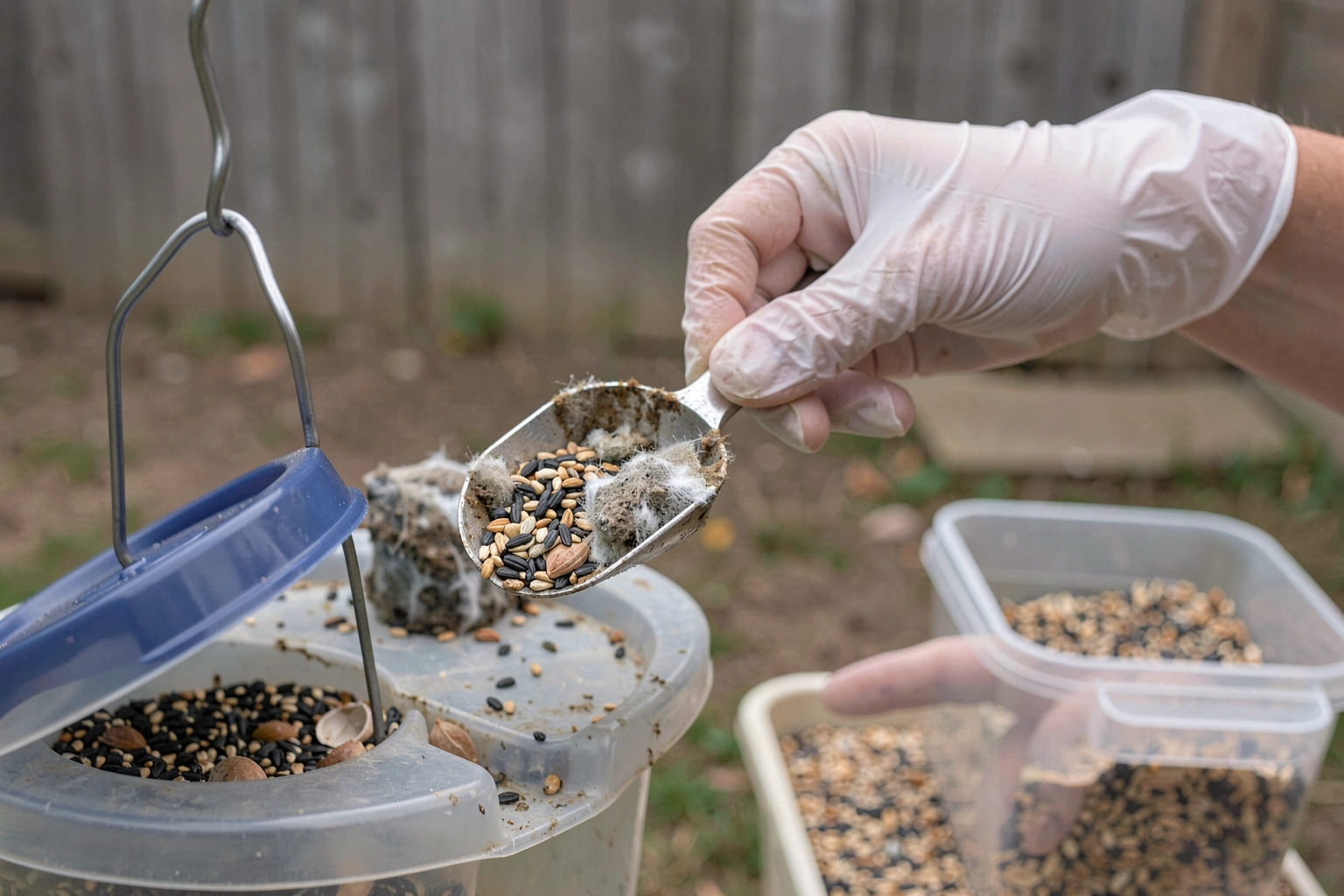
Does moldy bird seed actually hurt birds?
It can, and the mechanism is specific. The main risk is a fungal infection called aspergillosis, caused by Aspergillus mold species. When birds forage in or around moldy seed, they inhale microscopic spores. Those spores can lodge in a bird's lungs or air sacs, where they germinate and grow fungal threads (hyphae) directly into the respiratory tissue. Birds have a uniquely efficient respiratory system, which unfortunately makes them especially vulnerable to airborne particles, including mold spores.
What makes this particularly serious is that aspergillosis is very difficult to treat once it takes hold. The Pennsylvania Game Commission and Cornell's Wildlife Health Lab both emphasize prevention over treatment for exactly this reason. Because treatment outcomes are poor, the guidance from wildlife health organizations is unanimous: preventing access to moldy feed is the most important thing you can do.
Beyond aspergillosis, moldy seed can also contain mycotoxins, particularly aflatoxins produced by Aspergillus flavus when the fungus gets access to the sugars in grain. A study examining wild bird seed purchased in Texas found aflatoxin contamination was a real concern for songbirds. Aflatoxins and other mycotoxins like ochratoxin can cause digestive damage, immune suppression, and other systemic problems in birds even without a full-blown respiratory infection.
Will birds eat moldy seed on their own?
Some will, some won't. Birds don't have the same instinctive avoidance of mold that we might expect. Many will pick through a feeder tray that has moldy seed mixed in with fresh seed, especially if food sources are scarce. Ground-feeding birds like doves, sparrows, and juncos that forage through seed hulls and droppings on the ground below feeders are at particular risk. The risk also goes up when birds are crowded together at feeders, since they disturb and aerosolize more spores.
Project FeederWatch specifically notes that leftover seed bits and hulls that become moldy, combined with accumulated droppings on feeder trays, are a documented source of illness at backyard feeders. So even if the main seed in the hopper looks fine, the tray or platform below can quietly become a hazard.
The real risks laid out clearly
Respiratory infection (aspergillosis)
This is the biggest direct threat. Spores from Aspergillus mold species are the infectious units. Once inhaled, they bypass the bird's defenses and establish themselves in the respiratory tract. Because treatment is difficult and outcomes are often poor, wildlife health organizations treat prevention as the only reliable strategy.
Mycotoxin poisoning
Visible mold on seed is a red flag for possible mycotoxin contamination. Oklahoma State University Extension advises avoiding any grain with visible mold growth for exactly this reason. Aflatoxins and nephrotoxic mycotoxins like ochratoxin A can cause oral ulcers, digestive damage, immune problems, and in poultry studies, impacts on organ function. The WHO notes that damaged or improperly stored grain is especially prone to mold invasion and mycotoxin buildup.
Gut issues from spoiled seed
Even setting aside specific toxins, seed that's gone damp and moldy has degraded nutritionally and can cause digestive upset in birds. The seed you're offering should be a source of clean energy, not a source of stress on a bird's system.
A note on human exposure
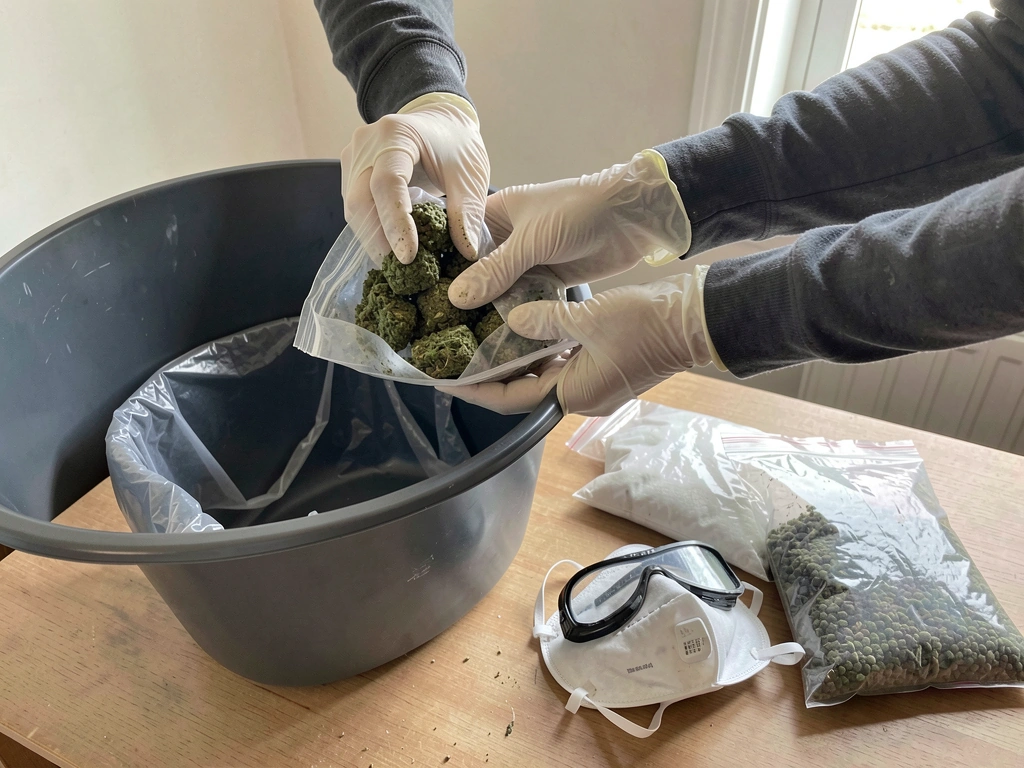
The moldy seed is a potential irritant for you too. The EPA notes mold can cause eye, nose, throat, and skin irritation even in people who aren't allergic. The CDC links dampness and mold exposure to respiratory symptoms, worsening asthma, and in people with weakened immune systems, potentially more serious fungal infections. blank" rel="noopener noreferrer">Handle moldy seed with an N-95 mask (NIOSH-approved), gloves, goggles, and long sleeves. The good news: according to the New York State DEC, birds infected with aspergillosis do not pose a significant threat to human health.
What to do right now if you have moldy seed
- Stop feeding immediately. Take the feeder down or stop access to any seed you suspect is moldy. Don't just pick out the obviously bad bits — if mold is present, spores are throughout.
- Put on protective gear before handling. Wear an N-95 mask, disposable gloves, goggles, and long sleeves. Do not handle moldy seed in an enclosed space with poor ventilation.
- Discard the moldy seed. Bag it up and throw it away. There's no reliable way to salvage seed that shows visible mold or has a musty smell — the spores are microscopic and you cannot wash them out. Don't compost moldy seed either, as this can spread spores.
- Clean the feeder thoroughly. Disassemble the feeder completely and scrub all surfaces with warm soapy water to remove debris, hulls, and droppings. Then soak it in a bleach solution: either a 1:10 bleach-to-water ratio (10% bleach) or a 1:32 solution for a gentler option, soaking for at least 10 minutes. Rinse extremely thoroughly with fresh water and allow to dry completely before refilling.
- Do not mix cleaning products. The CDC specifically warns against mixing bleach and ammonia, which produces toxic vapors.
- Clean the area around the feeder. If you have a ground feeder or seed has been falling on the ground, rake up and dispose of the debris. Spores in that material can re-infect clean feeders.
- Let everything dry fully before refilling. A feeder refilled while still damp will start the mold cycle over again.
Discard vs. salvage: a quick rule
If you can see mold (white, grey, green, or black patches), smell mustiness, or the seed is clumped from moisture, discard it. There's no useful middle ground here. Fresh seed is inexpensive compared to the risk. If a small portion of a large, sealed, dry storage bag looks fine and only the surface of the opening was exposed briefly to humidity, you can use your judgment, but when in doubt, throw it out.
How to stop mold from coming back
Store seed correctly
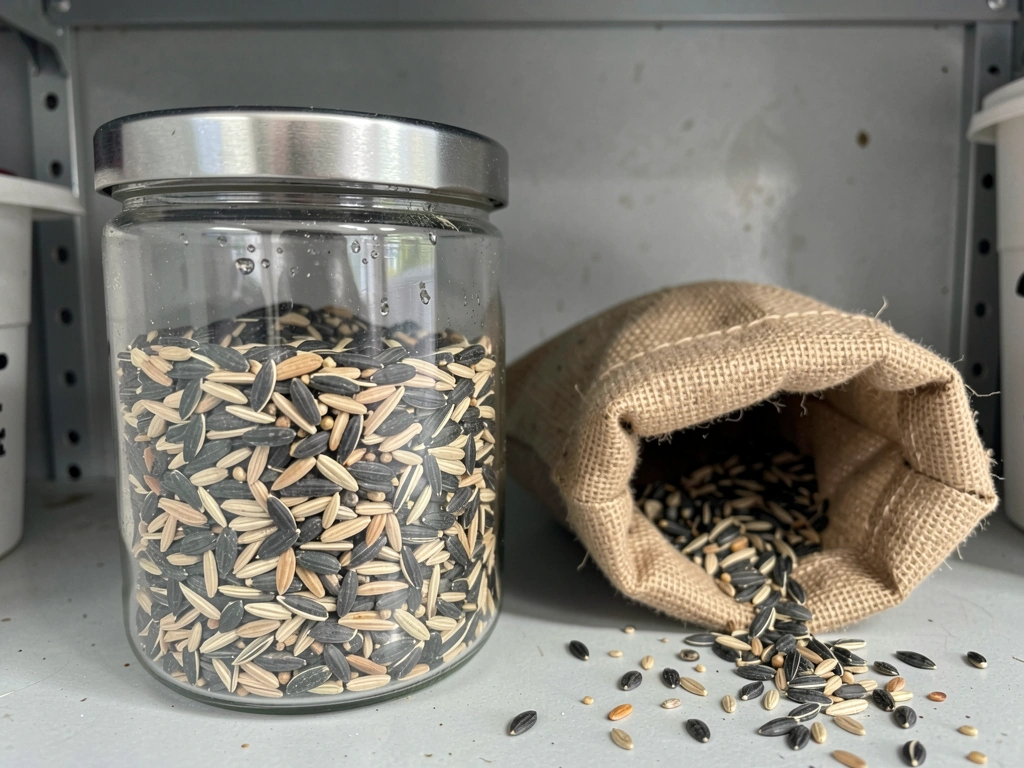
Moisture is the enemy. Seed absorbs moisture from the air, and once it does, mold follows quickly. Store bird seed in a sealed, airtight container (a metal or hard plastic bin with a tight lid works best) in a cool, dry location. A garage or shed is fine as long as it doesn't get damp. Never store seed in burlap, open bags, or cardboard, which let moisture in freely. Buy seed in quantities you'll use within a few weeks rather than stocking up for months.
Choose the right feeder setup
Feeder design matters. Tube feeders with small ports dispense seed as birds eat, reducing how much sits exposed to weather. Platform or tray feeders are much more prone to moisture buildup unless they have drainage holes and you're cleaning them frequently. If you use a tray feeder, look for one with a mesh bottom so rain drains through rather than pooling. Avoid placing feeders directly under trees or roof overhangs where dripping water or leaf debris adds moisture to the seed.
Set a cleaning schedule and stick to it
Project FeederWatch recommends cleaning seed feeders every two weeks, and more often during warm or wet conditions. The Iowa DNR recommends a monthly cleaning with a 10% bleach solution as a minimum standard. One Reddit discussion also describes routine feeder cleaning guidance, including using a 10% bleach solution after washing, and notes that hummingbird feeders may need more frequent cleaning The Iowa DNR recommends a monthly cleaning with a 10% bleach solution as a minimum standard.. In humid climates or during rainy stretches, I'd lean toward every 10 days. The key step most people skip: making sure the feeder is completely dry before refilling. A wet feeder filled with seed is mold in progress.
Control how much seed is out at once
Only put out as much seed as birds will eat in a day or two, especially in warm or rainy weather. Overfilling a feeder means seed sits longer, absorbs moisture, and molds before it gets eaten. During wet or humid stretches, it's better to refill more often with smaller amounts than to load up a feeder and let it sit.
Safer seed choices and how to resume feeding
Once your feeder is clean and fully dry, you're ready to start fresh. Here's what to prioritize when buying and using new seed. This is also why people ask, is hot bird seed bad for birds, because heat can hide early spoilage without fixing moisture damage moldy seed.
- Buy from reputable suppliers with good stock turnover. Seed that's been sitting in a warehouse or garden center for months is already at higher risk of mold before it reaches you.
- Check the seed before filling. Fresh seed should smell clean and slightly nutty, not musty. It should be dry and free-flowing, not clumped.
- Opt for seed types less prone to spoilage. Shelled peanuts and suet are higher risk in warm weather because fat goes rancid and mold loves protein-rich material. Black oil sunflower seeds in the shell hold up better.
- Consider no-waste seed blends. Hulled seeds and no-mess blends leave less debris buildup in trays, which reduces the mold-friendly environment from decaying hulls and droppings.
- Use multiple smaller feeders rather than one large one. This spreads birds out (reducing crowding, which increases spore dispersal risk) and makes it easier to clean each feeder fully.
It's also worth thinking about the broader picture of seed freshness and shelf life. Seed can also expire or go stale over time, so check freshness and storage conditions before refilling your feeder seed freshness. If mold keeps showing up in your feeders despite regular cleaning, the problem might start upstream in how long you're storing seed or where you're buying it. Seed freshness can go bad before it ever develops visible mold, so staying on top of storage and freshness is part of the same prevention effort.
Feeder cleaning methods compared
| Method | Dilution | Soak Time | Notes |
|---|---|---|---|
| 10% bleach solution | 1 part bleach to 9–10 parts water | 10 minutes | Widely recommended by Iowa DNR, MSU Extension, and Audubon. Rinse thoroughly. |
| 1:32 bleach solution | 1 part bleach to 32 parts water | 10 minutes | Gentler on feeder materials. Recommended by Madrone Audubon Society. Still requires full rinse. |
| Hydrogen peroxide | Standard 3% solution | 10 minutes | Recommended by Clemson HGIC as a bleach alternative. Safer for some plastics. |
| Warm soapy water only | Dish soap and warm water | Scrub thoroughly | Good for routine cleaning but not sufficient when mold is present. Use as a first step before disinfecting. |
When to call a vet or wildlife rehab
If you have pet birds (parrots, canaries, finches, chickens) that have had access to moldy seed, contact an avian vet promptly if you notice any of the following signs. Aspergillosis in birds can progress quickly, and early intervention matters even if treatment is difficult.
- Labored or open-mouth breathing, tail bobbing with each breath, or wheezing
- Sudden lethargy or unwillingness to move, perch, or eat
- Voice changes or loss of vocalization
- Nasal discharge or crusty nostrils
- Weight loss or fluffed feathers persisting over more than a day
- Visible mouth lesions or unusual plaques inside the beak
For wild birds, the situation is different. You can't catch and treat a wild bird at home, and you shouldn't try. If you notice multiple wild birds at your feeder appearing sick (lethargic, unable to fly, sitting on the ground), the right step is to take your feeder down immediately to stop the potential spread, and contact a licensed wildlife rehabilitator or your state's wildlife health agency. Do not handle sick wild birds without gloves and do not keep them at home.
If you keep cage birds and are wondering whether routine feeding practices might be creating ongoing risk, it's worth reviewing how you manage food freshness in the cage environment alongside these prevention steps. If you are asking, should i leave food in my bird cage, the key idea is to remove any leftover or damp seed quickly and keep the cage and food areas dry and clean. The principles are the same: fresh seed, dry conditions, and clean surfaces are the foundation of a safe feeding setup.
FAQ
Can I save a partially moldy bag of bird seed if only the top looks affected?
If any seed shows visible mold, has a musty smell, or is clumped from moisture, the safest approach is to discard the whole affected portion. Even if only the top layer looks bad, spores and moisture can spread into adjacent seed, and mycotoxins can develop without you seeing obvious growth throughout the bag.
If I already fed from a moldy feeder today, what should I do next?
Do not wait for symptoms to appear. For backyard birds, the immediate action is to remove the seed source today, because the main hazard is ongoing spore exposure (inhalation) rather than a one-time event.
What is the safest way to dispose of moldy seed and clean storage containers?
For a small amount, use a sealed trash bag, then wash the feeder and any surrounding surfaces. For the storage bin, empty it completely, wipe all seed dust, and let the container dry fully before refilling, since residues can keep moisture and spores around even after the visible mold is gone.
Can birds get sick from moldy feeder trays even when the seed looks mostly fine?
Yes. Platform and tray feeders often trap rainwater, seed hulls, and droppings where mold can start on the tray even if seed in the hopper looks fine. If you use a tray feeder, prioritize drainage (mesh bottom or drainage holes) and strict drying before refilling.
How can I tell if “dusty” seed is just seed residue or actual mold?
White, grey, green, or black patches, a musty odor, and damp clumps are red flags. If you see only a faint dusty film that you suspect is mold, treat it as suspicious and discard, because you cannot reliably distinguish mold dust from normal seed coating by sight alone.
Is it ever acceptable to use seed from a bag that briefly got damp near the opening?
If only the opening was briefly exposed and everything else stayed dry, some people judge that as low risk, but it depends on whether humidity actually soaked into the bulk seed and whether you notice any musty smell. When in doubt, discard that bag or keep it separate from regular feeding and check it closely for odor or clumping.
Why does mold keep coming back even though I clean my feeder regularly?
It can, especially if moisture got into the storage area or feeder components. If you keep finding mold despite good feeder hygiene, look upstream at how long seed sits after purchase, whether the bag is truly sealed, and whether the storage location gets damp during weather swings (garage/shed condensation is a common culprit).
Is moldy bird seed dangerous to humans or just birds?
Yes, but you should not treat it as a harmless irritation. Wear respiratory and skin protection when handling moldy seed (mask, gloves, and eye protection), avoid shaking moldy material, and keep children and people with asthma or weakened immune systems away while you clean.
Does crowding at feeders change the risk level for moldy seed?
Certain birds are more at risk due to how they forage, but crowded feeders increase risk for all species because birds disturb more spores and increase aerosolization. If you notice sickness, reducing crowding (fewer birds per feeder, more feeding stations spaced apart) is a helpful prevention step once you switch to clean, dry seed.
What should I do if I see several wild birds sick at my feeder?
If you see multiple wild birds at once that look sick, take down the feeder immediately to stop further exposure and contact a licensed wildlife rehabilitator or your state agency. Avoid handling birds barehanded, since respiratory symptoms and heavy spore loads can be hazardous.
What warning signs in pet birds mean I should call an avian vet right away after possible exposure?
For pet birds with exposure, early action matters. Contact an avian veterinarian promptly if you notice breathing changes, lethargy, reduced appetite, or abnormal posture, because progression can be rapid and treatment decisions are time-sensitive.
If I use bleach to clean the feeder, do I need to rinse and dry extra carefully?
10% bleach is a useful minimum for many feeder surfaces, but the key requirement is complete drying before refilling. Also rinse well after bleaching so no chemical residue remains, since birds can ingest feeder residue when they peck.
How do wet or humid weather conditions change how often I should refill the feeder?
Yes. In warm or humid weather, seed can start absorbing moisture and growing mold sooner, so your effective “safe window” for leaving seed out is shorter. Use smaller daily refills and keep the feeder as dry as possible, even if that means refilling more frequently.