Bird seed gets bugs in it because the insects were almost certainly already there before the bag ever reached your home. Weevils, Indian meal moths, beetles, and their larvae are classic stored-grain pests that can hitch a ride through the entire supply chain, from the grain elevator to the retailer to your garage shelf. Warm, slightly humid storage conditions then let them breed fast. Once you open a bag or store seed in a thin cardboard box, the clock starts ticking.
Why Does My Bird Food Have Bugs in It? Fix Today

Maya Henderson
5 May 2026
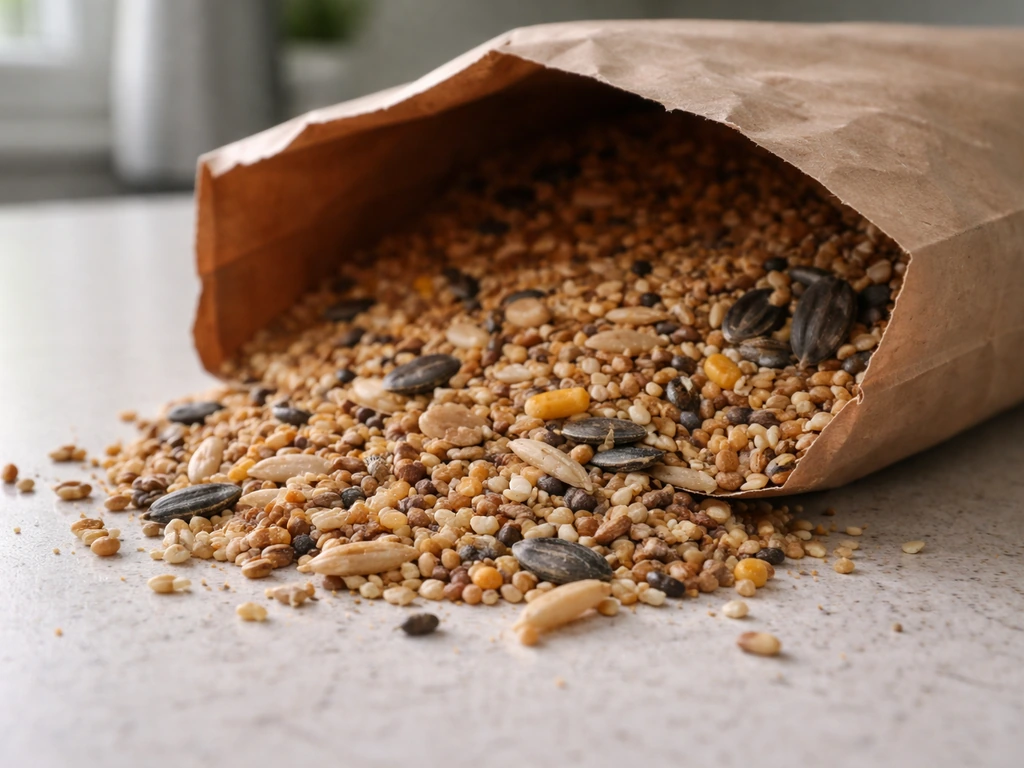
What you're actually seeing in your bird seed
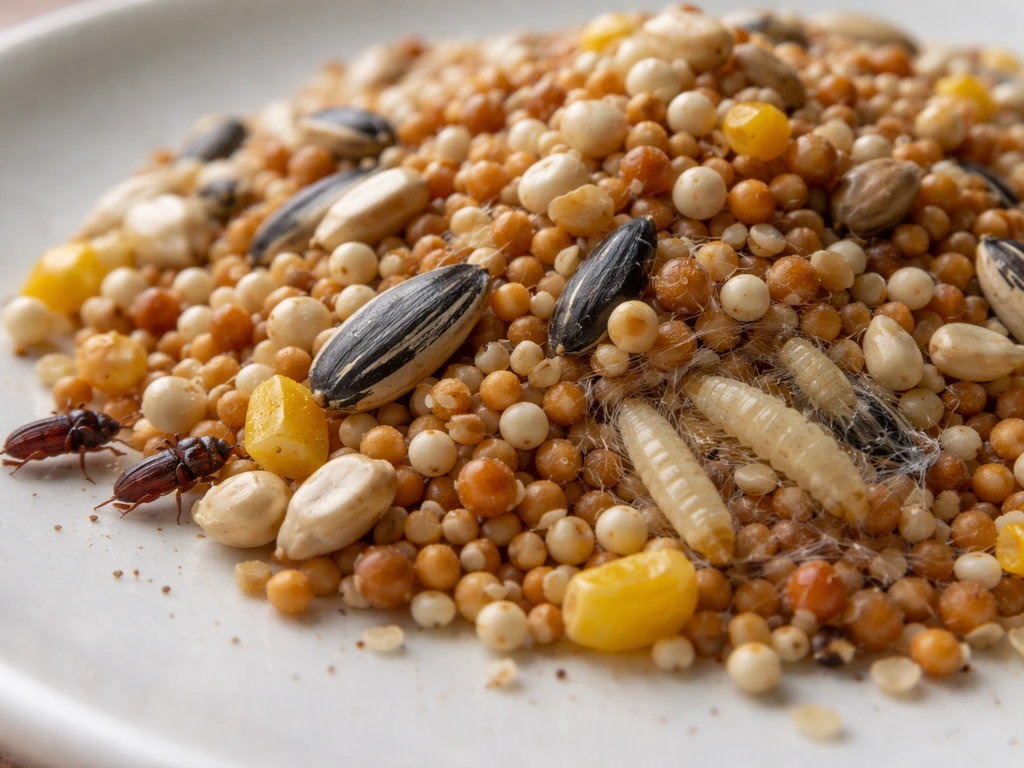
The most common culprits are a fairly short list. Knowing which one you have helps you judge how far the infestation has spread and what you're dealing with.
| Bug | What to look for | Where you'll find them |
|---|---|---|
| Grain weevils | Tiny reddish-brown beetles with a long snout; hollowed-out kernels; musty smell | Inside and around kernels, especially whole seeds like sunflower |
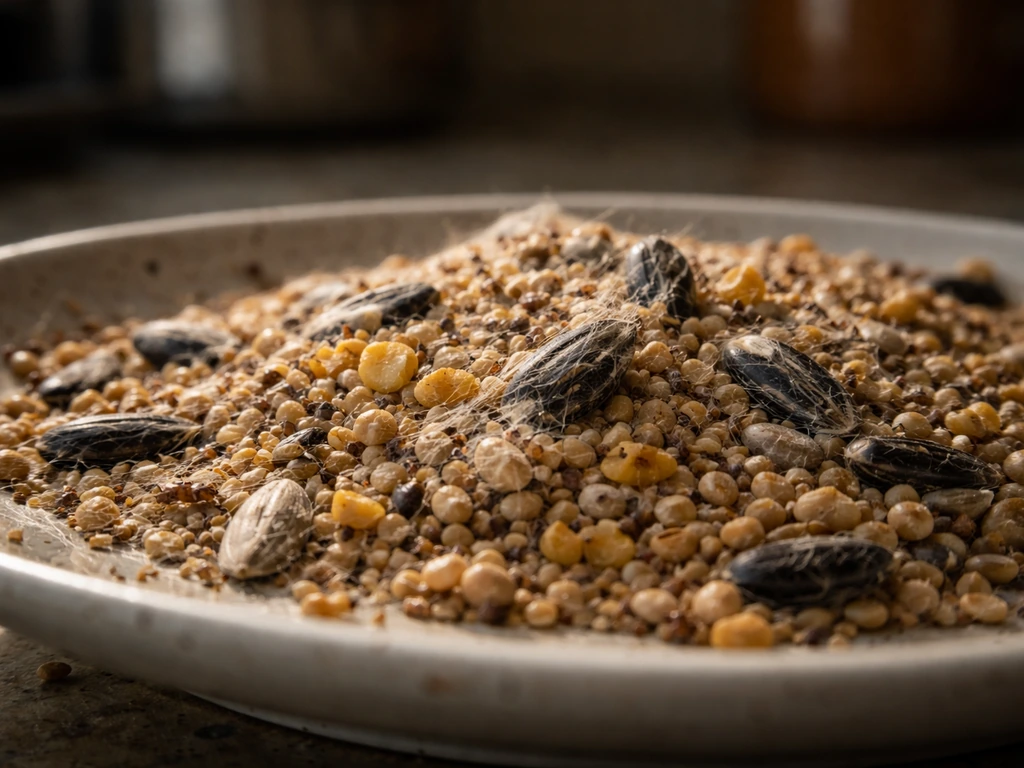
| Indian meal moth larvae | Small, cream-colored worms with a dark head; silky webbing on the seed surface; frass (tiny dark droppings); shed skins | On the surface of the seed, in clumps held together by webbing |
| Indian meal moth adults | Small moths (about 3/4 inch) with coppery-brown outer wings; flying near light at night | Near the storage area, lights, ceiling corners |
| Flour/grain beetles | Tiny flat reddish-brown beetles; often in seed dust or fine material at the bottom of the bag | Bottom of the bag or bin, in broken seed fragments |
| Larvae (general) | Small, pale, worm-like grubs; may be in clumped or damp seed | Throughout infested seed, especially if moisture is present |
If you're seeing silky webbing stuck to the seed, that's a strong sign of Indian meal moths specifically. Webbing is their calling card. If you notice tiny holes bored into individual kernels and a musty odor but no visible insects at first glance, weevils are most likely at work. All life stages, including eggs, larvae, pupae, and adults, can be present at the same time in the same bag, which is why getting rid of the seed alone isn't always enough.
How the bugs got in there in the first place
The honest answer is that infested seed is extremely common and the infestation usually started long before you bought it. Stored-food pests like weevils and Indian meal moths can be introduced at the grain processing stage, during packaging, in warehouse storage, or at the retail store. Once a bag is opened, or even if insects chew through thin cardboard or paper packaging at a fold or seam, the infestation takes hold in your home. The UMN Extension notes that opened products are by far the most common point of infestation, but even sealed bags aren't completely safe.
Temperature is the biggest driver of how fast things get bad. These insects thrive at around 80°F. If you're storing seed in a garage, shed, or laundry room that gets warm in spring and summer, you've created near-perfect breeding conditions. Reproduction slows significantly below 60°F and above 95°F, but in a typical warm-weather storage spot, one generation can spin up in as little as two weeks. Add any moisture, whether from a leaky roof, condensation, or just high humidity, and clumping and mold follow quickly.
Spilled seed under or around feeders can also serve as an outdoor breeding ground that eventually works its way back toward your storage area. Insects attracted to the spill can find their way inside, especially through gaps around garage doors or shed walls.
Is bug-infested seed still safe to feed birds, pets, or wildlife?
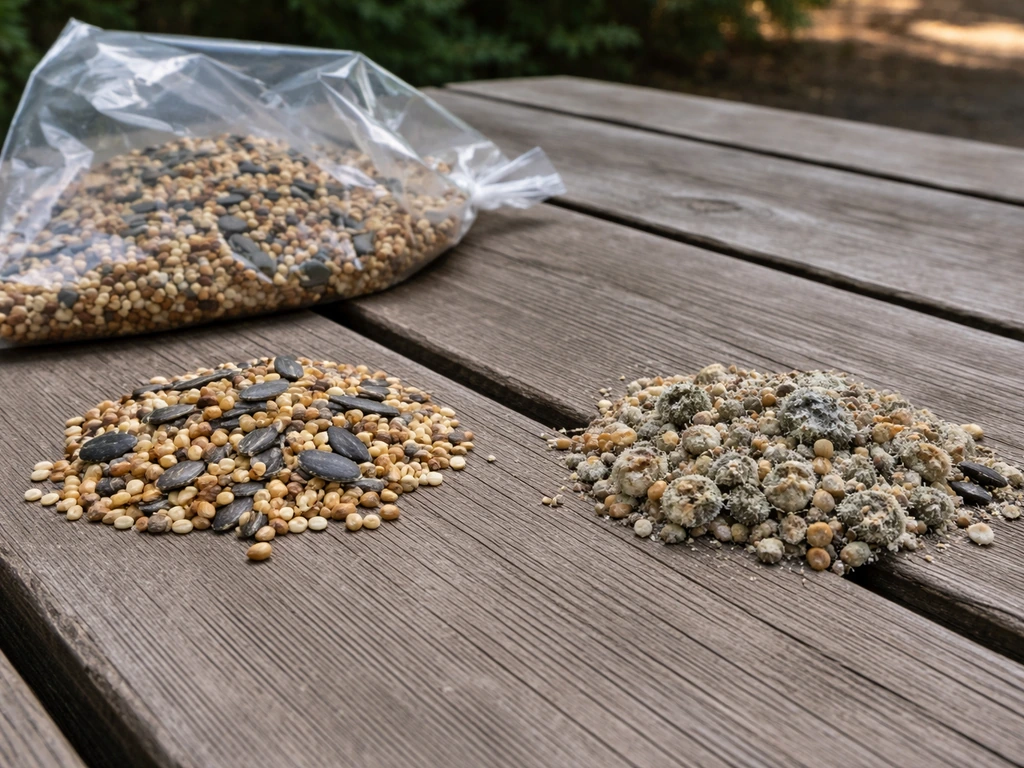
The bugs themselves are not the real danger. Insects and larvae in bird seed are protein-rich, and many birds will happily eat them. In fact, insectivorous birds actively seek out grubs. The question is whether the seed itself has gone bad, because that's where genuine harm can occur. In general, bugs in bird seed can be safe to eat as long as the seed itself is not moldy or contaminated with aflatoxin is bug-infested seed still safe.
The real risk is mold, specifically aflatoxin-producing Aspergillus fungus. Insect damage and moisture create the exact conditions this fungus thrives in. Aflatoxin is carcinogenic and can cause acute toxicity, organ dysfunction, and death in wildlife and pets that eat contaminated grain. Oklahoma State University Extension is direct about this: if grain is visibly moldy, clumping, or wet, it should be disposed of immediately and not fed to any animal.
Here's how to read what you have:
- Seed with a few visible insects but no mold, no clumping, and no sour or musty smell: generally safe for backyard birds and wildlife, though you'll want to deal with the infestation anyway
- Seed that smells musty, is clumping together, or has any visible mold: discard it, do not feed it to birds or wildlife
- Seed that is dry, intact, and showing only webbing or frass on the surface: consider discarding out of caution, especially if stored for a long time or in warm conditions
- Any seed you're unsure about and plan to keep indoors near pet food or human food: discard it to avoid spreading the infestation
For dogs, cats, or pet birds that have gotten into infested seed, the insects themselves are not toxic, but moldy or aflatoxin-contaminated seed absolutely is. If your pet ate a significant amount of seed that smelled musty or showed mold, contact your vet. For backyard wildlife like squirrels, raccoons, or deer, the same rule applies: bugs in dry seed are fine, mold is not. OSU Extension specifically recommends avoiding feeding grain during warm and moist conditions when mold risk is highest, and limiting outdoor feeding to temperatures below 60°F if possible.
What to do today: remove, isolate, and decide
Don't wait on this one. Pantry pests spread fast, and insects from one infested bag can move to any other stored food in the same area, including your own pantry goods if the bag is stored indoors.
- Take the infested seed bag (or bin) outside immediately and seal it in a heavy garbage bag before doing anything else. This stops adult moths from flying around your house and larvae from migrating.
- Check every other bag, box, or container of bird seed, pet food, or stored grain nearby. Look for webbing, frass, tiny holes in kernels, clumping, and any live insects. Don't forget bags you haven't opened yet.
- Decide: if the seed is moldy, wet, clumping, or smells musty, discard it. If it's dry, intact, and only has some webbing or visible insects, you can freeze it to kill the infestation (see next section) or simply discard it. When in doubt, throw it out.
- If you're keeping any seed, seal it in a hard-sided airtight container (more on this below) and move it somewhere cooler than 60°F if possible.
- Take the infested seed bag to an outdoor trash bin right away. Don't leave it in the garage or shed where adults can escape and restart the cycle.
How to clean feeders and storage areas to break the life cycle
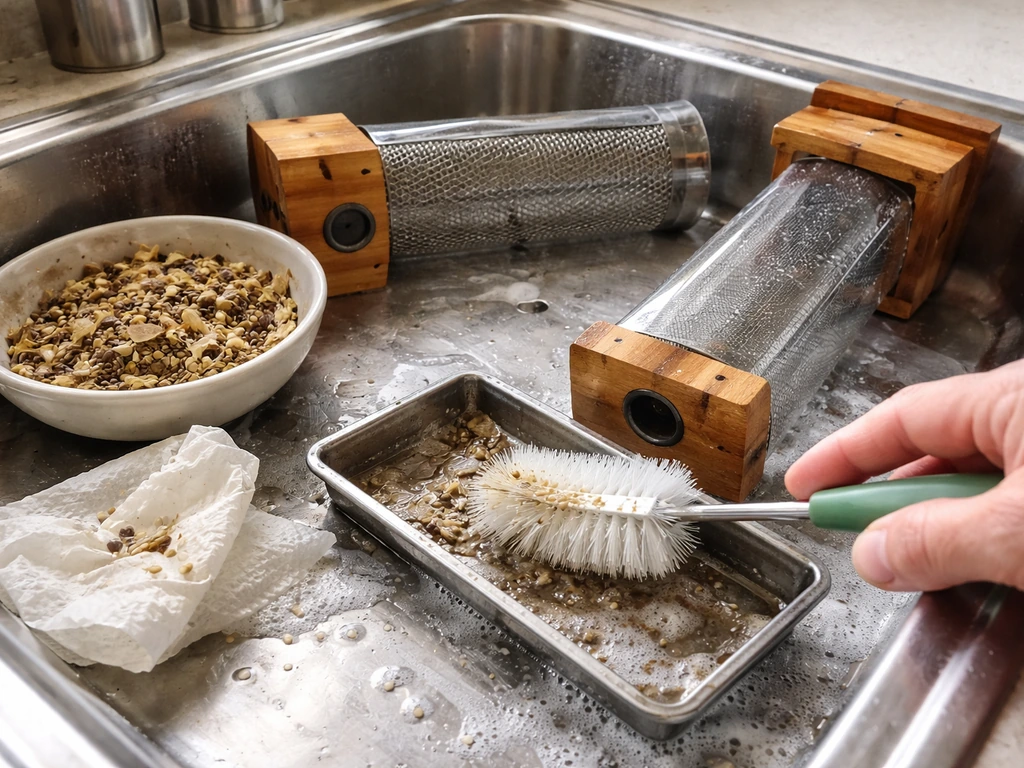
Removing the seed is step one, but the eggs, larvae, and pupae left in your feeders, bins, shelving, and storage area are what restart the whole cycle if you don't address them. This cleanup matters just as much.
Cleaning your bird feeders
- Empty the feeder completely and dump any remaining seed outside away from the house.
- Scrub all surfaces with hot water and soap, using a bottle brush to reach inside tube feeders and hoppers. For heavy debris or stuck-on material, scrubbing first is essential before any disinfecting step.
- Soak all feeder parts in a 10% bleach solution (1 part household bleach to 9 parts water) for 10 minutes.
- Rinse thoroughly with clean water, making sure no bleach residue remains.
- Allow the feeder to air-dry completely before refilling. Moisture in a feeder promotes mold on fresh seed almost immediately. This is a step people skip and then wonder why problems return.
Cleaning the storage area
- Remove everything from the storage space: all seed containers, bags, pet food, and stored grain.
- Vacuum shelves, cracks, corners, and any gaps where seed dust or debris accumulates. Larvae can pupate in wall cracks, shelf brackets, and cardboard box corners.
- Wipe down all surfaces with a damp cloth and mild soap, then let them dry fully.
- Inspect your storage bins and containers. If the container is plastic or rubber with a tight-fitting lid, wash it with hot soapy water and rinse well. If it's thin cardboard or paper, dispose of it.
- Check the surrounding area for spilled seed, especially in corners and under shelving.
If you want to use freezing to salvage seed you're not sure about, put the sealed bag or container in a home freezer set to 0°F for at least 4 to 7 days. At 5°F or below, larvae and adults die within 2 to 3 days, but eggs take longer, up to 3 to 4 weeks. One practical approach: freeze for a week, let the seed come to room temperature for a couple of days, then freeze again for another week. This gives any eggs that hatched during the rest period a second killing exposure. After freezing, inspect the seed carefully before feeding.
Preventing bugs from coming back
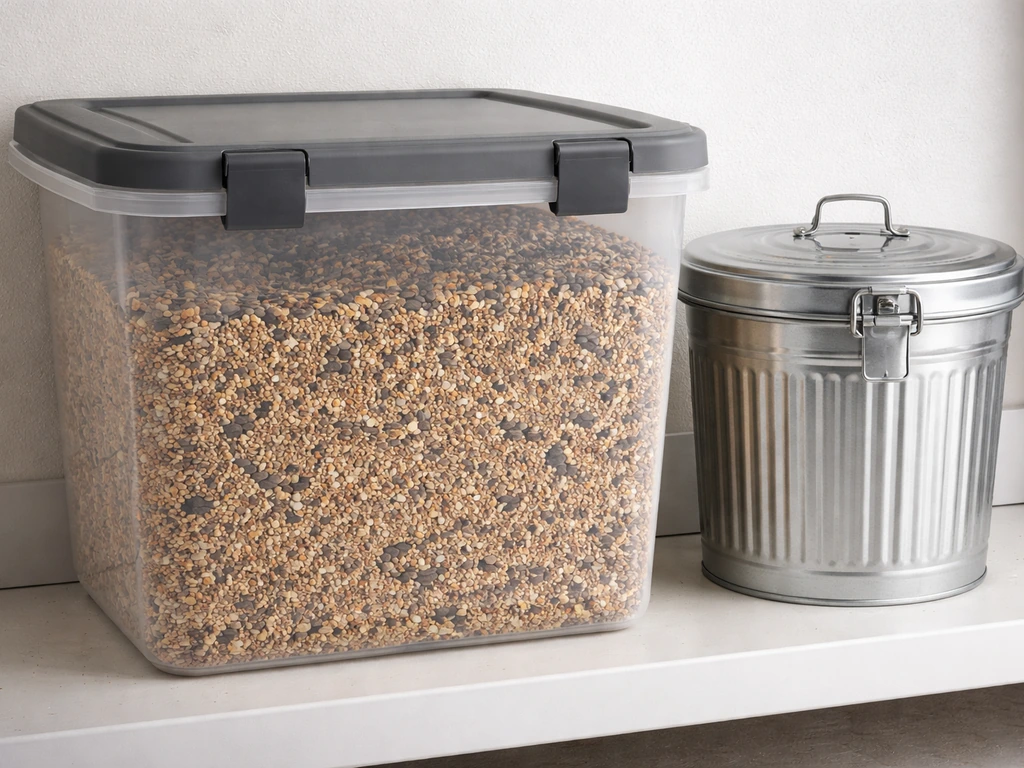
Storage is where most people make preventable mistakes. Here are the practices that actually work.
Storage rules that make the biggest difference
- Use hard-sided, airtight containers: metal trash cans with locking lids or thick plastic bins with tight-fitting gaskets. Insects can chew through or squeeze into thin plastic bags and most cardboard packaging.
- Store seed in a cool location, ideally below 60°F. A climate-controlled space or an air-conditioned room slows reproduction dramatically. An unventilated summer garage regularly hits 90°F or above, which is close to ideal for pest breeding.
- Don't stockpile more seed than you'll use in 4 to 6 weeks. OSU Extension notes that aflatoxin risk increases the longer grain is stored, even in good conditions.
- Avoid temperature fluctuations that cause condensation inside the container, which can lead to moisture on the seed and mold formation. Let cold seed warm up slowly rather than moving it from a freezer into a warm room and sealing it immediately.
- Never pour new seed on top of old seed. Empty and inspect the container each time, and clean it every month or two.
- Freeze new bulk seed purchases for a week before putting them in storage. This kills any insects already present from the supply chain.
Feeder and yard practices
- Clean feeders with a 10% bleach solution at least once a month, and more often during warm and wet weather.
- Don't let seed sit in feeders for more than a week or two. Old seed in a feeder, especially a platform or hopper feeder, can get wet and moldy fast.
- Rake up or sweep spilled seed under feeders regularly. Seed on the ground draws insects, and it also attracts rats and other wildlife you may not want around. Keeping the ground clean reduces the outdoor pest reservoir.
- Consider the type of feeder. Tube feeders with small ports dispense seed in smaller quantities and reduce waste and spillage compared to platform feeders.
- If you notice moths flying near your lights at night, especially during spring and summer, check your seed storage immediately. Flying adults mean larvae are already somewhere in the area.
When infestations keep coming back: troubleshooting and supplier options
If you've done a thorough cleanup and the bugs keep showing up in your fresh seed within a few weeks, the infestation is almost certainly coming from the seed itself at the supplier level. This is more common than most people realize.
First, rule out your storage environment as the source. Check nearby pantry items, pet food, and any other stored dry goods for signs of webbing, frass, or insects. Indian meal moth larvae will migrate from an infested bag and set up in other food products, behind wall panels, in ceiling gaps, and in cardboard boxes. If you're finding moths flying around your house weeks after discarding the seed, the infestation has spread beyond the seed and you may need to check your entire pantry. If you are wondering why there are moths in your bird seed, it is usually because Indian meal moths and other stored-grain pests got into the seed through the supply chain and then reproduced after you opened it.
If your storage environment is clean and the problem recurs with every new bag from the same retailer or brand, contact the supplier. Document the batch code (usually printed on the bag), take photos of the infestation, and reach out directly. Reputable bird seed brands and retailers will often replace infested product and will want to know about a supply-chain issue. If the same retailer's stock is consistently infested, consider switching suppliers or buying from a store with higher turnover so seed doesn't sit in a warehouse or on a shelf long enough for an infestation to develop.
For persistent indoor moth infestations, pheromone traps designed for Indian meal moths (available at hardware stores and online) can help you monitor activity and catch adults, reducing the breeding population while you track down the source. They won't eliminate an infestation on their own, but they're a useful diagnostic tool. If the problem has spread widely through your home's pantry, it may be worth consulting a pest management professional who handles stored-product pests specifically.
FAQ
Are bugs in bird seed ever actually dangerous to birds?
If the seed is dry and you only see insects, that is usually not the concern. The bigger problem is whether the seed is clumped, wet, or visibly moldy (or has a strong musty smell), since mold can produce aflatoxin that is dangerous to wildlife and pets that eat it.
Can I freeze infested bird seed to make it safe even if it smells musty?
Freezing mainly kills existing eggs, larvae, and adults, but it does not “fix” mold. If you see any moisture, clumping, or mold growth, discard the entire lot rather than freezing it and feeding anyway.
Why do moths keep showing up after I throw out the bag?
Yes, moths can be a clue even without seeing bugs in the bag. If you notice adult Indian meal moths flying weeks after you throw out a bag, it strongly suggests eggs or larvae are already established elsewhere in your storage area or pantry.
Can bugs get into a sealed bag of bird seed?
Cardboard and paper can be partially chewed through, especially near fold lines or seams. Store seed in sealed, hard-sided containers (airtight plastic or metal bins) after buying, then keep those containers in the coolest dry spot you have.
How long should I freeze bird seed, and why does a second freeze help?
Expect a short timeline: adult insects and larvae may die during freezing, but eggs can take weeks to hatch. If you freeze for a week, rest at room temperature for a couple of days, then freeze again, you improve coverage of any eggs that hatched during the warm interval.
What should I do if I feed squirrels or deer, and the seed gets bugs?
For wildlife feeding, your best decision rule is moisture and temperature. Avoid feeding grain when your storage or feeding spot is warm and humid, and if possible limit outdoor feeding during warmer periods (for example, when daytime temperatures are above about 60°F).
What signs mean the infestation is already advanced in the bag?
Frass (tiny insect droppings), webbing, and bored holes tell you more than seeing one or two insects. If you find frass or webbing, treat it as a sign the infestation is actively progressing even if the seed looks mostly normal.
Do I need to clean anything beyond the feeder and the bird seed bag?
You should inspect and clean the exact storage area where the seed sat, not just the feeder. Wipe shelves and bins, remove any spilled seed underneath feeders, and vacuum cracks or crevices where moths and larvae can hide.
My dog ate some buggy seed. When should I call the vet?
If your pets got into seed that was only bug-infested and otherwise dry, risk is usually lower. If there was mold, clumping, wetness, or a strong musty smell, contact your veterinarian, since aflatoxin exposure can cause serious illness even if insects themselves are not the main toxin.
What should I do if every new bag I buy has the same kind of infestation?
If the problem recurs with every new bag from the same brand or retailer, document the bag batch code, take clear photos of holes, webbing, or frass, and contact the supplier. Replacement is often possible when there is a supply-chain or warehouse storage issue.
Next Articles
Bird Seed Infested With Bugs: Identify, Clean Up, and Prevent
Identify bug types in bird seed, clean feeders and storage safely, and prevent reinfestation for birds, pets, and people
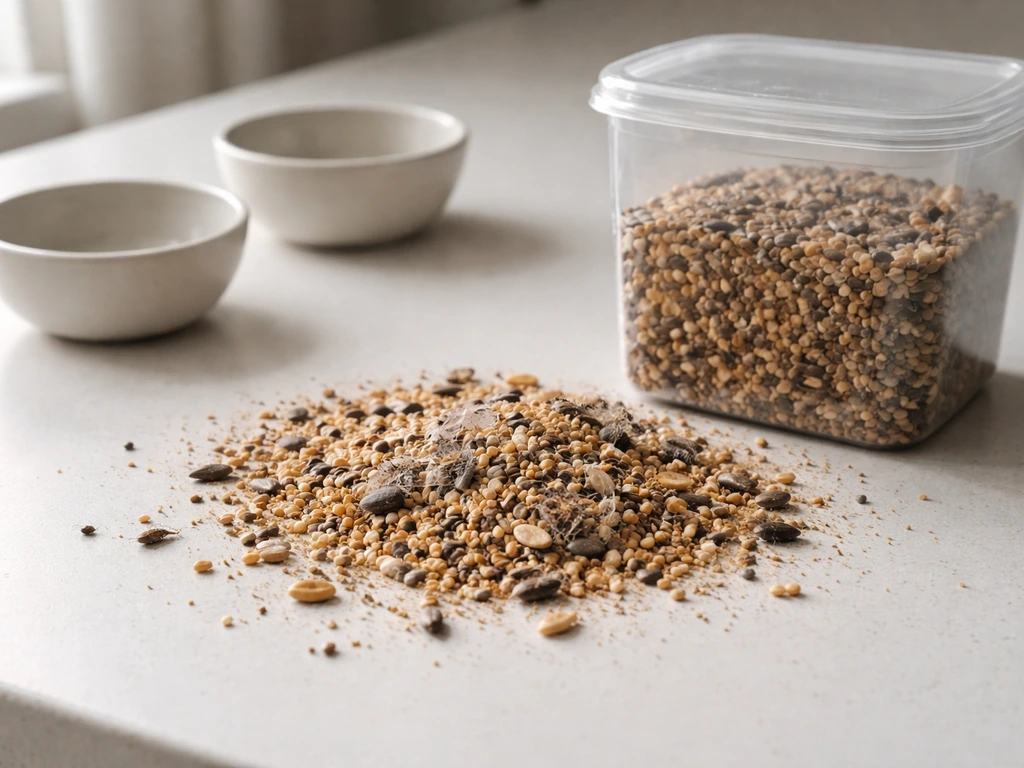
Bugs in Bird Seed Safe to Eat? Risks and What to Do
Learn if bugs in bird seed are safe, how to assess mold, allergies, and pets, and steps to clean or discard.
Do Seagulls Eat Bird Seed? How to Stop Them
Yes, seagulls often eat bird seed. Learn why they show up and how to block them while keeping feeding safe.