Bird seed moths are almost always Indian meal moths (Plodia interpunctella). The adults are small, roughly 1/3 inch long with a wingspan of 10–15 mm, and their front wings are the easiest tell: the outer two-thirds are coppery-brown or reddish-bronze, while the inner third near the body is pale gray or cream. That two-tone wing pattern is the single fastest way to identify them.
What Do Bird Seed Moths Look Like? ID Guide + Next Steps

Maya Henderson
18 May 2026
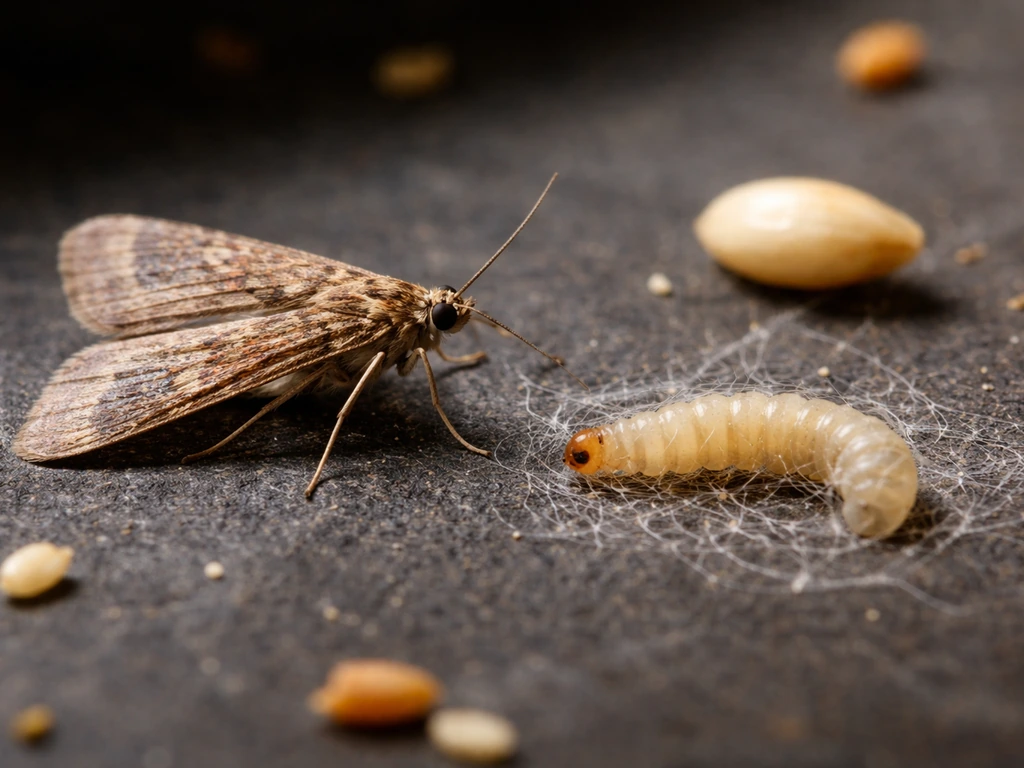
At rest they fold their wings flat over their backs in a tent shape, and at night you'll often spot them fluttering near lights. Extension fact sheets note that Indian meal moth adults [fly mostly at night and are attracted to lights](https://www1. maine. gov/dacf/php/gotpests/bugs/documents/indian-meal-moth-ohio.
pdf). The larvae are the ones actually wrecking your seed: off-white to pinkish caterpillars about half an inch long when mature, with a brown head capsule, [leaving silk webbing tangled through the seed](https://www. ipmimages. org/collections/viewcollection.
cfm? id=93382).
Quick ID: What the Adults Look Like at Your Feeder and Indoors
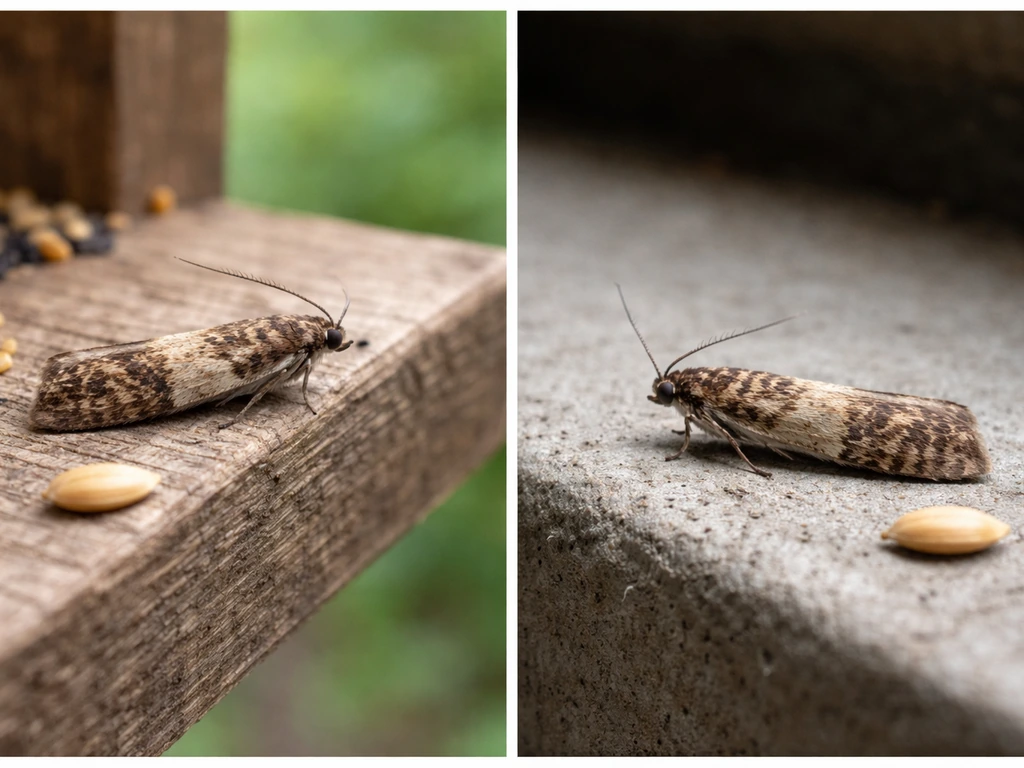
Adult Indian meal moths are easy to overlook because they're small and tend to stay still during the day. At your feeder or in the garage where you store seed, you might see them resting on nearby walls or the side of the seed bin. Indoors, they're more active after dark, which is when you're most likely to see one zigzagging toward a lamp or window.
- Body length about 1/3 inch (8–9 mm); wingspan 10–15 mm
- Front wings: pale gray or cream on the inner half, reddish-bronze or coppery-brown on the outer half — this two-tone pattern is distinctive
- Both wings have fringed rear margins (a fine hairy fringe along the edge)
- At rest, wings are folded flat and tent-like over the body
- Antennae are thin and thread-like, not feathery
- Flight pattern is erratic and fluttery, mostly at night
- Strongly attracted to light sources — finding one near a window or lamp at night is a classic sign
One thing that trips people up: you can keep seeing adult moths flying around for up to three weeks after you've already thrown out the infested seed. That's not a sign your cleanup failed. The adults that emerged before you removed the food source just keep going. What matters is whether you're still finding larvae or webbing in any remaining seed.
Look for the Larvae: Size, Color, Webbing, and Seed Damage
The larvae do all the damage, and they're what confirm an active infestation. If you dump some seed into your hand and see fine silk webbing clumping the seeds together, you've found them. They spin silk as they feed and tunnel through the seed mass, creating a matted, webby layer, especially in the upper portion of the bag or bin where they tend to stay.
- Color: off-white to pinkish or pale yellowish, smooth and slightly shiny
- Head capsule: distinct brown or reddish-brown, visibly darker than the body
- Size: about 1/8 inch when young, up to roughly 1/2 inch (about 12 mm) when fully mature
- Movement: they wriggle actively when disturbed and may crawl out of seed onto container walls
- Webbing: fine, silky threads tangled through and around seed clusters — often the first visible sign
- Frass: small dark specks (insect droppings) mixed in with the webbing and seed
- Tunnel-like silk cases visible within the seed mass if infestation is heavy
If you're not sure whether the webbing is from a moth or a spider, look at scale. Moth webbing in seed is fine, dense, and matted through the seed itself, not a clean web structure. You'll often find it concentrated in clumps rather than spanning open space.
Common Look-Alikes: Beetles and Other Pantry Bugs
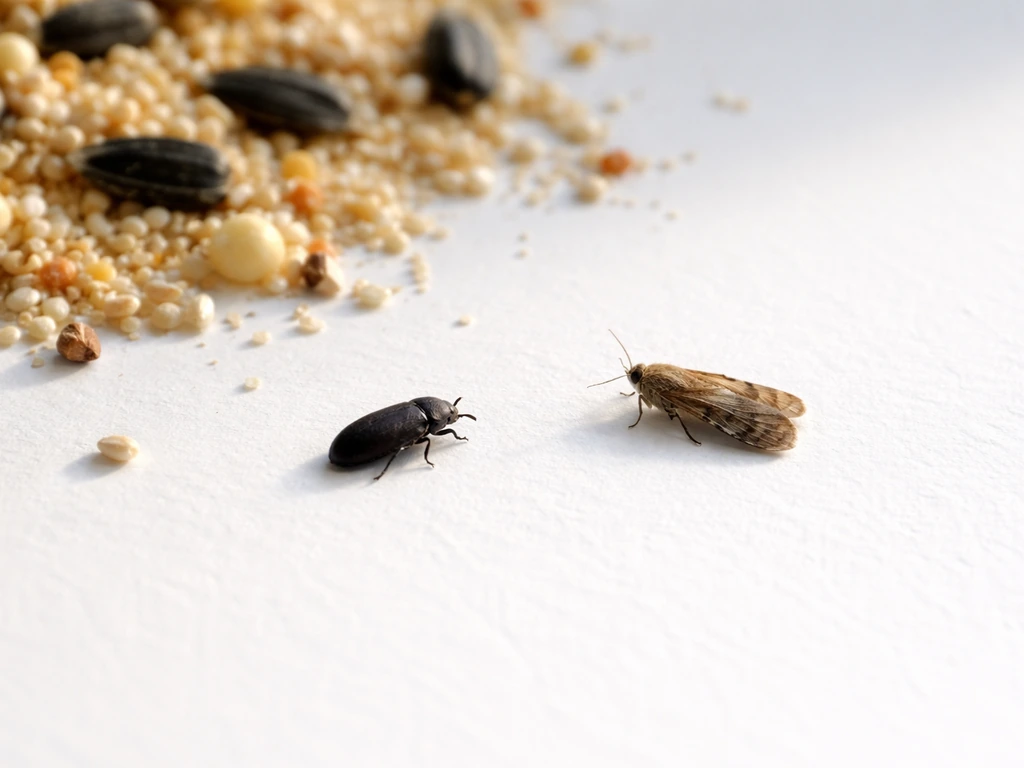
Not every small insect in your bird seed is a moth. Why are there moths in my bird seed in the first place? Most often, it starts when Indian meal moth eggs or larvae arrive with the seed and then multiply in storage. Grain beetles and weevils are common in stored seed too, and knowing the difference matters for how you respond. Here's a quick comparison of the most common look-alikes.
| Insect | Size | Key Visual Trait | Larva/Sign | Webbing? |
|---|---|---|---|---|
| Indian meal moth (adult) | 8–9 mm body | Two-tone copper/cream wings, folded flat at rest | Off-white caterpillar with brown head | Yes — distinctive silk webbing |
| Granary weevil | 2–3 mm | Hard brown shell, distinctive snout (rostrum) on head | Soft white legless grub inside kernel — rarely seen | No |
| Red/confused flour beetle | 3–4 mm | Reddish-brown, flat oval body, no snout | Slender yellowish larva with two tail spines | No |
| Cigarette beetle | 2–3 mm | Rounded, humped back, reddish-brown, serrated antennae | Small white grub covered in frass | No — frass clumps but no silk |
The single clearest difference between moths and beetles in your seed is webbing. If you are dealing with bird seed moths, the key signs of bird seed infested with bugs are webbing and larvae damage in and around the seed. Beetles don't produce silk. If you see silky threads matting the seed together, that's a moth. Beetles leave behind grain dust, frass, and sometimes small emergence holes in individual kernels (especially weevils), but no webbing. If you're finding both webbing and small hard-shelled insects, you may have a mixed infestation, which does happen.
Small flies (like fungus gnats) can also appear near seed, but they're associated with moisture and mold rather than the seed itself. If your seed smells musty and you're seeing tiny dark flies rather than moths, mold contamination is the more likely problem, which is its own hazard worth addressing immediately.
Where to Search Today
Infestations usually start in the seed bag or bin and spread outward, so work in expanding circles from your most recent seed purchase. Here's where to check right now.
- The seed bag itself: open it and look at the surface of the seed for webbing, clumping, or movement. Check inside any folds or creases in the bag.
- Your feeder: inspect the interior corners, the base where seed collects, and any crevices or ports. Larvae and pupae (small oval silk cocoons) can hide in feeder seams.
- The storage area: shelves, bins, or cabinets where seed is kept. Check the walls and ceiling of the space for pupae stuck in corners or cracks — they crawl away from the food source to pupate.
- Nearby pantry items: Indian meal moths readily spread to pet food, dried herbs, nuts, cereals, and pasta. Check anything stored near the seed.
- Near windows and lights at night: adults fly toward light, so checking light fixtures and window sills after dark can confirm adult moth activity.
- Entry points: check where the seed bag was stored before you brought it inside — in a garage, shed, or car trunk. Infestations are often already present in the bag when you buy it.
How to Confirm an Infestation
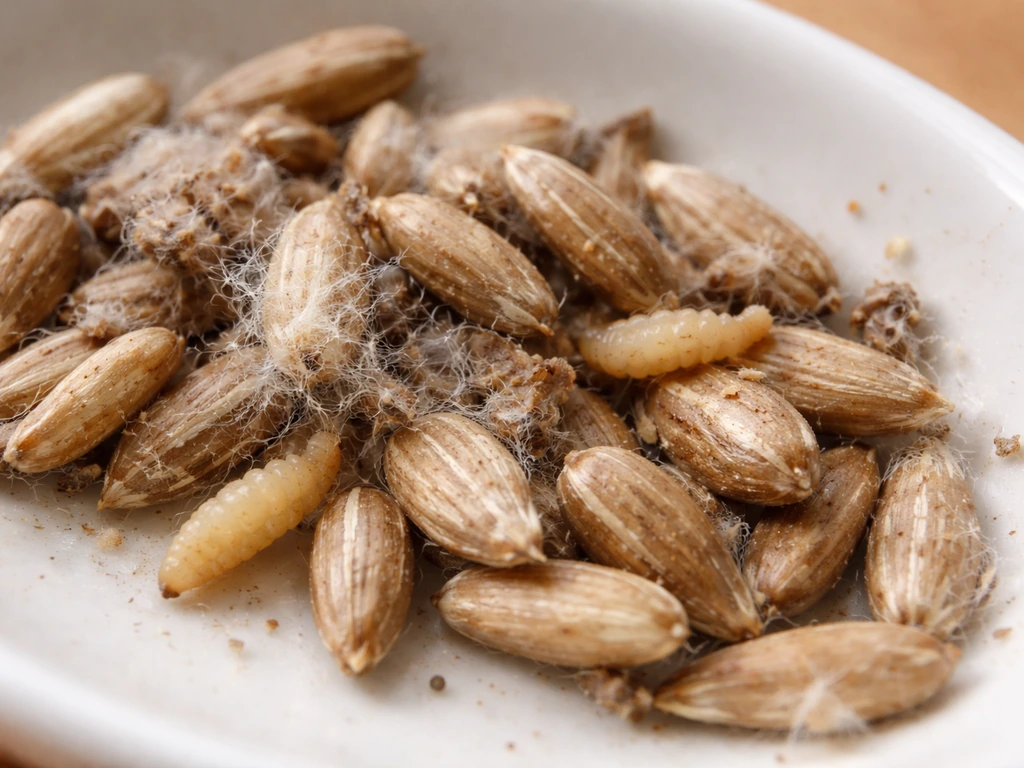
You don't need a lab to confirm this. A visual check with good lighting is enough. Run through this checklist systematically.
- Webbing visible in the seed: fine silk threads clumping seeds or coating the surface (strongest indicator)
- Live or dead larvae in the seed: off-white caterpillars with brown heads, possibly wriggling
- Frass mixed with seed: small dark specks that look like coarse pepper throughout the seed mass
- Silk cocoons (pupae) in corners or crevices: small oval cases made of silk, often in feeder seams, storage shelf corners, or on walls near storage
- Adult moths seen flying at night near lights or near the storage area
- Seed clumping together in the bag despite being dry — silk webbing is the cause
- Holes or chewed spots in the seed bag packaging (though moths can also enter through existing small gaps)
A simple field test: scoop a cup of seed onto a white plate or paper towel in good light. Spread it out and look for movement, webbing, or larvae. If you see any of the above within 60 seconds of looking, you have an active infestation. It's also worth checking whether any other stored food nearby has webbing, this tells you how far the problem has spread.
Immediate Cleanup: How to Safely Remove and Dispose of Infested Seed
Move quickly, but don't panic. The goal is to remove all infested material, clean every surface the moths touched, and seal anything that's at risk. Here's the sequence that works.
- Seal and bag the infested seed immediately. Put the seed and the original bag into a sealed plastic bag and place it directly into an outdoor trash bin. Don't leave it in your garage or shed where moths can escape and re-infest.
- Empty and inspect your feeder completely. Remove all remaining seed. If you see webbing, larvae, or frass in the feeder, soak it in a 10% bleach solution (1 part bleach to 9 parts water) for a few minutes, scrub all surfaces, rinse thoroughly, and let it dry completely before refilling.
- Vacuum the storage area. Use a vacuum to clean shelves, cracks, and corners where the seed was kept. Larvae crawl away from the food to pupate, so pay special attention to wall junctions and ceiling corners. Empty the vacuum bag or canister directly into a sealed outdoor trash bag afterward — not your indoor bin.
- Wipe down surfaces with soapy water or a mild disinfectant after vacuuming.
- Inspect all nearby stored food. Check anything within a few feet of the seed storage: pet food, dried goods, nuts. Discard anything with webbing.
- Don't use insecticide sprays on or near your feeder. Residue can harm birds. Thorough physical cleaning is safer and just as effective.
On pet and wildlife safety: if your dog, cat, or backyard wildlife has eaten seed that was visibly infested with moth larvae, it's generally not toxic in small amounts, larvae themselves are just protein. If you found bugs in bird seed, it doesn't automatically mean the seed is safe to eat, especially if there is webbing or mold generally not toxic in small amounts. The real concern is heavily contaminated, old seed that may have also developed mold.
Moldy seed can be a genuine health risk to pets and birds. If the seed smelled musty or looked discolored, that's worth monitoring, and if a pet ate a significant amount of moldy-smelling seed, a call to your vet is reasonable.
Related questions about bugs in bird seed more broadly, including whether infested seed is safe for birds to eat, come up often, and the short answer is: fresh infestation with no mold, minor risk; moldy or heavily degraded seed, toss it.
How to Prevent It From Happening Again
Storage Changes That Actually Work
The number one prevention step is airtight storage. Indian meal moths enter seed bags through seams, small tears, or they're already present as eggs when the bag is purchased. Moving seed into a hard-sided container with a locking lid cuts off both routes. Metal trash cans with tight lids, hard plastic bins, or purpose-built seed storage containers all work well. Avoid leaving seed in the original paper or thin plastic bag.
- Store seed in a sealed hard-sided container, not the original bag
- Buy seed in quantities you'll use within 4–6 weeks — fresher seed, less exposure time
- Freeze new seed before storing: place the entire bag in a freezer at 0°F (-18°C) for at least four days to kill any eggs already in the seed when you bought it
- If you can't freeze it, you can heat seed at 130–140°F in an oven for 30 minutes as an alternative — though this may affect seed germination if that matters
- Store seed in a cool, dry location — moths thrive in warm, humid conditions
- Don't stack old seed under new; rotate stock and use oldest seed first
Feeder Hygiene Steps
Feeders themselves can harbor larvae if seed is left sitting for too long, especially in warm weather. A basic routine goes a long way.
- Clean feeders every 1–2 weeks in warm months, monthly in winter
- Remove old, uneaten seed before refilling — don't top off over stale seed
- Let feeders dry completely after washing before adding fresh seed; moisture accelerates both mold and insect activity
- Check the seed in your feeder regularly — if it's clumping without moisture exposure, look for webbing
- If you use a seed catcher tray below the feeder, clean it frequently as fallen seed can become an infestation point
Pheromone-based moth traps (sticky traps scented to attract male Indian meal moths) can be useful monitoring tools for your storage area. They won't eliminate an infestation on their own, but they'll alert you early if moths are present before the problem grows. Place one near your seed storage and check it weekly. If you're catching moths on the trap consistently, it's time to inspect the seed.
FAQ
If I only see a few adult moths, does that mean my bird seed is actively infested?
In a typical bird-seed infestation you will usually see webbing and larvae in the seed mass before you notice adults. If you only see a single adult moth and no silk or matted seed, it may be from a nearby storage area, a previous batch, or the moth resting temporarily on a wall. Do a quick plate check for movement and webbing to decide whether it is active.
How can I tell moth webbing in seed from a spider web?
Yes, but rely on scale and structure. Moth silk in seed is fine, dense, and clumps through the kernels. Spider webs are typically larger, more open, and you often see them spanning corners or hanging strands rather than being embedded in seed itself.
What if I see larvae or bugs, but no visible silk, how do I know whether it is moths or beetles?
Look for a brown head capsule and the webby, matted tunneling pattern inside the seed. Beetle larvae are usually grub-like without that silk-tunnel signature, and adult beetles do not produce webbing. If you find hard-bodied insects plus frass (grain dust) but no silk, it points more toward beetles than moths, and your cleanup steps should focus on removing food, then vacuuming dust and crevices.
Why do I still find moths after throwing out the seed, and how do I know which batch is the problem?
Do not assume a moth you see in the room is coming from the seed you just bought. Adults can emerge from prior stock and keep flying for weeks after removal. Confirm by checking the seed batch you plan to use for clumping silk, tunneling, or live larvae.
Can I save bird seed if I find some webbing or larvae?
If the seed is only lightly affected, you can sometimes salvage by discarding the portion with any webbing and closely inspecting the rest, but any presence of silk throughout the bag usually means larvae have spread. For best risk reduction, remove and replace seed that has matted webs, visible tunnels, or musty odors, then clean the bin and feeder thoroughly.
Is the presence of moths in bird seed the same as mold risk?
A musty smell is a stronger warning sign for health risk than the presence of a few dead-looking bits. Indian meal moth activity alone is not necessarily the same as mold contamination. If you notice moldy odor, discoloration, or dampness, treat it as higher risk and consider discarding rather than storing it.
Where in the bag or bin should I inspect first for early infestation signs?
Check for early signs in storage seams, around the top layer of the bag, and near where you previously left seed undisturbed. Adults often rest nearby, but larvae feeding tends to show up in the upper portion first, where seed mass has more contact and where silk clumps are easiest to spot.
What does it mean if my pheromone traps catch moths every week, but I do not see larvae yet?
A pheromone trap tells you males are active in the area, not whether larvae are already inside a particular sealed bag. If traps catch moths consistently, do a seed inspection anyway, and also check any other stored grains or pet foods in the same space.
Does weather or season change how fast moths spread or how often I should clean the feeder?
In warmer weather, development can be faster, and feeders left with seed for long periods are more likely to accumulate larvae and webbing. If you are seeing moth activity in summer, shorten refill intervals and clean feeders more often, especially if seed gets wet or sits in protected corners.
What should I watch for if my dog or cat ate infested bird seed?
If a pet or wildlife animal eats visibly infested seed, the larger concern is often moldy, degraded seed rather than the larvae themselves. If the seed smelled musty, looked discolored, or had heavy webbing and deterioration, monitor your pet for GI upset and contact your vet, especially after a significant amount.
Next Articles
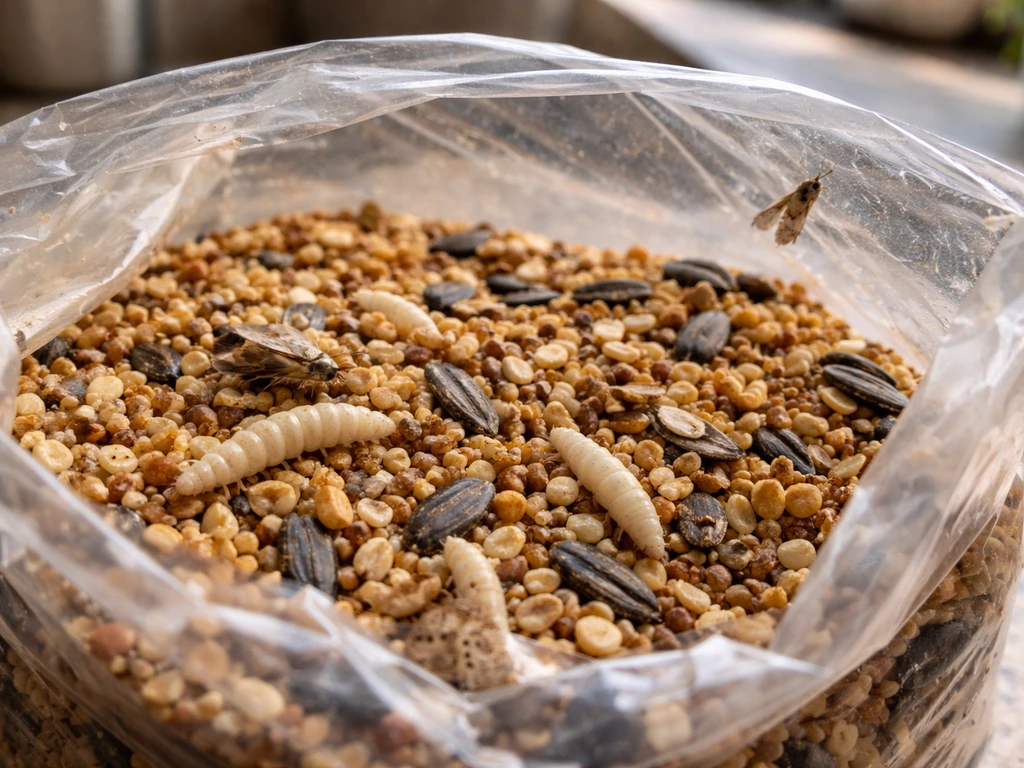
Why Are There Moths in My Bird Seed? Causes and Fixes
Learn why moths appear in bird seed, how to spot larvae vs weevils, and quick cleaning steps to protect birds.
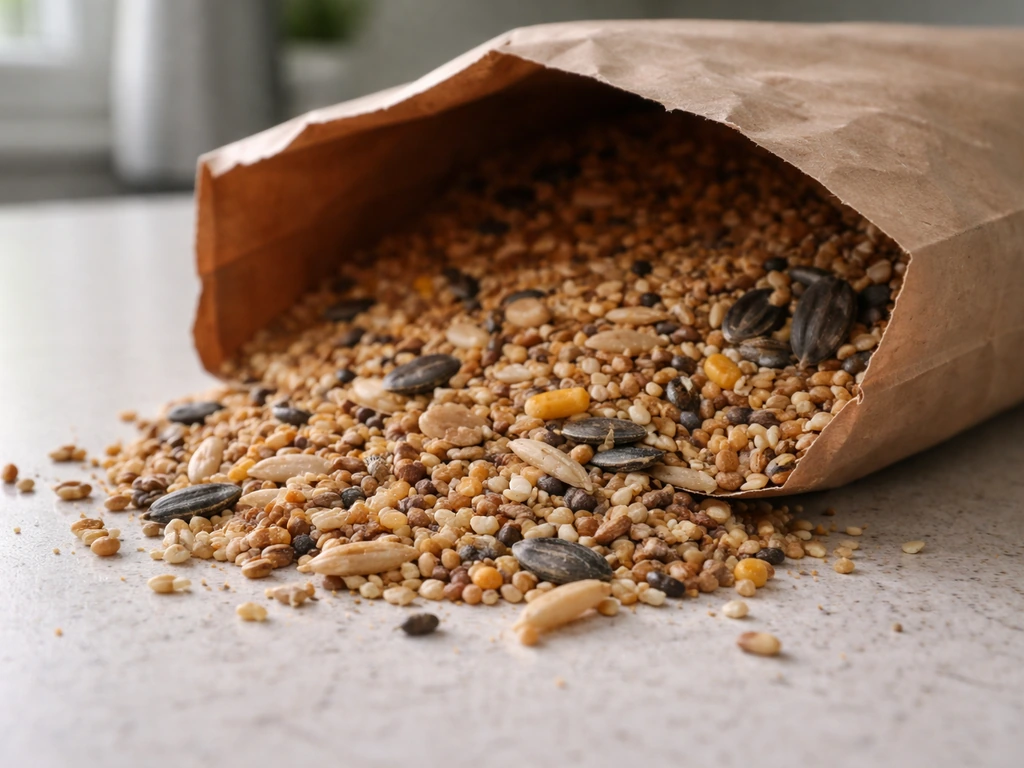
Why Does My Bird Food Have Bugs in It? Fix Today
Learn why bird seed has bugs and how to identify pests, keep it safe, and stop re-infestation today.
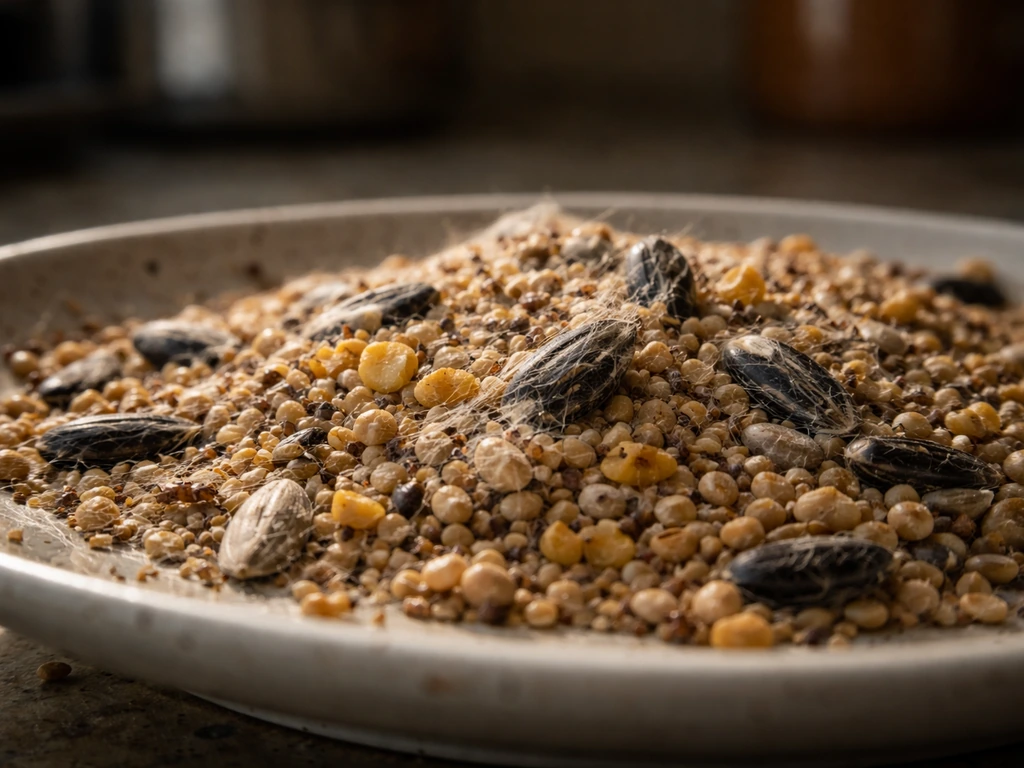
Bird Seed Infested With Bugs: Identify, Clean Up, and Prevent
Identify bug types in bird seed, clean feeders and storage safely, and prevent reinfestation for birds, pets, and people