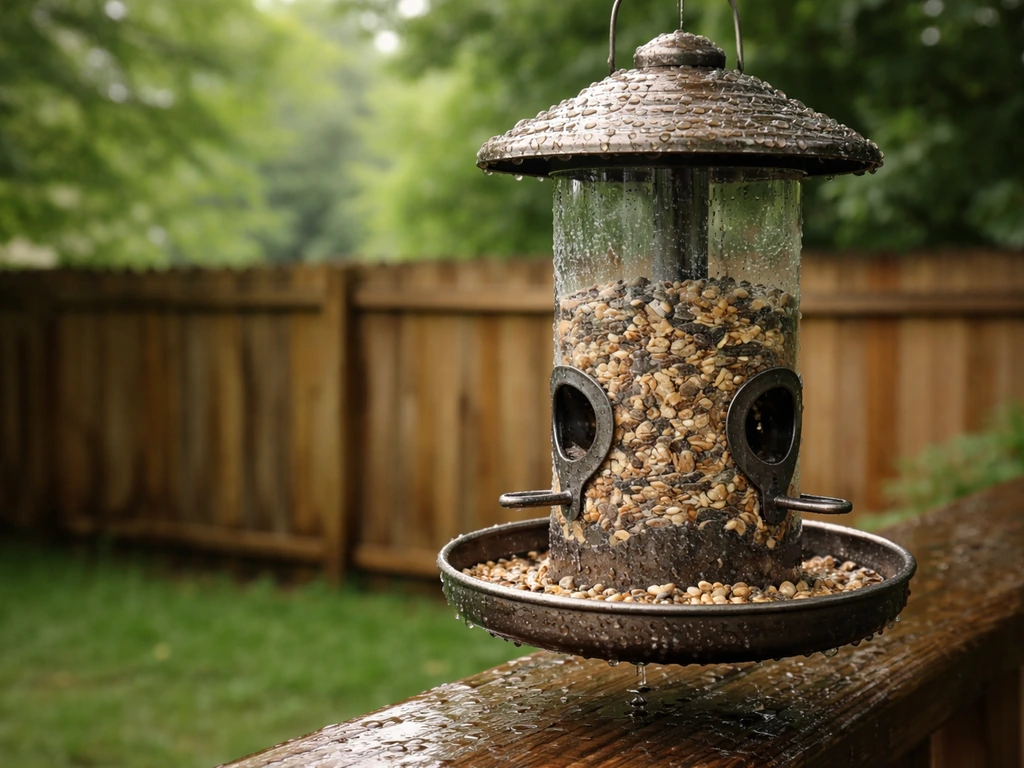
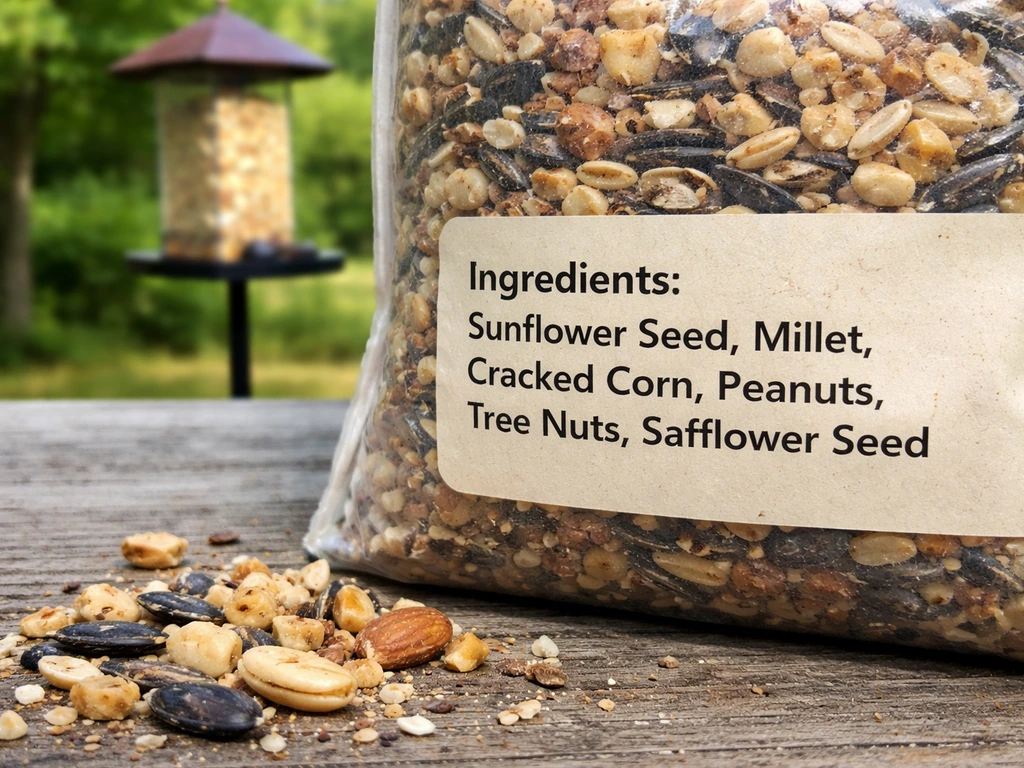
Some bird seed mixes do contain nuts, most commonly peanuts in the form of peanut pieces, peanut granules, peanut chips, split peanuts, or kibbled peanuts. Many standard wild bird mixes do not include nuts at all, sticking to sunflower seeds, millet, cracked corn, and safflower. But plenty of popular blends, including ones labeled 'no-mess,' do include peanut ingredients. The only reliable way to know what's in your bag is to read the ingredient list every single time, because formulas vary by brand, mix type, and country.
Does Bird Seed Contain Nuts? How to Check Labels Safely
Maya Henderson
16 May 2026
Do most bird seed mixes include nuts?
There's no universal answer because 'bird seed' covers a huge range of products. A basic finch mix or a straight safflower seed bag? Almost certainly nut-free. A premium wild bird blend, a woodpecker mix, a suet cake, or anything marketed toward squirrels? Very likely to contain peanuts or peanut derivatives. The label 'no-mess' doesn't mean nut-free either. Multiple no-mess products on shelves right now explicitly list peanut granules, peanut chips, or kibbled peanuts in their ingredients. Peanuts are cheap, calorie-dense, and birds love them, so manufacturers use them often.
Tree nuts like walnuts, almonds, hazelnuts, or pecans are much less common in commercial bird seed, but they do appear in specialty or wildlife blends, particularly mixes aimed at squirrels or larger feeder birds. Peanuts are technically legumes, not tree nuts, but from a practical standpoint, they show up in bird seed far more often and matter most if you're worried about allergies or wildlife attraction.
How to check the label: what to look for
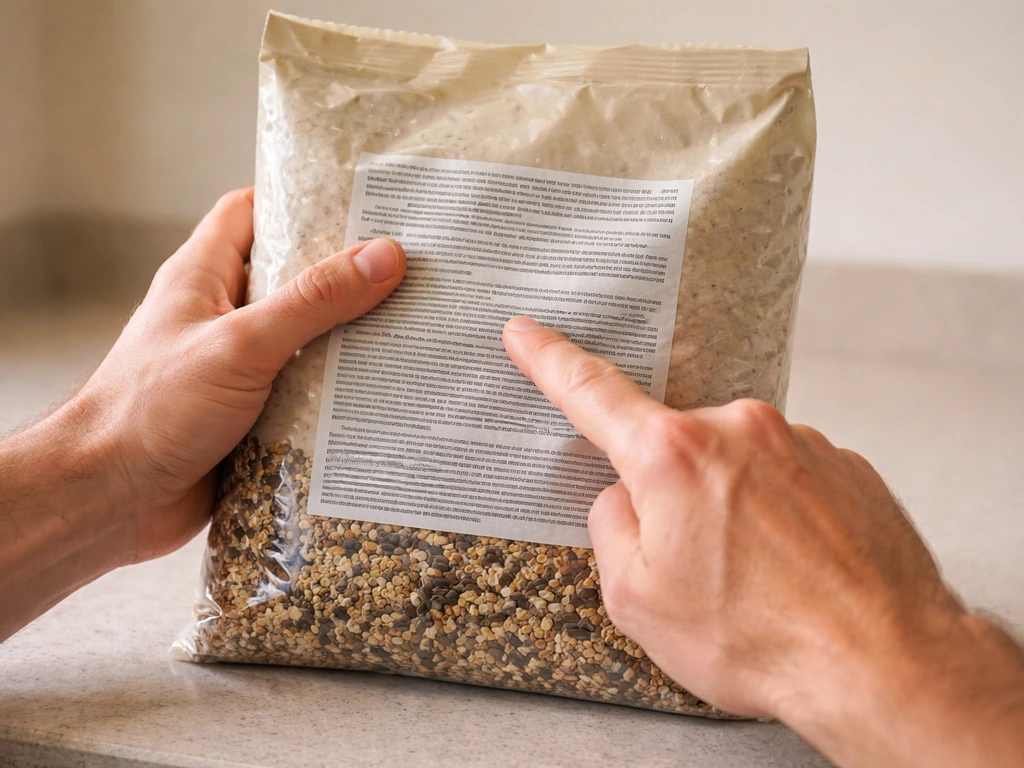
Flip the bag over and look at the full ingredient list, not just the front panel. Marketing names like 'wild bird mix' or 'garden blend' tell you nothing about nut content. Here are the specific terms to watch for:
- Peanuts, peanut pieces, peanut chips, peanut granules, peanut halves, split peanuts, kibbled peanuts, shelled peanuts
- Groundnut or groundnut meal (a common UK/European term for peanut)
- Nutmeats (a catch-all term for the edible kernel of any nut)
- Walnut, almond, hazelnut, pecan, Brazil nut, pistachio (rare but possible in premium or squirrel mixes)
- Suet with peanut, peanut suet dough, peanut suet pellets (the peanut is in the suet component, not the seed itself)
- 'May contain nuts including peanuts' (a precautionary allergen statement, meaning cross-contact during production is possible even if nuts aren't a listed ingredient)
A few ingredients sometimes get confused with nuts but aren't: sunflower seeds, safflower seeds, hemp seeds, flaxseed, and niger (thistle) seed are all seeds, not nuts. Corn, millet, and sorghum are grains. If you see oil dressing or oilseed listed, that usually refers to a vegetable oil coating used to bind fine ingredients, not a nut product. When in doubt, do a quick search on any unfamiliar ingredient before assuming it's nut-free.
Mix types most likely to contain nuts
Not all mix categories carry the same risk. This table gives you a fast reference so you know where to focus your label-checking attention.
| Mix Type | Nut Content Likelihood | Common Nut Form | Animals Attracted |
|---|---|---|---|
| Premium wild bird blend | High | Split peanuts, peanut pieces | Most garden birds, squirrels, jays |
| No-mess wild bird mix | Moderate to high | Peanut granules, peanut chips | Finches, tits, sparrows, squirrels |
| Woodpecker/suet mix | High | Peanut suet dough, peanut pieces | Woodpeckers, nuthatches, chickadees |
| Squirrel/wildlife blend | Very high | Whole peanuts, peanut halves, tree nuts | Squirrels, raccoons, jays, rodents |
| Standard finch/nyjer mix | Low | Usually none | Finches, siskins, redpolls |
| Straight safflower seed | Very low | None | Cardinals, doves, sparrows |
| Straight sunflower seed | Very low | None | Wide variety of songbirds |
| Suet cake (commercial) | Moderate | Peanut pieces or peanut suet | Woodpeckers, starlings, corvids |
Peanut-based suet products are deliberately designed to attract woodpeckers, chickadees, and nuthatches, and they work well for that purpose. But because peanuts are so appealing to mammals too, those same products will draw squirrels, raccoons, and rodents to your yard reliably.
What nut-containing seed means for birds, pets, and wildlife
Birds
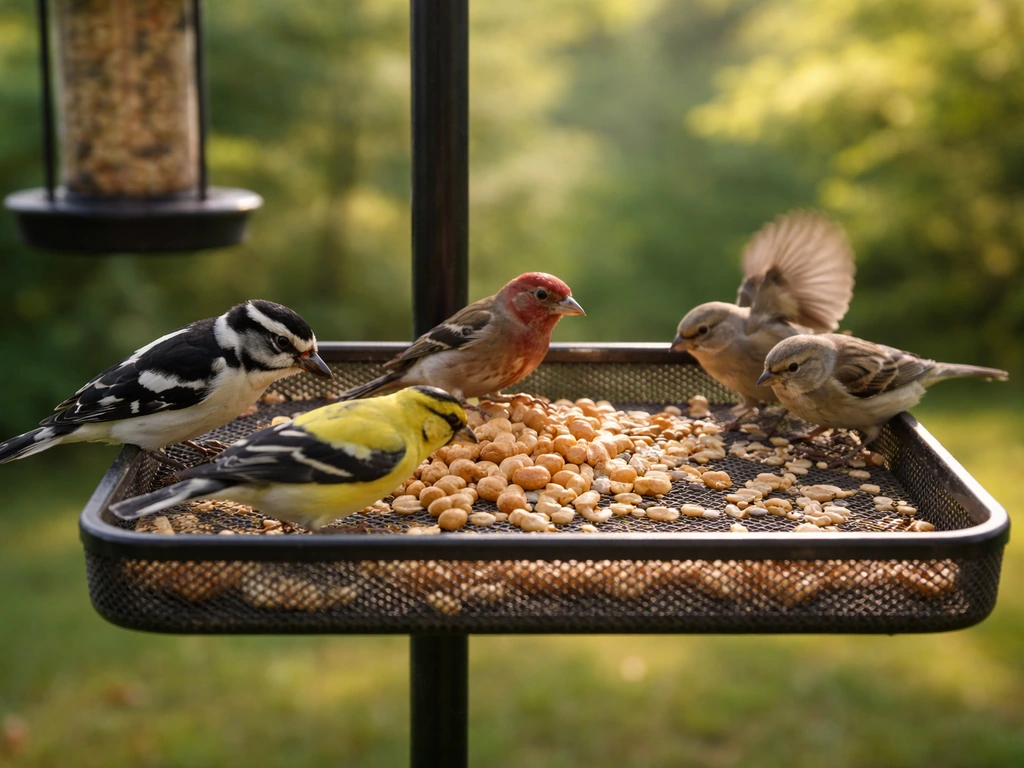
For most wild birds, peanuts and peanut pieces are a perfectly safe, high-energy food. Many species actively prefer them, especially woodpeckers, jays, nuthatches, and tits. The risk for birds doesn't come from the nuts themselves when fresh. It comes from spoilage. Peanuts are one of the foods most susceptible to blank" rel="noopener noreferrer">aflatoxin contamination, a group of mycotoxins produced by Aspergillus molds. If peanuts or peanut-containing seed get wet, clump together, or sit in a warm feeder too long, mold can develop and aflatoxins can form quickly. If you’re wondering about the specific issue of moisture, wet bird seed can spoil quickly, which is where the danger starts for birds is wet bird seed bad for birds. Birds that eat aflatoxin-contaminated seed can become seriously ill. This is why monitoring feeder conditions matters as much as what you put in them. Thistle bird seed can also go bad, so check for spoilage signs like mold, off smells, or clumping before refilling your feeder.
Pets (especially dogs)
Dogs are the most at-risk pet around backyard feeders. Many dogs will eat seed that falls on the ground, and if that seed contains peanuts or peanut-based ingredients, there are two distinct hazards. First, aflatoxin poisoning: the FDA has flagged aflatoxin contamination as a serious risk for dogs, with symptoms that include lethargy, vomiting, jaundice, and in severe cases liver failure and death. Symptoms can be nonspecific, which means a vet may need to test food samples to confirm. Second, if you ever use peanut butter to coat a DIY seed mixture or treat, check that the peanut butter doesn't contain xylitol. Xylitol is an artificial sweetener found in some nut butter brands and it's highly toxic to dogs, causing a dangerous drop in blood sugar, tremors, seizures, and potential liver damage. The ingredient list on the peanut butter jar matters just as much as the ingredient list on the seed bag. Cats are less likely to eat seed off the ground but can also be affected by moldy seed if they're persistent grazers near feeders.
Squirrels, raccoons, and rodents
Peanuts and tree nuts in bird seed are a strong attractant for squirrels, raccoons, and rodents. This isn't just a nuisance issue. Rodents near feeders can introduce Salmonella into the feeding area through droppings and contaminated seed, creating a disease risk for both birds and the people handling feeders. If you're already dealing with rodent pressure in your yard, switching to a nut-free mix or using weight-sensitive squirrel-proof feeders can meaningfully reduce the attraction. Squirrels aren't harmed by eating peanuts, but they'll empty a peanut-containing feeder fast and return repeatedly once they know it's there.
When nut-containing seed becomes genuinely dangerous
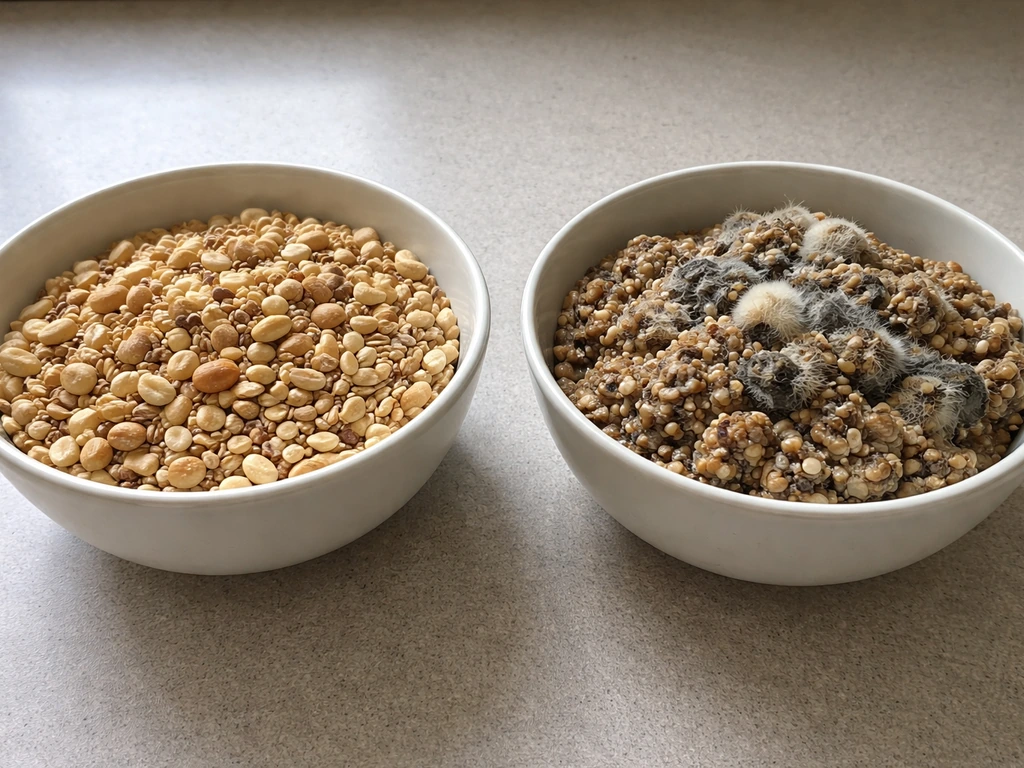
Fresh, dry, properly stored peanut-containing seed is generally low-risk for the birds eating it. The danger ramps up fast under the wrong conditions. Here's when to be concerned:
- Seed that has gotten wet and clumped together, even once, is at elevated mold risk and should be discarded
- Any seed that smells rancid, musty, or sour has likely already developed mold or bacterial growth
- Peanut pieces sitting in a feeder in warm, humid weather can spoil within days, not weeks
- Seed stored in a garage, shed, or outdoor bin that isn't insect- and rodent-proof can be contaminated by rodent droppings or insects introducing bacteria and mold spores
- Old bags of seed sitting unused past their best-by date, particularly peanut-containing ones, carry increasing aflatoxin risk
- Wet or clumped seed in feeders during winter is a spoilage risk even in cold weather, because warming and cooling cycles create condensation
The rule from bird-feeding experts is simple and worth following: if you suspect the seed is moldy, rancid, or has gotten wet and sat for more than a day or two, discard it entirely. Don't try to dry it out and reuse it. The risk isn't worth it for birds or for any dog that might hoover up fallen seed from the ground. Clean the feeder with a dilute bleach solution and let it dry completely before refilling. These spoilage concerns apply to any seed type, but peanuts and corn are particularly high-risk for aflatoxin, making nut-containing mixes worth extra vigilance. If you want more detail on how wet seed specifically behaves, wet bird seed and winter seed storage are closely related issues worth understanding alongside this one. If you're wondering whether does bird seed go bad in winter, the main issue is moisture and how long it sits in a feeder wet bird seed and winter seed storage.
How to avoid nuts in bird seed
If you need to keep nuts out of your feeder setup, whether because of a pet allergy, a desire to reduce squirrel and raccoon visits, or simply a preference for knowing exactly what you're feeding, here are your best options:
- Buy single-ingredient seed. Straight sunflower seeds (black oil or striped), safflower seed, nyjer/thistle seed, white millet, or cracked corn are almost never packaged with added nuts. What's on the label is what's in the bag.
- Look for products explicitly labeled 'nut-free' or check ingredient lists carefully on any blended mix before buying. Don't rely on the product name alone.
- Avoid any mix labeled 'premium,' 'wildlife,' 'squirrel,' or 'woodpecker blend' without checking the label first. These categories have the highest nut-inclusion rate.
- If you're buying no-mess mixes, read the ingredient list on every bag. No-mess does not mean nut-free, and multiple commercial no-mess products contain peanut granules or peanut chips.
- Check precautionary labeling too. A 'may contain nuts including peanuts' statement means cross-contact is possible and the product may not be safe for someone with a severe allergy even if nuts aren't in the ingredient list.
- Use tube feeders with small ports or weight-sensitive squirrel-proof feeders. Even if you do want to offer peanut-containing seed, these feeder designs limit access to non-target animals like squirrels and raccoons.
- If you want to attract woodpeckers or other peanut-loving species without a full nut-containing mix, offer a small separate peanut feeder rather than mixing peanuts into every station. That way most of your feeders stay nut-free.
What to do right now if you're unsure or have a nut-sensitive pet
If you already have seed out and you're not sure whether it contains nuts, here's a practical checklist to work through today:
- Pull the bag and read the full ingredient list right now. Look for any of the peanut terms listed earlier in this article. If you've thrown the bag away, check the brand's website for the product page or ingredient listing.
- Inspect the seed currently in your feeders. If it looks clumped, smells off, or has visible mold, remove and discard it immediately. Don't wait.
- If you have a dog that accesses the yard, check whether they've been eating seed off the ground. If the seed contained peanuts and may have been there for days, monitor your dog for any signs of digestive upset, lethargy, yellowing of the whites of the eyes (a jaundice sign), or unusual behavior, and contact your vet if you see anything concerning.
- If you've used any peanut butter in a DIY seed mixture or to coat a pinecone feeder, check that peanut butter's ingredient list for xylitol immediately. If it contains xylitol and your dog has eaten any of it, call your vet or an animal poison control line right now.
- If you want to switch to a nut-free setup going forward, start with straight sunflower seed or safflower in tube or hopper feeders. You'll still attract a wide range of birds without peanut risk.
- Clean feeders before refilling with any new seed. A dilute bleach solution (one part bleach to nine parts water) kills mold and bacteria. Rinse thoroughly and dry completely before adding fresh seed.
- Store new seed in a sealed, rodent-proof container in a cool, dry place. Avoid storing large quantities outdoors in summer where heat and humidity accelerate spoilage.
The bottom line is that bird seed can absolutely contain nuts, most often peanuts in various processed forms, and the only way to know for sure is to read the label every time. For most backyard feeders, nut-containing seed is perfectly fine. But if you have a dog with feeder access, a nut allergy concern in your household, or a rodent problem you're trying to manage, choosing a nut-free seed setup is a straightforward fix. Start with single-ingredient seeds, read labels, and keep feeders clean. For cross-contact situations, Canada’s allergen labeling guidance also explains that blank" rel="noopener noreferrer">precautionary “may contain” statements can be used when there is a risk of cross-contact during production. That covers the vast majority of the risk.
FAQ
If a bird seed bag says “wild bird mix” or “garden blend,” does that mean it is nut-free?
No. Those phrases are marketing categories, not ingredient guarantees. Always confirm by scanning the ingredient list for peanut derivatives (peanut pieces, chips, granules, or kibbled peanuts) and any tree nut names. Don’t rely on the front label or the bird species images.
Are peanuts in bird seed the same thing as “tree nuts” for allergy purposes?
In many allergy contexts, peanuts are treated separately from tree nuts, because peanuts are legumes. However, if you are avoiding nuts due to a household allergy or cross-contact concerns, check for any nut ingredient on the label and consider contacting the manufacturer if the product is processed in a facility that handles other nuts.
Can “no-mess” bird seed still contain nuts?
Yes. “No-mess” typically refers to reduced debris, but some products still use peanut granules, peanut chips, or kibbled peanuts. Treat the term as a convenience feature, not an ingredient promise, and verify by reading the ingredients line.
How do I check for nuts if the label uses vague wording like “oil” or “oil coating”?
Vegetable oil or oil coating usually is not a nut ingredient by itself, but it can hide the presence of an additive if the product also includes peanut-derived ingredients. Check whether the ingredient list includes “peanut” anywhere. If you see only generic “vegetable oil,” it is typically not a nut product.
Do finch mixes and safflower seed usually avoid nuts?
Often yes. Basic mixes focused on safflower, millet, cracked corn, or sunflower seed are less likely to include peanuts. But “usually” is not “always,” because brands can change formulas, so check the ingredients even for familiar products.
What should I do if I already bought seed and I’m worried it contains nuts but I can’t identify the ingredient?
Search the exact ingredient name printed on the bag, not the product nickname. If the ingredient is listed as peanut products, it is a nut/legume concern. If the ingredient is unfamiliar or the label is incomplete, consider returning the product or switching to a single-ingredient seed you can confirm.
Is moldy bird seed dangerous even if only a small amount got wet?
Yes. A partial wet spot or clumping can indicate the start of spoilage, and peanuts are especially associated with aflatoxin risk. If the bag or feeder contents stayed damp or warm for more than a day or two, the safest move is to discard it rather than try to dry and reuse it.
Can dogs and cats get sick from nut-containing bird seed?
Yes, dogs are the highest concern because they often eat fallen seed. The two specific concerns are aflatoxin exposure from moldy peanut-containing seed and, for DIY mixes or peanut butter, xylitol contamination in the peanut product. Cats are less likely to scavenge but can still be affected by persistent grazing on spoiled seed.
Will nuts in bird seed always attract squirrels and raccoons?
They strongly increase the odds. Peanut-containing blends tend to be emptied faster and draw rodents persistently, which can also raise disease and sanitation issues. If you have rodent pressure, switching to a nut-free mix and using squirrel-resistant or weight-sensitive feeders can reduce visits meaningfully.
What is the safest “nut-free” approach if I want to avoid both peanuts and tree nuts?
Use single-ingredient seeds (for example, plain sunflower or safflower where appropriate) and avoid blends marketed toward squirrels or mammals. Read the label for any “peanut” or tree nut terms every time you buy, since formulas vary by brand and region.
Next Article
Is Wet Bird Seed Bad for Birds? What to Do Now
Wet bird seed can mold and spread illness; learn when to stop, how to clean feeders, and safe restart steps.