Introduction
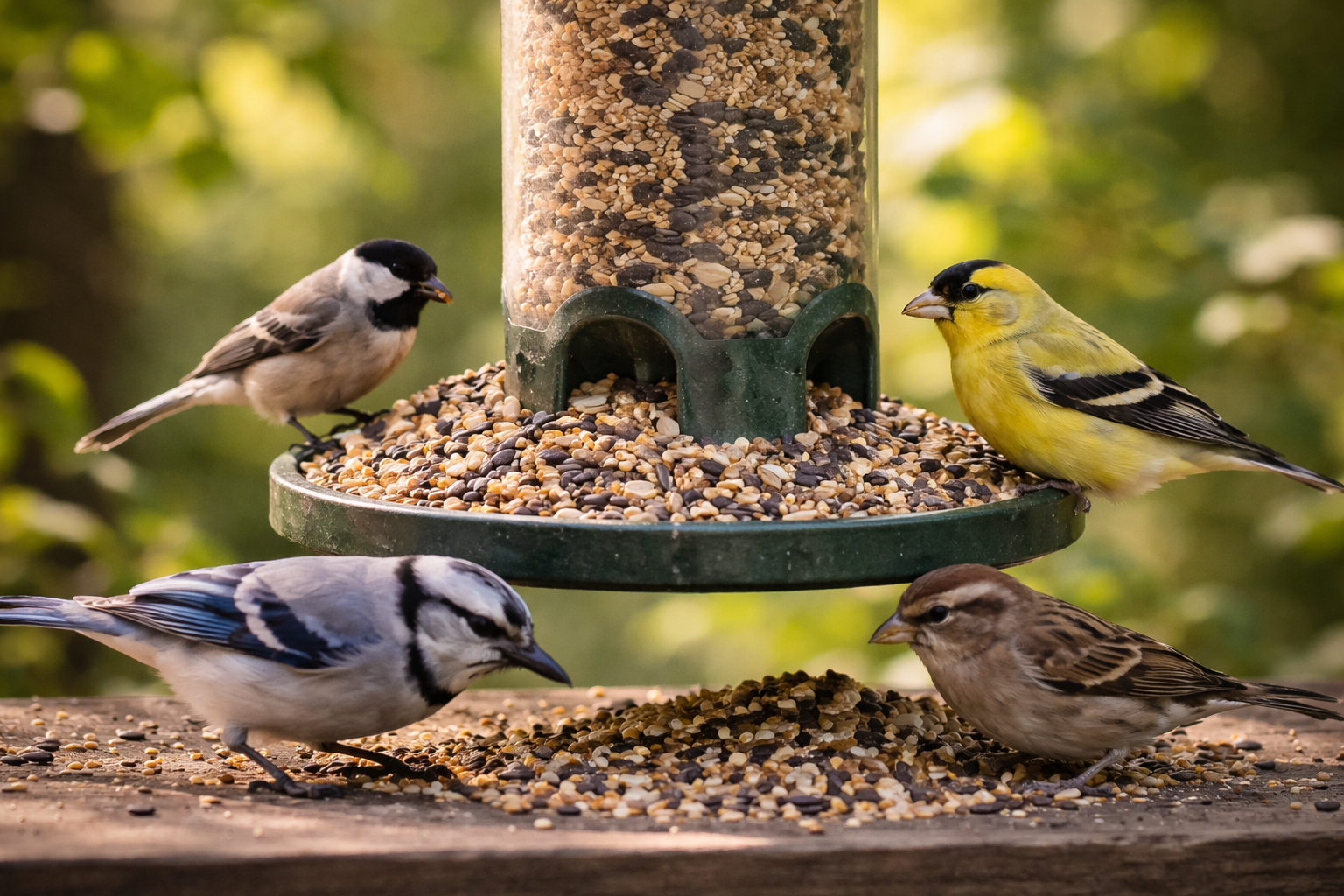
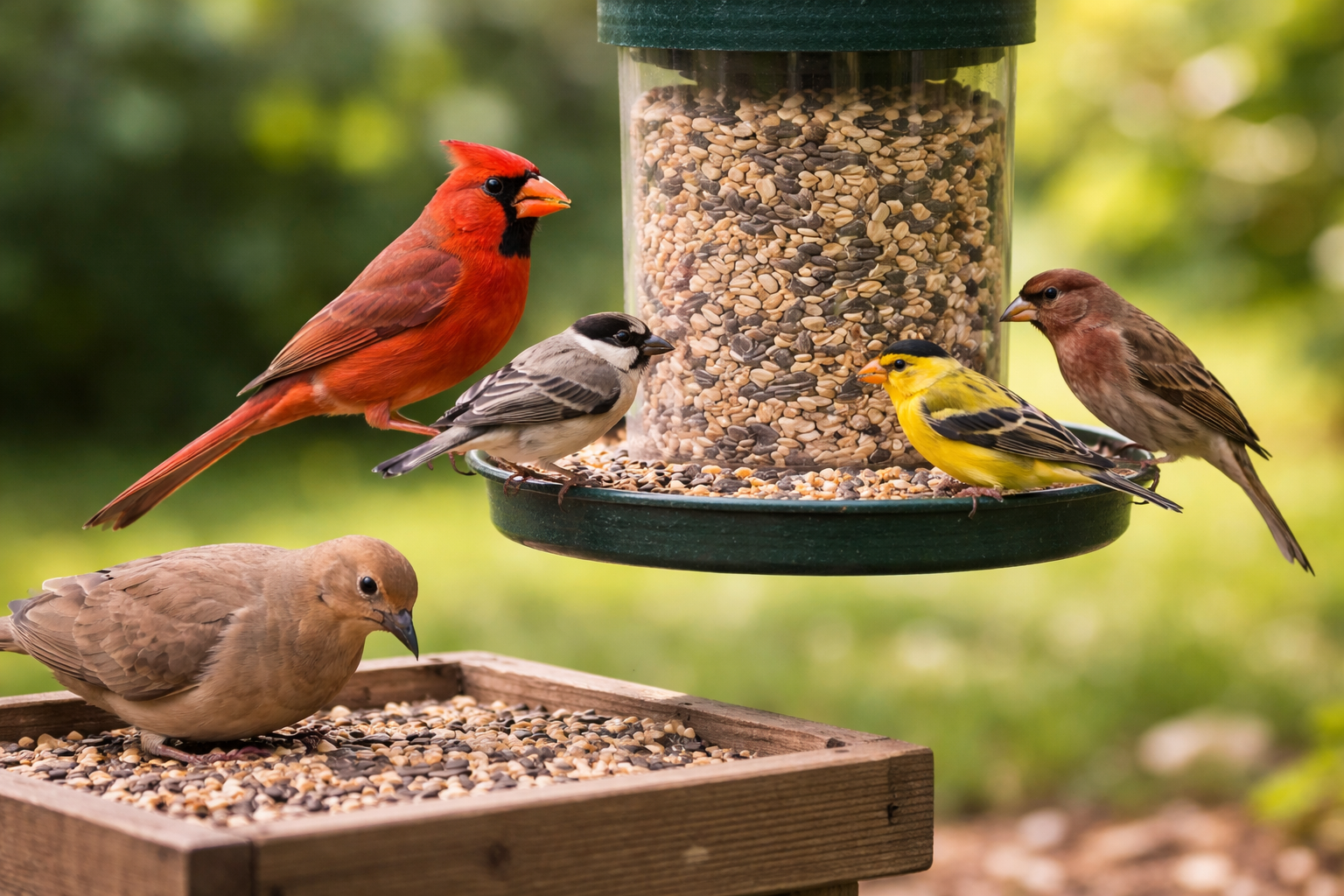
Seeds are a cornerstone of many backyard bird diets, but there is no single universal number that applies to every species, seed type, or season. The amount a bird eats in a day depends on who is visiting your feeders, what they are eating, and what the environment looks like at that moment. This guide provides an evidence informed framework to understand daily seed needs for common backyard visitors, plus a practical species table, guidance on seed blends and waste reduction, and a simple home friendly way to estimate daily intake. The aim is to help you set realistic expectations, optimize feathered diversity, minimize waste, and keep seed fresh and clean in your yard.
How to read seed consumption figures
Seed intake is usually reported in two ways: seeds per day and grams of seed per day. Some studies in this area convert intake into calories using seed energy densities, but exact numbers vary by seed form, moisture content, and how much time birds spend at the feeder. When you see a figure expressed as seeds per day, remember that a small seed such as nyjer requires many more individual seeds to reach the same weight as a larger seed like black oil sunflower. If a report cites calories per gram, you can multiply by the daily grams to estimate daily energy needs, but keep in mind that energy costs also depend on activity level, weather, breeding status, and available alternatives in the landscape.
Translating published figures into practical feeder guidance demands transparency about uncertainty. Kinetic factors such as flock size, time spent at the feeder, and competition at suet or seed stations can push intake up or down. In this article you will see a practical table that lists seeds per day and grams per day for common backyard birds where data exist, and notes where data are not specified. The emphasis is on ranges and context rather than a single precision number.
Species by species guide
The following table provides a quick reference for 14 species commonly seen at North American backyards. For each species, the entry shows the typical range of seeds per day and grams per day where such data are available, along with notes on preferred seed types and sources of variability. If a specific numeric range is not published, the cell notes reflect that gap and suggest how to interpret the figure in practice.
| Species | Seeds per day (range) | Grams per day (range) | Typical preferred seed types | Notes on variability |
|---|---|---|---|---|
| American Goldfinch | Not specified | Not specified | Nyjer, sunflower, safflower | Breeding season and flocking behavior can shift intake; small-bodied finch species often respond to small seeds |
| Black-capped Chickadee | Not specified | Not specified | Sunflower, safflower | Winter caching and daily energy needs can alter consumption levels |
| Tufted Titmouse | Not specified | Not specified | Sunflower, safflower | Territorial behavior and seasonal food availability influence intake |
| White-breasted Nuthatch | Not specified | Not specified | Sunflower, peanuts | Activity level and tree-hauling behavior affect daily totals |
| Blue Jay | Not specified | Not specified | Sunflower, peanuts, corn | Large bodied and opportunistic; intake varies with flock size and food availability |
| Northern Cardinal | Not specified | Not specified | Sunflower, safflower | Seasonal changes and flocking can modulate daily consumption |
| Dark-eyed Junco | Not specified | Not specified | Millet, sunflower | Ground foraging habits and winter energy needs drive variation |
| House Sparrow | Not specified | Not specified | Mixed seed blends including millet | Ubiquitous presence means high variability by locality and season |
| Mourning Dove | Not specified | Not specified | Cracked corn, millet | Ground feeding style and energy demands differ by season |
| Downy Woodpecker | Not specified | Not specified | Sunflower, peanut hearts | Smaller body size means adjustments with seed type and time at feeder |
| Red-bellied Woodpecker | Not specified | Not specified | Sunflower, peanut hearts | Larger seeds and feeding bouts can influence daily totals |
| White-throated Sparrow | Not specified | Not specified | Millet, cracked corn | Ground forager; seasonal changes and migratory movements affect intake |
| Common Grackle | Not specified | Not specified | Sunflower, corn | Flocking behavior and local food spikes can shift daily totals |
| House Finch | Not specified | Not specified | Sunflower, nyjer | Seasonal shifts in diet with breeding and migration patterns |
Notes: Data gaps exist for precise daily seed counts across these species in typical backyard settings. Where ranges are not specified, practitioners are advised to use the described methods to estimate needs based on observed visits and spillover from seed mixes.
Seed type effects and blends
Seed selection shapes how much birds eat at a given visit and how efficiently they extract energy. High fat seeds such as black oil sunflower provide dense calories, which can support longer feeder times and potentially higher intake during cold periods. Small seeds like nyjer are favored by many small passerines and can support quick, steady feeding, but they may attract large exotics if present in abundant quantity.
Blends add complexity because the mix composition can change the rate of consumption and the amount of waste. A seed mix heavy on large seeds may reduce the number of visits by small birds, while too much filler seed lowers the energy delivered per bird and can lead to more waste if small birds leave seeds uneaten. The practical takeaway is to favor a diverse mix that includes a core high energy seed, a smaller seed option for finches and sparrows, and a modest amount of variety to keep a broad flock engaged without encouraging waste. Rotate seed types by season and monitor what birds actually visit your feeder to tailor blends locally.
Seasonal and geographic variation
Season matters because energy needs change with breeding and thermoregulation. Breeding birds typically require more energy to support territory defense, egg production, and chick rearing, which can increase daily seed intake compared with non breeding periods. Weather and temperature also influence energy expenditure; cold snaps raise caloric needs, while warm spells can reduce the daily demand. Geographic differences reflect local plant phenology and seed availability. In temperate North America, seed availability from home gardens, field plantings, and local agriculture shapes how much birds consume daily. The core principle remains simple: daily seed intake is dynamic, not fixed, and responding to birds' energy budgets, not a universal number.
Practical feeding guidance
Estimating daily seed needs for your flock
A practical framework starts with observation. Begin with a moderate daily portion and adjust based on what you observe at the feeder.
- Step 1. Count the birds that visit your feeder on an average day across the main hours of activity. A rough headcount can be performed by watching for 20 to 30 minutes during peak times.
- Step 2. Note the mix you provide and how many visits you see by species. If you see many small birds, small seeds will drive higher counts of individual seeds; if larger birds dominate, portions of larger seeds will be used more quickly.
- Step 3. Use a simple waste check. If more than a quarter of the provided seed is left uneaten after feeding time, reduce the daily portion or adjust the blend to improve consumption and reduce waste.
- Step 4. Adjust for season. Increase portions modestly during cold weather or breeding phases when energy needs rise. Reduce slightly in mild conditions when activity and energy demands decrease.
- Step 5. Track over a week and refine. A small notebook or mobile note can help you see patterns in seed use and waste, guiding future adjustments.
Daily pickup amounts and hygiene
To minimize waste and mold risk, provide fresh seed daily and rinse/empty feeders regularly. Dry, clean seed stays fresh longer, reducing spoilage. Avoid storing seed in humid or warm locations and use airtight containers to slow spoilage. Rotate seed types over the week to encourage a broader flock and prevent overreliance on a single seed that might encourage waste when weather or flock composition changes.
Blends and species friendly practices
- Favor a core seed such as a high energy option and modestly mix in smaller seeds to keep a broader audience engaged.
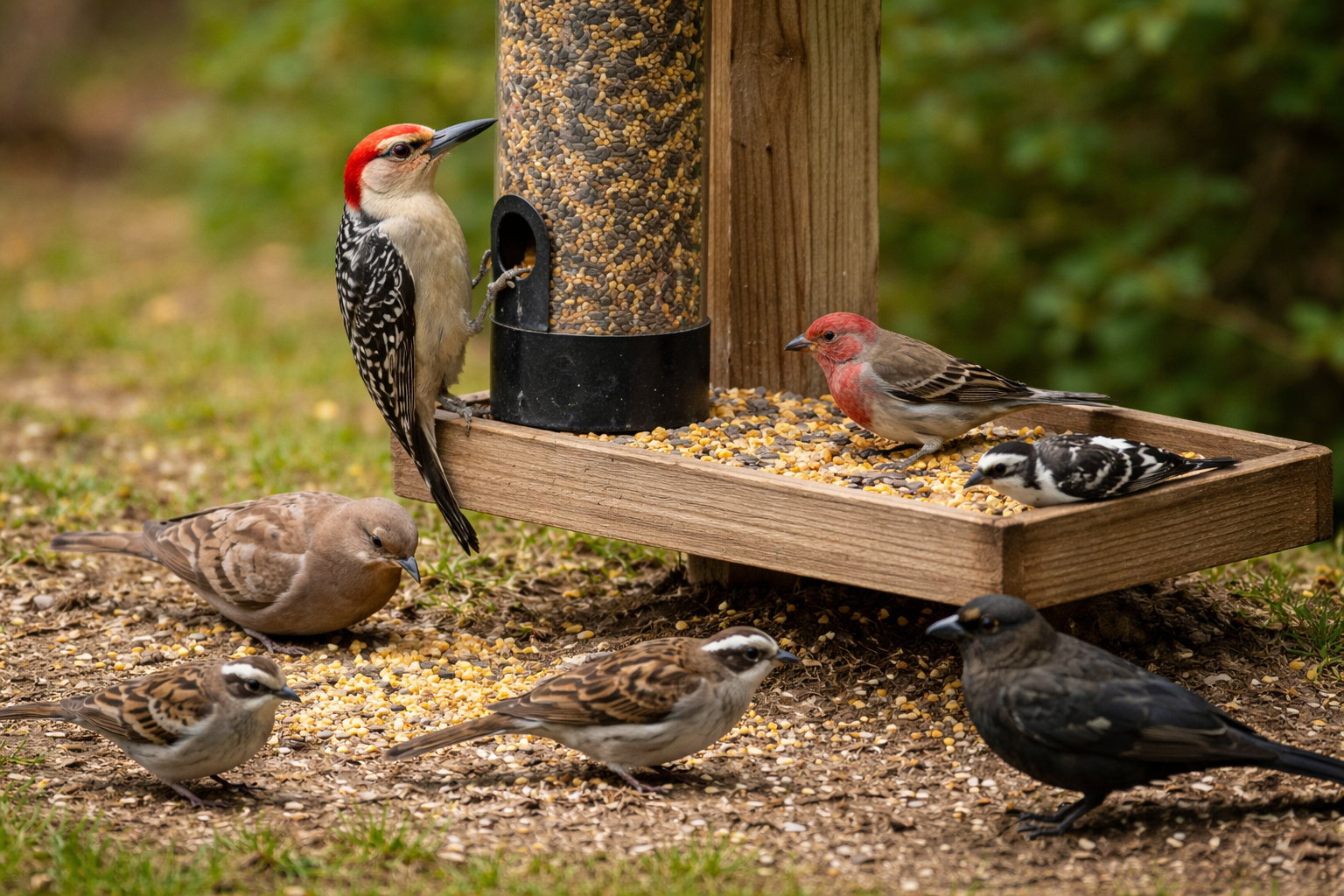
- Place multiple feeders or sections for different seed types to reduce competition and encourage exploration of a diverse menu.
- Provide water in warm or freeze thaw cycles, since water is essential for digestion and can influence feeding patterns.
- Keep feeders clean and inspect for mold or pests. Moldy seed can cause illness; replace immediate sources and sanitize feeder ports.
Quick home friendly estimation idea
A simple approach is to estimate seeds per day by counting visits and estimating seeds per visit. If you observe a typical finch visit consuming roughly a small handful of seeds, and larger birds consume more per visit, you can estimate a daily total by summing visits across the day and multiplying by a per visit seed intake that matches the visitor size. Convert the total seeds into grams by using the approximate seed weight per seed type, and, if helpful, translate to calories using the seed energy density. This method yields a practical daily target that you can adjust with real world results from your yard.
Quick reference and a simple calculator idea
Inputs you could track at home include number of birds and the seed types you provide. Outputs include total seeds per day and total grams per day. A straightforward home friendly calculation can be framed as follows: total seeds per day equals the sum across seed types of (seeds per visit times visits per day times number of birds of that type), while total grams per day equals total seeds per day times the average grams per seed type. In practice, you can implement a small worksheet or notepad with sections for each seed type, the observed daily visits by species, and a running tally of seed left at the end of the day to guide adjustments.
Conclusions and takeaways
Backyard bird feeding is a dynamic system rather than a fixed number. The key message is to use realistic, observation based estimates, adjust for season and geography, and favor seed blends that provide reliable energy while minimizing waste. A well managed feeder setup supports healthy birds, encourages biodiversity, and reduces seed loss to spoilage and pests. Regular hygiene, water availability, and thoughtful seed selection help you optimize feeding, even when precise daily seed counts per species are not published.
Visuals mentioned
- A compact species table for quick reference at a glance
- Simple charts illustrating seeds per day by species and calories per day by seed type (where data exist) can be generated once local observations are collected
- An at home seed calculator concept described above for users to implement in a notebook or spreadsheet
Practical checklist for existence of a healthy feeding setup
- Provide clean, fresh seed daily and avoid stale or moldy seed
- Use a diverse seed mix including a high energy seed core and small seed options
- Rotate seed types seasonally to align with bird visitors
- Maintain clean feeders and provide water
- Observe and adapt based on yard observations and seed waste
Final notes
The guidance above emphasizes that there is no single daily seed count that fits every backyard. It is a practical framework to help you estimate, monitor, and adjust daily seed intake so your birds stay healthy, your yard supports biodiversity, and seed waste is minimized.